
November 1933
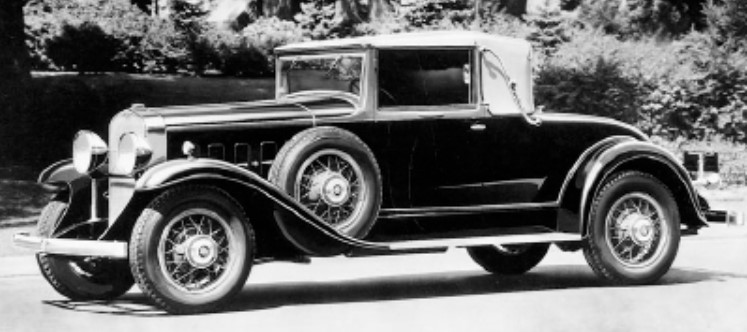
It was late on a Monday afternoon. I was tooling to Harry’s Paradise Tavern in my 1930 LaSalle roadster, a heap as black as my mood. I’d spent my last two hours attending the funeral of a fellow private detective, Rupert Keegan. We hadn’t known each other very long or well. Yet I felt a strong kinship with the man. My mother always told my brother and me, “Friendship isn’t measured in days, months, or years. It’s measured in the way you’re connected to another person.” I sensed a kinship with the fellow. Apparently, few others had. Attendance at his interment was sadly sparse. It made a mug contemplate what the turnout might be at his own memorial service. Sometimes the private investigator racket could make you feel as lonely as a lighthouse keeper.
“Friendship isn’t measured in days, months, or years. It’s measured in the way you’re connected to another person.”
* * *
When I walked into the tavern, I saw it was empty except for a few diehard tosspots. That was fine with me. I was in no mood for mindless chitchat. As I plopped on my favorite stool at the bar, its owner/operator, Harry Bittles, slid a glass to me. Then, he started to open a bottle of Jack Daniels, my usual fare. I put a hand over the tumbler and shook my head. My pal gave me an uncertain frown. “Not this time,” I said dryly. “You still have that Bushmills?” The bartender’s eyebrows arched, but he said nothing. Irish whiskey wasn’t the most requested thirst quencher in the place. He just nodded, stepped back half a pace from the counter, and searched the shelves below. He bent over and came up with the bottle.
As he poured, he sighed, “Oh, yeah. That’s right. Today was the burial of that shamus crony of yours from the old sod.” Though some might have taken the term “shamus” as a slight and many I’d encountered used it that way, I knew my buddy intended no offense.
“Yeah, it was,” I mumbled. “Once again, I’m drinking to the memory of an irrepressible Irishman. A friend who wasn’t a friend long enough to suit me.”
He reached for another glass and asked, “Mind if I join you?” Compassion molded his words.
“Not at all.”
Harry raised his drink. “Here’s to ….”
“Rupert Keegan,” I put in.
“Here’s to Rupert Keegan,” he resumed. “May the Irish hills caress you. May her lakes and rivers bless you. May the luck of the Irish enfold you. And may Saint Patrick behold you.” We clinked our glasses and downed our whiskey.
“Thanks for that, Harry. Rupert would have approved.”
“Another, Gil?”
“No thanks. I’m gonna call it a night. I only stopped in to pay the man a tribute he’d have appreciated.” We said goodnight. I drove to my apartment, still mulling over life in this cockeyed world.
* * *
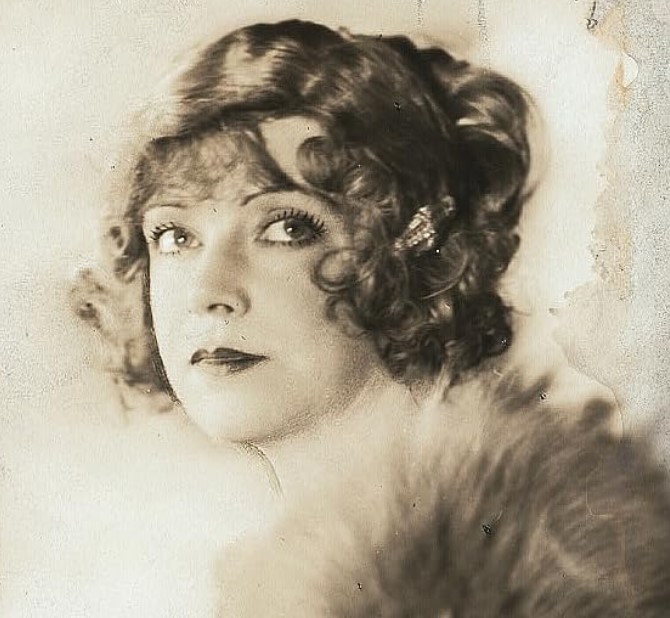
Over breakfast at the Wayside Café two days later, I was reading the bulldog edition of The City Chronicle when a snippet caught my eye. A brief article reported the death of Texas Guinan. Hers was not a name many people might readily recognize. Ironically, I’d just seen a movie she’d appeared in. At the time, I was looking for a crime drama. I glimpsed a promising moniker on a coming attractions poster for the feature. In this particular offering, Paul Kelly played gangster Frank Rocci. His presence usually meant a good, hard-boiled picture show. Instead, I found myself sitting through a musical. Not my cup of tea. Not even close.
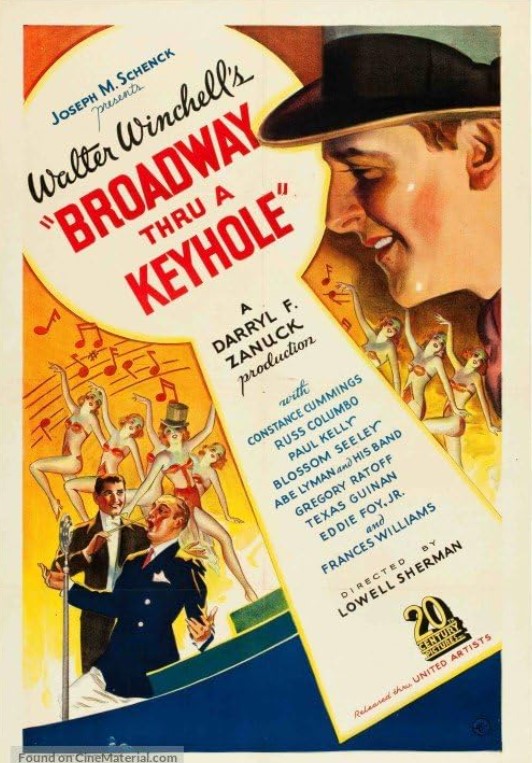
The title of the flicker, Broadway Thru a Keyhole, brought the late Mr. Keegan to mind once more. His nickname had been “Keyhole” Keegan. The motion picture was the story of a Manhattan mobster who helped a childhood friend by getting her sister a job as a chorine in the nightclub owned by Texas Guinan. With respect to the deceased Guinan, it was what the Hollywood crowd referred to as typecasting. In the prohibition era, the woman became known as a successful owner and hostess of night clubs and speakeasies, where she made certain everyone had a good time. Every lug who wandered into a watering hole, legit or otherwise, wanted to find a dame like her at the door. Unfortunately, she’d died the day after the picture’s release.
* * *
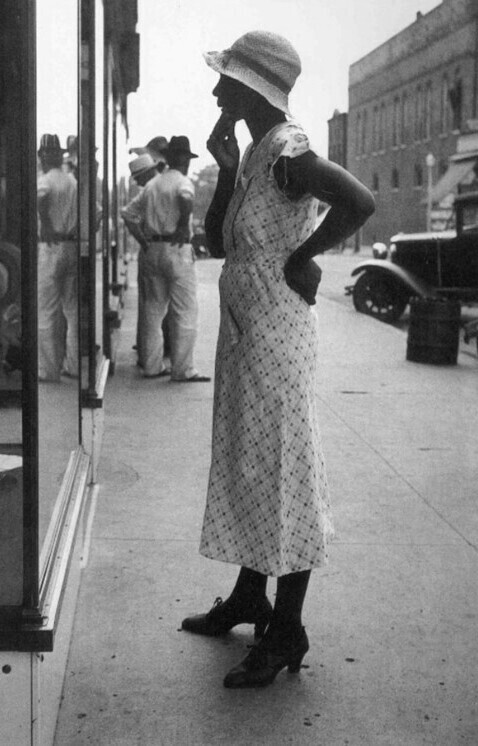
Later, sliding out from behind the wheel of my car in front of my office building, I glimpsed a familiar face window shopping further along Orchard Street. We’d not seen each other since she provided me and the coppers the solution to the cause of a man’s death over a year earlier. Initially, city Detective Gus Donovan, inclined to take the path of least resistance in an investigation, was happy to put the dead guy’s demise under the heading of a suicide. Despite the bull’s nasty attitude toward anything the cleaning woman had to say, Viola Turner stood firm on what she believed and handed over proof positive it was a case of murder.
I glimpsed a familiar face window shopping further along Orchard Street.
The frail caught sight of me and approached. “Good morning, Mr. Tanner,” she greeted me, extending her hand.
I ignored her proposed handshake and gently hugged her. When we parted, I saw she was somewhat taken aback. To ease whatever tension she might be experiencing, I chuckled, “Say, Viola, I thought we had an agreement that you’d call me Gil. Remember? ‘Mr. Tanner’ was my old man.”
She seemed to relax, smiled, and nodded. “Is it possible that I could have a few minutes of your time to talk?”
“Sure thing. Come up to my agency.”
During the elevator ride up, I inquired about her family. She related that her son, Luther, was doing well and growing like a weed. Her father, Amos, was fine, but still grieving over the loss of his wife and Viola’s mother, Celia. My visitor revealed she’d passed away that past January from pneumonia. I hadn’t heard about her death. Then, I recalled the fragile lady’s skepticism regarding my help, as a “white man,” for her daughter the previous time our paths crossed. She’d been an outstanding cook. I expressed my sincere sorrow over the passing of her mother.
While she took a guest chair in my office, I offered to make a pot of coffee for us. She declined any java. Having just topped off with a huge breakfast, I passed on the notion myself. From behind my desk, I asked what I could do for her.
“There is a man who attends my church occasionally.” She cleared her throat. “The truth is, he’s an itinerant. We, that is our pastor and the church members, think he stays in a kind of shantytown near the rail yard, but we aren’t exactly certain.”
There was a hobo encampment in that area described by the local rags. The law swept in periodically and broke it up. Its inhabitants would disappear. Then, as with the rising and falling of the ocean’s tide, the folks drifted back in to take up residence once more.
“Anyway,” she continued, “he’s been arrested and is in jail, charged with an armed robbery. He swears he’s innocent. We don’t believe he did it. And we want to hire you to prove he didn’t commit this thing they’ve accused him of.”
“I’ll be glad to look into it. But what happens if I come across proof that he’s guilty?”
“Then we’ll accept it. And the law must take its course.” After a brief pause, watching me with her keen eyes, she affirmed, “But we don’t believe that will be the outcome, Gil. And I trust you to find the truth.”
I waggled my head in understanding. When we delved into what details she knew of the matter, Viola told me the incarcerated man’s name was Fordham Bellows. It struck me as a fairly aristocratic-sounding handle for a drifter living on the edge of society. Bellows, she explained, was accused of robbing a filling station in the southeast section of the city. She was unaware of the name of the detective handling the case. I silently prayed it wouldn’t be Donovan.
Turner shared that her pastor, the Reverend Calvin Tegler, had visited Fordham in the municipal lockup. The vagrant’s strong protestations of innocence convinced him. As a result, the congregation agreed to Viola’s suggestion they hire me to investigate the circumstances. They were determined to support “one of their own” in his time of need. She wrote the preacher’s telephone number down in case I needed to contact him. I assured the lady I would keep her up-to-date on what I learned.
She sat back in her chair and opened her purse. “What do you charge for this type of thing?”
I grinned at her. Twenty bucks per day plus expenses was my asking price. But I’d worked for less. A lot less. “Tell you what, Viola. Let me dig into the situation. We can settle up later. You trust I’ll do right by you and your church, don’t you?” She nodded and smiled.
Twenty bucks per day plus expenses was my asking price. But I’d worked for less. A lot less.
We stood, and I asked her to give my regards to Amos. Then, I showed her out of the office. With nothing else to occupy me at that moment, a visit to police headquarters was in order.
* * *
As I headed to the station house, I decided to begin by learning who the police investigator was.
When Sergeant Harry Logan, who was manning the front desk, couldn’t fill in the blank, I asked if my pal, Detective Sergeant Rob Waddell, was available. He contacted the man in the Detective Bureau. He told Harry to send me back.
I navigated the hallway to the department and Waddell’s office. His lanky form was seated at his desk, with Gus Donovan sitting across from him. The junior gumshoe was depicting something to his boss, but clammed up when he saw me at the door. Rob signaled for me to come in and have a seat. The other detective eyed me suspiciously. Since day one of our association, Donovan and I’d had a contentious relationship. We were like two cats with their tails tied together and hung over a clothesline.
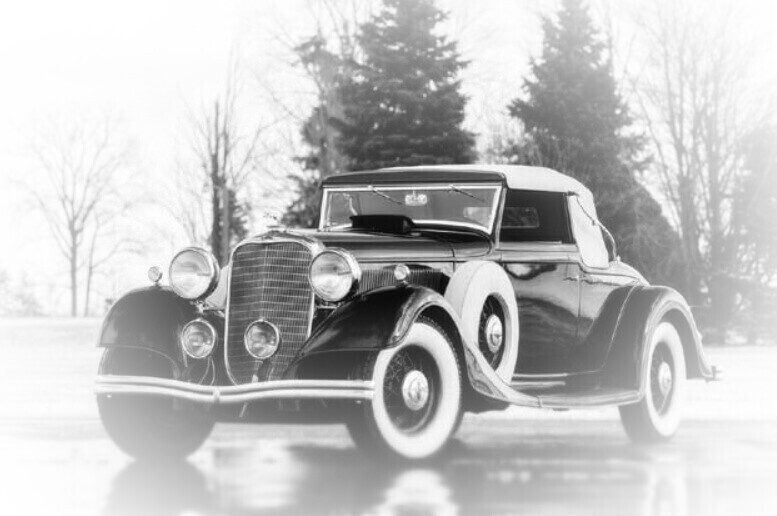
“Gus here has been tailing a mug who’s supposedly involved with the recent increase in stolen cars around town.” The theft of more expensive autos was becoming something of a cottage industry across the city. A few of the pilfered vehicles I’d seen chronicled in the broadsheets were a 1933 Chrysler Imperial CL Phaeton, a new Duesenberg Model SJ, two Cadillac V-16s, and one new Lincoln K Roadster. Based on complaints from the well-heeled citizens who could afford such pricey “baubles,” the police commissioner and the mayor’s office had been seriously pressuring Waddell and his men to put a stop to it. “Well, go on, Gus,” the detective sergeant urged. “Then what happened?”
The rotund sleuth shot me an unhappy sideways glance as his pockmarked face flushed. Then he proceeded hesitantly with his narration. “Well, I followed Fortenberry to Patrick’s Pub. He was in–”
“Was that ‘Slippery’ Sam Fortenberry?” I interjected. Word on the street was the goon, associated with The League, the mob that worked the south side of the city, was involved with this crime spree. And the Irish bar was a known hangout for members of that gang.
Gus ignored my query and again dummied up, merely staring at Waddell. He obviously didn’t appreciate my presence, much less my inquisitiveness. Finally, Rob broke the tension. “Yeah, he’s been shadowing the hooligan.” He raised his chin slightly at Donovan. “Go on with your account.”
The man shifted uncomfortably in his chair. “Like I was saying, he went into the pub and stayed nearly a half hour. While he was inside and I was stashed out across the street, a guy came and drove off in the heap Fortenberry had been driving.”
The stout flatfoot paused. Waddell said nothing. He simply gave his subordinate with a questioning expression. After several seconds, Donovan responded. “It was a new Lincoln K Convertible Roadster. Found out later it had been heisted earlier in the day.”
I let out a low whistle. Make that two new Lincoln Roadsters that had been swiped. They were expensive rides.
Gus’s ears reddened. “But it hadn’t been reported stolen at the time!” he blurted. “I had no way of knowing!”
“All right. I guess that’s understandable,” Waddell moaned with a dismissive hand gesture. “And then…?” his voice tapered off.
“A few minutes after the Lincoln drove away, Fortenberry came out of the joint and walked over to my car.” Again, the heavyset gumshoe moved awkwardly in his seat. “Then, the cheeky bastard asked me for a ride because, he claimed, his auto had been stolen.”
The detective sergeant’s eyes flashed to me as if daring me to guffaw. I struggled not to. Rob normally served as a referee between Donovan and me. Despite him suppressing his own laugh, he had the nerve to stick to that role now.
Gus finished what little else he wanted to report and got up to leave.
I couldn’t pass up a parting shot at him. “Do you think I need to be worried that my crate might get boosted, Gus?”
He whirled at me, then glimpsed Waddell and caught himself. “Nah, peeper. Nobody would be hard up enough to steal that piece of crap you drive,” he laughed on his way out the door.
I turned my attention to Rob.
“So, what brings you here, Gil?”
“I’ve been retained to look into the case of a guy you have charged with armed robbery. The name’s Fordham Bellows. He’s in the city pokey. I was wondering who has the investigation and if I can visit him?”
“The name’s Fordham Bellows. He’s in the city pokey.”
“Who hired you?”
Although I rarely disclose any information regarding my clients, I didn’t figure it mattered at this point since Waddell had a hand in the murder case Viola solved. “A fellow congregant where he sometimes attends church.”
“Shiloh Baptist?”
“Yeah. How d’you know?”
“As Ripley would say, ‘believe it or not,’ not much goes through this bureau that I don’t hear of. Is your client that cleaning lady who saved Donovan’s bacon last year?”
My friend was known for his memory of details. “The person who came to solicit my services is the same. But the entire congregation is footing the bill. And the jackpot question I have right now is who’s handling the investigation for the department?”
“Relax. It’s not who you think. No, this time you lucked out. Or maybe I should say Fordham Bellows dodged a bullet. Its Detective Delacroix.” Rob craned his neck to search the space beyond his office door. “He was out in the bullpen a little while ago.”
“Yeah, I saw him when I passed through. Thanks, Rob.”
We shook hands, and I left his office. Ed Delacroix was an ambitious, but fair-minded cop who’d never been involved with a case I was connected with. They had recently promoted him to detective. My brother Marty, a harnessed bull on the city payroll, spoke highly of him. That was good enough for me.

I located the man at his desk. Tall and broad with an unruly mop of wavy brown hair, he appeared several years older than me. Since we’d never formally met, I introduced myself, handed him my business card, and asked if I could buy him lunch. Then, I confessed a need to pick his brain on the Bellows case on behalf of Shiloh Baptist Church’s congregation. He tossed me an odd expression with keen black eyes, but readily agreed. Walking to the front of the building, I inquired if he liked Italian food. Ed laughed and told me his mother’s maiden name was Giusti. He asked if I thought he enjoyed the food. So we settled on a bite at Cappacino’s Restaurant.
Driving to the eatery, we talked about our respective backgrounds. Delacroix explained that his mother hailed from Saluzzo in the province of Cuneo, Italy, and his father lived just across the border in France. They met, courted, married, and reached Ellis Island right before the turn of the century. He was born here a year later.
I told him of my family history and of my relation to Marty. It turned out he and my brother joined the force at around the same time. He described Marty as a great pal.
* * *
At the restaurant, it came to light that Mama Cappacino, the place’s owner and operator, knew Delacroix through his mother.
We enjoyed a tasty slumgullion lunch special, during which I spelled out my interest in the Bellows matter. Unlike Donovan, Ed didn’t seem defensive about my involvement. He elaborated on the facts of the crime and the evidence he’d gathered.
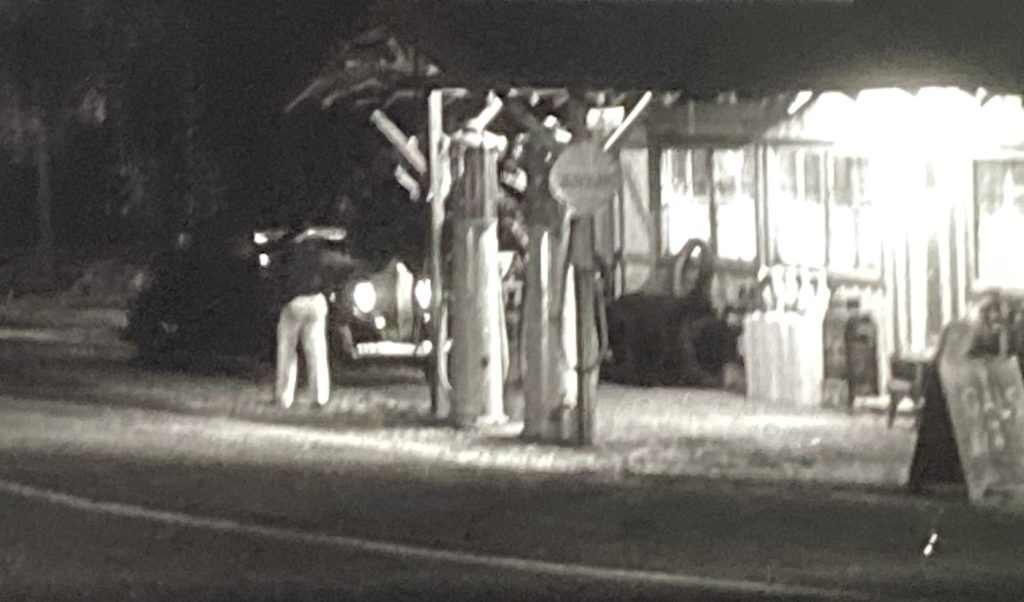
The subject of the holdup was a young man named Ned Helms, who was working at the business alone the night of the stickup. He’d told police Bellows walked in with an automatic and demanded the money from the register. At first, the victim refused to cooperate. At that point, the robber hit the gas jockey on his head with the gun and fired a shot to scare him into handing over the dough. The youngster advised Delacroix the blow from the gat staggered him. Though the wounded fellow was incapacitated, he said he watched his attacker snatch the cash from the till drawer and run from sight. Ed added that there was a charge of assault in the second degree also pending based on the attendant being struck with the rod. The responding patrolman called for an ambulance to take the somewhat incoherent kid to the receiving hospital.
At that point, the robber hit the gas jockey on his head with the gun and fired a shot to scare him into handing over the dough.
The copper continued, telling me that the following day the police received a telephone call from a pawnbroker. A man was in his shop claiming he wanted to hock a handgun he possessed. The fellow looked like a tramp. The concerned shopkeeper suspected the man’s true motive was a heist. When he described the customer’s pistol, it matched the one Helms had recounted. They sent officers to the business where they arrested Bellows.
Subsequently, the cops drove their prisoner to be viewed by his mark. He was identified as the individual who robbed the station. I never liked what they called a “show up,” where a person, often already under arrest, was shown to a witness or victim. There seemed to be a level of prejudice to the accused in it. Better, I thought, to use a lineup, where the alleged perpetrator stood among several other people and was required to be singled out from the crowd.
When asked, Delacroix revealed the artillery in question was a Luger. Though I had to admit the German-made piece was distinctive in its appearance, I gently argued that there were quite a few floating around because so many were brought back from France after the war. “How,” I asked, “can you be sure the piece Bellows possessed was the same one used to commit the robbery?”
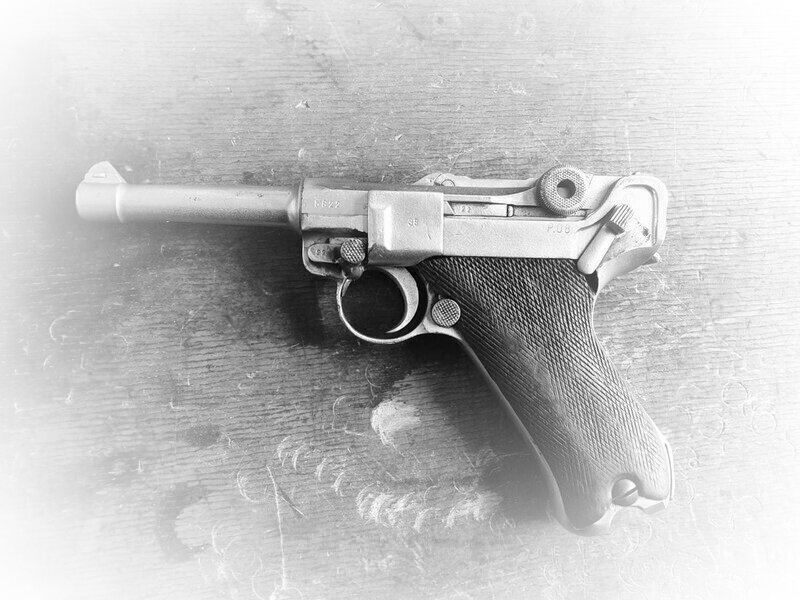
“After the guy’s arrest, our crime lab guys recovered the discharged round from the back wall of the service station’s office. It was turned over to Rosenthal in the laboratory. I was familiar with the man’s expertise concerning firearms. Contrary to what the pulp writers asserted in their tales, the technician stated he couldn’t tell if the Luger had been fired recently, but it had been since its last cleaning. The lab man ran a ballistics comparison. The slug from the wall matched the one from Bellows’s weapon, retrieved after test-firing it. Rosenthal also found traces of blood on the pistol. They matched Helms’s blood type.
Sure enough, the evidence against Viola’s fellow church-goer appeared overwhelming. Yet my curiosity was piqued. I’d promised her a thorough investigation. And she would have one. Offhandedly, I asked Ed what the accused man told him by way of explanation. Delacroix acknowledged he’d not yet interrogated him. He’d been “wrapped around the axle” on another older, unrelated armed robbery. It was what he’d been working on when I approached him at his desk.
When I asked the detective whether he minded if I met with the accused, he said he had no problem with it. He offered to interview the man upon our return and to let me sit in on it. I could ask any questions I felt relevant in areas he hadn’t covered. Before doing that, we agreed we’d stop by the gas station and speak with Helms to see if he had anything to add to what he’d told the uniformed officer that night.
* * *
When we arrived at Ned’s place of employment, he wasn’t there. The owner, John Burkhalter, was working at a bench in the business service bay. He wiped his grease-stained knuckles with a streaked chamois while telling us his employee was still out because of the wound he’d sustained during the holdup. The owner’s lean, hawklike face held an aquiline nose, which seemed to emphasize the sharpness of his features. The old man’s voice held an edge of cynicism regarding the recovery time required for the boy’s injury. Because he knew the kid better than either me or Ed, it caught my attention.
The old man’s voice held an edge of cynicism….
Burkhalter offered to telephone and have him report to work. He told us it gave him an excuse to get the boy back on the job. John led us into the small office and made the call. That area of the business smelled as much of various oils, gasoline, and solvents as the garage did. Most surfaces in the space bore a thin coating of grime.
Helms, who was in his late teens, arrived around twenty-five minutes later. The ginger-haired youth sported a bandage on his left cheek where he’d received several stitches because of the wallop from the handgun. Bruising peeked out from under the dressing.
Delacroix introduced himself and me to the pimply faced teenager. Ed was gracious enough to refer to me simply as another detective. He asked the victim some general questions, including the approximate sum that was taken. When Ned said “around fifty dollars,” I caught a slight grimace on Burkhalter’s puss. I made a mental note to go back to that later.
Ed beat me to the punch and told the redhead to reenact the crime. He told Helms to take the place where he was when the armed man entered. The boy walked behind the counter. There, he repeated what the man said to him and how he responded.
Next, the detective had the teen assume the position and movements of the robber. At the lawman’s direction, he moved to the door and set his hand in the shape of a gun, as children do when they’re playing cops and robbers without the appropriate toys. Mimicking the rodded thug’s actions, the grease monkey stepped to the counter while waving his “gun hand” and reciting what he demanded of him.
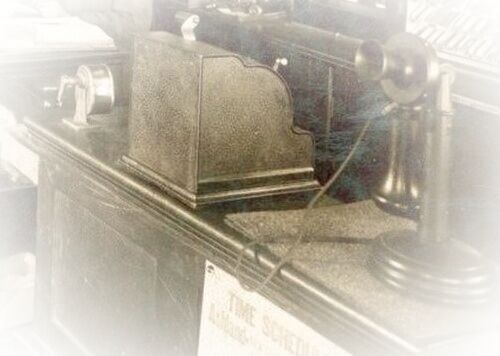
At the point he claimed to have refused the villain’s commands, the youngster showed how the man struck him in the face with the butt of the Luger. Then, he told us, he fell backwards against the shelves behind him. While he watched helplessly, the goon hurried to the till, opened the drawer, and grabbed the cash before bolting out of the place. Ned told us he staggered to the door and saw the thief run away into the darkness. He made an off-handed remark concerning how impressed he was at the speed with which the older man moved. I questioned whether he had mentioned the race of the thief to the responding officer. Helms said he hadn’t because he wasn’t asked. He assumed they knew the robber was a Negro, although he didn’t use that word.
During this little “dramatization,” I noticed John roll his eyes a couple of times. When the demonstration was finished, he told his employee there was a carburetor on the workbench in the garage that needed his “loving attention.” The kid shrugged and disappeared into that work space.
I turned to the owner. “Mr. Burkhalter, I couldn’t help but notice your facial expressions while Ned presented his account of the incident. Do you doubt his truthfulness?” Ed perked up with my observation and question.
John’s eyes swept around, then leaned in toward Delacroix and me. In conspiratorial tones he said, “Look, the boy’s a good worker if you don’t mind kicking his ass once in a while. But he can be a Sarah Bernhardt at times. A little overly dramatic, if you know what I mean. Embellishes things. I figure it comes from being raised by his momma, with no man in the home to guide him. I try, but….” He shrugged, coughed hard, and spit a wad of phlegm out through the open door. “See here, I don’t doubt my place was held up and money was taken. But I got to be honest with you. That drawer,” he maintained, jerking a thumb at the till, “ain’t seen fifty bucks at any one time since ’29. Possibly thirty dollars was there for the taking. On a good day, maybe. But not fifty.”
“…he can be a Sarah Bernhardt at times. A little overly dramatic….”
Ed and I looked at each other with what were unanswered questions flashing through our minds. My issues with what we’d just heard were probably different from his. We thanked the old man, climbed into my LaSalle and drove to headquarters.
* * *
At the station house, we ankled to the bullpen area so Ed might brief Waddell about what he’d been doing. Then he checked the armed robbery report filed by Afterward, Delacroix phoned the jail, which was attached to the headquarters building. He had Bellows brought over to an interrogation room. The city detective and I walked to the prearranged space and sat, waiting patiently for him.
While we lingered, I broached that idea that had been gnawing at my brain since we were at Burkhalter’s filling station. “Ed, ask yourself one question. Why would a man who just got, let’s say, even thirty dollars in a robbery try to get more money by hocking the gun he’d used? And so soon after the holdup? Even thirty bucks is more than a city bus driver makes a week. From what I understand, it’s over half what the police commissioner pulls in per week.”
“Yeah. Makes no sense to me either. I’ll have to–”
The door opened. We stubbed out our gaspers. A jail custodial officer escorted a large black man into the room and nudged him to a chair across the table from us. As he walked, I detected a noticeable limp in the inmate’s stride. Apparently, Ed did, too. He tossed a meaningful glance in my direction. The accompanying cop took up a position at the wall behind his prisoner.
It was Ed’s show, so I waited for him to take point. “You’re Fordham Bellows?” The man nodded but said nothing. “You understand what you’ve been charged with?” Bellows spread his hands on the table and glared down at them. However, again, a silent, minimal head waggle answered the question. “A fella says you came into his filling station and robbed him with a gun the other night. The same weapon you later tried to sell at the pawnshop.”
The black man raised his face to glower at the plainclothesman. He had dark, piercing eyes. His wasn’t an angry or threatening countenance; it was one of determination not to accept without objection whatever anyone attempted to force on him.
“Naw, sir. I ain’t stole no gun, an’ I ain’t robbed nobody,” he said quietly but firmly. “Like I told those other police, I found the gun. I was hungry and figured I could get money from it to eat. So I tried to sell it to that man.” He snorted. “I’m innocent, but nobody give a hoot. Know what some of your guards call me? ‘Four below zero’.”
The cop standing behind him snickered. Ed glowered at him. The snide smile quickly disappeared. “Know why they name me that? Because they call a white bum a zero. But they say I be four degrees below that.” He held up one of his enormous fists and ticked off four items on his fingers: “I’m black. The way they see it, I’m no-account. I got a bum leg. An’ I ain’t from around here.” His eyes dropped to his hands again. He shook his head without looking up. “I ain’t wantin’ nobody’s pity, but I count for nothin’. Nobody cares.”
“Well, somebody cares!” I announced, not waiting for Ed. “In fact, a lot of somebody’s care! All of Shiloh Baptist Church gives a hoot! That’s why I’m here!” The black man’s eyes softened, but he said nothing.
Delacroix raised a hand slightly to stop me and returned to the conversation. “Let’s start with the gun. You say you found it. Where?”
“We was goin’ to a place up the road from the rail yard where folks eat. They throw out victuals fit for most tables. It was after dark. As we made our way, I accidentally kicked somethin’ on the side of the road. It felt heavy, so I looked and found the thing. It was a Luger. I–”
“So, you recognized what kind of gun it was?”
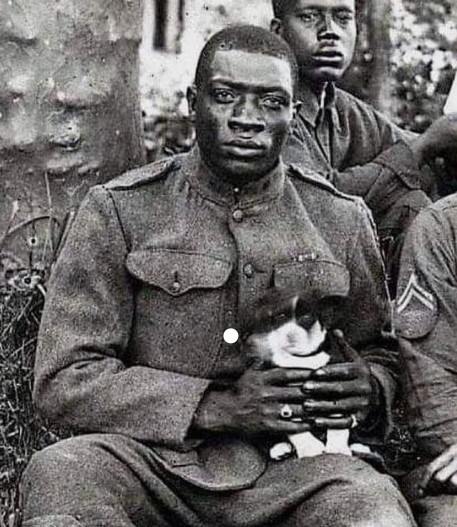
“Yassuh. I was in France during the war.” Pride raised his chin. “Was in the 369th Infantry Regiment. We was called the Harlem Hellfighters. Thanks to the whites, though, we wasn’t allowed to fight with the American army. We fought alongside the French instead.” Fordham exhaled sharply, then went on. “Got myself wounded bad at Séchault during the Meuse-Argonne offensive. Fritz shot up my leg somethin’ fierce. Ended my baseball playin’.” Looking off to the side at nothing in particular, the large man seemed to collapse in on himself. This last offering was the first sign of any resentment in the man’s voice. It faded as he continued, “Did ourselves proud. So, yeah, I know a Luger when I see one.”
“Was in the 369th Infantry Regiment. We was called the Harlem Hellfighters.”
The detective leaned over the table. “You said ‘we.’ Was somebody else with you when you found the gun?”
“Uh-huh. I got a buddy name of Jelly Roll. We was wantin’ somethin’ to eat.”
“You mean like Jelly Roll Morton?”
“Yeah, but dis boy white. White, but he shore can sing. Some places we been, he sings for food, and I play along on my mouth organ.”
“May I, detective?” I interrupted.
“Sure.”
“Mr. Bellows, I reckon Jelly Roll is a nickname.” He shrugged. “Do you know his real name?”
“Not truly. But another fella called him Ezra once. Like the book in the Old Testament. He stay at the camp, too.”
Delacroix slid a pencil and a blank piece of paper to the man. “My understanding is the camp is sort of big and spread out. Is it possible that you can draw us a map of where this Ezra might be found at the site?”
“He ain’t gonna be in no trouble, is he?”
“Not at all. But if he can prove you located the gun, as you say, it will fix this mess for you.”
Another notion was bouncing around in my skull at that moment, but I let it drift for the time being.
Bellows pulled the writing material to him. When he picked up the pencil and started drawing, the entire case against him fell apart. My eyes met those of Detective Delacroix. The war veteran was left-handed. Everything Helms had done and said during his reenactment showed the robber to have held the gun in his right hand. And he told us the man grabbed the cash from the till drawer with his other mitt. Plus, Ned’s facial injury was to the left side of his face, indicating a right-handed person had struck him.
“Fordham, also print or write your name on that sheet when you finish your drawing, please. That way we can show a judge it was yours and you helped us.” I was sure Ed was having him do that to confirm his dominant hand. Bellows continued and completed his sketch and signed the paper as a southpaw. That cinched it in my mind.
Regardless, there were a few questions that needed to be answered. We had to find Ezra to verify what had happened that night when Fordham came across the pistol on the road. Then there was the matter of Helms identifying Bellows as the robber. The grease monkey had to be confronted about the holes in his story. Because of those issues, neither of us mentioned anything further regarding the case itself.
Nonetheless, when Ed started to stand, I reached my hand to the middle of the table and said, “If you don’t mind one more thing, detective?”
“No, sure, go ahead.”
“Before you leave, Mr. Bellows, you mentioned baseball. Did you play?”
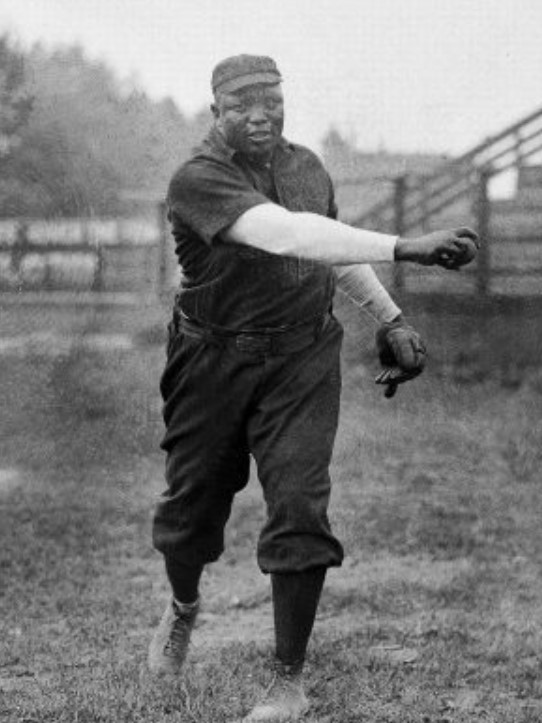
“Yeah.” He chuckled sadly. “Not to brag, but I was a pretty fair catcher. May not think it to look at me, but I could hit it a mile and had good speed on the bases, too. Rube Foster was my hero. Wanted to play professional ball with him more than anythin’. Can’t run at all now.” He sighed and passed a hand wearily across his face. A heavy, momentary silence fell on the room. Ed and I exchanged glances. Another item to contradict Helms’s story that this man stole the money from him had arisen.
After a few seconds, Delacroix stood. “Okay, Mr. Bellows. I’m going to send you back for now while we follow up on a few things you’ve told us.” He glanced at the uniformed copper and nodded. The prisoner got up and limped toward the door. As the officer passed him, the detective took hold of his arm. “Wait in the hall, Fordham,” Ed instructed. “And don’t move.” When the black man went out of the room, the detective focused on his fellow lawman and hissed low, “Take him back. And let me be crystal clear. I don’t want to hear a damned thing about any trouble that fella has while he’s in our jail. Pass the word. He’s to be called by his name. Period! Savvy?”
…the detective focused on his fellow lawman and hissed low, “…I don’t want to hear a damned thing about any trouble that fella has while he’s in our jail.”
“Yes, sir,” he said sheepishly before leaving with his charge.
“Gil, let’s go to my desk. I have a call to make.”
When we reached the bullpen, the detective shuffled through the reports on Bellows’s case. Then, he telephoned someone and asked for two officers. Only one was in the building. He was told to report to Delacroix immediately. In a very few minutes, Officer Tom Dillon appeared. He was a younger patrolman, plain-looking, angular-framed. I wasn’t familiar with him.
The detective stood and stretched to his fullest height. “You and Cahill arrested that armed robbery suspect at Grobman’s Pawn Shop, right?” The cop confirmed the supposition with a measure of pride.
“Did he resist you?”
“No, sir.”
“Did he say anything concerning the gun?”
“He said he found it. I think I put that in my report.”
“Mm-hmm. Your report also says that the victim positively identified Fordham Bellows as the culprit.”
“Yes, sir,” Dillon answered. His tone was becoming more uncertain.
“Exactly how did that identification come about?”
“Well, based on what they told us when we were dispatched, we knew where the heist occurred. Figuring we were already out with the dinge, we decided to get the victim to tell us if he was the right guy.”
Delacroix flinched faintly at the word ‘dinge’ but moved on. “And…?”
Dillon apparently took no note of his superior’s reaction. “The smoke was in the back seat with Cahill. I pulled up to the station and got the attendant’s attention. He walked to the car. I asked if the fella in custody was the robber. The kid said yeah. We brought him in.”
“Okay, Dillon. I want a straight answer. Did you ask if the man you’d arrested was the thief?” When the officer hesitated and shifted from one foot to the other, Ed pressed him. “Or did you tell the victim something such as we found the guy who robbed you? And then asked him to confirm it?”
Tom nervously glimpsed my way. “I don’t recall my exact words, detective,” he croaked, “but the gas jockey could have misunderstood me.”
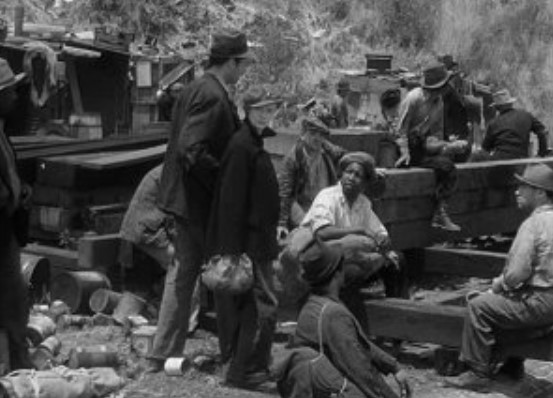
An agitated Delacroix dropped the papers on his desk and retrieved Bellows’s rough drawing of the encampment area. “Okay. I have a job for you.” Dillon smiled contritely. “Find Cahill. The two of you are going to the hobo camp at the rail yards.” The smile left the copper’s face. “You may need to take a few other officers with you to do this right. You’ll use this map, run a dragnet through the place, and locate a vagrant there named Ezra. Don’t know his last name, but he goes by the nickname Jelly Roll. He’s a white man.
“Find him and bring him in to get his statement. He was with the person you arrested when they found the Luger. Make sure he understands he’s not in any trouble, but will probably set his pal free. According to this sketch Bellows drew, this Ezra stays between the smaller water tower in the yard and Stevens Creek. Don’t come back here without him. Get me?”
“Yes, Detective Delacroix,” the cop answered in a docile voice.
“Okay. Go on. Get it done.”
As the uniformed cop walked away, Ed sat down at his desk and picked up another sheet of paper from the folder. He was not happy. “There’s not one mention in this report from the officer who responded to the robbery call concerning the race of the perpetrator. Black or white. I have to believe that the drama queen at the gas station would have been sure to include that it was an enormous black man who robbed him.” He tossed the paper in disgust. “Not a word.” Putting the file together, he scoffed, “Even a half-wit lip could have a field day with that identification.” He gave me an up-from-under look. “Is there anything else you can think of that I need to do?”
“Even a half-wit lip could have a field day with that identification.”
“No, just tying up the obvious loose ends you’re already aware of.” I plucked my fedora off his desk. “Can I help in any way?” The detective shook his head. “Will you call me and let me know where the case against Bellows stands? My agency’s number is on my card.”
“Sure. No problem. I appreciate your input.” He said sincerely, shaking my hand.
I appreciated this guy. Unlike Gus, he was open-minded, dedicated, and willing to listen to what others had to say. He was a right gee in my book. I departed headquarters and returned to my office, figuring to give the police detective the chance to work his magic in bringing everything together.
* * *
Saturday afternoon, I was perched on a stool in Harry’s Paradise Tavern, nursing my usual Jack Daniels, neat, when Detective Delacroix walked through the door. He joined me at the bar, and we shook hands. Bittles mopped his way along the counter with his bar rag to where we sat. I introduced the cop to my favorite bartender.
“What’ll you have?” Harry asked the new arrival.
“Just so happens I clocked off duty. So I won’t be violating department policy by imbibing.” He glanced at my glass. “What’re you drinking?”
“What he always drinks,” the barkeep laughed. “Jack Daniels.”
“Sounds good. I’ll have the same.” The proprietor set to work to fill the order.
I liked this guy even more than before. “So, what brings you in here? How’d you find me?”
“You can thank Detective Sergeant Waddell for that.”
I chuckled. Of course, I thought.
“I’m sorry it’s taken several days to iron things out in the Bellows case. It required some time for Dillon and Cahill to convince our vagrant friends at the rail yard that Ezra wasn’t in trouble with the law. Ezra Potter’s his name, by the way. They finally got him to show himself. When Cahill brought him in, he confirmed his pal’s account of how they found the Luger that night.
“Meanwhile, I’d hauled Helms’s happy fanny in and grilled him over how his story of the robbery didn’t hold water. He admitted he’d lied. Turns out, Helms suffers from two ailments: bigotry regarding black people and fear of a ruthless neighborhood punk named James Paxton. Paxton had beaten him up more than once. Anyway, when the officers presented him with a black scapegoat, other than the area ruffian, at the station that day, he jumped at the opportunity to get out of a jam. The only reason Ned called the police about the theft to begin with was he couldn’t otherwise explain the missing money without being suspected of stealing it himself.
“Anyway, Paxton’s the one who robbed him, expecting Helms’s fear to keep him from spilling the truth of it. It seems that James is the local version of Al Capone, terrorizing everyone in the neighborhood into submission. But that’s finished. I arrested him. Under serious interrogation, he confessed to the whole thing. Deep down, he’s yellow. I theorize the hoodlum dropped the Luger in the dark while running away from the gas station.” It was the same hypothesis I’d developed, but without a name attached. “Paxton’s old man confirmed he’d owned a Luger but can’t locate it now. He was my last stop before reporting everything to Waddell. Fordham is going to be released within the next hour, in case you’re interested.”
“I theorize the hoodlum dropped the Luger in the dark while running away from the gas station.”
I thanked the man profusely and informed him I intended to pick Bellows up at the jail. We finished our drinks and left the tavern.
Right or wrong, I’d held off contacting Viola Turner with the latest information for fear of building up her hopes, only to have to bring her bad news later. I know the situation appeared very hopeful, but I decided to err on the side of caution for the time being.
* * *
Though nothing nearly as sexy as the part Delacroix had finished playing, I had something more to complete in this case. When I retrieved the erstwhile inmate from lockup, he was pleasantly surprised to see me waiting. I explained my plan, if he was willing to go along with me. After his protesting it was unnecessary and my insisting, he finally agreed to my proposal.
We drove to a second-hand clothing store off Market Street. Unfortunately, I didn’t have the dough to buy a new suit for him. I only owned two. And neither of them would fit his muscular bulk. At the shop, he found something that he liked and was the right size. I paid the owner, and we departed for the S. S. Kresge on Broad Street, where we purchased underwear and a few other necessary articles.
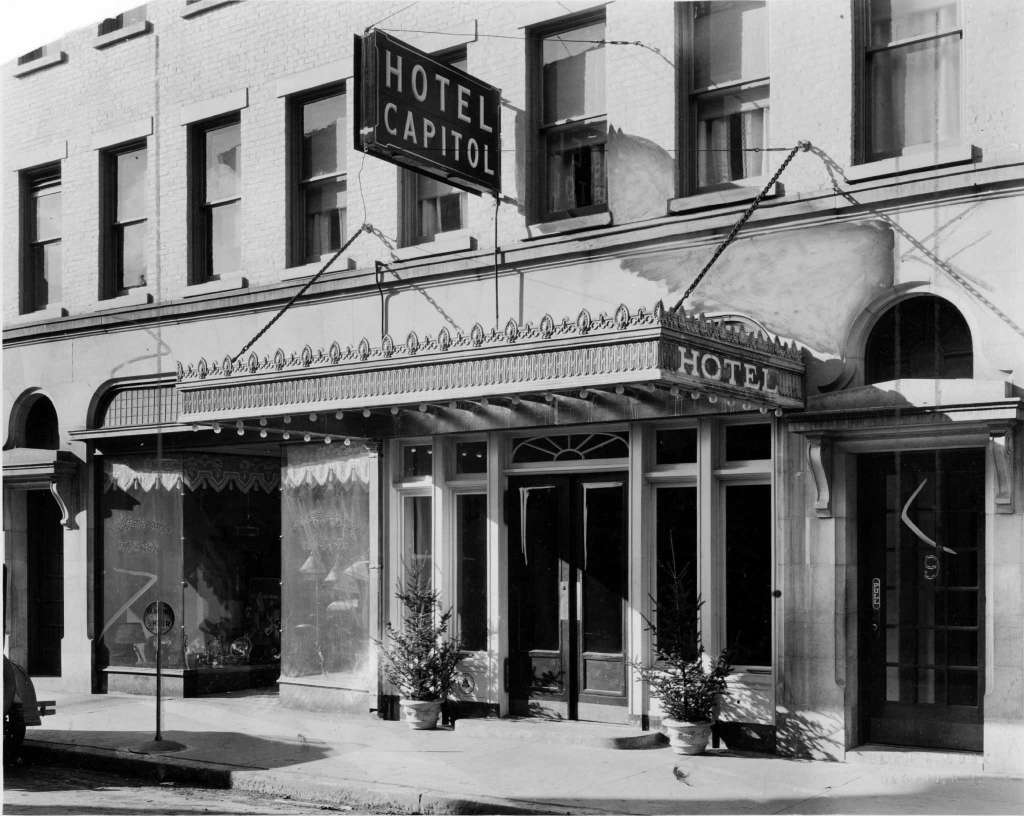
Our next stop was the Hotel Capital. It wasn’t the nicest joint in the city, but it was the best I could afford at that moment. I paid for a room. He checked in, and we went upstairs. Riding the elevator, he chortled and told me he wasn’t accustomed to sleeping indoors or having a hot shower. My thought was he’d probably put up with that enough for a lifetime when he was in France.
* * *
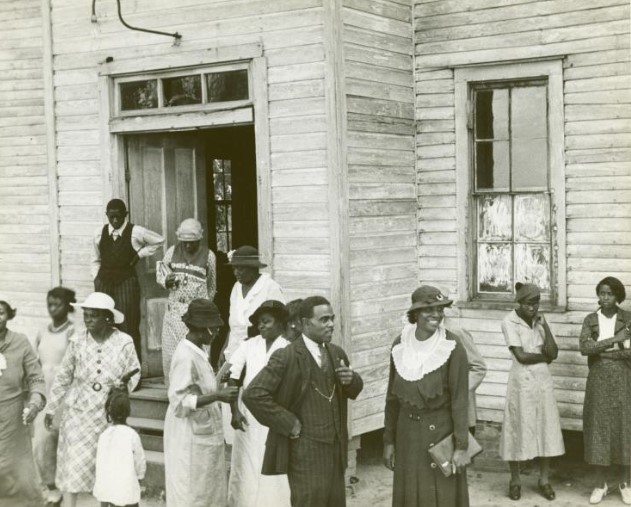
Early the next morning, I found him waiting at the hotel’s entrance, as we agreed, looking like a shiny new silver dollar. We motored to Shiloh Baptist Church. Viola Turner, her father, and her son happened to be standing out front, chinning with other folks. When I pulled to the curb, the group she stood with stopped talking and eyeballed my boiler. Fordham climbed out, unrecognized by the small crowd. As he limped in their direction, Viola let out a yelp and ran to him. Many in the congregation joined her, including Reverend Tegler, clearly distinguishable by his clerical collar. They stepped to Bellows, hugged him, and shook his hand. Viola spied me sitting in the LaSalle and watching. She rushed to the passenger door.
As he limped in their direction, Viola let out a yelp and ran to him.
With a huge smile, she greeted me and asked, “How did this happen?”
“It took a little work.”
“You’re wonderful, Gil!” she gushed.
“Hey, most of the credit goes to Detective Ed Delacroix at the police department.” As we spoke, Amos walked over to my car, reached in, and shook my hand.
“I think you’re being modest,” Viola insisted.
“Who me? Never!” I laughed.
“Can I come by your office tomorrow and settle up for your work?”
“There’s no need. No charge for the little I did. Besides, the city police and I are still indebted to you for your assistance in the Yarbrough murder case.”
“Now, Gil, there has to be some money owed you.”
“Tell you what. Whatever you think I’m due, put it in the offering plate. Or give it to Fordham to help him get on his feet.”
She smiled and waved her hand toward the church. “Well, at least come in and join us for the service.”
“I can’t, Viola. I’ve got to meet someone on a case,” I lied. This day was about a fresh start, hopefully, for Fordham Bellows. I didn’t need to be a part of that celebration.
“You sure?”
“Yes. Let’s don’t wait so long to get in touch next time.” She nodded. “Gotta go. Take care.”
“God bless you, Gil Tanner!” she exclaimed, as I pulled away.
Driving to my apartment, I once again contemplated life in this cockeyed world. And I said a brief prayer for all the veterans who felt forgotten after all the sacrifices they’d made for our country. ©