
My first realization when coming to consciousness that morning was someone whispering my name and shaking me gently. It was Claudette Colbert waking me with a kiss and a hot cup of coffee. But rising from the depths of sleep to mere somnolence, as the eggheads liked to call it, I tried to open my eyes. As I did, her voice got deeper, the shaking became harder, and the face took on a less attractive form. Finally, I was looking up into the puss of Detective Sergeant Robert Waddell, bent over the bed. Well, at least I was in my bed.
It was Claudette Colbert waking me with a kiss and a hot cup of coffee.
Then I remembered the night before. I’d started recalling a dead client, a gentle widow who’d come to me for answers and for protection. I’d found the former, but too late to help her understand why someone was trying to kill her. In the latter quest, I’d failed her completely. The recollection of it caused me to go into a major funk. I’d tried to drink the memory away. It hadn’t worked. It probably never will.
Rob straightened. “Get up, Gil. We were meeting for breakfast. Remember?” I started to speak, but the detective went on, “Never mind. Pin your diapers on and let’s get outta here. There’s been another one.” My buddy from the city police department didn’t have to say anything more. I knew what he meant. I sat up and swung my feet down to the cool wood floor. As I sat on the edge of the bed, he grabbed my cigarettes from a chair and tossed them to me. Dropping into the seat, he added, “You look like a condemned building, Gil.”
“Thanks. I love you, too.” I rubbed my stubbled face with both hands, trying to clear the cobwebs in my head.
“If you cut yourself shaving bad enough, your eyes might clear up.” Waddell spoke fluent sarcasm. He leaned forward in the chair, resting his elbows on his thighs, spinning the fedora in his hands, and asked, “When’s the last time you ate?”
I looked at him through bleary eyes. “What day is it?”
“C’mon,” he blew air. “Let’s get something in your belly to help soak up the hooch you’ve been living on. Then we have work to do.” When I started pulling on my pants, Waddell reached out and grabbed my arm. “Whaddya doing, Gil?”
“Getting dressed. What else?”
“Oh, no! You’re not going out to my crime scene looking like an unmade bed. Get a shower and a shave. Put on a clean shirt. We’ve got a little time. The guy won’t be any less dead when we get there. Besides, I’m pushing against departmental policy, letting you tag along. The least you can do is look as though you’re a model citizen.”
My head hurt like hell but was slowly clearing. “You want a model citizen, huh?” I chuckled. “Well, my old man used to tell me a model is just a small replica of the real thing.”
“However you want to think of it, Gil, get cleaned up and let’s go.”
* * *
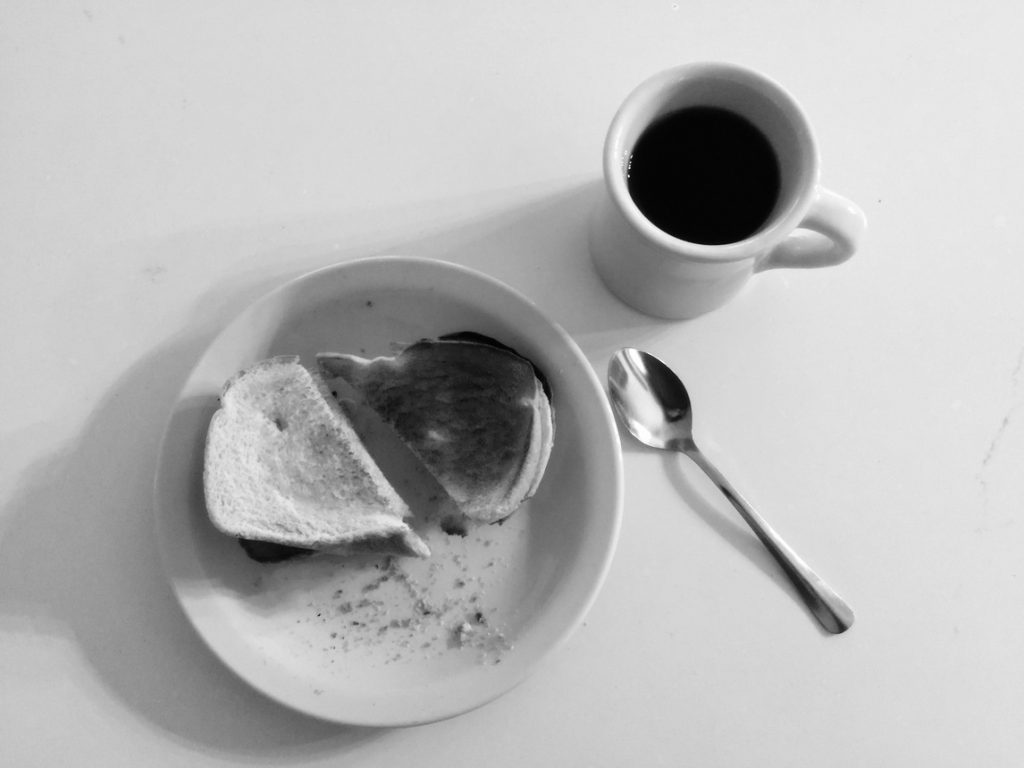
I managed to get down a few quick cups of java and dry toast at The Wayside Café. My stomach was in no mood for any other solid food, despite my friend’s insistence. As I did, Waddell told me a beat cop had been crossing a weed-infested vacant lot when he found the corpse we were going to see. When he’d called it in to headquarters, the officer reported the dead guy had been strangled, the same as the previous two.
Now, understand our city was not like Chicago of the last fifteen or so years. While home to two mob organizations, who could and would resort to violence when they felt the need, their “flare-ups” were only against each other and never endangered “civilians.” They didn’t randomly fire submachine guns on a busy street to hit an adversarial target, the way Capone, O’Banion, Moran, and their goons had. Sure, we had our robbers, pickpockets, and can houses, but not the wholesale murders some big cities experienced.
However, we’d had two, now possibly three murders in a short time, all of which seemed to have the same modus operandi, as my copper pal would term it. And neither of the first two had any links to our mobs. It concerned Waddell greatly we might have a deranged killer stalking the streets. He was working overtime trying to come up with a connection between the murder victims. So far, he’d found no common thread.
…we’d had two, now possibly three murders in a short time, all of which seemed to have the same modus operandi….
* * *
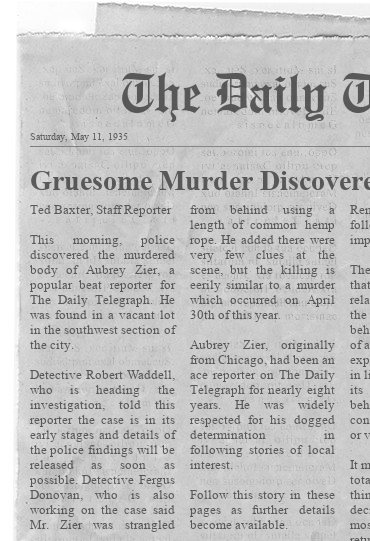
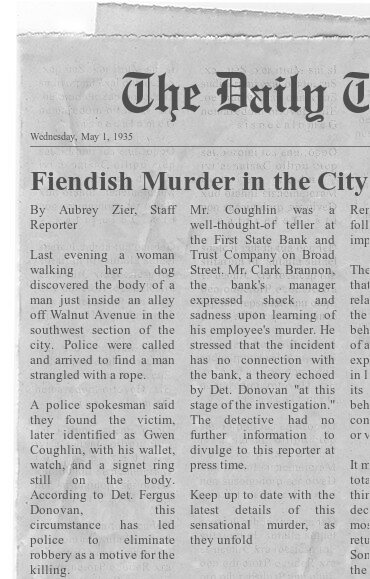
I’d known the second victim, a diminutive newshound named Aubrey Zier. The irony was Zier, a police-beat reporter, had written the newspaper account of the first murder. Then, a short time later, he fell prey to the same killer. Okay, the person or persons committed his murder in the same way with a hemp rope from behind. Because I’d handled a matter for Zier several years before and knew something of his private life, I thought I might have an angle for the homicides. I happened to be in Rob’s office when the call on Aubrey’s killing came in. I tagged along, not knowing who or what we’d find at the scene.
When I told the detectives who he was before they discovered his billfold and identification, Gus Donovan, Waddell’s partner, blurted out, “This is just great! The boys in the press are gonna put some real pressure on us to solve this thing! And now!”
“Well, don’t go all choked up over the guy’s death, Gus,” Waddell said sharply.
Afterward, I’d stupidly made a comment hinting I might know something to help his investigation. Despite Detective Waddell’s persistence, I wouldn’t spill the dope, because I didn’t want to harm anyone’s reputation by speaking too soon.
* * *
“When are you going to give me the lowdown on your theory of these murders, Gil?” We were climbing into the department’s Ford Waddell drove. My eyes crawled in his direction, but I said nothing. “Listen, I could take you into custody as a material witness. Don’t make me do it,” he threatened, as he cranked the crate’s flathead V-8 to life. The powerful roar of his newer machine’s engine always impressed me when compared to my 1930 LaSalle.
“You listen, Rob. When I think there’s good reason to believe I may have something for you, you’ll get it. When you do, you’ll understand why I waited to spill it to you.”
He shook his head in aggravation and shifted into gear. “I oughta toss you out on your ear!”
“Maybe you should, but you don’t want to waste a chance for a lead on this case. And you know it.”
* * *
A short time later, we pulled to the curb on Walton Street, which ran through an older, middle-class residential neighborhood in the town’s southwest section. The coroner’s meat wagon was parked nearby. Two of his guys in white coats stood a short distance from a small group of men in suits. The suits clustered in a vacant corner lot. Standing among those men was my brother Marty, a uniformed officer on the city’s payroll. Although this was the area of his regular beat, I hadn’t expected to see him here.
As we neared the gathering, the all-too-familiar figure of Detective Donovan detached himself from the group and approached my companion. “Mornin’, Rob.” As usual, Waddell’s partner ignored my presence. We had issues. “Patrolman Tanner there found this lug an hour or so ago. The stiff was choked to death, just as the first two. Same as before, the killer used hemp rope you could buy at any hardware store or farm supply joint.
“… the killer used hemp rope you could buy at any hardware store or farm supply joint.”
“We still don’t have any identification on him. He didn’t have any money on him, but maybe he was just on the nut.” Gus turned and we walked toward the corpse as he explained. “He wasn’t a bum, though. Okay-looking togs on him. And, as in the other two, there’s nothin’ else here of any evidentiary value.” They’d found the earlier victims with cash and jewelry on them, so the cops had quickly abandoned robbery as a motive.
When we reached the dead man, what I saw stunned me. He was a hefty mug whose muscular body had sagged over recent years. “I know … knew this guy.” All eyes turned toward me. I flipped my half-smoked Chesterfield away and stepped closer to the body.
“Careful, shamus. Knowin’ at least two of the dead mugs is settin’ yourself up as the killer. Now we’ve got you in the frame.” Donovan growled.
“Easy. You’re starting to make noises like a detective,” I replied sarcastically.
“There’s your link, Rob,” the stout Gus added. Marty grunted disparagingly. Donovan shot my brother a hard glare.
Rob ignored his partner’s comment. “Now that you mention it, Gil, he looks familiar. But I can’t figure out where from or put a name to the face. Who is he, Gil? How do you know this one?”
“He was a former second-rate prizefighter. His name was Crusher Caston.” I glanced at Waddell, who nodded knowingly. “Well, that’s the name he fought under. I’m not aware of his real first name. The optimism of whoever gave him the moniker didn’t pan out during his career.” I studied the contorted face for a second. His open eyes stared skyward, seeing nothing. His bloated tongue protruded slightly from a silent mouth just above the rope, which had been forced deep into his thick neck. As strangulation victims often do, the man had soiled himself.
“He had a good right hand, but was slow on his feet,” I added. “I saw him lose a preliminary bout to Tiger McPherson back in ’31. In Caston’s situation, it was retire young or die early. He retired early. I used to see him bumming around occasionally at O’Malley’s Gym over on Orchard Street. But I haven’t seen him in a while. Anyway, somebody there may be able to tell you his true first name.” I shook my head, “Too bad.”
“Yeah!” Waddell said. “I remember him now!” He paused. “Yeah, too bad,” he said absentmindedly. The detective suddenly turned to look at me. “What the hell you doing at a dump like O’Malley’s?”
I merely smiled. “You know my passion for the fight game, Rob. The joint’s a once-in-a-while fix for me. It only seems like a dump to the untrained eye. A lot of good, up-and-coming kids train there.” My pal didn’t need to know I kept a tamper-proof locker there. Some things were better kept from the bulls, even a friend such as the detective sergeant.
While the coppers assessed the crime scene, I re-examined my theory of the motive for the murders. Crusher being a victim set it on a different level than when it was only the first victim who I didn’t know, and Zier, who I did. I couldn’t shake the image of the smallish newshawk splayed out in death. An extremely violent death.
“… put up a hell of a fight from the looks of it.” Marty was giving his assessment to the detectives, indicating the ground surrounding the corpse.
“Yeah, but this crowd has trampled the hell out of the weeds around the body,” Donovan corrected, condescendingly.
“But I’m not talking about just the weeds, detective,” my brother explained. “See the churned-up dirt around Caston’s feet. He was fighting for his life and the ground shows the results of his struggles. If the murderer had to fight as hard to control him, there’s probably disturbed earth beneath the body, too, since they attacked from behind.” The man’s arms, splayed out to his sides as they were, struck me. I might have thought, if he were struggling as the evidence suggested and surely he would have been, his hands should be at his neck, clutching at the rope.
“Uh, yeah, right. That’s what I was thinkin’,” the rotund detective muttered. He took off his hat, ran a forefinger around the inside of the damp sweatband. The big copper then wiped beads from his glistening forehead and the bald spot at the top of his crown before returning the fedora to his prominent head. “I was gonna suggest we roll him over,” he offered, reaching for Caston’s body.
Waddell stopped him. “Wait, Gus. First, let the photog boys get the last of their pictures.” The photographers, one from the department and one from a local broadsheet, lugging his Speed Graphic, took their cue and moved in to finish the job. They snapped a couple more when they rolled the stiff over. As Marty had predicted, the soil under the body had also been stirred up. Waddell bent over the body and studied the ground where Crusher had laid. “What’d the cutter say about the time of death?”
The stout detective referred to his notepad. “The best he could estimate at this point was death occurred around four or five hours ago, Rob. He said he may be able to narrow it down after the autopsy.” Then Detective Donovan looked up and scanned the brownstones, apartment buildings, and boarding houses surrounding the vacant lot. “Well, somebody’s got to have heard or seen somethin’.”
Marty piped up, “Not necessarily so, detective. After walking this beat for several years, I know the neighborhood and the people fairly well. They’re good folks, but they keep themselves to themselves pretty much. And I can tell you they’re buttoned up in their homes at night. We can canvass the nearby buildings but don’t count on a lot of information.”
“Well, we’ll give it a try anyway,” Waddell pressed. “Get some other uniforms and organize the canvassing, Marty. Report to me what you find.”
“Sure, sergeant. Will do.” Marty moved away and spoke with several other uniformed officers standing at the street. From there, they separated and moved off in various directions.
Waddell turned to the other detective. “In the meantime, let’s see what we can learn about this guy. Find out where he lived. Was it around here somewhere? If not, what was he doing in this part of town? Was he meeting someone? If so, who? Was he involved with any particular woman? Maybe we’ll stumble over something linking these three victims together.” As his partner moved to his automobile, followed by a news ferret from the same rag as the photographer, digging for a newsworthy quote, Waddell eased over to me. “Oh, Gus,” he called to his partner in an afterthought, “tell the coroner’s boys they can have the body now.” In a low voice, he said to me, “This looks to be the work of the same killer as the first two. Are you ready to tell me your theory on the motivation for these murders yet, Gil?”
“Maybe we’ll stumble over something linking these three victims together.”
“Or it could be a copycat,” I suggested. I glanced back at the man’s body. “No, Rob. Actually, Caston’s murder just blew a hole in my theory. Forget it. It doesn’t add up anymore.”
“Care to share it with me, anyway?”
“Nah. It was only a Chinese angle that didn’t pan out. I was wrong, Rob. Forget it. I’m still interested in the case, though, if only for Zier’s sake. Can you keep me in the know?”
“Sure, buddy.” He turned and started for his automobile with me beside him. “Well, one thing’s for certain. Crusher may have been out of the fight game, but he still looked strong as an ox. It’s for damned sure a woman or a small fella didn’t kill him.”
“Unless the boxer was drunk.”
“Yeah. Right. I’ll have the cutter check his blood for alcohol.” He called out the need to the men from the coroner’s department. They acknowledged his request with waves and nods.
As we pulled away from the curb in Waddell’s heap, the city morgue men were loading the corpse into the back of their wagon. On the ride back toward my place, we grabbed lunch at Cappacino’s Restaurant. My system was overcoming the effects of the alcohol from the previous night. My appetite was back.

* * *
Another murder with the same M. O. occurred a little over a week later. Unfortunately, I was out of town, running down a bail jumper for a bondsman buddy of mine. So I missed the excitement. It was late at night when I got back to town and found a note Detective Waddell had slipped under my office door. In it he asked me to come by and see him when I returned.
The next morning, at police headquarters, the front-desk sergeant called the detectives’ division to locate Waddell for me. When he pegged the receiver, he told me they’d called the detective out, but he was on his way back. I grabbed a seat on a bench against the wall and waited. While I cooled my heels, Marty came through the lobby on his way home after his patrol shift. My brother quickly told me there’d been a recent development in the Caston murder investigation but said Waddell could fill me in on it. He was eager to get home to help Donna, who was nursing their seven-month-old sick child, Tommy.
… there’d been a recent development in the Caston murder investigation….
A few minutes later, a haggard-looking Waddell came through the front door. The smile he gave when he saw me was world-weary, at best. We exchanged brief greetings, after which he invited to his office. As we moved along the corridor, I asked him about the new development Marty had mentioned. He explained a witness had come forward. The guy had seen Caston talking with a man the evening before they located his body. The place the witness had seen them was not far from the crime scene. He added the canvass of the area where they’d discovered the fighter produced no results.
When we reached the detective’s office, I saw a large street map of our metropolis pinned to a wall. A big red circle encompassed a section of the west side of the city. Walking to the wall, while Rob settled behind his desk, I studied the marked off area briefly. Besides the middle-class neighborhood where Marty found the body, the circle included a more run-down section of town where the residential streets gave way to the edge of the business district. Small flag pins, the kind the military used, were pushed in at the locations where they’d discovered each of the four strangled victims. After a second or so, Waddell joined me at the plat.
“We found the victims within this seven-block radius of each other.” He thumped the delineated streets hard with a knuckle. “It has to mean something. There has to be something within this circle which connects the victims. Not all of them lived there. None of them knew each other as far as we can learn. They had different kinds of jobs. Well, except for the boxer, that is. He sort of bummed around, as you said. By the way, the coroner said Caston didn’t have any alcohol in his blood.
“Anyway, the first victim was a teller at a bank nearby, the second was a newspaper reporter from downtown, and the last one worked at Western Union downtown. The bank teller had been married but was divorced. His ex-wife was a dead end. The other three were unmarried.” He shook his head and searched the map. Waddell inhaled deeply and let part of it out audibly. His eyes ran across circled area. “Possibly the killer lives or works somewhere in there. But where? And how does he pick a target? Or are they merely targets of opportunity for a demented mind?”
“Possibly the killer lives or works somewhere in there. But where? And how does he pick a target?”
With that he returned to his desk, plopped wearily into his chair, and set fire to a fag. “Of course, the mayor’s office is catching shit from the press–just as Gus predicted–because one of their own was a victim. In turn, city hall is raising hell with the department over these murders being unsolved.” Rob scoffed, “That’s where I was coming from a few minutes ago. I’ve had my ass chewed so much in the last month I got nothing to sit on.” He grabbed a pencil from his desk and threw it against the far wall in frustration. “And we can’t seem to get anywhere!”
I picked the pencil up and eased into the chair across from him. Tossing the thing back onto his desk, I suggested, “No gambling debts involved?” Rob waggled his head. “How about women? Any possible jealousies?” Same response.
He leaned across the desk. “Listen, Gil, I’ve covered his thing from every angle possible. Nothing adds up. Nothing. He doesn’t deal death from the end of a gun or the point of a knife, which might leave evidence we can trace. No. He uses a common rope anyone can buy in dozens of joints.” My friend’s voice was rife with hopelessness.
In an effort to lighten my friend’s mood, I asked, “What about this witness?”
“Oh, yeah. We may have caught something of a break. A mug walking home from his job at the waterworks saw Caston and this other guy talking the night before Marty found his body. The waterworks fella came in this morning. He didn’t put the story of the murder together with what he’d seen until one of his buddies at work connected the dots for him. He gave us a pretty good description of the other man. A tall man, he told us, with gray or white hair, wearing a suit.
Your brother put us onto who the other man probably was. Name’s McBroom. He’s a preacher who runs the Union Mission on the west side of town. The joint doubles as a soup kitchen. I understand from Marty that McBroom’s always out on the street talking to bums.” He raised a cautionary hand, staving off my objection concerning his characterization of Zier and the ex-boxer. “Or those he thinks to be bums, trying to spread the message of God to the aimless heathens.”
“What did McBroom say?”
“Well, I just learned who he was and haven’t talked to him yet. But I’m hoping he can give me some idea of what Caston said to him that evening. Hopefully where the poor slob was going, whether he was going to meet anyone. That kind of thing.” Waddell stood. He’d seemed to have caught a second wind. “Want to tag along?”
“Sure.”
* * *
In time, Waddell pulled his crate to the side of Houston Street, across from the Union Mission. It was nearing lunchtime and a line of unfortunates was already formed for the free meal offered by the place. Things were generally better than they’d been in 1933, but the world was still bleak for a lot of folks.
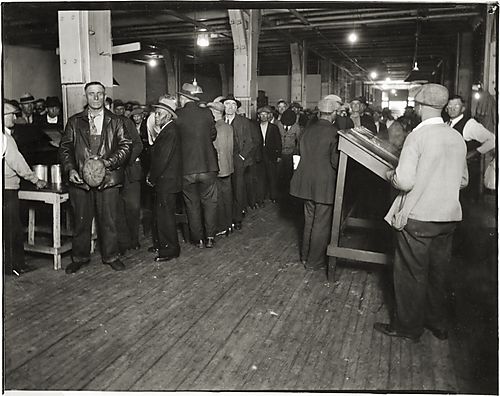
Inside, a fella in an apron directed us to Reverend Benjamin McBroom straightaway. He wasn’t hard to spot. Besides his dog collar, he stood a white-haired head taller than anyone around him. His grim, beady-eyed, sharp-nosed, weather-beaten face was how I would have expected a fire-and-brimstone minister to look. He was big, as well as tall. As we slalomed through the patrons and tables toward the pastor, he was finishing a scripture-quoting morality lesson to some poor ruffian who I could tell only wanted to sit and eat. “… ‘what has been will be again, what has been done will be done again; there is nothing new under the sun.’ This, too, is ‘chasing after the wind’.” McBroom moved his eyes skyward and returned them slowly to the man, placing an absolving hand on his shoulder.
The face of the man McBroom was talking to was as blank as a pie pan. It told me he didn’t understand what the parson was going on about. From what I’d heard, I could relate.
“Reverend McBroom?” Waddell began. When the preacher turned to us, my detective friend flashed his badge and continued, “I’m Detective Sergeant Waddell. I want to ask you a few questions.” At Waddell’s words and the sight of his buzzer, the recipient of McBroom’s sermonette crept away.
“Certainly, detective. Whatever I can do to help our men battling the evils of crime, I will surely do. Let’s go into my office,” he offered in a rich, mellifluous voice. As we made our way, we passed the food-serving area where McBroom boomed to the folks dishing up the meal, “Good job! Keep up the Lord’s work, children!”
In the cramped little office, McBroom sat in the chair behind his small desk. Because it was his show, Waddell took the only other chair in the space. The minister looked at me and apologized for the lack of room for a third chair. I told him to think nothing of it. I enjoyed standing. Rob shot me a look.
McBroom took no notice. “Well, what can I do for you gentlemen?”
“Reverend McBroom, I’ve learned you spoke to a man on a street near here on the evening of the twenty-third. He–”
“I speak with many men and women on the streets of our city, detective. My mission from God is to bring the lost into His fold and to reconcile their sins against the Almighty.”
Rob smiled patiently. “I understand, Reverend. In this circumstance, the man was murdered later that night or early the next morning.” McBroom gasped faintly. “I wanted to see whether you could recall your conversation, if you can remember anything he said which might help me find his killer. Why he was there, for example. If he was going to see anyone in the area.”
“As I said, I speak to so many people. Can you tell me more about the man in question?”
“His name was Hoyt Caston.” That moment was the first time I’d heard pug’s true given name. “He was a former prizefighter.”
“Oh, yes,” Pastor McBroom smiled. “Yes, I recall the man. He was among the most lost of those under God’s firmament. Poor soul. How did he die, detective? Murdered, you say?”
“Strangled.”
“‘For the Lord is a God of retribution; He will repay in full.’ Jeremiah,” he added as a clear afterthought in answer to our blank stares.
Waddell leaned forward slightly. “Retribution, pastor?”
“Only God knows what’s in a man’s heart, Detective Waddell. God and those He gifts with the sight. Anyway, I spoke to the man, uh, Mr. Caston, about renouncing his sin and turning his face to God. He didn’t seem to care for my concern and moved on. But the man said nothing while we spoke which might answer any of your questions.”
“Anyway, I spoke to the man, uh, Mr. Caston, about renouncing his sin and turning his face to God.”
“Had you ever seen him before that night? Was he alone when you spoke with him? Did you see him with anyone else that evening?”
“No, detective, I don’t believe I’d ever laid eyes on the man before. And he was quite alone when I spoke with him. When we finished our brief conversation, we parted company.”
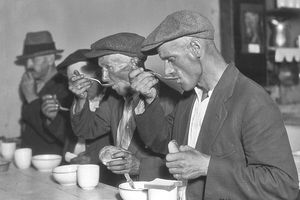
After glancing at his small notebook, Waddell stood and shook hands with the minister, thanking him for his time and help. He also asked him to contact the police if he thought of anything else regarding their conversation which might help the investigation. Then Reverend McBroom shook my hand. His grip was firm, strong. As we stepped back out into the dining hall, the preacher asked, “Would you gentlemen care to join us in our humble repast before you go?”
Having seen the dishwater-like swill being served with slices of bread, we graciously passed on the invitation.
* * *
Back at the station house, bad news awaited Detective Waddell. Kids playing in an abandoned warehouse had come across another body. The building was in the same section of the city where they’d discovered the other bodies. We climbed right back into the Ford. Rob threw his arm across the top of our seat, looked back, and reversed into the street. “Damn! These bodies are stacking up like cordwood,” he sighed heavily. “Another pin for my map.” We drove to the scene in silence.
Someone had strangled the man in the same manner as the previous victims. When the coppers had done what they could at the scene, we returned to headquarters. While the detectives worked to determine who the next of kin was for death notification, I meandered back to my office. The rent was coming due and my bank account balance was going down faster than the Lusitania.
Adhesive tape held a message to my office door. The note was from bail bondsman Murray Hertz, relating he had another runner for me to find. Opening the office door, I found two additional messages shoved under it. I had to think seriously about getting a secretary. The problem was, she’d probably expect to get paid for her services.
During a quick telephone call, Murray told me he wasn’t sure his client had even left town. The bail jumper had strong ties to a small group of yeggs operating in the city and was likely being hidden by them. He said he simply didn’t have the means to chase the lug down himself. I told Hertz I’d be by in an hour or so to get the information. Two other calls were to the potential clients who’d slid notes under the door. We set up appointments to discuss their cases.
* * *
At Hertz’s office, the bondsman gave me the dope on his client who’d pulled the big flit. His name was Lem Sutton. Murray also provided me with the names of several of Lem’s associates and the address of one of them. I knew something of Sutton and his crew, so I felt I could make quick work of this job, if he were still in the city.
* * *
I located the address Hertz had given me. Sutton’s crony had moved on when the rent came due. It took me several days to chase down the dive the yegg now called home. He was ensconced in a first-floor apartment at the rear of a building on Lexington Avenue. Don’t let the highbrow street name fool you. The place was a run-down dump. The windows of this particular residence had a breathtaking view of an alley and its prerequisite trash cans. That was good for me.
Sauntering into the front of the building casual like, I copied the number of the hall telephone located near the apartment door. The hallway was dimly lit. I strolled to a rear exit from the building at the end of the passage which opened into the backstreet. Outside, a single lightbulb over the door illuminated that part of the alley at night. If Sutton and his pals cooperated, I had a plan.
After dark enveloped the alleyway, I staked out the joint’s windows from across the way among a row of large overflowing garbage cans. Who said the life of a private investigator isn’t glamorous? Just like in the moving pictures.
Luck was with me. Eventually, Sutton’s mush floated past a window, chugging from a liquor bottle. It never occurred to these dopes to close their shades. After I saw my target, I counted on the presence of hooch to help my cause. Hustling to a telephone booth outside a druggist’s store at the end of the alley, I put a handkerchief over the mouthpiece, dropped my nickel into the slot, and dialed. After a dozen or so rings, someone answered the hall telephone. “Yeah?”
“I ain’t got time to talk,” I growled into the phone, “but get word to Sutton the coppers are on their way! They’ll be coming through the front door any second! He needs to cheese it!”
“Who is this?” the guy demanded.
“I’ve warned you!” I snarled before slamming the receiver back onto the cradle.
Sap in hand, I ran back to the building’s rear exit. I dragged a heavily ladened trash can across the alley, stood on the hinged side of the door, and waited. Sutton’s delayed reaction wasn’t too long in coming. The door flew open. I caught it before it hit me. Closing it hard and quick to slow anyone following him, I quickly stepped behind a winded Lem Sutton and applied my sap behind his right ear. The tap was enough to put his lights out for an hour or so. He dropped like a bag of laundry. As he did, I tilted the garbage can’s top edge under the doorknob and forced it into place.
I … applied my sap behind his right ear. The tap was enough to put his lights out for an hour or so. He dropped like a bag of laundry.
Swinging up and crushing the lightbulb with my sap to hamper his pals’ view of the alley, I grabbed my prey by his collar and hoisted him over my shoulder. Then I made my way to my LaSalle, parked on the street outside the alley in front of the drugstore. As I walked, I could hear shouts and chaos coming from the other side of the door, as the garbage can shifted but held firm.
I deposited Sutton in my bucket, trotted to the phone booth again, and called Hertz at home. When I told him the circumstances, he agreed to meet me at the city jail to deliver Sutton to the authorities. I reminded him to bring the rest of my fee. He chuckled and agreed.
After delivering the still-unconscious Sutton to his bondsman at the jail, I retreated to Harry’s Paradise Tavern for a well-earned nightcap. As I sat on my favorite barstool, a larger-than-usual crowd filled the place. The tavern’s owner had the radio behind the bar tuned into a variety program. Neither circumstance was the norm. I focused on giving my Jack Daniels its due. After a few minutes, the radio broadcast shifted to a ringside announcer. Harry turned up the volume. The gathered throng suddenly grew quiet. Then it hit me. It was June thirteenth, the night of the much-touted championship fight between the heavily favored heavyweight champion Max Baer and his challenger, James Braddock. I’d been so preoccupied with the job I’d forgotten the date. No one expected Braddock to last more than a couple of rounds. I’d laid a few bucks on Baer to win easily.
From the opening bell, the announcer reported Baer seemed to take his opponent lightly. Meanwhile, the Bulldog of Bergen spent much of his time doggedly dodging and blocking the champ’s punches, especially Baer’s much-touted right hand. The resolute challenger appeared to win round after round by sticking his jab sharply to Baer’s face.
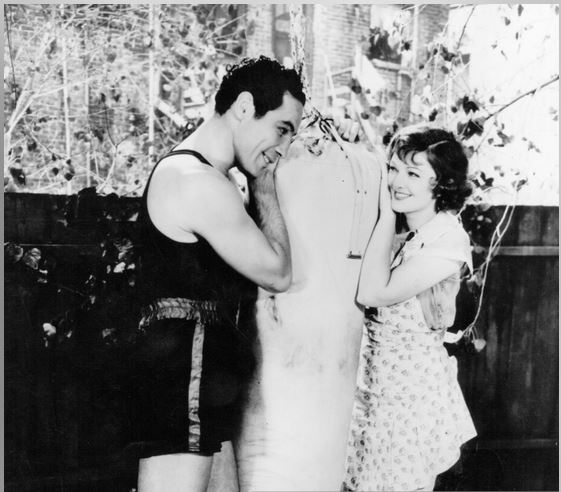
Throughout the bout, Braddock, renowned for his firm chin, weathered the storm. He was still going strong when the final bell sounded. In the end, Braddock won a unanimous decision and the heavyweight title. I reckoned Baer had spent too much time on a movie set and not enough time in the training ring. The announcer had noted, during the introductions, the now-dethroned champ had worn a robe, bearing the name “Steve Morgan,” into the ring. It was the same one he’d worn in the flicker, The Prizefighter and the Lady, which had come out two years earlier.
As the working-class patrons of Harry’s cheered their hero, my thoughts drifted back to an Irishman named Keegan I’d known a few years earlier. When we’d been discussing the fight game back then, I’d dismissed James Braddock as washed up after his disastrous loss to Tommy Loughran back in ’28. The sly Irishman had told me, “The lad still has a lot of fight left in him, my son. He’ll be back. Hide and watch.” Smiling, I wondered whether even “Keyhole” Keegan could have imagined this unlikely scene. Still grinning, I called it a day.
* * *
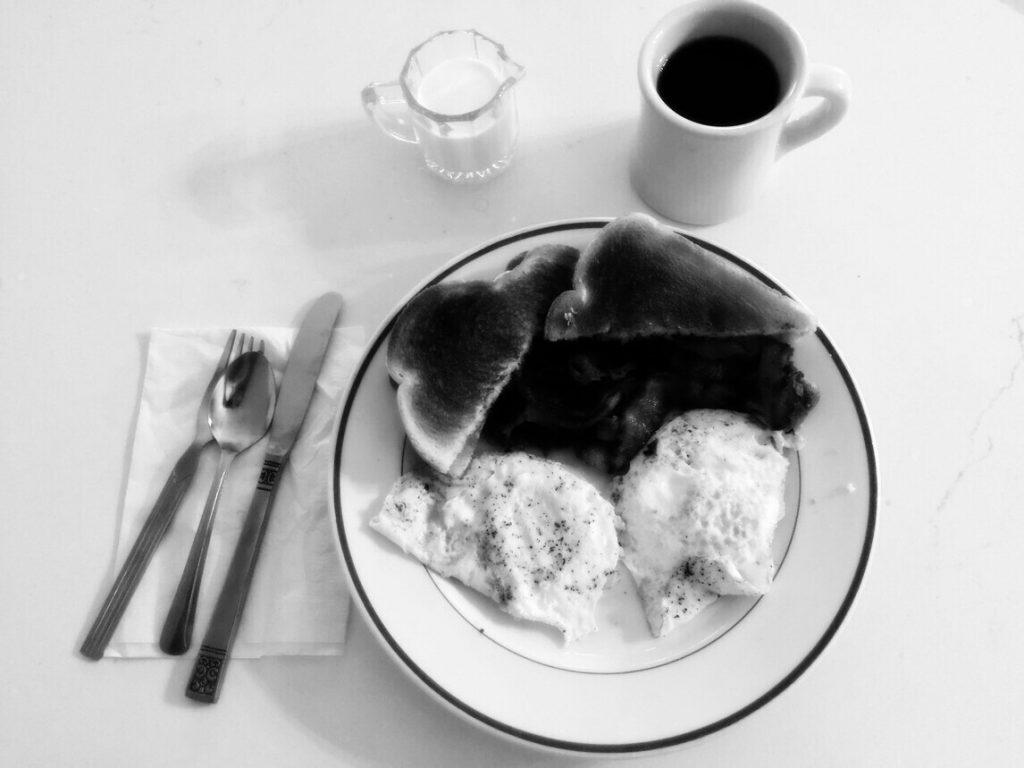
The next morning, I had the usual breakfast at The Wayside Café before moseying back to the office. I needed to check for any messages and to clear up my bookkeeping, such as it was. I had an afternoon meeting with a potential client who believed her husband was stepping out with one of his typing-pool ladies. She wanted, as she put it, “his sorry ass” followed. She hired me and gave me the details I’d need to start work. Finally, she paid for my first week’s work. The woman departed, confident she had the “bastard” where she wanted him.
Before I left the office, I called Marty and Donna’s place to check on them. Donna answered. She told me the baby had recovered from a severe cold and they were doing fine. We disconnected with a promise to get together at Cappacino’s Restaurant for supper sometime soon. Afterward, I went to my bank and deposited my new client’s retainer and the balance of Hertz’s payment, with a tidy sum left out for visits to Harry’s. A visit to Harry’s …? Nah, that could wait.
With time on my hands, I paid Detective Waddell a visit to catch up on the latest developments, if any, in the murder inquiries. My pal was pacing in his office. He’d spread what evidence there was from the five murders across his desk and a side table. The only new development, he told me, was he’d identified the last victim as one Cyril Kane, an employee of a flower shop on the edge of the business district. I grabbed a chair, lit a gasper, and offered one to Rob. He twirled the thing between his fingers, contemplating his case, then jabbed it into his mouth. After he set fire to it, I realized he already had one going in an ashtray on his desk. The abandoned cigarette was wisping a thin thread of smoke into the still air.
“Something,” he mumbled to himself. “Anything.”
“You need to go with me to Harry’s, Rob. If only for a little while. And just to clear your head for a bit.”
He stopped wandering for a second and gave me a hard look. Though he was looking at me, I know he didn’t see me. He still saw the five murdered men. I’d never seen Waddell so worked up over an investigation.
Around that time, Marty came in. “Here’s my report on the interview of the witness who saw Caston talking to Reverend McBroom.”
“Put it over there on the table, Marty,” Waddell said absentmindedly. “Thanks.”
My brother stepped to the table and gazed at the collection of what little evidence there was. He paused and started shifting some of the things around on the table. It caught the detective’s eye. “What’re you doing, officer? Those things are in a specific order.”
“Sorry, detective, but something came to mind as I looked at the crime-scene photographs. Something odd.”
The detective’s face lightened. “Odd” was apparently good in his mind. He turned and walked to the uniformed officer. “Go on, Marty. What is it?”
“Well, it’s probably only a coincidence,” he explained, “but, take a look at this group of photographs of the five murdered men. I mean, the way their bodies are positioned. It almost looks as if they’re laid out in semaphore.” The detective grunted in uncertainty. My brother continued, “You know the system of visual signaling using two flags, one in each hand.” Waddell was now nodding vigorously. My curiosity aroused, I joined the two men at the table. “We used the method to send signals between ships in the Coast Guard when we wanted to maintain radio silence or something like that. The army uses it in the field, too.”
“… the way their bodies are positioned. It almost looks as if they’re laid out in semaphore.”
“Yeah?” There was a hint of excitement in the detective’s tone.
“Well, this one–the newspaper reporter, right?” the cop asked, as Waddell’s head bobbed. “His arms and hands are to his right, at what I’d call nine o’clock and maybe eleven o’clock. It could be the letter ‘O’. This guy–”
“Caston. Yeah?”

“Well, his arms are spread to his left and right. Like seven or eight o’clock to his right and three o’clock to his left. That’s semaphore for the letter ‘M’. They kinda look staged, you know?”
“Are you sure about this, Marty? I mean the semaphore letters?” Waddell’s excitement was building.
“Well, they could be numbers, because the number signals are the same as for ‘A’, ‘B’, ‘C’ and so forth. But the number semaphores one through zero only go through ‘K,’ skipping ‘J’.” Marty held up a snap of one of the dead men. “And you already have an ‘O’ and an ‘M’. So, yes, absolutely, detective. I’m sure.”
“Okay.” Waddell shifted a photograph. “The Western Union worker is laid out the same as Zier, making another letter ‘O’. So we have ‘M-O-O’. What about the first victim, the bank teller?”
“He’s laid out with both arms to his right, at nine o’clock and seven or eight o’clock. It forms the letter ‘H’.”
“And the last guy,” the detective picked up the snap of Cyril Kane’s body. “What about him?”
“Well, the positioning of his arms would make the letter ‘S’.”
“Great! Now we have M-O-O-H-S. Or S-H-O-O-M.” After a second, Waddell exclaimed, “What the hell is that?”
Waddell was too excited to think clearly and put them in the proper order. Knowing what I knew of Aubrey Zier, I reached in and rearranged the photos.
“H-O-M-O-S?” Waddell asked blankly. Then it clicked. “H-O-M-O-S! As in homosexual?” My detective friend gave me a hard glance. “That can’t be right!”
“It would make sense, what with Zier’s murder.”
“Whaddya mean, Gil?” My words stunned the detective. “Was Aubrey Zier a–?”
“Let’s simply say I worked on an investigation for him once, which confirmed his penchants. Now you know why I hesitated to give you my theory of the case. People’s reputations were at stake. When Caston was murdered, I figured I had it all wrong.”
“Caston!” By this time, Rob was incredulous. “You mean to say the pug was a–?”
I smiled. “I’m saying he was a prizefighter, Rob. Nothing more.”
“Who the–”
“Rob, there’s been a shootin’ on the west side!” Gus Donovan had suddenly appeared at Waddell’s door. “The patrolman who called it in says it’s related to your murders!”
“A shooting? How the hell is that involved with a series of strangulations?”
Donovan shrugged. “I’m only passin’ the word, partner.”
Rob made a general hand gesture toward the evidence. “Can you handle it, Gus? I’m on the verge of–”
“Sorry, but Officer Lumpkin insists it’s connected to your murders. He’s got the shooter and the victim at the scene. He’s still on the blower, Rob, from a call box. What’ll I tell him?”
“Detective,” Marty put in, “for what it’s worth, I know Ronald Lumpkin fairly well. He’s a sharp officer.”
Waddell blew air. “Okay. Tell him we’re on our way.”
* * *
A few minutes later found us in the departmental Ford, speeding toward the west side of the city. Marty was in the front seat, reading the address aloud, as Waddell scared the hell out of the other motorists, weaving in and out of traffic at breakneck speed, and honking every other second. I was in the back seat, holding on for dear life. My brother’s stock went up in my mind. He held the page with the information on it in both hands and took the car’s swerves, shakes, stops, and starts in stride. He must’ve weathered some damned heavy storms on Coast Guard ships to ride so easily and be so calm. Darkness was falling, which made the trek that much more “exciting.”
When we reached our destination, the headlamps swept across Officer Lumpkin, who was on the sidewalk waving us down. The Ford screeched to a stop next to him. Waddell grabbed a flashlight and bailed out of the heap. We joined him.
“They’re in the alley over here, Detective Waddell,” Lumpkin explained, as he turned. “One’s been shot, and I don’t think he’s gonna make it. I called for an ambulance, anyway. The shooter’s pretty shaken up and crying. Here’s his gun.” Lumpkin handed something wrapped in a handkerchief to the detective.
Waddell unwrapped a small “bean shooter” such as a woman might carry in her purse. We made our way into the alley. The detective shone his light around. A smallish man sat crumpled against the wall on one side, blubbering like a baby. When Rob swung the flash to the other side, the beam caught the bleeding form of Reverend Benjamin McBroom. The light was bright enough to reveal a length of hemp clutched in his right hand.
Waddell and I kneeled beside the white-haired man, who rasped heavily with each breath. The detective shone the flashlight on the supine figure. “What was the meaning of this, McBroom?”
The dying preacher’s eyelids fluttered as he struggled to speak. “‘They parade their sin like Sodom; they do not hide it,’” he gasped. “‘Woe … woe to them! They have brought disaster upon themselves.’” McBroom coughed harshly. A pinkish froth coated his teeth as blood trickled from the corners of his mouth. “Cursed be the Sodomites!” We heard the rattle, a spent sigh, then silence. The killer had died.
We heard the rattle, a spent sigh, then silence.
When we stood, Waddell looked at me gravely and shook his head. “Well, he said his job was to ‘reconcile their wrongs against the Almighty’. I guess now we know what he thought their ‘wrongs’ were and what he meant by ‘reconciling’.” The lanky copper chuckled sourly and waggled his head once more. “The name Benjamin means ‘son of the right hand’ in Hebrew.” He again shone his light on the sobbing man. Pushing his hat far back on his widow’s peak, the detective looked to Lumpkin. “Who is this guy, officer?”
“I dunno, sir. He’s crying so hard I can’t get anything out of him.”
“Marty, you and Officer Lumpkin put him in the back seat of my car. One of you stay with him. And don’t try to talk to him. The other go to the call box and have the coroner’s boys sent here. Then come back and keep any rubberneckers outta the alley. We’ll wait here until the coroner arrives.” The two uniformed officers did as instructed. Waddell looked back at McBroom’s body. “Goes to show you don’t need a large-caliber gun to get the job done. Not if you use enough rounds. What a bloody mess. There’s blood everywhere. There’s even blood on his dog collar.”
I chuckled grimly, “In more ways than one.”
* * *
At headquarters, I accompanied Detective Waddell into an interrogation room to speak with the shooter. The detective finally got the small man to stop crying. The distraught fella identified himself as Leo Hickman, a shoe salesman at a local store.
“Just tell us what led up to the shooting tonight,” my detective pal said softly. Hickman hesitated. He cast his eyes downward. “Go on. We’re not here to judge,” Waddell added reassuringly, holding out a fresh deck of cigarettes with one extended from the package. When the shooter took one, Rob offered his lighter. The man’s hands were shaking too much to bring the gasper and the fire together. The detective took the lighter from him. “Here. Let me.” He snapped the lighter and held it to the end of the cigarette. Leo leaned into it carefully, dragged in a lungful of smoke, and let it out slowly. He looked at the burning end of his gasper as if it held an answer.
Finally, he spoke. “Well, I belong to a members-only, very private place called the Caravan Club. It’s on Walnut Avenue.” Walnut Avenue was on the west side of town, three blocks from where the shooting had taken place. I’d heard of the club, but knew nothing more than a few rumors concerning it.
“I know of the club. Go on,” Waddell encouraged.
The man understood no further explanation was necessary. “Well, no one there thought much about the first murder. I mean, we were sorry for George’s death, of course, but it didn’t set off any warning signals. Crap happens in a city this size. But then, when they killed Aubrey the same way, we became concerned. There was a lot of conjecture among the members.” He looked away before returning his pleading eyes to Waddell.
“It seems we’re always an easy target for some people.” The detective’s nodding silence spurred the man to carry on. “We knew each other, you see.” He gave me a sharp look, “But it’s not what you’re thinking.” I wasn’t sure what had caused this to be directed at me, but let it drift. Hickman paused before continuing, “Anyway, when Hoyt Caston was killed in the same manner, something of a panic set in among us.” Hickman’s eyes teared up.
Rob tried to hold off another of Hickman’s crying jags by pressing the man. “We understand. Is that what caused you to carry the gun?” The question seemed superfluous, but I knew what he was doing: keep the guy talking, not crying.
“I was frightened like the rest of my friends,” he said pitifully. “Word had gotten around in the ‘community’–not only the club–to be careful.” He put his face in his hands. “I bought the gun to scare an attacker,” he sobbed between his fingers. “Never intended to fire it.” After composing himself, the shoe salesman spread his hands on the table and looked down at them. “Personally, I have no taste for firearms, mind you, but this seemed to be a matter of life or death. A number of our members have armed themselves.” He paused with a shudder and looked at Waddell. The detective was still nodding his encouragement.
“Well, I left the club late this afternoon. As I walked along Walnut Avenue toward Market Street to catch the streetcar for home, I sensed someone was following me. To be certain, I made several turns I wouldn’t ordinarily make. The much bigger man mirrored my every move. I noticed he was wearing a clerical collar, but it didn’t ease my mind any. The clergy haven’t been particular friends of ours, you see.
“I tell you, I was scared to death by this time. I quickened my pace. He did likewise. As I approached the alley where you found us, the man came up behind me. He pushed me from the sidewalk into the alley, while trying to put something around my neck.” A pause and a sob were followed by, “I don’t know how it happened, how I did it. But somehow, I slipped under the man’s hands and turned toward him. Some way or another, the gun was in my hand and I shot him. I fired until the gun just clicked. There were no more bullets.”
Waddell reached across the table and took hold of Hickman’s upper arms. “Go home, Mr. Hickman. And tell your friends to put away their weapons. It’s over.”
“This time,” was all the little man could say before the tears started again.
While the shooter got his emotions settled, Waddell and I stepped out into the hall. My pal dug the package of cigarettes out of a pocket, shook one loose, and held the pack out. I was out of Chesterfields. I took one of his Camels and set fire to both.
“Whaddya think, Gil? Weird, uh? McBroom and using semaphore, I mean.”
I nodded. “Well, not to use too much technical psychological jargon, but I think the Right Reverend’s choo-choo went around the bend sometime back. Seriously, he probably wanted to make sure the world knew what these people were and the ‘punishment’ God, through him, had meted out. Thus, the semaphore.”
“God save us from his ilk,” my friend sighed. “But McBroom’s involvement pretty much explains everything. The Union Mission is smack in the middle of the seven-block area outlined on the street map in my office. And the Caravan Club is only a few blocks away from the Mission. McBroom must’ve somehow found out about the club and staked it out. Then he merely picked off a member every so often as they were leaving. Too bad the two buildings were so close to each other.”
“God save us from his ilk”
“Speaking of the Caravan Club, what’s the deal with it staying in operation, considering the laws on the books?” When the detective gave me a sharp, meaningful look, I threw up a hand and quickly added, “I mean I don’t care what consenting adults do behind closed doors. Not my dish, but, hey. I’m just surprised at the latitude a known place such as that gets from the coppers.”
“Between the two of us, Gil, it has some kind of political pull downtown which affords it special protection.”
“Hmm. Maybe somebody in city hall …?” I didn’t finish the thought. Waddell arched his eyebrows at the implication.
Before either of us could say another word, Marty approached. “Detective, I just laid the reports on the McBroom shooting from me and Officer Lumpkin on your desk.” He chuckled and added, “Lumpkin’s wife had their first baby around a half hour ago, so he’s not here right now. Let me know if you need anything else from either of us.”
“Sure thing. Thanks.” Waddell watched Marty walk away, but spoke to me, “By the way, your brother’s a pretty sharp cookie, Gil. He’ll probably make detective if he sticks around. You could learn a thing or two from him.” He turned to me with a big grin.
“I already have, thanks.”
From Gil Tanner’s case notes: Out of a random curiosity, Detective Waddell looked into Benjamin McBroom’s past to see whether there might be any clues for his actions. He learned McBroom was a former Army chaplain, who’d been discharged during the Great War owing to mental instability. Whatever religious organization he’d been affiliated with had defrocked him. As with many others during the Great Depression, McBroom had found a place where he wasn’t known and reinvented himself. Apparently, his form of madness had continued to progress until he was driven by a fanatical delusion to commit the murders. ©