
In November 1936, a job came my way, which required me to travel out west. Beyond the job itself, the trip showed me just how much more the bad times enveloping us had impacted the lives of my fellow citizens outside our city, my state.
* * *
It was just after three o’clock in the afternoon. I was reading follow-up newspaper article on the recent re-election of FDR when my office telephone rang. The ring sounded more impatient than the mug at the other end of the wire when I answered.
“Gilbert Tanner?” the metallic voice inquired with a tinge of a limey accent. “Of the Tanner Detective Agency?”
“Speaking.”
“Do you have a minute to speak with me?”
“It’s your nickel, bub.” In late November 1936, I needed work to support my habits, such as eating, drinking, and smoking, but my patience was not at its high-water mark at the moment. Understand I’m not the sentimental type, given to sob-sister crap. But the scars left by a dame named Agnes, who’d walked out on me a month or so earlier, were still healing. Slowly. Extremely slowly.
“I need to hire somebody to take care of a matter out of town. And I need a fellow who is trustworthy, discrete, and able to handle himself in tough situations. Someone gave me your name. But you sound as if you don’t need the jack, chum.” The tone had become somewhat hard. And it had lost its patient air. “Yes or no, Mr. Tanner?” he asked evenly.
I wanted to tell this jerk to go hire a boy scout, but bit my lower lip to collect myself instead. “Yeah. Yeah, I’m available. What’s the gig?”
“Do you have a problem traveling for a job, Tanner?”
“No, not at all. I–”
“Do you know the Riverside Supper Club?”
“Sure,” I assured the caller with a little white lie. I knew of the Riverside Supper Club, though I spent little time in smart joints like it. I was more a Harry’s Paradise Tavern sort of mug. “Who gave you–?”
“Be here tonight at ten o’clock. When you check your hat, ask the girl for Mr. Simon.”
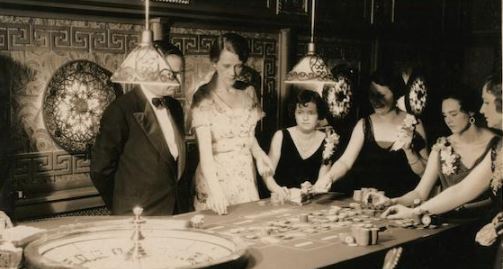
Before I could finish making a smart-assed response, I was talking to a dead line. I pegged the receiver, lit a Chesterfield, and sat back to contemplate the call. I’d never liked abrupt or unnecessarily rude clients and usually told them to go climb up their thumb. But, as I said, business was slow. So, I let it drift. The nightclub in question was a popular front for a high-classed gambling joint. The swells of our city showed up there in their glad rags and took in a sumptuous meal, maybe dance, before losing their poke at the gaming tables. That was the extent of my knowledge. I wasn’t sure who was behind the operation. Since gambling wasn’t legal in our state, they had to be greasing the palms of the local politicians to keep the law at bay and the roulette wheels spinning.
The nightclub in question was a popular front for a high-classed gambling joint.
* * *
As was my usual practice under such circumstances, I made my way to Malaprop’s Bookstore and its proprietor, Micah Kaplan. Micah was a keeper of local knowledge and lore which made the city historian envious. What my old pal didn’t know concerning our metropolis and its inhabitants wasn’t worth repeating. He was a good friend and a godsend to a guy in my line of work.
When I mentioned the Riverside Supper Club, Kaplan hung his head and exhaled audibly. Before I could ask the reason for his reaction, he shook it off and moved on. Regarding the nightclub, Micah knew the owner and operator to be an Englishman named Albert Wainthropp, known to those few who got close enough to him as Bertie. The story handed down was the man had made a fortune in England during the Great War. According to my friend, the same chin-wag had him somehow connected with Basil Zaharoff, the scurrilous munitions dealer.
When, in the fighting’s aftermath, authorities had looked more closely at wartime profiteering, things became too hot for him. The mug immigrated, first to Canada and then to the U. S. Supposedly, the Brit made a brief stopover in New York state, during which he was involved with the operation one of the Saratoga lake houses. That was until the New York mob arrived and moved him out. Eventually, he made his way to our city and opened the restaurant. Once he’d gotten comfortable with the lay of the land, he expanded his enterprise to include the “backroom” gambling operation. The book merchant warned me against taking the term “backroom” too literally. The place was strictly “top drawer.”
…the New York mob arrived and moved him out.
Micah explained Wainthropp, if such was his correct name, was not someone to trifle with. He was powerful, dangerous, and quick to anger. Kaplan added the man was extremely tightfisted. One last item my friend imparted to me was the rumor there was a connection among Wainthropp’s operation, our city’s north side mob, and Jack Dragna’s outfit in Los Angeles.
Before I thanked my friend and turned to leave, I gave him a meaningful look. He smiled feebly but said nothing. I held my gaze. Our long friendship finally overcame his obvious reluctance to speak. “My brother’s son, my nephew … Reuben ….” Micah muttered, making a helpless hand motion. Sol Kaplan, Micah’s brother, owned a well-respected men’s shirt manufacturing business in the city. My oracle pal continued, “In a moment of weakness, Reuben fell prey to the vice the casino provides. The shmegege now has a gambling debt to the ganef he may never be able to repay.”
He raised his face to me with emotion I’d never seen in him. His eyes swam. “My brother Solomon, a fiercely religious man, has turned his back on his only son. Reuben worked for his father. Now Solomon’s discharged the young man. He’s refused to help repay Reuben’s debt. And he steadfastly refuses to let me help him.” He put a hand to each cheek and waggled his head. “And the vigorish alone … oy.” I put what I hoped was a comforting hand on Micah’s shoulder. Again, the old man smiled weakly. Ever ready to impart some Yiddish wisdom, he sighed, “Az men git dem tayvl a hor, vil er di gantse bord.”
* * *
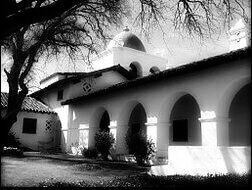
A little before ten o’clock that night, I followed Belair Road out of town before turning north onto Blairsville Highway. The Riverside Supper Club sat at the crest of a hill west of town where the road paralleled the river. The joint was one of those low, rambling, vaguely Spanish-looking affairs that had become the rage after the popularity of The Mark of Zorro, Douglas Fairbank’s vehicle of a decade and a half before. Despite its architecture, which looked out of place in our neck of the woods, its menu offered strictly American cuisine. But the exotic-appearing thing made it even a bigger draw for the suckers who flocked there. And it had plenty of parking for the chumps.
I passed on the valet parking and eased my LaSalle in among the other newer, more expensive heaps. I tucked my gat and shoulder holster under the front seat. As I walked up the path to the front door, I took in the river’s view from the club’s perch on the bluff above it. The city’s lights twinkled in the distance like an enormous Christmas tree. Unfortunately, with the economy the way it was at the moment, folks were more likely to find coal in their stockings than presents this year.
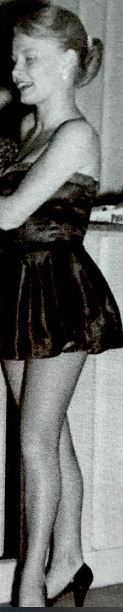
A bubbly young doll greeted me at the hatcheck counter. She wore a short, skimpy off-the-shoulder outfit which complimented her gorgeous figure and showed off great gams. The frail had a smile that could make a freight train take a dirt road. When the girl handed me the ticket for my hat, I told her I needed to see Mr. Simon. At the mention of the name, her eyes flinched as if she’d been slapped hard. Some of her perkiness faded, but she forced a smile and asked me to wait there. She moved to a telephone at the end of the counter and made a quiet call.
The frail had a smile that could make a freight train take a dirt road.
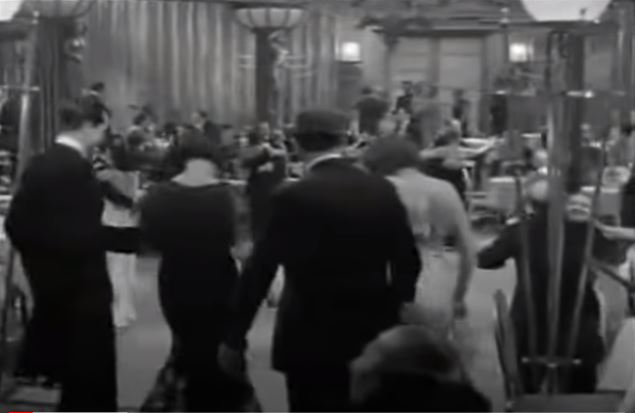
Trying to shake off her reaction to my words, I turned to take in the place. Through a large opening between the lobby and the club’s dining and dancing area, I could see revelers making merry at the tables. More than a few were moving around the dance floor to the house orchestra’s fox-trot rendition of Sometimes I’m Happy. When the hatcheck girl returned, she told me Mr. Simon would be right out. She quietly returned to her routine while I watched the marks gleefully make their way through a door from the main room to what I suspected was the gambling part of the building.
After a short time, from the corner of my eye, I saw a mug come through a door at the rear of the lobby. He walked to the girl. She became sullen at his approach. The man reached across the counter and grabbed her wrist hard as he spoke quietly for a second. Her face twisted in pain and fear. He sneered. She averted her eyes. I’ve never cared much for bullies, especially the kind who push twists around. Without a valid reason, that is. This scene made me angry, but I held the storm at bay. Quickly yet nonchalantly, I moved to his side.
“You Simon?”
He pushed the girl’s arm away and squared up to me. She moved along the counter hastily, rubbing her offended wrist. The goon was a few inches shorter than me but muscle-bound wide, built as solid as a blockhouse. The guy had no neck. He had a face like a mud fence. “Who’s askin’?”
I handed him a business card. “The name’s Tanner. I was told to be here at ten and to ask for Simon. Well, I’m here and now I’m asking, are you Simon?”
Glancing at the card, he muttered, “Yeah, buster. Yeah, that’s me. C’mon.” Shooting a nasty glance at the girl and tossing my card on the counter, he turned as he spoke and moved to the door he’d come through a minute before.
I looked back at the young woman and tried to give her a reassuring smile and nod. “Keep that close, in case you need it,” I half mouthed, half whispered to her, jutting my chin toward the business card. It brought no reaction.
When I’d followed Simon through the door and it had closed behind me, he stopped suddenly, turned, and put a solid hand on my chest. “Hold it, pally. I need to check you over before you talk to the boss.”
Obligingly holding my arms out to the side, Simon started frisking me for weapons. As he did, I looked around the large office. A distinguished-looking man sat behind a desk of blond wood. I didn’t recognize him. His elbows were resting comfortably on its surface with his fingers steepled in front of his mouth. He watched and said nothing. They’d decorated the place in the Style Moderne fashion, which had been the rage for the last decade. Tasteful, I thought, but nothing special.
A second stoic lug sat on a nearby divan. Him I recognized. He was a lip whose picture had been in the newspapers a time or two.

I’ve never liked having hands put on me, even when it was a logical turn of events, such as this. An alienist might say it went back to the physical abuse my brother and I suffered at the hands of our old man. When Simon, kneeling in front of me, moved his clumsy hands up the inside of my thighs a little too close to my crotch, I pushed him down. He landed hard on his ass. “Easy, fella,” I warned him. “I already got a steady girl.”
I’ve never liked having hands put on me, even when it was a logical turn of events, such as this.
The big man came off the floor angrily. His chest prodded mine. His beezer was as close to mine as the height difference allowed. “Keep it up, buster, and I’m gonna break you into pieces and sell you for parts!” he growled.
“Oh, please, stop,” I whined sarcastically. “You’re making my palms all sweaty.”
“Enough, Simon,” the man behind the desk broke his silence calmly. “Take some air. I’ll call you if I need you.”
Simon’s enraged face held firm. “I’ll be seein’ you around, Mac!” He stabbed a meaty forefinger into my chest. I slapped his hand away.
Before he could react, the man seated at the desk shouted, “I said enough, Simon!” Calming himself, he finished, “Now get out.” Until that second, the man had impressed me as the kind who got what he wanted without having to raise his voice.
The bully moved away reluctantly. He glared back at me as he strode to the door. The remaining men eyed me carefully as I made my way to join the shyster on the sofa. I nodded toward the door closing behind Simon. “You need to feed him more often.” I chuckled, “I’m surprised he’s housebroken.” I took a seat at the opposite end from the attorney.
“Simon has his uses” was what came to me in the way of a flat reply from my host. His eyes caught mine. He was measuring me. I gauged him as a display of pomp and menace. He lived well on the proceeds of various nefarious and mysterious schemes. “Have a drink?” He swung his chair around to the setups on the cellarette behind him.
“Don’t mind if I do.”
“Call it.”
“Got any unclaimed Jack Daniels?”
Wainthropp nodded. “Ice, water or soda?”
“No, thanks. On its own.”
He moved the few steps to a cellarette, poured me a drink, and freshened his. The lip waved off the suggestion of another. “Have you ever been to my place?” he asked, handing me the glass and returning to his chair.
“Can’t say that I have,” I smiled. “My gambling interests tend toward the ponies, baseball, and the prizefights.” Bertie shot me a sour look. Pulling a pack from my pocket, I set fire to a fag. I pulled the ashtray on the table next to me closer and dropped the match into it. Enough small talk. “You said you wanted to hire me for a job out of town?”
“My gambling interests tend toward the ponies, baseball, and the prizefights.” Bertie shot me a sour look.
“Yes, Mr. Tanner, I do. I need someone, who is trustworthy and dependable, to deliver a package for me to Las Vegas. The work might also require a certain degree of, shall we say, toughness? You’ve come highly recommended as just such a man. Because of the nature of the transaction, I’m willing to pay handsomely for the job.”
“Who gave you my name?” The answer to the question often told me a lot about the case I was getting into.
“The man’s name is not important, Mr. Tanner. Even if I told you, you wouldn’t recognize it. Let us just say he is a powerful and knowledgeable man with many connections in this city and leave it there.”
That could take in several mugs I’d come in contact with in the past, including the very secretive, unnamed big boss of the north side mob. Maybe it proved the rumored connections Micah had mentioned. Possibly it was the law enforcement Bertie was rumored to have in his pocket. But I decided not to push the issue.

Though I limited my usual betting habits to boxing, baseball, and bangtails, a paid trip to Las Vegas intrigued me. Back in ’31, I’d read Nevada had legalized casino gambling. The same year also witnessed the beginning of construction of nearby Boulder Dam, which they’d completed and turned over to the federal government that past March. In addition, the state had reduced the residency requirements for divorce to six weeks. The former occurrence led to gambling halls providing local cowboys and the dam’s construction workers places to wager and, when Prohibition disappeared, drink away their hard-earned money. The latter change in the law had guest ranches cropping up to help the poor soon-to-be divorcées “cope” with their newfound freedom, increasing the female company available to the cowpokes and construction lugs.
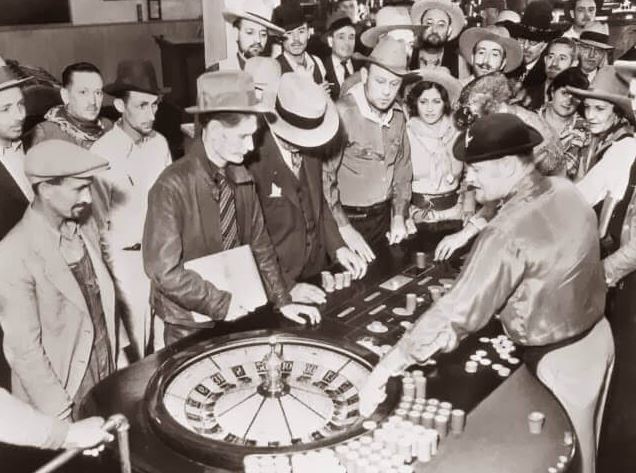
Booze, gambling, and women on the make. As the Gershwin brothers had put it, “Who could ask for anything more?” Las Vegas was on the upswing. I looked forward to giving the burg the once-over.
Breaking the silence that followed my host’s comment, I probed, “I’m available if the price is right. What’s in the package?” The limey merely held my gaze. When no response was forthcoming, I eased my butt to the edge of the sofa, looked around the room, and went on. “Let’s be straight with each other, Mr. Wainthropp. You didn’t build this joint with money from an offering plate. Besides, you’ve got boys to run errands. Mugs like Simon. I’m not as dumb as I may seem. And I’m no sucker.” He continued glaring at me, but said nothing. “Look, I asked you as simple question. Give me a straight answer or I walk,” I finished, rising from the davenport.
“Let’s be straight with each other, Mr. Wainthropp. You didn’t build this joint with money from an offering plate.”
He waved an impatient hand, indicating for me to sit down. Slowly, I complied. I needed the work. He leaned across the desk as if imparting highly confidential information. “I mentioned Simon has his uses. This isn’t one of them. My other employees don’t necessarily fit the job requirements I’ve stated. They’re fine when they’re closely supervised, shall we say? But this work doesn’t suit their particular character foibles.”
I was starting to get a picture of the job. “So, what’s in the package?”
Bertie’s eyes cut quickly to the sphinxlike third man, then back to me. The mouthpiece’s eyebrows arched, and he nodded indistinctly. The supper club’s owner continued, “I need to have two hundred and fifty grand in cash delivered to a west-coast business associate of mine. You will meet his representative in Las Vegas, which is around halfway between us. The money will be locked and sealed in a satchel, which you will turn over in Las Vegas. The seal will assure no one opens the package before you deliver it there. You’ll–”
“Why not just wire the money to the coast?”
Wainthropp smiled wickedly. “It’s a transaction which doesn’t lend itself to that type delivery, Mr. Tanner. We don’t care to have any paper trail.”
I’d swallowed hard when Bertie mentioned the amount. By this time, I was trying to crab if it was hush money, a payoff, or just a cute way to get the cash out of town to another syndicate without a trace. Hell, possibly the crumb was investing in a motion picture project. I didn’t care. What did matter to me was the risk involved in the job. The answer to my next question might tell me. “So, what’s the payoff at my end?”
“I’ll pay you five thousand dollars to make the delivery. Half now and half when you return.”
Five thousand smackers seemed a lot of money to pay for what appeared to be a relatively simple job. That is, unless there were hidden dangers in the caper or the man shelling out didn’t intend to pay it all. Quickly, I tumbled to a notion which didn’t bode well for me. This could easily be a set up. It went something like this. Hire a sap to haul a sizeable pile of cabbage to someone out of town but only pay him half the agreed-to fee for the job. Then, when the transfer is complete, have the guy rubbed out in the faraway town. The unpaid half of the bargain pays for the mug getting bumped off. So the client gets the money delivered and there’s nobody to tell the story, no connection back to him. Cute. I could be wrong and had been in the past.
Quickly, I tumbled to a notion which didn’t bode well for me. This could easily be a set up.
I’m a careful man, even when taking a risk. An uncle of mine, who’d fought in the Great War, told me he’d heard a tank corps officer over there advocate taking calculated risks, which he’d declared differed from being rash. Excellent advice. I quickly figured my odds of making the return trip were probably close to the same as those at one of the nightclub’s roulette tables: around thirty-five to one against me. But I’d deal with whatever was coming my way when it showed its ugly puss. I’m happy to take chances for money, if the payoff is big enough. I wouldn’t have gotten into this racket if that weren’t the case. But, if such was Wainthropp’s play, I wanted him to think he was really getting a bargain.
“I’ve got a different proposition for you. What if we make it two thousand for the job?” Bertie’s face reflected confusion. “With one condition. You pay me the one thousand in advance and the give me the markers of one of the rubes who owes you. Then you can pay me the balance when the job’s done.”
The Englishman was taken aback somewhat as his eyes crawled to his companion. Returning to me, he demanded, “What do you know of my business, Tanner?” By my tally, I was getting somewhere. He’d dropped the formalities. “And why should I give you someone else’s IOUs? Who is this person? A slag with whom you’ve become entangled?”
I snickered, “Nah, nothing of the kind. He’s a friend of a friend. Period. Name’s Kaplan. Reuben Kaplan. Give me his paper, pay me the two thousand for the caper, and we’ll call it even.”
He eyed me carefully. “As you might imagine, I don’t have the names of everyone indebted to me or the amount owed committed to memory.” He fished a set of keys from a suit pocket and unlocked a lower desk drawer. Wainthropp then pulled a lockbox from the drawer and used another key to open it. He removed a ledger from the box and flipped through the pages. “Ah, yes, Reuben Kaplan. The little kike owes me just under eight thousand dollars.” Quietly closing the book, he shot me a hard look. “Now why would I turn over markers worth nearly eight grand as partial payment for you doing this job?”
To push my argument, I leaned toward the desk, resting my forearms on my thighs. “Well, for starters, you phoned me based on a solid recommendation. So, you know I can and will get the work done. Then look at it as getting at least three thousand of whatever Kaplan owes you back without having to lift a finger.”
Point made, I leaned back and added, “And what might you do otherwise? You likely wouldn’t kill him. Bumping him off would ensure you’d never see a dime of your money. Maybe you’d send somebody like Simon out to break his legs, beat him half to death? Sure, it’ll inflict pain on the slob. It might even send a message to the other chumps who come into your joint. That is, if they hear about it and if they connect it to Kaplan owing you money. But it won’t guarantee you’ll get a penny from Kaplan. He–”
“His old man’s well-heeled. He’ll–”
“Reuben’s old man has disowned him because of his gambling debts! And he fired his son to boot. So, kid’s got no income. He’s in no position to pay what he owes you.” I tossed the man a knowing smirk. “Something’s better than nothing. Right now, all you have is a fist full of paper.”
For a long minute, Wainthropp looked through me as a fella does a pane of glass in a window to the scene beyond. He was weighing my points against his business acumen. “Two thousand, you say?” When I started to interject, he cut me off. “Plus, Kaplan’s IOUs.” After another pause, he said, “We have a deal, Mr. Tanner.” We were back to civility. He stood and shook my hand. “Come by here tomorrow morning at ten o’clock and collect the satchel and Kaplan’s markers. I’ll be here to turn them over to you. And I’ll pay you half your money for the job. Then you can leave for New Mexico straightaway. You are to deliver the money in Las Vegas a week from today.”
Wainthropp looked through me as a fella does a pane of glass in a window to the scene beyond. He was weighing my points against his business acumen.
He had me confused. “You mean Nevada. Las Vegas, Nevada.”
“No, Mr. Tanner. I mean Las Vegas, New Mexico. You’re to hand over the money to the contact in Las Vegas, New Mexico.”
* * *
Despite my disappointment about traveling to Las Vegas, New Mexico versus Nevada, I was looking forward to my pilgrimage into the West. It was a part of our great country I’d never laid eyes on except in magazines or moving pictures. I packed a suitcase, including a couple of extra magazines for my .45 and my sap. In addition, I snagged a small notebook to keep information on where I ate and stayed on the way west. Detective Rob Waddell, a friend in the city’s police department, told me he’d done it on a trip to visit a relative up on Lake Erie once. Rob swore it saved him time and aggravation on the return trip.
* * *
At the appointed hour the next morning, I arrived at the club. The proprietor was there with his oversized lapdog, Simon. The bully was being the same jerk he’d been the night before. My client produced one of those unremarkable oversized bags that doctors carry when they’re making house calls. This one had seen better days. He had Simon count out the money. It was fins, sawbucks, double-sawbucks, fifties, and C-notes, bundled together with bank bands. I’d never seen so many portraits of Lincoln, Hamilton, Jackson, Grant and Franklin.
“Does my upfront pay come from some of that?” I inquired.
The casino owner raised a hand slightly. “No, Mr. Tanner.” Opening a side drawer of his desk, he continued, “Your fee comes from another source.” The man chuckled, “I thought you’d appreciate new bills.” The Englishman tossed a thinner flat pack of gum-banded new hundred-dollar bills across to me. My quick sideways glimpse caught a malicious smirk on Simon’s puss. The hairs on the back of my neck stood up, but I picked it up, slipped it into a coat pocket, and said nothing.
My quick sideways glimpse caught a malicious smirk on Simon’s puss. The hairs on the back of my neck stood up….
After the goon stuffed the delivery cash into the satchel, Wainthropp locked and sealed it with some kind of jury-rigged wire and wax contraption. Then he handed me the key and had me sign a receipt for the cash. Despite Bertie’s earlier comments, the document looked to be a “paper trail” to me. But as the poet might have written, “mine was not to reason why, mine was but to collect and say goodbye.”
The Brit wrote out the instructions of when and where I was to meet my contact, as well as how to identify the man once I arrived. Finally, my client gave me Reuben Kaplan’s IOUs in an envelope. While an annoyed Wainthropp watched, I thumbed through markers, each signed by my friend’s nephew and by the club’s owner. A quick calculation in my head came up with a figure of slightly less than eight thousand dollars. I also fanned through my fee. It was there in nice new bills. Ben Franklin never looked more handsome.
As I started to leave, the irritated limey stopped me. “You don’t care for me very much, do you, Tanner?”
I picked up the bag. “You’re not paying me to like you,” I replied evenly as I turned and walked to the office door.
* * *
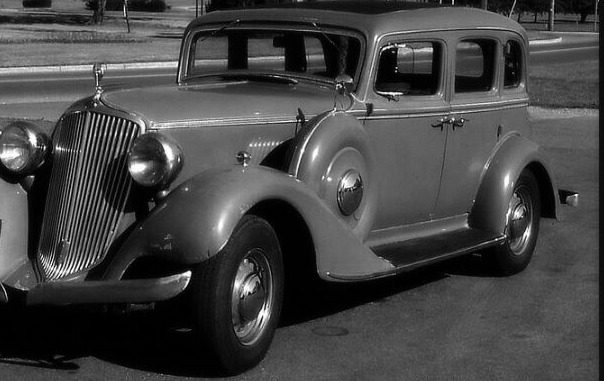
Micah’s bookstore was my intended first destination when I left the nightclub. After a couple of minutes’ drive, though, I realized I’d picked up a tail. On a second look, I could see the lug in the Graham Custom 8 behind me was Simon. It seemed the club’s proprietor wasn’t taking any chances of me snatching the satchel and dusting for good. Or perhaps the bully had a measure of retribution on his mind. Regardless, his talent at shadowing a mug was on a level with his ability to frisk him. The bum was about as subtle as a white elephant on a baseball diamond.
Now, having seen the bag containing the cash, I formulated something of a scheme just in case there were problems during its delivery. I didn’t want Simon following me to Micah’s place, so I changed the order of the stops I’d planned before I left the city.
I drove to my office in the Belvedere Building. There I typed two identical documents: receipts for the money. They were to be signed by me and by the person taking delivery in Las Vegas. Mrs. Tanner didn’t raise any patsies.
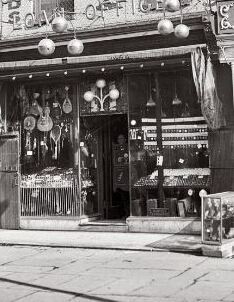
My next destination was the establishment Monk’s Pawn Shop, which was in a seedier section of our city. Not surprisingly, Monk, owner and operator of the hockshop, was one of the sleazier inhabitants of the metropolis. But, like my old pal Simon, he had his uses. I parked at the curb in front of his joint and ankled to the door. Out of the corner of my eye, I saw Simon ease to a stop nearby. Inside, I bought an old pair of handcuffs from the “private stock” in Monk’s backroom and dropped them in a coat pocket.
…Monk, owner and operator of the hockshop, was one of the sleazier inhabitants of the metropolis.
Simon was waiting patiently behind a smoke when I returned to my LaSalle. He cranked up his bucket as I pulled into traffic. Making my way to an alley behind a rundown apartment building on Lexington Avenue, I made a quick turn, pulled in a couple of dozen yards, stopped, and climbed out of my bucket. Simon was close on my heels and quickly turned his Graham into the alley.
He slammed on brakes when he saw me waiting. I walked back past him as he sat frozen and stoned-faced behind the wheel of the Graham. Tossing several large, overflowing trash cans into the path behind his heap, I walked back toward my crate and repeated the effort in front of his car. I waved him a farewell with a hand from the brim of my fedora. The big man just sat there befuddled as I climbed back into my LaSalle and sped away. As Shakespeare wrote, “Not so much brain as ear-wax.”
I parked at the curb down the block from Malaprop’s Bookstore and hustled into the place. Micah was enjoying a cup of tea at the counter when I approached. Saying nothing, I handed the promissory notes to the old man. He gave me a questioning look before opening the envelope and leafing through the pages. “As far as I can tell, they’re all there, my friend.” When he looked up, I added, “Ask no questions. But I recommend you get photostatic copies of these made and tuck them away somewhere safe. And tell your nephew to stay the hell away from the Riverside Supper Club.”
Kaplan looked at me with watery eyes and let loose a guttural sob. Then he came around the counter and embraced me tightly. “Gat zal eykh bentshn,” he whispered through his tears.
Pushing back gently, I said, “I need to hit the road, old friend, to New Mexico. Unfamiliar territory to me. I may be gone a couple of weeks. First, I need to figure a route to get there.”
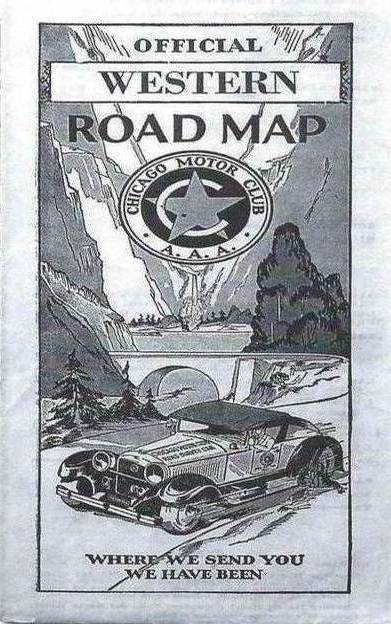
Micah held up a shaky hand. “Wait here a moment,” he choked. He moved to a far section of his store, pulled something from a shelf, and returned. “These should help you, Gil.” He handed me several roadmap books and waved off my attempt to pay him. I thanked the old man. We parted without another word. I had places I had to be, and, although I wanted to arrive sooner, seven days to get there.
Events at the Riverside Supper Club that morning had added one more stop to my plans. The way Bertie distinguished the source of my fee from the money I was to deliver, together with the nasty grin on Simon’s face when he said it, gave me pause. There was no telling where the dough for me had come from. Paying me with hot cash from a bank robbery, a kidnap ransom, or some such could be part of a setup. Perhaps I was just being paranoid. Rather safe than sorry.
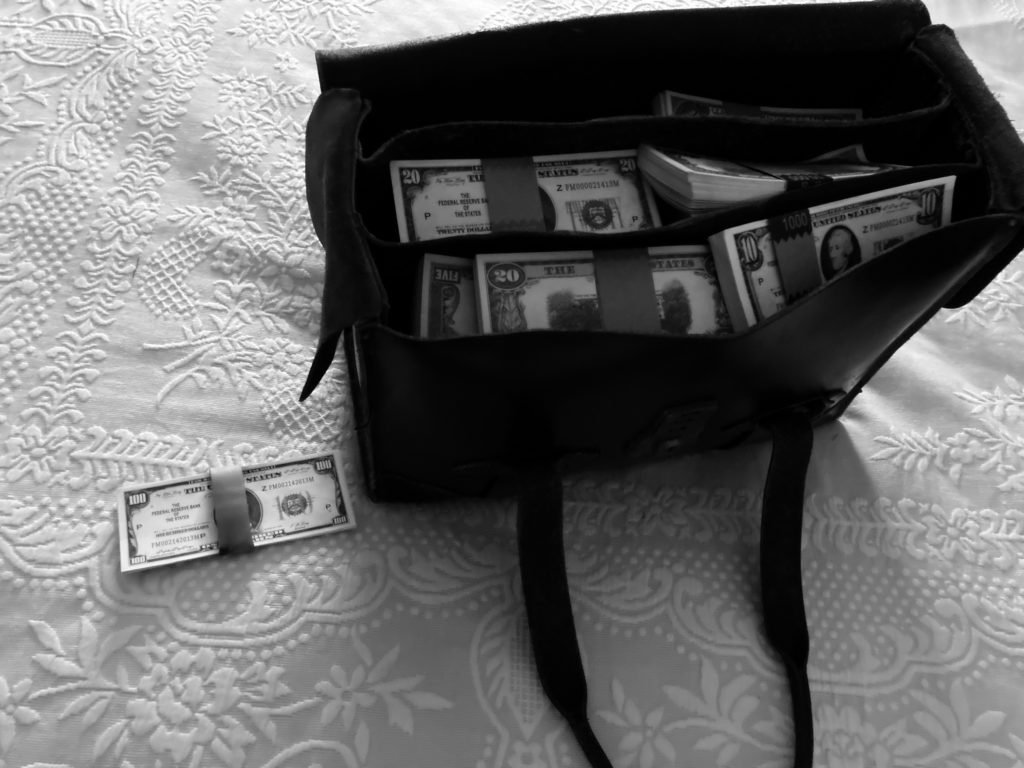
Back at my apartment, I tossed Wainthropp’s bag on my bed and started rifling my dresser drawers without finding what I wanted. On the back of the shelf in my wardrobe, I located a candle left over from a romantic weekend with a dame a while back. I broke the seal on the satchel and unlocked it. Then, I pulled ten C-notes from the middle of one packet of used bills and substituted the bills Bertie had paid me with. After exchanging the cash, I buried the packet deep in the bag. Then I locked and resealed it, using melted wax and a coin from my pocket. My handiwork didn’t look exactly like the casino owners, but it was close enough. By the time anyone might notice, if they noticed, I’d either be long gone or dead.
After exchanging the cash, I buried the packet deep in the bag.
I stopped by my bank to deposit most of my thousand on the way out of town.
* * *
The first day of the trip was easy: drive west. At days’ end, I stopped in a small burg whose name I can’t recall. After checking into a hotel, I went off in search of nourishment, both solid and liquid forms. A greasy spoon near the hotel provided the former. A drugstore next to the eatery sold me the latter with a bottle of Jack Daniels.
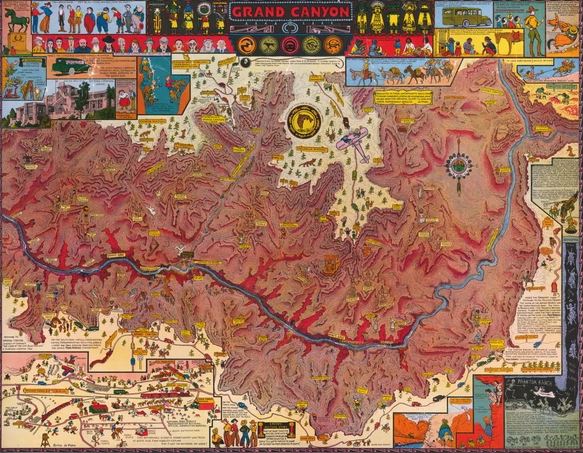
I hauled the satchel with me everywhere and kept it close. People must have thought I was a croaker going to or coming back from a patient visit. Back in my room, I unpacked just enough of my suitcase to get into clean BVDs and a fresh shirt the next morning. While imbibing whiskey, I flopped in a chair and perused the map books Micah had given me. A map of the Grand Canyon fell out of one book. I wasn’t traveling that far west, so I set it aside.
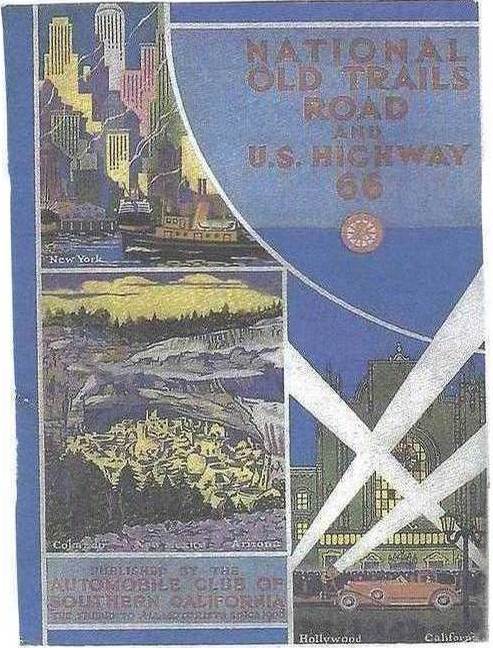
Since one book gave road distance information, I did a quick calculation of mileages. Contrary to what my client had assured me, Las Vegas, New Mexico was not the halfway point between Los Angeles and our city. Not even close. I would drive a much greater distance than my contact. As Micah might say with a shrug and a sigh, “Such is life.” Well, at least I’d get to see a part of the country I’d never experienced. Neither the hotel nor the joint I ate at were worth writing home about. So I made no entry in my trip book for the return journey.
Before crawling into bed, I propped the chair against the door and under the knob to keep out unwanted visitors. And I double-checked the lock on my room’s window. I’d never slept closer to a dame than I did the bag of money that night.
I’d never slept closer to a dame than I did the bag of money that night.
* * *
Because I’d only gotten a little more than a half days’ drive on the first day out, it was my intention to pick up my pace when possible the next morning. After a decent breakfast at the same greasy spoon, the LaSalle was pointed west once again. While it was slightly out of my way, I made for St. Louis. There I could pick up U. S. Highway 66, which I’d read was an excellent choice for traveling west. The roads were pretty good east of the Mississippi River, but, according to the maps, could be otherwise west of the waterway. So, the paved Federal roadway was the best option to make good time getting to Las Vegas.
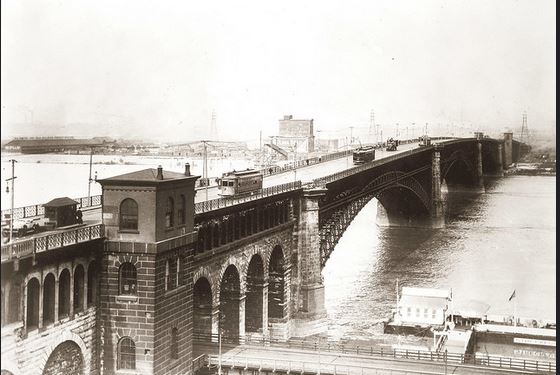
The Eads Bridge over the Mississippi River dumped me into downtown St. Louis. Despite the unfamiliar terrain, I quickly picked up Highway 66 with a thoroughfare named Gravois Avenue. While driving through the city, I’d hoped to get a gander at Sportsman’s Park, home of the Cardinals, Harry Bittles favorite team. I figured I’d get a photograph of it with my Graflex camera for my pal. The New York Giants had been beaten the Redbirds out of a World Series appearance that year. And, yes, Harry was still whining about it. He got no sympathy from me. My Reds had finished three spots behind his Cards when the season ended. Anyway, I later learned the ball field was located several blocks northwest of where I’d entered the city. I promised myself to visit the stadium and get the photo on my return trip.
Continuing southwesterly out of the St. Louis, I decided to ply myself with java so I could make more distance before bedding down for the night. A short time after leaving the city, I stopped at a roadside diner for coffee and a hamburger sandwich. The waitress in the joint mentioned a stopover further along the road near Newburg. She said it was a nice tourist court with cabins and a dance pavilion. The girl told me she especially liked the latter. The dance hall meant nothing to me, but I welcomed the news of the cabins.
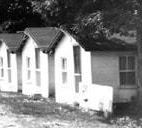
In time, I came across the place the waitress had suggested. When my headlamps raked across the property as I pulled in, there appeared to be a half dozen cabins. After renting one, I found my unit. The thing was somewhat Spartan but comfortable, not that it mattered. After a little over nine hours behind the wheel, I could have slept on a clothesline. A few shots of Jack Daniels helped. Before going to bed, I staggered around in the dark until I found the outhouse. All the modern conveniences! A straight-back chair propped under the doorknob gave me a better chance for a good night’s sleep. Nonetheless, I lay awake in the dark for a while, smoking and trying to figure what might await me in Las Vegas. I didn’t trust the likes of Bertie Wainthropp or anyone associated with him.
Before going to bed, I staggered around in the dark until I found the outhouse. All the modern conveniences!
* * *
The next morning, I rolled back out onto Highway 66, motoring toward the Kansas state line. An occasional grouping of red and white Burma Shave signs provided a diversion from the drive. The tedious trip gave me more time to think over what I might be traveling into. Not that it worried me. I’ve always thought of myself as someone who could handle unexpected situations.
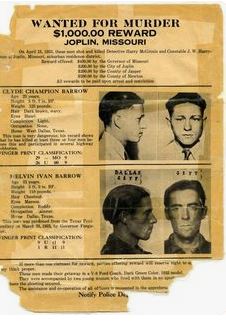
About lunchtime, I pulled into a filling station in Joplin to fuel up the LaSalle. When asked, the guy pumping the gasoline recommended a restaurant over on Main Street for a good meal. As I followed the man’s directions to the place, I recalled something I’d read in the broadsheets during the spring of the previous year. Clyde Barrow and his gang had been involved in a gun battle with the law somewhere here in Joplin. They’d killed two coppers in the shootout. It was old news now, though. Lawmen had gunned down the outlaw and his moll earlier in the year in Louisiana. “Live by the sword ….”
The restaurant was nice. I had a delicious T-bone steak. Like seeing Sportsman’s Park, I noted Wilder’s Restaurant for the return trip.
Shortly after crossing from Kansas into Oklahoma, I rolled into the town of Miami, whose Main Street was a segment of U. S. 66. A sizeable crowd, gathered in front of a Spanish-style theater, slowed traffic through town a bit. On the southern side of Miami, I encountered a section of the roadway which was paved but uncomfortably narrow. It was only eight or nine feet wide. It made for interesting situations when I met oncoming traffic.
By the end of my day, the LaSalle was cruising into Tulsa. I found a good meal and a room. After following what was becoming a routine for me, a chair propped against the doorknob, I slept with my constant companion, the satchel full of cash.
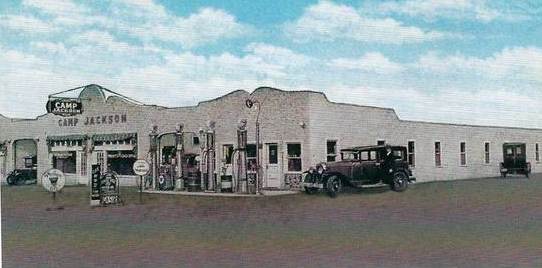
An early start got me into Oklahoma City around midmorning the next day. Driving into the city, I pulled into a gas station to top off my heap’s tank. There was no telling what might lay ahead in the way of filling stations. So I gassed up when the opportunity presented itself with bathroom breaks at the same time. While the kid filled the LaSalle, I asked about a good place to get a bite to eat. On his recommendation, I grabbed a quick, early lunch at a chicken joint, luckily located on the same road. Another entry for the notebook.
Back on the Federal highway, I continued to make good time. The route was proving to be the road I’d counted on. Around eight hours after leaving Tulsa, I crossed into Texas and the little municipality of Shamrock, where I’d planned to stay the night. Before grabbing a room, I filled the LaSalle’s tank again.
The man putting gas in my crate asked where I was headed. When I told him I was traveling west, he chuckled, “Lucky for you there’s been a drought goin’ on, partner.”
“That so?”
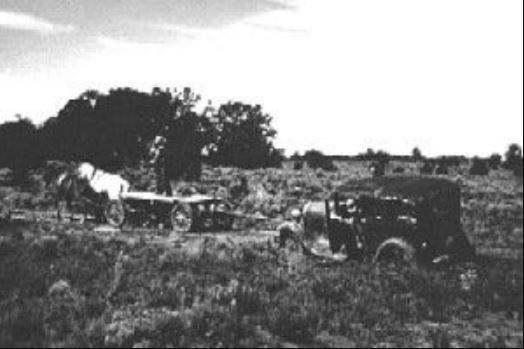
“Yeah. A few miles west a here thar’s a stretch o’ road, ‘tween Alanreed and a town called Groom, that ain’t paved.” His information about a dirt section of roadway wasn’t welcomed news. “It’s only ‘bout seven miles long. We call it the ‘Jericho Gap’ ‘cause it passes through Jericho. In wet weather, it turns to a sticky mud we call ‘Black Gumbo.’ Lots o’ farmers make a livin’ pullin’ tourists’ cars outta the stuff with their horses and wagons.”
“Lucky for me there’s a drought then,” I suggested without thinking.
He shook his head as he finished pumping. “Lucky for you, mister. Not so lucky for the rest of us. Especially the farmers.”
“Yeah. Sorry,” I muttered, swallowing hard at my misspoken words. As I paid the guy, I remembered newspaper pieces reporting the conditions in this part of the country. The severe drought had brought with it a number of dust storms, which were devastating the farms of America’s heartland. The dailies reported one such storm, back in May of ’34, had carried dust from Wyoming through Iowa all the way to Wisconsin. There’d been a haze from Boston to Savannah, by the newspaper reports, which had also described dust on the decks of ships three-hundred miles off the east coast. Then there’d been the “Black Sunday” storm in April of ’35. A reporter named Geiger had labeled the region the “dust bowl.”
The dailies reported one such storm, back in May of ’34, had carried dust from Wyoming through Iowa all the way to Wisconsin.
Because of the drought, crops were failing and the values of farms had dropped. Farmers, who may not have ordinarily been hit as hard by the Depression, were suffering right along with the rest of the country. Maybe even more since there were fewer resources to help folks in the rural areas. FDR and his New Dealers appeared to have no answers for them so far.
From the filling station, I drove to a nearby hotel, the U-Drop Inn, where I got a room. The place was new and very comfortable. I made another entry into my travel journal. Studying the roadmap books that night, I estimated I’d need to spend only one more night on the road before arriving in Las Vegas. The long days of driving were wearing on me a bit. But I’d arrive in the six days I’d hoped for–one day ahead of when I was to meet my west coast contact. Before calling it a night, I stepped outside for a smoke while I finished a glass of Jack. The burg was quiet, the kind of quiet you don’t get in the city.
The next morning, I grabbed a quick breakfast in the hotel’s café, not so much as I was hungry, but because I figured on a lengthy day on the road. It wasn’t long before I came across the dirt section of road the gas station man had mentioned. The ground looked reasonably solid. The six-plus mile drive was not too bad. Fairly rough, but okay. Not soon enough, I reached the town of Groom, Texas, and picked up pavement again. I was grateful for the hard surface.
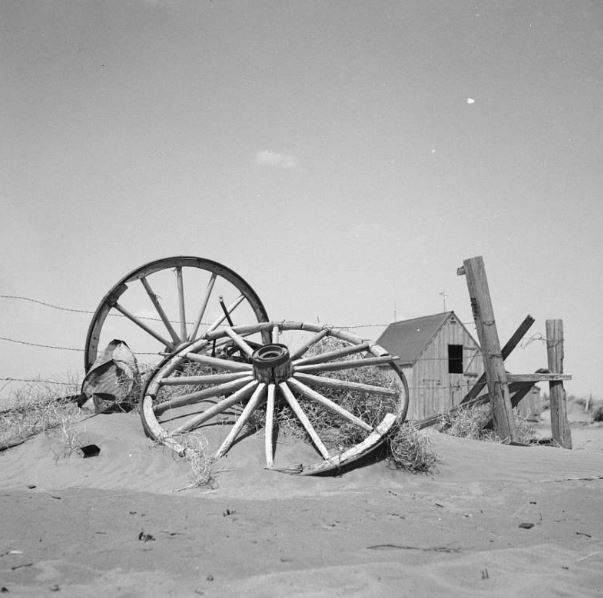
Once I was back on concrete, I started noticing things I hadn’t while the LaSalle fought its way along the “Jericho Gap.” As I drove on, both sides of the thoroughfare showed the effects of the drought and the dust storms. Sand dunes, similar to what I’d seen in picture postcards from the beaches, expect not nearly as picturesque or inviting, gathered up along fences. At least the things struggling to break the dirt’s surface at different points appeared to be fencing: bare posts with barbed wire fighting to stay attached. In areas, the sandbanks were taller than the LaSalle. At some points, sand had blown across the route, making the drive something of a challenge.
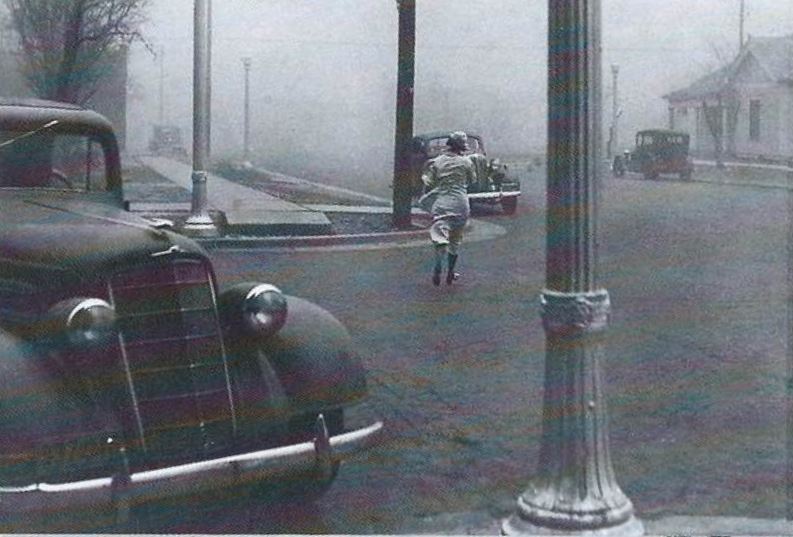
When I drove through Amarillo, the telltale signs of the last dust storm were still visible. A fine dust coated everything.
West of Amarillo, in the small town of Vega, the road was becoming more littered with discouraged-looking people riding in horse- or cow-pulled wagons or walking. The lucky ones had motorized transport, though some crates looked to be on death’s doorstep. They came onto U. S. 66 from the tributary roads of various descriptions emptying onto the main highway: graveled county roads and rutted country trails, a few of which were little more than old wagon courses.
They came onto U. S. 66 from the tributary roads of various descriptions emptying onto the main highway….
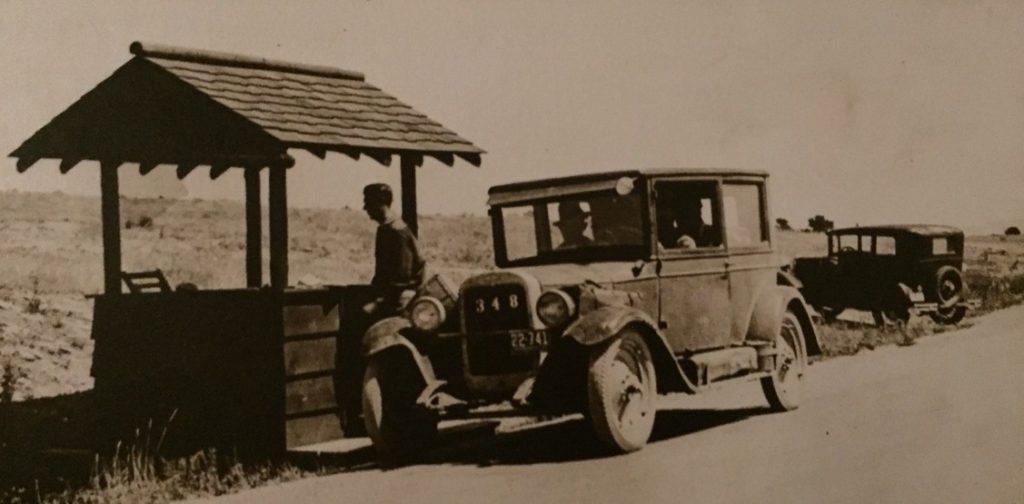
Out of necessity, I slowed as I passed them. All appeared to be hauling whatever earthly possessions they’d been able to salvage and carry. Just by their appearances, they seemed to be searching for something, anything better than what they’d left. At one point, several cars and trucks were lined up at a well sitting beside the roadway. People were filling sundry jugs and buckets for drinking and cooking. A few were topping off their radiators for the long hot drive which lay ahead.
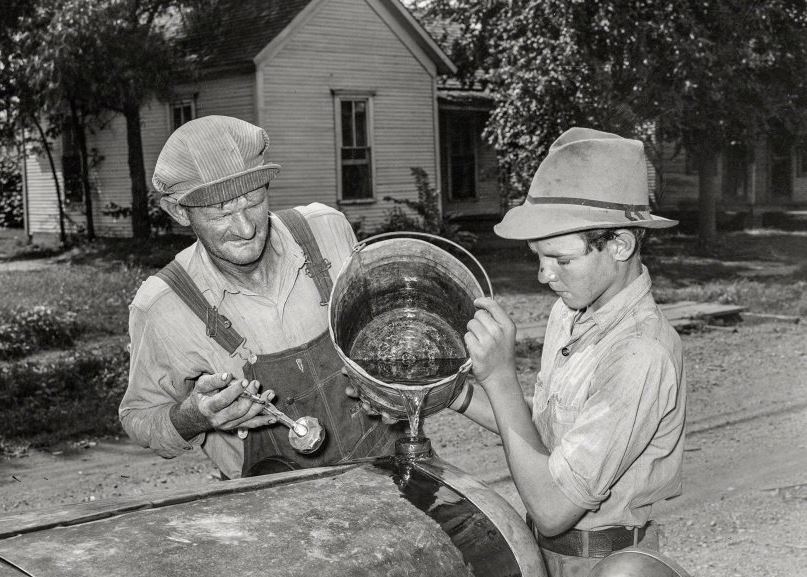
Just beyond the roadside cluster sat an old general store with a gasoline pump out front. I drove past a row of vehicles sitting off to the side and parked to stretch my legs and get a cold drink. My car’s engine coughed itself still. As I got out of my heap, an overloaded 1928 Chevrolet truck and a worse-for-wear four-banger car towing a little two-wheel trailer pulled off the road in front of me. They made up a ragged caravan of sorts. A forlorn-looking group bailed out of them and walked in the store’s direction.
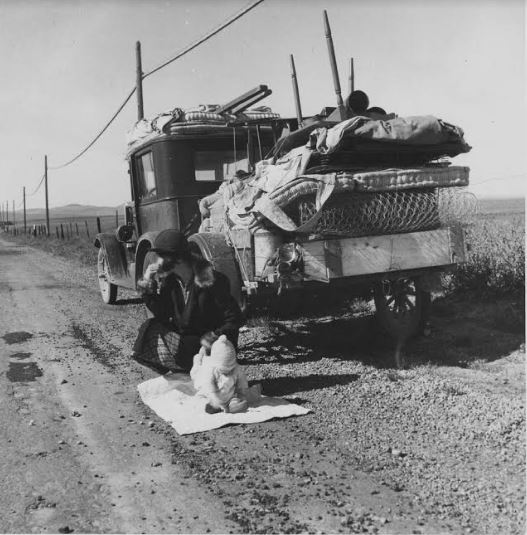
As I followed them, I passed several old cars and trucks. They were a sight to behold. Folks had tied mattresses on top of or to the backs of a few cars. Besides the extended family, every square inch of the interiors contained something they’d need or couldn’t bear to part with. Maybe it was a prized sewing machine, grandma’s old Victrola, or a sugar bowl a dear relative had bought at the 1904 Louisiana Purchase Exposition in St. Louis. Possibly they carried many of the items to trade for food or gasoline along the way.
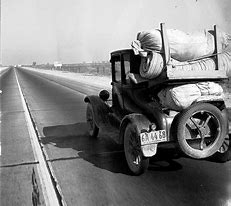
Trunks were stacked on the bed of the trucks. Atop them were several hungry, restless kids teetering on a mattress and bed springs, waiting for parents to return from the store. The sides of a few cars were slung with unknown things tied in blankets. Pots and pans were also secured here and there, no doubt rattling with every bounce the sagging springs of the machines took along the way. Someone had a milk cow tied to back of a truck. As I walked, I noticed the acrid smell of sage hanging in the air.
The sides of a few cars were slung with unknown things tied in blankets.
I moved under the covered front of the store to a soft drink cooler. A small girl stood next to the thing, gazing into it longingly. She eyed me closely as I fished around in the iced water for a Coca-Cola. “Can I help you find one you’re looking for?”
Her eyes dropped to the rough floor, and she shook her head as she smoothed her frayed dress. “No thank you, mister. I really don’t want any.” She looked back up at me. Her face and eyes told me something different.
Now I’m not a sentimental creature, but a few things hit home. The suffering of innocents from the effects of the Depression was one of them. Returning the soda to the bottom of the chest, I smiled at the girl and said offhandedly, “Guess I’d better pay for it first.”
I went inside. People in dusty, tattered clothes crowded the place. They milled about, trying to decide how best to spend a nickel or a dime they couldn’t afford to part with on something to tide them over for a while. Adults were telling their whining offspring they didn’t need this or that in hushed tones. After paying the old lady behind the counter for two Coca-Colas and two paper bags of peanuts, I walked back outside to the cooler. The pretty little girl still stood beside it.
I asked her to hold the bags of peanuts while I searched for my drinks. She sniffed the aroma coming from the bags and lick her lips. As I pulled the bottles from the chest, I set one on the wooden floor and complained, “Gee, this one’s too cold for me. I can’t drink this. But I’ve already paid for it.” Holding one out to her, I asked, “Is it too cold for you?”
She hesitated until I nodded approvingly, extended it closer to her, and retrieved the peanuts. When she gripped the bottle, she knotted her eyebrows and proclaimed, “Nah, mister, it ain’t too cold!”
“What’s your name?”
“Sarah Mae.”
“Well, then, Sarah Mae, you’d better drink it ‘cause I sure can’t.” She shot me a look of uncertainty again. “No, really. And here, take a bag of the peanuts. I sure enough can’t eat both bags with only one soda.”
While I opened the bottle for her, I asked where she was from. “Oklahoma,” she opened up. “We–my folks and four … three brothers–been on the road near two weeks now. Kinda hafta go slow on account of Bessie.”
“Is she a sick relative or something?”
“Nah,” Sarah giggled, “Bessie’s our milk cow.”
“Oh, I see,” I laughed and handed her the bottle.
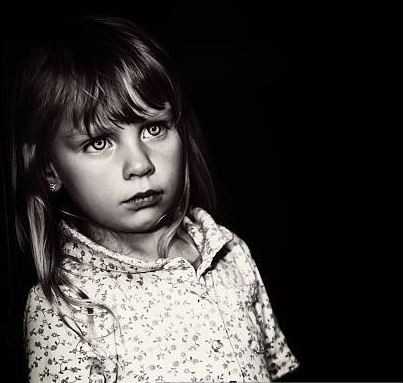
The kid took a long drink and then set it down to tear into the bag of nuts. “Paw said we needed to keep Bessie long as we could,” she explained through a mouth full of goobers. “But she’s ‘bout dried up of milk. I heared him tell Mama we’re gonna hafta trade her for food soon. We’re goin’ to Californy,” she beamed.
I crouched, so we were at eye level with each other. “Would you do me another favor, Sarah?” She waggled her head. “How high can you count?”
“To ‘bout a hunnert, I guess. I used to count chicken eggs for my mama.”
I reached into my pocket and found a sawbuck. Folding it, I extended it to the girl. “I need you to count to one hundred and then give this to your daddy. Will you do that for me?” She hesitated again. “Please, Sarah. It’s a surprise. But you have to count before you give it to him. Please.” With that, she reached out for the bill. I stood. “I’ve got to go now. You take care, sweetie.”
I’d no sooner climbed behind the wheel of the LaSalle than I glanced in my wing mirror and saw a man approaching. He was moving quickly and had something in his hand that looked suspiciously like a ten-dollar bill. Damn, I thought, Sarah must have counted to a hundred by tens. I resigned myself to what was coming, lifted my feet off the floorboard, and got out.
I’d no sooner climbed behind the wheel of the LaSalle than I glanced in my wing mirror and saw a man approaching.
As he advanced, he held the tenner out to me. “Say, mister, what’s your game? You had no call to give my daughter this here money. I don’t want her takin’ no money from a stranger.” He defiantly stretched himself to his maximum height. “We don’t need nobody’s pity.” The farmer appeared older than me, much older than I’d have expected Sarah’s father to be.
“It’s not pity, sir. It’s just a helping hand from one man to another. I knew better than to try to hand it to you directly,” I smiled. “Thought I’d be out of here before Sarah Mae gave it to you.” The man’s patience was wearing thin. “Hey,” I added gently, “I damned well understand your pride, mister. But it’s not pity. If the Federal government, say, offered you a hand, you’d likely take it for the sake of your family, right?” The old man swallowed hard, teared up, and nodded reluctantly. “I pay my taxes. So we’re just cutting out the middle man. It’s a long haul from Oklahoma to California.”
“But–”
“Look, I’m fortunate to be in a good place right now,” I cut him off. “So I thought I’d try to help–for Sarah’s sake. No offense meant, mister.”
The old farmer looked overwhelmed by the enormity of his circumstances. A frown creased the forehead of his weathered, brown face. It was a kind face marked by years of sun and disappointment. Tears welled in his eyes. The fella turned and dropped to my car’s running board. He shuddered and looked away, seemingly to check on his family. Then his eyes raised to meet mine. “We come outta near Boise City, Cimarron County, Oklahoma.” His lips quivered. The man pushed his brown sweat-stained fedora back on his balding head as he spoke. Then he took it off and slapped it against a pant leg of his bib overalls. A cloud of brownish-red dust billowed around us. He readjusted the thing’s creases and put the gray hat back on his weary head.
“The dang thing started with the drought we was goin’ through back in ’31,” he sighed. “That was bad ‘nough. But then, in July of the year, a swarm of grasshoppers come up outta nowhere. The horde was so thick, I swear, they blocked out the sun. I could scoop ‘em up with a shovel. Ate what little crops we had clean to the ground. I heared we didn’t git it as bad as Nebraska and up that way, but we suffered. Our preacher said ‘twas the end times.
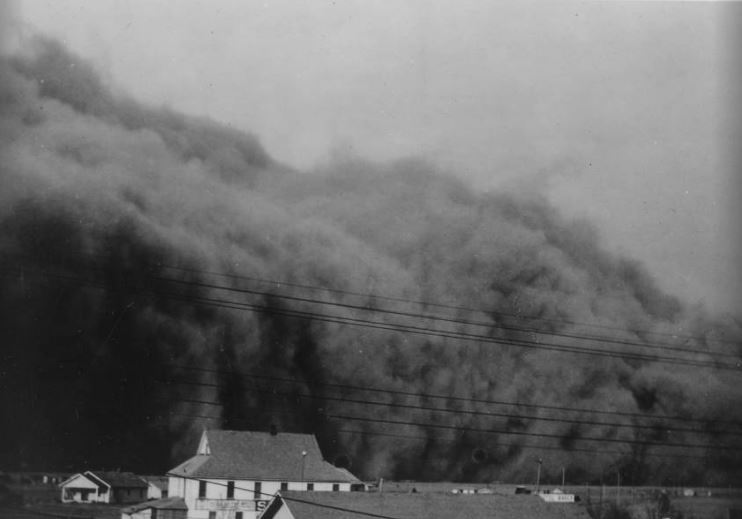
“We was clawing to survive that when the dust storms got worse. But we didn’t give up, mister,” he assured me with pride in his voice. “Then, last year, came what folks back east called ‘Black Sunday.’” He glimpsed up at me with plaintive, moist eyes. “Ain’t it funny how easy people label things they don’t have to suffer through?” His comment evoked my feelings regarding terms like “The Great War” and “The Great Depression.” I nodded.
“Ain’t it funny how easy people label things they don’t have to suffer through?”
He blew air and continued, “We fought hard for our land and our families, but it tweren’t to be. Crops blowed away. Stock died off or just wandered away when the Russian thistle got caught in the fencin’ and dirt piled up behind it. Cows just walked right over the buried fences. To feed the young’uns, I rode to town to find something to do. Tweren’t no kind a work. Goin’ on relief was the hardest thing I ever had to do. Afore that we ate so bad the hobos stopped coming by our place to beg for food. The relief truck with those brown markings on the sides come to the house for ever’body to see. A man lost his pride, his self-respect when neighbors saw the truck and knew.
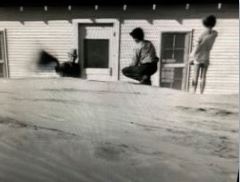
“Wind kept ablowin’. When the dirt piled up to the winder sills, then stacked up against the panes, we stuck it out. We’re made of tougher stuff, mister. But then we lost our youngest to what the doc called ‘dust pneumonia.’” His voice cracked with emotion. “The wife ain’t been the same since. Says she keeps seein’ the little’un playing around the house, in the yard.” He shook his head dejectedly. “Then the unbearable heat and no rain this year. They keep asayin’ helps on the way. But all we see acomin’ is another dust storm. Might git better, might git worse. But we ain’t gonna be here for either. Gotta find something better … somewhere.
“No way out,” he sighed. He jerked his head toward the pavement. “Nothin’ but that there road. Know’d it to be paved. More’n likely to find a place to git gas, and, if we got the money, a place to eat.” With mournful eyes, he waggled his head and added, “We was keepin’ the cow as long as we could for milk for the young’uns. Then maybe trade her fer gas or sell her fer gas or eatin’ money when we need ta. Hoped to find some grazin’ land along the road as we moved. Tweren’t none. The critter’s drying up and just too slow-movin’. Gotta give her up in the next town.”
I put a hand on his shoulder. “Friend, don’t take this the wrong way, but, if you don’t take the money I’ve offered to help your family, you’re a fool.”
He bristled and looked up at me. “One thing I ain’t, mister, is a fool,” he declared, quickly standing. I was uncertain what was coming next. Broken he might be, but the man had the gristle to make a good fight with anybody I knew.
“One thing I ain’t, mister, is a fool,” he declared, quickly standing.
“I agree. Keep the money,” I breathed. “For Sarah Mae.”
He looked down at the sawbuck in his hand, then back to me. His shoulders drooped. “I’m much obliged, mister. But I need your address, ‘cause I’m apaying this back, as God is my witness.”
I refused to insult the man with a fake name or address or such. “It’s not necessary, but here,” I said, handing him my business card. “Why don’t you just worry about getting your brood to California and making good? Then, if you ever see me sitting on a park bench, tattered and unshaven, you can buy me a meal.” The old farmer took the card, smiled weakly, and trudged away.
Easing into my crate, I stepped on the starter and pulled back onto the pavement. I drove away slowly, reflecting on the impact of the country’s financial doldrums on the average Joe. Though tough beyond words back home, the effect in my part of the nation appeared to be less than what I was seeing out here in the West.
I’d figured something around eight to nine hours to get from Shamrock to my next overnight stop, Santa Rosa, New Mexico. The time spent with Sarah Mae and her father at the general store had put me behind schedule. But it had been time well spent. I pressed on to Santa Rosa, making up a little time as I drove.
* * *
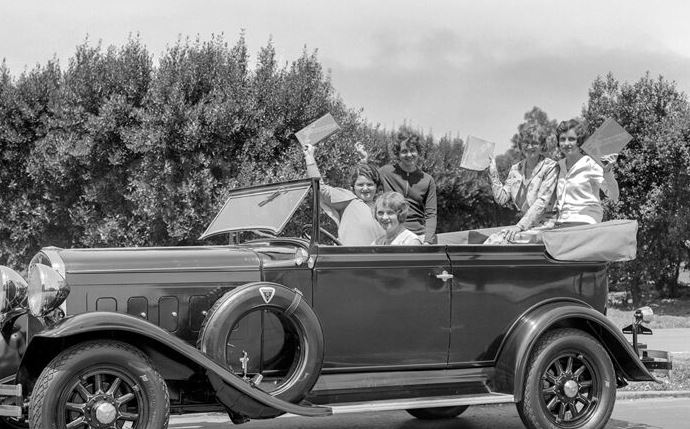
Eventually, hunger overtook me just outside the little town of Glenrio, Texas, on the Texas-New Mexico line. I’d read it was cheaper to fuel up on the Texas side of the line, so I did. Then I stopped at a café for a blue-plate special lunch. As I sat at a window in the eatery, I watched a group of swells pile out of a touring car across the road. They were laughing and taking pictures of themselves, including ones with one foot in Texas and one in New Mexico. To them, life was just a bowl of cherries, as Rudy Vallee had sung a few years earlier. They seemed totally oblivious to the world of Sarah Mae, her family and the thousands like them. Watching the merry party brought home the disparity between the folks suffering and those who weren’t.
They were laughing and taking pictures of themselves, including ones with one foot in Texas and one in New Mexico.
Before I left the joint, I asked the waitress where I might get a bottle of whiskey. She told me, because Deaf Smith County, where I sat, was dry, I’d need to cross over into New Mexico to make my purchase. When I did a double take at the county’s name, she explained they’d named it after a fella, Erastus “Deaf” Smith. Smith, she told me, was a “Yankee” from New York, but had served as a guide, spy, and messenger for Sam Houston during the Texas Revolution. He’d been a hero during the conflict. Live and learn, as my mother used to say.
At her suggestion, I made a quick stop on the New Mexico side of Glenrio for my liquid refreshment before heading west.
* * *
In time, I pulled into Santa Rosa, New Mexico. Like Glenrio, it was another town along Highway 66 which owed its livelihood to the railroad. After a good home-cooked meal at the Club Café, I checked my weary butt in to a room for the night. By my estimation, the last leg of the trip to Las Vegas should not take more than a couple of hours.
* * *
I left early the next morning. Just after Santa Rosa, U. S. Highway 66 swung north toward Dilia and my ultimate destination. The road’s altitude had risen steadily since Oklahoma City. Conversely, the temperature had dropped. But now I really noticed it.
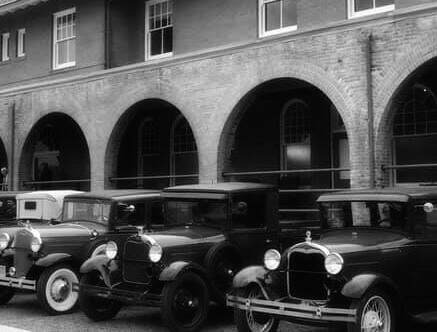
Shortly after ten in the morning, I eased in to the parking area of the Castañeda Hotel on Railroad Avenue where I was to meet my west-coast contact the following day. The trip had been long but interesting. What lie ahead in the next forty-eight hours was anybody’s guess. ©
To be continued.