
This tale started with a headline that came from the West Coast in the middle of December 1935. Over breakfast in a hash house down the street from my apartment building, I read the story in the morning paper. Mae Whitehead, maid to the beautiful and popular actress, Thelma Todd, found her dead in her car in the garage of her Los Angeles home. Immediately, the name Faye Jensen came to mind. Faye had been what my German acquaintances called a doppelgänger in relation to Thelma Todd.
Mae Whitehead, maid to the beautiful and popular actress, Thelma Todd, found her dead in her car in the garage of her Los Angeles home.
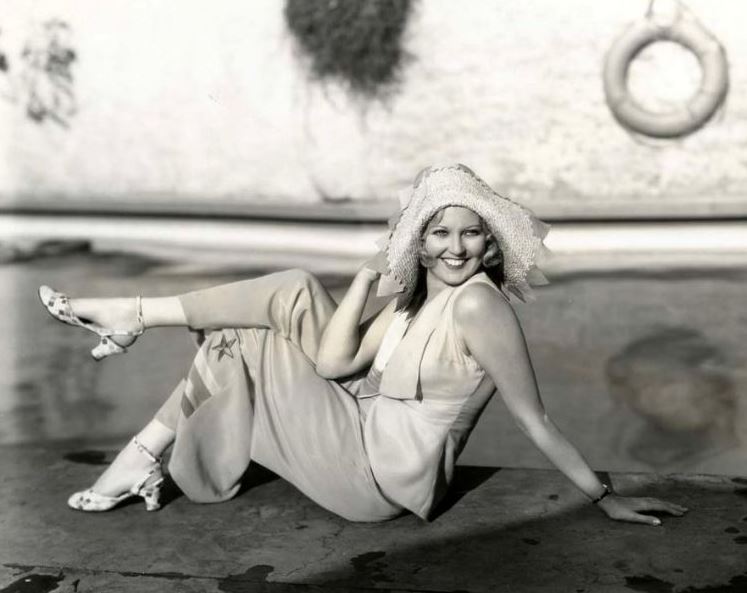
It had been almost a year since I’d seen the gorgeous blonde Jensen off on a westbound train at the conclusion of one of my investigations. But some dames you don’t forget. Ever.
Sometime later, Marty, my brother on our city’s police payroll, shared with me what he’d gleaned through the law-enforcement grapevine concerning Todd’s untimely death. The money in Tinseltown was giving odds Todd had not committed suicide, as the notoriously corrupt L. A. district attorney had decided before quickly and unceremoniously closing the case. Rumor had it shady underworld types who wanted to take over her highly successful nightclub-restaurant, “Thelma Todd’s Sidewalk Cafe,” bumped off the 29-year-old beauty.
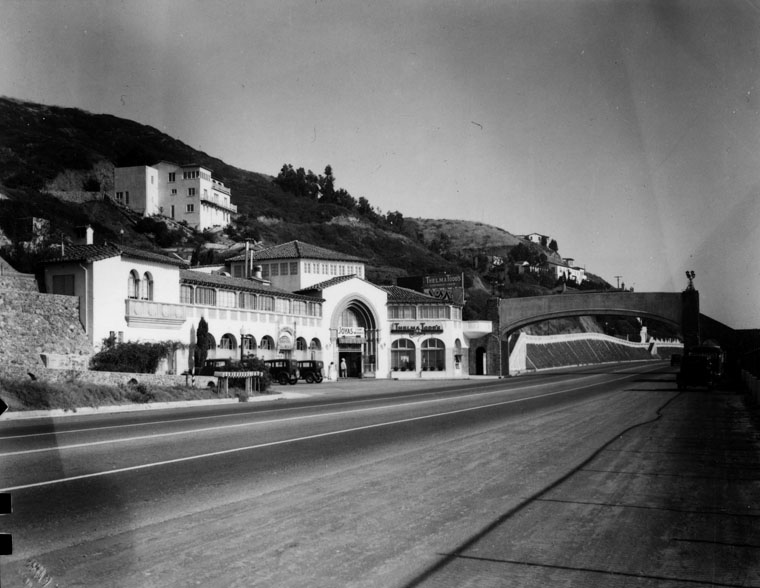
These gangsters saw her joint, which catered to the show-business crowd, as more lucrative as a gambling establishment through which to fleece the well-heeled Hollywood people.
Reverie overtook me. The lingering loveliness of Faye Jensen played across my memory. Also, Thelma Todd’s part in the Marx Brothers’ movie from a few years earlier, Horse Feathers, drifted through my mind and brought a chuckle to an otherwise dismal morning.
Our region of the republic had been having a harsh winter. Heavy snow had blanketed the area since mid-November. The local newspapers had reported a few weather-related deaths as folks continued to struggle against the Great Depression. I still didn’t understand what was so great about the economic doldrums still facing the country. But that’s what the politicians, barely touched by it, called the thing. The day before, a bit of relief from winter rolled into town and the snow started melting. Then, that night, a severe dip in the mercury led to ice-covered sidewalks and streets, precipitating perils of another variety. I sat at a window of the eatery, sipping coffee, smoking, and watching early morning commuters–least those who still had jobs–hazard the sidewalks of our city.
After rereading the article reporting the starlet’s death over one last cup of joe, I had to return to the here and now. I’d been working a divorce for a pudgy mouthpiece by the name of Richard Head. The lawyer called on me occasionally to handle the dirtier, less tasteful aspects of his client’s lives. Those who knew Mr. Head well often added unflattering, four-letter words to the front of his last name when referring to him. They were expletives I won’t repeat here. You can use your imagination.
Mindful of the task ahead, I left the diner and slipped and slid my way across the streets and sidewalks back to the Tanner Detective Agency’s office. I’m the agency’s sole proprietor and lone operative. Making my harrowing way along the icy thoroughfares past several automobile accidents only confirmed my decision to leave my LaSalle parked for the day.
Back in my office, I made notes to the files of a few other cases that had occupied me recently. Then, I started typing my report and an invoice for the divorce inquiry for Head. While snooping around during the investigation, I’d taken a few compromising snaps of the husband of the shyster’s client. A buxom, auburn-haired beauty, a torch singer from one of the local nightclubs, joined him in flagrante delicto, as the swells say. The revealing pictures lay on my desk as I typed.
While snooping around during the investigation, I’d taken a few compromising snaps of the husband of the shyster’s client.
I was in mid-keystroke when there came a loud knock on my office door. In quick succession, the tenant from next door, Lester, hurriedly entered my office. The tall, towheaded fellow, brother-in-law to our “illustrious” mayor, was a professional photographer of dubious reputation. This flaw in his character was owing, to a degree, to his part-time, clandestine evening business of photographing women for a French postcard enterprise. The illicit aspect of his business was the worst-kept secret in our office building.
Waving a pitcher around, the photog explained he desperately needed water to clean up a child he was trying to capture on film. It seemed the kid had thrown up during the session. The photographer never made it to my watercooler standing in the corner. Lester set aside the urgency when he happened to see the photos on my desk. Like a hound dog in a butcher shop, the man was slobbering over the images in a matter of seconds.
I sat back from my pre-Great-War vintage Royal typewriter and glared at my visitor. “Don’t you get enough of this sort of thing during your evening activities, Lester?” I asked, as I leaned over my desk and gather the snapshots into the belly drawer.
He shot me a sheepish grin, saying, “I don’t know what you mean, Gil.” He nodded toward the now-vacant space the pictures had occupied. “Where d’you take those?”
“Never you mind, Lester. Just get the water and take it on the arches,” I replied in my gruffest, threatening voice. My neighbor swallowed hard and retreated to get the water before hurriedly departing. I had something of a reputation of my own.
When I finished, the lawyer’s copy of my report, together with his copies of the explicit photographs and an invoice, slid neatly into an oversized envelope. It was time to deliver the goods and get paid. I left my office, making certain to lock the door against the prying eyes of my lecherous neighbor. Cautiously, I ankled my way over the frozen sidewalks toward the lawyer’s office in the Monroe Building. On the way, I passed a line of desperate men huddled against the cold, waiting for a soup kitchen in an abandoned furniture store to open.
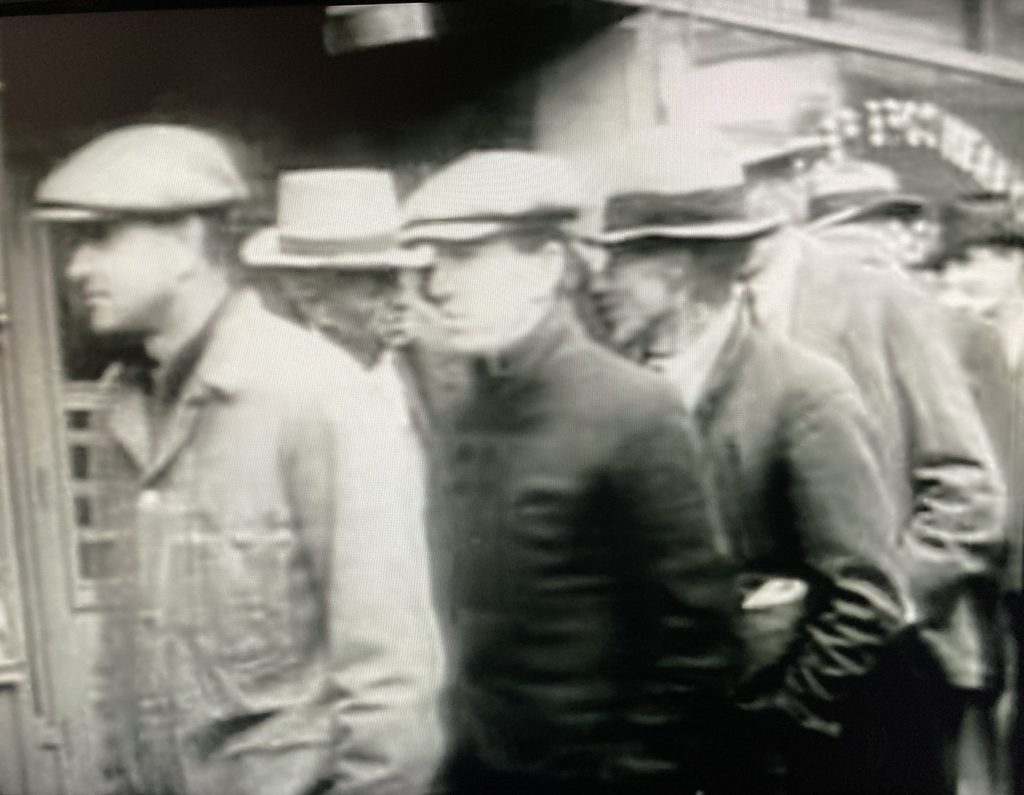
It was a metallic cold day. Their breaths made gray clouds in the frigid air of the harsh winter. Things looked pretty bleak for a lot of folks. I thanked my lucky stars.
Opening Head’s outer office door on the fourteenth floor, I encountered his secretary, the resident dragon who guarded the “gates” of his office. She was a hard-bitten old prune named Elvira. Understand that I mean the description in the most positive way possible. Elvira was a sinewy piece of work, who I heard had once sparred with Gentleman Jim Corbett back in the day. Rumor had it her severe beating of the prizefighter is what finally made a “gentleman” of him. Some of those who knew and had to deal with the woman called her Evil-a.
Elvira was a sinewy piece of work, who I heard had once sparred with Gentleman Jim Corbett back in the day.
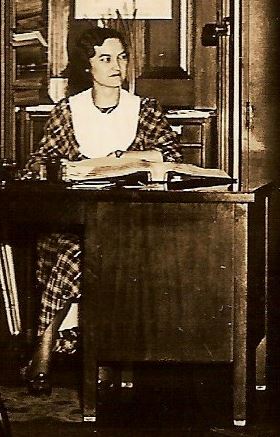
As usual, I stood before her desk, lid in hand, and waited. When Elvira looked up at me at long last, she extended her hand for the envelope I held by my side. I pulled it tightly to my chest and shook my head. “I have to give this to Attorney Head personally,” I admonished, quietly. This was a form of ritualistic “dance” we did every time I came into the office with a report. She’d demand subtly, I’d refuse blatantly, then I’d get into Head’s office to deliver the paperwork. Besides not wanting to hand over my work product on principle, I had money coming from the good shyster.
A grimace decorating her face, Elvira stood stiffly and opened the gate in the rail divider separating the office’s public area from her “sanctified” zone. She turned and knocked on the attorney’s private office door while eyeing me contemptuously. Her blows received a muffled response from inside. Elvira opened the door and announced my presence to the counselor. Then, she held the door open and stepped aside as I entered the office. The entire thing seemed akin to what I imagined a personal visit to the Pope must entail. In short order, I explained my findings in the matter and delivered the envelope to the lawyer. But not before I received the balance of the money he owed me.
I left Attorney Head’s office building and traveled to my bank to deposit most of the fee I’d received from him into what remained of my bank account. With what I kept in my pocket, I gingerly walked to Harry’s Paradise Tavern. Everything was jake with me. Not even the lousy weather could cloud my optimism, no pun intended. The lunchtime regulars were in attendance at the watering hole, trying to escape the cold. I joined them in their sheltered existence. We spent the rest of the afternoon and well into the evening in liquid abandonment.
* * *
Nonstop pounding coming from somewhere rudely awakened me. I opened my eyes and grudgingly took in my surroundings. Early morning light streaming through windows simultaneously hurt my eyes and helped me see where I was. The room was the apartment I called home, thank goodness. The banging sound was coming from the other side of my apartment door. At that point, I realized someone was shouting my name as they bashed. I lay in my Morris chair, apparently having been unable to open my Murphy bed the night before without killing myself. I was dressed in the clothes from the previous day. It made answering the door an easier and quicker proposition. Although, with the throbbing in my temples, I would have opened it in the nakedness with which I entered this world if only to stop the fellow’s pommeling.
I lay in my Morris chair, apparently having been unable to open my Murphy bed the night before without killing myself.
Launching myself from the chair, I struggled to the door and pulled it open. There stood Lenny, a neighbor from across the hall, wearing a flannel bathrobe of indistinguishable pattern and indiscernible color. “Somebody wants you on the blower, Gil. It’s a woman. Says it’s an emergency.” The phone in the hall was a holdover from the time when none of the tenants had them in their apartments. Some of us used its presence as an excuse not to spend the extra bucks. I hadn’t yet sprung for a phone in my place but was coming to realize my business made it a requirement. Meanwhile, I relied on the phone in the corridor and the graciousness of my fellow tenants.
I thanked Lenny and moved groggily down the hallway, rubbing my aching head with one hand and scratching my numb butt with the other. The earpiece was still swinging on its cord below the phone. I managed to catch it somehow. Close to the mouthpiece, I mumbled a greeting. When I heard the voice at the other end of the wire, I knew something was terribly wrong. It was Donna, Marty’s wife of a few years. Now, Donna and I always got along swell. She was a great gal and, gratefully, was a fine influence on my big brother. She just never had cause to telephone me. So, something bad was in the air. She never got past “hello.”
When I heard the voice at the other end of the wire, I knew something was terribly wrong.
“What is it, Donna? Are you all right? Is the baby okay?” Air stirred at the other end of the phone line. She was crying. “Take it easy, Donna, and just tell me what’s wrong.” I tried to keep my voice as calm as I knew how. Then, a horrific thought suddenly hit me. “Marty? Donna is Marty all right?” Another heavy sob.
“No, Gil.” My heart sank. When I groaned audibly, she quickly continued, “Oh, no, Gil, Marty’s not hurt.” Relief swept over me. Before I could ask, Donna added, “There’s been a shooting involving him. He’s not hurt, but he killed a man and now he’s being accused of murder. He–”
“Was he on the job when it happened?” My mind was racing. Maybe she didn’t understand the circumstances.
“What?”
“Was he on duty, Donna, on duty when it happened?”
“Yes. But–”
“Then there should be nothing to worry about.” I knew Marty being on duty didn’t answer every issue in a shooting situation, but it went a long way in his favor.
“But they’re saying he killed an unarmed man, Gil. That the guy didn’t have a gun.”
Additional issues ran through my head. But talking to Donna couldn’t answer my questions. “Where’s Marty now?”
“He’s being held at police headquarters.”
“Are you okay? Do you need anything?” When she replied she was fine and needed nothing, I did my best to quiet her and told her I’d go straight to headquarters. I talked her out of joining me there, reminding her she needed to stay calm and take care of their kid just then. I promised to telephone her as soon as I’d talked with Marty. In turn, she said she would call me if she needed something.
After cradling the receiver, I hurried back to my apartment. I quickly scraped my face with a razor. A certain funk emanated from me because of my activities in the last twenty-four hours. So I also took what the hospital had called, during my last stay, a sponge bath, and put on a clean shirt. I grabbed a morning edition from the newsie at the corner. With the current icy road conditions, I left my LaSalle parked right where I’d left it two nights earlier and hailed a hack. While riding in the taxi, I combed the newspaper for anything about Marty’s situation. Nothing. Apparently, it had happened too late that morning to make the early edition. The driver turned out to be a damned good wheelman and got me to police headquarters in quick order, considering the weather.
* * *
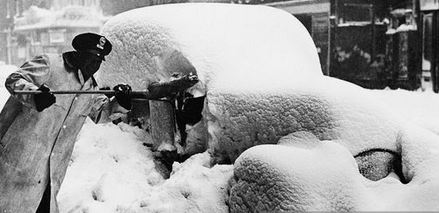
As I made my haphazard way along the sidewalk in front of police headquarters, I passed a copper digging his way through the snow to a car. Everybody was suffering the effects of the storm in one way or another.
I trotted up the steps into the building. The desk sergeant, sitting behind the raised counter, looked up from writing in his ledger and asked if he could help me. The officer was unfamiliar to me, so I flashed my PI credentials and told him I needed to see my brother, Marty Tanner, being held in the jail. After a minute on the candlestick phone on his desk, he confirmed our relationship. Then he made another quick call. “The detective handling the murder investigation will be right out,” he advised, as he pronged the earpiece. I realized every time someone spoke the word “murder” regarding Marty’s case it would sting.
The desk sergeant … was unfamiliar to me, so I flashed my PI credentials and told him I needed to see Marty Tanner.
I nervously spun my fedora on my hands and paced as I waited. Several uniformed officers passed through the lobby. I knew a few of them. They shot me forlorn looks as they walked by. Finally, a door from the vestibule to the guts of the building opened and through it stepped my worst nightmare for my brother’s situation, Detective Gus Donovan. Donovan was a man blessed with delusions of adequacy when it came to his job. We had a history of bumping heads.
His florid, pockmarked face held a curious smirk. “I wondered how long before you’d stick your beezer in this.” He drew up short of where I stood.
Walking toward the big copper, I asked, “Can I see my brother, detective?”
“What for?”
“I want to hear his side of the story. He–”
“His side of the story is just stringin’ bullshit together to cover his ass!” The detective’s harsh, loud tone got the attention of the desk sergeant. When Donovan raised his hands slightly to calm himself and nodded to him, the sergeant returned his attention to his ledger.
The detective then took a deep breath and smugly proceeded, “Look, I don’t have to tell you shit, but here’s how I figure it. Officer Tanner was on early mornin’ patrol when he saw this fella runnin’ from a fancy jewelry store that had been burgled. Your brother yelled at the guy to stop. When the poor slob didn’t, he plugged him twice–two times outta four or five shots. Not great shootin’ in my estimation, but it got the job done. Dead men tell no tales, as they say. The stiff wasn’t no punk either. He’s … was the nephew of the jewelry store’s owner. And he wasn’t packin’ heat.”
I mulled over what Donovan had said. “So, why was he running?”
“My guess is the dead guy stumbled onto the burglary in progress at his uncle’s store and chased the thief. Your brother mistook him for the burglar and shot him before he could even get across the street.”
“Any witnesses?”
“Yeah, as a matter of fact, Mr. Private Investigator, there was one. An old lady was awake and takin’ care of a colicky baby, her grandkid, in a third-floor apartment above the jewelry store. She says she heard yellin’ and shootin’. So, she walked to a window overlookin’ the street and saw a policeman, your brother, as it turned out, shootin’ at a man. Four or five shots. What she saw shocked her so much she lost count of the exact number of shots fired.
“When the dead man fell, your brother walked over to him and stood there for a second. She says she yelled at the copper, who then ran away. He was out of her sight for a bit before he returned to his victim. The guy who bit the linoleum didn’t have a gun, she says. She hustled to the apartment’s livin’ room and called the police.”
“The guy who bit the linoleum didn’t have a gun, she says.”
“It was still dark when this occurred, right?”
“Yeah, but before you go tryin’ to find a Chinese angle in this case, shamus, you need to know there was streetlights in the area. Go look for yourself. The old lady clearly saw what happened.”
“How many times does Marty say he fired his service weapon?”
“Twice.”
“And did you examine his gun?”
“Yeah, sure. And I found two expended shell casings in the cylinder.” Before I could speak, the detective cut me off with a sneer, “It doesn’t mean a thing. I figure he replaced the other two or three used shell casings for fresh rounds when he was out of the sight of the witness. He had plenty of time for it.” He chuckled. “This case is duck soup, Tanner. So, ya see, you’re wastin’ your time here.”
Donovan’s self-satisfaction was plucking my nerves. “Oh, yeah? I recall that’s what you said about your investigation of the Cappacino kid!”
The big detective’s nostrils flared. “Why, you two-bit gumshoe, you ain’t gonna queer this investigation! Git outta here. I ain’t got time for your shit, Tanner! I’m overworked as it is!”
“Yeah? And overworked coppers make mistakes!”
He stepped toward me in a threatening manner. “So, go climb up your thumb!”
I bristled at the threat. Fortunately, Detective Sergeant Robert Waddell, one of the department’s best, sauntered into the lobby at that moment. Waddell was well aware of the friction between Donovan and me. When he saw us, he called out, “Hey, break it up!” and made a beeline for me and his fellow detective as we were ready to come to blows. The tough, lanky Waddell stepped between us. “What gives with you two?”
“This private dick thinks he can come in here and tell me how to investigate a murder his brother did!”
Waddell, standing between and perpendicular to each of us, glanced at Donovan. “This the killing of the alderman’s son?”
His words hit me like a Mark V tank. “What? The dead mug was an alderman’s son?”
“Yeah, that’s right, Tanner!” Donovan snarled. “Your brother did it up big! He cold-bloodedly shot an innocent, unarmed man, who happened to be Bert Jacobs, Alderman Jacobs’ kid!” I hadn’t heard the dead man’s name until that minute. Waddell’s hand found my chest as I started forward. But Donovan wasn’t finished, “And I’m gonna send your brother over for this! You get me? Oh, yeah! Your brother’ll step off for this one!” Rob placed his other hand against the angry copper. Donovan turned on his heels and stamped his way back to the door from which he’d emerged. “And I still think you had a hand in The Turk’s murder, Tanner! Up to your eyeballs! So, I’m not through with you yet either!” he yelled over his shoulder before disappearing through the door.
“Your brother’ll step off for this one!”
“Okay then! That went well,” Detective Waddell dripped sarcasm. He looked back from the door and squared up, facing me. “You know you’re not doing Marty any good getting into it with Gus.” I nodded half-heartedly. He was right, of course. But, based on his track record, I just didn’t have any confidence Gus Donovan would give the investigation a worthwhile effort, even if the accused was a fellow copper. “Seriously, Gil, I was really sorry to hear about the jam Marty’s gotten himself into. Is there anything I can do to help?”
I swallowed hard at the thought of political pressure being brought to bear in Marty’s circumstances in addition to all the other implications the facts carried. A torrent of thoughts passed through his mind. “I want to visit my brother, Rob. That’s what I came here for to begin with.” I took a deep breath and exhaled slowly. “My intention in coming here wasn’t to confront Donovan.” I looked at the door he’d passed through. “Of all the mugs to catch this investigation, it had to be Donovan,” I groaned.
“Never mind that now, Gil. Let’s get you to Marty. C’mon.” He turned and walked to a door off the lobby with me close beside him. He glanced at me sideways. “So, you figure on looking into this on your own?”
I waggled my head. “Yeah.”
“Just don’t get in Donovan’s way while you do.” He paused, then asked, “And what happens if you find evidence which proves his theory of the killing?”
“It goes where it goes.” For me, it was too much to consider. We walked on to the jail area in silence.
* * *
Waddell arranged for me to meet with Marty in a room normally used by lawyers meeting with their incarcerated clients. Before he brought Marty in, a jailhouse copper frisked me for weapons and contraband. Hoping to simplify things if I got to see my brother, I hadn’t been packing. When Marty came in, he looked like hell. Waddell called the officer out to the hall so we could have some privacy. Overwhelmed by the emotions of the moment, we shared a bear hug with several back pats. Our family didn’t easily show feelings with embraces and such, a product, in part, of our old man’s meanness. He was such a son of a bitch, Marty and I sometimes questioned how our parents ever conceived us.
When he sat across the table from me, I told Marty I’d talked to Donna and would do so again as soon as I left the jail. After he asked, I assured him she and the baby were fine. And I’d make sure she got anything she needed. My brother expressed relief that I’d talked her out of coming to the jail with me. He told me he was being treated fine and was being kept away from the jail’s general population due to his status as a copper. Then his eyes teared up. It tore me up to see the big man hurting like this. I gave him a minute.
Finally, we got down to the matter at hand. “Okay, Marty, tell me what happened.”
Marty looked down at his hands, flattened in front of him on the table. He inhaled deeply and let part of it out audibly. “Well, I was walking my usual beat a little after six this morning. I was just rounding the corner of Dunbritan Street and Richmond Hill Street when there was the loud crash of breaking glass. Four doors down on Dunbritan, these two guys were kind of standing in front of Jacobs’ Jewelry Store. There’s a streetlight on the sidewalk there, so I could see them pretty good.
“They had just started to turn away from the storefront when they saw me. That’s when one mug, the one who got away, yelled and started running across Dunbritan Street. I didn’t get a good look at his face, because he was wearing a jeff cap yanked low over his eyes. His partner didn’t react as quick and followed him at a distance. I started chasing them at an angle, you know, like an open-field tackler. Just as the first burglar made it to the alley across the street, his buddy suddenly turned and threw gunshots at me. I didn’t see the gun before that. I ducked behind a parked car, pulled my service revolver, and returned fire. He dropped.”
“Just as the first burglar made it to the alley across the street, his buddy suddenly turned and threw gunshots at me.”
“How much time passed between the glass breaking and when you saw the two men in front of the Jacobs’ place?”
“Only a second or two. I was almost at the corner, only a yard or so away from it, when I heard the crash. I saw the pair as soon as I turned the corner. They were already on the sidewalk, Gil,” my brother pleaded.
“How many shots, Marty?” He gave me an expression of uncertainty. “How many shots did you fire, Marty?”
He nodded, “Two.”
“How many times did the guy fire at you? Did you hear or see his rounds hit?”
“Two or three times, I think. And, no, Gil, I didn’t see where they went.” He stared at me intently. “Has anybody ever shot at you?”
Marty knew the answer. Goons had shot at me in gun skirmishes more than once. He was trying to make a point even if it took being a smart aleck to do it. A firefight was not the time you normally counted rounds coming at you or saw where they struck, unless they found their target–you. “Okay, I get you, Marty. Do you know whether your people found the slugs he fired?”
“No, I don’t,” Marty answered, raising a hand in an impatient gesture. “Gil, he was flailing and slipping around on the icy street so much when he was trying to run and shoot, there’s no telling where they hit. And he was using a revolver, so there were no ejected shell casings either.” He sighed and massaged his temples. Marty was a pretty rough-and-tumble lug, but this was something he’d never experienced.
“Go on.”
“When I was sure the shooter was down to stay, at least for a while, I walked over to him. He was dead there in the street. I looked but didn’t find his gun. But I swear he had one! I didn’t imagine being shot at.” My brother paused and swallowed hard. “In all the times I traded potshots with rumrunners while I was in the Coast Guard, I never killed a man, Gil.” He sobbed a low moan and paused for a short time.
“In all the times I traded potshots with rumrunners while I was in the Coast Guard, I never killed a man, Gil.”
“A witness says you ran away from the body when she yelled at you. Where–?”
“Witness? There was a witness?” His eyes looked around impatiently. “Then why am I in here?”
“One step at a time, Marty. Did you hear a woman shouting during this?” He shook his head vigorously. That didn’t come as a shock under the circumstances. I’d been in similar situations where background noises faded to nothing during and just after a firefight. “Where d’you go, Marty, when you left the body?”
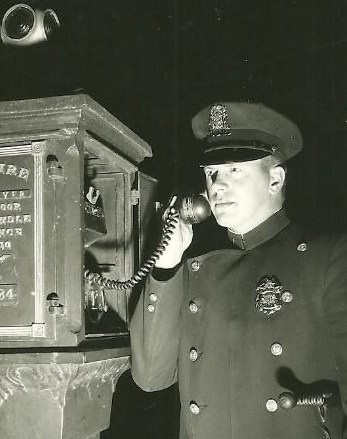
“Into the alley, searching for the other guy. I checked the alley over to Presley Avenue, but the other perpetrator was long gone. So, I came back to the body and checked him again before I hustled to a call box to report the shooting. There’s a box in front of the drugstore at the corner of Dunbritan and Richmond Hill I had a clear view of the body from where I made the call. Nobody came near it. After the call, I hurried back to the dead guy and waited. What’d the witness say?”
“Let’s just leave it at she told Donovan a whole different story than you’re telling. When you walked over and looked at him, could you tell how many times you’d hit him?”
He nodded. “Yeah, I saw the wounds when I looked for the gun. I hit him twice. Once under the arm he’d used to shoot at me with and once in the back. I guess I returned fire so quick the first one caught him in the side before he’d completely turned to run. He turned so fast, my second round caught him in the back. But he was pretty much facing me when I started shooting, Gil! I swear! There may have been a second or so between my two rounds. And I swear he had a gun and shot at me!”
“And there’s no way the other fella might’ve come back and picked up the gun?”
“No! Not between the time the shooting stopped when the dead guy dropped and I walked to him and didn’t find his gun anywhere. I even rolled his body over, thinking the gat might be under him. Nothing.”
“Did you see anyone else on the street during this time?”
“No. Nobody.” He shot me a pathetic up-from-under look. “Donovan tells me he knows the dead man was unarmed. That’s just not true, Gil! Says he was Alderman Jacobs’ kid. Is that true?” After a tough pause, he added, “Donovan’s out to hang me.” His eyes were swimming. “I’m dead, Gil,” he moaned pitifully. “Help me roll back the stone, brother.” I’d never seen Marty this dejected. Not even when our old man, smaller than his oldest son, used to beat him to get him to knuckle under. It hurt me.
“I’m gonna try to get bail for you. We need to get you outta here.”
“Bail? Forget it, Gil. I’m looking at a murder charge here. And for supposedly killing an unarmed alderman’s kid. No judge will give me bail in this case.” Marty blew air. “Anyway, what with the baby and other stuff, I can’t afford it. And I don’t want you to go bail for me. No, Gil, I got more time than money. Let it be.” His eyes watered again. He looked thoroughly beaten. “Give Donna my love.”
“No judge will give me bail in this case.”
I reached out and grabbed his forearm. “Listen, Marty, just keep calm. I’m going to poke around. And, if Donna or the kid need something in the meantime, I’ll take care of it. Okay?” When he didn’t respond right away, I shook his arm.
“Yeah, yeah, Gil. Thanks.” His voice was hollow and without energy.
* * *
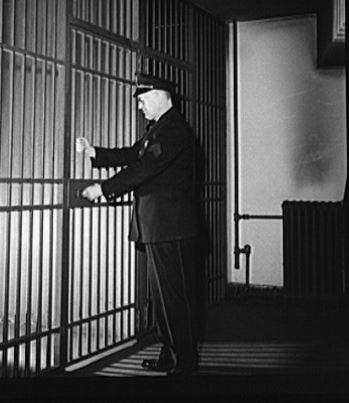
I left Marty sitting there waiting for a bull to come take him back to his cell. Misery overwhelmed me as I walked the corridor back toward the headquarters’ lobby. Marty had never lied to me. When we were kids and he’d been dead wrong in something, where it might have been to his advantage to lie, you could count on him to tell the truth. Or even when it got him into trouble, he never lied. I believed his version of the incident, despite the evidence at the moment.
Detective Waddell suddenly stepped from an office and fell in beside me as I walked. He looked at me sideways. “How’s Marty holding up?”
“He’s okay, Rob, considering. Thanks.”
The detective slowed and pulled me into a room off the hallway. Closing the door to the hall, he turned to me with a grim expression. “Look, Gil, frankly I want to see justice done here, whoever it affects.” I nodded, uncertain of what was on his mind. He went on, “Donovan’s a coworker. But you’re a pal. So, let me tell you where the bear shits in the buckwheat on this thing. Word is, Gus Donovan wants to be the next chief of detectives. He thinks solving this killing quickly will get the support of Alderman Jacobs to put him there. That includes hanging Marty.”
Word is, Gus Donovan wants to be the next chief of detectives. He thinks solving this killing quickly will get the support of Alderman Jacobs to put him there.
The information didn’t surprise me any, except the bit concerning Donovan going for the chief of detectives’ job. “Just a word to the wise, my friend.” I nodded my understanding. Before we parted, he gave me a few other tidbits of information about Donovan’s findings so far. I thanked him.
As promised, I called Donna from the lobby pay telephone and gave her what information I felt I could to keep her from panicking. She made me promise to help her get to see Marty when the time was right. I wasn’t sure whether the time would be right anytime soon. Marty didn’t want her to see him this way. But I promised. I passed Marty’s love to her and the baby, as well. She was crying when she disconnected.
* * *
When I left the station house, I took a taxi back to my LaSalle. Weather or no weather, I had to have quick mobility for this investigation. That meant using my heap. I drove cautiously to Jacobs’ Jewelry Store.
Despite the bitter cold, people-the sympathetic, the curious, and the morbid among the local population-crowded the sidewalk outside the jewelry store. I drove by slowly to size up the situation. Lights shone through the business’ front windows. After parking my crate next to a fireplug down the block, I walked back to the store, noting streetlights were plentiful on the block, just as Marty and Donovan had said.
I elbowed my way through the throng toward the front door. One lug in the swarm tried to get tough over me working my way to the storefront. I stiffened and asked whether he’d bought a ticket to the show. When he sneered he hadn’t, I told him I had and flashed a badge I kept beneath my PI credentials for just such occasions. He only had a split-second to see the thing. The bluff worked. He thought I was a copper and melted back into the mob behind him.
I elbowed my way through the throng toward the front door.
Planks, hastily nailed across the front door where the glass was missing, blocked entry at that location. There were sizable gaps between the boards, but not nearly large enough for a person to crawl through. It looked like the type construction the kids in the Our Gang Comedies might do for a clubhouse. Peering through an opening, I saw a bearded, younger man in a white shirt and wearing a black yarmulke. His expression seemed resigned to any sort of calamity. The fellow appeared to be taking inventory. I got his attention, quickly flashed the badge again, and told him I needed to speak with him. Again, the shield bought my way past obstacles. He asked me to come to the back entrance.
I made my way to the alley running behind the businesses on that block and found him holding a door open. He led me to the store’s front business area. When I inquired about the owner, the man advised me Mr. Jacobs wasn’t coming in that day because of his nephew’s levaya. He told me, being only an employee, though a trusted one, and not a relative or close friend, he’d volunteered to clean up the place during the funeral. Since he was there anyway, he offered to complete an inventory for Mr. Jacobs. The employee’s name was Horowitz.
I jerked my head toward the store’s boarded-up front door. “Do you have any idea how they broke the door’s glass?” Horowitz pointed to a brick resting on a display case. “Can you tell me what’s missing?”
“I told all this to the other officer.”
“Yeah, sure, but he’s with homicide division. Right now, I’m trying to get a handle on the burglary aspect of the crime.” Not a complete lie.
He nodded in understanding and scratched his head while looking around. “Well, for starters, they took the cash.”
“Any idea how much cash, Mr. Horowitz?”
“Oh, yes. Mr. Jacobs is very meticulous about keeping records. It was the money taken in during the week, and it was a good week. We had a large estate sale on Wednesday. The collection contained many precious, unique items of jewelry.”
“Go on,” I said impatiently, as he paused. “How much money did the thieves take?”
“Exactly eleven thousand eight hundred twenty-three dollars.”
I let out a low whistle between my teeth. In my socioeconomic part of the universe, anything over a couple of C’s is big money! Eleven grand is in another stratosphere altogether! “That’s a lot of cash to have on hand, isn’t it?”
He nodded vigorously. “Yes, it’s well above what we normally had in the store. But, as I said, this was an unusual week for our business. Mr. Jacobs, who personally makes the store’s bank deposits on Fridays, chose to wait and take it in with the regular deposit today instead of Wednesday afternoon or yesterday. He said one day wouldn’t make any difference. You see, on Fridays, we remove the week’s receipts from the safe and make a bank deposit at noon.”
“And that’s a routine thing?”
“Yes. Noon every Friday. Whatever we take in Friday afternoon goes into our cash on hand to start business Monday morning. So, relatively speaking, there’s not much cash left here after noon on Friday.”
“So, I assume they broke into a safe.”
“No, in fact, they didn’t.” He paused. I tossed him a look he understood. He smiled vaguely. “It just so happened a mechanism in the safe’s tumblers or something isn’t working properly. Mr. Jacobs wasn’t able to lock it Wednesday evening. We couldn’t use it until the repairman came by and fixed it. He’s scheduled to be here this afternoon.” He chuckled sardonically. “A little late for that now. Anyway, Mr. Jacobs locked the money in a strongbox in his office desk, which he also locked. The thief broke into the desk and took the strongbox. We’ve never had anything such as this happen.”
“Was anything else in Mr. Jacobs’ office rifled?”
“Rifled?”
“Yeah, you know, gone through, ransacked?”
“Oh. Yes, the thief also removed the costly jewelry items Mr. Jacobs had hidden in the back of a filing cabinet drawer. The jewelry comprised items left over from the estate sale. Another sale is … was scheduled for next week. The jewelry container was too big to fit in the desk drawers. That, too, would have normally been in the safe.”
I asked to see the desk and the filing cabinet. The young man escorted me to the owner’s office. I examined the desk. The thing was a large, sturdy old oak piece. Someone had spent time jimmying their way into it. My examination of the cabinet revealed no signs of forced entry. At that point, Mr. Horowitz advised me it didn’t lock, but Mr. Jacobs thought it to be the best hiding place. I finished my examination and turned to the store employee. “Anything else taken?”
I examined the desk. The thing was a large, sturdy old oak piece. Someone had spent time jimmying their way into it.
He made a vague hand gesture toward the store’s showroom. “Just a few pieces of random jewelry from the front of the store. Nothing to speak of compared to the money and items from Mr. Jacobs’ office.” He put his hands together as if in prayer and moved them up and down and moaned, “Still, such a pittance for a man’s life.”
So-called naturally occurring coincidences have never been my favorite situations to come upon. I’m a worst-case scenario kind of guy. And this was one of the worst cases of compounded coincidences I’d come across in a while. Get this. Somebody burgled Jacobs’ establishment the week there was a huge estate sale, while the joint sat loaded with cash, and the safe was unusable. Additionally, the thieves–I was going with the plural, my brother’s version of the facts–seemingly proceeded straight to a locked desk to steal the strongbox full of cash. Then they moved directly to a filing cabinet where the proprietor had hidden very expensive jewelry. This theft was stacking up to be an inside job. The few less-impressive jewelry pieces taken from the showroom and the front door smashed with a “handy” brick struck me as window dressing to throw everyone off that idea.
“How many people knew there was the large amount of cash, the stash of jewelry in the filing cabinet, and the problem with the safe?”
His eyebrows furrowed, Horowitz mulled the question over for a minute. “Well, of course, those of us who work here knew. That’s a total of five people. But everyone here is reliable and trustworthy, I assure you. And I’m sure the family members were aware. It’s a family business, you see.”
“That included Bert Jacobs?”
He started to nod, but stopped as his eyes widened, “Hey, you don’t think–?”
“Oh, no, I don’t think anything at this point.”
“–Bert was a ganef, do you?” he stammered.
I tried to shy away from revealing too much too soon. “We’re just looking at all the angles,” I said, giving Horowitz my best all-is-well grin. “Say, do you happen to know where Bert Jacobs lived?”
The stunned young fellow muttered, “He still lived with his parents.”
“And do you know where Alderman Jacobs’ residence is? I may need to speak with him after the appropriate period of mourning, of course.” He looked the address up in something on Mr. Jacobs’ desk and recited it as I wrote. By my estimation, the home was twelve miles away, as the crow flies. I added another weird coincidence to the rest in these circumstances. Police canvassing the neighborhood had found no automobile in the store’s vicinity connected to Bert Jacobs, according to what Detective Waddell told me. So, we’re expected to believe the dead man was coincidentally walking past his uncle’s store, twelve miles from home, in the early morning hours just as a burglar emerged? And he gave chase?
I thanked Mr. Horowitz for his help, got his address and telephone number, and departed. When I hit the sidewalk, a question kept haunting me. What were the chances Detective Donovan might follow the same course of investigation I had and come to the same conclusions I was? As a Brit acquaintance of mine from Harry’s often said, “Not bloody likely!” The detective’s track record of taking the path of least resistance and jumping to unfounded assumptions stood in the way. In working an investigation, Donovan couldn’t find rice in Chinatown. And now my brother’s life rested on that ineptitude.
When I hit the sidewalk, a question kept haunting me.
* * *
Since I was in the neighborhood, I decided to pay a visit to the eyewitness and confirm what she’d seen. Climbing the stairs to the third floor, I prowled the dimly lighted hallway to the only apartment facing the street. No noise came from inside, so I knocked on the door as gently as I could and still have the occupants respond. If the colicky baby had finally found rest, this mug didn’t want to be responsible for waking it. Bare feet rustled across a carpet before a female voice sounded through the door in a whisper, “Yeah? Who is it?”
“Detective Tanner, ma’am. I need to speak to you about last night’s events, if I may.” The door opened a crack. A single, bloodshot eye peered from behind it. The peeper belonged to a wary female. “I just need a minute of your time, ma’am.” I kept my voice soft. My best I’m-harmless-as-a-butterfly smile spread across my puss.
The door opened wider and a haggard-looking woman invited me in.
Despite her current state, you could tell the skirt was an attractive darb when she was made up. She clutched the top of her cinched bathrobe’s front tightly to her throat with a sturdy hand. “My mother’s already spoken to another detective, detective,” she whispered, sleepily.
I followed suit with a low tone. “Yes, ma’am, I understand. Detective Donovan told me he had, but I’ll bet he was in a hurry, what with the murder, and didn’t have the time he needed to be thorough.”
“Well, my mama said everything was moving pretty fast.”
“Is your mother here? Can I speak to her for just a minute?” She nodded reluctantly.
I declined her offer of coffee. Before disappearing down a hallway, the frail gestured toward a chintz-covered divan sitting against the far wall. I dropped my hat on a small table holding a large ashtray made of smoky glass and sat on the sofa. My eyes prowled the room. Except for a sink full of dirty dishes in the kitchen area, the residents kept the modest apartment tidy. Two windows in the compact living room opened to a small air shaft.
While waiting, I absentmindedly toyed with a doily on the arm of the divan. I found it covered a cigarette burn in the arm. I was smoothing the doily back in place when the older woman appeared, followed by her daughter. The mother, who had only a faint resemblance to her daughter when she smiled, wore a shapeless print housedress. She was tall and trim. Her face appeared tired and careworn. I stood and introduced myself, again without giving away my true status in the matter.
The mother, who had only a faint resemblance to her daughter when she smiled, wore a shapeless print housedress.
She introduced herself as Mrs. Bernice Volker and apologized for her appearance, explaining she’d been sleeping after a long night with a sick infant. In turn, I expressed regret at having to disturb her with more questions. When we sat down, the older woman took a seat at the opposite end of the divan from me. Her daughter occupied a bulky stuffed chair near her.
When asked, Mrs. Volker once more talked through the events of the early hours that morning. I gently prodded her with pointed questions to get the exact sequence of the things she’d seen and heard. She closed her eyes briefly as if reliving the time. After discussing them, it turned out the older lady initially became aware of someone shouting. Then the first gunshots followed. That’s when she hurried to the front window, still holding the baby. How many initial shots sounded, she wasn’t sure. Two, maybe three. When she arrived at the window overlooking the street, the Volker woman saw the uniformed officer shooting at a man across the street from the apartment. Because she didn’t see the second man holding a gun, she assumed the cop had fired all the shots. But, in reality, when pressed, the woman couldn’t say for sure. She admitted someone other than the police officer might have fired the first shots. When she called to the officer, he ran away. The window was closed, so the woman wasn’t sure he’d even heard her shouts. Mrs. Volker carried the baby into the living room and called the police to report what was happening.

I asked whether she’d heard any glass breaking during this time. The older woman told me she definitely had not. At this point, her daughter, whose last name was Wells, became animated. “Of course you did! You had to, Mama! That was what woke me up!” The young mother shifted her wide-eyed gaze back to me. “After the glass breaking, I heard someone shouting, then the guns being fired. I was so tired. I’d been up with the baby for two straight days and nights before mama came over. At first I thought I was dreaming.”
Mrs. Volker’s weariness started to show. “I most certainly did not hear any glass breaking!” she responded to her daughter irritably. “Remember that I had Mikey Junior in my arms, screaming at the top of his lungs. I barely heard the yelling. They fired the first shots before I got to the window.” She relaxed and followed with, “So, I only heard the shouting and the gunfire.” She explained the window she’d gone to was at the end of the hall. The only other windows overlooking the street were in the bedroom where Mrs. Wells had been sleeping.
I turned to the daughter. “So, you heard the glass breaking, the shouts, and then the gunfire?” She nodded emphatically. “Time wise, how far apart would you say they were from each other?”
“Oh, I was so groggy, I can’t say exactly. But they were sort of close together. Perhaps a few seconds apart.”
“Did you mention any of this to the other detective when he was here and spoke with your mother?”
“No. Nobody’s asked me any questions before now. When I heard the rumpus, I got up long enough to check on Mama and the baby. They were here in the living room when I peeked in on them, so I climbed back into bed. I was too worn out to care.”
“That’s right, detective,” the older woman put in. “When that other detective was here, Geraldine was still in bed. She’s had a rough time of it, so I let her sleep. I didn’t realize she’d seen or heard anything.” She smiled wearily, “When she got up, we handed the baby off so quick, we didn’t even talk to each other. I went straight to bed.”
The daughter chuckled, “That’s right. Mama and me haven’t had a conversation since yesterday morning. Just hand Mikey Junior off between the one getting up and the one going to bed.” She glanced toward the hallway and murmured, “Thank goodness he’s sleeping now.”
Before leaving the two women, I went back over their statements to confirm the sequence of what each had heard at the time of the incident. Then, I made certain each was willing to testify in court as to what they’d told me.
Back on the street, the crowd of gawkers in front of Jacobs’ store had dwindled only a little. As I gazed into their sorrowful, sunken eyes, I realize how desperate laid-off folks were for something to take their minds off their troubles and their hunger.
I took a minute to think over what I’d learned. It added up, except for one thing. Where was the gun used by Jacobs to shoot at Marty? My brother was sure there’d been no way for someone else to recover it during the incident. Marty was certain he’d looked everywhere around and under the body for it without finding it. And that was immediately after the shooting. So, where the hell could it be?
It added up, except for one thing. Where was the gun used by Jacobs to shoot at Marty?
I walked across the street from where Marty had said he’d been standing during the firefight. I found the spot where Jacobs had died. It was in an almost direct line between Marty’s position and the alley the first culprit had run into. The man’s resting place was simple to find. His blood still lay frozen over the icy street. I looked over the area. There was nothing under which someone might have hidden a weapon. Where was the gun? Who was the second man Marty had seen? I knew he existed beyond my brother’s say-so. The police found none of the stolen items on Bert Jacobs’ body. The second lug was obviously carrying the loot. But how could I learn who the goon was? As I stood there befuddled by the circumstances, I resolved to take my findings to Detective Donovan.
* * *
At headquarters, the desk sergeant made a quick telephone call and relayed to me Donovan was not in the building. My request to see Detective Waddell brought the same result. Frustrated with the situation, I suddenly realized it was midafternoon. I hadn’t eaten all day. My stomach was as empty as last year’s bird nests. So, Cappacino’s Restaurant was my next stop. The time for a meal could also give me the opportunity to consider what I’d learned so far and to plan my next step, beyond informing Donovan of my findings.
* * *
Mama Cappacino was in her usual place, greeting her customers, when I arrived. She gave me my customary hug but held on a little longer than normal. When she pushed back and looked up into my face, tears filled her eyes. “I hear about Marty. He’s-a good-a boy, Gil. I pray for-a him and-a Donna.” She crossed herself as she spoke. I smiled weakly. I’d introduced Donna and Marty to Mama’s place some time back. They’d become regulars whenever finances allowed. Occasionally, when I was flush after a decent bit of work, I’d spring for a meal with them. They loved the place and told Mama, if their next child was a girl, they’d name the baby Rosalie, after her. Mama had giggled like a schoolgirl at their promise. I wasn’t sure whether they were serious, but time would tell.
“I hear about Marty. He’s-a good-a boy, Gil. I pray for-a him and-a Donna.”
I thanked Mama for her thoughts. When she sat me at a booth, she asked where things stood. I briefly told her what I’d learned and explained there was a second mug with the dead man, but I had no idea how to locate him. She smiled sweetly as she left me and sent a waitress over.
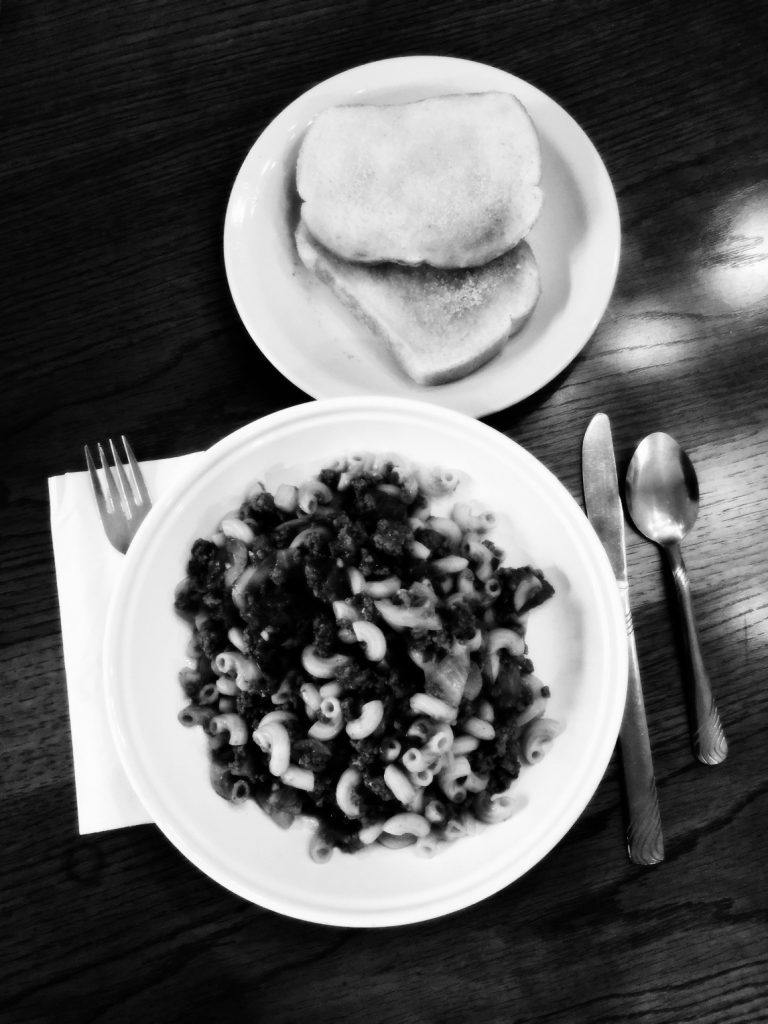
The girl told me Mama had fixed a big pot of slumgullion that morning. Now, slumgullion may not sound like the most appetizing name for a dish, but that was part of its charm for the customers at Cappacino’s. One restaurant regular had learned to love it during the earliest, dark days of the depression back in Omaha. As he had explained to the restaurant’s owner a while back, his family didn’t have much money. Slumgullion was what they often served at their dinner table during those tough times. After he gave her the recipe, Mama made it especially for him. It soon caught on with other patrons, including me. Now, she occasionally made it a daily special. It was my choice that day.
Nothing new on how to pursue the inquiry occurred to me as I ate. At one point, I got up and called police headquarters from the restaurant’s public telephone. Neither detective had returned. Helplessness overwhelmed me. Marty refused to try to make bond, even on the slim chance a judge would grant it. I’d learned important facts that backed up Marty’s explanation, but I didn’t find the gun. And I couldn’t reach the detective in charge to relate those facts to him. In desperation, I left a message for Rob Waddell, telling him I had some important, new information I’d feel better delivering to him personally. I added I’d probably be at Harry’s tavern by the time he got the message, if he wanted to contact me there. Rob knew the number.
* * *
Leaving the restaurant, I found the temperature was plummeting again. Snow clouds threatened to add to the city’s misery. Twenty minutes later I was warming my favorite barstool in Harry’s Paradise Tavern. Harry sauntered over to me when he’d satisfied a thirsty gob at the other end of the bar. The proprietor poured my usual and wiped the bar out of habit. He leaned toward me and whispered, “I read about Marty in the evening editions. Sounds like they want to crucify him, Gil. That Detective Donovan doesn’t sound any too friendly to Marty’s predicament.” Harry’s comment on the local newspapers “crucifying” Marty and my brother’s statement about being dead and needing help to “roll the stone back” hit me in that moment.
He leaned toward me and whispered, “I read about Marty in the evening editions. Sounds like they want to crucify him, Gil.
I shook my head and I told him, “It’s political bushwah, Harry!” A skirt I didn’t know was sitting next to me, so I kept my response clean. It wasn’t easy. “Just because the dead guy’s an alderman’s son.” I caught myself before I said any more. “The truth of it will come out soon enough.” He waggled his head, threw me a hopeful grin, and moved on to another parched patron.
Out of concern for being clear-headed while Marty’s case was open, I limited myself to only two drinks. It seemed I nursed the one in front of me longer than any newborn ever had been. Forty-five minutes after my entry into Harry’s, a familiar, sociable face appeared at my side. “Hey, Rob, glad to see ya, fella! Let me buy you a drink and let’s grab a booth.”
The detective nodded, “I’ll have the same as you, Gil.”
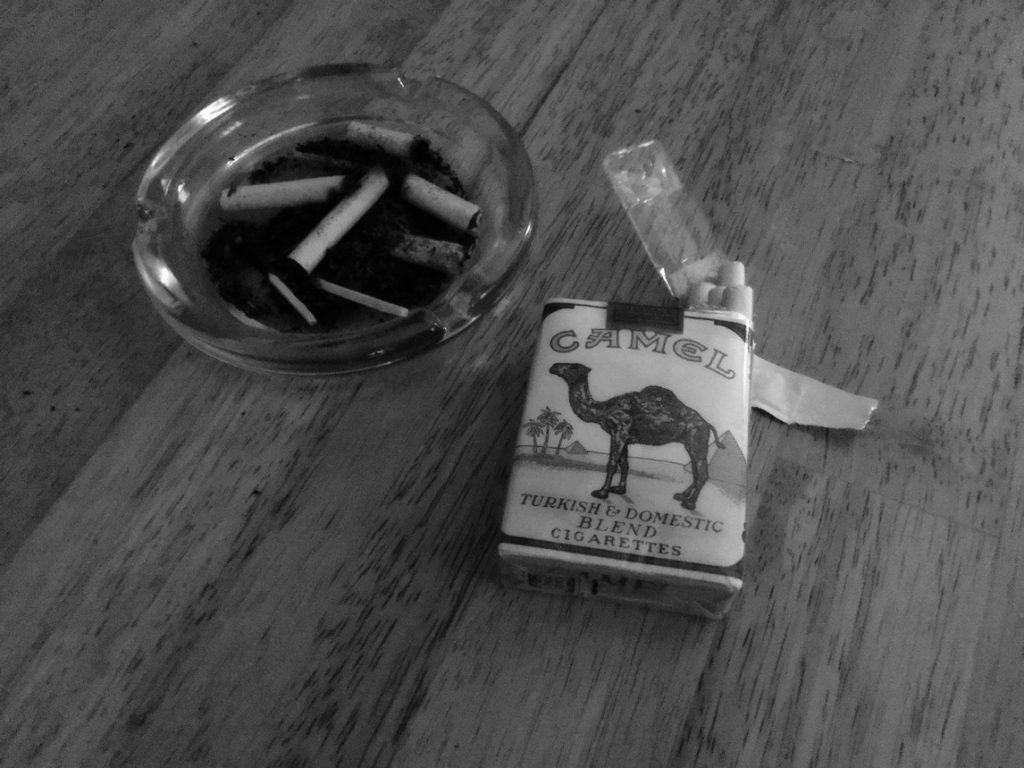
I looked back at my barkeep, signaled for two more of the same, and jerked my thumb back over my shoulder toward an empty booth. Harry nodded. Time had come for a refill for me. I’d nearly carried my first drink past its prime. We arrived at the booth just ahead of the drinks. Harry and Waddell, who patronized the tavern occasionally, exchanged greetings. Rob took a seat in the booth and dug a new deck of Camels from a pocket. Watching my friend unwrap the gaspers brought a smile to my face. After all this time, he was still trying to get use to the cellophane outer packaging the brand had added back in ’31. Tapping a fag on his thumbnail, he asked, “So, what’s the dope, Gil? Why the big rush?” He lit the cigarette, emptied his lungs of smoke, and waited.
“I’ve done some digging today, Rob, and what I’ve learned is good news for my brother.” I filled the detective in on what I’d learned at the jewelry store and from the two women in the apartment above it, one of whom Donovan never interviewed. The information dovetailed with what my brother had told the rotund detective.
I finished by stating the obvious. The closeness in time of the door’s glass being broken and Marty seeing the pair outside the jewelry store meant they had completed the burglary before they busted in the door. No one could have gotten to that desk and pried it open in such a short time, much less located the jewelry items hidden in the filing cabinet drawer. Nobody. The broken glass in the door and the small-time things taken from the showroom were red herring. When I’d finished, I signaled for Harry and borrowed the pencil he always carried. I wrote Horowitz’s name and address and the names of the two women in the apartment on a scrap of paper. Then, I slid it across the table to the man sitting there.
Detective Waddell turned the paper to read what I’d written. “And the gun your brother says Jacobs had? Find it?”
I felt my face redden. “No. No gun. Yet. But I believe Marty, so there has to be an explanation, Rob. I just haven’t found it.”
He sipped his drink and gaped at me. “So, why are you telling me this? Why aren’t you spilling it to Gus Donovan?”
“I’ve been trying to reach him all afternoon. Since I couldn’t find him, I determined I needed to tell somebody in the department what I’d learned. Somebody I can trust.”
After giving me an odd glance, he opined, “Donovan was probably out on a case during that time, Gil.”
As aggravated as his covering for his fellow detective made me, I kept my voice low. “All afternoon? Bullshit, Rob! He’s never spent that much time investigating anything. He’s more likely on vacation,” I seethed.
Waddell hardened at my words and raised a hand to stop me. “Easy, Gil. You’re my pal, but I still carry a badge. Same as Donovan.”
Waddell was a tough, but easygoing kind of guy. He was the sort you’d want to have a drink with in a bar. But he was also a mug you’d want with you if somebody in the bar started trouble. Maybe I’d pushed too hard. I sat back and gathered myself. Despite the detective’s admonition, I had to add, “No, you don’t, Rob. You don’t carry your badge the same as Donovan, if you get my meaning.”
Maybe I’d pushed too hard.
He asked, after a pause, “So what do you want from me? I won’t step on a fellow detective’s toes by getting involved in his investigation.”
“You outrank him in the division, right?” I cut off his response, “Just kidding, Rob. Sort of. I just want you with me when I tell Donovan what I’ve told you. Be there to make sure he listens.” I grinned, “And to keep the peace, if necessary. Nothing more.”
After a minute of reflective silence, he showed a lazy smile. “Okay. Fair enough. Come around at ten in the morning. I’ll make sure we’re both in the office.”
We finished our drinks with small talk reliving the recent pro football championship game, where the Lions had routed the Giants. Rob asked me whether Marty regretted his decision to leave the game just as new owners bought his Dayton team and moved it to Brooklyn. The thought of Marty, sitting in a cell, tore at me hard just then. I sucked it up, though. I told Waddell I doubted it because Brooklyn, though finishing in second place behind the Giants, had ended the season with a losing record. Marty didn’t like to lose. Anything.
* * *
The next morning broke icy, but clear. Grabbing a morning edition, I made my way to The Wayside Café down the street from my place to grab a bite of breakfast before meeting with the detectives. After eating, I drove to police headquarters, parked my LaSalle as close to the building as possible, and made my way into the lobby. The desk sergeant telephoned the detectives’ division to tell them of my arrival. A few minutes later, Waddell appeared at the door which led to the inner workings of the place.
I couldn’t help myself. “Is Donovan even here?”
Rob’s face took on an annoyed smirk, and he jerked his head toward the inside hallway. The lanky detective said nothing. After a few steps walking the hall together, he grumbled, “Gus is waiting for us in an interrogation room. I told him you’d gathered some new facts. He’s not happy, so lose the attitude, Gil.” His voice was stiff and edgy.
Now wasn’t the time to alienate the one pal I had in this scenario. A nod was all he got back from me. We passed through a second corridor to a door marked “Interrogation Room #2” in faded gold lettering. I chuckled to myself. Using the interrogation room was one way for Rob to keep things in hand. The detective opened the door and went in. I followed him. Detective Donovan sat on a straight-back chair at a scarred oak table, drumming its surface with his thick fingers. Two similar chairs finished the room’s décor.
Waddell took a seat. I sat in the last chair and leaned across the table toward Donovan. He stopped the tapping. “I told you not to mess in my case, Tanner.” His tone was cold and angry.
I tried to shoot Waddell a smirk that asked, “Who has the attitude?” He hoisted his eyebrows and exhaled noisily, gazing back and forth between me and Gus. “Hear him out, Gus. You said you would.” Donovan grunted. He had a mean look in his eyes.
I turned my attention to the big detective. In as pleasant a voice as I could muster, I offered, “I did not intend to ‘mess’ with your case, as you put it, detective. But I wanted to satisfy myself whether the thing happened the way Marty said. I went to Jacobs’ Jewelry Store yesterday and spoke with an employee there.
“Afterward, I went upstairs and spoke with the witness you’d mentioned, Mrs. Volker.” Donovan’s body turned rigid, but I pressed on, “There was another witness, an ear witness, in the same apartment, Mrs. Volker’s daughter, Mrs. Wells. Wells can corroborate the sequence of events out on the street. She heard everything from her bed. You didn’t speak with her.” I raised a hand when Donovan scowled, irritably leaned over the table, and started to say something. My brother’s liberty, possibly his life, hung in the balance. Diplomacy was foremost in my mind, but I’d have my say. “The reason you didn’t interview her is simple and understandable.” I lied about what I really thought.
My brother’s liberty, possibly his life, hung in the balance. Diplomacy was foremost in my mind, but I’d have my say.
“She’d been up with her sick kid the two nights before and was sound asleep when you were in the apartment, speaking with her mother. Meanwhile, her mother wasn’t aware Wells had heard or seen anything. As far as Mrs. Volker knew, her daughter had slept through the entire episode. And Mrs. Wells didn’t know the significance of what she’d heard.” Then, I filled Donovan in on everything I’d learned the day before, including not being able to locate Jacobs’ gun. “But, Detective Donovan, if everything else Marty said holds up, why wouldn’t his story about the gun and being shot at by Bert Jacobs? Won’t you give it another look?”
“All that may be true about what the witnesses have to say. But with no weapon to show me otherwise, I still believe your brother killed an unarmed man.”
I slammed my fist on the table and regretted it at once. Stopping to get myself in hand again, I went on, “If you’re right, detective, what harm will come from going back over what I picked up yesterday? Maybe it’ll be enough to put doubt in your mind about what you just said. I don’t believe it for a second.” Donovan shook his head vigorously, stubbornly. “Will you at least re-interview Volker and learn what Wells has to say? And, while you’re at it, won’t you compare what they say with the facts relating to the jewelry store burglary? It adds up to an inside job.”
Donovan made no reply as Waddell spoke. “Tell him about the car, Gus.”
His words stunned me. It was my turn to cast quick glances between the other two men at the table. “Car? What car? Did you find a car connected to this robbery?” Donovan sat silently. I looked to Detective Waddell and waited.
“We found out this morning,” Rob began, “Bert Jacobs’ car had been in a wreck yesterday morning as it was speeding away from the area of the shooting. Two fellas walking to work saw the accident. They said the jerk driving the crate jumped out and ran away. He was carrying some things, but they weren’t sure what. Since it was dark, they didn’t get a real good gander at him and only think they might identify him if they see him again. We got a general description, but that’s it. We–”
“And you’re sure it was Bert Jacobs’ car?”
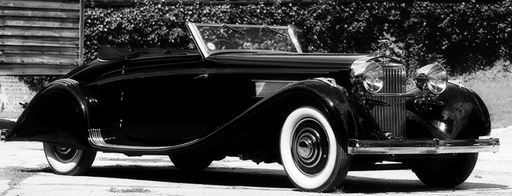
“He drove a pretty fancy heap, Gil: a Hispano-Suiza. Probably not another one in the entire city. It was his car, all right.” Waddell stopped me when I started to speak. “Nobody saw or heard it leave the immediate area of Jacobs’ Jewelry Store. Because of that, our guess is it was probably parked a block over from Dunbritan Street where that alley came out on Presley Avenue. It made for a pretty handy getaway. Gus has had the car brought to our garage to check for fingerprints. Perhaps we’ll get lucky and find out who drove it away from the burglary. Gus thinks the lug driving the car when it wrecked stole it. Merely a coincidence, he says.”
This entire time, Gus had been as quiet as King Tut’s tomb. I wasn’t certain whether Waddell or Donovan was behind impounding Jacobs’ car to check for prints. It didn’t sound like a Donovan-style move, but, at the moment, I didn’t care. It was being done. Yet another piece of the puzzle might fall into place. The word coincidence was not in my dictionary. “That wreck after the shooting corroborates Marty’s statement that there were two guys involved in the burglary,” I pleaded. Waddell smiled. Donovan didn’t stir. We discussed it no further. I left Donovan to contemplate these developments.
“That wreck after the shooting corroborates Marty’s statement that there were two guys involved in the burglary,” I pleaded.
Waddell walked me back to the front of the building, promising to make certain Gus Donovan followed up on what I’d found. I made sure he understood I’d be in touch.
* * *
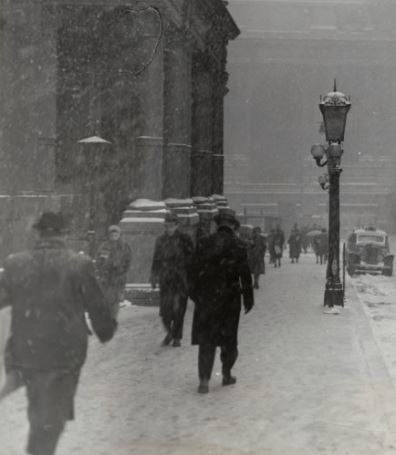
I visited Marty in the city jail while I was there. Trotting down the police headquarters’ front steps and around the side of the building, I made my way to the jail’s primary entrance a block down the street. Along the way, I realized my tax dollars weren’t being spent to clear the sidewalks around city buildings, at least not this oversized one. Back inside, I made arrangements to see my brother. He looked rough but seemed to be holding up well under the circumstances. Donna had come the afternoon before. Her visit had obviously lifted his spirits.
During our brief time together, I brought him up to date on what I’d learned and what was happening in his case. Despite my not having found the gun, news of the witnesses corroborating his story energized him. The possibility of the burglary being an inside job, with Jacobs’ not being just an innocent bystander, also buoyed him. Added to that was the circumstances of Jacobs’ Hispano-Suiza being located, confirming the presence of the second man he’d seen. Marty still teared up when we spoke of him shooting Jacobs. There was no doubt the incident, justifiable or not, would stay with my brother for some time, possibly forever. On leaving, I assured him I’d stay in touch with Donna and get him some cigarettes.
My visit with Marty had raised my enthusiasm for further pursuit of evidence in the matter. At my car, I resolved to visit the crime scene once more, hoping to find something concerning the gun’s whereabouts.
* * *

In due course, I jockeyed my car into a space on Dunbritan Street a short distance from Jacobs’ place of business. I cut the motor. From the driver’s seat, I briefly watched a workman replacing the glass in the jewelry store’s front door. I spent the next couple of minutes reviewing of the situation. That damned gun! It was the missing link. Also, from that vantage, I again located the approximate site where Marty had said he was standing when Jacobs fired at him. I slid out of the car and walked to the spot.
A cursory inspection of the sidewalk and buildings in the vicinity showed no signs of definitive bullet strikes or ricochets. Eyeballing the alley from there and sighting where Jacobs had fallen between the two places, I started across the street. I was so focused on the problem at hand, I was almost run over by a boxy relic from the 1920s. The thing had built up more speed than one might have thought possible. As I walked past the spot where Bert Jacobs had spent his last moments on earth, I saw remnants of his blood still frozen there. Somebody ought to clean that up, kept crossing my mind.
As I walked past the spot where Bert Jacobs had spent his last moments on earth, I saw remnants of his blood still frozen there.
Safely across Dunbritan Street, I entered the alley and followed it the block until it ran into Presley Avenue. Rummaging in the various trash cans, cardboard boxes, and rubbish piles scattered over its length brought nothing. I truly had expected nothing to turn up, but I had to make the effort.
I returned to the Dunbritan Street end of the alley and looked around again in desperation. Nothing of evidentiary value revealed itself. I was ready to give up and move on when something so obvious, so common it almost went unnoticed caught my eye. Just beyond the bloody pavement, between that spot and the alley, was a curbside storm drain. A storm drain!
I assumed Jacobs had fallen with his momentum going toward the alley. If I added his impetus from turning, it could easily cause the dropped gat to slide the scant distance across the icy street and into the storm drain. Though the drain opening was partially closed off by ice and snow and the angle was off just a bit, but it could have happened. That had to be the answer!
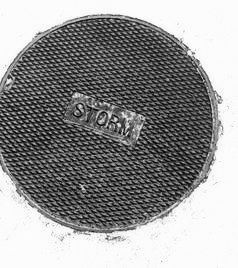
A manhole cover sat on the sidewalk just beyond the drain opening on the street. My first inclination was to rip the manhole cover up and look inside, but I had no tools.
Then I recalled the fella working on Jacobs’ door. I trotted across the street to the guy. He was a wizened old man, who seemed barely able to hold up the coveralls he sported. The guy had a rum pot color about him. After I inquired, he told me he had a large crowbar on his truck. When I asked to borrow it, he eyed me suspiciously. I offered him a buck to let me use it. He hesitated. We finally settled on a fin.
As we walked to his truck, a thought occurred to me. I didn’t want to lift the manhole cover and find something crucial without a witness. Donovan was sure to search for any holes in my evidence. I asked the old guy if he’d stand by and watch what I was doing and witness whatever I might find for the same fin. He dithered again. We settled on a sawbuck for the entire process. He tasted his tongue. I knew where that money was going.
I tossed my fedora in my car and grabbed a flashlight before we crossed to the storm drain. Once there, I inserted the end of the crowbar under the edge of the cover where it got a purchase. I lifted and twisted it off the hole enough to get a gap to look into. When the old man took hold of the bar to keep the cover lifted, I realized a small crowd of rubberneckers had gathered around us as I’d worked. Between this group and the gawkers at the jewelry store the day before, I realized this neighborhood desperately needed a motion picture theater for entertainment.
I got on my knees with the flashlight at the opening. The manhole cover was wobbling slightly. When I glanced at my helper, I saw the chore involved the slight old man in a battle of epic proportions as he tried to keep the heavy cover lifted. Before I could say or do anything, two local roustabouts joined the old workman in his struggles. They lifted the cover well beyond what I needed.
I shot the beam of the flash on the depths of the dark storm drain. As it moved on the surfaces below, the light caught the glimmer of a revolver on a ledge six feet below me. The gun appeared new, undamaged by the elements. After making sure the locals would continue to hold the manhole cover up, the old workman got on his all fours and peered into the opening. In the flashlight’s glare, he, too, saw the roscoe. With the confirmation of my findings, the men gently lowered the cover into place.
In the flashlight’s glare, he, too, saw the roscoe.
While the old man stood by with his crow bar, I hustled to a drugstore on the corner of Dunbritan and Richmond Hill. There, I called police headquarters from a public telephone. Detective Donovan finally came on the wire. After a period of arguing, he agreed to come to my location. Despite the significance of my finding, he complained he felt he’d be going on a fool’s errand. I stopped short of telling him I could not have picked a better man for the job. When Detective Waddell came on the line, I told him of my success and confirmed he would get Donovan to my location.
Returning to the storm drain, I found the crowd of onlookers had grown. Evidently, news of a recent development in the events of the burglary and shooting of the day before had spread around the neighborhood. As we waited for the coppers to show, the old man left his pry bar with me and finished repairing the jewelry store door. Then he returned to wait for the detectives with me. I pulled a deck of cigarettes from a pocket, gave the old fella one of the two remaining fags, and lit us both up while we waited. The curious throng continued to grow. To my amazement, no peanut vendor or candy butcher appeared to work the swarm. Yeah, I’m fluent in sarcasm.
In the fullness of time, a car, carrying Donovan and Waddell, pulled to curb. The two detectives got out and sauntered over to me. Donovan suspiciously eyeballed the gaunt, old workman standing next to me, then looked to me. “This had better be good, shamus!” was all the burly detective offered. My only response was a broad grin.
Finding volunteers to help lift the manhole cover at this point was not a problem. Apparently, all the locals wanted to say they’d had a hand in the investigation. When they lifted the cover a small amount, Waddell told them to finish the job and remove it completely. I handed him my flashlight, which he, in turn, gave to his fellow detective. Donovan bent over the opening and ranged the light around the catch basin. “It’s on a ledge on the far side from you and six feet down.” He shifted the light. His face reddened, but he said nothing.
Waddell took the light from him and found the gun in its glare. The detective sergeant was the trimmer of the two. He climbed down the access ladder in the drain and retrieved the weapon in a handkerchief. “It may not have any, but we’ll check it for prints. Right, Gus?” he said, as he was emerging from the opening. Donovan nodded reluctantly. The rod’s appearance brought excited murmurs from those gathered.
“It may not have any, but we’ll check it for prints. Right, Gus?”
I explained to the coppers my theory of how the gun got into the storm drain. Both nodded their understanding and agreement with the possibility. Both confirmed they’d check the weapon for prints. We replaced the manhole cover. I paid the old workman the sawbuck I owed him. With that, we climbed back into our cars and left the scene, to the great disappointment of the gathered rubberneckers.
Driving back toward my side of town, I chose to wait and learn whether there were any further developments from the gun before breaking the news to Marty. The chances of someone else dropping a perfectly good revolver into the storm drain and not trying to retrieve it seemed remote. But waiting for news from the detectives was my best option at this stage. Glancing at my strap watch, I decided it was time for a late lunch at Cappacino’s.
* * *
During my meal, Mama Cappacino approached my booth and handed me a slip of paper. She whispered someone had asked her to give it to me. After she walked away, I opened it to find information regarding one Kelly O’Dwyer, a soldier for the city’s south side gang, known as The League. His name was not familiar to me. I admit I didn’t have a handle on every member of our city’s criminal organizations.
After she walked away, I opened it to find information regarding one Kelly O’Dwyer, a soldier for the city’s south side gang, known as The League.
The note suggested he was the second person with Bert Jacobs in the jewelry store burglary. The message added O’Dwyer had blackmailed Jacobs into the theft because of the sizeable gambling debt he owed to Kelly’s boss. The higher-up mobster was a well-known bookie, gambling house operator, and loan shark for the League. Immediately, I realized what had prompted the note. O’Dwyer, from the south side’s League, had dared to rob a business well within the north side syndicate’s territory.
My guess was the tip came from Mama’s brother, known to me as the reclusive, unnamed kingpin of the city’s north side mob. He knew his sister and I were close friends. Word had probably reached him, through her, of Marty’s trouble. I smiled at the evidence to refute the adage of “honor among thieves.” Territory was territory. Period. On my way out of the restaurant, I asked Mama to thank “whoever” was responsible for the note. We never mentioned it again. My next stop would be police headquarters.
* * *
An hour later found me standing at Donovan’s desk in the detectives’ division. Waddell stood at my side. I told them of the information I’d received about Kelly O’Dwyer’s probable involvement in the burglary. Donovan was hot to learn the source of my information. When I refused to tell him, explaining it was a very reliable person, he tried to blow it off. Before I said anything, Waddell got into the discussion. “C’mon, Gus, you know damned well who Nails is and what he’s capable of!” When I tossed Rob a surprised expression at the name he used, he explained, “Kelly O’Dwyer’s one of the lesser lights of the local criminal underworld. A minor player, maybe, but with a record,” he looked back to his fellow detective, “and well-known to us. The goon’s a nervous, but vicious little twerp, nicknamed Nails because he’s always biting his.”
Donovan’s stubbornness hadn’t waned in the last several hours. “Yeah, yeah. So, Nails has got a sheet. So what?”
“Sheet hell! His criminal file stacks so high, it blocks out the noonday sun in July, Gus!” Waddell responded emphatically. “You know as well as I do he’s not just one guy. He’s a roll call. Nails has something like seven aliases.” Waddell reached across Donovan’s desk and grabbed some papers. Shuffling through them, he came upon the one he sought and let the rest drop back to the cluttered surface. After reading for a second, he shoved it back at the other detective. “Read the general description of the goon running from the Hispano-Suiza again, Gus! It fits Nails to a tee.”
“Sheet hell! His criminal file stacks so high, it blocks out the noonday sun in July, Gus!” Waddell responded emphatically.
Donovan grudgingly took the paper and read. His face darkened. “Okay, I’ll pick him up,” he sighed. “In the meantime, I’ll have the lab boys check whether they can get a match from the car with his prints on file.” Detective Donovan blew air as he rose from his chair. “And now, Tanner, if you’ll excuse me, I’m going to pay a visit on Alderman Jacobs. Now I’ve got a few questions for him, dead son or no dead son, mourning or not, politics or no.”
I smiled and looked at Waddell. I’d never seen such enthusiasm over any situation coming from Gus Donovan. Even the majestic deliberation of a pachyderm he now displayed was refreshing. Rob winked at me and asked the burly detective, “Mind if I come along, Gus? I’m might just learn something.”
Donovan threw a smirk of doubt at the detective sergeant, but agreed anyway. “Let’s go.”
Before I left the building, I dropped off the carton of cigarettes I’d bought for Marty earlier.
* * *
I was sitting on my favorite stool in Harry’s tavern that snowy evening, trying to take the chill off, when Detective Rob Waddell strolled into the watering hole. He had Detective Donovan in tow. Donovan was scanning the place with a look of uncertainty. As the lean detective approached and sat on the barstool next to me, Rob merely nodded his greeting and, loosening his tie, ordered a drink. Donovan, who took the seat on the other side of Waddell, assumed his sphinxlike demeanor and said nothing, except to order a drink. Finally, Rob glanced my way. “Can I buy you a drink, chum?”
“Nah, Rob, thanks. I’ve already gone a few rounds, and I’m losing on points.” I took another slug of my libation. “So, what gives, detectives?”
“Just thought we’d drop by and give you the latest on your brother’s situation,” Rob offered. Harry, who’d just delivered the detectives’ cocktails, hovered. My barkeep was the only “family” I had beyond Marty and his brood and Mama Cappacino, so he took a natural interest in any news. I looked past Rob to Gus Donovan and waited, but not for long. “Donovan arrested Nails O’Dwyer for his part in the burglary a while ago.” Again, I gazed at Donovan, thinking he might take up the story. However, he sipped his drink quietly as Waddell continued, “Yeah. Gus had planned to do a lineup with the two witnesses to the Hispano-Suiza wreck, but Nails confessed before he set it up.”
“Really?”
“Yeah, Gil.” He cut his eyes sideways at his fellow detective and chuckled. “Say what you want about Gus’ investigation techniques, but he’s a helluva interrogator.” The burly detective’s face split in an enormous grin. Rob took a sip of his drink. “Yep. Interrogation is more an art than a science. Intuition. That’s the key.” He slapped Donovan on the back, “And my buddy here has that in spades.”
“Say what you want about Gus’ investigation techniques, but he’s a helluva interrogator.”
I started to say there was nothing wrong with Donovan that reincarnation wouldn’t cure. And I wanted to ask how much a thick city telephone directory, a known interrogation tool, had played in the questioning. But things were going too smoothly, so I buttoned my chin in that regard. Whatever the technique, if it helped Marty, I was happy. “So, what’s the story, Detective Donovan?”
Gus didn’t respond at first. I caught Waddell giving him a slight elbow nudge to the ribs before he spoke. Donovan still didn’t care for me too much. I wasn’t sure why he’d even come into the place with Rob. He finally broke his silence. “Well, it seems the twenty-nine-year-old Bert Jacobs enjoyed playin’ the ponies, poker, roulette, and so on, a little too much. And he was none too good at it. He was in hock to Nails O’Dwyer’s boss to the tune of twenty G’s.
“Instead of collectin’ in his usual Neanderthal fashion, O’Dwyer blackmailed Bert into robbin’ his uncle’s store. Of course, Bert, who had the inside information on the store’s setup, was more than happy to keep his legs from gettin’ broken. And O’Dwyer’s fingerprints were all over the Hispano-Suiza.” Gus’ words stunned me–more that he knew the word Neanderthal and could use it in a sentence than the story behind the burglary. “I think O’Dwyer’s hopin’ for a deal from the district attorney for his cooperation. But I don’t see it happenin’. Too political a case.”
Gus’ words stunned me ….
“And my brother?”
“He’s being released as we speak,” Rob interjected. He held up a cautioning hand before I rejoiced. “But understand the DA still wants to take everything to the grand jury, just to be on the up-and-up. Especially since it involves the death of Alderman Jacobs’ little angel.” He leaned back and snickered, “Well, he may be an angel now. But, anyway, the grand jury’s just a formality, Gil. Marty will ride a desk until they’ve presented the evidence to them, though.”
“Speakin’ of Alderman Jacobs,” Donovan added, “that’s another bit of news. He was the registered owner of the gun we found in the storm drain. So, tyin’ it to his kid was no problem. And the rod had three expended shells casings in it.”
I stopped myself from correcting Donovan’s use of we when it came to who found Jacobs’ revolver. Friendly like, a smiling Harry slapped my forearm, which rested on the bar, and moved to serve another thirsty soul.
Donovan couldn’t resist a little boasting about resolving the thing. “Yeah, shamus, the early bird catches the worm.”
“Well, yeah, but the second rat gets the cheese.”
Donovan clinched his fists perched on the edge of the bar as his face reddened. “You callin’ me a rat, smart-ass?”
I laughed, “Time will tell, Donovan. Time will tell. But, meanwhile, let me buy you a drink, my friend.” He smiled, I’m sure, not at my use of the term friend but at the idea of another round. This one free.
Since Marty was finally back with his family after two days’ absence, I only made a quick call that night to check on them. I told him I’d come by to see him the next day.
* * *
The following morning, I drove to police headquarters to catch up with Marty. The desk sergeant smiled and told me he was at a desk job temporarily. Then, he directed me how to find him in the bowels of the building. As I approached the door to the office of his temporary digs, I heard someone giving my brother “instructions.” I stopped to listen.
“… New department policy. You’re gonna sit at that desk until this blows over, one way or another. I don’t give a shit if this building burns to the ground! You stay at the desk! And when they sift through the building’s ashes, they better find your charred ass in that chair! Get me?”
“Yeah, Sarge,” Marty responded in a firm voice.
After a brief pause, the sergeant finished in a gentler tone, “And, Officer Tanner, we’re damned glad to have a fine officer like yourself back among the living.”
Then Marty cracked up in that deep, hearty laugh he’d always had. I knew all was right with the world again. For now. ©