
November 1931
The year 1931 was a strange time. Memories of “The Great War,” though a more than a dozen years in the past, still haunted many. Our country was in the early stages of what would become known as “The Great Depression.” The unemployment rate hovered at around fifteen percent. Talkies had come into being, though not everyone had the coin to plunk down on what had suddenly become a popular luxury.
Many people were already running away from their previous lives for whatever reason. Some searched for an end to their misery. Many took the opportunity to abandon unhappy families. There were those who sought to escape the law, while still others simply hoped to re-invent themselves where no one knew of them or their background. One such case, although I’m unsure which category he fit into, was a fella I called “The Professor.” This is the story of our first meeting and the few weeks that followed.
* * *
The sky was fairly dark for the time of day. A cold, heavy rain swept across the roadway in sheets. It was the kind of freezing rain that causes steam to drift off your head. The globules were so large they sounded like hail slamming against my LaSalle. The jalopy’s wipers struggled to sling the heavy raindrops aside. Despite the weather and road conditions, I had the roadster going as fast as possible.
The pursuing Hupmobile edged alongside me on my right. I glanced its way. The barrel of a gat appeared in the front lower corner of the driver’s window. I tapped my brake pedal just as a blast sounded. The shot missed. Barely. The mobster jammed his brakes and skidded to a stop as I sped up and passed him. He quickly made up the distance between us and pulled even with me again. When I jerked my machine sharply in his direction, I was grateful he avoided me and slid off the highway. The LaSalle was brand new.
The barrel of a gat appeared in the front lower corner of the driver’s window.
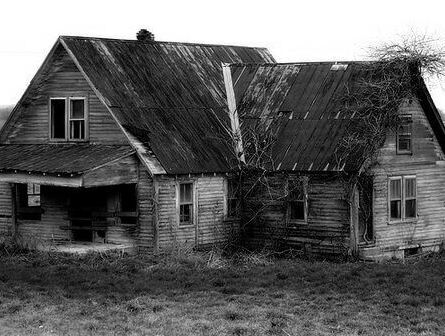
A glimpse in my wing mirror told me his boiler wasn’t incapacitated. I used the opportunity to put as much distance between us as possible. Rounding a curve, my car sputtered and slowed. I coasted to a stop on the side of the road. A squint at the fuel gage revealed it sat on empty. Although my adversary had fired several shots during the chase, I hadn’t heard or felt any strike my crate. So he hadn’t hit the tank. It had just run bone dry. Of all the damned luck! A scan of my surroundings told me I sat in the middle of nowhere. Ahead, I spied what appeared to be an abandoned farmhouse just off the road. The distant roar of my pursuer’s engine came to me over my shoulder. Bailing out of the car, I ran for the building’s cover, unholstering my .45 as I went.
Just after I entered the place and set up next to a window opening, the Hupmobile came to a screeching halt next to my car. After a moment, the thing eased forward to a spot in the road closer to the house. Its driver clambered out on the passenger’s side and peeked over the hood in my general direction. I could see his Borsalino bobbing as he tried to get a sign of my whereabouts.
“Tanner!” he bellowed. “C’mon out, Tanner! I promise I’ll make it quick!”
I waited. The goon could sit in the icy rain until hell froze over for all I cared. I removed my iron’s magazine. Four rounds remained, including the one in the chamber. That wasn’t enough to get into a shootout with this hooligan. My spare magazines were in the LaSalle. In my rush to get out of town, I’d tossed the bag they were in onto the passenger side floorboard. And when I beat a hasty retreat to the building, I’d forgotten to grab any of them.
Behind me, something shifted under a large flattened box lying on a dilapidated bedstead. I turned, expecting to encounter a rat. Instead, a man somewhat older than me peered out from under the cardboard. Though dressed in decent clothes, he looked rough, as though life had been bouncing him around hard. He shot me a startled grin through the three-day salt-and-pepper stubble covering his face. Whatever he was, he wasn’t a bindle stiff.
Instinctively, I had my rod pointed at him. “Who the hell are you?” I asked in a harsh whisper.
“I might well ask the same of you, young man,” he responded softly, but without a hint of fear. His eyes twinkled as he spoke. “I came in here to get warm. It’s too cold out there even for polo bears.” I was certain I’d heard him wrong. “And do you mind pointing that weapon in another direction?”.
I chuckled and lowered my gun. “Sorry to disturb you, old timer. But I have a situation on my hands that left me no choice.” He shrugged his lack of understanding. “There’s a guy out there who wants to kill me.”
He hoisted his brows. “Why?”
“That story will take more time to tell than I think we have.”
“We?”
“Sorry, but, if he kills me, he won’t leave any witnesses, no matter how far they may be removed from our dispute.”
The fellow shoved the box aside, rolled off the old mattress, and crawled over to me. He kept his voice low, asking, “Quite so. Where exactly is our antagonist?”
He caught on quick. “Well, don’t make a Hollywood production of it, but if you dare sneak a peek at the road, you’ll see a big car parked there. He’s on the other side of it.”
The stranger raised his eyes just above the opening. A shot rang out. A bullet kissed a hole in the window frame. Wood splintered near his face. He dropped to the floor, ashen. “I’d say you’ve aroused your antagonist’s ire,” he gasped.
“C’mon, Tanner!” the thug by the Hupmobile shouted. “Let’s get this over with! You’ve drawn your last card, and it’s a loser!”
My companion looked at me with a sympathetic smile. “May I deduce you are Tanner?” I nodded, eased back into the room’s shadows, and watched the car for any sign of movement. “Then we appear to be in something of a quagmire. Well,” he sighed, “every clown has a silver lining.” This time I was sure I’d heard him correctly. Before I could speak, he added, “At least we’re in out of the elephants, unlike our friend out there in the rain.” I let it drift. There were bigger issues to deal with just then. He dipped his head toward my automatic. “Do you have any proficiency with that instrument or are you like so many would-be rowdies who fancy themselves as the next Jesse James?”
“Well,” he sighed, “every clown has a silver lining.”
“I can handle myself, mister,” I chuckled. Grimly indicating my .45, I added, “Unfortunately, I have only four slugs left in this thing. Not enough to get us out alive under these circumstances.”
“Do you have a solution to our problem?”
“Just now, no,” I answered regrettably.
After a pause, he proposed, “Might I offer one?”
This fella was starting to interest me. “Sure. Be my guest.”
“Please hear me out. I explored this abode before I settled down for a nap.” He hiked a thumb over a shoulder. “If you didn’t notice it upon your arrival, there is an exterior door on that side of this edifice.” I glommed in that direction, but didn’t see the exit. “It’s in the room through that portiered door,” my chum clarified. “Now, might you agree that the gentleman behind the automobile isn’t aware of my presence? Until now, I suggest he believes there is only one man in here.”
It sounded logical to me. I waggled my head in agreement. He continued, “I propose to use your hat and overcoat to make a hasty exit through that side door and run for the woods behind the house. He, thinking it is you trying to escape, is likely to come out from his hiding place to kill me. When he does, it will be a simple matter for you to do whatever you deem necessary to terminate our predicament.”
“That’s gonna take guts on your part, bub. Guts and speed. Why should you put your life on the line that way?”
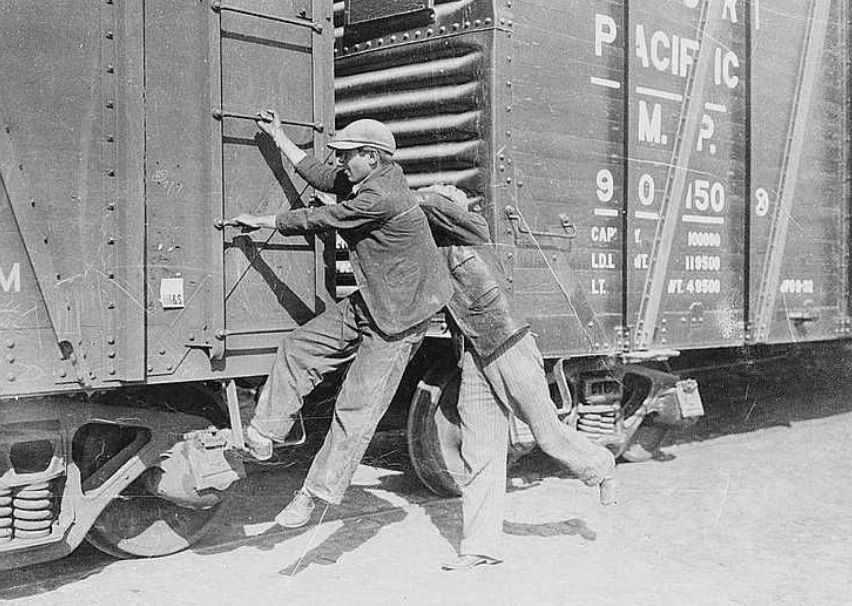
“First, if your hypotenuse is correct, my life is already forfeited simply by my mere presence here with you. Second, running fast is not a problem for me, despite what you may think as you graze on my person. I’ve chased down more boxcars than you can count, my boy. Third, I have more intestinal fortitude than one might suppose, and I must summon nerve. As the poet Ovid said, ‘the gods flavor the bold.’ And, as the man himself might have said, ‘Esse quam videri.’ Finally, I can think of no other means by which to extricate ourselves from this circumstance.” His tone was more a soft-spoken statement of fact than any sort of boast. “In this instance, I shall employ a zigzag pattern of travel.”
I wasn’t certain who this mug Ovid was, but he sounded more like a cook than a poet. “Listen, I’m willing to put a bet on my hypothesis being correct. He won’t leave either of us alive if he gets the chance. And he will leave me no alternative except to kill him. But I don’t want to see you get hurt.”
“Fear not,” he finished as he crawled away from the window opening, stood, and extended a hand for my hat and coat. After catching one more glance at the racketeer outside, I joined him and surrendered the items.
As he slid one arm in the sleeve of my coat, it became obvious the thing didn’t fit him well. The older guy was several inches shorter and smaller than me. I hoped the man shielded by the big heap wouldn’t notice the difference right away. After he donned the fedora, I urged, “Be careful.”
Through a grim countenance, he muttered, “You just make certain you hit him with that device. I’m not doing this for my own amazement, you know.”
We crept through the ragged remnant of a portiere to the other room. A door to the outside hung partly suspended on hinges. The front end of the Hupmobile was scarcely visible from it. Luckily, the rain had stopped. I shook the man’s hand. “Good luck.”
“And to you,” he said evenly. Just before running through the door, he whispered to no one in particular, reciting some unnamed sage, “‘Boldness be my friend.’”
Once out the door, the decoy made a wide, looping run toward the tree line at the rear of the homestead. I figured the fool wanted to make sure the goon at the automobile saw him. If that was his intent, it worked. A gunshot rang out as my newfound buddy crisscrossed the sodden earth, nearly slipping to the ground several times. The first round was rapidly followed by a second and third blast. My companion appeared unperturbed by them while he whooped his way over the field.
As the old gent had predicted, my adversary scurried from behind his car, firing as he moved. When he trotted even with my position, I stepped outside. He was around twenty feet away and so focused on the old man he never saw me. I squared up, aimed, and yelled his name. Stunned, he stopped, turned to me, and raised his weapon. Before he could get a shot off, my roscoe belched lead three times in lightning stabs. At least two found their mark. The hand holding his firearm flopped to his side. He squeezed off two more rounds as he dropped to the mud as dead things fall.
Stunned, he stopped, turned to me, and raised his weapon.
I called out to the old man as I walked cautiously to the fallen form. At the body, I kicked his weapon away from his hand and checked for a pulse. He had none. My breathless sidekick joined me. I grinned at him. “That was a helluva exhibition of moxie, my friend.”
“Is the fellow dead?” he asked. I blew air and bobbed my head. “Then, likewise, I must commend your demonstration of marksmanship, Mr. Tanner.”
“Call me Gil. Say, what’s your handle?”
He chuckled and held out a hand. “We haven’t introduced ourselves. My name is Packiam. Walter Packiam.” His grin faded as he looked at the gangster on the ground, then to me. “Who was he? Why did he want to kill you?”
“He was a gorilla named Wosyluk who worked for a small-time operator named Rozelli. Don’t know this lummox’s first name. Not important. Why he was after me doesn’t seem to matter now either. I didn’t necessarily want to kill him. But he gave me no choice.” When I heard my words, I wondered if I was lying to one or both of us. I knew the heartless killer Wosyluk had been.
The other seemed to sense my uncertainty. “Under the circumstances, Gil, forbearance would have been imprudent,” he reassured me.
Shaking off the minor regret, I surveyed the property. “I need to get rid of the body. Others also may be after me and following him. But digging a grave, even if I had a shovel, isn’t in my near future.” There was an old well behind the place. “I’ll just drop the body down that well and be done with it.”
“If I may, I want to enter an objection to that notion, Gil. Let me show you why.” After he returned my hat and overcoat, I followed the older fella to the front of the house. There, next to the front door, was a crudely carved cipher I hadn’t noticed on my hurried entry earlier. Walter explained it was what folks termed a “hobo symbol,” though he said he preferred the term “perambulator encryption.”
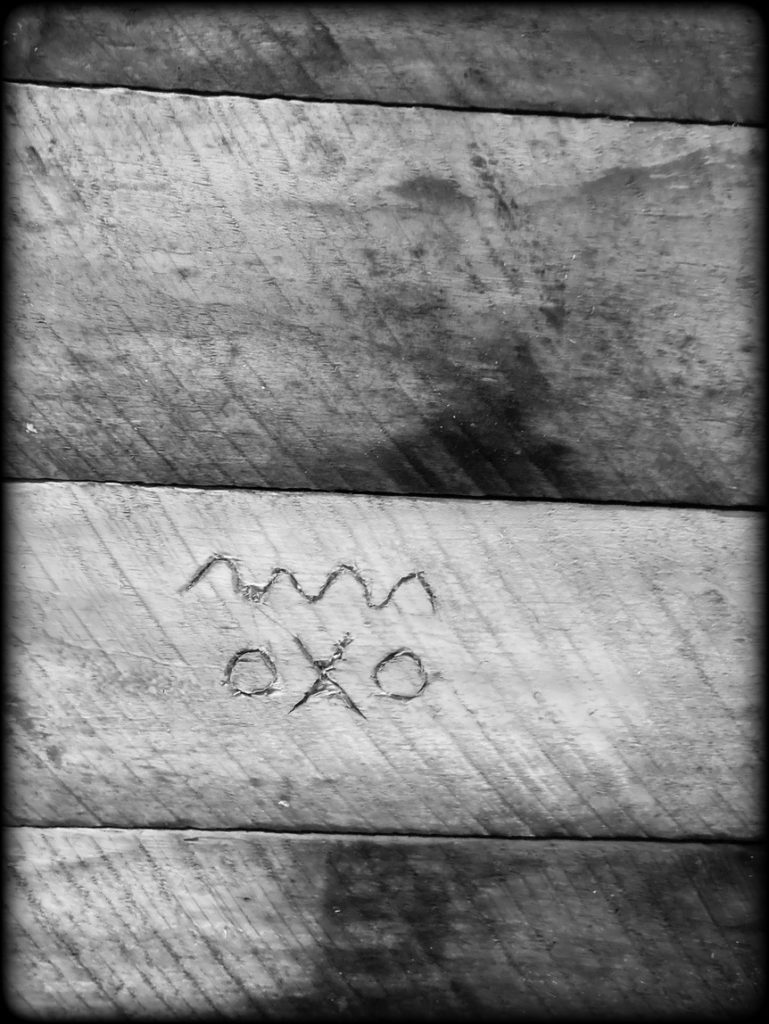
It consisted of a wavy line above a large “X,” which had small circles on either side. The old man told me meant it fresh water and a safe place to stay. “At least it was safe until you arrived,” he snickered. “So, you see, if you drop the unfortunate Mr. Wosyluk into the well, the water will no longer be fit to drink. My fellow unfortunates will suffer. I’d suggest we find another means of disposal.”
I rubbed my stubbled chin in thought. “Well, I can just put him in his crate and drive it off the road into the woods behind the house. That’ll also serve the purpose of hiding his car from any pursuers and the authorities for a while.” He waggled his head in agreement, and I continued, “But first, I need to transfer some of his fuel to my LaSalle. At least enough to get to Springfield up the road.” I looked around. “Now I need a container.”
My newfound pal held up a hand and grinned. “Never fear. ‘By working, one can bend fortune. She is fond of crafty men,’” the guy quoted somebody. He turned to go into the tumbledown building. “Follow me. I saw an old bucket somewhere in here. Decrepit, but I propose still suitable for our purpose.”
Inside, we located the thing. It had a sizeable hole rusted through its side, around four inches from its bottom. He blew and shook dust and debris from the pail. “If we hold it thus, it will suffice,” Walter said, demonstrating.
“That’s swell. But how do we get the gasoline out of the Hupmobile without a hose to siphon it?”
With another smile and a gesture, he led me to his earlier resting place. From beneath the mattress, he produced a leather traveling bag. A folded umbrella was shoved through its straps. The luggage was in better shape than he was. He opened the bag and rummaged for a moment before handing me an ice pick. “When danger presents itself in my travels, this is my weapon of choice. With sufficient force, I believe we may be able to puncture the automobile’s fuel tank and drain what we need.”
He opened the bag and rummaged for a moment before handing me an ice pick.
I thought, What the hell. Things have gone my way so far.
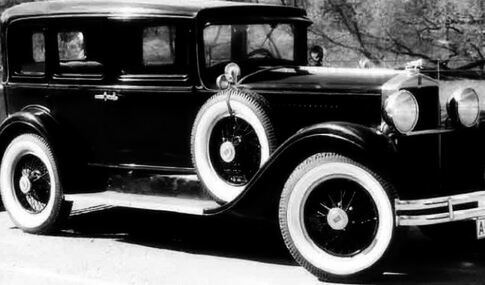
We moved Wosyluk’s car to my machine. I bent the bucket to give us a pouring spout of sorts. Using a large rock and several tries, I pounded the ice pick through the gas tank and filled the container as much as possible in its deteriorated condition. While Packiam held his finger over the hole we’d punched, I transferred the fuel to my machine. We repeated the process until I estimated I had more than enough to reach the next town.
At the same time, we left the Hupmobile’s tank with adequate gasoline to drive into the trees to the rear of the farmhouse. Then I drove it to the stiff lying in the field. We loaded the dead gunman and finished the trek to the woods. After shifting the corpse to the driver’s seat and lowering its window, I wiped my prints off the steering wheel and his gun, which I placed in his hand. Let whoever might find him draw whatever conclusions they wanted. My companion finished the vignette by placing Wosyluk’s Borsalino firmly on his lifeless head with a wry grin.
After a brief discussion, during which he accepted my proposal of a ride to my home city, Walter retrieved his suitcase, and we started the journey. As I’d expected, the LaSalle had plenty of fuel to reach Springfield where I topped the tank off before traveling on under lowering clouds.
* * *
As we’d covered the distance, my passenger didn’t speak of himself much. But his lack of funds was obvious from his circumstances and what little he told me. After thanking me for the ride, he seemed content to fill, light, and quietly smoke his hawkbill pipe. What conversation he shared continued to be interspersed with what my pal Micah Kaplan would term malapropisms. Other than the humorous “flaws,” he appeared to be well educated. Though there was no flashback forthcoming to explain his situation, he struck me as a gentleman fallen from social grace. Because the man exhibited a degree of refinement, was well spoken, and smoked a pipe, I gave him a moniker, as is often my habit with folks I run across. From that point on, I told him, I would refer to him as “The Professor.” He merely shrugged and smiled.
I convinced my new chum to bunk that night at my bedsit, where he could get a hot shower and shave before moving on, if he chose to do so. It was the least I could do. I owed him much more than a bit of simple hospitality. As he knocked the dottle from his pipe and blew through the stem, he assured me he didn’t want to be a composition on me. I promised he wouldn’t be imposing on me.
When we entered the city that evening, I offered him a chance to “freshen up” before I bought him a meal and at least one drink to celebrate our successful exploits. The man smacked his lips and readily accepted the proposal, saying he was, in fact, ravishing. I broke one of my cardinal rules and determined I’d eat this evening’s meal on an empty stomach. A more presentable Walter–bathed, shaved, and in fresh clothes–and I darted into Cappacino’s Restaurant just as the skies opened up again. The delicious food held The Professor’s undivided attention. He ate with enthusiasm, and neither of us talked much.
I broke one of my cardinal rules and determined I’d eat this evening’s meal on an empty stomach.
* * *
Later, we strolled under clearing skies into the Paradise Tavern. The owner was behind the bar, catering to the thirst of several regulars and a few other patrons unknown to me. Because Prohibition was still the law of the land, everyone drank the tavern’s “special tea” from coffee cups or tea glasses. We grabbed two barstools and settled in. The bartender moved our way. As he poured my Jack Daniels into a coffee mug below the bar level, he asked the old timer what he’d have. Walter, who always seemed to catch on quick to the way of things, asked barkeep if he carried any “Scottish iced tea.” The proprietor glanced my way. I smiled. With that, he poured the old man a scotch on the rocks. I paid for our drinks. My companion lifted his glass to me. I nodded without speaking.
“Harry, I’d like you to meet my pal, Walter Packiam. Walter, this is Harry Bittles, the owner of this fine establishment.
“Welcome to the tavern,” the saloonkeeper beamed as they shook hands.
“Glad to make your acquisition,” the newcomer replied. Bittles face showed mild surprise, but he smiled and dipped his head slightly before his eyes crawled my way. I merely arched my eyebrows. “Gil and I met along the road and had an exciting adventure together,” my new pal beamed.
“Yeah,” I put in, “The Professor here came in handy in a tight jam after scaring the hell out of me when he first appeared.”
“Professor, huh.” the saloonkeeper mumbled. He followed up with, “What happened?”
“Oh, that Professor’s just a monitor Gil has taken to calling me.” He raised a modest hand. “But humidity prevents me from saying what small part I played in our little escapade. Suffice it to say, a dastardly varlet was bent on our demise. Fortunately, we’ve lived to fart another day, right, Gil?” He slapped me on the shoulder as he spoke. “Since then,” he chuckled, “we’ve gotten on like a horse on fire.” With that, the old guy hoisted his drink and amiably turned to join a small group of men closer to his age, further along the bar.
Harry leaned across the counter toward me and whispered, “What the hell was that? Did he mean ‘fight another day’?”
“Let it drift,” I chuckled. “I don’t think he’s putting it on. It’s just his way, apparently.”
My pal harrumphed, “Where d’you find that character?”
I smiled at anybody in my circle of acquaintances tagging someone else as a character. “He may not look or sound like much, but he probably saved my life.”
“Sure enough?” When I dipped my head grimly, he folded his bar towel and continued, “What’s his story?”
“I’m not sure, Harry. He won’t talk about himself much. It makes him an easy man to like and a hard man to explain.”
“So how’d the job in Madison go?” my pal moved on. “Did you find that mug Rozitti?”
“Rozelli was the name. And, yeah, I found him. Case closed.”
I glimpsed my new friend, where he stood with a small cluster of older drinkers. He was just finishing a tale, “… and, because of it, he spent the next two weeks at Mount Cyanide Hospital in New York. Shows what can happen when your words fall on deaf gears.” The men bobbed their heads with pretended understanding and approval of the yarn. But, when The Professor turned back toward me, they gaped at each other in perplexed confusion.
We had a few more rounds before we called it a night and returned to my apartment. My guest slept in my Morris chair. His loud and uninterrupted snoring eased my concerns that he might be uncomfortable.
* * *
The next morning, after my pal’s shave, shower, and a change of clothes, we made our way to The Wayside Café for breakfast. During the meal, I tried to learn what Packiam planned to do. The older fellow told me he felt very at home in our city with the way we had received him. He indicated he’d look for a place to lay his head while he sought “a position among the working class.” In a moment, he added, “After all, I may be a transient, but I’m not a hobo. Quite so,” he smiled broadly, “I’m going to parfait this opportunity into a new start.”
Until I reminded him how much I was indebted to him, he put up a slight objection when I paid for his stack of wheats. I doubted he had the thirty-five cents anyway. Out on the sidewalk, I asked what I could do for him at that point. The Professor requested a ride to what I might consider one of our city’s “more respectable” men’s shelters. I agreed, and we collected his travel bag from my place.
Then I drove him to the Richmond Hill House, a hostel a local philanthropic family had set up in an old warehouse on the street bearing the same name. The place provided refuge to several hundred single men, such as The Professor, nightly. The fella who administered the thing for its benefactors, Dexter York, was an ex-pug I knew from my investigation racket. Dex, as everybody referred to him, was a burly, soft-spoken mug who wasn’t above butting the heads together if folks got too rowdy while in his “care.”
The fella who administered the thing for its benefactors, Dexter York, was an ex-pug I knew from my investigation racket.
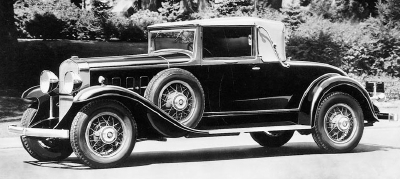
After easing the LaSalle to the curb, I sat long enough to give The Professor one of my business cards with a request that he contact me if he needed anything. In the meantime, I promised to keep my ear to the ground for any jobs he might be interested in.
I followed The Professor into what passed for the joint’s front desk area. Dex was behind the counter as usual. After getting his information, the proprietor had one of his helpers get his newest guest settled in with a cot. As the pair walked away, slaloming among the bunk beds, York turned to me. “The guy a friend of yours, Gil?”
“I just picked him up on the road between Madison and here yesterday. You could say he saved me from a rough squeeze. I owe him.”
“Sure enough?”
“Yeah,” I nodded. “Keep an eye on him for me, Dex. He’s an educated bird with a measure of street savvy, but I suspect he still has a certain naivety about him. Let me know if he needs anything or has any problems.” I finished, extending a sawbuck.
“Huh? Oh, oh yeah. Naivety. Sure.” He pushed the ten-dollar bill away. “No need, Gil. I’m still obliged to you. I’ll get in touch if need be.”
* * *
Upon returning to my office, I fell into the mundane routine that most often occupies a private investigator. It’s hardly ever the way Hollywood and pulp writers portray the life in their potboilers.
* * *
For the next several weeks, I bounced along life’s highway, scrounging what business there was to be had in the tough economic times closing in on us. The private investigation racket was feeling the effects of the egg Wall Street had laid in ’29. I was returning from lunch at The Wayside Café approaching my office when I heard my blower sounding off on the other side of the locked door. I managed to unlock the thing and grab the phone before the caller hung up. It was Dexter York on the other end of the wire.
He got right to the point. “Gil, you need to get to the city hoosegow and I mean fast! The coppers pinched your pal Packiam a little while ago!” He answered my next question before I could ask it. “They claim he tried to kill one of the residents here!”
I got Dex to clarify some things, at least as far as he knew them, so I had a better understanding of what had happened. After thanking York for the call, I disconnected and turned toward the door. The telephone started ringing again. I picked up. It was Detective Rob Waddell, a pal on the city’s police payroll. He said he was calling to let me know he’d heard they had a fella in custody who claimed to know me and wanted me contacted. Rob said the guy was still being booked in and hadn’t had a chance to make his one phone call yet.
“What was he arrested for?” I asked, just for the sake of clarity.
“I dunno much about it, but we were told he tried to burn one of his fellow residents at the Richmond Hill shelter,” he answered. “The victim identified him as his attacker.”
“… we were told he tried to burn one of his fellow residents at the Richmond Hill shelter.”
“That just doesn’t sound like Walter.”
“How long have you known the man, Gil?” Waddell was pretty quick to get to the heart of a matter when he wanted to.
I ignored an issue I didn’t want to face at that moment. “Tell Packiam I’ll be right there.” I cradled the receiver and made it to the door this time.
* * *
On the drive over to the city jail, Rob’s question kept creeping through my brain. Although I’m usually a pretty good judge of a mug’s character, I’d been wrong before. It was true I hadn’t known The Professor very long and really didn’t know him that well. But my gut kept telling my brain something didn’t sound right.
* * *
As I turned onto Gwinnett Street, where the city lockup sat next to police headquarters, Rob Waddell bounded out a side exit and down the station house steps. I pulled to the curb and cut him off. He broke into a smile, approached my passenger door, and leaned in through the window.
“That was quick, Gil,”
“Yeah, well, sounds as if my pal needs me. Where you headed?”
“I’m on my way to the unexplained body of a woman who turned up under the south bridge at the river. She wasn’t wearing a bathing suit,” he uttered sardonically, “so your brother, who found her, thinks it looks suspicious.”
My brother was a city beat cop. “Yeah, that’s Marty all right,” I chuckled. “He’s been stirring up trouble for others since we were kids. Say, I want to talk to you about this case with Packiam. When can we get together?”
“Oh, I’m not on the investigation. What there is to investigate. Detective Donovan caught the case. I just called you as a friendly gesture. Gus’s inside. He’s getting ready to interrogate your guy. If you hurry, you can catch him beforehand.” He stepped away from the open window and moved toward his departmental Ford. “Good luck,” he called with a wave.
“Thanks, Rob!” I contemplated the circumstances. Gus Donovan and I had only been acquainted a couple of months and our first encounter hadn’t been a smooth one. He was a hard number. Dealing with him was not likely to be duck soup.
* * *
Inside, the desk sergeant took time from decorating a scrawny Christmas tree in the atrium to call the investigation bureau. He told Gus I wanted to speak with him regarding Packiam’s arrest. The sergeant sent me into the bowels of the building to find my quarry. I was told The Professor was in interrogation room three.
An unhappy Gus met me in the hall outside the department’s offices. He threw up an enormous paw to stop me. “What d’you want, Tanner?”
“I’m here to see Walter Packiam.”
“Yeah, he was asking for you earlier.” He shot me a suspicious glance, rubbing his chin. “Say, you two are pals, ain’t ya?”
“Sure, but I never help him with his murders,” I replied sarcastically.
“Huh. But so what if you wanna see him? You ain’t no shyster! Not even close! You’re just a shamus!”
“True enough. But that doesn’t mean I can’t meet with him.” As Gus shook his head vigorously, I leaned in toward him and went on. “You need to stay up on the law of the land, my friend. Haven’t you heard of the recent U. S. Supreme Court case of Kyptericz versus New York?” I bluffed.
“What?”
“Yeah, in Kyptericz, the Supreme Court extended the accused’s right to counsel to several other groups of persons beyond attorneys. In that case, Bernie Kyptericz had asked to see his priest. A copper such as you refused him. In their ruling, the court was pretty nasty to that investigator, I’m telling you, brother! The justices said an accused person has a right to the counsel of not only a lawyer, but his priest, preacher, doctor, spouse, even a private investigator, if he so desires. Packiam asked for me. Waddell called me. So here I am.”
The rotund detective’s face screwed up like a bulldog chewing on a wasp as he mulled over what I’d told him. He pulled a pencil stub from a pocket and held it to a notepad. “What was that case’s name again?”
Turning toward the interrogation room, I repeated the case citation.
“How d’you spell that, peeper?” he demanded.
“It’s spelled exactly the way it’s pronounced.” Now, being deceitful to a lawman, even to someone such as Donovan, was not my normal approach. My reputation was too important to me. But I knew the dope would never figure out how to spell “Kyptericz” so he could ask someone else about the case. Based on my initial impression of the big flatfoot, I figured eventually his lack of initiative would overcome his curiosity and he’d abandon the search. I left Gus scratching his head.
But I knew the dope would never figure out how to spell “Kyptericz” so he could ask someone else about the case.
With the help of another bull, I located Walter in an interrogation room. He’d been expecting the detective to crash through the door at any second. His relief at seeing me was obvious. I joined him at the table where he sat handcuffed.
He declined the cigarette I offered him. “I’ll try to get your pipe and Granger tobacco to you.” Feigning nonchalance, I asked, “So, what have you been up to since I last saw you, Professor?”
He shot me a sheepish grin and waggled his head. “Thank you for coming, Gil. This whole situation,” he began, throwing his hands in the air as far as the manacles allowed, “is a huge misunderstanding.” Despite what we’d been through together in that abandoned homestead on that road several weeks earlier, for the first time, I recognized anxiety in his eyes. “I did not try to harm that man. I–”
My raised hand quieted him. “Why don’t you just tell me what happened.”
Heaving a long sigh, he began, “It was early this morning and I couldn’t sleep. So I got up and made my way for my morning toilet. When I passed through the antechamber leading to the washrooms, I noticed the shelter’s storage area door was open and the lights were on. It’s normally kept locked. At the same time, I observed Linford Marsh, the man Mr. York put in charge of the space, through the opened doorway. He was with another gentleman, but I couldn’t see the second man well because of his angle from me–he was on the other side of Linford. Initially, I didn’t pay any attention to them.
“Suddenly, as I entered the toilet room, I heard a visceral yelp. By the time I made my way to the storeroom door, the other man was running away like a scolded cat. Marsh was clutching at his bloodied neck and dropping to the floor. So I hurried to him and screamed for help. Mr. York and a few others appeared. We stemmed the bleeding and called for an ambulance. Then–”
“What had happened to him?”
“His neck had been sliced. An inept attempt to cut his throat, I surmise. Apparently, the carotid artery wasn’t damaged, but he was bleeding badly.” Following a pause, he stared down at the table and finished, “He also had cuts on an arm and his hands. It looked as though someone had tried to kill him.”
“Look at me, Walter,” I demanded quietly. His gaze climbed to meet mine. “Understand, I have to ask. Did you have anything to do with this lug’s injuries?”
“Of course not!” A hint of indignation came with his words. “I only knew the man in passing. What possible motif could I have had?”
“As I said, my friend, I had to ask. And you didn’t recognize the other man? Could you identify him if you saw him again?” The manacled old timer shook his head dejectedly. “Can you describe the second man?”
“Well, in my mind’s isle, he was around the same height as the ginger-haired Linford, perhaps an inch or two taller. And the second man had a swarthy complexion and black, bushy hair. Other than those outstanding features, their visages were much the same, and I don’t believe I could extinguish between the two of them at a distance. The second man was rather scruffy looking, though.”
“No offense, Walter, but ‘scruffy looking’ covers most of the men inhabiting the Richmond Hill House.” Again, Packiam waggled his head. “His height, hair and coloring might be useful, though,” I added, trying to end on a positive note. But one last question had to be asked. “Walter, why would this jasper identify you as his attacker?”
“I have been unable to gleam that myself, Gil. It makes no rational sense, unless the trauma of the moment had scrambled his brain. Perchance he’s suffering from an optional illusion. Because mine was the first face he saw after the incident, possibly he honestly believes it was me. But I assure you it was not.”
He gripped my arm as I rose from the chair. “Say, Gil. One last thing before you go.” I returned to my seat, as he continued in a serious, hushed tone, “As far as a weapon of choice goes, you know mine. But I’d only use my ice pick in self-defense. And if I took a notion to kill someone with it and could approach them as this rogue did, I’d use a quick thrust into the base of their skull into the brain. That could accomplish the task easily and quietly. Or through the rib cage directly into the heart. Either would suffice without the bloody mess.
“And if I took a notion to kill someone with it, . . . I’d use a quick thrust into the base of their skull into the brain.”
“Throat cutting?” he chuckled. “Not my style. But to cut the throat of someone over whom I could gain control from behind, I’d use a method anyone properly trained in such arts might employ.”
The mild-mannered man’s continued matter-of-fact explanation stunned me. “Using a very sharp knife, I’d place its point at the soft spot on the side of the throat just below the junction of the jaw and the neck. I’d have the cutting edge facing outwards, away from the ventral surface of my intended target. Then I would thrust the knife through, guiding the dull, back edge of the blade closely against the bundle of neck cords, esophagus, gullet and vertebral column.” He said this calmly, demonstrating as he spoke. “When the tip of the knife came through on the same soft spot on the other side, I’d slash outwards, away from the victim, cutting his vocal cords. But, as I said, the process is entirely too messy for my taste. No, someone who has read too many dime novels from the drugstore did this.”
I have to admit his declaration shocked me. He sat and looked evenly into my eyes as if he had been discussing the weather. After a few seconds, I regained my power of speech. “I wouldn’t disclose any of that to the coppers, Walter.” Because I was between jobs and was somewhat flush at the moment, I decided to look into my pal’s dilemma. “In the meantime, Professor, sit tight and I’ll see what I can find out. I’ll contact a defense mouthpiece pal of mine to come visit you. But not a word about anything to anyone within these walls–police, custodial officers, fellow inmates, no one. Not even the time of day. Get me?”
“Certainly, Gil. Henceforth, I shall give everyone a wide girth.”
* * *
In the hallway leading to the station house’s lobby, I bumped into Det. Donovan again. “Well, is Packiam ready to fess up, Tanner?”
“He says he didn’t do it and–”
“Bullshit! That’s what they all say!”
“And I believe him. You got a motive?”
“Motive, shmotive! He did it! The victim identified Packiam as the one who assaulted him!”
“Identified a man who attacked him from behind?”
“They struggled. The guy has defensive wounds. He coulda seen him.”
Turning to leave, I tossed over my shoulder, “I’ll get to the bottom of this.” Then, something else occurred to me, so I stopped and twisted to face the big gumshoe. “One more thing, detective. Walter Packiam doesn’t have a mark on him. Another bull I got to look him over can confirm it,” I lied. “I don’t expect that to be any different the next time I meet him.”
In the vestibule, I used the pay station to telephone Abe Birnbaum, a criminal defense lawyer I worked for occasionally. After explaining the circumstances, including the fact that I’d cover his legal fees for The Professor’s case, he assured me he’d go by to see him that afternoon. In the meantime, I told him I’d look into the matter further and let him know if I found something helpful. Then, I departed the headquarters building.
. . .I used the pay station to telephone Abe Birnbaum, a criminal defense lawyer I worked for occasionally.
* * *
My next stop was the men’s ward of St. Joseph’s Hospital, where I understood the wounded man was being treated. While driving to the north side of town, The Professor’s words kept coming back to mind. Walter’s reference to someone being trained to kill and his intimate knowledge of a lethal technique seemed out of character. His cold words ran counter to the spry but gentle older man I thought I knew, though for only a short time. The man was a conundrum, to be certain. I shook the questions from my mind and focused on the tasks ahead.
At St. Joe’s, the receptionists told me I was too late for visiting hours and could not see Linford Marsh at that time under any circumstances. I’d have to return the next morning if I wanted to visit.
On the way to my apartment, I grabbed a quick sandwich at The Wayside Café. While I ate, I again contemplated Waddell’s suggestion that maybe I hadn’t known The Professor well or long enough to have a firm grasp of exactly the sort of man he might be. Added to that was the admission Packiam had made regarding his intimate knowledge of how to slit a man’s throat. Regardless, again I stayed with my gut feeling concerning the old man.
* * *
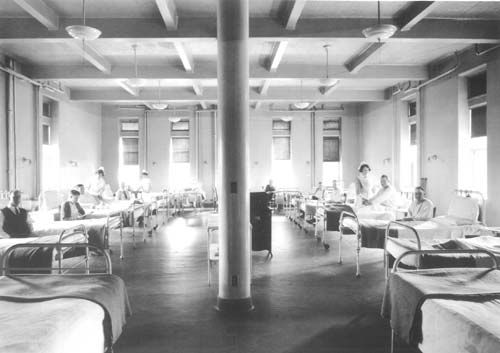
Bright and early the next morning, I was at the hospital. The ward nurse directed me to my objective’s bed and indicated she’d notify Dr. Holbrook, who was making his rounds, that I was there to see his patient. The first thing that struck me as I approached the unconscious man was the length of his body stretched over the bed. From the way the bedsheet lay on him, I judged him to be a scarecrow of a man.
Soon, the doctor stood next to me. I introduced myself as an investigator looking into the matter, told him I was interested in the man and his wounds, and asked how he was doing. His patient, he’d told me, was under heavy sedation because of his highly agitated state when they admitted him. Notwithstanding the injuries, which on the whole were minor, the physician said he’d never seen anyone as hysterical as he had been. “He kept screaming ‘that man’ was coming after him to finish the job.”
His patient, he’d told me, was under heavy sedation because of his highly agitated state when they admitted him.
I eyeballed the bandages swathing the flame top’s neck, face, and hands. Blood had seeped to their surfaces here and there. “Looks like he lost a lot of blood, doc.”
“It’s not as bad as it looks. Capillaries are notorious for blood flow when nicked. Like when you cut yourself shaving. The injuries looked a lot worse than they actually were,” explained, looking at a chart. “Someone came close to slitting his throat, though.”
“Did he say anything about how the incident occurred?” The doctor shook his head. “Well, based on his injuries, do you have any idea how the attack might have happened?”
The tall dark man hesitated and smiled. “I’m not a medical examiner or a forensic pathologist, mind you, Mr. Tanner, but…. Let’s say this pen was the knife.” I nodded. He stepped behind me, then reached to grab and lift my chin with his left hand. His right hand came around my neck and placed the pen against the left side of my throat. “That’s what the injuries tell me transpired. Starting on the left side, someone tried to cut his throat. By the grace of God, this man was able to grab his assailant’s hand holding the blade and fend him off. Thus, the superficial nature of the cuts to his neck and hands. My patient was extremely lucky.”
“True enough. Say, you’ve referred to a ‘knife’ and a ‘blade.’ Is it your opinion, then, that his wounds could not have been caused by something such as an ice pick?” After a moment’s consideration, accompanied by an odd expression, he shook his head vigorously. “Thanks, doc. I’ll be back when he’s conscious.” I put on my fedora and turned to go, but stopped short. “Oh, one last thing,” I inquired of the man in the smock, thrusting my chin in the bedridden man’s direction, “how tall would you say Marsh is?”
Holbrook glanced at his chart again. “The admitting staff’s notes show he is six feet, two inches tall.”
“Thanks. That was all I needed to hear.” He shot me a peculiar look as I walked away.
In my LaSalle, I decided my next stop should be The Richmond Hill House for a quick visit with Dexter York.
* * *
The manager led me into the space where the assault had occurred. As we walked, he told me he hadn’t seen the mugger. York had asked around and none of those few who saw the guy recognized him. As far as he could learn, the culprit had never been a resident of the shelter. The ex-boxer explained Marsh had been an inhabitant of Richmond Hill for several months. So, based on his observations of the man and what Dex decided was his general trustworthiness, the administrator had put Linford in charge of the storage room.
Dex unlocked the door, reached inside for a light switch, and stepped aside for me to enter. The storage area was a moderately sized space with a row of wooden shelves and a few lockers. The shelving held a scattering of various types of suitcases, grips and duffel bags, each tagged with names. Blood still stained the room’s concrete floor where the event had occurred. I saw there was a straight shot from the spot through the door from the atrium just as The Professor had described.
Blood still stained the room’s concrete floor where the event had occurred.
When asked, Dex said he was the first person to get to Marsh and Packiam when the latter yelled for help. While they worked to stop the man’s bleeding, he never saw a knife or blade of any kind. The lanky Linford, Dex told me, never referred to Walter as his assailant until after the law arrived. The cops searched Walter when the accusation was made. They found no weapon. The shelter’s manager said my pal cooperated and made no effort to leave. Dex said he and the coppers later searched the storeroom and located no knife.
While I looked around, York went to find the residents who’d said they seen the man running away. He returned with three of the four. Each man gave me a description that fit Walter’s portrayal of the man who lammed off. Two of them added the fellow had bushy black eyebrows. After assuring me they knew the wounded man on sight, all agreed the other man was bulkier than the fella he’d assaulted. Not fat. Just larger. Also, he had an olive-skinned complexion. I got the names of the witnesses and their promises to stick around to tell their stories to the law. Dex, with a droll smile, guaranteed me they would be available. I didn’t bother asking how he’d manage to keep tabs on them.
The Professor’s version of the events was adding up so far. But, despite his theory on the victim’s mental state, the thing that didn’t figure was why the carrot-topped scoundrel was claiming Packiam was his attacker.
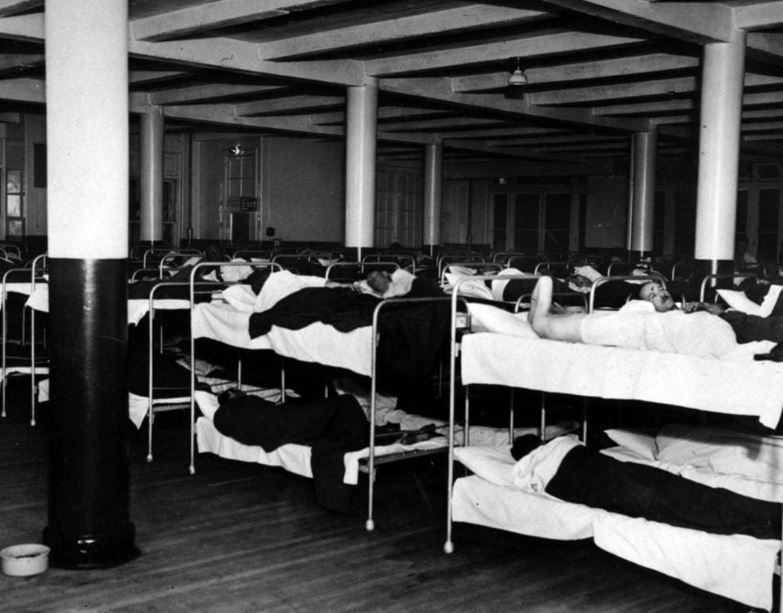
I asked York if I could look at any belongings the injured lug might have left there. “Let me check my notebook in the office.” As we walked, he leaned in and whispered, “Being down on their luck makes these men even more protective of what possessions they have. That’s why I set up the room to stow their gear. Too many hassles with theft if they keep ‘em in the dormitory. Maintain a record of the stuff, too. For my protection and theirs.” In the office, Dex checked a ledger. Mumbling to himself, he led me back to the storage area.
On a shelf, we located a battered suitcase bearing a tag with Marsh’s name. The thing contained the expected meager items of clothing. More significant was a softcover book with a newspaper article extending from its pages. When I removed the gum band which held the book closed and opened it to the page holding the clipping, the torn stub of a train ticket dropped to the floor. I picked it up. It was for a trip from Cleveland, Ohio, to our fair city several months earlier.
The newspaper excerpt reported four men had robbed a bank in Cleveland. During the heist, one of the unidentified quartet shot and killed a bank dick. Though the robbers hid behind large handkerchiefs and wore hats, witnesses gave the police partial descriptions. Two of the men were very tall. The skinnier of those two was said to have red hair. The second one had thick, black hair. Bystanders said his hat was dislodged during a scuffle with the guard before he shot him. The last two were of average height with what they thought to be dishwater blond or brown hair. The foursome made a clean sneak thanks to a driver waiting in a heap at the sidewalk. No description of the getaway driver was given.
During the heist, one of the unidentified quartet shot and killed a bank dick.
There was no date attached to the newspaper account, but the rough tearing of it had part of an adjacent writeup on the Wickersham Commission’s report being issued. Their findings, which had been issued that past January, proclaimed that Prohibition wasn’t working, and the law was unenforceable.
My gut had told me there was something extra to the story here. More than just the wrong man being charged as the assailant. And my instincts are more often correct than not. The stub and the newspaper clipping started my brain spinning with likely reasons why Linford was attacked. I returned the items to the book, replaced the gum band around it, and dropped the book into my coat pocket after getting Dex’s okey doke to take it.
Before I departed, York also gave me the pipe and Granger’s Rough-Cut tobacco from The Professor’s belongings.
I saw two ways to play this situation. The best gambit was to get the information I’d come upon and what I knew of The Professor to Det. Donovan as quickly as possible. It was the fastest way to spring the old man from the jug. So I made my way to police headquarters.
The desk sergeant made a phone call to the detective bureau. He came back with news that the portly investigator was out of town for the next several days visiting relatives for Christmas. Funny. For some reason, I’d not thought of Gus as having a family.
When I asked to speak with Det. Waddell, the sergeant informed me he was out of the building chasing leads in the murder of the young woman whose body had been found over by the river. The morning editions had reported she was the eldest daughter of a very prominent, politically connected local family. The sergeant said there was no telling when he might be available. No doubt, Rob was catching hell from the regime in city hall to resolve the homicide. On to my next plan of attack.
I made my way down the police headquarters’ front steps and around the side of the building to the jail’s primary entrance a block along the sidewalk. Inside, I found Attorney Birnbaum huddled with his new client in a lawyer’s visiting room. As I delivered the smoking material and matches to the “jailbird,” the shyster tugged me aside. Glancing around furtively, he asked, “Gil, what’s this Supreme Court case Detective Donovan is all up in the air over? He couldn’t pronounce the name but told me what it ruled.”
“What did you tell him?” I smiled, guiltily.
“What else could I say? I told him I’d research it and get back to him. Far be it from me to stop you if you want to make a monkey of the copper.” After a pause, he shook his head. With a wry smile, Abe scolded, “You know, Gil, one of these days you’re going to bluff something that ends up biting you in the tuchus.” With that, he returned to The Professor while I breezed off to visit Packiam’s alleged victim.
“You know, Gil, one of these days you’re going to bluff something that ends up biting you in the tuchus.”
* * *
Before returning to confront Linford Marsh, I cruised by a few juju dens to try to find a slug, known as The Crawler, I used for various jobs from time to time. He was sprawled out in a pall of reefer smoke on a tattered davenport at the second joint I fanned through. I held my breath as much as possible in the dump. I’m not a creampuff, mind you, but one of us had to maintain a steady thought process.
The hophead was barely sober enough for the task I had in mind, but he’d have to do. On the promise of a fin, I persuaded him to accompany me to the hospital for a quick job. He kept his groggy, paranoid head on a swivel for the first several blocks toward St. Joseph’s. Along the way, I explained his part, his lines in my little con. His vacuous, bleary eyes didn’t give me any confidence that we could pull this off.
* * *
After telling The Crawler to wait outside the doors, I ambled into the ward, praying all the while the doper didn’t meander away. At Marsh’s hospital bedside, I found a mug named Aubrey Zier, a crime beat reporter for a local broadsheet. He and I had run afoul of each other a year earlier when he wrote several negative articles concerning one of my clients who had killed her abusive husband in self-defense. When I’d complained about his lack of knowledge of the case facts, he’d told me he didn’t care. It was his ticket to the front page. Coincidentally, the extremely capable mouthpiece who successfully stood her defense at trial was none other than Abe Birnbaum.
“… make sure you headline that part,” the patient was finishing his instructions to the newshound as I approached. His voice was weak and scratchy. “Say, ‘Police have the would-be killer in jail. No further investigation is in the works.’” Linford shot his eyes to me apprehensively. “Who are you?” There was a lot of demand in that question. The man had the yips bad.
Aubrey half turned in my direction and grimaced. “Oh, this is a shamus named Tanner.” Marsh’s face showed a tinge of relief, but his overall trepidation remained. “I don’t know what his business is with you, but I’d be very careful.”
“Thanks for the intro, newsie. Just stand quiet and play dumb.” I gave the diminutive fellow an up-and-down glance and scoffed, “Looks like a cinch.”
Zier started to say something to me, but changed his mind and turned to go. “Be sure you make it clear that my attacker is in jail!” the bedridden man called after him. His raised voice caught the attention of several other patients and staff members on the ward. After a few seconds, they returned to their suffering and duties, respectively. It struck me how in line with my theory Linford’s insistence regarding the wording of his story’s headline was. Before I spoke, he returned his anxious eyes to me. “Well, what do you want? I already told the cops everything they need to know.”
Dragging a nearby chair closer, I dropped onto it. It protested my presence with a creak. I leaned forward, my elbows on my thighs, spun my hat in my hands slowly but said nothing, while keeping a fixed glare on the man in the bed. He didn’t hold up well to the moment. He frowned and shifted his eyes around everywhere but in my direction. There followed a silence with barbs on it. Every minor movement of my body caused the chair to squeak, which seemed to irritate my “host,” causing him to huff audibly and shift dramatically in the bed. He was jumpy.
He frowned and shifted his eyes around everywhere but in my direction. There followed a silence with barbs on it.
After a few minutes of intentionally increasing his annoyance with the chair, I played my hunch. With unhurried evenness, I asserted, “You know your story doesn’t hold water, mister.” No response. Just a continuation of eyes averted from me. “The physical evidence doesn’t support your claim that the mug they arrested was the perpetrator. And then there’s the witness who came forward.”
Marsh’s suspicious eyes followed me as I rose, ankled to the doors leading the hallway, and guided my gowed-up companion to the bed.
“Is this the man you told the cops about?” I asked.
The Crawler stared at the injured redhead for a long minute. I wasn’t certain whether he was doing it for effect or it was just his addled brain taking time to remember his lines. Either way, I didn’t care for him hamming it up. “Yeah, that’s him.”
“Where do you know him from?”
“Huh?” he moaned from among the mental cobwebs.
I eased a foot over the toes of one of his shoes and pressed hard. “From where, sir?”
He winced. “Oh, uh, Cleveland. The one in Ohio.”
I palmed The Crawler a sawbuck as I shook his hand to thank him. The extra cash meant there’d be no discussion over money afterward. He shuffled away, while surreptitiously looking at the bill in his hand, and disappeared through the doors. Then I turned back to the disconcerted patient and nonchalantly stated, “There’s a police officer waiting for him in the corridor to take him into custody until he testifies.”
Marsh’s frantic brain was on another track. “How could he-? Who the hell was he? I never saw that man before!”
“It doesn’t matter if you know him, Ace. He knows everything as far you and your gang’s knock off of the Great Lakes Savings Bank in Cleveland are concerned. Now he’s where you need to be. Protective custody.”
“Why… why was he acting so weird?”
So he’d noticed The Crawler’s tics. “That’s not weird. That’s scared shitless, my friend. Same as you. He’s afraid for his life because of the same man you are. Even as we speak, the law is out looking for the real culprit in your little drama. That’s why I’m here instead of my pal Det. Donovan. He’s got an excellent description of the lug witnesses saw running away from your attack. A man a little taller and larger than you. Black, bushy hair and eyebrows. Sort of Mediterranean-looking goon. And the fella that just left can tie the whole thing up for the district attorney with his testimony.
“Sure, initially the bulls were trying to figure the beef between you two. ‘You had a fling with his wife,’ one guessed. ‘You dishonored his sister,’ another surmised. Then this creatin showed up and told ‘em it was a falling out among thieves. Now the question is, did you hold out on his cut of the swag? You’ve got every copper in the city working overtime to pile up grief for you and your playmate. It’ll be a swell pinch, a feather in Gus Donovan’s hat.” I said casual-like.
I chose not to mention the dead bank guard. “This rap could hang over you for a long time, Marsh. This is where my pal, Detective Rob Waddell, usually says, ‘At this point, you can choose to become an inmate or a witness.’ Or, in your case, a piece of meat on a morgue slab.” It was another bluff. Based on what I’d read in the news clipping, he was going to be in stir for a while, regardless. But I wasn’t the law, and my lying to him wouldn’t have any repercussions on the case.
I nodded in the direction of Zier’s departure. “And I doubt that headline you want will ever see print. My guess is, the coppers will stop it from being written while they search for the man who wants to slit your throat.” I added emphasis to that last bit for effect.
That caught his attention. He blanched and shot a perplexed look my way as he tried to sit more upright. “What… what business is it of yours?”
I ignored his question. “Yeah, the law has a lot of influence over what the rags print. The editors will hold off on even a good story for a better exclusive from police headquarters down the road. And using you as bait to catch the guy who wants you dead is a damned good tale.”
I leaned back on the chair and cleared my throat as authoritatively as I could. “The headline will probably say something to the effect that the law expects you to spill the beans on the hooligan with the knife as soon as you’re able to talk. Oh sure, they might put an officer on this floor to keep an eye on you. But then you have to hope he doesn’t need a can break or want a bowl of soup or go down the hall to chin a nurse when your killer shows up. Nah, no big deal,” I sighed. “Though you’d be better off hidden behind a wall of coppers somewhere.”
His eyes twitched to me and he spoke in a low, frightened tone. “I need to see that detective fella! Pronto!”
I grinned. “I’ll find a telephone and make arrangements to have a detective here PDQ.” Several yards away from his bed, I turned to him. “Try to stay alive until he gets here.” Even through the bandages, I could see the man turn pale and swallow hard.
At the nurses’ station, I called police headquarters. With Gus out of town, I got Waddell on the horn. The exasperated detective said he couldn’t come to the hospital. Because of the politically sensitive case he was working, half of city hall was hanging off his ass, “chewing to beat the band.” And he was hot on the trail of his prime suspect, the murdered woman’s ex-lover. I briefly explained that the evidence in Marsh’s case, both physical and circumstantial, didn’t add up to his claims. In the corpulent detective’s absence, Rob put a young investigator I’d not met, Frank Devereaux, on the line. I repeated a condensed version of my findings to Devereaux. He said he’d head my way.
Because of the politically sensitive case he was working, half of city hall was hanging off his ass, “chewing to beat the band.”
* * *
When the bull arrived, I was sitting at Marsh’s bedside. I stood and greeted him with a handshake. Devereaux was a tall, broad-shouldered mug with close-set eyes of an indistinct blue. His ruddy-faced, athletic blond wholesomeness gave the casual observer the impression he was not likely to tolerate unnecessary crap from anybody. Officer Fred Stanhope, a reliable cop I’d dealt with in the past, accompanied him.
“Do you mind if we step out into the hall and jaw for a minute?” The detective waggled his head and told Stanhope to stay with the patient.
We moved to the corridor. Frank squared up to me, pad and pencil in hand. “Listen, Tanner, let me set you straight on one thing. I’m not at all comfortable getting involved with another guy’s investigation. But Rob said you were a right gee who won’t waste my time. So what’s the lowdown?”
“Let me get something straight with you, too, detective. I wouldn’t be so insistent if Marsh’s claim wasn’t so far out of line with the physical evidence and some information I’ve gleaned on him and, I think, his attacker. Add to that the fact a pal of mine is in lockup for the crime.”
He dipped his head in understanding and I continued. “If you haven’t yet noticed, the victim is six feet two inches tall. The guy Donovan locked up for the crime, Walter Packiam, is only around five feet seven or eight inches. The height difference alone is enough to cast doubt on Packiam being able to assault Marsh in the way he was.” Devereaux nodded for me to continue. “You can look at the injuries and tell that a right-handed thug with a knife made the assault. The treating physician, Dr. Holbrook, will back that up. Packiam is left-handed.”
“Okay, for the physical evidence. You mentioned information?”
“Yeah, two more things on physical evidence side of things first. Dexter York, manager of the Richmond Hill House, got to Marsh and Packiam almost immediately after Walter started yelling for help. He’ll tell you that, at no time, did Walter, who was rendering aid to Marsh, try to run away. York never saw nor were the police able to find a knife at the scene.
“In addition, three or four witnesses saw a man run away from the location. They described him as being slightly taller and heavier than Marsh, having black, bushy hair and eyebrows. He also had a swarthy complexion. Finally, The Professor, as I call Packiam, is a transient. Not necessarily against the law. In his travels, he’s found it necessary to arm himself against threats from others. I will tell you his self-defense weapon of choice is an ice pick, not a knife. That’s not a crime either. If you search his belongings at the Richmond Hill House, I’m sure you’ll find one.”
I paused long enough to retrieve the paperback book I’d gathered from Marsh’s suitcase. “As far as the other information I’ve found, this was in Marsh’s effects at the shelter.” I handed the thing to the big cop. “Inside you’ll find what I think are two relevant items.” As he removed the gum band, I went on, “One is a train ticket stub for a trip to our city from Cleveland, the one in Ohio,” I chuckled. He flashed a sharp, humorless up-from-under expression my way. “That’s an inside joke,” I added, clearing my throat.
“Anyway, the other thing is a newspaper report of a bank robbery in Cleveland in January of this year. The description of one of the four men inside the bank fits your victim in there to a tee,” I indicated, jutting my jaw toward the ward. “The account of another fits perfectly with that given by the witnesses of the man running away from this incident. That second man is the one reported having shot and killed a bank guard during the heist.”
The detective’s eyes moved from the clipping to meet mine. “For whatever reason, there’s been a falling out among the gang members. My theory is that the black-haired gangster tried to kill Marsh. But he botched the job. And he may still be in the city, waiting for another chance to put the chill on him before he can drop a nickel.” The young man studied the newspaper article for another couple of seconds. “He wants to spill the story to you in exchange for protection from this black-haired goon.”
“My theory is that the black-haired gangster tried to kill Marsh. But he botched the job.”
The other finished jotting notes and huffed, “Fine. I’ll see what he has to say. And, if he has anything worthwhile to tell me, I’ll leave Stanhope here to keep an eye on him. Fred’s a good man.” I smiled my agreement with his assessment of the cop and followed Frank to the victim’s hospital bed. Marsh was eyeing the uniformed officer suspiciously. I smiled, thinking that my warning touching on the possible lackadaisical monitoring he’d received had hit home with the outlaw.
I stood by while Devereaux had Linford, who confessed his true name was Myrne Walsh, go through the story of how their gang had planned and carried out the bank robbery to perfection. Flawless, that is, until the quick-tempered Carano–that was the thick-haired mug’s name, Frank Carano–got into a tussle with the bank guard, pushed him to the floor, and shot him. The gang made a clean getaway, ditched their hardware, and laid low in Cleveland for the next several weeks. Frank Carano, the gang’s leader, held the swag to be divided up later.
The knock-over was Marsh’s first big-time job, so he clipped the newspaper’s account of it. Then, one day, Marsh noticed an article in The Plain Dealer on a small-time hoodlum named Daniel “Danny Boy” O’Brian. A passing wino found the fella with his throat cut outside a speak on Mayfield Road in the lakefront city. O’Brian had been the ring’s driver. Aside from a tinge of sorrow for Danny’s untimely demise, tempered by his knowledge of a larger split, Marsh thought nothing of the death. Cleveland could be a rough town.
That outlook changed when, just under a week later, authorities found another of the robbers floating in the Cuyahoga River with his throat slashed. That was all Marsh needed to know. The roughneck with the dark hair and olive complexion was known as “The Blade,” whose weapon of choice was the stiletto. He was rumored to be connected to the Cleveland mob headed by Frank Milano. The redhead decided Carano was bumping off his fellow gang members either to eliminate witnesses to his murder of the bank guard or to keep the entire take for himself. That led Linford to determine Cleveland was too hot for him around the time he felt he was being stalked. He managed to lose his shadow, quickly pack a bag, and make his way to the new Union Terminal train station, where he used what cash he had for a ticket here.
Destitute, he decided to lose himself among the downtrodden until he could score a stake. He figured he’d made good his escape. That is, until Carano drifted into town–maybe tracked him some way–, appeared at the shelter, and took the opportunity to try to kill him. He didn’t know how the man tracked him or happened upon him here. And he didn’t care as long as the law protected him until he testified.
Satisfied, Devereaux spoke briefly with Dr. Holbrook, who agreed that his patient’s injuries were superficial enough that they could release him to law enforcement. The young detective then returned to headquarters, leaving Stanhope with the injured man. I followed the plainclothes copper to the station house.
* * *
After consultation with the detectives’ bureau chief, Devereaux made arrangements to transfer Marsh to the jail. The bureau chief also approved the release of Walter Packiam.
While I waited for The Professor’s paperwork to be processed, I telephoned Abe to let him know the most recent developments. He ended the conversation by telling me he’d send me a bill. Of that, I had no doubt.
When a very grateful Walter appeared in the jail’s lobby, he told me he wanted to return to Richmond Hill House tout de suite. But when I offered to buy him a celebratory drink before returning him there, he cordially accepted.
* * *
In short order, the pair of us had ensconced ourselves on a couple of barstools in Harry’s Paradise Tavern, sipping our “special tea.” As we drank, I filled The Professor in on the story behind the attack on Linford Marsh.
He thanked me profusely for my efforts on his behalf, and I assured him I’d been glad to do it. Then he turned his thoughts to the two men who’d been responsible for his trouble. “So it seems Carano’s underworld connections make him quite a raconteur.” He shook his head. “And Marsh’s fear of him cost me a night of incarceration. ‘O tempora! O mores!’ As the Bard said, ‘The soul of this man is his clothes.’
“Ah, well,” he exhaled after a time, “it wasn’t my first experience in a stockade.” He answered my questioning look with, “My boy, many municipalities take a dim view of those of us who are unemployed and merely passing through. As such, we are subject to the vagrancies of the local gendarmes.”
“Well, I’m just saying it could have been worse.”
“How so?”
Leaning in to my friend, I lowered my voice. “Supposedly, Det. Donovan has a heavy hand, shall we say, when he interrogates a suspect.”
“You don’t say?”
“I do say. He’s been said to employ rubber hoses, socks filled with bars of soap, and, his particular favorite, a telephone book.”
He grinned, “So you believe I may well have been carrying about me the aroma of embrocation after his questioning.”
I nodded my head in agreement. “Worse yet, might have been the agony you’d have gone through.”
“Tut-tut, my young friend. I have a high threshold of paint,” he asserted proudly.
I smiled at my pal’s manhandling of the English language as Det. Waddell drew up to the stool on the other side of my companion. “Figured I’d find you here, Gil.” He eyeballed the man next to me. “And you must be Walter Packiam, right?” The two exchanged greetings.
I chuckled, “I figured you’d still be out running down your murder suspect, Rob.”
“Done and dusted. The creatin walked straight into my arms at the airport. Bound for the West Coast. I have a different trip in mind for him.” Rob grinned, “This one will have a ‘shocking end’ for what he did to his ex-fiancé.” The cop ordered a drink from Harry and leaned across the man between us toward me. “Donovan left a jangled note on my desk, repeating something you told him. What’s this crap about some Supreme Court case giving you the same status as a mouthpiece?” I chuckled sheepishly. He drew back to his seat. “One of these days, Gil, you’re gonna pull a con and it’ll blow up in your face. You’ll end up behind the eight ball, my friend.”
“Yeah, so I’ve been told.”
The man between us suddenly slid off his seat and tapped the bar with his fingertips. “I must take my leave now, gentlemen, preferring to walk from here, Gil, if you please. I have an appointment with my stockbroker,” he added with a hint of sarcasm. “I’ve no doubt that, if Frank Carano is in the city, Det. Donovan will find him,” he pronounced with certainty. “No one can pull the wood over his eyes.” On that note, the enigmatic old man turned and disappeared through the door. Rob shot me an uncertain glance. Harry, standing nearby, simply shook his head. I grinned.
So, it was with The Professor. As he might have said of himself, he was a man of many faucets. And he was always running. ©