
August 1936
The enraged older man staggered back, catching himself on a scarred, timeworn Hoosier cabinet. His face bore the marks of more than a few well-placed jabs. As his hands fumbled along the small work surface to regain his balance, they discovered a paring knife lying there. He grabbed it and swung toward the other guy, brandishing it menacingly.
“Okay, you bastard. Now we’ll see what’s what!” he yelled, slurring most of his words.
“No, Godfrey! Don’t!” the woman standing in the kitchen doorway cried into her apron.
“Shut it, Hallie! The boy’s been asking for this for a long time!” He pushed off from the cupboard toward his intended target, who waited on the other side of the room.
As he lumbered past me, I grabbed him from behind in a bear hug. Though he was slightly larger than me, I might somehow control him and keep his arms pinned to his sides. “Drop it! Drop the knife!” I demanded between gritted teeth. When he didn’t comply, it squeezed his torso as hard as I could, to no avail.
“I’ll kill you, too, you punk!” he screamed over his shoulder at me.
“Let him go, Gil!” the other fella called to me. “Just let him go!”
“No, Gil! Please!” the woman cried out. “Godfrey! Please!”
I didn’t release him. The fistfight between my brother Marty and our old man had been bad enough. But a one-sided knife fight would not happen while I could help it. I looked at my mother’s pleading eyes. Her head shook at me in desperation.
My sibling was as big as a dreadnought and strong as an ox. He knew how to handle himself. That served him well when he played professional football for the Dayton Triangles later. Our dad, as usual, was as drunk as a lord. And that benefited no one.
My brother approached the furious guy, who was still in my grip, and poked a hard finger into his chest. “I’m leaving now, old man,” he growled angrily from behind a bloody nose. As rough as our home life and as tough as the neighborhood we grew up in had been, it was the only time I saw Marty bleed from a fight. “But, if I ever hear of you mistreating that woman again,” he avowed, pointing to her, “I’ll come back here and put you in the ground! I swear it!”
The man I held dropped the knife and his body slumped dejectedly. I released him, and he fell to his knees, crying. Marty picked up the weapon, returned it to the work surface, then walked to our mother. He slid his arm around her waist and led her into our small parlor, speaking in low tones. An hour later, after telling me it was now my responsibility to take care of mom, I watched him carry a tattered travel bag along the street. He was gone.
I awoke from the dream with a start and soaked with sweat. My apartment’s puny oscillating fan brought little relief from the stifling high temperatures battering the country or the heat of a terrible memory. That scene had played itself out over a dozen years earlier, but the recollection of it seemed as clear as if it were yesterday.
Sitting up on the edge of my Murphy bed, I fumbled for a Chesterfield and matches in the murky pre-dawn light. I set fire to one and let the smoke seep down into my lungs. There was no sense in trying to go back to sleep. Even if I managed it, I was certain unhappy visions awaited.
The nightmare I’d just had ended well. Sort of. My old man never laid another finger on me. And he never victimized our mother again, though he continued to drink himself toward an early grave. Marty wrote to say he’d joined the Coast Guard. “Hooligan’s navy,” our dad scoffed whenever we mentioned it. After that stint in the service, he played ball for the Dayton Triangles several years before returning home. By the time he did, Godfrey Tanner had died. Hallie Tanner’s physical condition had deteriorated. For reasons I’ll never understand, she still loved her husband and took his death hard. She passed away soon after my brother’s homecoming.
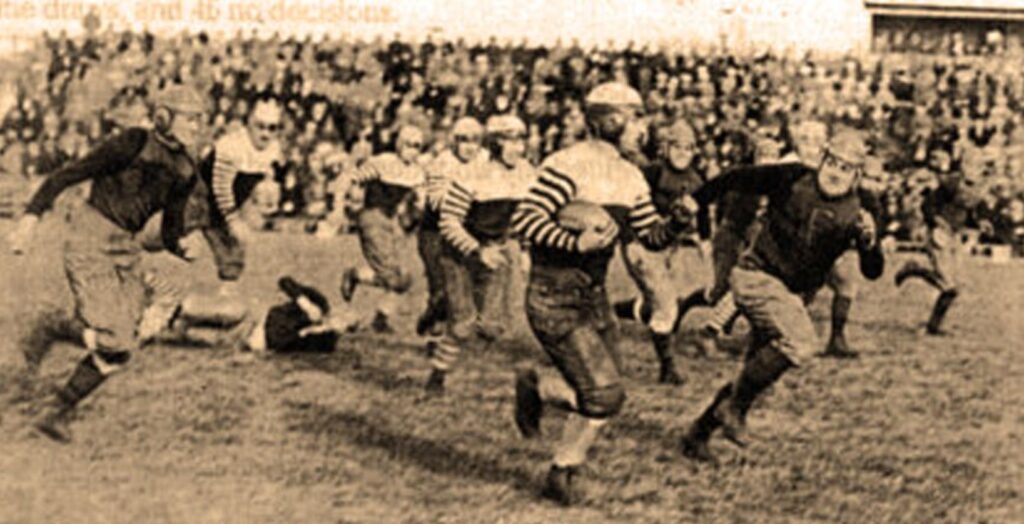
After that stint in the service, he played ball for the Dayton Triangles several years before returning home.
Now Marty was a harnessed bull on our city’s payroll with a family of his own. I’d survived long enough to be befriended by a city detective who encouraged me to start a private investigation agency. Speaking of which, it occurred to me I needed to open for business sometime today if I expected to eat, and, as nearly as important, to patronize Harry’s Paradise Tavern. The sun was barely up, but I showered, scrapped my puss, and dressed.
* * *
The Wayside Café was my first destination. Oscar, the joint’s owner and fry cook, was just getting started for the day when I entered. When he saw me, his face showed surprise. “What the heck, Gil? You haven’t been in the place this early since Agnes was working here.
Agnes…. Swell. Another bittersweet memory to haunt my dreams. “Yeah, well, I couldn’t sleep. Figured I’d go in and catch up on my paper work.”
“Grab a stool. I’ve got the coffee brewing. Something to eat? Griddle’s warming up,” he offered, wiping his hands on an apron that had been clean and white at some point back in the 1920s.
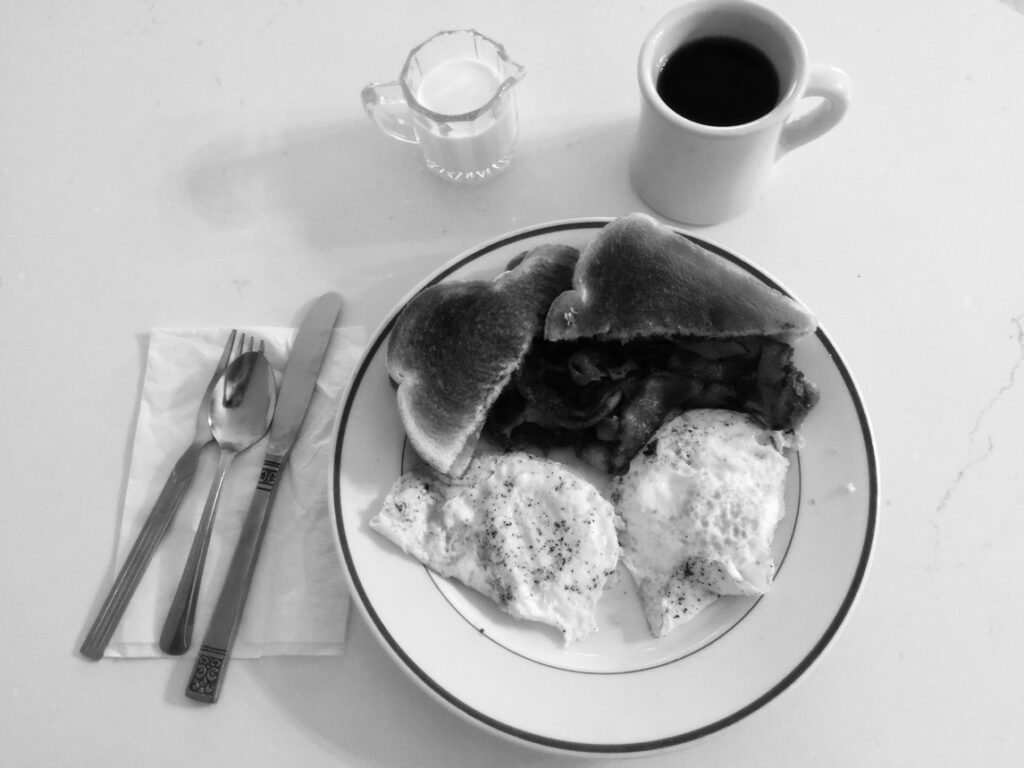
“How about a couple of eggs over medium, bacon, and toast to go with the java?”
“Coming up. The morning paper is at the end of the counter.” Olivia, the most recent waitress to work the diner, came in and started her routine as a crowd filtered into the eatery. She set my cup of joe on the counter. I doctored the brew and sipped it. Oscar’s coffee was strong enough to throw in the ring with Max Schmeling.
I glanced at the broadsheet. Most of the front-page headlines dealt with the record high temperatures the country was experiencing. The press reported several thousand people had died across the nation from the heat. And the toll continued to rise. Also included in the news were dispatches from the Spanish Civil War that had erupted late last month. Now the Axis powers had decided to stick their noses into the conflict. I’d have thought Mussolini was too busy with Ethiopia to become entangled in another struggle. A follow-up article raved over the Atlantic crossings of the Queen Mary, whose maiden voyage had been completed on the first of July.
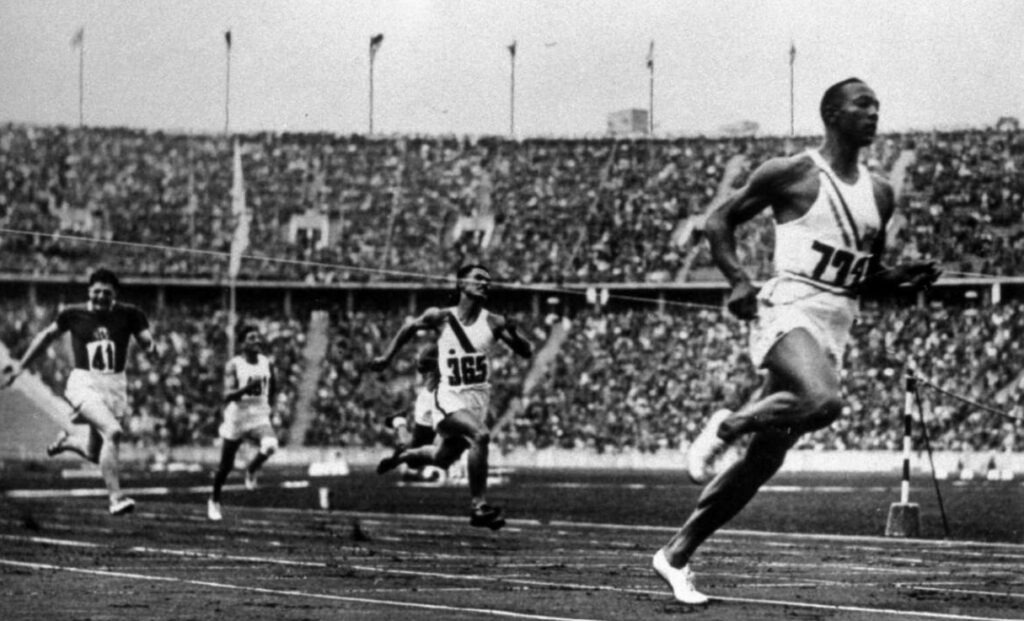
The sports pages were filled with news from the Berlin Olympics. This kid, Jesse Owens, was giving the rest of the world a run for its money, pun intended. The “Buckeye Bullet” made his country proud.
My Cincinnati ball club was still below .500 and apparently destined to finish in the bottom half of the National League.
I set the paper aside when Olivia delivered my breakfast.
* * *
Just before noon, I sat in my agency, catching up on my thumb twiddling, when the door opened. A matronly looking woman entered. “Mr. Tanner?” she asked shyly.
I stubbed out my fading fag, stood, and approached her. “Yes, ma’am. That’s me. Is there something I can help you with?” She nodded. “Please take a seat.” I escorted her in and eased her into a chair. “May I get you a cup of coffee? I’m afraid it’s the only thing I have to offer.” The bespectacled lady didn’t appear the type to propose Jack Daniels to, so I kept the bottle in a bottom drawer to myself. She wore a conservative but fashionable dark blue suit with a matching hat and carried a bag that might have held the contents of a fair-sized ice-box.
“No, thank you, Mr. Tanner. Nothing for me.” She cleared her throat. “My name is Naomi Everhart. I need your help.”
I’d heard the name before, but had never met the lady.
“That’s what I’m here for. If you’ll tell me exactly what your problem is, I’ll see what I can do for you.”
After a brief hesitation, she said, “Before I go any further, I must have your assurances that whatever I divulge to you or you find in your investigation will remain confidential. At least until I deem it appropriate to take it to the authorities.”
“That goes without saying. I’m the soul of discretion.”
“Fair enough. The situation involves my deceased brother, Hezekiah Ettlinger.”
The name rang a bell, but I couldn’t place from where or how.
“They found him in his home, dead from a gunshot wound. The police have decided it to be a case of murder.”
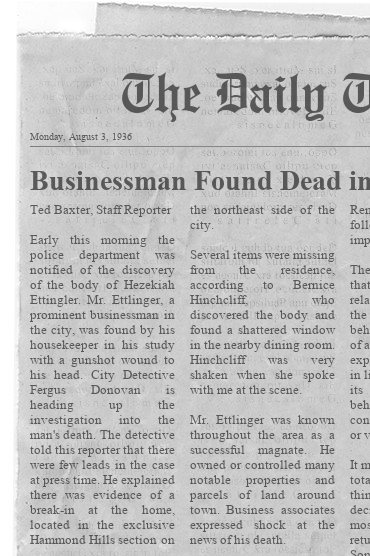
That was where I remembered the name from! The story had been in the newspapers that past week. Early this last Monday morning, the very well-heeled Hezekiah Ettlinger had been discovered in the chair at his desk in the ground-floor study of his mansion, shot through the temple. The tabloids reported a .38 caliber revolver was discovered with the body. A window elsewhere in the home had been smashed and opened. The coppers figured it to be how the killer gained access to do the deed. Despite his wealth, Ettlinger engaged no live-in servants. So, no one heard the gunfire.
…the very well-heeled Hezekiah Ettlinger had been found in the chair at his desk in the ground-floor study of his mansion, shot through the temple.
A housekeeper, Bernice Hinchcliff, who came in once a week to tidy up the place, had come across her dead employer. The coroner estimated Hezekiah to have been deceased two days when he was found. The exact time of death was uncertain. That was going to make it difficult in the extreme for anyone to provide an alibi. From the articles in the rags, it appeared to be an open-and-shut case of murder.
“If this is a matter where the police are involved and have reached a conclusion about the circumstances, they can find the killer. What would you hire me to do?”
“Frankly, Mr. Tanner, I want you to prove that it wasn’t murder.”
The implications of her statement stunned me. “That leaves only an accident or….”
“Suicide,” she put in. “See here, I think it highly unlikely a man might accidentally shoot himself in the side of his head.”
“That may be true, Miss Everhart. But the police must have their reasons for concluding the death to be a murder.” Before she responded, I changed tacks. “I want to get something straight before we proceed. All right?” She agreed.
“You need to understand that people hire me to work on their behalf. Sometimes I have to lie to achieve their objectives. Often, I have to speak a truth which may hurt. In both instances, I might direct the message to my client. And part of what I do in my racket is ask many questions of all kinds of folks.” Although an expression of understanding crossed her face, I hoped I hadn’t overplayed my hand. “So, I must inquire you if you’re being treated as a suspect in your brother’s death?”
“Oh, my, yes. The entire family is under suspicion.”
“Everyone of you?” The question belied my certainty that an enormous bundle of money to be at stake when the old man died. Relatives usually came first on the law’s list of suspects.
“Yes. There was just Hezekiah and me remaining from our family. We had a sister, but she passed away from the Spanish Flu back in 1919. His wife passed several years ago from meningitis. They had no children. I’m a widow with two sons and a daughter.”
“Have the police interviewed you?”
“As a matter of fact, the detective in charge has extensively questioned me and my children.”
“Who’s the investigator?”
“His last name is Donovan.” Her face skewed up in her attempt at recollection. “I didn’t catch his first name, if he ever told me.”
“That’s okay, Mrs. Ettlinger. I know him.” Regardless of my misgivings concerning the way Gus handled his investigations, I decided to wait to talk to him before formulating any opinions. “But, as I said earlier, Donovan must have his reasons for concluding someone murdered Hezekiah. And you have to recognize one thing. Notwithstanding my prior promise of confidentiality, I will not allow myself to get caught up in a conspiracy to hide evidence in a murder case. If I decide you or any of your family did it, I’ll burn you to the authorities.”
She turned slightly ashen at my words but, otherwise, appeared unperturbed. “Very well. I’m uncertain what the detective’s thought process might have been to reach a deduction of an unlawful killing. He believes someone murdered Hezekiah. However, the one flaw in his case is he didn’t know my brother.”
“I don’t take your meaning, Mrs. Everhart.”
She shifted in her chair, appearing to brace herself for the conversation to come. “I don’t mean to speak ill of the dead, especially of a relative, but the truth must be brought to light. In reality, my brother was a particularly nasty, evil man.” She gave me a glance that said she was unsure if I followed her. My countenance led her to explain herself better. “Are you a person who reads much, Mr. Tanner?
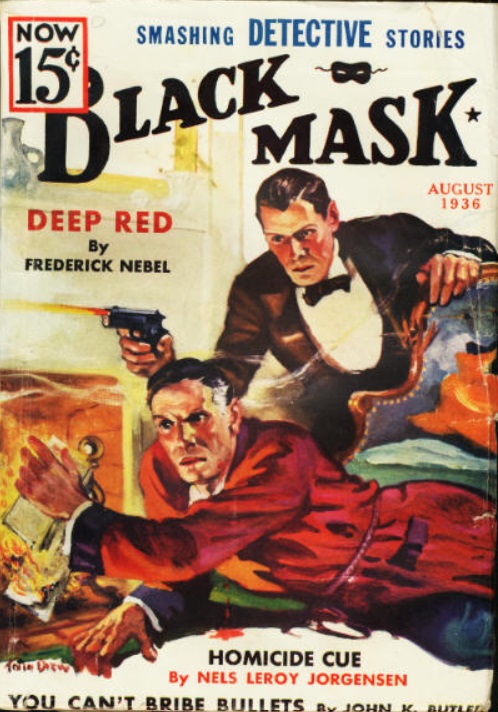
I shied away from revealing that my most recent reading involved the sports section and the funny pages of the dailies and an occasional Black Mask magazine while I waited at my barber’s shop. “Yes, ma’am, I’ve picked up a book here and there.”
“Then you are no doubt familiar with a few of the purely evil characters in literature.” I nodded. “To explain better the wretched traits of my brother, I refer you to Mephistopholes from Doctor Faustus, Grendel of Beowulf, or Satan from Milton’s Paradise Lost. Hezekiah displayed many of their most despicable propensities. He was the epitome of selfishness, a malicious force to be reckoned with. On top of that, he had the generosity of spirit of Scrooge in A Christmas Carol. He hated everyone. And everybody knew it. The man just didn’t give a damn, if you’ll pardon my language, Mr. Tanner.
“Oh, it started long ago. Hezekiah did unspeakable things to small animals as a child. Father laughed it off as ‘boys will be boys.’ Mother was horrified, but dared not voice any objections or admonitions.
“As he became a man, he directed his vile misanthropic tendencies at those often unable to protect themselves. Our father had gathered a modest fortune in the Cripple Creek Gold Rush at the turn of this century. As the only son and the eldest offspring, Hezekiah inherited the bulk of our father’s wealth.
“He immediately set about compounding that money. As a shrewd businessman, he acquired a great deal of property, both commercial and residential, when the war ended. Over time, he raised rents, thus forcing many families out of their homes. He showed no mercy to anyone. Hezekiah ramped up this ploy after the Crash before the government stepped in and froze rents. It was a period when folks could least afford it. Because he owned land and buildings, everything debt free, the Wall Street fiasco had little impact on his financial standing. In addition, he had foreseen the Crash and somehow manipulated stocks, earning a fortune following its downfall.
“As you well know, when the market crashed, people lost everything and had to put their residences up for sale. He swooped in and purchased their large homes or mansions in the older neighborhoods for substantially reduced amounts. Using them, he set several funeral directors up in business as a silent partner. Also, he obtained distressed businesses at fire-sale prices. The scoundrel bought out farmers for ridiculous sums and secretly got huge parcels of property from landholders, then forced their tenants off the place. He did so for no good reason. In every instance, he used his financial standing to cheat people ruthlessly when they were down and out. I believe the Good Book teaches us that the true value of our wealth is not in using it for our own gain, but to bless others. My brother never considered that notion. It seemed a form of sadism, referred to as Schadenfreude, engulfed Hezekiah.
“I assure you, Mr. Tanner, admitting these things brings me no pleasure. But it adds up to one thing. My brother relished inflicting pain on others and causing chaos for everybody. His demonic attitude worsened after Hazel, his wife, passed. Recently, he became more aggressive than ever in his lashing out at everyone, including family.” She grimaced. “The name Hezekiah means ‘the strength of the Lord.’ I’d say more akin to Beelzebub, who I’m certain would find him irksome.
My brother relished inflicting pain on others and causing chaos for everybody.
“Anyway, as a result, the Good Lord knows there were a plethora of people who wished him harm. Nonetheless, I don’t believe for a second, someone else killed him. Call it woman’s intuition or what have you. It boils down to familiarity with the creature.”
“Did you hate your brother?”
“Hate is a powerful word, don’t you think? I vehemently disapproved of the way he conducted his business affairs and treated people and found him intolerable and reprehensible. But hate him? No, Mr. Tanner. And I would certainly never harm him. In my system of beliefs, he has already answered to a higher power.”
“What about your children?”
“My husband, who passed a few years ago, and I raised them properly. They’d never do such a thing.” She sighed audibly. “Of course, they knew of their uncle and his lifestyle, but I never spoke of him in their presence. And, to my knowledge, they’ve never actually met Hezekiah. He was never a part of our family get-togethers. Such are the misfortunes of life,” she finished matter-of-factly.
“You realize the police will see any potential inheritance of money or property as a motive for anyone, shall we say, eager to speed up the natural process of death?” She waggled her head, seemingly unconcerned regarding the possibility. The impact of a suicide on any life insurance policies came to mind. “Have you given any thought to what a different finding for the cause of his demise might have on his estate?”
My visitor gathered herself and leaned over my desk. “Something you must understand, Mr. Tanner. My children and I don’t give two hoots and holler for Hezekiah’s money or property, even if we were to be beneficiaries, which I doubt. We consider every bit to be grievously ill-gotten gains, at best. Besides, they are contented with their lives. Second, and more important to me, is the fact that, if my brother did what I think he might have, I don’t want him to get away with it.”
Whatever Mrs. Everhart reckoned a dead man could pull off from the grave, she was determined in her pursuit of what she saw as the truth of the matter. And I asked nothing further.
We finished our conversation. She hired me, paid my retainer, and gave me the names, addresses, and occupations of her adult children. Naomi chuckled, then told me she’d abandoned her parents’ habit of giving offspring Biblical names. I requested she make them aware of my involvement in the case and advise them I might need to speak with them. The lady agreed to get in touch with them that day. She left the office after obtaining a promise from me to keep her apprised of my progress, if any.
* * *
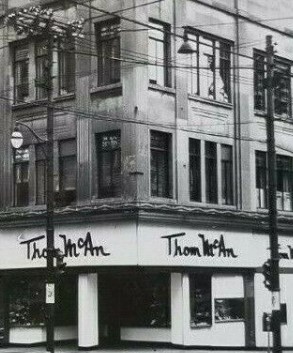
To give Mrs. Everhart plenty of time to contact them, I waited until the next morning to pay visits to the three siblings. The oldest son, Frank, was the manager of the Thom McAn shoe store over on Broad Street. The fella appeared to be in his late twenties and straight as an arrow. He knew nothing of his uncle or the man’s death. He’d never had communication with Ettlinger. From our discussion, it seemed he spent every day at the business and his free minutes beyond that in the company of a debutant he was engaged to.
The younger son, Doug, worked at Pratt’s Lumberyard. He wasn’t at the Greene Street location when I stopped by. So, I had to return another time.
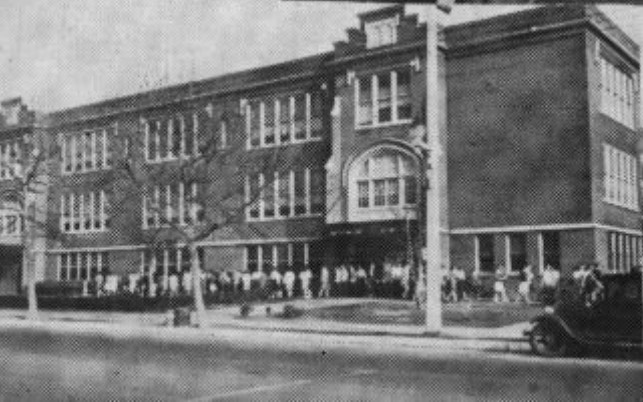
I moved on to see Naomi’s daughter, Helen, who was a teacher at Woodrow Wilson High School. As I parked in front of the school on Bradley Avenue, a bell was ringing. From the activity around the place, I gathered it denoted a change of class or a recess of some sort. So, I hustled inside and found the woman before her next session started. She was a vaguely attractive, short, demure thing in her early twenties. The young woman, too, knew little of her uncle or the circumstances of his demise. She maintained that she’d never even come in contact with the dead man and was unaware of where in the city he lived.
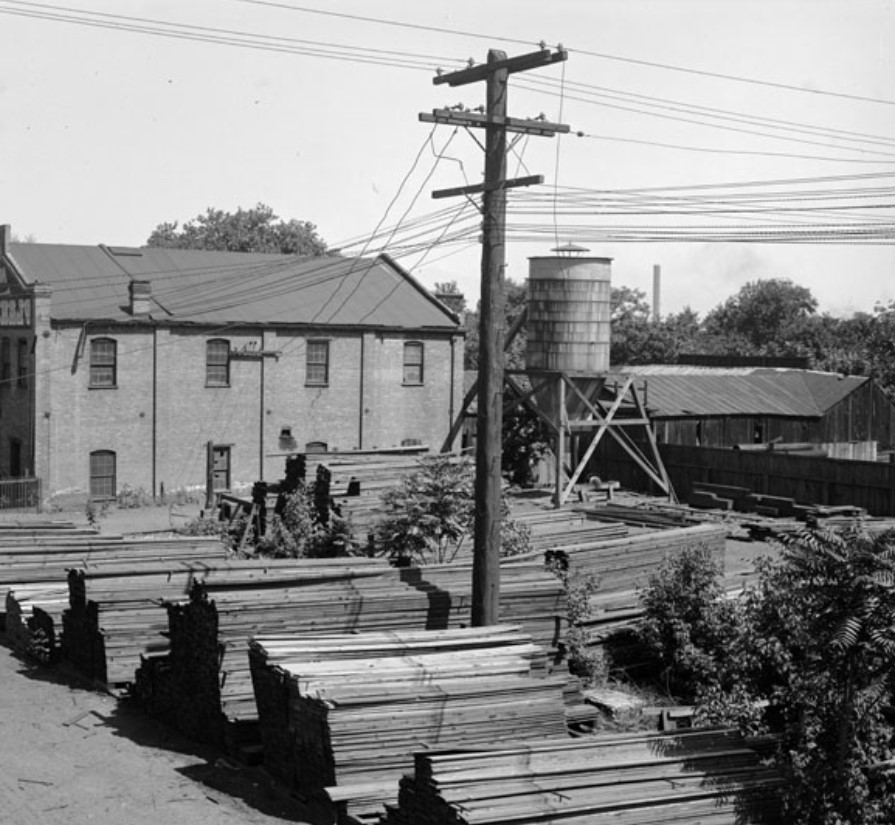
I returned to Pratt’s and met with Doug, who appeared in his mid-twenties. The third offspring had an ironclad alibi for the time of his uncle’s passing. His boss confirmed it. From the day before Hezekiah’s death, as estimated by the coroner, until two days afterward, the young man had been out of town negotiating a timber contract for the business. As with his siblings, Doug claimed he’d never come in contact with his uncle.
Over the years, I’ve become pretty good at spotting when someone was lying to me or hiding something. Every one of the Everhart people came across as forthright and telling me nothing but the truth.
It was now time to pay a visit to the ever-friendly Detective Donovan.
* * *
In the atrium of police headquarters, I told the desk sergeant I needed to speak with Gus. He made a quick phone call to the detective bureau and advised me he was too busy to meet. I asked the officer to advise him I wanted to see him regarding the Ettlinger murder. I’d stick with Gus’s theory of the case for now. The desk cop relayed my message, hung up the blower, and said the man was on his way out to meet me.
In short order, the rotund bull appeared at the door that led to the bowels of the building and the aforementioned department. As he approached me, he was as friendly as ever. “Yeah? Whaddya want, shamus?”
“Can you give me a minute to discuss the case?”
“What’s your interest in it? You trying to find a Chinese angle in this? ‘Cause there ain’t one.”
“No, detective. I’m just interested in the evidence you found.”
“You don’t do anything for nothing. Who you working for?”
“A relative of Ettlinger has hired me to look into it. I told them it sounds like an open-and-shut case, but I’ll check it out, anyway.”
“Yeah, peeper, they’re worried what I might turn up putting one of them on the hot seat.”
“Well, I’m going to give the thing a gander, regardless of which way it comes out. And if I find something worthwhile, I assure you that you’ll get it from me.”
“Can I really count on that, Tanner?” he asked after a pause.
“You can take it to the bank, Gus.”
He agreed and led me back to the detective’s bullpen. When we were seated, I dropped my fedora on his desk and said, “The newspaper accounts had some details concerning what evidence you found, but I have a notion there’s more to be told. What did you find that led you to conclude it was murder?”
“Well, a few newshounds have tossed out that Hezekiah might have pulled the Dutch act, but why would a rich mug such as that kill himself? Yeah, somebody tried very hard to make it look like a suicide, but they messed up. For one thing, in the room next to where the body was found, a window had been busted in. I figure the killer crashed it, then reached in, unlocked it, and climbed through it to get to Ettlinger.
“Yeah, somebody tried very hard to make it look like a suicide, but they messed up.”
“The dead fella was probably absorbed in whatever he was doing at his desk or had dozed off and didn’t hear the window break. Plus, the door to the study was closed and no windows in it were opened. Then, after killing the man, the murderer forced the gun into Hezekiah’s right hand, not knowing his victim was left-handed. Besides, there was no note found. And there always is a suicide note,” he ended with confidence.
“What do you figure the motive was?”
“Well, Ettlinger’s wallet sat on the desk, empty. He was known to carry a decent sum of cash at all times. Plus, according to the housekeeper, several pieces of silver are missing from a display cabinet in the study. But I reckon that’s either red herring to throw us off the track of a family member who stands to inherit or the motive was, in fact, robbery. Unfortunately, we haven’t been able to get fingerprints aside from the dead guys and a few from the Hinchcliff woman. But any lug who’s shifty enough to sneak up on a man and shoot him in the head is crafty enough to wear gloves to commit a murder.”
“Was Hinchcliff any help?”
“Nah. She just walked in and found the old guy. Never seen a dead body before. The blood and gore were too much for her. The broad went a little batty. She’s no help, but you’re welcome to talk to her. It comes down to the man’s relatives. We both see the storyline here, right? One of them will sing before it’s over.”
I reckoned there was no sense in arguing with the detective at this point. He had a solid basis for thinking the way he was. “Yeah, seems as if you have this case nailed down pretty good.” Donovan smiled at my feigned concession. “But just so I can tell my client I earned my fee, do you mind if I glance at your file and visit the Ettlinger home?” I guessed he’d meet my requests with resistance, but I gave it a try.
He exhaled audibly. “No problem. You can look at the reports. There’s not much to them at this point. Not many leads and, frankly, the family members are my only suspects.”
“Yeah, I figured that. Have you seen a will? Are you certain who inherits?”
“No, not yet.” He handed me the folder.
Over the next fifteen minutes, I pored through the file while the detective sat nearby and watched me. Gus was correct. There wasn’t much in it. Everything set forth in it was exactly as I’d be told. They found Ettlinger dead in his study, a roscoe in his right hand. His empty wallet lay on the desk in front of him. There was a shattered window in the adjacent room. In addition, items were missing from a shelf unit, and no fingerprints were located other than those of the victim and the housekeeper. There were notes regarding the statements made by Everhart and her adult children. They were a written confirmation of what they’d told me and clarified nothing. Owing to the uncertainty of the exact time when the man died, everyone but Doug, the youngest son, could only give general alibis.
I tossed the file on Gus’s desk. “Thanks, detective. How about that visit to the Ettlinger home?”
He paused, rubbing his chin, before answering. “Okay, but only if you swear if you turn up anything, you bring it directly to me. And I’m gonna send a uniform with you.”
“Fair enough. Is today agreeable with you?”
“Yeah. Hang on and I’ll dig up a man to accompany you.”
The detective disappeared for a couple of minutes and returned with Patrol Officer Bartek Polaski. Our paths had crossed before, always on friendly terms. I extended my hand to him. “Hey, Bart. How are you doing?”
“I’m doing great, Mr. Tanner. How are you?”
I chuckled. “I thought we had an agreement that you’d call me Gil.”
His peepers cut to Donovan as if to seek approval. “Never mind that,” I laughed. “It’s Gil, please.”
“All right, Gil.” His eyes moved to his superior, then back to me. “What’s going on?”
“You’re in luck, Tanner,” Gus offered. “Plaski here was the first officer on the scene when we got the notification of the Ettlinger murder. So, he knows his way around the place. He’ll be glad to go with you.”
“Sure,” the lawman smiled.
“Great! There’s no time like the present. I parked my LaSalle a short distance away on Market Street.”
“You’ll need a key to the house,” Gus mumbled, as he dug an evidence envelope from a box and retrieved the key. “Make sure you bring it back, officer.”
With that, we were off.
* * *
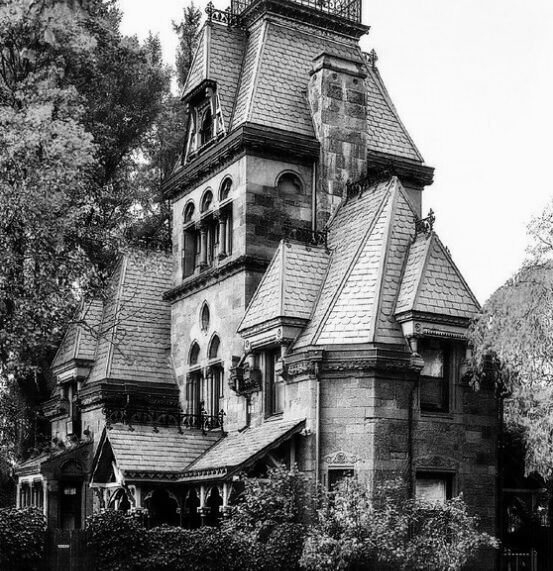
Within the hour, Polaski and I crawled out of my heap in front of the Ettlinger mansion. It was an ornate, multi-story affair, more vertical than sprawling. As we made our way up the walk, I stopped. My companion did the same and turned to me.
“While we’re out here, Bart, what say you take me to the broken window where the killer gained entrance to the place?”
“Okay. This way.” He stepped off the stone path and ambled around to the side of the home. Considering the heat we’d been having, the foundation shrubbery was in decent shape. It could make a great cover for a prowler. In the home’s rear, the cop showed me a window whose lower half had been knocked out. The thing was only four feet off the ground. So, it made entry easy.
“What room is this window in?”
“The dining room.”
“Where is the study from here?”
Polaski stepped back, got his bearings, and pointed. “The turret there forms part of the study where we found the body. I suppose you want to go inside now.”
I nodded, and we started around to the front of the mansion.
Inside, the patrolman led me through the foyer to a door at the end of a short hallway. “Dining room?” I asked, indicating the adjoining entryway.
He waggled his head and pushed it ajar to it for me to get a slant. Then he opened the door to the study and stepped inside to turn on the lights. The scene of Hezekiah’s death was a richly paneled space. His desk sat in the turreted area of the chamber. I ankled to it. There were still traces of blood and brain matter on and around it, though it was obvious someone, presumably Hinchcliff, had tried to remove the remnants. While the cop stood by, I plopped onto the swivel chair and looked through the drawers. Nothing of any significance came from the search.
The scene of Hezekiah’s death was a richly paneled space.
Then I checked the man’s appointment book, which was opened to the date of his demise. It bore dried blood spatters. Hoping to find something relevant to the circumstances, I turned back to the day exactly a month earlier and came forward. I scanned the sheets and saw several entries for scheduled meetings with various businessmen whose names I recognized. There were others that weren’t familiar to me. Two individuals were noted more than once. With a pencil stub and pad, I jotted the names and dates of the proposed get-togethers. Three weeks prior to his death, Ettlinger had a session with someone designated only by the initials R. D. In all, there were eight different people listed in the book during the time period I searched, not including R. D.
From the chair, I swept the room with my eyes. Everything appeared normal except for the display cabinet, which held two empty shelves. Its doors had fingerprint powder along the edges. “Bart, was there anything else you guys found in here or the rest of the home that you think was significant or that I should be aware of?”
“No, just the broken window and the body in here. There wasn’t much to be seen.”
I rose and moved to leave. When I reached the door, I swung it opened and closed several times. It creaked loudly. I’d noticed it when we’d come in. The noise struck me as loud enough to get someone’s attention if they were quietly working at the desk. It was sufficiently piercing to awaken even the soundest sleeper. The same had been true of the one accessing the dining room.
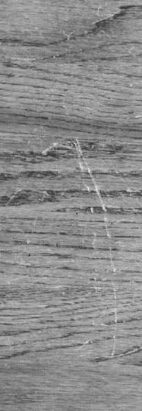
Polaski turned off the lights, and we started to depart, but not before I gave the place one last glaum. In the low sunlight filtering through the windows behind the desk, something caught my eye. I hadn’t noticed it when we first came in. Upon a closer look, I found there were gouges in the wood floor around the area where Hezekiah had been murdered. Neither a lot of them nor very deep, but enough to catch my attention.
Upon a closer look, I found there were gouges in the wood floor around the area where Hezekiah had been murdered.
As I returned to the police officer, I surveyed the floor. Almost imperceptible scratches ran from the desk to the door. Other than that path, they were nowhere else in the study. I showed them to Bart. He confessed they had not noticed them during the preliminary investigation. Retracing the gashes, we followed them directly back to the shattered window in the dining room. We didn’t see them elsewhere in the hallway or the home.
Now, they obviously could have been made by the killer walking through the broken glass and getting small shards lodged in his soles. However, based on my conversation with Naomi, a different notion came to mind.
“Do you know who has the dead man’s clothing, Bart?”
“I assume the coroner does.”
“Yeah, I thought so. Do you have time to accompany me to their office?”
“Sure. The detective said to stick with you. And I’m still on duty.”
* * *
Around forty-five minutes later, we entered the cutter’s office. Warren Moody, a doctor working in the place, was standing at the counter, making notes in a folder. He was a right gee.
Warren turned and greeted us with a smile. “What brings you to our corner of the world, Gil?”
“I’ve been hired by the family of one of your recent guests to look into the circumstances of his death.”
“Which customer?”
“Hezekiah Ettlinger. I was wondering if you still have his clothes and if I might examine them.”
“Yeah, I’m sure we do. But only because we’re running a little behind in our work. Unfortunately, the heat wave deaths and the sundry criminal activities have kept Mr. Ettlinger’s suicide in cold storage for the present. That and no one has called for the body.” He walked to a desk, flipped back a page in a logbook, and ran his finger along the entries. “Hold on.” He left the room and shortly reappeared with a bag of clothing. “This is what you’re asking for, I guess.” He dropped it on the counter and returned to his task.
I took the sack and emptied its contents. Moving past the bloody apparel, I retrieved the man’s shoes. Turning them over, we found the slivers of glass I’d hoped for embedded in their undersides. Pieces small enough to be overlooked unless you knew what to search for but sufficiently large to score the wood floor.
Polaski saw them at once. “Well, I’ll be a son of a–”
“Yeah, you and Hezekiah Ettlinger both.” I exclaimed in relief. “If the man was surprised at his desk and killed by another person who had smashed that window, there was no reason for the glass from it to be there,” I proposed, pointing at the shoes. “And that’s where it had to come from. If Hezekiah had these shards there before, we’d have found marks on the flooring elsewhere in the home. Right?” Bart nodded thoughtfully. “On the other hand, what if he was the one who broke the window from the outside? Then he went into the dining room to unlock and open it to avoid getting cut if he reached through. When he did, Ettlinger could have tracked through the pieces of glass.” The cop agreed.
I made arrangements with Doctor Moody for the shoes to be released to Officer Polaski for him to turn over to Detective Donovan. Warren was okay with that as long as we took all the clothing. We did.
This additional evidence should give Gus enough to rethink the case, but it still didn’t provide a motive for the man to kill himself, if, in fact, he had. I needed to dig deeper.
* * *
We returned to headquarters. As anyone who’s followed my cases could guess, Donovan was not happy with my new findings. He always fiercely resented my involvement in any police matter. Officer Polaski beat me to the punch and pointed out that the discovery may well change a murder to a suicide, requiring no more work of the detective. Of course, Bart put it much more diplomatically than I might have. At that point, the implications dawned on the hefty sleuth. Then I advised Gus I intended to reach out to the people in Hezekiah’s appointment book to see if they had any ideas why the man might end his own life. Again, I parted with the understanding I would bring whatever I learned to the police.
At that point, the implications dawned on the hefty sleuth.
* * *
I spent the next week setting meetings with and speaking with the eight individuals listed on Ettlinger’s calendar. It had shocked them to read of his death. They were stunned when I explained the case was beginning to look like a suicide. None of the businessmen could think of any reason the fellow might do such a thing. Several of them related they had significant deals in the works with the dead man. To a person, they considered Hezekiah to be a ruthless, cold-hearted lug, but one who brought profits to those he dealt with in a non-competitive way. Three told me he didn’t appear for his planned confab with them.
That last bit of information didn’t fit the habits I understood Ettlinger to follow. In my office, I reviewed where the case stood. I’d made my notes from the scheduling book in chronological order, starting with a month earlier and moving forward to the date of his death. When I looked back at the list, something hit me. Every missed consultation came after one with the unknown R. D. But I didn’t know who he or she was or whether it related to the sudden change in Hezekiah’s routine. To solve that mystery, I figured I’d speak with Naomi again. Maybe she might have a clue concerning the identity of R. D.
* * *
First thing the next morning, I motored to the Carnegie Library at the corner of Presley and Decker Avenues, where the Everhart woman worked as a librarian. I found her re-shelving books from a cart. She led me to a small reading room. At her insistence, I filled her in on what I’d learned to that point. Comments expressing the certainty of her thoughts on the situation accompanied her nods.
Finally, I got to the purpose of my visit. When I asked about someone with the initials R. D., she didn’t know. I departed the library for my agency with no more knowledge of the person I was looking for than when I’d arrived.
* * *
A little before noon, my office blower rang, jarring me out of a reverie. Answering the thing, I found Naomi on the wire.
“I think I may have something for you,” she began, “on those initials you asked about.” Her voice reflected a hint of excitement.
“That would be great! What do you have?”
“Well, Mr. Tanner, I just now recalled that a little more than a week back, a doctor’s office called me looking for Hezekiah. I was shocked, to say the least, that they contacted me. They explained my brother had given my information as his next of kin in his records. In light or our estranged relationship, I found it remarkable….” her voice drifted away. I waited. After a pause, she said, “The physician’s last name was Durkee. It’s the brand of spices I use. That’s the only reason I recollect it. The first name doesn’t come to mind, but I think it started with an R. Robert, Randolph, or maybe Richard. I simply cannot remember.”
“That’s swell, Mrs. Everhart. It’s a starting point. There can’t be that many Dr. Durkees in the metropolis. Let me check into it, and I’ll get back to you.”
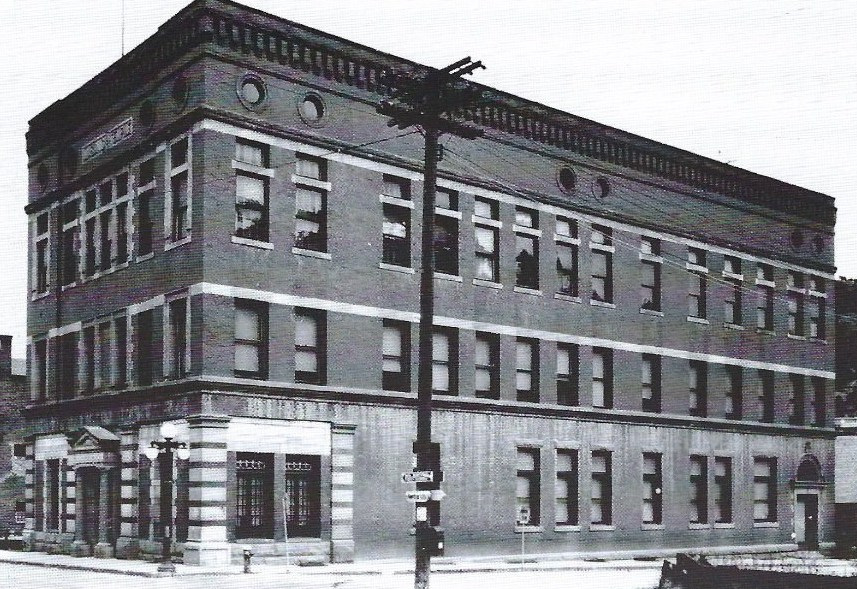
We rang off. I plopped the city directory on my desk and went through it. In no time, I came across a Dr. Richard Durkee with a practice in the Medical Arts Building near St. Joseph’s Hospital. I knew the place. A physician pal of mine maintained his medical facility in the same structure. When I telephoned, I was able to get an appointment for late that afternoon thanks to a cancellation.
* * *
I strolled into Dr. Durkee’s waiting area on the third floor a little before four o’clock, checked in with the receptionist, and sat. After a few minutes, the doctor appeared at a side door and invited me into his office-examining room. He returned to his desk while I took a visitor’s chair, propping my lid on my knee while we spoke.
The man was an average-looking guy in his early forties with dark brown hair showing a touch of distinguished graying at the temples. He glanced at a thin file, made a few notes, then looked at me. “So, what medical problem are you having, Mr. Tanner?”
Pulling my business card from a coat pocket, I handed it to him. “I don’t currently have a health issue, doc. What I have is a need for information regarding a man I believe to have been one of your patients.”
He immediately dropped the card dismissively, slid it in my direction, and informed me he couldn’t violate anyone’s confidentiality.
“Does that hold true even when the person is dead?” He leaned back in his chair, his face betraying an uncertainty of where this was going. Before he responded, I continued. “Relax, doc. I’m not here over a medical malpractice accusation against you.” His brow unfurrowed. “The man’s name was Hezekiah Ettlinger. He died sometime last weekend of a gunshot wound to the head.”
He leaned back in his chair, his face betraying an uncertainty of where this was going.
Durkee sat upright with a concerned expression. “Yes. I read it in the newspaper. That was terrible,” he added, shaking his noggin.
“Well, you probably also saw that the law thinks it was murder.”
He shook his melon. “No, I only read the first couple of paragraphs of the article, which was brief. I’ve seen nothing since.”
“So, he was your patient?” The physician waggled his head in the affirmative. “As I said, the coppers are investigating it as a murder. The family believes otherwise, and they’ve hired me to look into the matter. Meanwhile, the detective in the case suspects one of the man’s relatives was responsible. If it was a self-inflicted wound, I’m exploring for a probable motive he might have had. Ettlinger’s appointment book revealed an engagement three weeks earlier with someone having the initials R. D.
“His sister and only blood relative, Naomi Everhart, the lady who hired me, says she received a call from your office a week to ten days ago. You were looking for Ettlinger. Now, according to what the people here told her, she was listed by your patient as his next of kin. You can check that against the record you have for Hezekiah. So, I figure Mrs. Everhart could get the information I’m after. Do I need to bring her in here?”
The physician’s eyebrows furrowed. “One moment, Mr. Tanner,” Durkee said, getting up from his chair. I watched him walk to a row of file cabinets and combed through a drawer of folders. He retrieved one and returned to his seat. After searching the pages, his eyes swept up to me. “Yes. That is correct. It has a Mrs. Naomi Everhart listed as his closest relative.” He set it on the desk and leaned back in his seat, steepling his nicotine-stained fingers across his slight paunch. He sighed heavily and suddenly looked tired. “Despite the man’s demise and you acting on his sister’s behalf, I don’t feel I can disclose the facts of the case to you. I still need to maintain patient confidentiality. I assume a post mortem has been done. It may answer questions you or the family have.”
“It’s a long story, doctor, but they haven’t completed an autopsy as yet. That’s why–”
“Then I’m sorry you’ve wasted your time coming here.”
“But-”
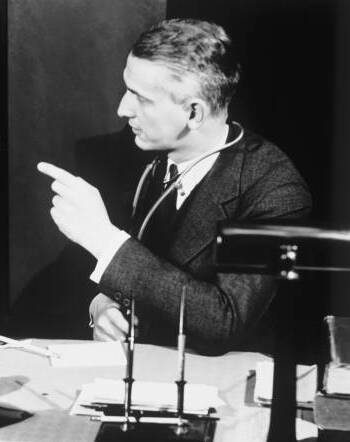
He held up a hand and pointed a challenging finger to cut me off. “With the Hippocratic Oath, I always err on the side of caution. Mr. Tanner, I’m going to require you to get a court order for the release of the contents of my records. Otherwise, no dice.” In a very condescending manner, he continued, “I’m an oncology specialist. A colleague referred Mr. Ettlinger to me. I hold sacrosanct what that physician shared with me and what I determined concerning and told to my patient. Whether the man is now deceased or you represent his next of kin matters not to me. So, I bid you good day, sir.”
With that, he more or less ushered me out the door. As we walked, I suppressed the overwhelming desire to knock the hell out of him. Standing in the hallway, I took a minute to calm myself. Then I descended to the ground floor.
* * *
Turning toward the building’s entrance, I saw Dr. Clarence Lusk emerging from his office. The man was a trusted friend. Clay, as he preferred to be called, had a reputation for treating gunshot wounds in the past and not reporting them to the authorities. Still did occasionally. He didn’t appreciate drop-in trade unless he knew you.
He understood the racket I was in, so he asked no questions when I showed up. Somehow, he’d never been prosecuted for his “missteps” and still held a license to practice medicine. Supposedly, the law never pursued him because one of his “after-hours” patience was the rapscallion son of someone deeply connected to city hall and the state political machine. The kid had been shot during a drunken brawl at a house of ill repute. It was said to have been a minor wound, but the circumstances were enough to want it kept from the public domain.
He understood the racket I was in, so he asked no questions when I showed up.
I called the doc’s name. He stopped, greeted me, and invited me into his office for a bit of liquid libation. Since I knew he was, like myself, a devotee of Jack Daniels, I accepted.
When we were seated at his desk and refreshments had been served, he asked, “What brings you here to this den of reprobate sawbones, Gil?” He chuckled, “You’re not taking your business elsewhere, are you?”
“Nah. You know me better than that.” I raised my glass to him in a silent salute.
“It’s been a couple of months since you came in and bought some paraphernalia for a job. (LINK) So, what brings you to our hub of medical care?”
“I’m on another case, looking into the death of a mug the cops think was a murder, but the family believes otherwise.”
The physician’s brows arched in surprise at the nature of my investigation. “Suicide?”
“It’s a complicated story, Clay,” I answered. He refilled our glasses. “I’m looking for a reason he might kill himself. He was a patient of Dr. Durkee on the third floor. But the croaker won’t give me any indication of what the man’s condition was and if it may have pushed him to suicide.”
“Harrumph,” he scoffed, running his fingers through his thinning, gray hair. “Doesn’t surprise me one bit. Richard’s an arrogant ass! Comes from money. Got his medical degree at an Ivy League school and thinks he’s better than everyone else ‘because of it. On top of that, he’s a specialist and makes sure everybody knows it.” Clay inclined over his desk in my direction. “I can’t prove it, but I think he was behind what first brought my “sideline,” shall we call it, to the attention of the authorities. I owe that bastard!”
As we drank, Lusk became quiet, as though he were mulling something over. Finally, he inquired, “Are you certain this man you’re checking on was a patient of Durkee’s?”
“Yeah. He retrieved the man’s file to confirm a piece of information for me just now when I was in his office. But that’s as far as he’d go divulging anything.”
“You still keep your picklock set handy?”
I grinned. “Yeah, so?”
“If you came back tonight after eleven o’clock, when the building’s empty, you might get into his office and sneak a peek at that file, huh?”
“Sure, but this place is locked up tighter than Grant’s tomb at night.”
Instead of saying anything, the doctor pulled a ring of keys from a pocket and sorted through them. He removed one key from the collection and tossed it across the desk.
“What? Are you sure, doc?”
“Now, before you pick that up, let me advise you of something. I mentioned eleven o’clock, because that’s when the folks who come in to clean the building are supposed to be finished. My experience is they’re long gone by then.”
“Fine.”
“But,” he cautioned, raising a hand, “in addition, there is an old night watchman who makes periodic rounds.” My expectations sank with his words. “His movements are inconsistent, though. He may not stir from his little office in the basement or he might roam around the entire time. By the way, the last door on the left in the hallway leads to the cellar. Again, I can only tell you what I’ve witnessed on those nights I’ve worked late on ‘special patients.’ So you need to be on your toes if you choose to follow through.”
It was a chance I was prepared to take to get the information. I willingly encountered risks for money. It was part of the racket I was in. I snatched the key.
Nodding, he drawled. “Just slide it under the door on your way out.” Pouring another round of Jack, he added, “You’re my friend, Gil, but if you are caught, I know nothing of this. If it comes back to me, I’ll swear that key was stolen, or I lost it. Get me?”
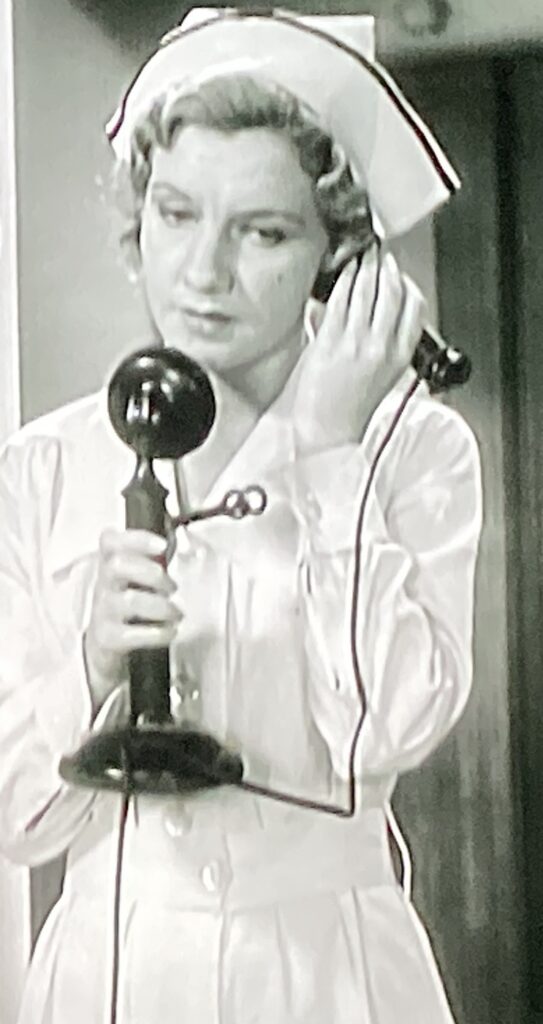
“Yeah, sure, Clay. But if I slip it under the door, won’t Lois find it and question the thing in the morning?” Lois Mizner was his office nurse.
“Don’t worry about Lois. She enjoys working here. We have … an understanding. Besides, I’ll make a point of getting here early tomorrow. I have a spare key at home.”
When we finished our drinks, I thanked the good doctor. We departed the building, moving in different directions.
* * *
Eleven-fifteen that evening found me sliding my LaSalle into a spot in St. Joseph’s Hospital parking lot, around half a block from the Medical Arts Building. I climbed out and ambled through the muggy evening air in that direction. Nothing stirred on Decker Avenue. Just as I reached the entrance to Lusk’s building, a fast wagon came around the corner with its siren blaring. It jolted me, but I simply walked past the door. The occupants apparently didn’t notice me. But, I thought, if this was any indication of the way my luck might run tonight, it will not end well.
Nothing stirred on Decker Avenue.
The vehicle turned into the hospital’s area and disappeared. When the coast was clear, I returned to the building’s brassbound plate-glass front door and peered in. The place was deathly still. I let myself in. When I was a kid, I had a slight aversion to empty buildings at night. Requirements of the private investigation profession quickly ended that anxiety. Yet, between the hospital-type smells and it being as dark as a foot up a bull’s butt, there was something creepy about a medical building in the dead of night.
I didn’t want to use my flashlight until I was upstairs, for fear of some passerby noticing the odd illumination. More or less feeling my way along the main corridor, I reached the stairwell. As I tiptoed to the second floor, I thought I heard movement in the passageway below me. It caused me to expedite my ascent. The second level appeared to be void of humanity. I continued on.
There were no signs of anyone being present on the third floor. Turning on my flash, I scurried to Durkee’s office. As expected, the entry was locked. I scanned my surroundings again and knelt at the doorknob. Holding my light in the crook between my neck and shoulder, I retrieved my picklock set from a pocket. With a little effort, the lock gave way.
Quickly easing inside, I re-secured the door and crossed the outer office to the doctor’s chamber. Then I moved to the filing cabinet I’d watched Richard access earlier. Again, with the flashlight held between my shoulder and neck, I pulled out the drawer and rummaged through the files until I came across the one bearing Hezekiah Ettlinger’s name.
I carried it to the desk, laid it down, and flipped on the small lamp there. Just then, another ambulance suddenly roared past with its siren blasting through the night air. When I settled my heart rate back to what might pass for normal, I opened the folder and read the contents. It was an eye-opening discovery. I recorded information in a small notepad I kept with me. The medical report held a pretty fair explanation of why the patient had resorted to a bullet in his brainpan. Naomi’s description of her brother’s temperament and mindset explained the rest. It struck me as the stuff Donovan needed to determine his case was a suicide.
Before I finished my perusal, I caught the sound of movements in the corridor. I killed the light and stepped into the outer office. Someone was walking down the hall, checking doors. I flattened against the wall. My hand instinctively reached into a pocket and caressed my sap. Uncertain whether the watchman was armed, I was prepared for anything. I held my breath. The knob on Durkee’s entry rattled, but held fast. I felt beads of sweat trickle down my spine. The clattering intensified, then tapered off. After a minute, the person moved away. Soon, I perceived someone descending the staircase. My breathing returned to normal. Sort of.
I flattened against the wall. My hand instinctively reached into a pocket and caressed my sap.
With the information I sought in hand, I now had to get out quickly and quietly. Not wanting to leave any clues of my visit, I returned the file to its proper place in the drawer and saw myself out, again relocking the doc’s portal. I cautiously dropped to the ground level. On the second-floor landing, I observed someone at the far end of the building, as the halo of light from his flashlight played from side to side across the hall. It provided an impetus to my departure. Fortunately, there were no other signs of another’s presence. On my hasty trip to the exit, I slid Dr. Lusk’s key under his door.
I returned to my agency and prepared a report of my findings and their logical conclusions.
* * *
My first job the following morning was to find Gus Donovan and give him what I’d learned. I ran into him as he was mounting the steps to police headquarters. As we walked together, he advised me Polaski had presented him with the evidence in the dead man’s shoes and the discovery of the scratches on the floor at his home. I followed the detective to his desk. He settled in, and we set fire to smokes. Contrary to his usual attitude toward my involvement, he invited me to tell him my thoughts on the case.
“Well, Gus, here’s how I see it. Though she held no animus toward him, Ettinger’s sister will tell you what a mean, sadistic man he was. That can be more or less confirmed by interviewing his business associates. He apparently relished causing heartache and chaos. Around three weeks ago, he visited a Dr. Durkee here in the city and learned he had only a very short time to live because of cancer ravaging his body. They will probably confirm the advanced condition during an autopsy. I spoke with Durkee yesterday. If you go to speak with him, be prepared for resistance to giving you anything. He demanded I get a court order to have access to his records.”
Around three weeks ago, he visited a Dr. Durkee here in the city and learned he had only a very short time to live….
“Oh, yeah? Well, he ain’t had a run-in with Gus Donovan yet!” he boasted. Following a brief pause, he shot me a look of suspicion. “Say, how’d you come by this information?”
“That’s a trade secret,” I bluffed. “Anyway, after getting the bad news from Durkee is when I think Ettlinger set about departing this world by his own hand and causing more havoc in the process. Being left-handed, he knew finding the gun in his right hand might lead an intelligent investigator like yourself,” I urged, stretching the truth as I saw it regarding Gus, “to suspect foul play. I’d argue that his grip on the weapon was not the result of someone forcing it into his hand but was the product of the cadaveric spasm we’ve heard the cutters testify to so many times. Hezekiah also recognized that leaving no suicide note could add to the police speculation of a murder.
“But he was clever enough to know he shouldn’t have a break-in occur in the study where we’d question how someone could then sneak up on him. So, he staged the broken window in the dining room, as evidenced by the glass shards in his shoes and the path of faintly visible nicks he left between the shattered opening and his desk.” Gus bobbed his head in understanding as I spoke.
I went on, “Recalling his perversity, I’ll wager he figured this scenario would create additional circumstances he could find joy in. First, an investigation into a murder that wasn’t would use up valuable police resources and waste people’s time. Second, the initial evidence had to bring into suspicion anyone who had a probable motive, especially the family members who might expect an inheritance but who had shunned him.”
His first look of consternation at my appearance had turned to relief as I spoke. “Fair enough, Tanner. I’ll take it from here. But, from what you’ve found, it looks like the case can be closed as a suicide.”
I nodded my agreement. “Thanks. Here’s a copy of my report to my client. Can I relay your proposed action on the investigation to Mr. Everhart?”
“Yeah. Sure thing.”
We shook hands, and I left Donovan perusing the typed account of my inquiry. As I made my way out of the building, I wondered whether I’d actually persuaded Gus as I’d wanted or he was simply happy to take the easy route to close a tough case. I also questioned how much of my investigative file might be plagiarized into his final report on the death. It didn’t matter to me. I was convinced of my findings and position. And it put the skids under Gus’s hounding the Everhart family.
* * *
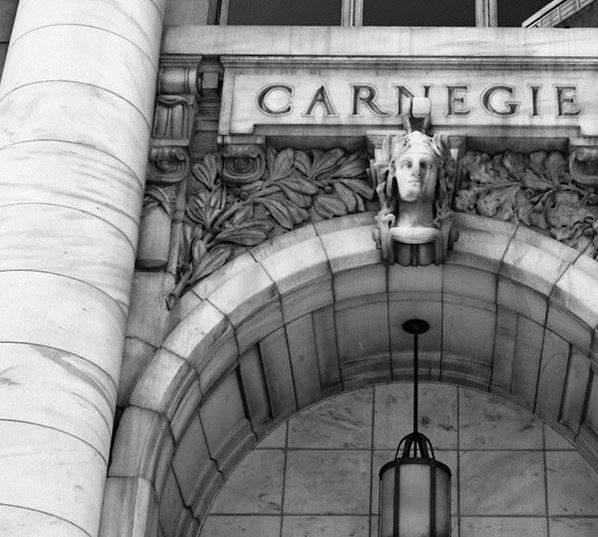
A short time later, I climbed the steps of the Carnegie Library with my paperwork in hand. Naomi was stationed behind the front counter. When she saw me, a pensive look played across her face. When I asked if we could speak, she led me to the same small reading room.
We sat at the table. I walked her through everything I’d done, leaving out, of course, my late-night visit to Durkee’s office. I explained that his regular physician had referred her brother to Dr. Durkee for further evaluation. Durkee determined Hezekiah was in the last stages of terminal cancer. Unfortunately, he’d ignored obvious signs of the disease for so long that, by the time he sought treatment, it was too late. It had metastasized to the point it was inoperable and incurable. After a thorough examination, tests, and medical procedures, Durkee advised him he had perhaps three months at most to live. Then, I gave her a copy of my narrative.
As she glanced at it, I admitted, “Mrs. Everhart, I have to confess that I’ve already reported my findings to Detective Donovan and given him a copy of that. He informed me I could tell you the case will be listed as a suicide.”
She smiled sadly as she clutched the sheets of paper. Her eyes welled with tears. “Thank you, Mr. Tanner.” Naomi sighed deeply. “The Good Book says we shouldn’t judge. But I know where my brother is now. And I firmly believe that, for the past two weeks, Hezekiah has had the loudest laugh in hell.” ©