
Turning the corner on the landing between the fifth and sixth floors of April Cleaver’s apartment building, I paused, caught my breath, and shook my head. It occurred to me it was time to ask my prospective clients whether they lived in a structure without an elevator. Perhaps the coffin nails and the Jack Daniels were taking a toll on me. I waggled my head again. Nah. That couldn’t be it. My guess was it was more likely the oppressive heat with which the sweltering summer of 1934 had covered most of the country.
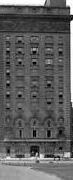
Finally reaching the floor of my client’s flat, I stopped for a breather and wiped my face with a handkerchief. The Cleaver woman was expecting me, because I’d telephoned a couple of hours earlier to let her know I’d completed her case. I thought appearing at the lady’s door out of breath and sweaty wouldn’t inspire her confidence in my abilities as a private investigator. Now, I wasn’t in bad shape but also wasn’t ready to go more than five or six rounds with Max Baer, either. Okay, one or two rounds. Regardless, eight flights of stairs in that heat were enough for any man.
After a brief rest, I moved along the stuffy hallway to the Cleavers’ apartment and knocked. A second or so later, the door opened. My client greeted me, wearing only a slinky, pink silk chemise. Although her appearance took me aback, the voluptuous blonde didn’t seem the least bit concerned about the circumstances. Don’t get me wrong, I’m no prude or a lollipop, but I keep my business and my pleasures separate. Compartmentalized was the new word I’ve heard the swells use to describe it. I wasn’t sure what the dame had in mind, but all I wanted was to give her my final report, collect my fee in cash, and blow. Sweeping my fedora off and smiling, I told her, “As I said over the blower, Mrs. Cleaver, I’ve found your husband. I only wanted to let you know where he is and to collect my fee.”
Putting a delicate hand on a shapely hip, she snapped, “Well, you might as well come in, detective.” She jerked the door wide. The white softness of her breasts shifted under the silky fabric. I pretended not to notice. She pretended not to notice me noticing. Mrs. Cleaver’s snarky attitude surprised me. The desperation she’d shown when she hired me led me to believe quickly locating her wayward husband was an absolute necessity.
The white softness of her breasts shifted under the silky fabric. I pretended not to notice.
She stepped aside and closed the door behind me when I crossed the threshold. From another room, presumably the kitchen, a man’s voice came to me over my shoulder as I faced my client. “The lemonade’s almost ready, April. Where’s the gin?” I turned in that direction. The words “Who was at the door?” followed as the fellow, wearing only gripper drawers and an A-shirt, came into the living room. He held a lemon in one hand and a large kitchen knife in the other. It was Randolph Cleaver, the lady’s husband, the man April had hired me to find. He saw me and stopped short of where the skirt, uh, the woman and I stood. Mr. Cleaver looked between his wife and me with an expression of uncertainty.
I spun my lid in my hands and smiled at the situation, though I was uncertain where it would go from there. “Well, good afternoon, Mr. Cleaver. Glad to see you made it back all right. You don’t know me, but I’m the detective your wife hired to dredge up you and your new tomato.” I looked to his wife and added, “I’m just here to tell you I found the roving lad and to collect my fee.”
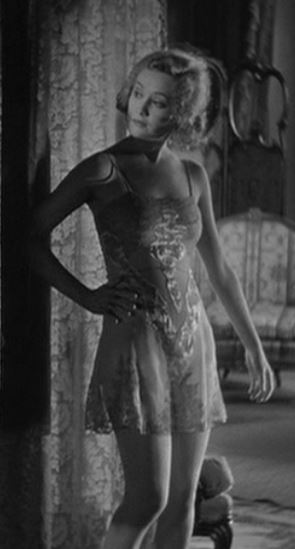
At this, April Cleaver made a vague gesture in her spouse’s direction and barked, “As you can see, Randy’s come home. He got here an hour after you called and without your help. Just why the hell do you think I’d pay you anything now?” When she opened her mouth, the prettiness left her face. The woman put her other dainty hand on the other well-formed hip and jutted her jaw out defiantly.
“Well, for starters, sister, you hired me to find him! Second, I found him, such as he is,” I continued, nodding in Randolph’s direction and looking him up and down. “And last, the retainer you paid me didn’t even cover the expenses I incurred doing your bidding, much less the daily fee we agreed to!” My voice was none too sweet.
Randolph squared up and bristled. “Hey, mister, you can’t talk to my wife that way!” he shouted around a wad of chewing gum. The slight aroma of Wrigley’s Doublemint wafted across the air between us.
I cut my eyes to the husband. “Well, at the moment she’s my client, and that’s all I care about, ace! Her being your wife is your problem!”
As I started turning back to April, Randolph, still working the wad of gum, dropped the lemon. Then, he came at me, growling, “It’ll tickle me pink to show this bum out, honey!”
His exact intentions were unclear, but the knife he held spoke volumes to me. Cleaver was not a small lad, to be sure. Fortunately, he wasn’t in the best of shape. When he got near me, the man lunged. Working his momentum against him, I sidestepped his thrust and put a leg out where it did the most good. As he stumbled past, I landed a heavy punch to his gut. The blow was hard enough to empty most of the air from his lungs. He tumbled to the floor, still holding the knife in a hand extended in front of him. The fall finished the job of emptying his lungs of air and his mouth of chewing gum. He gasped for breath. I stamped my foot hard on the man’s hand, causing him to release the knife.
Suddenly, the lovely and talented Mrs. Cleaver joined the fray. Despite her sparse clothing, she unashamedly jumped on my back, wrapped her legs around my waist, and began pelting me with her tiny fists. My hat fell to the floor. I tossed her onto the couch next to me and wasn’t nice about it. While maintaining my foot on Randolph’s wrist, I fisted my hand in April’s hair and jerked her head back so she had to look up into my eyes. “Back off, doll, or this could get rough!” I yelled, slapping her, then unholstering my gat with my free hand. She continued flailing punches at me and missing. I tossed her head aside and returned my attention to her husband.
Bending over his prone form, I asked, “You enjoy getting tickled, Cleaver?” Flicking the delivery end of my .45 caliber against his closest earlobe, I continued, “Does this tickle? Huh? ‘Cause it won’t if I pull the trigger.” Randolph turned his head as far as he could and gave me a wide-eyed, hard stare. “If you’re going after a mug with a knife,” I counseled, “you’d better know how to use it, numbskull!”
April Cleaver had quieted, focused on returning her hair to its nicely coifed form. Straightening again, I motioned to her husband with the gun barrel. “Now sit up and behave. I came for my money, not trouble.” Randolph started to get up. I kicked his feet out from under him, admonishing, “I said sit up, not get up. Stay on the floor, buster. I like you there.” I motioned toward the divan with my gat. “Sit with your back to the sofa so’s I can keep an eye on you and the misses.” He glanced at the knife lying close at hand. I kicked it away from him across the room. Still wheezing, he did as he was told. “Now,” I asked, returning my attention to his wife, “what about my money?”
“I ain’t payin’ you nothing, Tanner!” My client’s insolent attitude hadn’t waned since my arrival.
From the corner of my eye, I saw Mr. Cleaver looking at the blood on the front of his undershirt. Then, he gently stroked the lip he’d split when he’d hit the floor. He was more attuned than his wife to the circumstances in which the couple found themselves. “What’s she owe you, pally?”
From the corner of my eye, I saw Mr. Cleaver looking at the blood on the front of his undershirt.
“Sixty bucks.” I grinned, “You weren’t that hard to find, Randolph. I’ll forget the money she still owes me for expenses, although I shouldn’t what with the aggravation you two chiselers have caused me.” To press home the point, I drew my handgun back as if to hit the man. “Try to stiff me, will you? Why, I oughta–!”
“Hold it, Tanner!” Randolph screamed from behind raised hands. I eased the rod down to my side. “Look, I got forty-five, maybe fifty dollars in my pants. It’s all I got on me. Honest. Take it and let’s call it even,” he pleaded, swallowing hard and looking up at me with pleading eyes.
The Cleaver woman’s face twisted in rage. “No, Randy! No!”
“Shut up, April!” Randolph shrieked with what breath he could manage. After a pause, he calmly said, “Just keep quiet, April. Please.”
Following my lifelong philosophy of “something’s better than nothing,” I nodded. “Okay, where’re your pants?”
Cleaver jerked his chin toward an open door at the other end of the living room. “On the floor of the bedroom.” Evidently, he’d been glad to get home. And Mrs. Cleaver had been excited to welcome him.
“Okay. It’s a deal.” Again, he started to get up. “Uh-uh.” I motioned with the roscoe again and looked at April. Keeping my voice low and cold, I said, “You go get his britches, doll face. But be quick and be careful. You two have pissed me off enough already. Try something stupid,” I added, seething and waving my gun, “and I’ll use this thing one way or another. I swear it. And understand I don’t believe in what they call ‘warning shots.’ You get me?”
The comely blonde nodded and got off the davenport slowly. She moved to the bedroom door, glancing back at us a couple of times. I looked at the man on the floor and chuckled, “Randolph, you’d better hope April doesn’t have it in for you for your disappearing act. She could try to pull something right now and use me to hurt you, you know.” His eyes widened.
After only a second or two, April returned with a pair of worsted trousers. She extended them to me. “No, angel, you dig the money out and pay me. And let’s get one thing straight. You’re paying me because you owe me. In fact, you’re getting away with paying me less than you owe me. This gat is for my protection, because you attacked me. It has nothing to do with the money being handed over, right?”
April started to say something challenging my contention, but Randolph cut her off with a heavy sigh, “Yeah, that’s the way it is, detective. Just take your money and dangle.”
The Cleaver woman threw angry glares between me and her husband as she patted the pants pockets. She pulled a wad of bills from a pocket and shoved them at me. “Uh-uh, April. Count it out. I’m only taking what I’m owed or what part of it Randolph has on hand.” She threw the trousers hard at Randolph’s face and counted out fifty-three dollars. “That’s close enough.” Taking the dough and retrieving my fedora from the floor, I bid the lovebirds adieu and departed. The sound of their screaming at each other died away behind me as I marched along the short corridor. Good riddance! There was no question my contacts with humanity had soured my overall attitude.
She pulled a wad of bills from a pocket and shoved them at me.
* * *
After that uplifting episode, I decided I needed a drink or two before lunch. I never eat on an empty stomach. So, thirty minutes later found me ensconced, out of the day’s scorching heat, on my preferred barstool in my favorite beverage distribution center, Harry’s Paradise Tavern. The old overhead fans in the joint were barely holding their own against the warm, stuffy air as they stirred it slowly. The cold beer in my hand made their task of cooling me much easier.
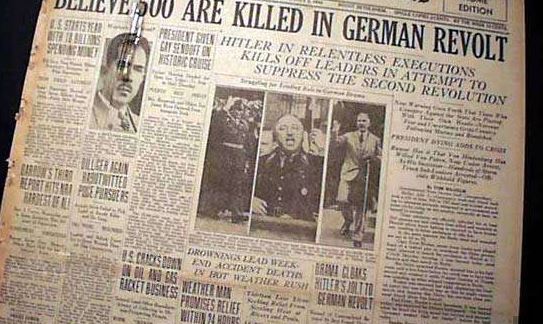
I sipped my cold refreshment on the perimeter of a heated discussion–as if I welcomed anything heated at the moment–among several regulars regarding recent events in Germany. The particular incident at issue was what the German Chancellor had referred to in a speech several weeks earlier as “The Night of the Long Knives.” Leading the debate was a longtime patron of Harry’s, a fella named Altmeyer, who was of German-Jewish descent and who still had family in the old country. He saw Hitler and his fascists in a far different light than several other mugs gathered around his seat at the bar.
My pal Altmeyer’s opposition in the argument referred to reports of the event in the national newspapers. They had initially expressed shock at the killings of Ernst Röhm and other SA leaders, while praising Hitler for stamping out a revolt by the thuggish brown shirts. One particularly nasty individual in the barroom fray claimed it still upset Altmeyer Germany had enacted laws the previous year, banning Jews from civil service jobs and from owning land. He didn’t mention another point supporting my buddy’s anti-Hitler argument. The Nazis had confirmed, in August of last year, Jews were being sent to concentration camps on inane charges, such as socializing with German girls or imitating the Nazi salute.
The Nazis had also confirmed, in August of last year, Jews were being sent to concentration camps….
I suspected the lug was a member of this new group of German sympathizers formed last year, who called themselves the Friends of New Germany. The organization was causing something of a stir in our country. He claimed, after the German government enacted the laws he’d mentioned, nothing Hitler might do to “protect” his people could ever find favor in the anti-Nazi’s eyes. On the contrary, one of Altmeyer’s allies in the debate contended Hitler’s recent purge was for securing Nazi power, not suppressing a supposed uprising. This whole movement in Germany seemed to be dividing our country into camps.
I looked at Harry to see whether he was going to put an end to the dispute and return peace to the bar. I realized, short of fisticuffs, the barkeeper was going to let the discussion continue, because the quarreling meant parched throats and parched throats led to liquid refreshment. Neither side appeared to be gaining ground, and I was getting a headache listening to the impassioned bickering. Besides, I’d had enough of raised voices for one day. I paid my tab and bid Harry a good afternoon. After giving Altmeyer an encouraging slap on the back on my way out, I moved on to a bite to eat at Cappacino’s. With a fine, relaxing lunch under my belt, I drove to my office.
* * *
The elevator in my office building clanked to a crawl from the ground level and shimmied and shook its way to a shuddering stop on the fourth floor where I had my agency. After the gunplay and tight spots I’ve been through, I will die in this damned machine one of these days, I thought as the door slowly creaked open. Despite a great lunch, I was still in a funk.
Turning toward my Tanner Detective Agency, I saw a long-legged woman standing at the office door. She held her hand up against the door as if she’d been knocking. When the auburn-haired dame saw me approaching, she nervously withdrew her hand, turned her head to the wall, and hurried past me. I didn’t get a good look at her. The woman pulled down on the wide brim of the dark-blue, Panama-style hat with a white grosgrain ribbon band and bow she wore, covering her head and face.
Now, if you’re getting any funny ideas about me because I knew so much about the woman’s hat, stop right there! I had recently parted company with a dish who owned a hat very much like it. However, my lady friend’s hat was light-green with white trim. In fact, the broad owned every style and color hat made in the last five years. She’d felt compelled to explain and describe the hats in detail to me. In turn, I’d felt obligated to feign interest in her millinery, hoping to remove one of her hats some fine evening. Her bonnets remained on, if you get my meaning, and I learned more than a mug should have to concerning the topic.
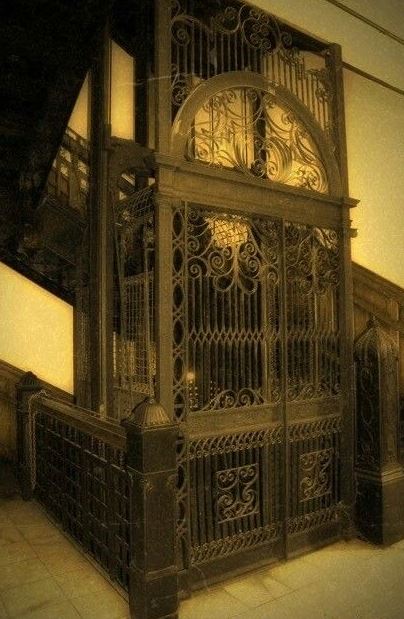
Anyway, I couldn’t see the face of the mysterious, long-haired woman in the hall. And nothing about her seemed familiar. I noted her striking figure, however. The stranger didn’t stop despite my calling out to her. She bypassed the elevator and went for the stairs. Good choice, I thought. I reckoned, if she really wanted or needed my services, she’d return. My mood didn’t lend itself to chasing her.
Inside the office, I set my mind to bringing my account books, such as they were, up to date. The shortfall in the Cleaver investigation’s income put a dent in my plans, but not a hole. I’d pay next month’s rents on the office and my apartment on time. However, the current state of my finances might curtail my social life somewhat. Come to think of it, nothing would change drastically.
An hour later, someone knocked on the office door. Thinking it might be the furtive lady from earlier, I walked to the door, instead of calling out as I normally did, and opened it. There stood one half of my favorite two people from the city police force, Detective Sergeant Rob Waddell. Detective Gus Donovan was with him. The second guy from the force I especially liked, my brother Marty, wasn’t with them. “Gentleman.” I paused for effect. “Gus.” Donovan heaved an audible sigh. A smile played at the corners of Waddell’s mouth as his eyes crawled back over his shoulder to the big copper behind him. I leaned a shoulder on the partially opened door and asked, “What brings you two to my humble trappings?”
“We need to talk, Gil. Can we come in?”
“Ya gotta a wahrant?” I demanded in my best deadpan, Brooklyn-accented impersonation.
Gus scowled and revived his exasperated air-blowing routine. Rob’s face darkened, “Aw, jeez, Gil, don’t be that way. We–”
I busted out laughing, “Just ribbing ya, Rob! Yeah, sure, c’mon in fellas.” I turned and walked back to my desk, gesturing to the two visitor’s chairs. “Have a seat.” The men casually plopped into the seats, as I picked up my still-smoldering cigarette from the ashtray and took a drag. As I sat in my squeaky swivel chair, I opened a bottom desk drawer. I retrieved three lowball glasses and a bottle of Jack Daniels from the stash I’d liberated from a Canadian pal. Donovan sat forward toward the desk and licked his lips.
Waddell waved off the implied invitation, “On duty, Gil. Thanks anyway.” His sidekick sat back dejectedly and rolled his eyes at the senior detective. “We were in the neighborhood and thought we’d drop in. We’re heading back to the station house from visiting a corpse over on Greene Street needing an explanation.”
“Now I know I need a bracer,” I claimed, pouring a generous drink and taking a long, slow slug from it while eyeing an envious Donovan. “But I’m not saying a word until I speak to my mouthpiece” I joked afterwards.
“Very funny, shamus,” the ever-fun-loving Donovan drawled harshly.
Waddell leaned forward and put his sharp elbows on my desk. “This may be something of interest to you and, then again, it may not be.” Rob’s voice was serious, but his face was noncommittal.
I broke out a fresh pack of cigarettes, dealt myself a butt, and skidded the rest across the blotter, sliding the ashtray behind it. “A fair assessment in every instance, detective. So what’s the dope?”
The detective sergeant shook a cigarette loose from the deck, then offered one to his fellow officer. Gus, though eyeing the Jack Daniels, took a cigarette and jabbed it into his mouth. Even if the burly detective didn’t enjoy my sense of humor, he, at least, liked my smokes. Waddell struck a match on his shoe sole and lit them both. When he’d emptied his lungs of smoke, he continued, “Ever hear of or meet a woman named Audrey Madison?”
After giving it a moment’s reflection, I answered, “Can’t say I have. Should I be familiar with the lady? Or am I supposed to know her?” A sharp thought suddenly crossed my mind. I didn’t get a visit from two detectives, one a detective sergeant every day. Something was in the wind. I leaned forward over my desk, “Say, does this have anything to with the stiff you just left?”
A sharp thought suddenly crossed my mind. I didn’t get a visit from two detectives, one a detective sergeant every day.
“Sounds like a guilty conscience to me, Rob,” Gus tossed out carelessly, glancing at his fellow detective. When he swiveled his head on his thick, hard neck back in my direction, I gave him a steely eyed glare. He shrugged, “What, Tanner?”
Based on the confrontational history between us, my response to Donovan was quick and hard. “I’m trying to figure out whether you’re a lot cleverer than you appear or a lot more stupid, Donovan.” The big copper growled and started to rise from his seat. Still harboring a foul mood and willing to meet his challenge, I stood.
Waddell turned slightly, grabbing Gus’s forearm firmly and pointed a determined, warning finger in my direction. “All right, you two. Take it easy!” He shot serious glances at each of us, pausing for effect. He meant business. “And,” he then said from behind a lazy smile, “mind your manners, both of you.” When we’d returned to our seats, it satisfied Rob he had the situation in hand. He continued, puffing smoke with each word, “No, Gil, this has nothing to do with the Greene Street murder. This Madison dame came by our office yesterday, claiming someone was trying to kill her.” Rob had my attention. “She alleges someone in a car tried to run her down yesterday morning as she was crossing a street.”
“This Madison dame came by our office yesterday, claiming someone was trying to kill her.”
“What’s that got to do with me?”
“I’m coming to it.”
Impatiently, I asked, “Did you check into it?”
“Look into what, Gil? Investigate the probably overactive imagination of a distraught twist?” An exasperated Waddell stubbed out his cigarette in the ashtray. “Do you know how many motor vehicles almost hit citizens in this city every day? And there were no witnesses to Madison’s alleged incident to speak of. At least, none with enough of a story regarding what they saw to make it sound as if someone tried to murder her.” Waddell sat back in his chair. “Even Madison admits she doesn’t know of any enemies, have anyone who’d want to hurt her. But she is truly scared, Gil. Because we couldn’t do anything for her, I recommended she come see you, let you look into it.”
Donovan snorted sardonically. “I think it’s a waste of time and money, hiring a keyhole peeper such as you,” he grumbled.
Ignoring the big copper’s comment, my mind drifted back to the excessively shy woman who’d been at my office door earlier in the day. Maybe she was the Madison woman. I shrugged, “Well, I can sit and wait for her to come to me or I can go to see her. Do you have her address?” As the detective dictated, I wrote the information on a slip of paper. Waddell threw in the woman’s telephone number for good measure. I chuckled, “Unlike some members of the legal profession, I don’t go in for ‘ambulance chasing.’ But I’ll contact her and see whether she wants me to sniff around for her.”
We stood, and I shook hands with Detective Waddell, thanking him for the referral. When I held my hand out to Detective Donovan as a sort of olive branch, he ignored it and turned toward the door. Rob sighed and shook his head. Hell, I thought, there’s no sense in being nice to this jerk. So, I gave Donovan a parting shot, “Hey, Gus, come back when you can’t stay so long. No, better yet, don’t come back.”
After Donovan stormed out into the hallway toward the elevator, Rob turned to me and raised an intent gaze from the hat in his hands to my face. “I know you’ve had run-ins with Gus before,” he whispered, “particularly in the Cappacino kid’s investigation, and I’ll admit he can be an asshole more often than not, but–”
“There’ve been other instances–”
“But,” he shook his head dismissively, “do you think you’ll ever let go of your dislike of him?”
“Pure and simple, he’s a sloppy investigator whose ambition outstrips his abilities, Rob. And I don’t appreciate that in a copper who has people’s lives in his hands,” I replied. Then, I chuckled, “And, anyway, I’ve been known to carry a grudge for a while. Hell, I still haven’t forgiven President Harding for banning doctors from prescribing beer back in ’21.” Waddell responded with a slight smile which seemed edged with sadness in a way. He bid me goodbye and left.
After I closed the door behind him, I went to my desk and dialed the number the detective had given me for the Madison woman. It seemed, if she truly believed someone was trying to kill her–based in reality or not–, she’d not be happy if a stranger approached without warning. I let the phone ring a dozen or so times before I pegged the receiver. The only thing left to do was pay the lady a visit when I had the time. And there was no time like the present. I grabbed my hat on the way out the door and headed to my car. Eddies of relentless heat rose from the pavement.
When I climbed into my LaSalle and tried to tease the motor alive, she didn’t kick over. Several more tries brought the same results. Exasperated, I crawled out and raised the hood. Nothing I tried did any good. So I made my way to a public phone in a nearby drugstore. Max, a German-born mechanic buddy of mine, answered his phone after a half-dozen rings. We made arrangements for him to tow the heap to his shop and get it running again. Meanwhile, I hailed a taxi and gave the driver Madison’s address. During the ride, my mind tossed around various scenarios about Mrs. Madison’s problem, if she even had one. The air moving through the hack’s open windows gave a brief relief from the sweltering atmosphere.
* * *
Shortly, the taxi pulled up in front of the Dunedin Arms Apartment Building, an impressive, pricey fifteen-story affair, completed just before the Wall Street crash. It always reminded me of the American Radiator Building I’d seen in New York City several years earlier, but without the gold-colored bricks used there. Suddenly my mind raced back to climbing stairs in Mrs. Cleaver’s building earlier in the day. Because Madison’s place was on the tenth floor, I cringed at the thought of another ascent, in my mind something akin to Hugh Ruttledge’s expedition on Mount Everest I’d read about some time last year.
When I’d paid the cabbie, a doorman, decked out like an Italian admiral, greeted me, in English I might add, with an enormous smile. He opened the door with a flourish worthy of the place. The man had my fullest sympathy, adorned in his heavy clothing in the sultry weather we were suffering through. He didn’t show any effects of it, however.
The air-cooled lobby was a welcomed relief from the outside temperature. Added to that break was the fact two elevators stood at one side of the atrium. I scanned the entrance area as much from habit as looking for any likely threatening miscreants. Everything was copacetic as far as I could tell.
On the tenth floor, I prowled the corridor until I located Audrey Madison’s apartment, number ten-twenty-three. Somewhere down the way, someone was lullabying to Benny Goodman’s rendition of Moonglow. Otherwise, the passageway was quiet. No sounds came from the other side of the Madison’s door. After knocking several times and receiving no answer, I became concerned for a reason I couldn’t explain. Surveying the hallway, I removed a piece of hard celluloid I always carried in my wallet and eased it between the jamb and the lock. I pushed the doorknob hard toward the door’s hinges, while pressing the celluloid against the slope of the spring lock. The lock snapped back, and the door gave way.
When I entered the front room, only dead air and darkness greeted me. The first things I noticed, beyond the heavy, oppressive stillness in the place, were the lowered blinds and the tightly drawn curtains. Someone was afraid of being seen through the windows. Perhaps Audrey Madison is just the shy type, I thought, smiling to myself.
The first things I noticed… were the lowered blinds and the tightly drawn curtains. Someone was afraid of being seen through the windows.
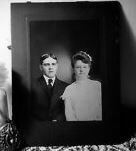
Making a fluid sweep of the tidy apartment, I found nothing which seemed out of place or outwardly disrupted. On a sideboard in the small dining room were several photographs of a man and a woman, one an apparent wedding snap. They were an average-looking couple somewhere in their thirties. His puss was of an average-looking Joe while hers bore a faint resemblance to the actress Edna May Oliver. One picture, evidently taken some time back, had what looked to be Niagara Falls in the background. The young pair appeared ecstatic. There were also several sepia photographs of older couples, probably the Madison’s parents.
On a small desk in the modest, tastefully furnished living room were pieces of mail addressed to Audrey Madison. I noticed a hint of Mr. Madison’s cigar smoke in the air but found no ashtrays. Maybe Mrs. Madison was one of those women who required her man to leave their residence to enjoy his tobacco. It seemed the reek had followed him back inside like a trailing wake. Considering the pungent aftermath of the thing, I understood at least part of her reasoning.
Satisfied there was nothing evidently amiss in the place, I re-locked the front door, left the building, and caught a trolley back to my office to finish some paperwork. Then, I grabbed a quick sandwich at The Wayside Café down the street from my flat before calling it a day.
* * *
The oppressive heat of the day didn’t recede when sundown arrived. I barely tolerated a sheet over me through my night’s fitful sleep in the stuffy, still air of my apartment. My small oscillating fan brought little relief. The sandman never made it to my bedside.
* * *
My alarm clock brought me to the reality of that Wednesday morning, as the sun came up in its relentless pursuit of another record temperature. I sat on the side of my bed, smoking my first gasper of the day, trying to wake up. After a groggy shower and a shave, I put on my second-best suit—ranked right behind the other one in my wardrobe. Well, I carried, as opposed to wore, the suit coat owing to the already high, early morning temperature.
I grabbed a newspaper from the boy at the corner and stopped for a quick breakfast at The Wayside Café. While I waited for my food, I set fire to a butt and flipped through the daily. A front-page headline proclaimed, a few days earlier, the Germans had elected Adolf Hitler to be their Führer, whatever the hell that was. Something else for Altmeyer and his antagonists to argue over, no doubt.
A front-page headline proclaimed, a few days earlier, the Germans had elected Adolf Hitler to be their Führer, whatever the hell that was.
The sports pages held nothing in the way of good news for me. My Cincinnati Reds were in the midst of a dismal season, despite Harlin Pool and the hawk-nosed Ernie Lombardi having great seasons at the plate. I closed the sports section with a sigh and pondered my circumstances. Max had let me know my LaSalle needed more of his professional attention. So, I’d be hoofing it for that day, at least.
I supposed later in the afternoon might be an agreeable time to take in a motion picture at one of the air-cooled theaters in town. The name of the flick or who starred in it, for that matter, didn’t make much difference. Cool relief from the heat was my primary aim. But, for the heck of it, I checked the broadsheet to see whether Cagney or William Powell had anything new showing. Turned out, I’d already seen both their current offerings at the local picture houses. So, I settled on Bulldog Drummond Strikes Back with Ronald Colman and Loretta Young. Oh, well. At least she was easy to look at.
With ham and eggs floating contently in about a quart of coffee, I left the diner and made my way to the office on a streetcar.
* * *
Climbing out of the potential death trap my office building’s owners euphemistically called an elevator, I saw the woman from the day before hurrying away from my door. Another stylish, wide-brimmed hat hid her face. When I called her name, she sped up toward the stairs. Exasperated, I called to her, “Mrs. Madison, I think you’re looking for me. Name’s Gil Tanner. Detective Waddell said you’d be stopping by.”
The fleeing stranger stopped, but I could tell from her body language her heart wasn’t in the effort. As the lady hesitantly turned in my direction, I swept off my fedora and ambled toward her, careful to hold my hands out from my sides in a nonthreatening manner. When she looked up from under her hat, the woman’s face was the same one I’d seen in the photographs in the Madison apartment the day before. “Are you really Gil Tanner?” she asked haltingly. Her darting eyes reminded me of a trapped rabbit desperately seeking an escape. Strangers apparently petrified her. I assumed it was a recent development
Uncertain of what she might do next, I spoke gently to her as I walked, stopping a few feet short of where she stood. “Yes, Mrs. Madison, I’m Gil Tanner. The same Gil Tanner Detective Rob Waddell referred you to. Believe me, no one would claim to be me who didn’t have to,” I chuckled, trying to break the ice and lessen her anxiety. The words didn’t seem to allay any of her concerns. “I have my credentials, if you’d care to see them. They’re inside my coat pocket.” I reached for them but paused long enough to ask her permission. With a terse head bob, the lady gave me the go-ahead. I retrieved them and handed them to her, using my full arm’s reach. Mrs. Madison extended her hand, took the documents, and looked at them carefully. The entire time, her cornflower-blue eyes darted between the documents and me.
Finally, she handed my identification back to me, gave the corridor a furtive sweep, then settled on me with an intent stare. “Okay. Can … can we go to your office to talk?”
Smiling, I stepped aside and swept my arm in that direction. She walked past me, and I followed her striking figure, shown to its best advantage by the dark-blue suit with white linen cuffs and collar she wore. At my office, I unlocked and opened the door for her. As we entered, I casually asked Mrs. Madison why she hadn’t stopped when I spoke to her the day before and when I called her name a few minutes earlier. She said she didn’t stop or speak to me because she didn’t know who I was. She added innocently I looked shady, untrustworthy to her. In my racket, I wasn’t sure whether I should take her comment as an insult or a compliment. So, I let it drift.
She said I looked shady, untrustworthy to her. In my racket, I wasn’t sure whether I should take her comment as an insult or a compliment.
Inside, when I motioned her to a chair, Mrs. Madison didn’t just sit. She dropped into it exhaustedly. Then she started to cry quietly into a hankie. If you haven’t figured it out by now, let me set you straight on something. I’m not good with crying dames. I sat and waited. During that time, I judged her to be in her mid-thirties. In person, she was as she appeared in the snaps in her flat: a plain-looking woman with a stunning figure. What with my kisser, I’m always reluctant to call someone else unattractive or homely. She was neither. Merely plain looking.
Eventually, Madison’s sobs subsided and she looked across the desk at me with as pitiful an expression as I’d ever seen. “My name is Audrey Madison. Someone’s trying to kill me, Mr. Tanner.” When I started to speak, she moved a shoulder, a hint of a shrug, and went on mournfully. “I don’t have a clue who, and I don’t understand why anyone might want to do such a thing.” After a pause, she added, “I went to the police to get help, protection. The detective didn’t seem to believe me.” Then, she looked at me hard, but it was a scared kind of hard, like a cornered animal. “Does it always come easy to men to tell a woman she’s inventing her fears?” Before I could speak, she finished, “Or perhaps the detective just doesn’t deal well with women.”
Trying desperately to divert from a men-versus-women conversation, I simply mused, “No, Mrs. Madison, I’m good friends with Detective Waddell. He has no problem with women. In fact, they’re some of his favorite people.” The effort at humor fell on deaf ears. Madison declined the cigarette I offered, but said she didn’t mind if I smoked. I lit up and spoke around the first puff. “Detective Waddell told me an automobile nearly struck you the other day. He said you suspect it was more than a mere chance occurrence. Please tell me about the incident.”
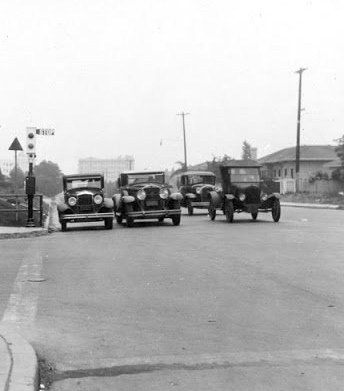
“Well, Monday morning I was going to cross Sheffield Street where it intersects with New Castle Avenue. As you’ll recall, there’s a stop signal for the traffic on Sheffield when it gets to New Castle. Before I stepped off the curb into the street, I saw a dark-colored car of some type–I don’t know much about the machines–approaching on Sheffield. I hesitated, and it slowed down as it was coming to the signal. When I felt it was going to stop at the intersection, I started across. Then the car sped up, ran the stop signal, and came right at me.
“Fortunately, I was looking in its direction. I saw the car’s action and barely got back to the sidewalk in time to avoid being hit. In my dash to get back to the curb, I lost a shoe. The car crushed it. Instead of slowing, the vehicle raced away without so much as a by-your-leave. There were only a few people at the intersection and none of them interpreted the incident as I did. But I know what happened, Mr. Tanner.” Her voice was firm and matter-of-fact.
For all her sincerity, the woman’s take on the event still seemed far-fetched. I tried to use my best calming smile and not sound dismissive. “As Detective Waddell observed, Mrs. Madison, pedestrians have close calls with automobiles every day in the city. Don’t you think–?”
“Maybe I would … if it had been the only occurrence, Mr. Tanner,” she quickly interrupted with little patience in evidence. The conviction of her tone and her words caught me off guard. “After I talked to the police Monday afternoon and then came by here on my lunch break yesterday, there was another ‘near miss.’ That’s what a few people have labeled these things. I don’t care for the term.” She paused.
I leaned across the desk and urged her to continue. Audrey’s teary eyes swept around the office as if searching for the right words. “When I left work Tuesday afternoon, I walked home instead of taking the streetcar. I decided to walk, because I needed to stop at the grocers. And I wanted time to think over what the detective told me, you know, that the thing was merely an accident and I was letting my imagination run away. I was beginning to wonder whether I was crazy or whether something was really going on.
“Anyway, it was quitting time, so the sidewalk was pretty crowded. At one point the flow of folks stopped to wait for a traffic signal. Then, someone pushed me out into the path of an oncoming bus. I landed, sprawled on the street in the bus’s path, but I was lucky. The bus was coming to a stop to pick up passengers, anyway. It came to rest a foot or so from where I laid. Some men helped me to my feet. Despite the crowd, nobody saw anything. Everyone there sympathized but chalked it up to an accident caused by people jostling to get a place at the bus stop. But I know better, Mr. Tanner. I felt the hands on my back, pushing. They shoved me hard toward the street.” When she finished, Mrs. Madison was trembling. The woman didn’t seem given to histrionics, but she was genuinely scared.
Pushing a person into traffic is not a surefire way to kill someone, I thought. Still not convinced she wasn’t simply the victim of two unfortunate coincidences, I asked her to tell me a little about herself.
She ignored my inquiry. “There’s one more thing you need to be aware of, Mr. Tanner,” Mrs. Madison said gravely. “While I was at work yesterday, someone broke into my apartment. They didn’t steal a thing, but I know someone was there.” I tried not to smile, knowing I was the one who’d entered her residence. “After the incident with the bus, I worried more. I felt unsafe even in my home. So, before I left for work yesterday, I put a piece of paper between the jamb and the edge of a closed door inside my apartment. Then, I did the same thing at my front door.”
“While I was at work yesterday, someone broke into my apartment.”
A weak smile touched her lips, as she added meekly, “I read of the trick in a paperback novel I bought at the drugstore a while back. When I got home, both pieces of paper were lying on the floor, but both the front and the bedroom doors were still closed.”
I recalled opening a door to a bedroom but closed it again so my intrusion wouldn’t be noticed. Questions concerning Mrs. Madison’s suppositions and thoughts on the situation still came to me. My relief about the circumstances of the “mysterious visitor” to the apartment was short-lived when she continued. “Then, there was the smell of an awful cigar the person who broke in had been smoking.”
This development caught me by surprise, but I moved forward cautiously so as not to give away my having been in her residence. “So, there was a cigar odor?” She nodded. “It wasn’t something Mr. Madison may have caused?”
“My husband died a little over a year ago, Mr. Tanner.” Her voice softened and her long face appeared to extend further in sadness at the memory. “He had what the doctors had called congenital emphysema. Because of it, he never smoked. And we never allowed anyone to smoke in our home. In fact, we moved into the Dunedin Arms Apartments when the building was brand new. Part of our motivation for the move was no one had ever lived in the building. We didn’t have to deal with any issues of smoke residue left by a previous tenant. We’d lived at the Dunedin for five years when David, my husband, died of a sudden heart attack. He’d been an accountant. David was the only family I had,” she sighed sadly.
Again, disclosures from Mrs. Madison stunned me. The smoke I’d detected in the flat was not from her husband. “Perhaps a neighbor’s or a visitor’s cigar smoke might have drifted–”
“Our … my apartment is at the end of the hall.” I recalled that being the setup, as she continued, “Across the hall from me is a building superintendent’s closet. Next to the superintendent’s closet is a stairwell,” she ticked off, as if covering every plausible explanation for the smoke I might think of. “So, I only have one neighbor, Mrs. Ball, a seventy-one-year-old widow, who lives next door to me. She doesn’t smoke cigars, and she doesn’t entertain men.” Audrey’s body stiffened almost imperceptibly as she followed with, “For the record, neither do I.”
Her declaration made me grin before a thought occurred to me. “Maybe the building’s super–?”
“My building’s superintendent, Mr. Paquette, is a sincere, respectful, and considerate man, who knows me to be an extremely private person. He and I have an understanding. Except in an extreme emergency, he never comes into my apartment unless I’m there. In any event, he’d make me aware if he’d had to go into my apartment when I wasn’t there. And he didn’t. Besides, I know he doesn’t smoke cigars and wouldn’t do so in someone’s apartment in any circumstance.” She said softly, after a pause, “Mr. Tanner, I’ve never hired a private investigator. Do you think you can help me find out what’s going on?”
The facts were stacking up in a much different light from what they’d first appeared. It seemed Waddell and I had jumped to the same conclusion too fast. Also, it appeared I wasn’t the only visitor the Madison residence had had yesterday. And, if Audrey Madison was correct, I’d been in her apartment a short time after her other, unexpected visitor. He’d not still been there while I was. “Perhaps you’d better tell me more about the car that almost hit you on Monday.”
Mrs. Madison reiterated she didn’t know what make or model it was, but it was a dark–possibly black, dark-blue, or dark-green–newer automobile. The car was moving too fast to get a tag number. She explained, while she didn’t get a good look at them when they raced past her, there were definitely two men in the car, both wearing suits.
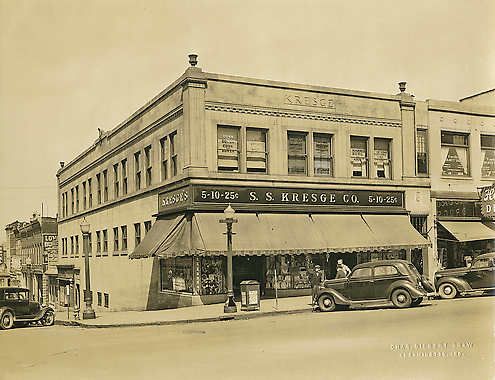
Regarding her background, Mrs. Madison explained she was thirty-five and, again, told me she’d been a widow for a year, after thirteen years of marriage. After giving me the name of the accounting firm where her husband had worked, she related she worked as a cashier at a local S. S. Kresge store. It was one of those that hadn’t been closed because of the Depression. Audrey Madison told me she’d not had a workday off since her husband’s funeral. But, between her frazzled nerves and her efforts to contact me, she’d taken a day’s “personal time” that day. We discussed at length anyone she could think of with a motive for wanting to do her harm. The Madison woman knew of no one who’d want to hurt, much less kill her.
She’d been a widow for a year, after thirteen years of marriage.
With no family, the lady explained, she’d canceled her small life-insurance policy after David had died. While not wealthy by any definition of the word, she lived comfortably. In a safe-deposit box, Mrs. Madison told me, she still had a few Liberty bonds she and her husband had purchased years before. The widow put in she was leaving everything to her church when the time came. No one knew that fact except her attorney. So, financial gain didn’t appear to be a motive.
Audrey told me she got along well with everyone at work. She’d never had any trouble with her store’s management, either. Also, there were no issues with anyone in her apartment building. Madison had none of the normal vices which occupied the day’s run-of-the-mill citizen. Finally, she assured me she’d kept to herself since her husband’s death. Audrey had no romantic involvements, and she had no old lovers who might be subject to a jealous rage aimed at her. She simply had no known enemies. Nonetheless, she restated her absolute certainty someone was out to kill her. When she concluded, she gave me the same sorrowful glance as before.
If she had no explanation for the recent events and none was clear to me, I was willing to help her figure it out. “Mrs. Madison, I can check into the matter, if you want to hire me. There may be something to this. There may not. But I can try to find answers for you.” After we discussed my fee, she hired me, and we settled the arrangements, including a modest retainer. That step relaxed Audrey somewhat. As it was approaching noon, I offered to take her to lunch. She declined, saying she only wanted to go home and rest, if she could. My offer to escort her home was no sooner on the table than it occurred to me my LaSalle was still in Max’s shop. She accepted. A taxi would have to do.
Outside my office building, I hailed one of the Diamond Company’s cabs. The heat and humidity of the day bore down on us as the hack made its way across several lanes of traffic to where we stood. The cloudy sky looked threatening. Maybe rain might cool things off, I thought, as we climbed into the taxi. I let Mrs. Madison give the driver her address so as not to reveal my familiarity with it. We settled in for the ride. Neither of us felt compelled to speak during the trip.
* * *
A short time later, the taxi pulled up to the curb in front of the Dunedin Arms Apartments. While I paid the driver, my client got out and moved to the entrance to her building. Before I could turn from the cab, I heard a scream, a terrific crash, then another shriek. Turning to Audrey Madison, pressed hard against the entry door with the doorman by her side, I observed a large, ornate concrete planter in pieces on the sidewalk between us. Horror clouded her face. My eyes immediately raced up the building. On a ledge outside a fourth-floor window, I saw a matching container, holding a small evergreen shrub like the one now spread on the sidewalk. It was directly above the door. The figure of a man moved away from the window.
I observed a large, ornate concrete planter in pieces on the sidewalk between us. Horror clouded her face.
My instincts took over. I unleathered my gat and raced for the door. “Don’t move!” I yelled at Audrey, sprinting past her and the doorman and into the building. There was no time to wait for an elevator. Taking the steps two or three at a time, I climbed the stairs to the fourth floor. With the stairwell door to the hallway cracked, I quickly essayed the corridor. No one was waiting for me. I eased into the hall as quietly as my heavy panting allowed. By my estimation, I’d find the window in question in an apartment or along the hallway to my left.
I made my way there and found the door to a residence open. By my best reckoning, I figured the offending window had to be in that apartment. Neither the door nor the doorjamb showed any sign of a forced entry. Somebody knew what they were doing–the same as at Madison’s apartment the day before. Just outside the door, I pressed against the wall. When no sounds came from the apartment, I moved my head around the door’s edge just long enough to scan the room before pushing back to the corridor wall again. The place appeared to be empty, but it wouldn’t be the first time I’d entered a seemingly unoccupied space only to find a welcoming committee who wished me bodily injury.
Bursting into the apartment, I dove behind an oversized sofa sitting in the middle of the floor. From my squatting position, my eyes prowled the room and the adjacent ones from what I could see through the open doors leading to them. Nothing moved except the cotton lace curtains covering the window in question, flapping gently in a weak, sultry breeze.
I cleared the apartment, which was decorated along the lines of a joss house. The joint held an abundance of teakwood, red lacquer, gold-framed photographs and artwork, and ornate lamps adorned by fringed shades bearing the likenesses of various Oriental figures. Suddenly, I had a craving for egg foo yong. Searching, I found nothing. The one thing I noticed was the pungent stench of a cheap stogie in the air. Again, the same as was in Madison’s apartment.
Moving to the window, I stuck my head out it and saw no sign of my client below. The doorman called something unintelligible to me from the sidewalk below and pointed to the entry door. I briefly turned my attention to the matching planter remaining on the wide ledge. The concept of the decorative plants being placed how and where they were struck me as odd, but, then, I wasn’t an architect. The plant-holder’s design focused its considerable weight toward a wide bottom, making an accidental fall highly unlikely. Pulling my head back inside the room, I realized a small group of rubberneckers had gathered at the apartment’s door by this time. I moved toward the group, intending to find Audrey Madison as quickly as possible.
A sinewy, redheaded copper pushed his way through the crowd into the room. You could tell by the way he carried himself he was no rookie and had some hard bark. “What’s all the noise about?” he asked with a slight brogue, looking around. He was a bull I’d never met. Seeing me and the .45 I held at my side, the man bristled and gave me a hard glare. He pointed his nightstick at the rod and demanded, “Say, you’d better be puttin’ that down, boyo! And do it easy like or I’ll make your life a misery!” He put his working hand on the butt of his service revolver as he spoke. As I leaned sideways to comply and laid the gun on a desk close by, he followed up, “Who are you, buster? This your gaff?”
Seeing me and the .45 I held at my side, the man bristled and gave me a hard glare.
“Uh-uh, officer. The name’s Gil Tanner. I’m a private investigator. My credentials are in my coat pocket, if you want to see them.” The policeman held out his hand and snapped his fingers impatiently. I retrieved my identification papers and handed them to him. Audrey Madison appeared in the cluster of people behind him as he looked them over. “Somebody just tried to kill my client there,” I explained, pointing in her direction, “by attempting to drop a heavy planter from the ledge outside that window onto her head. Fortunately, he missed. There was somebody at the window. I ran up here to get some answers–answers somebody didn’t want to give. The door was open but the place was empty by the time I got here.” Madison stepped forward from the throng.
The copper glanced at her. He tossed my papers back to me. Then, he put his hand on his firm chin, pursed his lips, and narrowed his eyes at me thoughtfully. “Hm!” he grunted. “Maybe ‘twas a wee bit of an accident, Tanner.”
Before I could respond, a middle-aged man and woman pushed their way through the folks blocking the door. “What the hell’s going on here?” the man shouted at me before he was aware of the police officer off to one side.
The copper turned slightly to answer, never taking his eyes off me and my .45. To make his life easier, I moved away from the desktop where the roscoe rested, leaned against the back of the sofa, and folded my arms across my chest. It helped. The officer gave the couple his attention. “I’m Officer Cregan. And who might you be?”
“I’m David Kupferman, Officer Cregan. And this is my wife, Sarah. This is our apartment. What’s going on?” As he spoke, his wife’s eyes roamed the room, obviously trying to determine, from where she stood, whether anything was missing or damaged.
“I only this minute arrived meself, mister. This man,” he gestured at me, “says someone dropped a planter from your window there, tryin’ to kill a lady on the sidewalk out front. When I got up here, he was lookin’ around the place. He says the door was open. I’m guessin’ the window was, too.” He cut his eyes at me, and I nodded.
“Well, we sure as hell didn’t leave them open!” Kupferman yelled as he set fire to a gasper. “He has no right to be in here! I want him arrested, officer!”
Cregan raised his hands to calm Kupferman. “Now, mister, what–”
“I’ll give you an alternative play, Cregan. Call the department and ask for Detective Sergeant Rob Waddell. Know him?” The copper waggled his head in the affirmative. “Tell him you found Gil Tanner in this couple’s apartment accompanied by Audrey Madison. Remind him it’s the building where Madison lives and explain the circumstances as I’ve described them to you. See what he says. I’ll go along with whatever he tells you to do. Meanwhile, if you want, let these good folks look around their apartment to make sure nothing is missing. If something’s gone, it’s a damned cinch I didn’t take it, because you found me here with only my legally possessed weapon in my hand. And that was for self-defense.”
Officer Cregan’s kisser reflected his careful consideration of the matter, before he responded, “I ‘spose I could do that. Ya gotta telephone, Mr. Kupferman?” The apartment’s tenant directed the copper to a small telephone table at the far end of the room. When he walked between the desk where my weapon lay and me on his way to the phone, Cregan casually picked up the handgun. At the table, he lifted the phone off its cradle and turned back to the aggrieved couple. “Look around. See if anything’s missin’. Make a list if there is.” He started to dial a number but paused and tossed a scowl at the Kupfermans. “Oh, and don’t mess me about by tryin’ to pad any list, folks. This ain’t me first day on the force.”
When he walked between the desk where my weapon lay and me on his way to the phone, Cregan casually picked up the handgun.
After a brief, muttered conversation on the phone, Cregan walked back to me and handed me my .45. “Detective Waddell says to wait here. He’s on his way to sort this out.” The officer then turned his attention to the throng stuffed into the doorway and crowding the hall. “All right, people! There’s nothin’ to see here! Gwan about your business.” He extended his arms from his sides and forced the hesitant throng from the residence. “If you be needing entertainment, Kate Smith’ll be comin’ on the radio shortly. Go home and give her a listen.” He herded the crowd, “Gwan now! Keep movin’.” He rapped his truncheon firmly on the apartment’s doorjamb to help the undecided move along.
With that accomplished, the officer returned to the Kupferman residence, closed the door behind him, and took up a deep perch on the large davenport. “Well, we might as well make ourselves comfy while we wait for the detective.”
I dropped onto a settee opposite the sofa. Audrey joined me. She sat in silence, wringing her hands in anxiety. As I studied her face, I now had no doubts her life was in danger. She was still frenzied by the recent events. “Do you know these folks?” I whispered, cocking my chin at the Kupferman couple. Without moving her gaze from her lap, she gave me a sharp head shake. “Ever see them before?” Same response. The look of utter shock and helplessness hadn’t left her eyes. “Do you want a cigarette?” I asked, softly. “It might help calm your nerves.” I knew she didn’t smoke, but, not seeing any hooch readily available in the joint, it was the only thing I could think of to steady the woman.
After a moment, she halfheartedly nodded. I called out, “Do you mind if we smoke, Mr. Kupferman?” He looked to his wife, who nodded her consent. Ironically, the man waived his hand holding a cigarette in my direction. I dug a fresh pack of cigarettes out of a pocket, tore it open, and shook one loose from it. Audrey took the offered fag tentatively, but put it between her trembling lips, nonetheless. I speared my mouth with one.
“Say, would you be mindin’ me havin’ one of those, Mr. Tanner?” Cregan asked, leaning in my direction with his hand extended. “The chief has an objection to us smokin’ the little darlin’s while we walk our beats. But ain’t nothin’ been said,” he chuckled, as his eyes swept the room, “‘bout indulgin’ while waitin’ indoors for a detective.” I threw the pack to him. After pulling one out, he tossed it back to me and started tapping the cigarette on his thumbnail.
I pulled out a box of matches accompanying my smokes. My client reached for it with shaky fingers. I ignored her offer. “Here. Let me.” I struck a match and held it to the end of the cigarette. Nothing happened. The cigarette didn’t ignite. Chuckling softly, I looked at her, “Okay. You have to inhale.” Once lighted, the cigarette’s smoke drifted up into her squinting eyes. She broke into a momentary coughing fit, followed by an embarrassed grin. We shared a smile as I lit mine. Audrey quickly learned to keep her head tilted to one side to keep the smoke from getting in her eyes.
I reached toward the copper with the match. “Oh, no!” he exclaimed in a whisper.
Realizing his would have been the third cigarette lit by the match, I chuckled, “Superstitious, officer?”
“Nay, Mr. Tanner,” he grinned, rapping the wooden table beside the sofa three times. “Merely cautious, tis all.”
While we waited, the flatfoot asked for and took down in a small notebook the pertinent information of the principals in the matter. Simultaneously, the Kupfermans completed the inspection of their apartment. The wife opened a few windows in search of a cross draft to counter the stuffy heat. The couple reported to Officer Cregan nothing was missing. They told him the only things that appeared to differ from how they’d left their place were the front door and the one window being opened. Mr. Kupferman seemed disappointed they’d not found something to report. Cregan made a brief note of the result on the same piece of paper he’d written our details.
My client had abandoned her first smoke while it was still wisping a tiny thread of smoke into the still air. Cregan and I were on our second cigarettes when there came a sharp knock at the door. The flame-topped copper quickly stubbed out his half-smoked butt, fanned the air around where he’d been sitting with his free hand, then moved to the door.
Cregan and I were on our second cigarettes when there came a sharp knock at the door.
When the door opened, Detective Waddell edged into the room. Just inside, he spoke in hushed tones to the uniformed officer before moving to Mrs. Madison and me. I rose to speak with him. Rob looked at Audrey with a gentle intensity and nodded his greeting. While the detective considered her, he spoke to me, “What gives, Gil?”
“I was escorting Mrs. Madison home from my office after she hired me to make inquiries.” As I spoke, Waddell moved his eyes to me. “I stopped to pay the cabbie.” His brow furrowed. “My LaSalle’s on the fritz. Anyway, when she approached the building’s front door, someone pushed a large concrete planter from the ledge outside that window,” I explained, jerking my head toward the opening in question. “The thing barely missed crushing her.” Rob’s eyes moved back to Audrey. She returned his gaze with soft, swimming eyes and wagged her head.
The lanky detective stepped around me to the window. He bent over with his hands on the sill and stuck his head outside for a minute. “Yeah, I saw the thing when I came in. But I don’t get the setup of that ledge at this window,” he said, as he pulled back in and straightened his long-limbed frame.
Mr. and Mrs. Kupferman were standing nearby, observing, listening. He piped up, “When we took the flat, the building’s management told us plans called for the ledge to have been at the window on the end of our hallway. But, during the rush to complete the construction, there were changes or miscalculations or some such to the internal building designs, for whatever reason. They gave no thought to the ledge’s location. The window with the ledge wound up looking out from this apartment instead of the hall. Because the shrubs were fake and didn’t require any upkeep from anybody, we didn’t care. Never dreamed something such as this could happen.”
Waddell expressed his understanding, then turned back to me. “Cregan says you saw a guy standing at the window a second after.” He moved his eyes in Kupferman’s direction and whispered, “Any chance …?”
“Nah. I didn’t get a good gander at his face, Rob, but the mug was a lot bulkier. The bird’d taken a powder by the time I got up here. My guess is whoever it was, staked out the place, broke in after the couple left, and waited. He was banking on the slim chance Mrs. Madison would come home while he watched. If that failed, he could always get to her in her apartment. I figured he didn’t count on the woman having an escort. The Kupfermans are probably lucky they weren’t here when he made his play. Or didn’t walk in on him while he waited.”
Again, Waddell nodded and briefly scanned the apartment. In a low tone, I continued, “Look, Mrs. Madison’s behind the eight ball here, detective. She had another near miss after she visited you. It was late Tuesday afternoon.” With my face, I tried to shoot my client an apology for using the term she took exception to. Once more, Audrey’s tired, moist eyes met the detective’s face. “Can’t the police do anything for her?” Her sigh was an exclamation point.
Waddell turned to the woman. “Mrs. Madison, at this point, all I can do is canvas this floor to learn whether anyone saw the person who did this. With a building this size, there’s only a chance in a million the doorman might be any help in identifying the guy. And I can check the apartment for fingerprints. But if those options bring me goose eggs, I don’t have any other ideas.”
Frustration and anger overtook me. “Does she have to get killed for the coppers to get involved?”
Detective Waddell bristled at my words. His mouth twisted in harsh irritation. Audrey Madison sobbed a gasp. Too late, I realized the impact of my words. The mistake of saying them to Waddell and in front of Audrey Madison hit me immediately. Before I could soften or reverse the blunder, my detective friend grabbed me by an arm and forced me out into the hallway. The more muscular aspect of his gangly frame revealed itself in that moment.
He slammed the door behind us. Rob wasn’t happy. Through gritted teeth, he seethed, “Listen, hotshot, I take a lot of crap from you for the sake of our friendship but don’t push it! You ever say anything like that again in front of a citizen, and I’ll knock your block off! Friendship or not! Get me?” The copper paused and took a deep breath.
“Listen, hotshot, I take a lot of crap from you for the sake of our friendship but don’t push it!”
I pulled my arm from his firm grasp, and he looked at me levelly for a long moment. “Audrey Madison may well be sitting on dynamite, but, until I see the sticks or hear the fuse sizzling, I can’t figure where or how to stop the explosion. You know damned well this city is lousy with crime. It stretches headquarters thin as it is without chasing ghosts.” His tone softened somewhat. “But, from the day she came to me, I believed there might be something to her story. It’s the reason I sent her to you in the first place, Gil. So, back off.”
“I’m sorry, Rob. I screwed up when I spoke. It’s just my frustration at this poor woman’s dilemma is through the roof. The–”
“Well, what have you done on her case so far?”
“Nothing much yet. She only hired me a couple of hours ago. After you left my office yesterday, I tried to telephone her. When I couldn’t reach her, I came over here to her apartment. Nobody answered the door, so I–”
Waddell threw his hand up. “Whoa! Stop right there, Gil! Don’t tell me anything else!” The man was a pretty insightful detective. And he knew me well enough to realize what was coming might be too much information concerning how I handled some circumstances for him, as a copper, to hear. We shared a knowing grin. “Look, if you get something solid–a name, a motive, whatever–, bring it to me. You know I’ll do my damnedest to get the dope on the caper and to bring those responsible to justice.”
“Thanks, Rob,” I said, offering my hand in apology. “Again, I am sorry.” We shook hands and returned to the Kupfermans’ apartment. Inside, I squared up to my client. “Mrs. Madison, I spoke out of turn just now. The current circumstances tie Detective Waddell’s hands. Until I can come up with something concrete about what’s going on it’s just the way things stand. I have options available to me he doesn’t have. When I get something, I’ll take it to him. You can rest assured he’ll do everything he can to resolve this issue. In the meantime, I’m going to be at your side to protect you every minute while looking for answers.” She smiled sweetly, but maybe with a measure of uncertainty.
With that said, my client and I left the Kupfermans’ flat to go upstairs to her place. Detective Waddell, meanwhile, started what brief investigation there was for him to complete at that stage. He told me later the canvas of the neighbors, the questioning the doorman, and the effort to get any unknown fingerprints failed to bear fruit. Back in her apartment, I cleared the place and checked the windows to make certain they were secure. It was merely a precaution. I told Audrey I wanted to stash her in a hotel until we could get a better handle on the situation. Initially, she balked at the idea. Then, I reminded her of the unknown, cigar-smoking visitor she’d had in her place the day before. That sold her on the scheme. Madison quickly packed a bag.
Before leaving, I telephoned a buddy of mine, a hard number who drove a hack for one of the city’s cab companies. Mel worked nights, so I woke him from a sound sleep. As he yawned his way through our conversation, the cabbie agreed to pick us up on the street running behind the Dunedin Arms building. I asked him to come rodded, as well. He had no questions. He was a right gee and accustomed to such requests from me. Besides, the man owed me several big favors. Again, another story for another time.
After the call, we waited a few minutes to allow Mel to wake up, get dressed, and make his trek to us. Then, my client and I made our way to the building’s back exit and waited. Soon, through the door, there came two horn toots. We stepped into the narrow street shimmering with heat waves. My pal was waiting, motor running.
Once we were in the taxi, I told Mel someone might try to follow us. He smiled, winked, and told me it wouldn’t be a problem. He hadn’t needed to tell me. If ever I decided to follow a life of crime and needed a wheelman for a job, Mel was the guy.
* * *
A half hour and many turns and U-turns later, Mel pulled up a scant distance down the block from the entrance to the Claremont Hotel, a relatively nice place. I got out and walked inside alone. Meanwhile, as we’d discussed during the meandering drive, Mel pulled the cab a short distance further along the block and waited with Audrey hunkered low in the back seat. Inside the hotel, I asked the young desk clerk to give me a room and a bath.
“I can give you a room, but you’ll have to give yourself the bath,” the smart-alecky kid smirked.
“Say, does vaudeville know about you?” My tone was flat. He got the message. My concern Audrey’s pursuers may have put us together by this time led me to register for the room as Hal Cooper, a name I used from time to time. At the same time, I got an adjoining room “for my boss” who, as I told the desk clerk, was coming into town later that evening. I gave my boss’ name as William Blaisdell. I figured correctly the kid behind the registration desk was too young to recognize the name of the mustached silent movie actor, who’d died only a few years earlier. But, when the clerk acted skeptical, a fin from me eased his knitted brow. It also helped I paid for both rooms for several days in advance.
After getting the rooms, I proceeded to the next step of my plan. Standing on the sidewalk outside the Claremont, I removed my fedora and used a handkerchief to wipe my brow with a flourish. It was the signal to Mel it was okay to deliver Audrey Madison to me at the hotel’s seldom-used back entrance. Yeah, sure, the gambit was cheesy, but the idea was to get Audrey to the relative safety of the hotel room, not to steal military secrets from Mussolini.
A few minutes later, Mel pulled his hack up to where I stood in the alley behind the Claremont. Not another soul was in sight. After helping Audrey and her suitcase out of the taxi, I paid Mel. Initially, he refused my money. He reluctantly accepted the dough after I insisted and explained I might need him again soon. “See ya at Harry’s!” he called out as he pulled away. I smiled and waved. Then, my focus quickly returned to my client.
We made our way back to the hotel lobby where we waited for an elevator. The kid at the desk happened to see us and tossed me a vulgar grin. He said nothing, though. He’d become too friendly with the five-buck payoff I’d given him. I waved off an offer of help from an old bellhop.
On the fifth floor, I showed Mrs. Madison into her room. Then I opened the door to the bathroom our lodgings shared and the adjoining door to my room. She paced nervously. The woman still had the heebie-jeebies from the most recent incident. I explained to Audrey, although it was late afternoon, I wanted to go out for a brief time to check on a few things relating to her matter. After admonishing her not to open the door for anyone, including purported hotel staff, I promised her a nice meal when I returned. She agreed.
Then, Mrs. Madison took me by surprise by asking softly, “Would you mind giving me a hug, in case … in case I disappear?” Her words rode on a faltering breath. Uncertain, I tried to show a sympathetic smile and nodded. When we embraced, she held me tighter, longer than I’d expected. The woman was in mortal fear. I fought letting her feelings of helplessness overcome me, too. My eyes searched the distance through the window beyond her shoulder for an answer. None came.
“Would you mind giving me a hug, in case … in case I disappear?”
I secured the doors and windows in her room. As I departed, she was sitting in a corner chair, her wide eyes ablaze with insecurity. Easing down the rear stairway, I left through the alley.
* * *
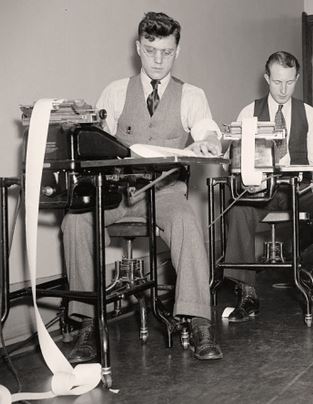
My first stop was the accounting firm in the Metropolitan Building where Mr. Madison had worked. Luckily, it was less than a block away from the Claremont, facing an adjoining park. The company’s offices were on the twelfth floor, behind swinging doors edged in polished brass. Beyond the firm’s front counter were row after row of men seated at desks, busily poring over ledgers and pounding on tabulating machines. The din was deafening. As I waited to speak with a company officer, it occurred to me being in a daily firefight with a gang of thugs was preferable to working like that.
In the relative quiet of his office, I met with Mr. M. Howard Winters, the stodgy company president, who put me in mind of Calvin Coolidge, only a little stouter. After I introduced myself, he agreed to speak in confidence. Explaining the widow of one of his former employees had received some anonymous threats, I clarified I was simply checking every possible source for the problem. I didn’t go into detail beyond the name of the former employee. At the mention of David Madison’s name, Mr. Winters expressed sincere sorrow over the man’s untimely death and what a loss it had been to the company. He stated his shock Mrs. Madison might find herself in such a predicament.
The bottom line of our discussion was the several companies, for whom Madison kept books, were well-known, respectable enterprises. None would pose any threat to Madison, much less his widow. Winters assured me David Madison had been a steady, workaday fellow with no known enemies. After Winters offered to give me any additional help I felt necessary, I thanked him and departed through the hellish noise of the place. My mind wondered to the description of the noisy Underworld in Virgil’s Aeneid.
Yeah, I read a book once.
* * *
Back on the street, I realized I had time to travel to the Kresge store on Broad Street and talk to Audrey Madison’s boss. Five streetcar stops later, I walked into the five-and-dime where my client worked. I spoke with the affable store manager, Harvey Tillman and gave him as brief an explanation of the reason for my visit as I thought was necessary. From Tillman, I learned Audrey Madison was a longtime employee he called the “head cashier.” He considered her an invaluable, trustworthy worker. The man assured me Mrs. Madison had never had any complaints placed against her. In addition, she had the loyalty and respect of everyone who worked with her and was in fine standing with the company.
The manager allowed me to speak with two other cashiers and Audrey’s immediate supervisor. They echoed what Tillman had told me. While there, I asked the store manager, on behalf of my client, whether she could take the next couple of days off to attend to a personal matter. Tillman readily agreed to my request, commenting she’d never missed a day’s work, except her for husband’s funeral, in the entire time they’d employed her. He laughed and told me, while he could easily replace her with “a warm body,” what with all the people currently clamoring for jobs. But he couldn’t replace her work ethic and loyalty even with some effort. I thanked him and left.
* * *
Riding a streetcar back toward the Claremont, I pondered the circumstances surrounding Audrey Madison. The attempts on her life were undeniable in my mind. But they apparently weren’t coming from anyone connected with her job or where her dead husband had worked. The solitary existence she led left little else to consider. Middle-aged women didn’t get bumped off every day. At least, not those without husbands to do the bumping. I decided to move her to a decent hotel in the next city over for safekeeping while I looked for answers. Again, the thought that whoever was after Audrey may have put the two of us together by his time gave me second thoughts about our evening meal. That meant going to Mama Cappacino’s was out. So was being seen together in Harry’s, even if Audrey Madison frequented such joints. My plans changed.
* * *
At the first opportunity, I hopped off the streetcar and hustled the several blocks over to my office. I needed to check on things in the event I was out of town for a couple of days. The proprietor of the photography studio next to my detective agency, Lester, was leaving as I approached my office. He told me a kid had come by the office with a message for me. Because I hadn’t been around most of the day, Lester had committed the message to paper and slid the note under my office door.
The gist of the note was Max had repaired my LaSalle, and it was ready for me to pick up. That was good news to me. I’d been considering renting a heap from a Drive-It-Yourself outfit over on Orchard Street. It was a better alternative than using public modes of getting around. Trying to watch over a client on public transportation, especially when traveling between cities, could be nerve racking, at best.
I glimpsed my strap watch and decided I’d retrieve the machine the next morning. My top priority at the moment was getting Madison fed and tucked in for the night. And as far as supper, deviled ham with minced pickle sandwiches or maybe hamburgers with cheese and the works and coffee from The Wayside Café would have to do. Before I left my office, I grabbed a thermos usually reserved for stakeouts, a clean shirt I kept there for such situations, and a sap I called my ‘persuader’. Those and a bottle of Jack Daniels went into a handy sack. On the way out the door, I pocketed a handful of dough from an emergency cash box I kept locked in the cabinet.
* * *
A short time later I swung into The Wayside Café. The joint was nearly empty. A youngish waitress I’d never seen was sitting on a stool at the counter, snapping her chewing gum as she read a copy of Modern Screen movie magazine. The periodical had a likeness of Norma Shearer on the cover. Nice-looking face, cute figure. The waitress, not Shearer. I plopped on a stool two over from hers and put my sack on the floor beside me. She dropped the mag and gave me what I supposed was her best I-really-need-tip-money smile. The friendly grin didn’t fade, however, when she pulled a pencil from her hairdo, put it to a pad, and followed up, “What’ll you have, mister?”
“I need a couple of hamburger sandwiches with cheese and all the trimmings. Make ‘em to go.” After a second, I added, “Make it three sandwiches. And coffee,” as I sat the thermos on the counter.
“You got it!”
As she moved around the counter, the girl started to call out the order. But the owner-fry cook, a beefy lug named Oscar, who was at the griddle on the other end of the counter, gently cut her off. “I heard the man, Agnes. Thanks.”
She rolled her eyes and her smile broadened. “I’ll wait to get your coffee when your order’s done. Hopefully, it’ll still be hot when you’re ready for it.”
“Much obliged, ma’am.”
“What’s with the ‘ma’am’ routine?” she teased. “I not that old.” She wasn’t. I grinned and offered an apology. She smiled and winked her acceptance.
The waitress came out from behind the counter and started clearing a nearby booth. I watched. The slim, supple maturity of her figure, which her apron couldn’t hide, intrigued me. Her hips’ jaunty swing added to my interest. She’d pulled her strawberry blonde hair–more red than blonde–tight against her head. I supposed it was for her job. A question crossed my mind about how it looked when she let it down. If she ever did.
The slim, supple maturity of her figure, which her apron couldn’t hide, intrigued me.
An annoyed voice from the other end of the counter broke the spell. In between working my burgers and onions, the owner kept returning to the only other customer in the place. He was a grizzled older guy in tattered clothes, who was nursing a mug of java like it stood between him and death. Dilapidated clothes were not an uncommon sight in the depression year of 1934. Neither was making a cup of joe last, especially if a man was on the nut. But the mug had perturbed Oscar by asking for a coffee refill. “Only two free refills, bub. You’ve reached your limit. I know things are tough, but, if I make an exception for you, I gotta make one for everybody.” His voice was gentle but firm.

Initially, I’d thought the older man to be your typical bindle punk. But, about that time, a patch on the shoulder of the frayed shirt he was wearing caught my eye. It comprised a khaki gunsight with crosshairs on a red disk. Blue filled in the upper right quarter segment of the crosshairs. Although I’d been too young for the Great War and my brother was already in the Coast Guard at the time, I recognized the insignia an uncle of ours had worn. I lifted off the stool and sauntered to where he sat. “What’s the score, soldier?”
He turned to me with hopeless-looking eyes, proud yet pathetic, sitting on a world-weary puss. A deep, hideous scar ran across his face from his hairline to just to one side of and below his mouth. The lower part of the earlobe on that side was missing. But he tossed me a half-baked grin. “I got nothing to squawk about, mister. No more ‘n anybody else, I guess.” The guy was old for his years. He gave no sign of being a rumpot. I figured him for just an average Joe, but one who’d been through a hell of a lot and was down on his luck.
I indicated his patch. “Meuse-Argonne Offensive?”
He heaved a low, mournful sigh and nodded. “Yeah. Thirty-fifth Infantry Division.” It was clear that was everything he wanted to say on the topic.
I palmed a fin and reached below his seat. Straightening, I handed the cash to him. “Well, you can’t survive that show, only to come back home and drop your money everywhere. You need to be more careful, fella.” Before he could respond, I swung back toward my perch down the counter.
When I turned, I found the waitress was staring at me with a blank look on her kisser. Her expression confused me. Did she think I was a chump or a right gee? Although I didn’t want to louse up a first impression with the doll, it wasn’t foremost in my mind under the circumstances. Neither of us said anything. When I sat, from the corner of my eye, I saw the veteran staring at the bill in his hand as if it’d grown there, sudden like. After a long minute, he looked in my direction. I waggled my head, then swept my eyes to a sign behind the counter admonishing “Cash Only” and fixed them there. He quietly ordered the blue plate special and more coffee.
“Order’s ready, Agnes!” Oscar announced, shaking his head as his eyes crawled my way.
The waitress walked past me to go behind the counter. As she passed, she gently laid a hand on my shoulder. Agnes said nothing. Neither did I. No words were necessary. Still snapping her gum, only quieter, she wrapped and bagged my sandwiches and filled the thermos, smiling as she worked. Agnes had a heart-breaker of a smile. I thanked and paid her, telling her to keep the change. As I reached the door, the old soldier called out, “Hey!” When I looked back, he simply smiled and sent a head jounce in my direction. We needed no more words between us, either. I threw him a quick wave and pushed through the door, looking for a streetcar back to the Claremont. The air was still stifling.
When I looked back, he smiled and sent a head jounce in my direction. We didn’t need any more words between us, either.
* * *
Returning to my hotel room, I dropped the sandwiches and thermos on a table and walked through our shared bathroom to the door to Audrey’s room. I knocked while calling her name so as not to frighten her, wondering in what state I’d find her. She answered her door wearing pajamas and a bathrobe. My client appeared relatively relaxed, explaining she’d taken a bath and fallen asleep after I’d left. She reported there’d been no visitors or telephone calls in my absence.
I voiced my concerns regarding going out to eat. When I told her I’d picked up hamburger sandwiches and coffee for our supper instead, the woman expressed relief at not having to leave the rooms. She confessed the events of the last several days had exhausted her. I suggested she stay in her pajamas and robe for the meal, if she was comfortable doing so. She blushed faintly, but agreed.
While we ate at the small table in my room, I shared with Mrs. Madison the gist of my visit to her late husband’s place of employment. I went on to tell her of my trip to Kresge’s in search of any possible leads. Neither, I added, had led to anything throwing light on the investigation. In speaking of my conversation with Harvey Tillman at Kresge’s, I told Audrey he’d given her the next two days off. When a look of uncertainty crossed her face, I explained she might be safer in a neighboring city for a few days while my investigation continued. Audrey reluctantly accepted the suggestion.
When I offered my client the third sandwich, she gladly accepted and wolfed it down. Instead of the second hamburger, I poured myself a Jack Daniels. Audrey passed on an offered drink. After our meal, I again checked the locks on Madison’s room door to the hall and her windows. She was secure for the night. The circumstances left her room close and airless, but I couldn’t help it. Then we retired to our respective rooms.
Back in my room, I lay on my bed and smoked several cigarettes, trying to get a handle on my client’s case. Nothing added up. Finally, thinking I might get some shut-eye, I killed the lamp on the bedside table and closed my eyes. It was no use. After twenty minutes of tossing and turning, I reached for my Chesterfields, lit up, and smoked in the dark. For the second night in a row, I suffered through a white night.
Early the next morning, I felt like moldy death. Nothing a shave, a clean shirt, and a gallon or so of coffee couldn’t fix, though. As quiet as I could so as not to wake Audrey, I grabbed a quick shower. Then, I went to the barbershop off the hotel’s lobby for a shave. While in the chair, I asked the barber whether he knew of a good place nearby for decent coffee. He referred me to a joint several doors from the hotel. After the shave, I hustled back to my room for the thermos. The thing was getting more of a workout that week than it had in a while. I found the coffee shop. After several cups of strong java, I bought a bag of sinkers and a thermos of coffee. On the corner, I also grabbed a broadsheet to check the baseball scores.
When I returned to my room, I could hear Audrey stirring around in the bathroom. Then I heard the bathtub filling. Knocking on the door, I let her know there was coffee and a light breakfast on the table in my room when she was ready. In the meantime, I sat at the table with coffee and cigarettes, contemplating my plan to get Madison away from the city. First, I had to pick up the LaSalle. My client could pack up and sit tight until I got back. Speaking of which, I realized I needed to pack a change of clothes for the next several days in case I had to stay with Audrey. That meant a quick visit to my apartment.
Waiting for Audrey, I skimmed the sports section, checking on my hapless Cincinnati Reds and looking for any follow-up stories on this unknown kid in the boxing world, Joe Louis. A month earlier, he’d KO’d a fellow named Kracken in Chicago in the first round. The match had been Louis’ first pro fight. The young boxer from Detroit looked pretty good. Some of my money would follow him in the near future.
I skimmed the sports section, looking for any follow-up stories on this unknown kid in the boxing world, Joe Louis.
After a curt knock, the door to the bathroom opened. Audrey stepped into my room, wearing the same robe over something I couldn’t make out. I didn’t try. She had a towel wrapped around her hair. I laid the sports section aside and chuckled at her. “What?” she shot back at me with a smile.
“Oh, nothing. It’s only you make quite an image with your hair enfolded in that towel.” I stubbed out my cigarette in an ashtray. As I lit a fresh one, I added, “I haven’t spent a lot of time around women. Nothing more.”
“You need to get out more,” she giggled shyly. Audrey shook her head sharply when I offered a cigarette from my deck. “The one yesterday cured me for life, thanks.”
As my client had her breakfast, I told her of my plans to pick up my machine, grab clothes at my apartment, then to head with her to a nearby city. Audrey said she understood as she dunked a sinker into her coffee and carefully put it in her mouth. Before I left, I reminded her to stay put until my return. Again, I secured her windows and door. While I was doing it, I noticed Madison standing at one of her windows peering out longingly at the park across the street from the hotel. Joining her at the window and looking out over her shoulder, I asked whether she was all right. She shrugged and said she was getting “cabin fever” from being locked away in the rooms. She wasn’t used to it, she added. I assured her it wouldn’t be for long. We’d get answers soon.
Joining her at the window and looking out over her shoulder, I asked whether she was all right.
* * *
At Max’s garage, he walked me to my roadster, which had never looked so good. Max then tried to explain what the problem had been. As the mechanic spoke, it was intuitively obvious to the casual observer he loved his work. Unfortunately, Max dipped snuff. With every word in his thick German accent came an unintended spray of the stuff. I knew how Barney Oldfield must have felt as he raced around the dirt tracks of his era. I only wished I’d had Barney’s goggles.
Anyway, the mechanic was trying to enlighten me on something concerning a compression ratio. Taking a cue from my old man, I merely smiled and nodded as if I cared about or understood what the hell he was saying. As long as he cared and understood, my participation didn’t matter. The only ratios I knew of were the two-to-one gin-to-vermouth ratio in one of Harry’s martinis or the odds on a fight or on a bangtail race.
Before leaving his joint, I used Max’s telephone to call the superintendent of my apartment building, Mario Conforti. While the call was ringing, I found a clean rag and wiped the snuff grime from my face. Mrs. Conforti answered the call. Francesca told me Mario was somewhere around the place. Fortunately, she knew me and the kind of work I did. Mrs. Conforti agreed to find him and give him my instructions on helping me into the building surreptitiously. I knew Mario would come through for me. He appreciated the bottles of sambuca I occasionally slipped him away from his wife’s prying eyes.
* * *
Twenty minutes later, I parked the LaSalle a block from my apartment building. I ambled along the sidewalk, taking a gander every so often to make sure I wasn’t being shadowed. Then, I slipped in to the alley running beside the joint. At the self-locking service door toward the rear of the building, Conforti was waiting, holding it open for me. I thanked him with the promise of a bottle of sambuca as soon as I finished the job I was on. Hustling to my digs, I peeled off my shirt in favor of a clean one and quickly threw some duds into a canvas duffel bag I often used for short trips. A couple of extra loaded magazines for my automatic and several extra packs of smokes followed the clothes into the bag.
* * *
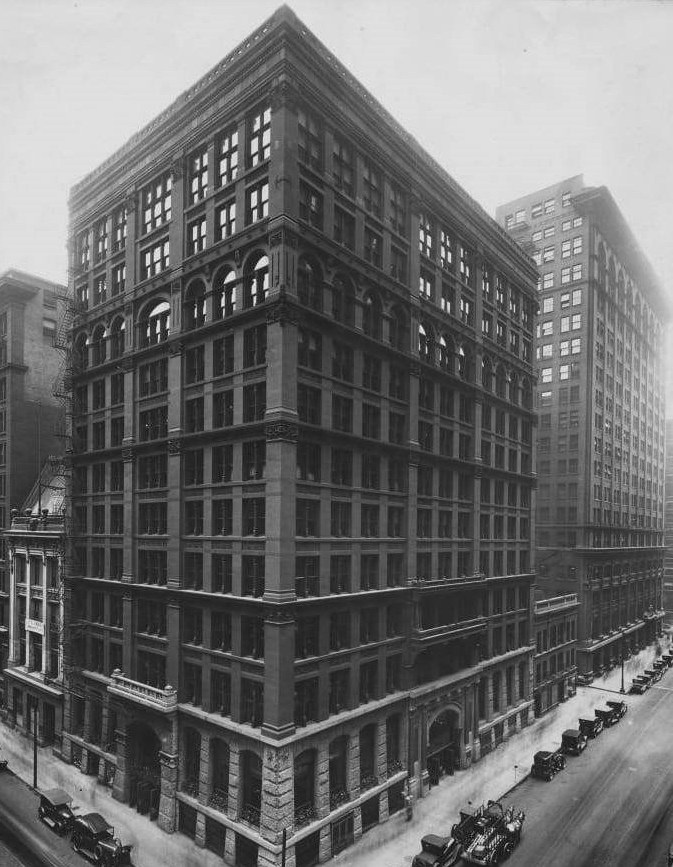
Still concerned about picking up a tag from the goons after Audrey, my route back to the Claremont was indirect, to say the least. Thinking we’d leave tout de suite through the Claremont’s rear entrance, I parked on the crowded street near the alley behind the hotel. Parking in the alley presented too many chances of getting my heap blocked in. When I returned to our rooms by the back stairs, my client was not there. Her clothes and suitcase were still in the room. There were no signs of a forced entry or a struggle.
In a slight panic, I quickly made my way back to the lobby area. Giving them as good a description as I could, I asked the desk clerk and bellboys whether they’d seen her. No one had. I got the same results when I checked the coffee shop several doors down the street. I couldn’t find Audrey anywhere. My anxiety level rose as I hurried back to our rooms. Madison’s comment about her fear of simply disappearing haunted me.
I couldn’t find Audrey anywhere.
As I made my way, thoughts of where to look for Audrey raced through my mind. I had no idea where to search–her apartment, the Kresge store–with a certainty of finding her. Plus, it concerned me we might pass each other in our routes–me on the way to look for her, while she was returning to the Claremont. I didn’t want to miss her, should she return while I searched for her.
Helplessness overwhelmed me. So did my concern for her safety. I didn’t understand why she’d go against my explicit instructions to stay in the room. The only thing left for me to do at this stage was to wait in our rooms and hope she was okay. One thing was certain. We needed to get out of town as rapidly as possible. The one encouraging thing was, during my search for Madison, I’d not seen or heard of any unusual commotions having had occurred.
One hour passed as I chain-smoked and paced in the room. I made a call to Detective Waddell. He’d not seen or heard from Mrs. Madison. Rob said he’d check the police blotter and call the local hospitals for any sign her name had appeared anywhere. A few minutes into the second hour, Waddell called me back. He had nothing to report. Before the detective hung up, he told me to call him if I needed him.
The second hour since my return to the Claremont passed excruciatingly slow. Finally, I rode an elevator to the lobby for more cigarettes. No messages at the front desk. No lowlifes hanging around. I thought of checking the park across the street in case she’d decided to go there for a walk. I walked to the lobby door on the side of the hotel only to realize a deluge of heavy rain had moved into the city. My first thought was my raincoat and umbrella were elsewhere, as usual. Immediately, my mind shifted back to the problem at hand. If Audrey had recklessly gone into the park, certainly she’d have returned because of the rain.
I walked to the hotel’s front entrance facing the park. Protected from the rain by its embrasure, I tried to think of something else I could do besides standing around, waiting. It seemed a battle as to which could produce the most noise, between the heavy raindrops pounding the sidewalk and the swishing sound of tires driving past, was underway. The downpour only added to my feeling of despair. Back inside, I entered the elevator for the ride back to the fifth floor and took up my vigil in my client’s room.
The third hour with no sign of Audrey Madison came and went. Darkness was overtaking the city, aided by the heavy storm clouds which had moved into the area. My chain smoking continued, as my feelings of desperation grew by the minute.
Suddenly, there was a noise at the door as if someone were trying to pick the lock or to make an unpracticed entry with a key. I killed the table lamp next to my chair. Ripping my rod from its shoulder holster, I moved quietly to a place beside the door. Pressing tight against the wall, automatic at the ready, I reached across the door for the knob. Whoever it was on the other side finally wrangled the door unlocked. As the knob turned, I grabbed it and pulled hard. My sudden yank jerked the person into the room. At that point, my gat was aimed squarely at my startled client. She shrieked when she saw the gun in the dim light from the hallway. I switched on the overhead light and closed the door.
Anger overcame my compassion as I holstered my iron. I grabbed her by the arms. “Where the hell have you been, Audrey? You’ve had me worried sick! Why did you leave? They could’ve killed you!” An odd expression, a mixture of fear and irritation, played across her face. Madison tried to put her hands to her head as she sobbed, but I gripped her arms firmly.
“Why did you leave? They could’ve killed you!”
With a violent look in her eyes, Audrey stepped back from any thought of crying. She gazed at me hard and jerked away from my grasp. “I went to my apartment to get more clothes! Okay?” she snapped. “If you’re taking me on the road, I needed more clothes!” The timid, placid woman I’d watched for the last two days had become an enraged creature. What she’d said, how she’d said it took me back somewhat, but she hadn’t finished. Storming to the bed, she sat down hard on its edge and screeched, “You’ve had me cooped up in these rooms for over a day! Seemed like forever! I couldn’t take it anymore and needed fresh air!” She took a deep breath. “Besides, no one saw me,” she moaned.
I moved quickly to the woman and bent over her, waving my arms in exasperation. “No! You saw no one see you! It’s not the same thing, Audrey!”
“Well, what about you?”
I backed a step and demanded, “Whatta ya mean?”
“What about you being followed?” she shot back, harshly.
“I’m a professional, Audrey!”
She looked at me with tears rolling down her cheeks. Her jaw jutted. “Oh, yeah? So was the guy who designed The Titanic!” she spat at me.
She was right, of course. It wouldn’t have been the first time somebody might have tailed me without my knowing it, despite the care I’d taken. If the thugs wanting to do Audrey Madison harm had found her during her time away from the Claremont that afternoon, they’d have acted when they had the chance. She wouldn’t have returned. I had an empty feeling of having miscounted the trumps. Finding my voice, I calmly asked, “What took you so long?”
After a pause, she explained she’d packed her bags and visited her elderly neighbor, Mrs. Ball, who’d been sick recently. I interrupted her train of thought by asking if she’d brought suitcases. She told me there were two still in the hall outside the door. I retrieved them, taking the time to eyeball the passageway. The corridor was empty. When I returned, she continued. “Then, I had trouble getting a cab in this lousy weather.” Another poignant silence. “Look, I’m sorry. But, when you mentioned getting clothes from your place, it dawned on me I needed some things, too. Yesterday, when we left my apartment, I packed too fast. I didn’t get everything I’ll need for more than a day or two away.”
My anger had drained away. It hadn’t occurred to me she might need more clothes, too. I knelt next to where she sat on the bed and took her hands in mine. “Okay, Mrs. Madison. I’m sorry I yelled at you. You just scared the hell out of me. I take protecting you and solving this case very seriously.” I motioned toward her unpacked clothes lying around the room. “Let’s get packed and get you away from here. My car’s downstairs.” She could only gaze at me with weary, moist eyes and nod weakly.
I walked back to my room and gathered the last of my things, feeling guilty for the way I’d responded to Madison. Returning through the bathroom to my client’s room, I found her packed and sitting on the bed again. Her eyes reflected someone distracted, confused, and frightened by the circumstances in which she found herself.
Hauling my travel bag and Audrey’s two heaviest pieces of luggage while she carried the lightest one, we made our way to the hotel’s rear entrance. I stuck my head outside. Darkness had engulfed the city. The small light above the door provided little help when I studied the back street for potential danger. It looked clear. As best I could, splashing through puddles in the heavy downpour, I trotted along the alley toward my crate. Madison was close on my heels, holding the morning’s newspaper over her head against the rain.
At the LaSalle, my client scrambled into the passenger seat with a small suitcase, while I crammed the rest of our gear into the rumble seat. By the time I climbed behind the wheel, the rain had soaked me. In the light from a nearby storefront window, I could see Audrey smile faintly as I licked the rain from my lips and shook it from my hat. She only nodded sharply in response to my asking whether she was ready to go.
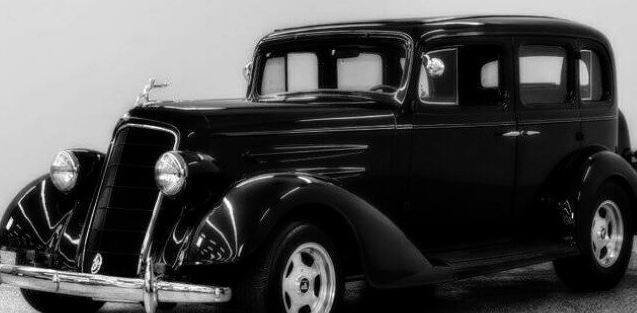
I coaxed the machine to life and pulled away from the curb. We immediately came to an abrupt stop. The traffic was heavy and further slowed by the relentless rainstorm. As we sat, waiting for an opening in the bottleneck, I noticed a dark-colored car, maybe a new Oldsmobile, low-slung and speedy-looking, sitting a couple of parking spaces behind us. Its headlamps were off, but its motor was idling in a powerful purr, barely audible above the street noise. I adjusted my wing mirror to get a better look.
I noticed a dark-colored car, maybe a new Oldsmobile, low-slung and speedy-looking, sitting a couple of parking spaces behind us, … its motor idling in a powerful purr.
The two men I could make out in the car were barely visible, beyond their cigarette tips randomly glowing in the dark. Not everyone adhered to my philosophy relating to nighttime stakeouts in an automobile: don’t smoke. If you smoke, it shows at a distance someone’s in the car. The danger of giving away your position by lighting up was something I recalled my uncle talk about when he spoke of his war experiences. We finally got the opening in traffic to move out. The big car’s lamps came on, and it shot forward several cars behind us. The hair on the back of my neck stood at attention.
When the Olds mirrored every move I made, I began to burn the road. Luckily, the rain had stopped. The LaSalle turned hard on protesting tires, and we headed out of the city on State Highway Fifty-one. My only hope then was to outrun the hoodlums or to lose them somehow in the dark. Audrey picked up on the change in my driving. She glanced at me, then looked through the back window. The Olds was tagging us hard. And gaining ground. When I cut my eyes at her sideways, my client had a horrified expression on her face again.
Right after we passed a roadhouse called Johnny’s Jungle Room, I heard the unmistakable crack of a shot being fired. The would-be killers were now getting desperate. They’d given up the idea of framing an accident. My passenger let loose with a sharp yelp. “Scrunch down in the seat, sugar!” I yelled above the road noise. “And stay there!” She did, making her tall frame smaller than I’d have thought possible. I stepped harder on the gas pedal and ducked low as far as I could and still see the wet, winding road ahead. The following car shrank in the distance, but only for a second or two. He regained the lost ground rapidly. Their machine was as fast as I’d thought.
Several more shots blasted the night air when the driver had closed the gap between us. I wasn’t sure where the rest of them landed, but one found its mark. A hellacious pain overtook my left shoulder, searing as if someone had stuck a hot branding iron to me. I felt the bullet hit a bone and rattle the entire left side of my upper torso. Somehow, I managed to maintain control of the car. Audrey responded to my question she was unhurt.
I felt the bullet hit a bone and rattle the entire left side of my upper torso.
Ten miles outside the city, the highway had an unexpected, sharp left curve. The story of the road was a controversial one. It made its directional change because a local, influential politician had seen to it the highway curved and crossed fallow land he owned. The bent “public servant” then gladly sold it to the state for a pretty penny. Anyway, the curve was hard enough to navigate on dry pavement at a moderate speed in daylight hours. It was hard as hell when the road was wet and you were burning road in the dark. I was about to find out what impact a gunshot wound might have on the equation.
Fortunately, I knew the road well and made the curve. Barely. The passenger side tires left the roadway noisily and scarcely made it back onto the pavement without taking the rest of the LaSalle with them. Even luckier for Audrey and me, the Olds’ driver apparently was unfamiliar with the stretch of road. His headlamps disappeared momentarily. I made the most of the time, smashing the gas as hard as I could.
Maybe I slammed it too hard. Within a few minutes, the LaSalle’s motor started sputtering and coughing until it died altogether. I eased the crate to the side of the highway near what appeared to be, in the faint light of an intermittent full moon, an abandoned farm. The farmhouse was a low, rambling clapboard thing set back from the road. A dilapidated barn sat between the house and us. A few quick, repeated attempts to restart my crate failed. Possibly, I thought, one of their slugs found the gas tank.
“Look!” Madison exclaimed. I followed her outstretched arm and pointing finger. Farther down the highway, we made out the lights of another building, probably a neighboring farm. The distance was hard to estimate at night, but I reckoned it a little over a mile or so away.
“Let’s go!” We bailed out of the heap and quickly met back at the rumble seat. I grabbed the duffel bag holding extra magazines for my automatic, just in case. There wasn’t time to fumble around in the bag for them then. As we started running through the knee-high weeds, I could hear the Oldsmobile’s powerful engine roaring ever-closer to us. I realized we’d never make it to the occupied farmhouse. And we’d be sitting ducks out in the open. We’d have to abandon the idea of covering the distance before our pursuers got to us. “Let’s take cover here!” I shouted. She turned to go back to the barn which we’d already run past but which was closer than the house. “No, Audrey! That two-bit thing won’t give us any cover! The house! And stay on my hip!”
With the woman right behind me, I found the house’s porch and kicked through the front door with a tremendous crash. The stark stillness of the abandoned building swallowed the noise. I moved to below a glassless window opening facing the barn and road, dragging my client with me to the roughhewn floor. We heard the Oldsmobile slowing as it approached my car cautiously. Finally, the car drew up next to the stalled LaSalle. The moon took that moment to disappear again behind the clouds. Two car doors opened and closed. Audrey squeezed my arm in fear.
Finally, the car drew up next to the stalled LaSalle.
Flashlight beams, reflecting here and there on my chromium bumper, crisscrossed the area around my car. Then the beams moved along the ground toward the barn and, finally, the house. Their lights moved across the building. We held our breaths. Though I was sure they were speaking to each other, sizing up their next move, the night air was deathly still and quiet. No sounds came to us. I watched as man reoccupied the car and drove slowly, almost noiselessly, to the side of the barn. Meanwhile, the other lug made a mad dash for the dilapidated building. His partner then joined him. I dug around in the duffel bag and located the extra magazines.
When the moonlight filtered through the clouds momentarily, it found its way to us through a hole in the roof above. I could see my companion’s cheeks were wet. Her eyes were pleading. She saw the blood on my shirt. Her face suddenly took on the appearance of a prelude to a scream. I cupped my hand over her mouth hard, pressing her head against the wall, and made a warning face. With my other hand, I put a finger to my lips. She calmed down and bobbed her head. The area went black again.
“Tanner!” a yell came to us from the barn. The sound of it gave me a fleeting jolt. “Gil Tanner! Give us the woman and you can go!” He followed a pause with, “No sense in both of you kicking off tonight! C’mon let’s get this thing over with so’s we can all go home.”
I grabbed Audrey’s head with my free hand and pulled her ear close to my mouth. Her entire body was shaking. “Relax!” I implored in a hoarse whisper. “We’re in this together! Right ‘til the end! The only concern you should have right now is whether you trust me to take care of you. Do you?” I pushed her head back so I could read her answer in the passing moonlight. Her panicked eyes darted between my face and the blood staining my shirt. Behind my hand still covering her mouth, she nodded emphatically. “Good.” Despite the pain in my shoulder, I chuckled. “This … this is only a flesh wound,” I lied. “I’m going to let go of you now. No noise, okay?” Again, she waggled her head in the affirmative.
I released Madison and cautiously moved an eye back to the window opening. Nothing stirred in the night’s darkness. Then, a door in the barn’s near wall opened. I watched for any sign of movement. At first, nothing. Then, somebody turned on a flashlight inside the run-down structure. The light revealed the silhouette of a sizeable man in the doorway. Light danced around behind him. The gorilla held a big roscoe in his left hand. I raised my gat to the window’s ledge. The man half turned, calling something to his fellow goon. I couldn’t make out the words, but it was not a cheerful conversation.
His companion extinguished the light. Before anything in that last image had time to change, I blasted three quick rounds to the spot where the mug had been standing. A cry of pain rose across the barnyard, followed by the roar of a gun with the accompanying muzzle flash. Then, there was the sound of something, someone crashing against a wall and tumbling to the ground in the darkness.
The second man foolishly turned the flashlight on again, long enough to show me a rumpled pile of mobster lying in the doorway. Then, the light moved and the mug pulled the body back from the opening. The door slammed shut. I figured I’d resolved half our problem. But I needed to take care of the other half while I had the advantage of what I hoped was the second man’s mental setback.
In a coarse whisper, I told Audrey I was going to the barn to end the stalemate. In the faint light, I could see fear play across her face again. Her arms twined about my neck. After returning her embrace and trying to soothe her fears, I pulled her arms from my neck. “It’ll be all right, Audrey. Just don’t move. Wait for me to come back. And I will be back.” She nodded hesitantly. “Someone in that next farmhouse had to have heard the gunfire. They’ll come for us. They’ll bring help.”
Her sad eyes looked at me mournfully. “What if nobody comes?”
Her sobering question hit me. I swallowed hard, whispering, “Then pray.”
I half stood with my back to the wall and slid a fresh magazine into my rod and chambered a round. After climbing through the opening of a side window, I hustled across the distance between the buildings as quickly as possible and pressed myself quietly against the barn’s exterior. No sound came to me from inside. The element of surprise was the only thing that might save this moment.
Stepping back from the barn door, I charged forward and burst into the building. Old wood splintered as I tripped and fell to the ground. A lighted flash lay beside the body of a man. As I got up, a rushing shape smashed into me, bowled me over with a fist against my jaw. I landed on my back in the dirt, dropping my gat in the fall. Quickly twisting, I jackknifed and shot my feet upward, catching the big hoodlum in the pit of his stomach. A powerful push sent him crashing through the rotted wood of a stall wall.
As I got up, a rushing shape smashed into me, bowled me over with a fist against my jaw.
We scrambled to our feet and met in the center of the space. I slammed a hard punch. He jerked his head, evading the full force of the blow. In dodging my strike, though, he lost his balance and fell backward. I rushed him. He pushed me back hard with his feet. I tumbled to the dirt as he rose and located his gun on the ground nearby. Spying my rod close at hand, I scuttled across to it on my hands and knees, grabbed it, and rolled onto my side, facing my adversary. He swung his automatic on me as he straightened and turned. The slug he fired whistled by my head, slamming the dirt behind me.
I squeezed lead twice. Both blasts found their mark. The hooligan’s gun fell to the dust. His back arched once, then went loose as he dropped where he’d stood. The man didn’t move as I watched him closely in the dim glow from the flashlight. But he was still alive. I rose and moved to him, kicking his automatic away as I approached. He had a wound to the upper right side of his abdomen and one to his right shoulder. I grabbed the light to see him better. The lug’s face, with closed eyes, twisted in pain. I knelt beside him and slapped him hard to get his attention. The blow cracked like a rifle shot. But it served its purpose.
The man looked up at me with hatred in his face, fighting for each breath. “Whatta ya want, shamus?” Maybe it was the effect of the gunshot wound, but he sounded like a lunger.
“I want to know who’s behind your going after my client. And why?”
“I don’t know from nothin’!”
“Well, you may not know much, but you’re gonna tell me what you do know.” I grinned, “Look, I’m trying to be nice here. But you’re making it difficult.”
“Nice? You shot me, you bastard! Twice!” he coughed. “Go to hell!”
“Technically, I returned your fire when you cornered me. As I said, you won’t let me be nice here.” I leaned in close and kept my voice low. “So, choose your next words carefully. Why are you trying to kill Audrey Madison?”
“Who?”
“Audrey Madison. The woman with me. The one you’ve been trying to bump off.”
“I don’t know her name, mac.” His lips stretched in a grimace of pain.
I ran the flashlight beam to his gunshot wounds. “Oops! That’s not good. Blood’s almost black.”
His eyes widened. “Meaning what, asshole?” The words fought their way out between gritted, bloodstained teeth.
“It means the bullet’s penetrated your liver. You’ve got a half hour or so to live. Anything you want to tell me in the meantime?” When he hesitated, I sank the barrel of my .45 into a bullet wound.
He screamed in pain. “All right, all right!” He sucked air, then looked at me with angry eyes. “When the boss says he wants a bozo–a dame, a gink or whatever–chilled off, I blow one down. You git me?”
“Who’s the boss and why?” When no answer was forthcoming, I dragged the barrel of my rod hard across his torso toward the other wound. His attitude changed in a hurry.
“Wait! Wait!” He paused and swallowed hard. “My boss is … is Jimmy Doolan.” I recognized the name as one of the big tickets in The League, the gang ruling the south side of our city. “Word is our outfit’s been making payoffs to a highbinder in city hall.” He fell into a brief coughing jag, before continuing, “This mug turns around and sends part of the cabbage to some muckety-muck at the state capital.”
The rumor around town was the governor, our former district attorney, was getting bribes from the south side mob, known as The League, through an influential ward boss and the mayor. He’d been getting them for some time. While still DA, so the story went, The League had paid him well to go after the north side mobsters through his office and the courts. This “tough on crime” reputation played right into his political aspirations, while currying favor with The League.
While still DA, so the story went, he’d been paid well to go after the north side mobsters through his office and the courts.
A number of reformers had been after his hide and those of his political cronies for quite a while. I knew Detective Waddell and the right cops who worked with him had been trying to get something on these bums for some time. Nothing ever stuck. But it didn’t explain the attempts to kill Audrey Madison. “So?” When the man merely gazed at me, I pressed the muzzle to the entry wound enough to get him talking again.
“Okay, okay!” He screamed, then swallowed hard again. “Every so often, the word comes down … to rub out some lug who’s making trouble for the politicians. We bumped off one not too long ago. A do-gooder named Armour.” The gorilla started another coughing fit.
I’d read about this fellow Armour’s body being found, riddled with bullets, in a vacant, weed-wild lot recently. The mobster at my feet was weakening fast, and I needed answers. When he stopped coughing, I prodded him to go on with his explanation.
“This dame walked up on us when we were snatching Armour off the street to take him for his last ride. When she saw us, she asked …” he swallowed hard, “asked if everything was jake. We told her he was lit, boozed up, and we were taking him home. But, afterwards, we couldn’t take the chance she’d put two and two together later, when the news of his murder broke. The twist had got a good gander at our kissers. The boss said we hadda croak her. And it hadda look like a accident.”
So, my client had been a witness to something, and she didn’t even realize it. But simply being at that spot at that time was enough to cost Madison her life by the League’s rules. I rose from my crouch. “Well, good luck, pal. See you in the obits.”
The man looked up at me with pleading eyes. “Aren’t you gonna get me help? Give me a break, will ya?”
“Oh, sure, like the break you were giving Audrey Madison.” The lug started crying.
Turning, I started back to the farmhouse and my client. As I made my way, I heard a muffled crack. It came from the house. It sounded like a muted gunshot! I started running with the flashlight I still held, lighting the way. Then, heavy footfalls rumbled inside the building. Before I reached the door, a figure emerged at a gallop. I put the light on his face. When he saw me, he raised a roscoe and fired before I could react. The blast creased my left arm. That side of my body was taking a hell of a beating suddenly! Then, his big revolver clicked dry twice in rapid succession. I still had my rod in my working hand and raised it instinctively. It spit lead three times in the figure’s direction. He dropped back onto the front porch.
The blast creased my left arm.
So, there’d been three gangsters in the Oldsmobile! Apparently, a non-smoker without a flashlight who’d been able to move quietly around the barn to the house. The one, it seemed, who’d the bosses brought in because he was more adept at going after my client than the two other clowns I’d dealt with. My client! Oh, hell!
I quickened my pace to find Audrey. She was still sitting below the window where I’d left her. The goon had shot the woman in the chest. Under these remote circumstances, her wound was likely to be a fatal one, but she was still alive. I dropped my gun and the flashlight, dove next to her, and cradled her in my arms. In the light’s glow, she looked up at me with those same tired eyes. Only this time, they were sadder than I could ever have imagined. I saw a wisp of smoke drifting from my duffel bag, which Audrey’s shooter had used to stifle the blast.
I dropped my gun and the flashlight, dove next to her, and cradled her in my arms.
“Why? I … I don’t understand, Gil,” she pleaded weakly. Her lips bubbled pink froth. “Did I … do something wrong?”
“You saw something you shouldn’t have, Mrs. Madison. It was no fault of yours.” Her forehead furrowed. I wasn’t sure whether it was because of pain or a remaining question. For only the second time since my mother’s funeral, tears filled my eyes. “You did all right, Audrey. You really did. I’m sorry I left you,” I shuddered. “So sorry.” She gurgled and gasped, then went limp. She was gone. In my sincere sorrow and regret, I held her tighter. I swore under my breath. And cried. I wasn’t always as tough as I liked to appear.
The heavy rain had returned, coming through those holes in the roof. The night still held sway, but the feel of dawn was in the air. Even so, the day already felt old and tired.
As I sat there rocking Audrey’s body in my arms, I realized I’d lost the first client who’d hired me to protect them. In addition, but far less important, I knew any chance I had to give Detective Waddell evidence of corruption in city hall and to help him put together a case against the mayor and his henchmen had died with Audrey Madison.
Not all of life’s stories have happy endings. I read somewhere the Chinese have a saying: Life is lighter than a feather; duty is heavier than a mountain. I felt the mountain bearing down on me in that minute as never before.
So, you bury the dead. And the living can’t haunt you. ©