
My name is Gilbert Tanner, but my friends, the few I have, call me Gil. My racket, when I’m working that is, is private investigations. In an earlier anecdote, I mentioned the history between the proprietor of Harry’s Paradise Tavern in our fair city, and me goes way back. I wrote then it was another story for another time. Well, now’s the time, and this is at least part of the story. If the truth be told, my history with the tavern goes back to the time when Harry Bittles Senior, owned and operated the place. When the old man died, God rest his booze-dispensing soul, his son, a mug I call my pal, Harry Junior, took over.
In an earlier anecdote, I mentioned the history between the proprietor of Harry’s Paradise Tavern and me goes way back.
I’d been a frequent supporter of the tavern throughout the dreary days of Prohibition. When that national nightmare hit years before, old man Bittles converted the tavern from a bar to a restaurant. He served “light” meals and offered “special” coffee and tea. Most folks, however, didn’t see fit to blemish their hooch with those caffeine products. So, they drank their liquor from the mugs, straight. As with most places in the city, the local coppers looked the other way. That is to say, they ignored the booze being served at the tavern unless they were patronizing the joint. Then they looked straight into and drank from their mugs.
When the old man died and the Harry Junior took over, he maintained the same standard of excellence in the business. The new owner and I had gotten to know each other pretty good over the years. But this story goes back to before we became great pals.
* * *
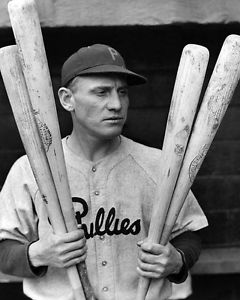
The time was the summer of 1930. Chuck Klein, the Hoosier Hammer, was tearing up baseballs with his bat for the Philadelphia Athletics. Now, I loved a great hitter as much as the next fella, but it was difficult to appreciate when my Cincinnati Reds were having another dismal season. Elsewhere, our neighbors North of the border were involved in a hotly contested election for their Prime Minister, whatever that was. Lastly, the newspapers were beginning to howl about the disappearance of a judge in New York named John Force Crater. The last of these news items brings a point of irony to my tale, as you’ll see.
The time was the summer of 1930.
The last several days had occupied me with tracking a missing husband. A distressed wife, a Mrs. Florence Flanders, had come to my office with a sad tale. Her husband, Roland, left their place the day before to “go fishing for their dinner” and never returned. She explained it wasn’t like him. The coppers wouldn’t touch the case for two reasons. Unfortunately, because of the economic conditions during the period, too many men and, I guess, more than a few women simply up and disappeared with no crime involved. Also, the husband’s absence had been less than twenty-four hours, not long enough in their estimation for them to get involved yet. Besides, as the desk sergeant had told her, they were “wrapped around the axle” with too many “actual crimes” on the books.
So, the Flanders woman had come to me, recommended by a friend. She came with her pitiful story and her nest of vipers in the guise of four children. As we spoke, the two oldest of her youngsters ripped into everything they could find in my office. They spilled files, scattered papers, overturned an inkwell, nearly toppled the crock watercooler stand, and so forth. A third crawled around on the threadbare rug covering my office’s floor and added to its distress by vomiting on it. The fourth and youngest child sat on his mother’s extremely pregnant lap, clinging to her bosom and screaming at the top of his lungs. I had an inkling of what Custer must have felt at the Little Bighorn. Through it, I managed to keep my .45 holstered.
Mrs. Flanders needed her husband back, she told me, to bring in what money he made at his odd jobs. Because the couple had four children with a fifth one on the way and were not in good financial shape, alarm bells went off in my head. But I said nothing to her. Florence wasn’t able to pay my usual rate, but I took what she said she could afford. Business was slow, and I needed the work. She gave me a picture of the absent lad they’d had made on their honeymoon years earlier. She said he looked the same, just older. Eyeing her heathens making mayhem of my office, my thought was he probably just looked more haggard.
Florence wasn’t able to pay my usual rate, but I took what she said she could afford. Business was slow, and I needed the work.
As was my typical way of handling such matters, I called my brother, Marty, who was on the city’s police department payroll. In addition, I contacted a buddy, Jason, who was a deputy sheriff for the county. These two sources could let me know whether Flanders or his body showed up on their police blotters. After two days of searching, I’d come up with nothing but dead ends and constant telephone calls from an unhappy Mrs. Flanders. Then there came an unexpected break. Jason called to report the man, who had rented a boat to Flanders for fishing on a nearby lake, found it capsized in a small cove there.

After I hung up from the deputy’s call, I hustled out, hopped into my new LaSalle, and sped to Crab Orchard Lake. The place was a scant distance outside the city and a popular escape destination for many of its population. On reaching the location Jason had described, I saw him and another member of the sheriff’s department I’d not met before. An older, scruffy-looking person, who turned out to be the boat-rental guy, was with them and engaged in a lively discussion near a small cove. The old fella’s pants were soaking wet from the crotch down. I coasted my heap to a stop nearby. As the engine coughed itself still, I sat there for a second and watched the three men.
Most of the dialogue’s animation was coming from the old man’s side of the conversation. As I approached the three, the boatman was adamantly explaining to Jason the wide, flat-bottomed vessel was almost impossible to capsize under ordinary, calm-water conditions. It sounded as if the man’s explanation was more an attempt to sidestep any legal liability than to offer information to law enforcement. I drew up next to Jason and eavesdropped. His fellow deputy gave me the big fisheye, coupled with a not-so-subtle snarl. Somehow, he knew who and what I was. The man obviously didn’t take kindly to my ilk and felt me an invasive presence. I thanked goodness Jason appeared in charge at the moment.
While the old man continued his argument, I walked around and surveyed the area. The flat-bottomed rig, with its hull still facing skyward, now rested with one-half on the shore, the other half sitting in the waters of the cove. The hull showed no damage. There was nothing else of interest. No houses, no signs of life, nothing. I returned to the cluster of men. Gradually, the old man, named Bragg, broke off his conversation with Jason and sloshed back to an old truck parked near my LaSalle. He stood, arms folded across his chest, watching.
As his fellow deputy held his ground, steadfastly refusing to acknowledge my presence or to hear my ideas regarding the circumstances they’d found, Jason ambled to me, smiling. After we’d conceded old man Bragg had made an excellent point about the boat’s stability, Jason briefed me on how the old man had finally gotten around to searching for and finding his missing vessel that morning.
When he’d located the thing capsized in the cove, Bragg found something lying on its upturned hull. It was the small, black object Jason had been holding. Thinking it was a notepad, I’d paid no attention to it. My buddy’s smile broadened as he now handed it to me. It was a billfold. Significantly, it was Roland Flanders’ billfold, complete with driver’s license, a photograph of the wifey, a dollar bill and a newspaper clipping listing jobs with a local trucking company.
The conversation that followed between Jason and me resulted in us agreeing on four issues. First, we’d had nothing but pleasant weather in the region for the last two weeks. Good, except hotter than hell. No “heavy weather,” as my former-Coastie brother might term it. So, a weather-, wind-, or water-related accident was extremely unlikely. Second, it was a “miracle,” in the midst of a boating accident, Flanders’ wallet had ended up where someone could easily find it to identify the “tragedy’s” victim. Third, the whole damned thing was a setup. Roland was better able to make babies than a clean, convincing getaway. Finally, we agreed to classify the man as missing, with no presumption of death or physical harm deduced from the facts. Jason would make his report to his superiors, and I would make mine to Mrs. Flanders.
Roland was better able to make babies than a clean, convincing getaway.
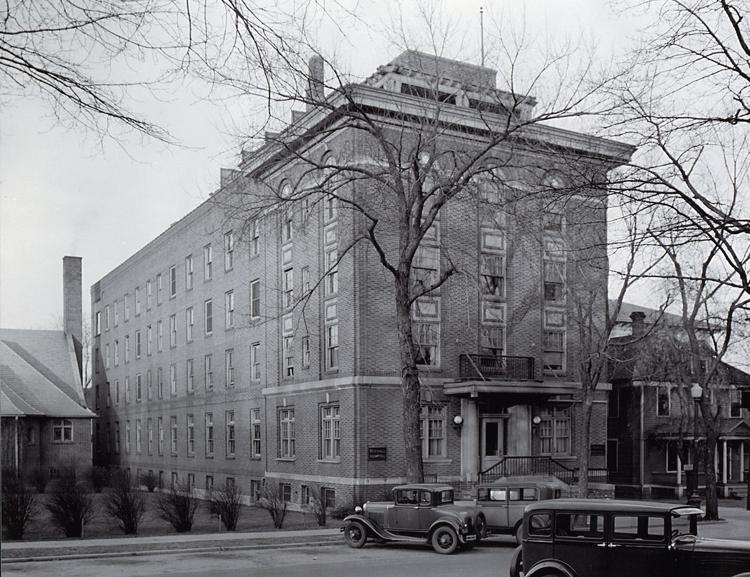
We left it at that, and I returned to the city to let the abandoned woman know what we’d found. Recalling the three-ringed circus and my resulting annoyance in my office, I left my gat in the car when I went into the apartment building. None of the children had calmed down since I’d last seen them. My client took the news surprisingly well, until I told her the authorities declared her hubby missing, but not dead.
It turned out he had a small life-insurance policy left from a decent job he’d had before the stock-market crash. Until someone officially said he was dead or seven years passed and they declared him legally dead, the policy wouldn’t pay. Above the apartment’s din, dear Florence made it clear she didn’t want to wait the seven years.
I left the unhappy lady with her rambunctious brood and walked out into the repressive afternoon heat which had layered the city for several weeks. Now, the air was thick with the threat of rain. As I strolled from the Flanders domicile to my automobile, a comment made by a friend, a successful businessman, and a confirmed bachelor came to mind. Once, a single mother of two, who had set her cap for my acquaintance, asked him whether he liked children. He responded by saying it depended on how someone cooked them. He’s still a bachelor, by the way.
Anyway, my thirst was growing.
* * *
In due course, I walked into the Paradise Tavern for my usual afternoon liquid repast. Even the old overhead fans, slowly stirring the warm, stuffy air in the place, were a welcomed relief from the heat of the day. I didn’t see anyone behind the bar. That was unusual. Suddenly, the proprietor’s short, heavyset form burst through the door from the back storeroom. He looked like death warmed over as he frantically chewed on his ever-present cigar. The barkeep’s loose, good-natured mouth was taut with anxiety. Gone were the intense eyes and electric energy in his step, giving the impression of one twenty years younger.
Suddenly, the proprietor’s short, heavyset form burst through the door from the back storeroom.
The man marched to my location and was pouring my usual libation when I asked him if anything was wrong. He scanned the bar, filled with its usual “lunchtime” crowd. Harry then leaned across to me and whispered in a low hoarse voice, “I’ll tell ya later.” His voice was stiff and edgy.
Curious and concerned, I lingered at the bar until most of the mob had dwindled to only a few die-hard regulars like me. The barman walked to my spot and started to speak. He hesitated and once more essayed his place. Satisfied no one might die of thirst if he abandoned his post for a few minutes, he squinted at me and jerked his head toward the back room’s door. For some reason, I felt compelled to follow suit and perused the joint before I slid off my stool. I moved to the hinged, flip-up section of the bar’s surface which the saloon’s owner had lifted for me to pass through. Once behind the bar, I waited for his next move. He opened the storeroom door and ushered me in. Harry bid me take a seat on a keg of something and paced the floor.
When I started to speak, the bartender held up a firm palm to stop me. He swore harshly, then added, “Let me get this out, Gil. You know my wife, Blanche?” I shook my head because I’d never met her or, to my knowledge, even laid eyes on the woman. When my mouth opened to speak, he cut me off again. “I meant you know I’ve got a wife named Blanche, right?” I nodded. It seemed his eyes welled with tears.
After a brief pause, Harry explained his wife of several years, had up and run off with a crumb he thought to be a door-to-door salesman. I’d heard the bar owner mention her occasionally. The way he talked about her, none of the regulars might have thought her leaving was such a bad thing. Turned out it wouldn’t have been. But, when she left with the scalawag, as my friend called her Casanova, she also took all his cash. The proprietor confided he kept his nest egg in a lockbox under the floorboards of their apartment.
His wife of several years, had up and run off with a crumb he thought to be a door-to-door salesman.
The tavern’s owner had been one of those who’d never quite gotten over the huge number of bank failures we’d seen in the first seven months of 1930. Moreover, the bank restrictions on how much depositors could withdraw of their own money after the crash had threatened what he believed to be the natural order of things. He didn’t trust the banks and kept his cash stashed at home.
He told me he’d looked everywhere he could think of but couldn’t find a trace of his money or, as an apparent afterthought, his spouse. In a pitiful moment of anguish, the saloonkeeper asked for my help in locating her and, as he put it with marked affection, bringing Andy back home. At first, I thought the man was referring to their son, who I’d heard of but about whom he’d not spoken much. I clearly didn’t know the boy’s name. On further inquiry, I learned, by Andy, Harry was referring to Andrew Jackson on the twenty-dollar bills Blanche had taken with her. My friend told me the boy in question, Luther, was her ten-year-old son by a previous marriage.
That made things a little less complicated from my standpoint. To help my search, he gave me a photograph of Blanche. The picture was a hurtful thing, but I said nothing. When he asked what I’d charge him for my work, I finally got him to agree I’d start the job gratis for a friend.
Harry knew nothing of the guy she had run off with, except he sold door to door. According to my pal, the couple already had a twenty-six-hour head start on me. I needed to hit the ground running.
* * *
So, there I was trying to find a door-to-door salesman whose name, line of goods, and employer’s name I didn’t know. My best guess was the missing woman, who, according to her husband, was no social butterfly, had to have crossed paths with the salesman when he came to her door. On that basis, I decided to canvass the Bittles’ apartment building, dressed in my best suit, pretending to be a follow-up supervisor to “our company’s salesmen.”
So, there I was trying to find a door-to-door salesman whose name, line of goods, and employer’s name I didn’t know.
My job, I could explain to anyone questioning me, was to see our salesmen presented our products constructively and left a positive impression of the goods and the company. That way, I could avoid giving the name of the salesman or the company I didn’t know anyway. By “testing” their memory to see whether they could recall the names based on a positive visit from “our representative,” I hoped to fill in the blanks. Crazy, yeah, but what the hell. It was all I had to go on.
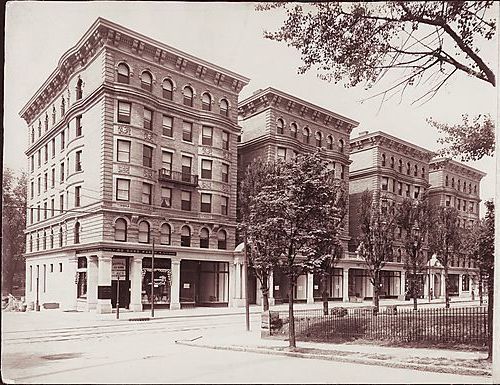
The next morning broke gray and dismal with a steady rain beating the pavement. I made my way to the building the Bittles had called home. My first three attempted contacts were less than successful. Two slammed their doors in my face. The man answering the third door threatened to sic his dog on me if I didn’t leave at once. Uncertain whether he even had a dog in his apartment, I didn’t wait around to find out. So it went for the better part of the morning. As I climbed yet another set of stairs, clipboard in hand, I wondered why anyone did this for a living, even in these hard times.
At last, a Mrs. Hutchinson came to her door and gave me glimmer of hope. The dowdy woman informed me she had bought something from a door-to-door salesman recently. As I stood in the hallway, she loudly proclaimed she’d bought a pair of shoes, which were the worst-fitting things she’d ever owned. After a bit of cajoling, I moved our conversation from the corridor to her living room. I did my best to maneuver past her unhappiness and get the information I sought.
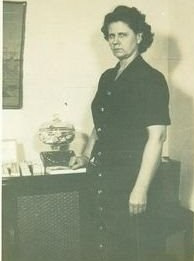
The woman never lowered her voice below a dull roar. She kept returning to her dissatisfaction with the product and dragged the shoes from a closet in the back of her apartment. From this, I learned the name of the salesman’s company. The footwear was from a company called SoftHaven. Promising to address her frustration with the product, I explained, to test his effectiveness, I needed to know whether she remembered the salesman’s name. She paused, thinking. The mental strain was obvious, but to no avail. Mrs. Hutchinson drew a blank on the man’s moniker. However, she described him as a short, stout man with an enormous nose and a bald head.
The woman never lowered her voice below a dull roar.
Eager to bring our dialogue to a swift conclusion, I pledged to have someone return with a full refund of her money and to collect the shoes. Placated, she thanked me and asked my name. I gave her the alias I usually used, Hal Cooper. She then showed me out.
For a long minute, I stood in the hall and stared at Mrs. Hutchinson’s door. As difficult as dealing with her had been, at least now I felt as if I’d made progress. My objective might be a salesman for SoftHaven Shoes. But I didn’t feel I had enough information to make it a solid lead. The man Hutchinson described certainly didn’t sound like a Lothario. Of course, counterbalancing that was the photograph Bittles had given me of Blanche. And added to the mix was that puss of Harry’s, good friend that he was. Neither of the pair would grace the cover of a moving picture magazine any time soon. I shook my head and chuckled quietly.
Making my way down the hall toward the stairwell, I approached a buxom, sleepy-eyed blonde dish, leaning against her doorjamb, smoking. The door to her apartment stood open. She was attractive in a trashy sort of way and wore a wraparound negligee thing that told of unseen delights. I smiled, just for civility’s sake. She gave me a vampy smile in return. The dame made a vague gesture with a hand holding a glass of an amber liquid, saying coolly, “Didn’t sound like ol’ lady Hutchinson was buyin’ what you’re pushin’.”
She was attractive in a trashy sort of way and wore a wraparound negligee thing that told of unseen delights.
My pace slowed. I half turned and jerked my head in Hutchinson’s direction. “Nope, the lady’s not happy,” I smiled and stopped walking.
The broad ran her eyes over me and nodded into her apartment, softly suggesting, “Why don’t you try your luck in here?” Her voice was a sultry whisper with a boozy edge to it.
I chuckled. “You don’t even know what my product is.”
Another seductive smile. “Oh, I’ve got a pretty good idea was your product is, sport. C’mon in.” She stepped inside and turned back to see whether I was following. Now, I’m no Adonis by any stretch of the imagination. My old man used to tell the neighbors he had to tie a pork chop around my neck just to get the family dog to play with me. Maybe I could see why a man might take up this racket after all. I casually glimpsed the hallway and sashayed into the apartment, closing the door behind me.
I won’t go into details concerning the events of the next hour or so. But suffice it to say the twist was no shrinking violet. While I continued the role of a salesman, the boozed-up woman mentioned, among other things, another guy who’d recently sold sewing notions door to door in the building. According to my “hostess,” Candice Mathison, he was more the Don Juan type than the man Hutchinson had encountered. It turned out Candy, as she asked me to call her, had given him a tumble during a boring, rainy afternoon. She didn’t place an order with him–Candy wasn’t the type to sew–but she recalled the name of his company. And, after an enchanted evening spent dining and dancing with the man, she knew his name. Geoffrey Coursey.
… the boozed-up woman mentioned, among other things, another guy who’d recently sold sewing notions door to door ….
With a dreamy look in her eyes, she spoke freely about him and made a passing comment Mr. Coursey was a rugged army veteran. He’d promised to return but never showed, she explained with derision. I made no such commitment, and Candice didn’t seem to expect one. Maybe my visit hadn’t been up to Mr. Coursey’s standards. Oh, well. We parted on good terms, nonetheless. As I ambled toward the stairs, I was grateful it was raining again that day.
No fresh leads were forthcoming during the rest of my canvassing. It left me with one shoe salesman and one purveyor of sewing notions who’d been in the building recently. One somewhat homely and one a seducer. With what information I had, I stopped canvassing and started digging further. Coursey’s company was an outfit out of Chicago with a regional headquarters in a nearby city.
My next stop was the tavern, where I filled my pal in on my progress so far. Okay, I didn’t give him every detail. Paid or not, I wanted him to think I was actually working for him and not merely enjoying myself here and there. My barkeep scratched his head and wondered aloud about the missus buying sewing notions. “She never sewed a day in her life,” he moaned.
“Well, evidently several women, who never took up sewing, bumped into this character.” Blanche’s husband tossed me a funny look and adjusted his unbuttoned vest, but said nothing. The proprietor appreciated my effort on his behalf. He offered to pay my expenses, but I declined during my third round of hooch on the house. Later, as I walked to my LaSalle, I realized the rain had stopped. For a minute or so, my thoughts drifted back to Candy. I shook the visions from my head and focused on the job at hand.
Blanche’s husband tossed me a funny look and adjusted his unbuttoned vest, but said nothing.
* * *
Early the next morning, dressed in my best suit, I made the three-hour trip to the salesman’s regional headquarters. During the drive, a plan to locate Coursey came to me. The best starting point appeared to be to ask for him at the office. That way, if he happened to be in, I didn’t have to go into my subterfuge and possibly get caught in a lie. Ad-libbing a story about contacting him to get a few sewing supplies for my wife would serve me otherwise. I could then set up on the building and tail him later when he left. If he wasn’t in, I could go to my ploy for getting his address. Since I knew nothing of Coursey’s personal life, except he’d supposedly been in the army, I decided on an obvious approach. I was just a guy trying catch up with an old army buddy.
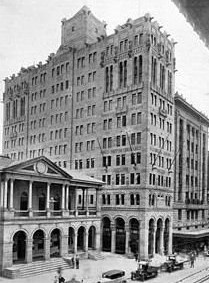
I found the company’s building with little trouble. In their offices on the fifth floor, a cute, bubbly receptionist greeted me. When I asked whether Coursey was around the place, she referred to a scheduling calendar she had there and told me he was “on the road.” She explained his territory included this city and the one I’d left that morning. I’d hoped she knew of Geoffrey Coursey, but not much about him. If he’d tried to spread his “charms” around the office, I might take a risk by making up some facts, such as where we’d known each other.
Fortunately, she was in the dark regarding him to an extent and bought my story. I told her I was a friend, stationed with Coursey in the army in Washington state a while back. Elaborating he’d moved since I’d last seen him, I explained I was trying to pay him a surprise visit but didn’t know where he lived. She giggled sweetly and told me she thought it was a swell idea and she’d be glad to help me.
The girl moved across the reception area to a high cabinet where she opened a wooden box containing filing cards. She fingered her way through a few until she looked my way and smiled. “Here it is!” The receptionist returned to me. “He has a place at the Bullington Arms. It’s an apartment building over on Ouzts Avenue.” She paused as I bent over her desk and copied the information. “Do you know where that is?”
Standing erect and smiling pleasantly, I answered, “I’m sure I can find it. Thank you very much.” I leaned toward her and spoke in a conspiratorial fashion. “You’ve been kind and helpful, but I have one more favor to ask of you.” A barely discernible wrinkle appeared in her forehead. “Oh, it’s nothing big. I may not come in contact with Geoffrey for a couple of days because he’s on the road, as you say. Please don’t mention we spoke or anything if you see him. It’s a surprise. Okay?”
A cunning smile played across her face. “Oh, sure! I understand. Not a word!” she winked. I thanked her and left the offices. If the salesman had absconded with Blanche and Luther in tow, I figured he wasn’t on the road conducting business.
* * *
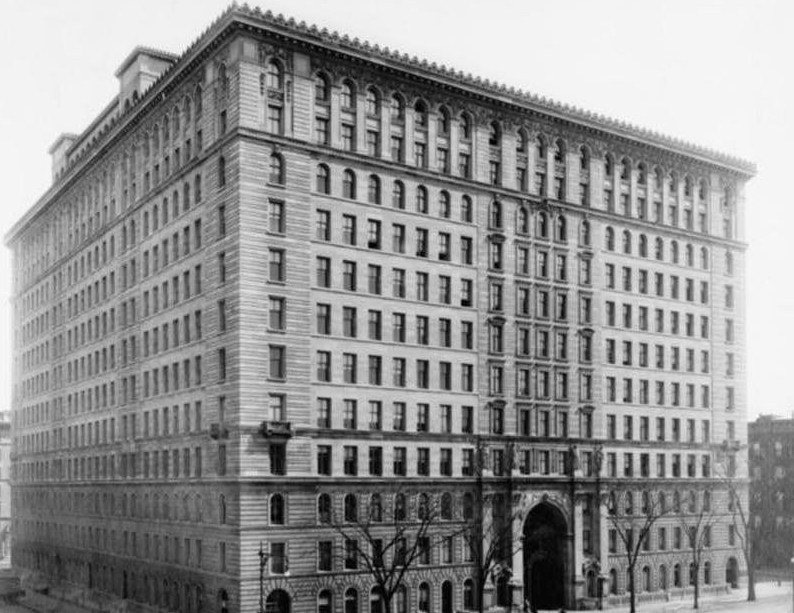
After cruising past Coursey’s building, the LaSalle fit neatly into a parking spot half a block farther down the street. Coincidentally, the slot was in front of a small hotel which I decided might come in handy, depending on what I found at the Bullington Arms. I walked back to the apartment building and into the lobby. The place appeared to be an older, modest residential joint. I saw a barbershop with a shoeshine stand across the lobby from the front desk. Next to the barbershop was a small coffee shop. The registration desk was manned by a tall, raw-boned, sinewy fellow with long matted hair.
I didn’t want to play my hand too quickly, so I didn’t approach the counter to ask for Coursey’s apartment number. Instead, I stepped into one of the phone booths located outside the barbershop’s door. My nickel dropped into the slot, and I dialed for the operator. When she came on the wire, I asked the her to connect me with the Bullington Arms. In a few seconds, the telephone at the front desk rang. The fellow working the desk answered with a melodious flourish, belying his appearance.
I told him I was Western Union and needed Coursey’s apartment number for a telegram delivery. He told me just to drop it at the front desk. I laughed as sheepishly as I could manage and reminded him our rules required a number to be on the envelope, even if we dropped it there. He gave an understanding chortle and told me Coursey lived in apartment five twelve, but simply to leave it with him. The clerk said he’d seen my target go out just a short time earlier and would give him the message when he returned. I thanked him and hung up. Because of the close proximity of the booth to the registration area, I waited until something else occupied the man’s attention before I left it.
I told him I was Western Union and needed Coursey’s apartment number for a telegram delivery.
I decided my brick pounders needed a shine. Telling the fella working the stand to take his time, I eased into the chair and hid behind a local newspaper while keeping an eye on the lobby. He finished the shine before I was ready to leave. Since nobody was waiting for the chair, I told the boy to give the shoes another going over and, again, to take his time. When he gave me a face, I paid him for the first shine and told him I’d pay double for another. He shrugged and went back to work.
The second shine was the trick. Half-way through it, Blanche walked into the lobby. A kid, who could have been Luther’s age, and a tall, well-built man in a business suit accompanied her. Although no raving beauty, Mrs. Bittles was slightly better looking than the photograph had made her appear. The man walked to speak with the desk clerk.
Suddenly, Blanche’s beau turned and gave the lobby a hard look. I stayed hidden behind the newspaper until he, my target, and Luther moved to the elevator. If what the desk clerk told him had stirred his senses, I didn’t want to come under his scrutiny. I wasn’t sure whether he’d panic, thinking Harry was on his trail, but I was prepared for anything. So as not to arouse suspicions, I quickly paid the shine guy, left the lobby, and took up a spot across the street where I could watch the building.
An hour later, the man I had assumed was Geoffrey Coursey came out and walked west along the sidewalk. From across the street, I paralleled him. Generally, I hold fast to certain ground rules for shadowing a person. Coursey proved a challenge for sticking to these procedures. Several times, he stopped on the sidewalk, cut his eyes behind him, or used the reflections in storefront windows to see whether anyone was following him.
Generally, I hold fast to certain ground rules for shadowing a person.
While always keeping people between us without losing sight of him, I pretended to window shop, turned and lit cigarettes, or engaged someone with a request for directions. This way, I escaped his notice. I had to admit, for a sewing notions salesman, he was pretty cagey. After a couple of these stops and starts and several turns, which required some quick maneuvering on my part, he hurried into the Union Station. I followed discreetly and watched him make a purchase at the ticket counter. Then we reversed course and returned to the Bullington. I took up my position across the street and waited for a time, thinking the three of them might take a powder, but nothing happened.
It occurred to me I hadn’t eaten all day. I sauntered to the coffee shop in the Bullington and sat where I had an unobstructed view of the elevator and most of the lobby. After a chicken salad sandwich, a half-dozen cups of java, and at least as many cigarettes, the elevator door opened and Luther and his mother emerged. They tarried by the elevator door for a time, talking. I made my way into the lobby and entered a phone booth, but left the door open.
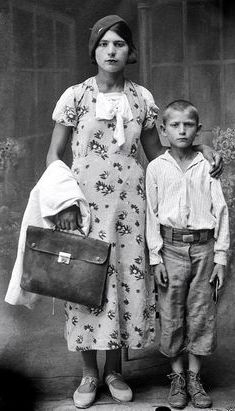
Blanche and the boy moved toward the door to the street but then suddenly stopped near my booth. I was sure Coursey had alerted her about the possible presence of someone and she’d spotted me. Instead, she was fussing quietly while rummaging through her purse for something. As she did, I caught enough of their conversation to piece together the pair was going to a moving picture show. Finally, she gave up finding whatever she’d been searching for and the pair walked out of the building. A few minutes after their departure, I felt I needed to act and decided to pay a visit to the salesman’s apartment.
* * *
On the fifth floor, I located Coursey’s apartment around the corner from the elevator. Using the routine of the delivery of a telegram from his corporate headquarters to get the door open, I shoved my way in past the salesman. Despite Geoffrey’s athletic build, my automatic easily convinced the pasty-faced man to sit quietly in a convenient Windsor chair in the compact living room. At my urging, he grabbed a little air while he was at it. Glancing around the space, I saw two opened, partially packed suitcases on the bed in the next room. I kept my weapon pointed in Geoffrey’s general direction and gave the luggage a closer look. The bags contained only men’s clothing hastily thrown together. The germ of an idea grew in my head.
Using the routine of the delivery of a telegram from his corporate headquarters …, I shoved my way in past the salesman.
Walking back in to where the man sat fidgeting nervously, I noticed his suit coat hanging from the back of a chair. A train ticket protruded from one of its pockets. On closer examination, I found Geoffrey had plans to catch the westbound limited from the Union Station in a half hour. And it appeared he intended to travel alone. I looked from the ticket to his desperate face. Geoffrey’s slight black mustache twitched. His eyes gave his thoughts away.
I stretched my arm out and gave him a slight tap on his noggin with the butt of my gun. Just enough to get his attention. “Uh-uh, Geoffrey. Don’t even think about it, you get me?” I waved the ticket under his nose. “You know, you’re a bad boy, a real heel, giving the air to Blanche and Luther while taking that bar owner’s hard-earned cash with you. Shame on you,” I said sarcastically, giving him another head tap, this time slightly harder. “Now, if you’ll just turn over the guy’s money to me, you can still make the train without having to stop off at a hospital.”
The man glared up at me with hatred in his eyes. I drew the gun back as if to strike another, much harder blow. “Okay, okay!” he screamed, rocking his head violently. “The money’s in a satchel under the bed. I’ll get it for you.” He started to stand.
I put the working end of the automatic to his temple, stopping his movement. “No. You’ll get up nice and slow when I say so, walk into the bedroom, and do as I tell you.” I pressed the barrel of the gun to his head harder for emphasis. “Now, get up. Slowly. You don’t want to make me nervous,” I snickered. Looking bug-eyed sideways in the gun’s direction, he rose cautiously. We strolled to the bedroom where I spun him around. “Now face the wall but stand away from it about three feet.” He did as he was told. “Now unbuckle and drop your trousers to your ankles.”
I put the working end of the automatic to his temple.
When he turned to protest, I gave him another taste of my rod’s steel to his head. That settled him, and he undid his pants and let them fall. “Now, your underpants.” Stunned, he hesitated but unhappily did as he was told, this time with no further encouragement from my roscoe. I find it enhances a man’s willingness to follow instructions when he has the added burden of marked vulnerability. “Now, lean toward the wall and touch it with only your forehead. Good man. Okay, put your hands behind you and interlace your fingers.”
“It hurts, mister!”
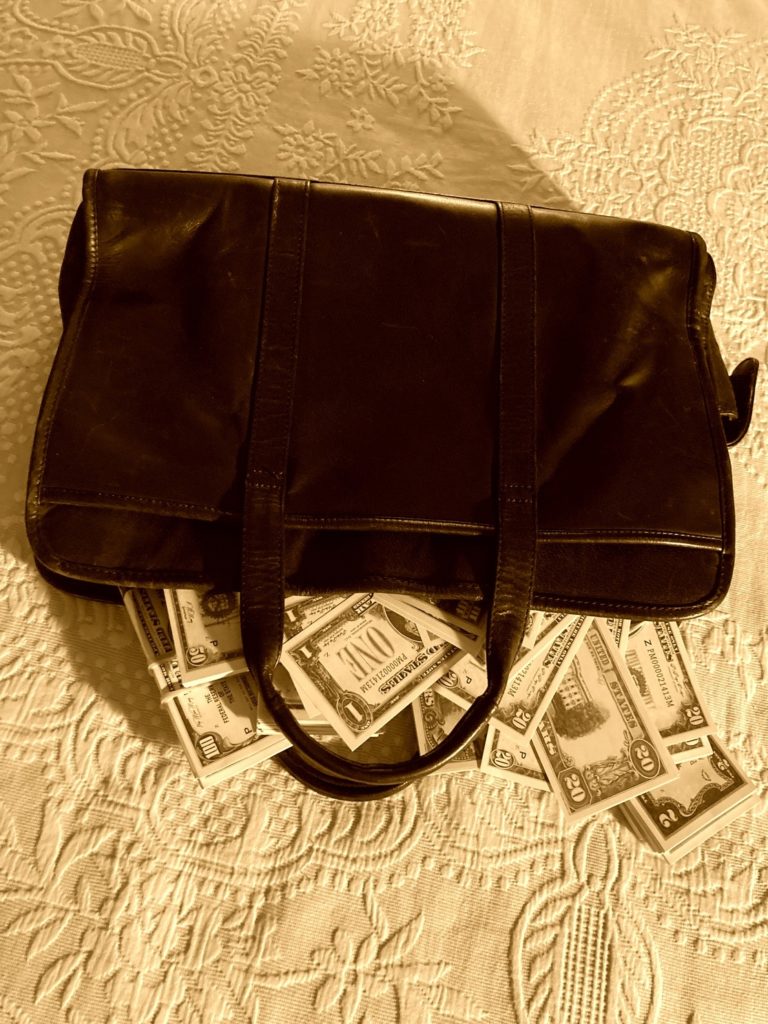
“Not as much as this .45 will hurt, whichever way I use it! Now button your chin!” I stepped toward the bed and warned, “If you move a muscle, I’ll plug you. I swear it.” His body tensed in his awkward position as I bent down and located the satchel. I pulled it on to the bed, opened it, and saw a great deal of cash. Harry’s business has been good, I smiled. Better than I’d realized.
From the wall, Geoffrey pleaded, “Mister, I wish you’d leave me a few bucks to get outta town.”
Turning back to Geoffrey, I said, “Wish in one hand and shit in the other, bub. See which fills up first.” He grunted his disappointment. With the satchel in hand, I said, “Now, stay like that and count slow to one hundred while I fade. If you do what you’re told, we’ll be copacetic. I’ll be counting on the other side of the door. If you stick your nose out the door before I finish my count, I’ll kill you. I’m on the lam anyway and got nothing to lose, mister,” I lied. I glanced at my watch. “You still have plenty of time to make your train.” Before leaving the bedroom, I snatched the telephone’s cord from the wall and repeated the effort in the living room.
If you stick your nose out the door before I finish my count, I’ll kill you.
Back on the street, I walked to my month-old LaSalle. With the satchel of cash I’d liberated from Coursey on the seat beside me, I drove to the city I called home, relishing a job well done. Harry later swore his undying gratitude at the return of his money. He told me I’d never have to pay for another drink in his place ever again. I asked him if he’d forgotten how much I drink. We shared a laugh. The two of us agreed. If the private investigator business was slow, I’d ask for the favor of a drink and he’d grant it.
From Gil Tanner’s case notes: We never saw or heard from Geoffrey Coursey again. Apparently, he’d been able to catch the westbound train. For that matter, Harry never saw hide nor hair of or heard from Blanche and Luther thereafter, either. And Roland Flanders, you may wonder? They found the roving lad six months later in Texas. He’d taken off with a frill who waitressed at a local greasy spoon. After getting to Texas, he made the mistake of trying to get the cash value of his life-insurance policy from the issuing company. Unfortunately for him, Mrs. Flanders had already raised a stink trying to collect. To shut them both up, the company contacted the local authorities. No word ever came back on whether Roland returned to the little wife and their kids. ©