
AUTHOR’S NOTE: Sitting at the typewriter on my desk, I was prepared to relate another of the investigations that comprised my career as a private detective. As I watched the smoke of a Chesterfield trail upward from an ashtray resting next to a pony glass of Jack Daniels, it occurred to me I never explained how I began my foray into the PI racket. You’ve read my words, “That’s another story for another time.” Now is the time. This is that yarn.
In the spring of 1924, I dropped out of college and straggled back to my hometown after nearly two full semesters of totally forgettable, regrettable effort. While the rest of the country bounced along on a stock-market-crazy economic joyride, my prospects were dismal.
There was no way I would return to the house where I’d been raised. My old man was as big an alcoholic, abusive cretin as ever. Maybe worse. Marty, my older, much larger brother, had always been there to protect our mother and me from him as often as possible. But my sibling was off playing football for the Dayton Triangles after a two-year stint in the Coast Guard. I was older, bigger, and tougher now. Any acting out by our dad while I was in the house was sure to lead to a bout of fisticuffs. For my mother’s sake, I chose to avoid that likelihood. Although I checked in on her often, the idea of living there again was out of the question.
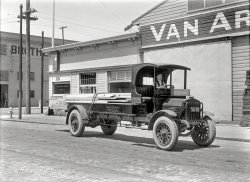
Initially, I’d bunked in the residences of a few high school classmates and old friends. I was very grateful for their kindness. I found a job at a local lumberyard. It was a temporary thing. My heart wasn’t into tossing two-by-fours and sheets of plywood onto a timeworn Federal Truck and hauling them around town to construction sites. Truthfully, I was uncertain about what I wanted to do with my life. But I knew that wasn’t it.
I found a job at a local lumberyard. It was a temporary thing.
By March of the following year, I’d put away enough dough to take a room in an inexpensive place over on Greenwich Avenue. Aside from the cash I gave my mother to supplement what Marty was sending her, I was saving most of my pay. However, the price of an automobile was still beyond my reach without having to drain my funds on hand. So, I hoofed it the two dozen blocks from Rearden’s Boardinghouse to work and back every day.
That month, the next chapter of my life began.
* * *
It had been a freezing and overcast day with a constant threat of rain, sleet or snow. Finally, late in the afternoon, the skies opened up with a deluge, making even walking across the muddy lumberyard perilous. The boss gathered his minions together under a shed and knocked us off early.

So, I set out for my lodgings. As I hustled along, the temperature dropped. The frigid rain came down harder, drenching me. Finally, I ducked into a place I’d passed daily called the Wayside Café. The joint was crowded. The aroma of hamburgers, onions and home fries filled the space not taken up by humankind. Fortunately, it overpowered the smell of water-soaked woolen clothing.
I waited a few minutes until a couple of lugs at the counter finished their repasts, paid the waitress, and stood to leave. As I eased onto a vacant stool, a guy grabbed the one next to me. I turned to find a city cop had taken the second seat. We nodded greetings to one another.
With money tight, I was hesitant to order anything more than a cup of java. Usually, I retreated to my digs at the end of the day and heated a can of soup on the hot plate hidden in my room. The appliance was “officially prohibited” by Mabel Rearden, my landlady. While the meals the widow Rearden served were tasty, there was never enough to go around satisfying everyone’s appetites. The soups were merely my hors d’oeuvres, as the swells might say.
The lawman ordered a cup of joe. I did likewise. Neither of us said anything until our coffees arrived. He asked me to pass the sugar. When I did, he chuckled and confided, “I just came in from my foot patrol seeking shelter from the weather. I’m famished, but my wife, Rose, will kill me if I chow down now. She’s got a roast in the oven.”
“I just came in from my foot patrol seeking shelter from the weather.”
“That sounds great.” The thought of it made my mouth water.
“Yeah. What about you? You eat here often?”
“Nah. I have a bedsit at Rearden’s,” I responded, nodding my head in that general direction. “Normally, I heat something up in my room to hold me over until mealtime. I’ve never been in here. Just came in for the same reason as you.”
“Give the food a try. Oscar, there,” he added, indicating the man at the griddle, “produces great grub.”
The fry cook overheard the statement and glanced over his shoulder as he worked. “Thanks for the endorsement, Rob. Mind if I put that on the sign out front? It won’t get you any free meals, but it’s good for a free coffee refill.”
Somewhat taken aback by his pronouncement, I looked at my cup, to the chef, then at the man beside me. He read my face. “Relax, kid,” Rob laughed. “Oscar’s full of mud. The refills are free anyway.”
I let out a quiet sigh of relief. I barely had the money in my pocket to cover my first round of coffee. A few more helpings to stave off the icy rain for the rest of my trek were in order.
After lighting a Camel, the harnessed bull offered me one. I declined, preferring my brand of gaspers. Then he extended a mitt. “I’m Rob Waddell. I haven’t seen you before. You new to the city?”
I studied his face as we shook hands. He looked to be around ten years older than I. World-wise, but amiable. In answer to his question, I replied, “No, this is my hometown. Just came back several months ago after a stab at college.” I shrugged. “It didn’t take. The whole thing bored me. I’m Gil Tanner.”
The rangy fella leaned close and whispered, “Any relation to Godfrey Tanner?”
I was setting fire to a Chesterfield from my deck. But the question caught me off guard. I paused. With a measure of trepidation, I admitted, “Yeah, he’s my old man. Do you know him?”
“No offense,” he said softly, “but most of the guys in the police department have come into contact with him or know of him by reputation. He is one joker who’s always full of piss and vinegar.”
“He is one joker who’s always full of piss and vinegar.”
“Piss, vinegar, and booze,” I put in. “He’s still patronizing the bottle.” There was no pleasure in my voice with the admission.
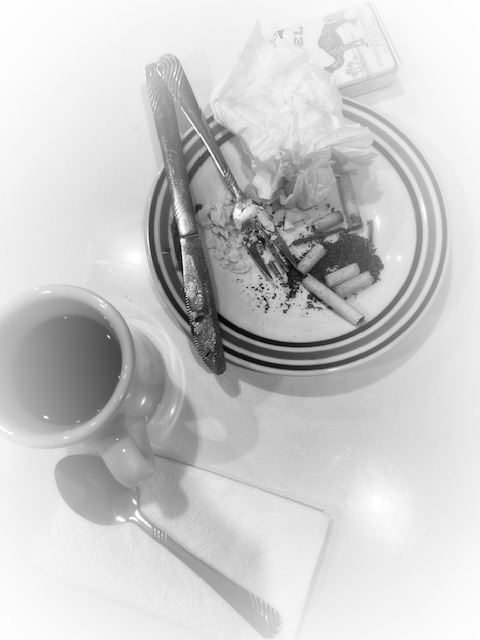
The copper made no response. He didn’t have to. Sliding a used plate to a spot on the counter between us, he flicked the slough of ash from his fag onto it and solicited more coffee. During refills of joe, we talked until the rain tapered off. When we walked out into the frosty damp air, Rob predicted snowfall before the next morning.
By the time we went our different ways, the flatfoot and I had decided to take in the Friday night prizefights at the Municipal Arena together. It turned out we both enjoyed boxing matches. My old man had taken me a few times before he dove into the bottle hard.
* * *
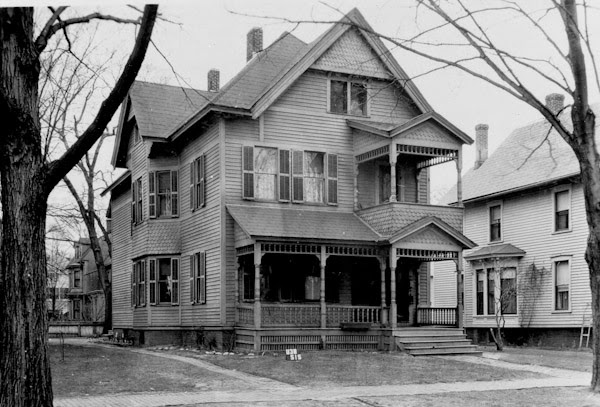
On the covered porch of my rooming house, I shook the rain off my hat and coat. It didn’t pay to leave a puddle on the landlady’s floor. Upon my entry, the short and plump but firm Mabel Rearden, emerging from her front-facing rooms, met me. Beneath her flashing brown eyes and brown hair, she wore a Mother Hubbard, as usual. This one bore a faded polka-dot pattern. She pulled the collar of her housedress close around her throat as if she’d felt a sudden chill.
“Supposed to rain sometime today,” I laughed.
She showed a faint smile. “You’re home early.”
I hiked a thumb over my shoulder toward the world beyond. “Not even beavers can work in this weather.”
“Supper at the usual hour, Gil. Rent’s due Friday,” she reminded me, though it wasn’t necessary. My understanding was that, somewhere back in time, the name Mabel was derived from a Latin word meaning “lovable.” Now, Mrs. Rearden had her compassionate moments, but she was a no-nonsense woman who ran a tight ship.
My understanding was that, somewhere back in time, the name Mabel was derived from a Latin word meaning “lovable.”
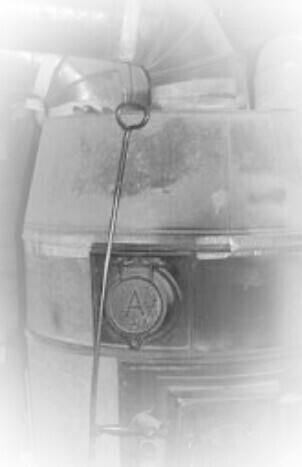
I smiled my acknowledgement of the fin I’d owe her for the week and climbed the stairs to my second-floor room. Retrieving my hot plate and cooking pot from their hiding place, I put a can of vegetable soup on to heat. I stripped off my wet clothes, dried off, and tried to warm myself. The warmth rising from the octopus furnace in the cellar helped. The aroma of the Campbell’s concoction hardly satisfied me while the enticing scent of the burgers and home fries from the diner lingered in my nostrils. I ate the soup anyway, smothered in soda crackers.
My new friend’s forecast came to pass. The following morning, a dusting of snow greeted us. It didn’t last very long.
* * *
Friday night, Waddell met me at the arena’s main entrance. He handed me a ducat to get in with. When I tried to pay for it, he said I could buy the tickets next time. His face told me he understood my financial means better than I would have liked. But beyond expressing my sincere thanks, nothing more was mentioned regarding his gesture. It was the first time I’d gone “out on the town” since my return.
The fight card was thoroughly entertaining, especially the main event. A kid known as “Joltin’ Joe” Deimler from the next county over put a stop to one Lenard Starzyk in the fifth round. Both fighters proved they could take a solid punch, but Deimler wore the Pole down. Rob knew the pugs on the program well enough to pick the winners in all but one of the five contests.
Afterwards, as we filtered out with the crowd, my companion suggested we stop somewhere for a nightcap. His proposal caught me by surprise. I didn’t expect an officer of the law, even out of uniform, to advance the idea of a drink during Prohibition. Regardless, I was game. We adjourned to a joint called Harry’s Paradise Tavern.
* * *
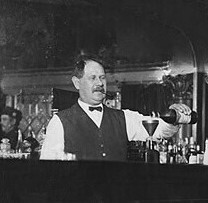
As we sat at the saloon’s bar, I wondered if the bartender had any notion that one of us was a law enforcement officer. My question was quickly answered when the beefy, mustached guy serving his thirsty patrons greeted Waddell by name and asked if he’d had any excitement while on his beat lately. Rob responded with a shrug and “same old things.” He then introduced me to Harry Bittles, the proprietor-barman. We shook hands. He took our drink orders and moved away. In a few seconds, a second man delivered Waddell’s rye and my Jack Daniels neat, a libation I’d gained a taste for in my college days. Both were served in tea glasses. The copper prompted my acquaintance with the fella. He turned out to be Harry Bittles, Junior.
…I wondered if the bartender had any notion that one of us was a law enforcement officer.
Rob raised his cocktail to me. “Here’s to happy days.” I tapped mine to his. We sipped our drinks. I was still stunned by the flatfoot’s attitude toward a violation of the law. My buddy caught the questioning glance I gave him over the top of my glass. It brought a smile to his puss.
He leaned in toward me and spoke in hushed tones. “I know the question rattling around in that cranium of yours. In my opinion, Gil, the 18th Amendment is one of the biggest mistakes our country’s ever made. People are going to pursue their desires, regardless of what the government might do to stop them. You can’t legislate morality or even what some folks think it to be. The worst result of prohibition has been to give rise to a criminal element such as this country has never seen.
Rob nodded toward the older tapster. “Back in January 1920, when the law took effect nationwide, everybody had seen it coming. Harry Senior was prepared. He converted the tavern from strictly a gin mill to a restaurant serving ‘light’ meals and ‘special’ coffee and tea. These choices were mere formalities as a means, if chosen, to deliver the hooch to his customers in coffee mugs or tea glasses.”
He sneered, “Imagine how my buddies and I felt when we returned from France after the war and found we could fight and die for our country but couldn’t get a drink in our country.” After a pause for another slug from his glass, he completed his thought. “Prohibition’ll never last. Now, I’m a law-and-order kind of mug, but the local cops have their hands full with the robberies, assaults, burglaries, murders and the rest.”
I related my understanding of his position. We finished our drinks. I signaled for another round. The money I hadn’t paid out on my entry fee to the auditorium allowed me to buy them. I nursed my Jack.
* * *
Over the next several months, Waddell and I spent a fair amount of time together. He and his wife had me over for dinner a few times. Mrs. Waddell was a sweet lady with a toughness lying just below the surface. I came to think it was a necessary trait for the spouse of a copper on the street.
We also met for supper at an Italian place called Cappacino’s Restaurant. I’d always had a partiality towards that cuisine. The owner-operator of the eatery was Rosalie Cappacino, who everyone referred to as Mama. She was a short, heavyset woman with twinkling eyes and an affable personality. We hit it off from the first moment.
Through the lanky cop, I was experiencing more of the city where I’d grown up.
* * *
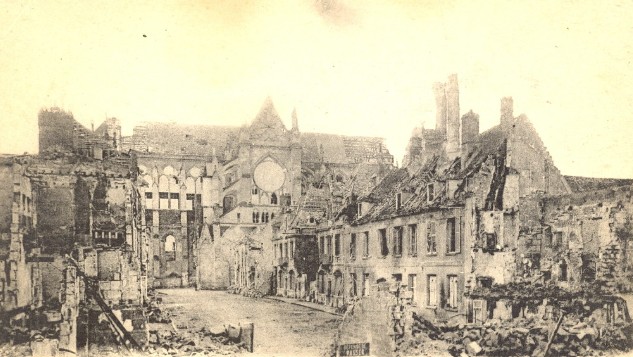
During that time, I felt Waddell treated me like a kid brother. I discovered why he’d “adopted” me one evening when I arrived at their home for dinner. Rob was running late. It gave Rose and me a chance to visit and talk. During our conversation, she confided, on my promise I not to say anything to her husband, that he’d said I reminded him of his younger brother, Rodney. The young man had been killed near Soissons, France, in the summer of 1918. Rob hadn’t learned of his death until he returned from Europe. The news of it had hit my compadre pretty hard. She told me that, beyond telling her of the comparison between Rodney and me, he never spoke of his only sibling. The subject never came up between him and me.
The young man had been killed near Soissons, France, in the summer of 1918.
After a time, my rapport with Rob grew into a strong friendship. Throughout those months, the policeman and I regularly chinned over cups of java in a booth at the Wayside Café or the Market Street Diner, which was closer to police headquarters. More often than not, we discussed the recent felonious activity that had splashed across the headlines of the dailies. The criminal mind had always fascinated me. Waddell and I had a mutual interest in each other’s take on such matters. My new friend also gave me practical advice on surveillance and interrogation techniques, evidence recognition, shadowing a target, and a few other tidbits that proved useful in the days and years to come. While I was grateful for Waddell’s mentoring, I couldn’t help feeling that it was driven in part by grief over his kid brother’s untimely death. The subject was never broached.
In the Fall of ’25, Harry Bittles, Sr., died suddenly of a heart attack. Rob and I attended his funeral. Harry Junior, who now stood to take over the tavern, held a small, private memorial for his old man there. Naturally, we put in an appearance to give him support.
By that time, I was more fed up with my job at the lumberyard than ever. So, it piqued my interest when, at the post-funeral wake, Waddell complimented me on my perception of the workings of the human mind and my “powers of observation.” He added that my insight into the activities of our burg’s nefarious citizenry could be of great help to the police department. This led to my friend urging me to join the force. While I enjoyed resolving a mystery, getting to the bottom of a conundrum, doing so as a policeman didn’t appeal to me. I believed they were too restricted in many ways in arriving at the truth of a matter. In that moment, my biggest challenge was explaining my reluctance without stepping on my buddy’s toes. Somehow, I managed.
Waddell reluctantly accepted my reasons for passing on his suggestion. Knowing my feelings concerning my then-current employment, he proposed I make use of, as he put it, my “talent” by becoming a private eye instead. Though the notion had never entered my mind, it intrigued me.
…he proposed I make use of, as he put it, my “talent” by becoming a private eye….
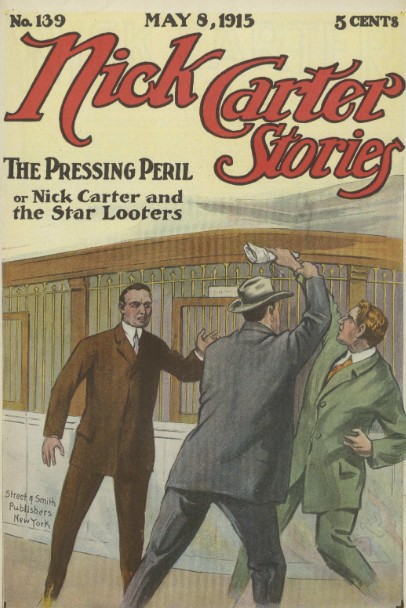

In my childhood, I had become enthralled by the Nick Carter mysteries and, of course, Arthur Conan Doyle’s Sherlock Holmes stories. In recent years, Mary Rhinehart’s The Circular Staircase, Herbert Jenkins’ The Strange Case of Mr. Challoner, Louis Joseph Vance’s Lone Wolf series, and the tales offered in Black Mask magazine, to name a few publications, had occupied my spare time. Solving the enigmas they presented gave me great satisfaction. And living in the same household as an abusive alcoholic had given me a tough disposition. As a result, I figured I could pull off the private detective racket.
Anyway, it sounded better than what I was doing at the lumberyard. Whether my ability to resolve a problem in an armchair might translate into real-life cases remained to be seen. I’d never know unless I tried.
When I asked him to tell me more about his idea, Rob explained what would be necessary to get an investigator’s license. He sold me.
In short order, I’d walked through the process of filing the paperwork and posting the required bond to obtain the PI’s permit. That latter need mandated my dipping into my savings. But, as my mother often said, “A person has to invest in themselves to get ahead.” So I did and received my “ticket,” as Waddell termed it. Other than no office in which to hang the license and no clients, I was set.
Regarding the former circumstance, I resigned myself to working out of my room at the boardinghouse for a while. If need be, I could meet potential clients in a reading room in the library or in a booth at the Wayside Café, which had quickly become one of my two favorite eating establishments. Waddell offered to introduce me to a few people who might throw business my way to get me started. My jumping-off point had been established.
* * *
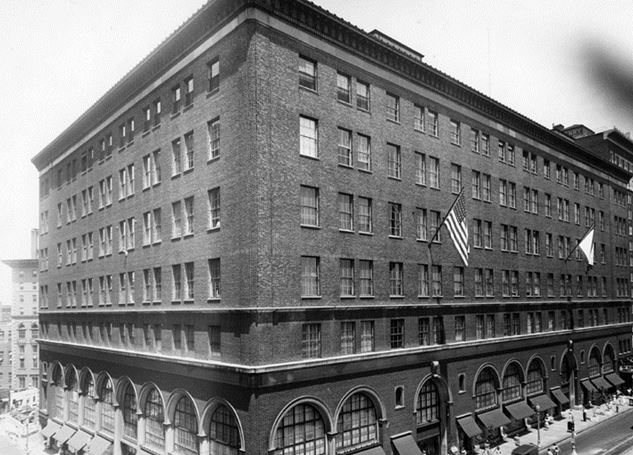
A few nights later, Rob telephoned me at Rearden’s and asked me to get with him early the next morning in the lobby of the Kenworthy Building. The structure sat at the corner of Market Street and New Castle Avenue, three blocks from police headquarters. My chum explained we were to meet a couple of people who might use my investigative services. I told him I’d call in sick to the lumberyard and free up the day.
* * *
In the Kenworthy’s vestibule, a uniformed Waddell advised me he had to hustle through our meetings and report in to headquarters. It was my first time in the old building, which I found was bereft of elevators. As we climbed the stairs, he explained we were going to see a lawyer, then a bail bondsman he’d lined up as potential sources of business for me. On the fourth floor, we ankled along the hall to the offices of Abraham Birnbaum, Attorney at Law.
As we climbed the stairs, he explained we were going to see a lawyer, then a bail bondsman he’d lined up as potential sources of business for me.
Inside, a young woman welcomed us. Standing slightly over five feet tall, she had a medium build, dark brown hair, and blue eyes. She was a tiny figure with a huge presence. The girl addressed Rob by name.
“Good morning,” the officer greeted her. “Anna, meet Gil Tanner. Attorney Birnbaum and I spoke several days ago. He asked me to drop into the office with him for an introduction.” With a vague hand motion, he said, “Gil, this is Anna Stadleman.” The girl and I shook hands. Hers was soft, warm, and inviting. I tried to clear my head of the thoughts the impression conjured up.
“Yes, Mr. Birnbaum is expecting you. Step this way.” She moved to the door of an inner office, opened it, and walked inside a short distance. “Sir, Officer Waddell is here with the man you discussed.”
“Fine,” a voice exclaimed from within the space, “show them in!”
Anna moved aside to allow us to enter. As we did so, a stocky fellow of average height was standing at a bookcase. Upon our entrance, he closed the tome he’d been reading and returned it to a shelf. Walking to us, he shook our hands, while Waddell made the introductions.
“Good morning, gentlemen. Have a seat. Let’s talk and permit me to get to know you, Mr. Tanner.”
“Please call me Gil, sir. Mr. Tanner is my father.”
“Fair enough. I go by Abe.”
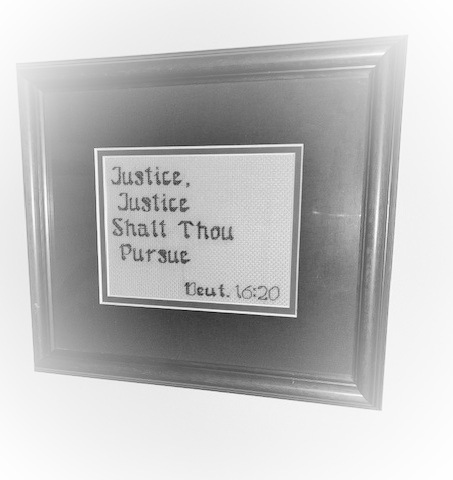
The stout fella moved around his desk, sat, and addressed me. “Allow me to start off by saying Officer Waddell has spoken glowingly about you. While he and I have never been on the same side in a court case, I know him to be a forthright individual. Like me, he has always shown himself to be after the truth in all matters.” At that point, I noticed a framed needlepoint hanging between to two large windows behind him. It quoted the Book of Deuteronomy concerning the pursuit of justice.
“Rob tells me you have recently obtained a private investigator’s license and are looking for patrons. I can always use a good, thorough sleuth when the occasion calls for it.” From the humidor on his desk, he offered us cigars. We both passed. Lighting his, the counselor-at-law opined frankly, “No offense intended, Mr. Tanner, but you appear somewhat young to be taking on such a career.”
“I may–”
Waddell interrupted my attempt to overcome the “handicap” of my age. “Well, sir, as my sergeant often says, ‘It’s not the years. It’s the mileage.’ Gil has terrific life experiences. They’ve given him a powerful insight into human nature.”
Birnbaum removed his pince-nez and tapped it against his cheek. He remained silent for a short time, studying me and my companion, puffing hard on his smoke. It seemed as if he were measuring the strength of Rob’s statement against my relatively youthful appearance. Finally, he laid the heater on an ashtray and bent over his desk. “The detectives I employ charge twenty to twenty-five dollars a day. Keeping in mind that you’ll just be starting out, what will be your daily rate?”
I hadn’t thought that far ahead. When I hesitated, Waddell once again stepped in. “We know Pinkertons get around six dollars per day, but their prices are notoriously low because the renown of the firm keeps them busy. They can afford to charge less with their greater volume of clients.” Our host nodded in agreement with my friend’s facts.
With that, Rob suddenly stopped speaking and looked at me expectantly. His expression told me, ‘Batter up!’ I leaned forward and cleared my throat. Deciding to start on the not-too-high end in case this turned into a bidding war, I did the quick math in my head. Using the difference between the twenty-five-dollar figure and the Pinkerton fee, dividing it in half and then adding it to the latter’s charge, I proposed fifteen dollars a day.
The attorney picked up his stogie and jabbed it between his teeth. He got a surprising amount of smoke from the cigar as he worked it across his mouth in reflection and exhaled upward. At length, he said, “All right. We’ll see how it goes. But any missteps and I’ll rethink the whole proposition. Oh, one last thing. What kind of automobile do you drive?”
At length, he said, “All right. We’ll see how it goes. But any missteps and I’ll rethink the whole proposition.”
My heart sank. Something else I hadn’t considered. “I don’t have a car yet.”
Abe jiggled the cigar along his lips. “Well, using streetcars and taxicabs to do what I need done will not work very well.”
Again, silence enveloped the room as Birnbaum mulled over the facts before him. I shifted uneasily in my chair. Suddenly, the lawyer’s eyebrows arched. He inclined in my direction. “Do you have a driver’s license?”
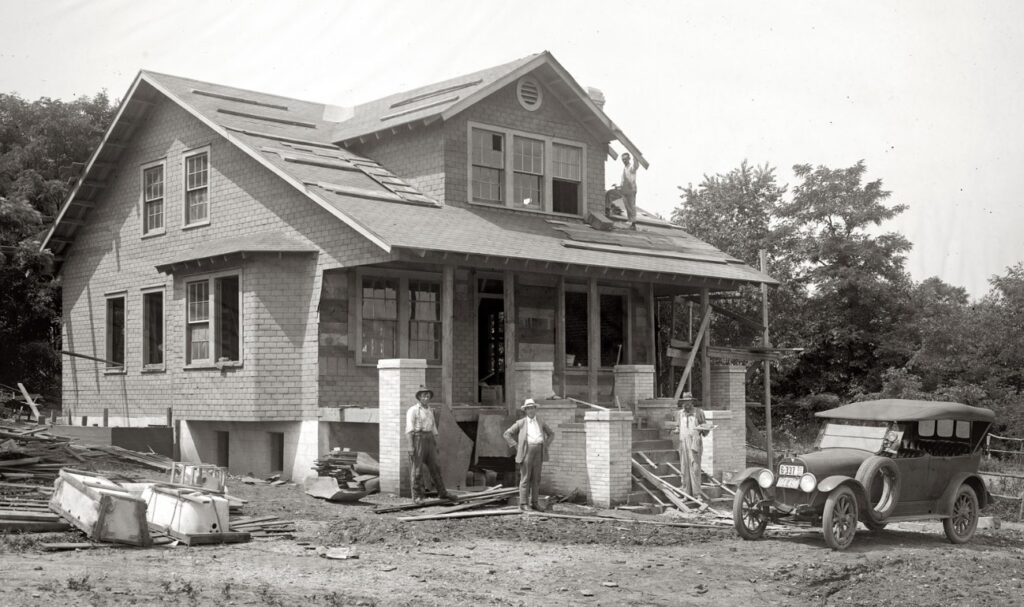
“Yeah, sure. My job right now is hauling building materials for Van Ark’s Lumberyard to houses under construction. And I’m working on getting a heap soon,” I asserted. Rob shot me a sideways glance but said nothing.
“If you have nothing firm lined up for a vehicle, may I suggest a workable solution which might be profitable for both of us?”
“Sure.”
“A recent client could not pay me cash for his trial representation. However, he owned an automobile. He turned the title over to me as payment for my services. It’s not new. It’s a 1923 Durant Roadster. Four cylinders. You won’t burn road with it, but it’ll be enough for your purposes. Anyway, I have no need of it. Thought I’d sell it until I learned it needs mechanical attention, which I’ve neglected to get done. As a result, I’ve been paying a storage fee during this time. Would you be interested in working out a deal where the car is repaired, and I turn the vehicle over to you on a sort of lease basis?”
“Fine, but won’t the person want it back?”
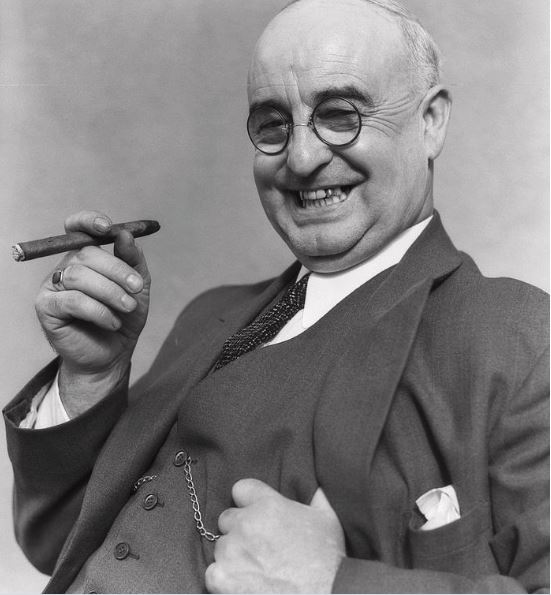
Birnbaum pulled his smoke from his mouth. “No,” he sighed. “Cavendish won’t need any means of transportation for somewhere between ten to fifteen years, according to the judge and jury.” At the mention of the name, Waddell snickered. Abe gave him a serious look but said nothing.
“Oh.” The word caught in my throat; I’d broached a tender subject with the counselor.
Birnbaum chuckled. “It’s not something I’m ashamed of, Gil. To quote Robert Louis Stevenson, ‘What hangs people … is the unfortunate circumstance of guilt.’ I did my best for the fellow. But, as I often remind folks of his ilk regarding the evidence against them, I can’t make chicken salad out of chicken shit. You should pardon my French.”
He took up his cigar again and got down to business. “Tell me if you’ll agree to this. I propose to draft a contract whereby I get the car repaired by my mechanic, Max. I’ll pay half the cost of the bill and you the other half, since we’ll both benefit from it in the long run. You can talk to Max yourself, if you like, so your mind is settled that the whole thing is on the up-and-up. He’s a top-notch man and charges far less than what his results are worth.
“Then you’ll take possession of the machine. You use it and pay me ten dollars a month on a lease basis. If you have a good month, you can remit more. Pay for it as fast as you want. There will be no interest involved. I recall Cavendish,”—here Abe cut his eyes at Rob, who sat mute—“told me he paid a little over eight hundred for it brand new. Because I’m wasting my money on the storage of the crate, I’ll settle on a price to you of six hundred bucks plus half the repair bill. Obviously, whatever you pay monthly will reduce what you owe on it.”
His proposition sounded copacetic to me. A faint nod from my patrolman friend sealed the deal. I agreed to the terms. Since it was likely I might need his services in the future, I decided to meet the mechanic, anyway.
“If we can go forward on a handshake, I’ll call Max right now and get him started.” I agreed. We shook hands on it. Birnbaum lifted the telephone receiver off the cradle and asked Miss Stadleman to get Max Eberhardt on the wire. Several seconds later his blower rang. Picking up, he burst out with, “Guten Morgen, Herr Eberhardt! Hier spricht Abe Birnbaum.”
During this discourse, I glanced at Waddell. I wondered if hearing the language of the nation he’d fought against in France a few years earlier, the people who’d killed his brother, twisted his guts. He gave no sign. But I was only beginning to tumble to the poker face my friend could show when needed.
After a brief pause, Abe laughed and said, “I’m switching to English, Max. I’ve used up the German I can muster.” Another break followed, then he went on. “I’m calling about my Durrant. Do you have an estimate of the repair cost? Huh? Say that again… Uh-huh… Yeah, okay. Wait a second.” The lawyer put his hand over the mouthpiece and spoke to me. “He says he thinks he can get it in great running order for around twelve dollars. Is that agreeable to you, Gil?”
I nodded my acceptance of the plan. My lawman friend smiled at the outcome.
Returning to the horn, Birnbaum stated, “Okay. When can you begin work on it? How long will it take? Yeah… Okay. Sehr gut! Danke! Auf Wiedersehen!” The lawyer dropped the earpiece onto its hook as he picked up a pencil and made a note. “Max said that, barring unforeseen difficulties, your car should be ready by tomorrow evening. Here’s the address of his garage. It’s on Heyward Street between Walnut and Hathcock Streets,” he elaborated, writing the info on the back of one of his cards.
When he handed it to me, Abe asked. “That reminds me, do you have a business card?”
“I haven’t had time yet. Plus, I wanted to make sure there were clients to give them to. I’ll have them soon.” Again, I felt ill-prepared for this powwow. “Look, Abe, I’m not the least bit afraid of work, but I want to start out slow until I get the swing of things as you want them done. Small doses, you might say. For now, I’ll be working out of my boardinghouse.”
“Fair enough.” Birnbaum stood, as did we. He walked around his desk and shook our hands. “Thank you for coming in and being forthright with me. I’m always glad to help a young man get started in business. Please leave your telephone number with Miss Stadleman. I’ll be in touch when Max calls me.” He glanced at his strap watch. “I need to be in court this afternoon. Come back in an hour, and our contract on the Durant will be drawn up for our signatures.”
I assured him I would be there. On our way out, I stopped at Miss Stadleman’s desk to give her my telephone number and explain it belonged to an instrument in the downstairs hall of my rooming house.
* * *
When Birnbaum’s door closed behind us, we rushed to the stairway and dropped down a floor to visit the Hertz Bail Bond Company offices. Inside, an array of dour-looking folks sat on chairs along two walls. A few others milled around the large window that overlooked the street intersection below. There were several not-so-subtle groans and rumblings at the sight of the uniformed copper who accompanied me. They brought a wry grin to my companion’s mug.
A door marked PRIVATE opened. A tall, dark-haired woman emerged through it. She had a shapely build and stony brown eyes. Those peepers scanned the room with a disdain she didn’t hide. Without having said a word, she struck me as someone not to be toyed with, a broad who’d tell you where to go in a heartbeat. Rob ushered me to the short wooden railing separating her from the customers.
Those peepers scanned the room with a disdain she didn’t hide.
“Good morning. Gil, this is Dora Kotler. Dora, meet Gil Tanner, the man I discussed with you and Mr. Hertz the other day. Murray asked me to bring him by for an introduction.”
Her face softened. “Sure, Officer Waddell. Hold on a second.” With that, she made a quick call to the inner office and informed her boss of our presence. She rang off and told us to go on in. This brought another chorus of grumbles from those gathered. “Relax, people, if you want to be helped!” she said loudly and firmly. The crowd immediately fell silent. Dora was obviously a force to be reckoned with.
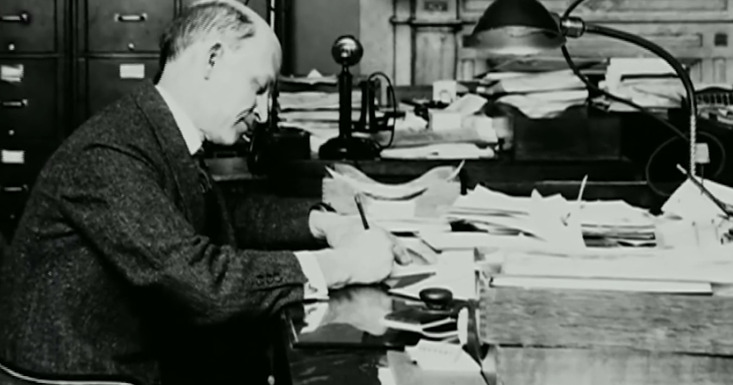
A bald-headed, dapper-dressed man sprang from behind a cluttered desk as we entered his office. He shook the cop’s hand, then extended his to me. Giving me a firm grip, he introduced himself and offered, “You must be the young fellow Officer Waddell spoke of.” When we were seated, he continued. “Rob here says you’re a keen observer with a pretty sharp, insightful mind. And you’ve recently obtained a private detective’s license.”
“Yes … to the part about getting my PI’s license.” I didn’t want to take credit for the compliments Rob had paid me.
“Well, I can use a good investigator from time to time. Unfortunately, not all my clients are completely honest with me about themselves. I need the truth concerning their circumstances to make decisions. Then there are those few who choose to skip their court appearances. You could come in handy in both cases: making background checks and retrieving bail jumpers.” He paused to fill and light a pipe. Aromatic smoke filled the air. “You certainly have the size to handle yourself in, shall we say, unfriendly situations? However, regardless of physical attributes, I don’t want a nebbish trying to do my bidding. It simply won’t do.” He gave me a hard gaze, as if weighing my abilities. “Do you have any background that might recommend you for such a job?”
“…I don’t want a nebbish trying to do my bidding.”
Assuming he, too, was concerned about my age and experience, I took up the argument Rob had made in the attorney’s office. “Well, sir, I always figured it’s not the years; it’s the mileage. I grew up in a damned tough neighborhood and learned to take care of myself, to stand up to bullies fairly young. Having dealt with hostile environments and troublesome people has provided me with significant life experiences. Those have given me a powerful insight into human nature. I’ve had my share of hard knocks. Don’t underestimate me. A few did, then regretted it.”
Murray laid his pipe in an ashtray and folded his hands on his desk. “Okay,” he began. “I need a competent, hard-working individual for this position. Time is often of the essence when someone has absconded on a bond. And frankly, my money is at stake. That’s not something I take lightly. Some schlemiels I’ve hired can’t get that through their thick skulls. I cannot and will not tolerate any costly slipups. And I may call on you at a moment’s notice occasionally.” I waggled my head in agreement. “What are your charges for your services?”
“Fifteen dollars a day,” I replied.
Hertz picked up his pipe and again puffed on it thoughtfully. Finally, he said, “All right. We’ll see how it goes. But I’ll stop using you if your work proves to be unsatisfactory. Oh, one last thing. You possess a car, I presume?”
“I’m getting one. I’ll have it in the next few days.”
“Swell. You’ll need it. I’m going to take a chance on you. Are you ready to start today?” I bobbed vigorously but with a measure of uncertainty I hoped wasn’t obvious. “Good. I just received a phone call from an attorney who’s at the courthouse,” the bondsman said, jerking his chin toward the horn. “He was there for a court date with one reprobate I provided a bond for. The schmuck didn’t appear. Now the judge has issued a fugitive bench warrant for his arrest. I want you to find him as quickly as possible.”
“I’m grateful for the employment. And I’ll take care of it for you, but I have a question.” When Murray made a gesture I assumed called for me to go on, I inquired, “Why not let the police department handle it?”
He glanced at Waddell, then back to me. “With all due respect to law enforcement, finding non-violent bail jumpers is not high on their priority list. I only have forty-eight hours to return him to the court. Are you sure you want the job?”
“Absolutely!” My mother had always told us there is no baptism like one under fire. “You figure he’s still in the city?”
Moving a shoulder in a hint of a shrug, Hertz grabbed his phone and dialed. He instructed Dora to bring in the Wilberforce dossier. Miss Kotler entered, walked to Murray’s desk, and handed him a folder. “Is this why Attorney Masterson telephoned earlier?” she asked.
“Yes,” he sighed. “A no-show in court this morning. Gil here is going to find him and bring him in. So, give him any cooperation he needs.”
The bondsman opened the file and edged it across to me. “Look through this. Make any notes you might consider useful.” He pushed a pad and pencil to me.
Murray’s uncertainty when I asked about the man’s continued presence in town weighed on me. I hadn’t foreseen having to chase a mug somewhere else other than in our burg. That was a possible roadblock to the success of my first outing as a private investigator. I perused Herbert Wilberforce’s information and made a few notes. “Is this residence still good?” I inquired.
“As far as I know.”
“It says here he’s employed at a warehouse in the riverfront district.”
“That’s what he told me. We contacted the place, and they confirmed it. But that was maybe two weeks ago. Anyway, it’s your best starting point,” my new employer advised.
“Yeah. I’ll check it out.” I read further. “And Herbert’s currently charged with a series of burglaries,” I voiced to no one in particular.
“As I indicated, he’s never been charged with any violent offenses to date. But he has a fairly lengthy criminal history. Because of that, Wilberforce is looking at a long time in stir. So he’ll not be eager to be taken into custody. He might want to put up a fight.” Murray exhaled sharply, then went on, “Sometimes I wish my legal counterparts weren’t so persuasive in convincing a judge to grant a bond. The jurists tend to set the bond high, thinking it will compel the defendant to return to court. In the end, it only puts more of my money at risk.”
“So he’ll not be eager to be taken into custody. He might want to put up a fight.”
“You don’t have to bail the person out,” Rob chimed in.
Hertz shrugged. “If I don’t, someone else will. I try to be cautious, but it’s my business.”
“No known relatives?” I muttered. The bail bondsman shook his noggin. I glanced up from the documents to Murray. “There’s no snap of him, no description in this folder.”
“Uh, no. We don’t normally take those. But there will be a picture in his police file. He–”
“I’ll get you a copy of his photo, Gil. Have it tomorrow morning,” Waddell assured me.
“Thanks.”
Hertz cleared his throat. “For now, I can tell you he’s around your size. Possibly an inch or two taller. He–”
“Muscular,” Dora, who had lingered in the office, interjected. “He’s very muscular.” There was almost a yearning in her words. The girl’s face reddened. Her boss gave her a reproving glance.
Murray returned his attention to me. “He has coal-black hair and blue eyes.”
“Gray,” the secretary murmured softly. “His eyes were gray.”
At this point, I was inclined to follow the portrayal given by the woman. I’d always thought dames to be more exact in their recollections of men’s appearances than my fellow males, especially when they were moonstruck.
Despite the unknowns about my prey, I was optimistic about my success. Sliding the bail skipper’s documentation back to Hertz, I stood. “Okay, I’ll get right on it. I’ll be in touch with you as soon as I have anything to report.”
Murray quickly rose from his chair. Opening a desk drawer, he removed a metal box and unlocked it as he spoke. “Since you don’t have a car yet, I assume you’ll be using other means of transportation. In addition, you may encounter a few other expenses along the way. So, I’m going to advance you a couple of days’ salary to get you on your way.” He handed me three sawbucks. “If you finish the job before the two days, you keep the overage.
“Is that your only suit?” he asked, as gently as I think he knew how. Slightly embarrassed, I nodded. It was my only “formal” outfit. My mom had bought it for me before I left for college. For several years, she’d given piano lessons to kids using the instrument at her church. Somehow, Mom had been able to salt away most of it and keep it hidden from our old man. The clothing salesman had referred to the suit as being of the “collegiate style.” I now needed to purchase something more appropriate for a businessman. Hertz continued, “Think about getting a newer one. You’ll want it for your work and need it for any court appearances.” Murray wrote something on a slip of paper and gave it to me. “Here’s a good place to buy one when you’re ready. Tell Mr. Singer I sent you.”
The bondsman shook our hands. “Thank you for stopping by. It was a pleasure to meet you. I look forward to hearing from you. Please leave your telephone number and address with my secretary when you go out.”
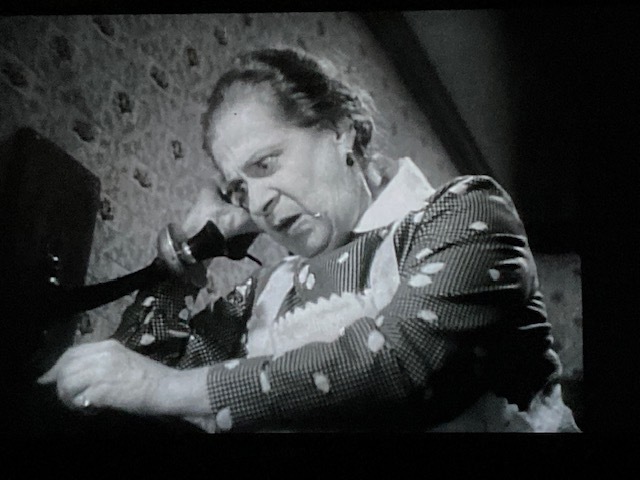
At Dora’s desk, I explained that, for the time being, I’d be operating from Rearden’s, where the phone was in the downstairs hallway and Mrs. Rearden was likely to answer any calls. She took down my contact information. In the back of my mind, I didn’t see Mabel Rearden putting up with answering phone calls or taking messages for my business for very long. One step at a time, I told myself.
As I was leaving, Dora smiled sweetly and told me to call on her for anything I needed or wanted. I let my thoughts on that drift.
When we reached the hall, Waddell asked me to telephone him that evening. Then he hustled away to report for duty. Meanwhile, I returned to the lawyer’s office to formalize our agreement on the Durant.
* * *
Miss Stadleman was removing pages of paper from her typewriter as I entered. “Perfect timing,” she beamed. “I just finished typing your contract for the automobile.” She handed a carbon copy of it to me. “Why don’t you look it over while I take the original in and tell Mr. Birnbaum you’re here.”
I took a seat and carefully read the document. It was straightforward and spelled out exactly what we’d discussed earlier. Within minutes, we’d finalized the contract. I left Abe’s office with my copy, on my way to my first assignment. My intent was to start with relatively minor cases: maybe tracking a bail-jumper such as Wilberforce or working a domestic matter for a local shyster. Little did I know how quickly a “small” investigation could become a much bigger issue.
I left Abe’s office … on my way to my first assignment.
* * *
On the streetcar heading back downtown, I reviewed the notes I’d made from Hertz’s file on his absentee client. My first destination was to be the Babington Warehouse on the river on Greene Street. Before his death a year earlier, old man Hugh Babington had been a mover and shaker around our fair city. Now his widow reigned over their vast holdings.
After transferring trolleys and walking the final distance, I finally stood outside the structure. Frustrated by the trek on foot, I was eager to get my hands on that Durant. Abe Birnbaum had been right: using public transportation to do this job would not work very well.
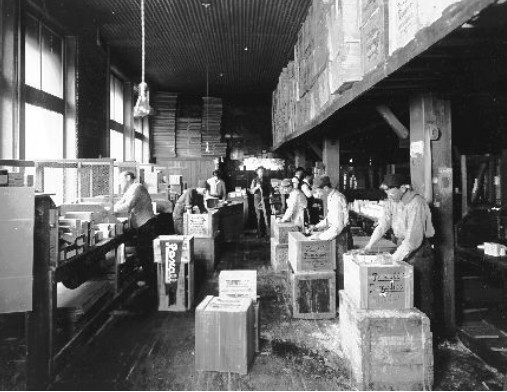
Entering the place, I found men working at various tasks. No one present fit Wilberforce’s description. An older, balding man, who appeared to be in charge, turned to me as I approached.
“What can I do for ya?” he asked.
“I’m looking for a job,” I lied. My guess was my pigeon wasn’t still employed there, but it was worth the bluff to gain any information I could. “A friend of mine works here. But I don’t see him around. Anyway, he told me I should try here.”
“Yeah? Who’s your friend?” he inquired in a friendly manner.
“Name’s Herbert Wilberforce.” Several of the other lugs stopped what they were doing at the sound of his name. A few exchanged looks that concerned me. Nonetheless, the die had been cast.
“Well, sport, you’re a day late and a dollar short. Your pal doesn’t work here anymore, and I don’t have any openings right now. Sorry.”
This supposed lead was getting me nowhere. “It was worth a try,” I said at last. “Thanks all the same.”
I’d just left the building when a sudden uneasiness overtook me. Someone was following me. Before I might look back, the guy yelled, “You a copper?”
As I turned to answer, something smashed down on my head. My knees buckled. A momentary black whirlpool enveloped me as I dropped to the ground. Several sharp kicks to my side brought me back to the reality of my predicament. Through the fog that shrouded my brain, I saw a goon standing over me, shouting things I couldn’t make out. I saw a moderately sloped forehead, heavy brows, and a hawklike nose. It was a puss I’d remember.
As I turned to answer, something smashed down on my head. My knees buckled.
When my grogginess finally wore off, I was alone, lying among the barrels and crates stacked against the storehouse. Using one container, I pulled myself up into a standing position. The back of my noggin and my ribs hurt like hell. When my head cleared enough, I made a mental note to learn the name of my assailant and to pay him a visit.
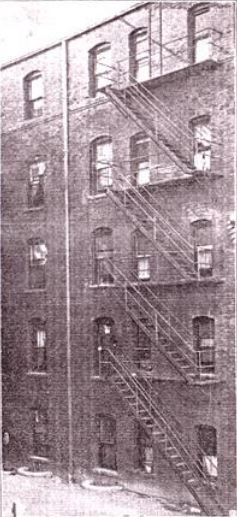
After referring again to my notes, I decided to try getting information at Wilberforce’s last known residence. The address Hertz had provided for him was attached to a flat in the Hosch Apartment Building. It was less than half a dozen blocks south of me on Lexington Avenue. As if I had a choice to do otherwise, I began hoofing it there. The walk in the cold air, I guessed, would clear my head. So, I staggered off.
* * *
By the time I reached the apartment building, my senses were functioning normally again, though my body still ached. My guard was up. I was ready for whatever came my way, including a knock-down-drag-out, if need be.
My destination was an older edifice built on a once highly respectable artery, Lexington Avenue. In recent years, the area had declined, as had the Hosch.
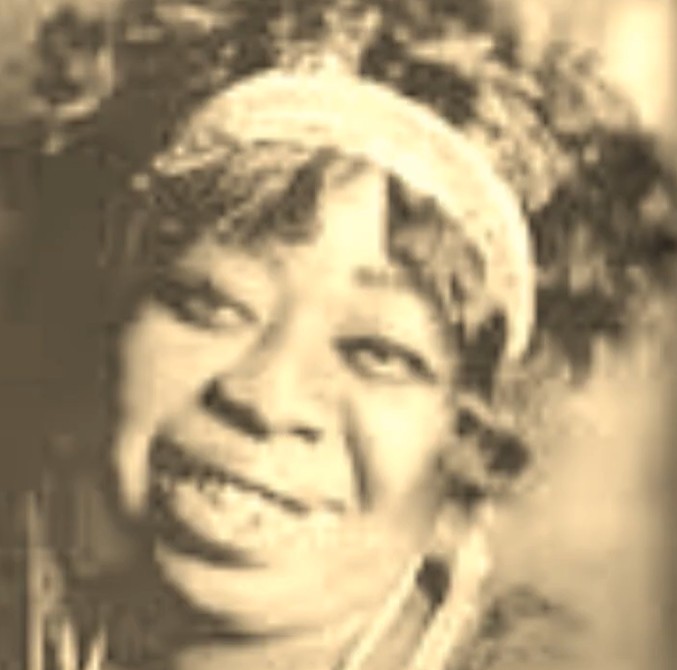
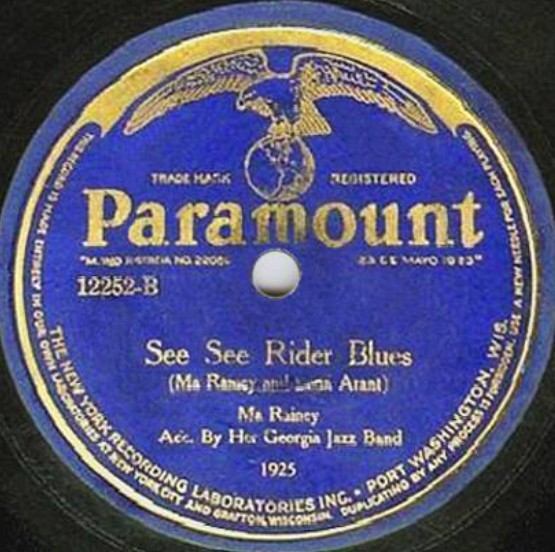
Still pissed off for having fallen victim to a sucker punch, I bypassed the joint’s elevator and forced myself to climb the stairs to the second-floor. At the door of the bedsit purportedly occupied by my target, I knocked. Though no one responded, I thought I heard movement inside. Somewhere along the hallway, someone cranked up a Victrola and played See See Rider Blues, its sultry rhythms being belted out by Ma Rainey.
Just before I banged harder, a whipsaw-lean fella wearing overalls and carrying a toolbox rounded a corner and approached. Beside him, a heavyset woman of approximately the same age waddled splayfooted. She wore a pale green housedress and sported a bucket and a mop.
“Can I help you?” he called out. The pair stopped when they reached me.
“I don’t know. I’m searching for a guy by the name of Herbert Wilberforce. My information says he lives in this apartment.”
He looked askance at the dame, who appeared annoyed at the mention of his moniker. Her forehead knotted beneath her ginger hair. He set his burden down and said, “Yeah, he lives here, but I ain’t seen him in a week or so.” The woman nodded her agreement. “I saw Molly a little while ago on her way out.” At this, the broad scoffed. “I’m Dick Foster, the super of this building. This here’s my wife Selma.”
“Yeah, he lives here, but I ain’t seen him in a week or so.”
I touched the brim of my hat and bobbed my head slightly to her. “Ma’am.” She smiled briefly in return. The documents Hertz shared with me had not mentioned the name. “Molly? Who is Molly?” I asked Mr. Foster.
“She’s Herbert’s wife.” The woman harrumphed. “Selma doesn’t care for them very much. She–”
“They claim to be married by common law, whatever that means!” Mrs. Foster huffed, an arm akimbo. “She still uses her own last name! Living in sin is what I call it! And she goes around with bare legs!” the dame exclaimed with obvious disapproval.
“Now, Selma.” Dick moaned, turning his head to her. Swinging back to me, he observed, “They’re okay people. Both work. Pay their rent on time. Keep quiet. That’s all I ask. Herb has a job somewhere along the river. Molly is a dance hostess at the Rosemont Ballroom. They–”
“She’s a cheap, bottle-blonde, dime-a-dance bimbo!” Selma interposed harshly. “A slut, if you ask me! He ain’t much better!”
Foster cut his wife off. “I dunno where the guy is. But you’ll probably find her at work this evening,” he offered, glancing at his pocket watch.
“Can you describe her to me? I mean beyond the blonde hair?”
“She’s of average height, well-built and attractive. Goes by Molly Rodgers,” Dick elaborated, giving his wife a challenging glare. Selma huffed and looked away disgustedly. The couple had a marriage made in heaven. You know, the place where thunder and lightning come from. “Not much else to tell you,” he finished. “Is Herb in trouble?”
The couple had a marriage made in heaven. You know, the place where thunder and lightning come from.
It was obvious the pair were unaware of either Wilberforce’s background or his most recent run-in with the law. I reckoned nothing more was to be gained here. I needed to depart before these two caught me up in a serious domestic disturbance. “No, nothing such as that. I’m checking the information he put on an application. Thanks. I appreciate your help.” I left before the couple could ask questions.
Developments were coming at me much faster than I might have ever expected. Back on the sidewalk, I contemplated the situation. If Foster hadn’t seen my quarry in a week, staking out the joint would be an exercise in futility. My best bet lay in finding Molly and bird-dogging her. I calculated she’d lead me to her “husband.”
* * *
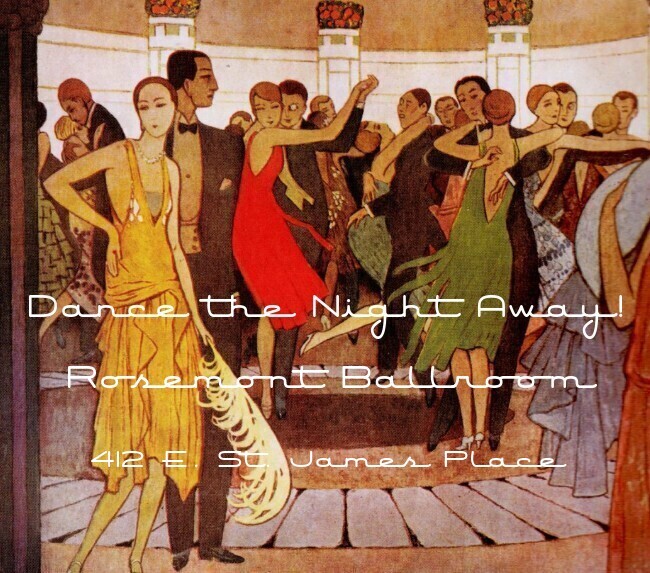
The Rosemont Ballroom was vaguely familiar to me. Located at the corner of St. James Place and Sheffield Street, two blocks north of Broad Street, it had opened years earlier as a classy nightspot for swells to spend evenings dancing their cares away. Early on, the Rosemont touted itself as “the home of refined entertainment.” It had featured what they labeled “society orchestra” groups.
Now it endured as a fallen-arches factory where taxi dancers earned a nickel on every ten-cent dance ticket they received from clodhoppers who paid for the privilege of stepping all over their feet. In its advertisements, the joint continued to portray itself with its sophistication of yesteryear. From what I’d heard, however, the “high-class orchestras” had been replaced by an assortment of the cheapest ensembles the management could get. Come to think of it, “ensemble” might be the wrong term for the musicians there. The word implies a group producing a single effect. That wasn’t always the case, musically speaking. In addition, every so often, the ballroom hosted a dance marathon, but only during the weekdays.
After hustling from the apartment house back to the streetcar line that ran along Greene Street, I caught one for a ride to Market. From there, I transferred for the distance up to Broad Street. At that point, I left the public transportation and hurried the last half dozen blocks to the dance hall on foot.
I went in to the front counter. Despite the fairly vague description of Herbie’s squeeze the Fosters had given me, I was determined to put the double O on her. She was likely my best lead to the whereabouts of her beau.
Despite the fairly vague description of Herbie’s squeeze the Fosters had given me, I was determined to put the double O on her.
The gal at the counter told me Rodgers wasn’t scheduled to start work until six p.m. I glanced at my strap watch. That left me with a little over three hours to kill. It gave me plenty of time to get to Eberhardt’s Garage to check on my Durant. Perhaps I was buying a pig in a poke, as my old man used to say. Caveat emptor, as highbrows like Birnbaum might caution. Not that I could do much about it now, but I needed to find out.
I walked outside under lowering skies and scanned the street in both directions. On the corner of the next block along St. James, I spied a hack sitting at the curb. Now was a good time to part with some of the cabbage Hertz had advanced me.
* * *
In short order, the taxi pulled up to the garage on Heyward Street. After asking the cabbie to wait, I entered the building.
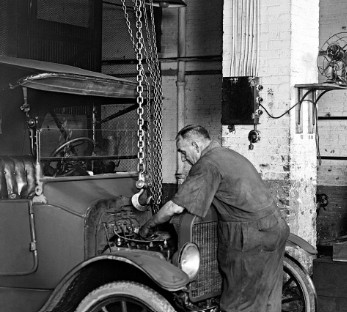
I strolled over to a fellow I thought could be the German expatriate. He was bent over the motor of a flivver. He was muttering under his breath in his native tongue as he labored to remove something from the jalopy’s engine area. Without releasing the grip on his objective, his eyes crawled to me.
“Ja?” he gasped in frustration.
“Guten tag.” When he turned to face me and broke into a full paragraph of German, I held up my hands. Beyond that greeting and the “guten morgen,” “danke,” “sehr gut,” and “auf Wiedersehen” that peppered the conversations between my mother and our neighborhood baker, Herr Hemstrought, during our visits to his shop, my German was kaput. Oh, yeah, that’s another word I knew in the man’s language. Anyway, I went on, “My name’s Gil Tanner. Attorney Abe Birnbaum telephoned you about repairing the Durant for me to pick up later this week.
“Oh, ja, ja!” the man exclaimed. “He call, but I have not start the repair on it yet. Maybe today later.” It took me a second to catch on to what he was saying through his thick accent. My attention was derailed slightly because he dipped snuff, and with every syllable a faint shower of the stuff reached his audience. Stepping back from harm’s way, I made a mental note that some sort of goggles might be in order during future visits.
My attention was derailed slightly because he dipped snuff, and with every syllable a faint shower of the stuff reached his audience.
“That’s swell. Can I see it?”
“Ja. Is in de yard through dat door,” he answered, pointing to an exit at the side of the building. He returned to his task at hand as I ambled to the opening.
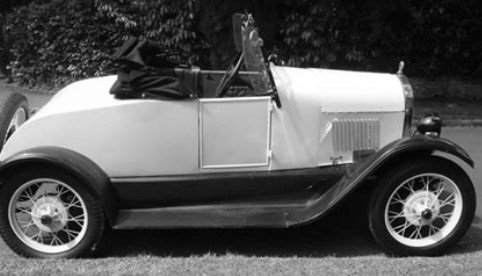
Max apparently used the small lot beside his garage to park heaps waiting for his expertise. Judging from the number, the man’s skill was fairly high in demand. My boiler sat nearby. Upon examination, I found the exterior and interior of the thing were in much better shape than I’d expected after hearing Abe’s description.
I returned to the mechanic, who was still grunting through his effort. The wrench slipped, and his hand slammed into the engine block with sufficient force, I figured, might send most mugs to a receiving hospital. He simply dropped the tool to the ground, shouting, “Oh mein Gott! Sohn einer hündin!” Wiping his hands with a grease-streaked chamois, he calmly turned to me and smiled. “Okay. I fix you now.”
I expressed my gratitude. Before departing, I explained I’d be back to retrieve the machine when he’d finished the repairs and had notified Abe.
* * *
Because of the ambush earlier in the day, I then had the cabbie take me to a hockshop I’d heard my old man mention occasionally. It was usually when he needed drinking money. His observations left me with the impression that the joint, called Monk’s Pawn Shop, wasn’t necessarily on the up-and-up and dealt in dubious items. I bought what I figured I might need for the time being. Although while there, another item struck my fancy. It had to wait until my wallet was flusher.
The hack driver returned me to the Rosemont at the time Molly was to report for work. I paid him and went inside.
The lobby was teeming with merrymakers. A small group of revelers was leaving as I entered. Just as I passed the counter, a female voice called out, “Hey, mister!” When I glanced around, I realized the young skirt I’d spoken with earlier was trying to get my attention. She waved for me to approach.
When I reached her, she asked, “Weren’t you looking for Molly?”
“Yeah. Sure.”
“Well, she walked right past you going out.” She shot me a suspicious scowl. “Say, I thought you were a friend of hers or something.”
“Oh,” I responded sheepishly. “I just didn’t see her in the crowd. You said she was working tonight, right?”
“She is, but a guy came in and asked for her a few minutes ago. He was wearing grubby work clothes. The manager, Mr. Becker, is very particular about the attire our patrons wear,” she enunciated that last part, trying to sound brighter than she might have been. “I didn’t let him inside.”
“I see.”
“They just missed each other. I gave her the message only a second before you came back. So, she’ll be back in a few minutes, I’m sure.”
A notion regarding the sudden appearance of a man leaving a message for Rodgers gnawed at my gut. “Can you tell me what it was?”
“Oh, I’m sorry, but we have a con… a confiden ….” Stymied, she paused. And blushed.
“A confidentiality policy?” I helped.
Her face lit up. “Yeah, that’s it! What you said!”
“I understand ….”
“Vilma.”
“I understand, Vilma.” I gave her the sweetest smile I knew how. “But it’s very important that I speak to her as quickly as possible. It’s concerning her husband.”
“You mean Herbie?”
I passed on asking this savant exactly how many husbands Molly possessed. “Yeah, Herbie.”
“Well, I dunno.”
I retrieved a couple of bucks where she could see them, laid the dough on the counter, and slid it under my mitt toward the girl. Her brow furrowed. She furtively surveyed the area. Then, just as quickly, she placed her hand on mine. When I pulled away, she fisted the cash and put it in a dress pocket.
Her brow furrowed. She furtively surveyed the area.
“He said she needed to meet him in front of the tobacco store down the block as soon as possible. The guy–”
“Which way is this store?”
Vilma pointed, saying, “It’s almost halfway down on this side.”
“Thanks, doll face!”
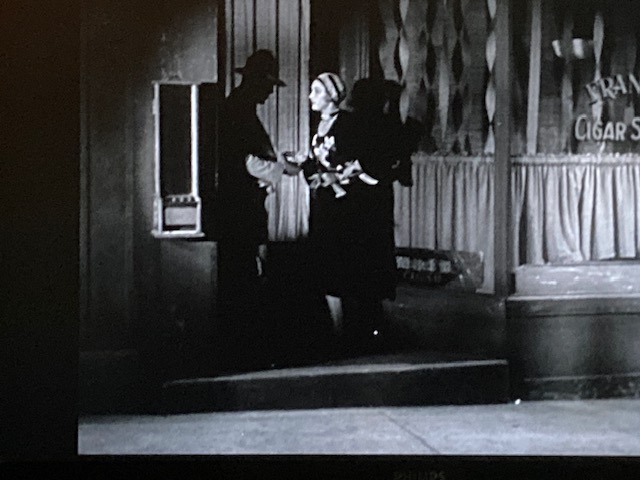
I bolted from the building, crossed the road, and loped in the shop’s direction, trying not to draw attention to myself. I located the place. From my location, I watched a dame speaking with a man hidden in the shadows of the business’s entrance. She matched Molly’s description regarding height and build Mr. Foster had provided. Blonde hair peeked from under the hat she wore. After a short time, she departed, rushing toward the ballroom, scanning her surroundings as she moved.
I hesitated long enough to observe the man she’d met. When he stepped into the light, I recognized my old pal from the warehouse. The pain from the pounding he’d given me still lingered with me. As much as I wanted to return the favor of a beatdown at that moment, it was neither the time nor the place. Shadowing Molly took priority. I followed the woman back to the Rosemont.
With an anxious expression, Rodgers went inside and joined the gaggle of other nickel hoppers. Meanwhile, I adjourned across the street to the darkened embrasure of a clothing store that was closed for the night. There, I smoked, watched, and waited. Around half past midnight, the darb appeared and hailed a hack. Tossing my Chesterfield, I did likewise and possibly coined the phrase “follow that cab.”
…I adjourned across the street to the darkened embrasure of a clothing store that was closed for the night. There, I smoked, watched, and waited.
* * *
The girl led us to an older neighborhood on the south end of town. When Molly’s hack turned a corner and came to a halt in front of a modest bungalow, I had my cabbie stop at the intersection before the turn. A few streetlights stood to one side of the cottage’s road. From our location, I observed my gull’s moves. She scurried from the taxi to the home’s front door and went inside. As soon as her hack had disappeared, I asked my driver to wait and watch for me to reappear somewhere around that house. Before I climbed out, I warned him I might need him in a hurry.
Most of the homes showed darkened windows. As I edged toward the residence and a chilled breeze swept past me, I studied the place. No cars were on the short, rutted driveway. A car parked in front looked harmless enough. The only indication of life was an older guy sitting on a porch swing under a dull entry light two houses farther along. The night owl’s cigarette glowed in the shadows. He didn’t seem to notice me.
I walked slowly up the drive, focused on the silence, alert for the menace implied by the hand-written sign nailed to a tree that ordered everyone to KEEP OUT. At the door, I paused and listened. The front room was dark, but the raised voices of a man and a woman came to me from somewhere inside. I carefully tried the doorknob. It was unlocked. I pushed the thing open as gently as I could, praying the hinges wouldn’t creak. They didn’t.
I crept into the room, which was partially illuminated by a shaft of light coming through an opening at the rear of the structure. It was the setting for the loud discussion I’d heard. Suddenly, the discourse stopped. I froze. My heart made its way to my throat. Despite the cold, a bead of sweat rolled down my spine, while my mouth was as dry as the floor of Death Valley. Then, the pair renewed their palaver. Now, the tone was softer, more intimate. I slalomed through the cheap painted furniture toward the lighted doorway, stopping just outside.
Suddenly, the discourse stopped. I froze. My heart made its way to my throat.
“…and when Jesse came to warn me tonight,” the woman sighed, “I wanted to run to you right then. But we need the money from my job to get to California. And Becker is enough of an ass not to let me leave early. He’d fire me in a heartbeat if I’d left.”
“Yeah, Jesse Hutton’s always been a good friend,” the man agreed. He exhaled audibly. “We’ll blow this burg first thing in the morning. Doug can fence our swag with Wygnanski and send us the money.” After a pause, he breathed, “I can’t live without you, Molly.”
“I love you, Herbie.” Her voice became even steamier. “I’d do anything for you, baby.”
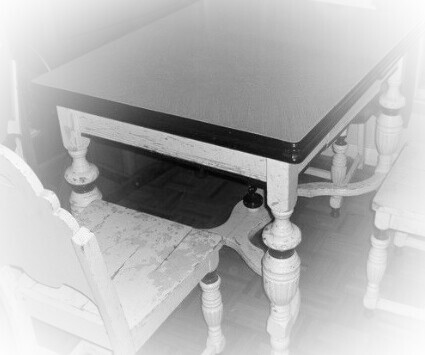
The sounds of smooching, snuggling, and soft moans followed. I stepped to the door just as modesty was about to be outraged. Oblivious to the rest of the world, Herbie had Molly hiked up on an enamel-topped dinette table with her blouse partially unbuttoned and his hand halfway up her dress.
Before I could make my presence known, a hard object was jammed into my back. “Go ahead, buster. Go on in,” a man behind me growled. He shoved me forward with whatever he held against my backbone.
I grudgingly ankled into the kitchen. Startled, Herbie and Molly turned shocked expressions in our direction. She quickly jumped off the table and tried to straighten her clothing. The “dilemma” he faced couldn’t be hidden by simply rearranging his trousers. Dora had been right regarding Hertz’s client: Herbert was a powerfully built individual, with broad shoulders and a thick neck. And gray eyes. The second man, a strong-looking roughneck brandishing a baseball bat, walked around me. His peepers never left me as he joined the disheveled pair.
My captor glanced sideways at Wilberforce and cleared his throat almost apologetically. “Sorry to interrupt, Herbie. But I came out of my bedroom and found this mug in the living room. Don’t know if he’s a peeping Tom or a copper, but I reckoned we needed to find out. And take care of him.” He pointed the bat at my face. “Explain yourself, pally, and you better make it good.” He pounded the fat end of his weapon into an open hand. “I’m pretty handy with this thing.”
Herbie raised a hand to hold my would-be assailant in place. “Thanks,” Wilberforce said, taking a half-step toward me. “Are you the jasper Jesse had a run-in with at the warehouse this morning? What’s your game, bub?” he demanded. I was neither a cop nor a peeping Tom, so I wasn’t inclined to respond. “Look at him, Doug! He wants to be a hero! And to be that hero, he has to put us behind bars for the rest of our lives!”
Angered, the thug with the bat rammed the working end of it hard into my midsection. It knocked the breath out of me momentarily. I struggled to inhale. Although outnumbered by these bullies, I’d taken enough pounding for one day. As Doug drew the cudgel back for a solid swing at me, I grabbed a dinette chair and held it to fend him off. It shielded me from the blow, but was shattered. He lost his grip on the bat. It flew out of his hands.
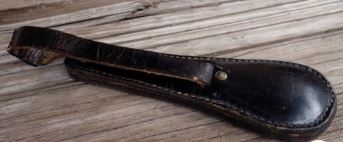
In a flash, he produced and, with a practiced move, opened a large pocketknife. When he jabbed the blade at me, I used the remnants of the chair to knock it away as best I might. The effort threw my attacker off-balance, but also brought back the pain of my aching ribs suddenly. He fell to the floor with the knife still in his grip. In that split second, I pulled a blackjack from a pocket and lunged in Doug’s direction. I stomped on his hand holding the weapon and simultaneously waylaid the stunned bruiser with a hard strike to the side of his head. He groaned, but didn’t stir.
In a flash, he produced and, with a practiced move, opened a large pocketknife.
My sudden action had caught Herbie by surprise. Luckily, he stood briefly slack-jawed as I dealt with his crony. Gathering his wits, he charged me. I sidestepped him and knocked him into oblivion, too. I looked at the sap I’d bought earlier in the day at Monk’s. It had been an opportune investment. From that point on, I’d refer to it as my equalizer.
Meanwhile, Molly had filled the air with screams. I turned to her. As quickly as her shrieks had started, they stopped. The come-hither look she’d had for her boyfriend when I’d entered the picture had rapidly dissipated. Her hand was at her mouth. She was biting a knuckle. Dropping her arm, she looked at me more closely, then silently mouthed something. Without hearing it, I knew it to be threatening. Then Rodgers slowly smiled. The grin grew into an evil laugh, which came through her nose. It made a rattling, snorting kind of sound — a disconcerting noise.
I approached Doug as he opened his beady eyes and gave him another tap to his melon to make sure he stayed out of my way for a while. After kicking the knife beyond his reach, I turned. Rodgers had retrieved the bat. She drew it back as if to swing at me.
Squaring up to her, I hoisted myself up to the last inch of my six-foot, two-hundred-pound frame. “Don’t mess with me. Molly. I’ll beat you to a pulp and lock you in a trunk. Then I’ll pretend to help people look for you when you’re reported missing.” She released the truncheon and dropped dejectedly onto a remaining dinette chair.
I grabbed the bat, walked to the front room, and tossed the club out of harm’s way. Then, I ripped the cords from every window curtain. Returning to the kitchen, I tied the girl’s hands behind her back, then her feet.
As I secured Molly, I told her, “I’m not a cop. Your jellybean there missed his court date yesterday morning. I’ve been hired to find him and bring him in.” She bit her lower lip and whimpered.
Next, I hogtied Doug, making certain he couldn’t free himself. I dragged him over to a small closet off the kitchen, which served as a pantry. When it was Molly’s turn, she begged me to let her go. I ignored her pleas and carried her to join Doug, lowering her on top of him. Before I closed the door, I assured her I’d pass along her whereabouts to someone who could “rescue” her.
The door had no lock on it, so I propped a chair under the knob to hold it shut. As an added precaution, I tied a length of the line to the doorknob, stretched it taught, and anchored the other end securely to the nearby stove. The measures would keep anyone inside for a good while, even if they freed themselves from their bonds.
I used the last of the cord and bound Herbie’s hands behind his back for the ride downtown. Something he’d said to his girlfriend piqued my interest. I prowled the house’s two bedrooms. Both appeared to contain objects taken from a series of burglaries: jewelry, cash, silver serving pieces and cutlery, even a couple of paintings.
I returned to the subject of my search. Hauling the still-unconscious burglar to his feet, I flung him over my shoulder like a sack of potatoes and trudged out of the house. Wilberforce weighed a ton! At one point, the rib cage pain I experienced during the effort nearly black caused me to black out.
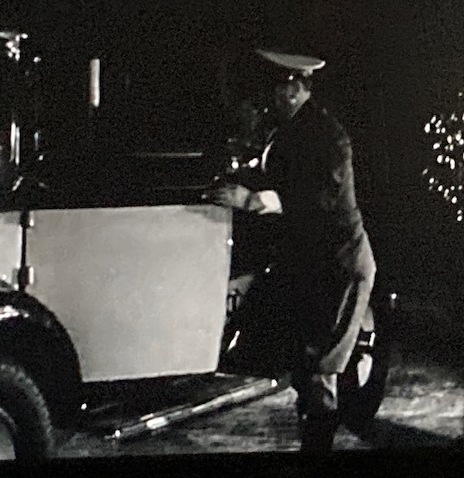
On the front porch, I waved to get the cabbie’s attention. Luckily, he was on his toes. The operator cranked the hack immediately and drove to me. He parked the vehicle and hopped out. Opening a rear door, he laughed, “I thought you got lost.”
“I really appreciate your waiting.”
“Hey, if you need a friend, you can count on me, brother. Besides, you’ve had my curiosity aroused since you jumped into my crate.” In the tepid light, I saw my wheelman regard me with bewildered amusement.
“Hey, if you need a friend, you can count on me, brother. Besides, you’ve had my curiosity aroused since you jumped into my crate.”
“Thanks again…” I groaned as I shoved Wilberforce onto the back floorboard.
“Mel. Mel Philpot.”
“Thanks, Mel. I’m Gil Tanner.”
He nodded toward my bail jumper. “Say, is he all right? I mean, he’s not gonna croak in my cab, is he?”
“Nah. He’s just going to have one hell of a headache when he wakes up.”
* * *
The ride into the city was uneventful. Much to my relief, Herbie regained consciousness, meaning I didn’t have to carry him. I set fire to fags for him and me and offered one to the cabbie. Because his hands were tied, I helped the yegg with his cigarette. We smoked in silence.
Mel dropped us in front of the lockup, which was next to police headquarters. Before he drove away, he gave me one of his cards and encouraged me to call him anytime I needed a taxi. It reminded me I had to get business cards printed soon.
Inside, I delivered Wilberforce to the jail’s desk sergeant, a big, older guy whose muscle hid under a layer of fat, like a grizzly bear. After a contentious discussion regarding the circumstances of our presence and a search for the arrest warrant in question, the law took charge of my captive.
At that point, I decided to share my good fortune with my friend. Using the pay station in the joint’s lobby, I called Waddell. It was in the early morning hours, and I hated to disturb him. But I wanted to give him the scoop on Wilberforce’s activities, his apparent running mate in the burglaries, and the location of at least part of the loot. I filled him in on everything. He took the timing of my phone call fine after he heard the details of what I’d learned. He expressed his gratitude for the information. Rob informed me he was going to get dressed and proceed to Herbie’s bungalow to collect Doug and their plunder.
I pegged the receiver, lit a gasper, and walked out into the frosty morning. The gray pre-dawn sky pressed down on the city. Heavy moisture in the air made it feel like snow again.
Despite the continuing ache in my ribcage and the tender knot on the back of my head, I felt pretty damned good. My first gig as a private investigator had turned out swell. I knew my success had more to do with luck and fortuitous circumstances than my skill as a PI at this juncture. But with the few lessons I’d learned along the way and the new friends I’d recently made, yeah, I was ready to embark on a new phase of my life.
I knew my success had more to do with luck and fortuitous circumstances than my skill as a PI at this juncture.
I pondered what the rest of my day held. Later that morning, I intended to report to Murray Hertz his client was in the hoosegow, collect my fee, and see if he had any other work for me. I’d wait for the call from Abe that my car was ready, then follow up with him on that job he’d hinted at. At some point, I planned on shopping for a new suit and having business cards printed.
But for now, my focus was on getting a few hours’ sleep. I tossed my half-smoked butt, thinking of the visit I intended to pay to Jesse Hutton and repay what I owed him. ©