
Late Fall, 1932
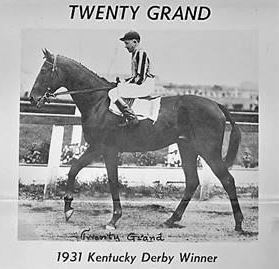
My recent luck with the bangtails had dropped off faster than the stock market in ’29. To tell the truth, the last solid winner I’d picked was in the Kentucky Derby the year before. Oh, there’d been a “place” here or “show” there but with not much cash coming in. And those picks actually were supposed to win their races. But my gut told me to bet them in the money, just not in the winner’s circle. Anyway, when the events of this case began unfolding, I was at the desk in my agency, going over the Daily Racing Form. I was trying to find a nag that didn’t need a taxicab to finish a sprint.
There came a rap at the office door. Yelling for whoever knocked to come on in, I slid the racing form into the belly drawer and tried to look like a busy private detective. The door opened and a familiar, unwelcomed face appeared. After tossing the pencil I’d grabbed in my pantomime of Philo Vance, I demanded harshly, “What do you want, Zier?”
* * *
Aubrey Zier was a young newshawk for a local broadsheet. Before being assigned to his latest beat, he freelanced a story here and there. His reporting showed a smart-assed attitude to the misfortunes of others, in particular, and the world in general. For example, he’d written a cavalier article under the headline, “Carnival performer killed in a freak accident.” The story recounted a “bearded lady” being accidentally crushed by a show wagon. He’d thought using the term “freak” in the heading hilarious. I figured him for a jerk.
His reporting showed a smart-assed attitude to the misfortunes of others, in particular, and the world in general.
Currently, he worked what the rag’s editor called “the police beat.” The cops could start beating him anytime now. Pun intended. If you haven’t gathered yet, I didn’t like the mug. I had my reasons.
Zier hadn’t been on the newspaper for long several years earlier when a woman I’d done work for ran afoul of the law. The lady in question had been in what the alienists euphemistically termed an abusive relationship. Frankly stated, her spouse had beaten the hell out of her for years. Outside the home, the husband was a pillar of the community. Instead, they should have pilloried him for his treatment of his wife. Despite my objections over the time we’d known each other, she took the abuse. Later, she explained to me it’s what she understood to be normal in a marriage. Look, I don’t always get my customers thought process, even if they have one. I merely take their money and do whatever they need or want doing. Within reason, of course.
Now, about that client’s case. When Wall Street laid an egg, her husband lost a minor fortune. His abusiveness exploded. In the early months of 1930, he died of lead poisoning. Which is to say, when she’d had enough, she gave him lead poisoning. From a .38 caliber revolver. All six doses. During the ensuing police investigation, Zier raked her over the coals in reports on the death.
…she gave him lead poisoning. From a .38 caliber revolver. All six doses.
Without knowing the facts, Zier had tried and convicted the woman in his newspaper. Try as I might, I couldn’t get fair treatment for her in the news articles. “Sudden death sells newspapers, shamus,” he’d haughtily proclaimed when I confronted him. “When one spouse metes out death to another, Tanner, it sells even more.” Fortunately, I dug up plenty of information regarding the husband’s mistreatment of the lady. After a quick trial, where an extremely capable mouthpiece stood for the defense, the jury found the woman not guilty. Afterward, one juror said the court system should have a verdict of “needed killing” for such cases. Zier was unrepentant over how he’d treated the lady, writing the acquittal was a “gross miscarriage of justice.”
Then, a year earlier, we had a run-in over his article on another of my clients. The law arrested Geno Cappacino, son of Mama Cappacino, owner-operator of Cappacino’s Restaurant, for stealing the car of a local politician. I’d long been a big fan of Mama’s cooking. She was almost family to me. Distraught, Mama came to me for help. Geno had sworn his innocence to his mother. He wouldn’t tell her where he’d been when the heap disappeared, but she believed in his innocence. I promised Mama I’d snoop around for what I could learn. Because I knew Geno was no angel, I entered the case slightly skeptical.

My digging around soon bore fruit. First, I learned the coppers had based Geno’s charge on the word of two actual juvenile miscreants. One, named Johnny Beverly, I knew loved to joyride in other folks’ crates. In addition, I determined Geno and a girl from the neighborhood had been together when the theft occurred. That’s “together” in the Biblical sense. Thus, his hesitancy to explain where he’d been.
But before the ink dried on the arrest report, an article by Zier had Geno halfway up the river on the charge. By this time, I didn’t even try to reason with the newshound. I finally got the half-assed police detective in charge of the investigation to review my evidence, and he dropped the charge. Again, the reporter made no hint of an apology.
Zier had a cavalier posture toward those he reported on, similar to the newspaper’s owner in the moving picture from the year before, Five Star Final. Over time, Aubrey had given me a distinct distaste for news ferrets. Don’t get me wrong, I believe in freedom of the press. But, as with the other freedoms we have in this magnificent country, it comes with responsibilities. Applied to the newspapers, fairness, and accuracy are at the top of the list in my book.
* * *
The smallish reporter pushed through the door into the office. He had his fedora cocked to one side in its typical jaunty fashion, with his “Press” credentials stuck prominently in the hat band. I’d seen coppers wear their badges with less pride than he had for his press card. As usual, there was a pencil propped over one ear and an unlit cigarette behind the other. Unlike his regular arrogant expression, his mug appeared tense and weary. A frown creased his forehead. Zier walked slowly to my desk and stayed standing. He appeared as unhappy to be there as I was to see him. Aubrey removed his hat and spun it nervously in his hands.
Without looking him in the eyes, I hissed, “I didn’t see any other buzzards wheeling overhead. Whaddya want?”
His voice cracked as he muttered, “I want to hire you, Mr. Tanner.” Only now did he get formal with the “mister.” Before I responded, he continued. “You’re a fierce fighter for your clients. But, most of all, you’re a private investigator with a reputation for being discreet.”
“You’re a fierce fighter for your clients.”
I chuckled and applied as much sarcasm as I could muster. “You mugs always talk honey when you want something such as a story or a favor and save the poison for the print.”
With a straight, high-bridged nose and thin lips, his puss reflected a weakness. It belied the grim determination I’d seen when he got a bit between his teeth. “Look, we’ve had our differences before, but I always strive for the truth. Now, I need your help.” A hint of his conceit still found its way through his words.
Angered, I stood abruptly. My desk chair slammed against the filing cabinet behind me. He flinched faintly. I let my antagonism slide before I spoke. “Let’s get one thing straight, Zier. My past dustups with you weren’t for my benefit or on my behalf. They were an attempt to achieve fairness for my clients. An evenhandedness which never surfaced. Your claimed ‘interest in the truth’ is good only up to a point. You wouldn’t know the truth if it bit you in the ass!” I looked at the little man. His body size seemed more suitable for an average jockey. It made him an interesting choice for a reporter covering the crime beat where he might come up against more than a few sizable thugs.
His face got vacant. He sputtered, “I’m sorry for our past misunderstandings.” He tried a faint smiled that died on his lips. “I recognize the cops have their job. And private gumshoes like you do, too, I guess. But I’ve got a job, too. I just-”
“Save that crap for the chumps who read your rag! Before I throw you out on your ass, Zier, let me say one more thing. Understand, when you write your article, smearing some poor slob, there are two sides to the story. Possibly it’s too much to ask for fairness from you mudslingers.” I eased back into my desk chair. “Now get out! Go back to your Linotype machine!”
Uninvited, the newsman dropped into a chair opposite me. “I’m being blackmailed and really need help.”
I pulled the racing form out of the drawer. Zier wasn’t anybody I needed to impress. I went back to looking over the bangtails in the afternoon’s races. “Blackmail?” I snorted without looking up. “Take it to headquarters!”
“I can’t.” After a momentary pause, he added, “I truly cannot. It’s part of my problem. That’s why I’ve come to you. It’s not something I want them to handle. But I need your word you’ll hold what we discuss in the strictest confidentiality.”
I shot him an up-from-under look. His sad eyes filled with tears. Now, I’m not a sap who normally gets emotional at tears, even when a frail looks that way. No, this was more curiosity than anything. Laying the racing sheet aside, I offered, “Okay, Zier, I’ll hear you out. And I assure you whatever we say here stays within these four walls. Why are you being blackmailed? What’s this person got on you?”
His Adam’s apple bobbed above his loosened tie as he swallowed hard at the question. He began to sweat. It started at his unruly black hairline. I waited. In a weird way this was sort of fun, given our history. “I’d rather not say. What I’m being threatened over isn’t important, is it?”
“As you said, Zier, I have a job to do if you hire me. Unlike you, I can’t do mine well without the correct information.” Anger swept across Zier’s face and he rose rapidly. I held up a hand to stop him. “Sit, newsie. What you’re being shaken down for could tell me whether a mob’s behind it, just trying to pick up petty cash or get you in their pocket. If it’s an individual, the information might help lead to him or her. So, yeah, it matters. The subject of the extortion scheme might tell me something of how they came into the information and help locate them.”
He sat silent for a bit. The ball was in his court. I waited. “It’s … it’s very personal,” he confided, at last.
Leaning toward him, I said evenly, “It usually is, Aubrey. If the subject of a blackmail is public knowledge, the goon threatening someone wouldn’t have any bulge over their mark.” I leaned back in my chair and let him digest the comment.
Zier stared at the tops of his shoes, his chin buried in the lapels of his suit coat. He jerked his head as if he were uncertain or unhappy about what he was getting ready to say. He mumbled something under his breath and garbled his words. “What? I couldn’t hear you.”
He looked up at me with pitiful, swimming eyes. “I’m different from the others. I like men, Mr. Tanner.”
“You mean–?”
“I mean I’m homosexual.” He gulped audibly, but his unwavering eyes never left mine. “Whoever this is …, they’ve found out somehow. They want money to keep quiet. You can see why I can’t go to the police. It’d cost me my job, my career, everything, if it became known. I desperately need you to locate and stop this person and put an end to it.”
His revelation stunned me. Suddenly, the “fun” had gone from my moment. He was becoming more upset. To calm him, I took a gasper from the deck on the desk and offered him one. He waved mine off and pulled one from a pack in his coat pocket. The move made me wonder what purpose the cigarette behind his ear had. I guessed he was too nervous to remember it being there. “Then, they’ve contacted you making demands? How–?”
“Whoever they are, they sent this to me at the paper.” He held out an envelope.
As he held it out to me, I saw it was addressed to him at the newspaper offices. The newspaper’s mail room staff and Aubrey had probably handled the thing so much by that time, fingerprinting it’d serve no purpose. Although I might take it to Detective Waddell at headquarters for testing, he’d want an explanation for the request and from whom it came. So, it’d embroil the coppers. Zier didn’t want them involved. I understood his concern. Among other things, he had to deal with them working his police beat rounds. Plus, Oscar Wilde aside, our part of the world wasn’t ready for this type of revelation about a journalist they read every morning with their cornflakes and coffee. Even the reform-minded editors on his paper wouldn’t take kindly to the news of Zier’s penchants.
I took the envelope. Inside, a block-printed letter told Zier the sender knew of his indulgences and had proof. The message further warned Zier not to contact or involve the law. In conclusion, the author promised a later communication to arrange for a money payment. The amount was unspecified. Nothing noteworthy in the printing caught my eye. The paper and envelope were of a common variety, same as the stuff I bought at the S. S. Kresge store over on Broad Street.
The message further warned Zier not to contact or involve the law.
“When did you get this?”
“Two days ago.” Zier shifted in his chair uncomfortably. “I’ve worried myself sick wondering what to do. Finally, a friend, one who shall remain nameless, said to come see you.”
Though who recommended me piqued my curiosity, I moved on. “Fair enough. I have to ask you some personal questions.” He nodded. “Do you have any idea who this might be? Any enemies who know details of your personal life?” Now he shook his head vigorously. “As unlikely as it might be under the circumstances, any old lover who might have a grudge?” Continued head waggling followed the question. “Any further contact from the blackmailer?”
“No. Nothing since the first time,” he responded, jerking his chin toward the thing in my hand. His kisser brightened faintly. “Do you think it means this is some kind of horrible joke or may it be the end of it?”
“I’ll not lie to you, Aubrey. I don’t think so. This is a serious matter, a grave threat to joke about.” I sat back in the chair and rubbed my chin in thought. “No, I think he’ll contact you again. But, if I’m hired, you need to let me know at once when he does. And no payoffs unless I’m nearby. Understood? If you pay this bullyboy, you’ll be entering a lifelong relationship with him. Or her.”
“Yes, Mr. Tanner. I understand.” After a pause, he continued, “So I’ll contact you here if there’s any more contact. I need to pay you a retainer, I guess.” He pulled a billfold from a pocket inside his coat and slid three crisp C-notes across the desk. It’d been so long since I’d seen one, I wasn’t even sure they still printed them. Benjamin Franklin’s mug never looked so handsome. “Is this enough?”
“First, Aubrey, call me Gil. ‘Mr. Tanner’ was my old man.” He smiled weakly. “Second, if there’s no answer here, call me at Harry’s Paradise Tavern or on the blower down the hall from my apartment.” I jotted the three numbers on a slip of paper and handed it to him. Then I picked up the dough and folded it into a pocket. “And, yeah, this is more than enough. In fact, it may be too much.”
“We’ll reconcile everything after you finish the job,” he offered, rising from the chair. “What should I do in the meantime?”
“Just go on with your normal routine. Act as if nothing has happened. But get in touch with me when the person makes contact again. And don’t tell anybody you hired me. That means nobody. Get me?”
We shook hands across the desk. I’m uncertain what I expected. But his grip was firm and sure. “I just want to bid this entire thing ‘good night’.” The newshound got a quizzical glance from me. He explained: when an editor releases a reporter from duty for the day, he gets a “goodnight” from the editor. It marked the workday’s end.
After he left, I spent a while thinking over the facts of the case so far as I knew them. Now, what I’m going to say may not sit well with a few folks. But it’s I how feel. Zier’s penchants were not my own, stood against the teachings of my mother, and were repugnant to me. The only strong feeling that bubbles up in me when it comes to what consenting adults do to one another behind closed doors is indifference. It’s their damned business. I said consenting and adults. There it is. My feelings regarding the carryings-on of Zier and his ilk had no bearing on the job I’d do. I figured whoever was doing this knew my client or somehow was well aware of his indulgences. This didn’t appear to be the work of a complete stranger. Regardless, the only thing I had to do now was sit and wait. Any inquiries at this stage, I felt, might lead to unwanted questions and /or reveal more information than Aubrey wanted known.
* * *
Several days slipped by with no word from the news ferret. We passed on the street once during that time. Aubrey nodded and continued on his way. Two days later, I found a telephone message from my client waiting when I strolled into Harry’s tavern just before lunchtime. The barkeep had taken a message asking me to telephone Zier at the paper as soon as possible. He moved the telephone from a back shelf across to the counter where I could reach it. I dialed the number for his newspaper.
Aubrey came on the line almost immediately after I asked for him. In somewhat cryptic terms, he advised the extortionist had contacted him by telephone at the paper’s city room. He asked whether we could get together in a half hour. I agreed to meet him at a dive called The Press Room, a newshawk watering hole right around from Zier’s offices. In fact, it was near every city broadsheet’s offices and, so, haunted primarily by a newspaper crowd. In the joint, the latest as-yet unpublished or unpublishable news stories mixed freely with the heavy pall of tobacco smoke and alcohol. I’d been in the saloon once a while back, tracking a lead on an inquiry, but didn’t quite recall its layout. Its floor plan was significant to me, because I’d be on the lookout for anyone who might be watching or tailing Aubrey.
In the joint, the latest as-yet unpublished or unpublishable news stories mixed freely with the heavy pall of tobacco smoke and alcohol.
* * *
Later, the little fella waited on the sidewalk as I approached. He nodded nervously and descended the steps to the gin mill’s below-street-level entrance. A heavy, gray cloud of smoke drifted through the joint. With its density, I wasn’t sure whether I had to light my own coffin nails or just breathe deeply.
The bar itself ran along a wall to one side. A man in a clean apron stood behind the counter, absentmindedly wiping glasses. Besides newspaper folks in various stages of sobriety, the tables, occupying the center of the floor, held a varied assortment of bottles of alcoholic libation, ashtrays, and playing cards. High-backed booths ran the length of the wall opposite the bar. We stopped long enough to buy two of cups of coffee. Then, Zier led the way to a booth at the back of the barroom. I took my usual place wherever I went, a seat facing the door.
My companion looked around anxiously. He told me in low tones the fella, who’d phoned him at the newspaper, demanded one thousand dollars for his silence. He told Zier to get the payoff together. The villain told Aubrey he’d receive another call later to set up delivery of the cash. The guy ended with a warning against his victim involving the law. “What’ll I do, Gil?”
The amount being demanded didn’t seem to faze Aubrey. I inquired, “Did you recognize the voice? Did it ring any bells as far as an accent or anything? Any background noise which might give us a clue?” My client replied in the negative to my questions. “Well, you get the cash and wait for the next telephone call. My hope is you’ll never have to pay him. Where we go from here remains a mystery until the next contact.” After a few more minutes’ discussion, we left and proceeded our separate ways.
* * *
The next morning, I sat in the Tanner Detective Agency, chewing the fat with Detective Rob Waddell, when my phone rang. At the other end of the wire a frantic Aubrey Zier jabbered inaudibly. I put my hand over the phone and asked Rob if we could take up our debate later. We’d been discussing the implications of Hoover’s recent statement on scrapping Prohibition. The detective smiled, grabbed his fedora, and left for the station house.
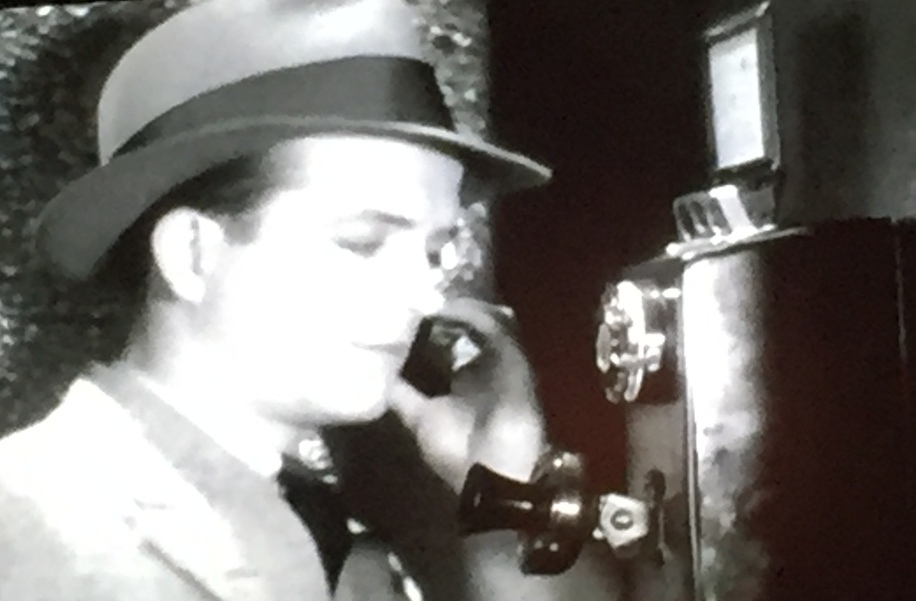
I returned to the telephone and an agitated client. Aubrey advised he was in a pay station in his building’s lobby, because he didn’t want to talk in the middle of the newspaper’s city room. He had received another call from his blackmailer. Zier wanted to meet again at The Press Room. I agreed, cradled the phone, grabbed my hat from the office rack, and headed out.
At the saloon, we got coffee and took the same booth. Zier was wide-eyed with panic. My attempts to calm him proved unsuccessful. He leaned across the table and repeated the man’s instructions. The caller had directed him to drop the one thousand dollars, wrapped in a paper bag, into a trash can in the park covering Middleton Square. Aubrey had been told the can in question sat next to a bench on the northeast corner. He was to deliver at precisely two forty-five that afternoon. His blackmailer had ended the conversation with another warning not to involve the coppers in any way, or else. When the little man raised his coffee cup to his mouth, his hands trembled. After a sip, he questioned, “How can we stop this guy from telling what he knows, even if I pay him?”
I didn’t have an honest answer at the moment. “Just relax. We’ll figure it out once we lay eyes on the goon.” To reassure Aubrey, I added, “I’ll take care of it.” The hard look on his face showed he needed more convincing. To move on, I inquired, “What about the payoff money?”
Zier explained he’d already emptied his bank account, gone to his editor and gotten an advance, and wrapped the geetus. As he spoke, he pulled one lapel of his coat aside, revealing a tied paper bag in the inside pocket.
After a brief discussion, we determined I’d go to Middleton Square early, so we didn’t show up at the same time. After positioning myself inconspicuously nearby with a newspaper, I’d watch for the culprit to retrieve the hush money. Despite Aubrey’s uncertainty with the idea, he finally accepted my suggestion. Instead of collaring the thug then and there, I’d follow him in the event there were more than one person involved in the shakedown. The collection guy could lead us to any accomplices he might have. If there were no one else involved, I explained, we’d still have our man. In addition, I advised Zier to get out of the park as soon as he’d dropped the payoff. Though run-of-the-mill extortionists rarely go in for rough stuff, I wanted him out of harm’s way if there were to be any gunplay. With that, he readily concurred.
I wanted him out of harm’s way if there were to be any gunplay.
As we stood to leave, I looked at my strap watch. It was twelve twenty-five. I told Aubrey I was going back to the office to pick something up before heading to the square. I was already packing heat, but I’d decided my sap might come in handy on this caper. Zier said he was heading to his office to try to finish a story he was working on for the morning edition. He confirmed he’d see me later.
* * *
Two-fifteen that afternoon found me sitting on a bench under a large elm growing in Middleton Square. The park was one square block of trees, pathways and benches with a fountain in the center. The city fathers set the grounds aside ages ago. In pleasant weather, the place was a favorite noontime retreat for workers from the office buildings and businesses, including a well-to-do apartment building, which surrounded it. The statue of a Civil War hero stood at the primary entrance.
I buried my nose in a local broadsheet and chain-smoked Chesterfields but maintained an unobstructed view of the trash can where Zier was to deposit the cash. Every time someone scuttled through the fallen leaves toward the bench and trash can, my heart rate quickened faintly. Sometimes you can’t predict how the events of a job will turn.
Just before two forty-five, a lug approached the receptacle and started rifling through it. I saw he was only a derelict rooting around for something worthwhile. Finding nothing, he moved away. The drop-off time came and went. There was no sign of Aubrey. And no one else went near the trash can.
Suddenly, I saw Zier running on a path in my direction. I stood as the breathless man reached me. “Where the hell have you been, Aubrey? What’s happening?”
After a second to catch his breath, he explained, “Just as I was ready to leave the office, I got a telephone call from the guy. He advised me there’d been a change of plans. I was to deliver his money to the front desk of the Claremont Hotel instead.” The hotel was across Middleton Boulevard from the park at its south end. Zier stopped to take in another deep breath and dropped onto the bench, exhausted. I joined him. He continued, “Then, when I got to the registration desk, a message was waiting for me. I was to go to the newsstand in the lobby of the Equitable Building and leave the payoff with the old man running the stall. Then I was to leave. By that time, I had only five minutes to get there and no time to find you.”
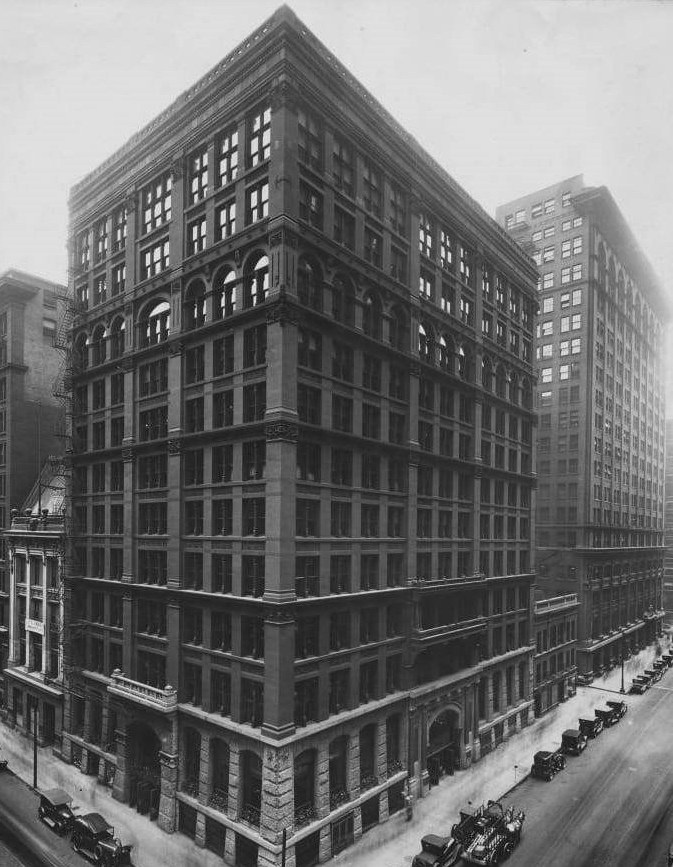
The high-rise Equitable Building sat kitty-cornered from the Claremont on the intersection of Middleton Boulevard and Concord Street. It housed a variety of businesses and was one of the more bustling structures in the city. Our man was testing Aubrey to determine whether he was being tailed by the law. All the while my raggedy ass was on the far end of God’s half acre. Okay, maybe two-and-a-half acres. Regardless, we’d missed a golden opportunity.
Aubrey broke my reverie by tugging on my coat sleeve. Breathing normally at last, he exclaimed, “But I now have the guy’s name and where he works!”
“What?”
“Yeah,” he grinned, “the guy told me to drop the dough off for a man named Paul Korner!” Before I could get a word in, Zier explained further. “After I left the bag with the newsstand guy, I walked outside and stood behind a column, watching. I could see the lobby and the entrance. Pretty soon, a guy got off the elevator and ambled to the newsstand. He spoke to the old attendant for a couple of seconds. Then the old fella gave Korner the package. Korner then hurriedly got on an elevator and disappeared. I couldn’t follow without him seeing me. Now we just have to discover where in the building this Paul Korner works. We’ve got him!”
My young client’s naivete was showing. For someone who’d covered the harsh reality of the police beat for several years, his level of innocence was surprising. Suddenly, I realized where I’d heard the name Paul Korner before, though pronounced differently. To confirm my suspicions, I requested Aubrey describe the fellow he’d seen.
“Well, he was a little taller than you and your age. Maybe older, but not by much. The jerk wore a nice suit and a gray fedora. The suit appeared to be of decent quality. He had a full beard and mustache. He had the hat pulled low over his eyes, so I couldn’t tell much about his features otherwise.” When I didn’t move immediately, Aubrey prodded, “Don’t we need to move on to the Equitable Building to find him?”
“That’ll come under the headline of a wasted effort, my friend.”
“But–!”
“But nothing!” I was getting frustrated by the whole situation but lowered my tone. My client fell against the bench seat back and threw his arms out in frustration. I pushed on with my thoughts. “Aubrey, did it ever occur to you the guy you saw doesn’t work in or have any connection with the building?” Zier let go an exasperated exhale. “Look, he’d have no problem going to an upper floor, possibly the mezzanine overlooking the lobby, ahead of time and waiting. No doubt, the blackmailer was counting on your fear putting you there and making the drop-off at two fifty sharp.
“In any case, he could watch you from the mezzanine, undetected in the crowd. A few minutes after you leave, he comes down in an elevator and snatches the cash. He gets back on the elevator, goes up as far as he feels he needs to, and gets off. After waiting a few minutes, he departs. Possibly by the front entrance, maybe by a side or back door. Hell, I’ve run the same gambit occasionally.” The air had gone out of him. “And forget the beard and mustache. Probably phonies. He likely ditched them in a men’s room upstairs. This goon’s no dummy. No, my hunch is we won’t find him anywhere in the building. The thing was a con, a setup. For that matter, you don’t know for sure the lug you saw is the person behind the shakedown.”
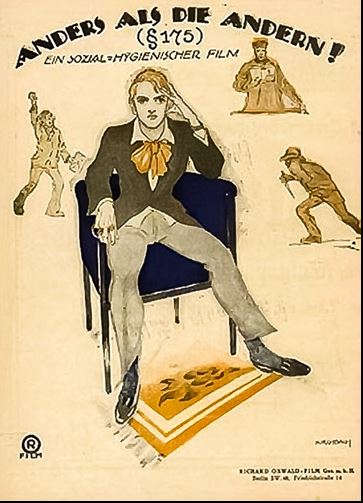
I paused for a minute to let Zier, who was shaking his head disgustedly, think over what I’d just told him. It likewise gave me a second to formulate what I had to tell him next. “I’m not certain exactly how to say this to you, but the name he gave you is part of the con.” Zier shot me a stunned look. “First, no blackmailer will give you correct his name. Think it over, Aubrey. Second, Paul Kӧrner was the name of a character played by an actor named Conrad Veidt in a German movie a dozen or so years ago. Except in the movie, the last name had the German pronunciation of Kӧrner with an umlaut over the letter O. He–”
Paul Kӧrner was the name of a character played by an actor named Conrad Veidt in a German movie a dozen or so years ago.
“But it has to be a coincidence, Gil! Don’t you think?”
I lowered my voice further. “Aubrey, Veidt was playing a musician who falls in love with another male musician. In other words, a homosexual. In the movie, someone blackmails the men. Don’t you see this entire thing is a frame by somebody with a keen, warped mind. The name was a smart-assed play by the shake down artist.” Zier tossed a funny look. I read his thoughts.
“No,” I responded to them, shaking my head, “I never saw the movie. A while back, I got tangled up with a dish who’d lived in Europe for a time after the war. She’d seen the thing and was gaga over this Veidt fella. The dame bumped gums about him and the flicker all the time. She thought it made her sound more sophisticated. After a while, she sounded like a boob. Eventually, I gave her the gate.” As I’d spoken, the reporter’s eyes watered. “Buck up, buster. I’ll talk with the newsstand man and with the desk clerk at the Claremont to learn whether they can give me any leads. Meanwhile, go home and try to relax. I’ll be in touch.”
Aubrey reluctantly left, no closer to a solution to his problem. And a thousand smackers poorer. The events were fresh enough I didn’t want Aubrey, including his obvious anxiety, with me for the tasks ahead. I ankled to the Equitable Building. The news vendor was friendly enough but not helpful. He was sure he’d never seen the man who’d retrieved the package before the incident. The newsie said he simply had no objection to helping someone pass a package along. I gave him my office telephone number. Then I asked him to call me if, by chance, he ever did see the guy again or thought of something which might help me find him. The old fella got a fin for his trouble. I went to the mezzanine to check the view. As I’d thought, anyone there had a clear sight of the entrance and the newsstand.
Luckily, the same clerk Aubrey had gotten the message from was on duty at the Claremont’s front desk. Unfortunately, same as the news stall proprietor, the fella who left the message for Aubrey was unknown to him. He said he was just as sure he’d not been a guest of the hotel. The man quickly added it was common for someone to leave a message at their front desk.
So, in both instances, I’d worked myself to a dead end. I returned to my office and called Aubrey at the newspaper’s city room with the results. He was despondent, to say the least.
* * *
A few nights later, I was sitting on my usual barstool in Harry’s. With nothing better to do, I’d been drinking since much earlier in the afternoon. Admittedly, I was a lot worse for wear. Suddenly, I realized Aubrey Zier sat on the seat next to me. At what point he’d come in wasn’t absolute in my inebriated mind. But, when I realized he was there, it gave me a start. “Where the hell did you come from?”
Suddenly, I realized Aubrey Zier sat on the seat next to me. At what point he’d come in wasn’t absolute in my inebriated mind.
He chuckled. “Chicago, but it’s not important now.”
“I mean, what are you doing here? Has something happened?”
“No, Gil. I only wanted to see how the other half spends its spare time,” he smiled.
“Well, it’s far more than ‘half’, my friend,” I countered with all the certainty slurred speech can offer.
“It’s far less than you think,” he responded with a wider grin. With that, he ordered me another round and a drink for himself. For some reason, Harry was eyeballing him suspiciously.
We drank together for another hour or so. Much of what happened afterward was a blur.
* * *
My eyes opened reluctantly to a strange room. I was lying on an unfamiliar divan, covered with a light blanket, wearing only my underwear and socks. That fact sent something of a shock wave through my system. An effort to rise onto one elbow proved futile. I dropped back on the sofa in defeat. Despite the cobwebs cluttering my throbbing head, I heard sounds coming from another room. My first prayer was there was a skirt in there making the noise. Second, I hoped the low racket came from making coffee. I laid there waiting. My head hurt too much to raise my voice to speak. After a minute or so, the source of the din came in with a cup of steaming coffee. It was Aubrey Zier decked out in a bathrobe. I squirmed in discomfort.
“Good morning, Gil,” he smiled, as he sat in a stuffed chair across the coffee table.
“Morning,” I stammered. I swallowed the boulder stuck in my throat.
“How’d I get here?”
He sipped his coffee. “Well, you were pretty drunk when we left Harry’s last night. I sort of walked you out and found your car, but you were too drunk to drive. So, I was going to drive you home. When I asked you your address, you kept moaning a woman’s name. Angel or Angeline. Something along that line. I couldn’t make it out. Finally, I gave up and brought you here to my place.”
Angela ... brought to mind a gal named Agnes. The recollection of a week in the mountains crossed my mind momentarily. But the matters at hand were more pressing. My discomfort level wasn’t fading any. I lifted the blanket a tad and questioned, “How’d I get like this?”
“Well, last night, you seemed to be in a hurry to remove your clothes. So, I let you have at it.” He continued to hold a devilish grin.
I felt my face redden. “Did … did something happen last night?”
“You were a tiger, Gil,” he chuckled. “We made love,” he whispered softly, evenly.
“What?” Anger replaced my discomfort. “Bullshit! You’ve got to be kidding me, Aubrey! I never–!”
Aubrey made a gesture to stop my protests. He held my gaze for a protracted minute before speaking. “Of course, I’m joking. We’re not predators, you know.” He sat his cup on the table and leaned toward me in his chair. “Do I make you nervous, Gil?”
As my face turned a deeper red, I tried to regain my composure. “No. No, of course, not. I just don’t think your brand of humor is funny. That’s all.” Finally, I saw my pants on a table behind me, grabbed them, and quickly started putting them on. “If you made me uneasy, I wouldn’t have taken your case,” I proclaimed flatly.
“Fair enough.” Despite his words, Aubrey’s face reflected a measure of doubt. He rose from his chair and moved away. “Finish putting your clothes on while I get dressed. I’ll drop you at your car on the way to work.”
On the way to my LaSalle, my client kept smiling as if he’d pulled one over on me. The idea angered me, but I let it drift. During the ride, we reiterated Zier was to telephone me if he heard from the blackmailer again. Aubrey was optimistic the guy wouldn’t contact him again. I was even more sure he would.
* * *
Several more days passed with no contact from the reporter. During the time, I touched base with a few of my “associates” in the lower regions of the city’s underbelly. Without mentioning my client’s name, I snooped around. None of my contacts could put me onto anybody who might blackmail someone with Zier’s inclinations. And none of them knew of a fella who ever used the alias Paul Korner, pronounced either way.
The following Tuesday night found me perched in my usual spot at Harry’s. I was attempting to ward off a chill hanging in the late fall air. Harry was leaning on the counter across from me, whining his beloved Cardinals finished next to the bottom in the National League’s final standings. He’d get no sympathy from me. My Cincinnati Reds were the team finishing below them. Thankfully, the telephone ringing interrupted the conversation. Harry answered and looked at me as he spoke. “Yeah. He’s right here.” He pulled the blower across to the end of the bar and held the receiver out for me. “It’s for you, Mr. P.I.”
I bailed off my barstool and walked to the telephone. A distraught Aubrey was on the wire. “He’s just now called me to deliver a payment to him! Right now!”
“What? That means–!” My raised voice caught the attention of other patrons, who shot me quick glances before returning to their thirsty business.
“Okay, okay, Gil! I know!” he exclaimed, wearily. “He called yesterday, demanding another five hundred dollars. I … I didn’t call you right away to tell you. Don’t ask me to explain why. I was just so shocked after this time had passed. Just help me, Gil. Please.”
What had happened was in the past. “Where, Aubrey, and when?” I glanced out a tavern window. Darkness was enveloping the city.
“He said to deliver his money in an alley behind the Carnegie Library. He said I’d find a box on a trash can there. I’m to put the money in it in fifteen minutes.”
This shakedown mug was smart, as usual. The library was around the corner from the newspaper where Zier worked. Fifteen minutes was just enough time for him to make it there and nothing else. I wasn’t certain I could get there in time, but I’d try. “Go make the delivery. Then leave the area. I’m on my way.” I pegged the receiver, thanked my pal Harry, and rushed out the door to my heap.
Running behind the allotted time, I slammed the LaSalle to the curb on Presley Avenue beside the library. Just as I did, two gun blasts echoed from the side street. As I hustled out of my auto with a flashlight in one hand and my roscoe in the other, another shot rang out. I ran through the darkened, narrow back roadway, prowling it with my flashlight beam. Against one side stood Zier with a smoking gat in his hand. I holstered my .45 and told him to stand still and not move as I took the gun from him. I’m uncertain whether he even heard me. His face was a mixture of fury and fear. It wasn’t clear which emotion held the upper hand.
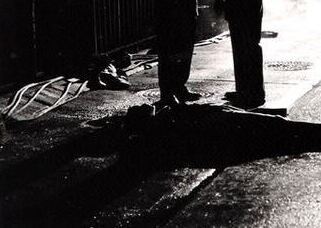
A tallish man lay sprawled on the asphalt. I moved my flash beam to his pan. He had a prominent forehead crowned with a shock of salt-and-pepper hair. I didn’t recognize him. The stiff was no bum, though. His clothes looked sharp, if you discounted the scarlet stain which filled the front of the dress shirt behind his pinstriped suit coat.
His clothes looked sharp, if you discounted the scarlet stain which filled the front of the dress shirt behind his pinstriped suit coat.
From what I could gather, he looked to have two bullet wounds in his chest. The disturbing aspect of the scene was the third gunshot wound high on his forehead. There was no exit wound. The circumstances led me to make the instantaneous assumption Zier had delivered it from above as the man lay where he was. Aubrey was much too short to have delivered the wound while his blackmailer was standing. Had it been the third blast I’d heard? Was he making certain he’d never have this man be bother him again? That’s something we’d deal with later, I thought. Maybe.
I turned to my client. “What happened Aubrey?”
He swallowed a sob. “I’m not sure. It happened so fast,” he babbled. “He was waiting here. He laughed at me and held out a hand for his money. Then, he laughed, saying I belonged to him. I was his bitch, his bank from now on.” Tears rolled down Zier’s cheeks. “The asshole kept laughing. I couldn’t take it. I had to do something to get out from under his thumb.” He looked at me with pleading eyes. “I just had to, Gil.”
“Who is he?” I solicited, nodding toward the other man.
“Hell, I don’t know!” Anger pushed his voice now.
“Have you ever seen him?”
“Yes. Yes, I have. He’s been around to a place we go to be away from unwanted attention. I’ve seen him there several times.”
The we didn’t need any explaining. I hurriedly thought through the situation. I offered, “My hunch is he was probably just a lowlife who was pretending to be one of you. He looked around your crowd until he could find a target to make a few bucks off of. He tried to capitalize on fear of exposure. You were unlucky enough to be the one he chose, Aubrey. At least as far as we know, the only one.” I glanced at the gun in my hand. “Where’d the rod come from, Aubrey?”
“It belonged to my father back in Chicago? When he died, he left it to me. I started carrying it for protection. I–”
As he rambled, I quickly considered my next step while the sound of police sirens came to us from a distance. Now I firmly believe in law and order. But I also believe in justice. In that split second, the juror’s words kept returning to me: “needed killing.” I looked from the gun to the reporter’s face and asked, “Can anyone trace this gun to you in any way?” Zier waggled his head. “Do the coppers know you’ve had it? Anyone else know?”
“No. Nobody. What do–?”
“Where’s the money?”
“There isn’t any. There wasn’t time. But I wasn’t going to tell him that.”
I made a hasty decision. “Get out of here and don’t come back.”
“But–!”
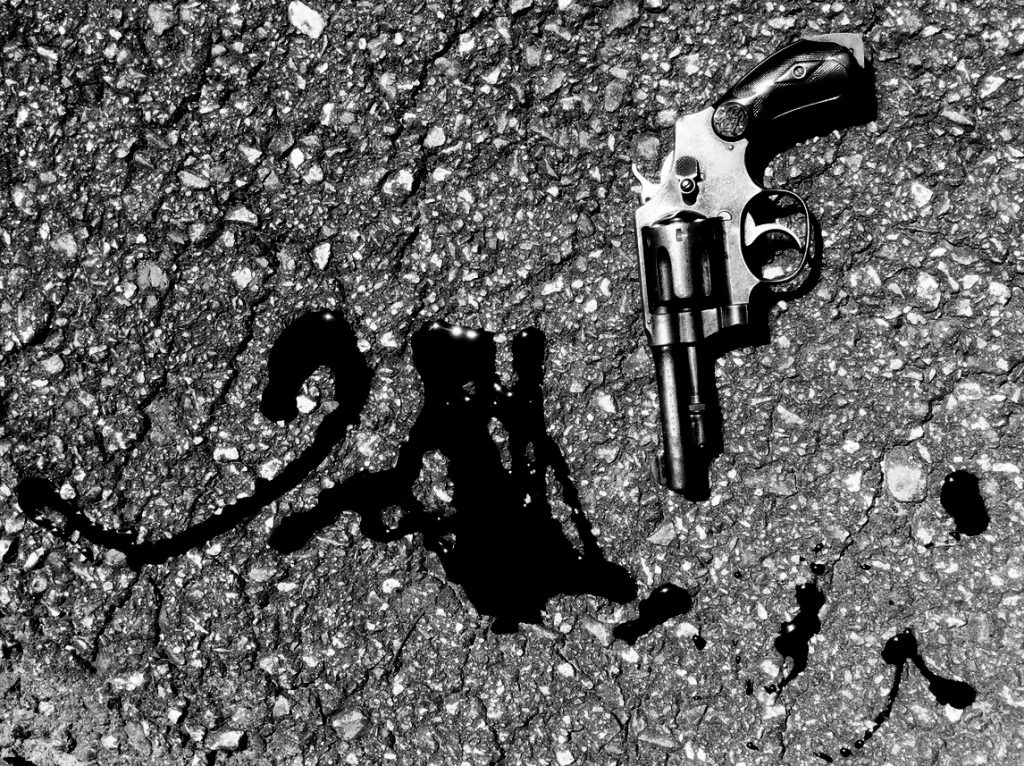
“Get out now, Aubrey! I’ll square things here!” He hesitated. The siren wails grew louder. “I’ll eat dirt with the cops!” I barked, as I shoved him and pointed in the opposite direction from the approaching law. “Go!” As he turned to go, one last warning came to mind. I grabbed his arm. “And don’t ever mention anything about tonight, this man or this incident to anyone! Understand? It never happened.” He nodded uncertainly as he ran away. With my handkerchief, I wiped any fingerprints off Zier’s gun and laid it on the pavement near the blood the dead man had oozed. I raised my hands submissively and turned to meet the approaching law.
Soon, a covey of coppers came charging at me, flashlight beams crisscrossing the alley, yelling for me to keep my hands up. I gladly did as requested.
* * *
Detective Donovan came back into the room and took a chair in the corner. Detective Waddell was finishing a tirade, “… and you expect us to believe you just happened to be passing when you heard the gunshots?” I nodded for the umpteenth time. “You got out of your crate, ran down the alley, and found the stiff? Nobody else was around? And you don’t know the dead mug or why he was there?” Several hours had passed, and I was sitting in an interrogation room at police headquarters. Waddell was leaning over the table where I sat.
I shrugged. “I’d never seen this guy before tonight.” Pausing and leaning sideways so I could see Donovan sitting behind Waddell, I continued, “Simmons you said his name was, Gus?” My eyes shifted back to the detective sergeant. “Anyway, before I saw him lying there in the alley, Rob, I’d never laid eyes on this Simmons lug. I swear it.” Okay, I answered one of his questions.
From the corner, Detective Donovan snorted contemptuously. “He’s been drinkin’, Rob! You can’t trust a word he says!”
Waddell ignored him and continued, “You know me, Tanner. You’ll get a fair shake if there’s a valid explanation.” I shrugged again. “But you also know I hate coincidences!” he shouted. “If I find out you’re lying to me, I’ll nail you! I’ll jerk your P.I.’s license so fast it’ll singe your britches! Get me?” With that, he tossed his half-smoked gasper to the tile floor and crushed it angrily. “All right! Git outta here, Gil!” He pointed an angry finger at me. “But don’t leave town in case I got any more questions!”
“But Rob–!” Donovan objected.
In frustration, Waddell spun around to the other detective. “Look, Gus!” Rob paused and took a deep breath. “We’ve got nothing to hold him on. Gil’s .45 certainly didn’t shoot the dead guy. It hasn’t even been fired recently. There were no prints on the .32 and no way to connect it to Tanner. We both know he only ever carries a .45. So far, there’s nothing to connect Tanner to the dead guy. Tell me what I’m missing, partner!” Gus’s chin dropped dejectedly. Rob looked back at me with a cynical glare. “Although something about this entire thing stinks to high heaven, Gil’s story has some plausibility to it. And I can’t prove otherwise!” Rob stormed out of the room. Donovan looked crestfallen as his shoulders dropped, and he followed his fellow detective.
I left the building as a brilliant sun was rising. My hope was Aubrey had received his “good night” on this chapter of his life. ©