
June, 1933
The bulldog edition of The City Chronicle was spread before me as I sat at my desk in the Tanner Detective Agency. My head felt as if they’d used it for the football in this past Rose Bowl. A cup of coffee was staring me down.
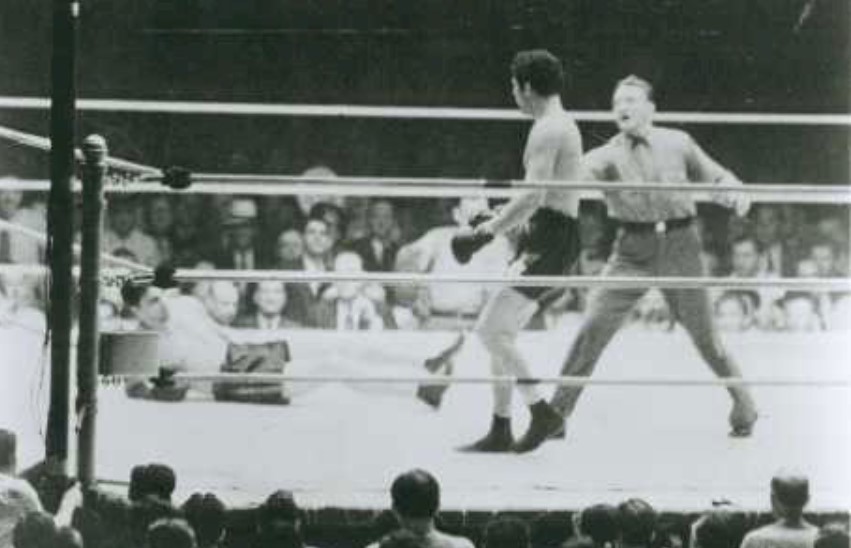
Through woozy eyes, I’d been reading the write-up by United Press’s Henry McLemore detailing last night’s boxing match between Max Baer and Max Schmeling at Yankee Stadium. Baer earned his shot at the world’s heavyweight boxing championship by scoring a TKO in the tenth round. From what we could gather via the radio broadcast we listened to at Harry’s Paradise Tavern, the American had been pummeling the German and put him on the canvas in the tenth. Schmeling got up late in the count, but referee Arthur Donovan stopped the fight moments later. And, having bet against the odds, I found myself $300.00 richer.
The oddsmakers favored Schmeling to win, but I laid my dough on Baer because of politics. Not normally a smart play. But Hitler was rumored to be using his fellow countryman to tout the superiority of the Aryan race against the American, who sported a Star of David on his trunks. Adolf and his cronies were pathological anti-Semites. I’d read quotes from his speeches and my friend Micah Kaplan had relayed a few excerpts to me from Hitler’s book, Mein Kampf. In that sampling, the mustached twerp struck me as a leader who made use of popular prejudices and false claims and promises in order to gain and hold on to power.
Back in March, the broadsheets had reported the national parliament of Nazi Germany finalized Hitler’s virtual dictatorial powers by the Reichstag Decree. Shortly thereafter, the Nazis ordered a ban against Jews in businesses, professions, and schools. I don’t care for extremism on either end of the political spectrum. Besides, I had too many good non-shellfish-eating acquaintances to tolerate the direction in which the Germans were moving.
I don’t care for extremism on either end of the political spectrum.
Anyway, Baer’s victory gave way to a lengthy celebration at the watering hole last night. Now I was paying the price.
With my Cincinnati Redlegs beating the Pirates the day before, they moved only one game above .500 and remained in fifth place in the National League race. So I passed on reading any more about another of their hapless seasons. I still loved the Reds, but maybe next year will be different. Gee, I think I’d said that before.
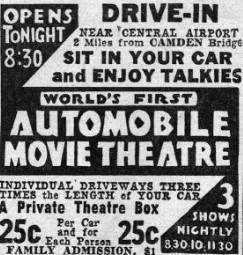
I defeated the first cup of java and took on the challenge of a second while I scanned the rest of the paper. The only other national news that caught my bloodshot eyes was a brief article regarding the opening of what the writer termed a park-in movie theater in Camden, New Jersey. Folks could drive onto the grounds, park, and, from the comfort of their heaps, watch a motion picture projected onto a giant screen. It was an interesting concept. A local wag pronounced the set up to be a fad, which could likely die right there in Jersey. Time would tell.
I turned to read about Joe Palooka, Dick Tracy, and Pete the Tramp in the funny pages. I felt pretty certain I’d come across a few of Pete’s buddies over at the rail yard. But I don’t believe they clung to any of his gentlemanly instincts. I was checking the latest installment of Tracy’s dealings with Stooge Viller when there was a knock on the office door.
“Yeah? It’s unlocked!” I called out. The sound of my voice made my head ache.
As the door cracked open, the familiar face of Walter Packiam pushed into the room and beamed. I returned the grin. “Come on in!”
The man had been a vagabond on the road when I first met him around a year and a half earlier as I was returning from an out-of-town job. He helped me get out of a pretty tight jam and earned my eternal gratitude. The circumstances of that encounter led me to give him a ride here to my hometown for a meal and a warm place to sleep. During our time together, he didn’t talk about himself much. It made him an easy guy to like and a hard one to explain. So, though I knew little of his background, I’d liked him from that first day.
He helped me get out of a pretty tight jam and earned my eternal gratitude.
Packiam remained in our metropolis. Before long, I’d hung the nickname “The Professor” on him because of the dignity with which he carried himself, the decorum he maintained, and the way he spoke, despite his inclination toward malapropisms. The moniker stuck, and it was how he became known within his small circle of acquaintances around town. From time to time, the man had served as an informant for me. His knowledge of the denizens of our city streets was on a different level, with a diverse slant from that of my other snitches. Eventually I’d helped him land the job of doorman at the Claremont Hotel. The result was I saw him occasionally when a case took me to the north side of the city.
I met my pal at the door, ushered him to a seat, got him a cup of joe, and returned to my desk. Setting the newspaper aside, I asked, “So, what brings you for a visit?” This was only the second time the fellow had appeared at my office since we’d met each other.
After a sip of his java, The Professor set the mug down and gave me a serious look. He leaned toward me. “I suppose you’ve heard of the unfortunate demises at the game of chance last Saturday night.”
I nodded. The plucky gal, who followed the police beat for the Chronicle, broke the story Sunday morning of the murders of three poker players at a bungalow in the Riverside neighborhood. New York has the Bowery. San Francisco has the Barbary Coast. Algiers has the Casbah. Our city has the Riverside neighborhood.
After reports by neighbors of shots fired at the house, coppers discovered the bodies strewn around a table where the card game had been in progress. Robbery was assumed to be the motive. Monday morning, over breakfast at the Wayside Café, Detective Sergeant Rob Waddell told me they figured there to be two perpetrators, because five hands had been dealt when the shooting occurred.
Attempts to get fingerprints had led nowhere. So the law had no clue concerning the identity of the fugitive pair. As reported by the dailies, they had assigned the case to the feckless Detective Fergus Donovan. That spelled good news for the culprits. Gus couldn’t have found ice if he’d been with Byrd at the North Pole. Follow-up pieces on the killings had been splashed across all the rags the week since.
“Yeah, I’ve read about it. Detective Waddell said they do not know who the two killers were. Why do you ask? Do you know something about it?”
“Yes, indeed! For starters, there was only one man guilty of the crime. The–”
“But Waddell,” I interrupted, “told me the evidence shows two men are missing. They figure both took part in the robbery and murders.”
“Well, I’m here to tell you that is a false hypotenuse! Utter flapdoodle! I don’t mean to disintegrate your friend’s powers of observation, but I have received the truth of the matter straight from the horse’s mouse.”
Fortunately, I’d spent enough time with the man to interpret what he was saying as he spoke. He was no fool. And the few folks I’d watched calculate him for one had paid a price. So, I needed to hear what he wanted to say. “So, what’s the actual story?”
He leaned back in his chair and retrieved his hawkbill pipe and Granger “rough cut” tobacco from his suit coat. As he lit up, I slid my desk ashtray to him and waited. After a few puffs, he tossed his match and continued, “Only one person was responsible for the killings. The second missing man was to have been the fourth victim. But, in the pandemic of the moment, he dove through a nearby window and made good an escape from his would-be executioner.”
“The second missing man was to have been the fourth victim.”
That last bit explained a crashed-out window the police found at the scene. Waddell told me Gus decided it was how the murderers got away from the home, since the exterior doors were locked. The fact of the broken window had not been made public or given to the press. So, The Professor had otherwise undisclosed information from someone.
“How do you come to have this information?”
“The individual who escaped is a very good friend of mine. His name is Nelson Wittmer. He–”
“Is that ‘Whispers’ Wittmer?”
My visitor’s face immediately turned crimson at my question. “That epitaph is very hurtful to the man’s feelings, Gil. As his chum, I take reception to it.”
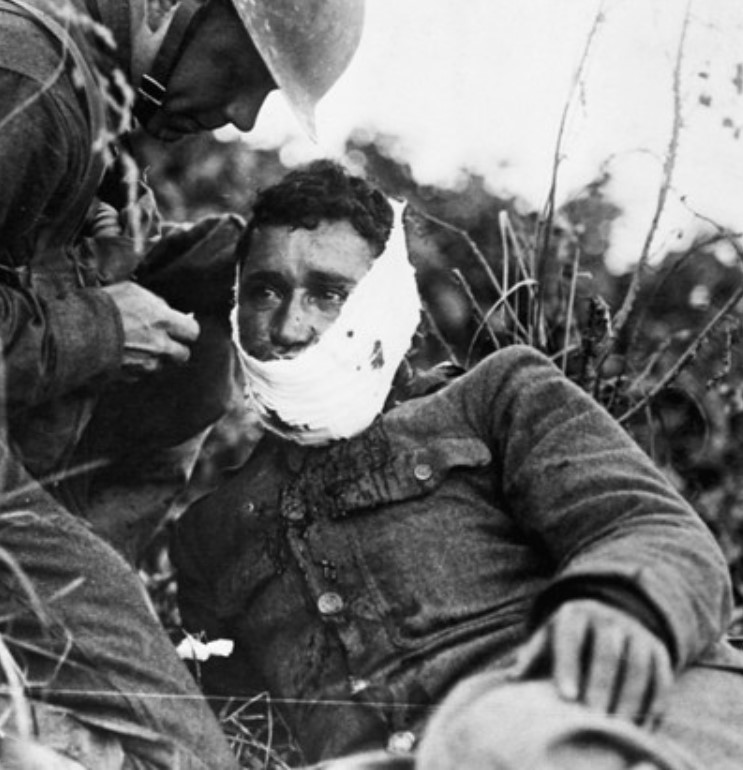
My hands went up in an apology. “I’m sorry. I meant no offense. It was my clumsy way of making certain I knew who we were speaking of.” Nelson ‘Whispers’ Wittmer had been a hero of sorts in The Great War. Before being forgotten, like so many of the men of that conflict, the local tabloids featured his story. While serving in a company of the 328th Infantry, 82nd Division during the Meuse–Argonne offensive, he’d suffered a gunshot wound to his neck when he successfully charged a Hun machinegun nest. The bullet barely missed his carotid artery but did significant damage to his vocal cords. Now the guy was known around town as a relatively harmless small-time grifter.
Packiam’s feathers quickly unruffled, and he returned to his explanation. “There were five people at that table on the night of the mascara. The three dead men, my pal, and the killer. But you need to learn what transpired from Nelson himself. He can explain the entrails of the situation better than I.”
“Detective Donovan has the investigation. Why didn’t you go to him with this information?” As soon as I asked, I regretted it. Just after The Professor arrived in our city, Gus had done his best to pin an attempted murder charge on Packiam. It turned out the victim of the attack was a loose end that an armed robbery associate was trying to tie up. Walter was innocent of the crime. But the damage to any kind of trust between him and the plainclothesman had been done. I raised my hand again. “You don’t need to say it. I know the answer.” The man, whose body had bristled in response, relaxed. “Are you willing to say where Wittmer is now?”
“Yes. That’s why I came to you, Gil. I trust you, above all people.”
I smiled at the compliment. In my experience, men who rode the rails or lived on the road held an abiding deep distrust of everybody, even of other “travelers.” I asked sincerely, “What have I done to earn your trust and loyalty?”
“You made a place for me,” he said softly.
I had no response for that. There was only silent gratitude that my mother had always taught my brother and me to treat everyone with love, dignity, and respect. That is, I did until they showed me they needed to be handled otherwise. Then, the chips had to fall where they might. My old man hadn’t known the meaning of those words. “You realize Donovan will have to be involved in this at some point?”
“Quite so. I have reconnoitered myself to that eventuality.”
“So, where is your pal now?”
“Nelson came to me for help. He is certain the killer is searching for him. In the vernacular of his ilk, I stashed him in a storeroom in the basement of the Claremont until I could come to you.”
“All right then. We need to find Donovan and get to Wittmer.” I reached for the telephone and placed a call to the detective bureau at police headquarters. Gus got on the wire.
“Yeah, whaddya want, shamus? I’m kinda busy,” he growled. The big guy was always happy to speak to me.
“It’s about the murders at the card game over on Huron Place.”
“Yeah? What about ‘em?” His voice held a tone of hesitation.
“There’s a witness to the killings.”
“Ya don’t say? And how do you know that?”
“Does it matter, Gus? So long as you get the information that could help even you solve the case?”
“Always time for a wisecrack, eh?”
This conversation was already becoming tiresome. “I can put you with him. What’ll it be, Donovan? You want to talk to him? Yes, or no?”
“Okay, peeper. Where are you?”
“I’m in my office, but the witness isn’t here. We need to meet in the lobby of the Claremont Hotel.”
After a pause, he responded, “I’ll be there in half an hour.”
“See you there,” I said, ringing off. I noticed my visitor had a perplexed look on his kisser. “It’s okay,” I tried to assure him. “He’ll see us there. My LaSalle is just outside.” I knew he got around by a streetcar.
* * *
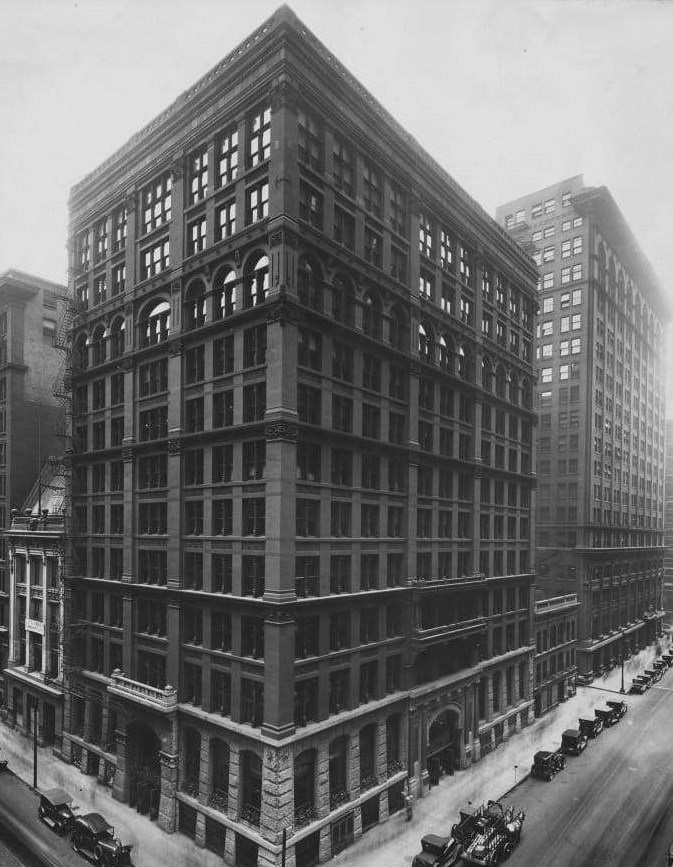
Around thirty minutes later, we strolled through the hotel’s front entrance. Gus was ensconced on a borne settee, fidgeting nervously. He rose when we approached, frowned at me, and jerked his chin at my companion. “Say, what are you giving me, Tanner? Don’t tell me this monkey is your witness.”
The doorman spun on his heels to leave. I grabbed his arm while glaring at the thoughtless bull. “Do you want to resolve the Huron Place murders or not, you big dumb flatfoot?” I seethed in a low tone so as not to draw the attention of others in the area. Packiam stopped where he was. I relinquished the arm. Donovan bowed up, but said nothing. He blushed slightly and nodded. “Okay then,” I finished.
“Do you want to resolve the Huron Place murders or not, you big dumb flatfoot?”
I stepped back, so our conversation included Walter. “My friend here has had someone approach him who says he was at that poker game and was to be the fourth victim. But he crashed through the busted window you found and got away.” Gus’s eyebrows arched at that piece of information. He recognized the significance of it. What’s that old saying? ‘Even a blind hog….’ “Now the shooter is gunning for him. Apparently, the man wants to tell his story and get police protection.”
“Okay, who is this all-knowing mug? And where is he?” the lawman demanded harshly.
The Professor drew himself up to the last inch of his moderate height and shot his cuffs. “First, detective, understand that we are not at cross porpoises.” The copper’s questioning eyes shot to me. I merely smiled while Packiam continued, “We all want to see justice done. According to this witness, he and the guilty party were once great pals and always hung around together. He says they were virtually insufferable. Now, it seems, they are deadly enemas. Anyway, the bearer of this tale is currently in a storeroom below us. I will take you to him, and he can explain the particulates of the shooting. My friend wants his predator comprehended as quickly as possible.” With every misspoken word, Gus’s face scrunched up a little more. Walter never seemed to notice. And I would not intercede. Watching the detective’s mental anguish was worth the price of admission.
Walter bid us follow him. We made our way past the front desk to a stairwell off a hall behind the reception area. As we descended the stairs, I could sense Gus tense up. Walter led us along a dimly lit corridor to a door marked “Storage.” When he unlocked and opened the door and turned on the lights, the space appeared empty. From among stacks of crates, a shaken Whispers slowly emerged. He looked to be carrying the weight of the world.
Donovan recognized the man. He crossed the cluttered room to an old wooden desk and hiked a hip up onto it. The thing protested his presence with a loud creak. He motioned Wittmer to a chair. When the fellow took the seat, Gus leaned down toward him and spoke softly. “This guy tells me you attended the poker game on Huron Place last Saturday, where three lugs were murdered.” Whispers responded with a guttural, “yes.”
“So, you can reveal to me who the killer was?” The old man nodded. “And you claim you were going to be killed, too?” Nelson’s head waggle was far more vigorous this time. “Then take your time and tell me what happened.” Gus maintained his gentle tone. I’d never seen him like this during an interrogation.
Whispers struggled through an explanation of the circumstances of that night. His good pal, Barry Wygnanski, invited him to the card game. The gorilla was known around the city as “Short Stack.” The source of his nickname, with its dubious connotations / implications, was the subject of quite a bit of unflattering conjecture. He was a tough, outcast bruiser, affiliated with The League, the mob controlling the south side of the metropolis. Exactly what Barry did for the organization was the topic of as much speculation as was his moniker.
Wittmer related the Saturday night game, being held at the house of one of the dead men, started out friendly enough with booze and congeniality flowing freely among the participants. As the gambling proceeded, Short Stack found himself on a losing streak. The more money he lost, the more he drank and the less sociable he became.
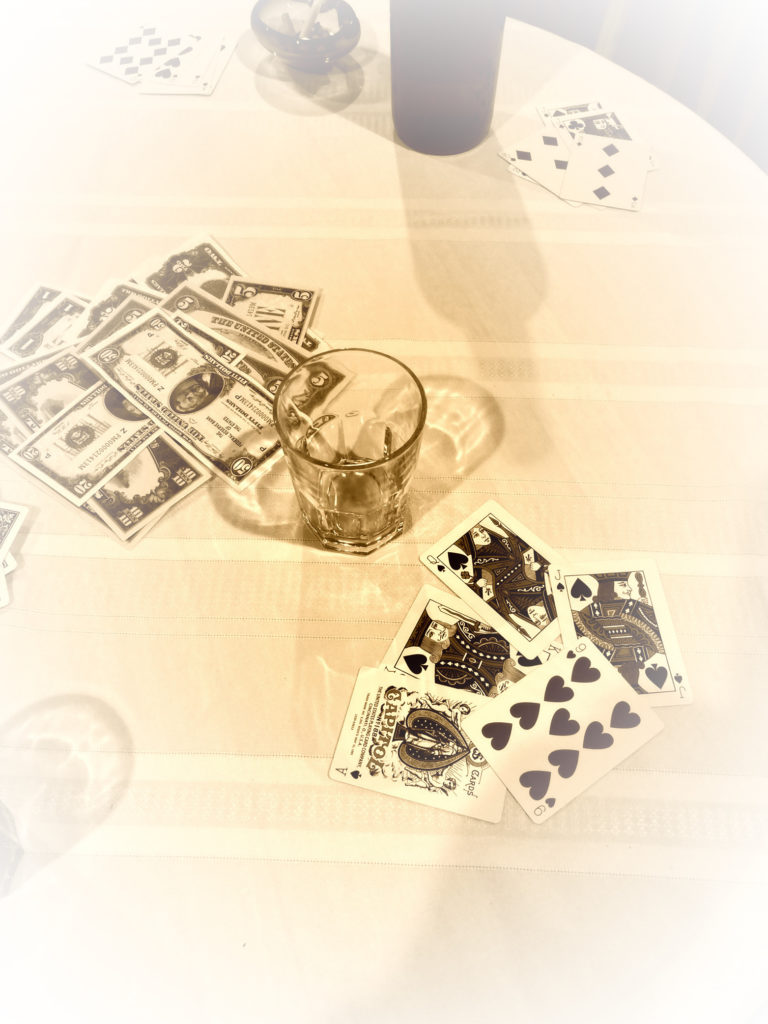
Then Wygnanski started accusing two participants of cheating. As the last hand was being bet, Whispers said the pot became too rich for his blood. He folded and walked to the head, which was just off the room where they were playing. While he was in there, he could hear Barry screaming at the other gamblers. He was yelling about an ace-high flush. Nelson finished his business and opened the door just as his pal jumped up and kicked his chair from behind him. Short Stack had a crazed look in his eyes. He pulled a gat from his shoulder holster and began firing at the three men at the table.
The witness said he didn’t hesitate to run to a nearby window and crash through it, landing in the shrubbery outside. He quickly scrambled to his feet and ran as fast as he could. The war-ravaged man told Gus he heard additional shots being fired and felt a slug go past him as he fled. At that point, he recognized Barry’s intentions. He’d been hiding out since then. Finally, he made his way to the Claremont Hotel and his pal for refuge.
“How do I know you weren’t part of the crime and are only trying to save your own hide by turning on your partner?” When Whispers started pleading his case again, the detective cut him off. “Never mind. Which seat were you in at the table?”
“Is that important?” I hastily questioned. I knew Gus to go off on tangents that led nowhere.
He glared at me. “Yes, as a matter of fact, it is, gumshoe.” Turning back to Nelson, he laid out five objects around the desktop. “Who was sitting where, mister?”
While Walter and I watched with interest, Nelson stood and moved to the table. Pointing to the various items, he outlined the men’s positions, including his and Short Stack’s. The three dead men were Squatty Malone, a thickset bookie nicknamed “Odds,” Gordy Hess, a low-level bag man, and Mo Lowenthal. At least one of the trio was loosely connected to The League. I’d barely heard of Lowenthal. Maybe the police department knew more about him. They were a trio of the most unlikely lummoxes you could put together. Such was our city’s underworld. Donovan merely nodded as he studied Wittmer’s face during his elaboration on the murder.
They were a trio of the most unlikely lummoxes you could put together.
“Okay. Stay put,” the detective ordered.
I buttonholed the rotund sleuth and pulled him aside. In a low tone, I asked, “So, what gives, Gus?”
“He was there sure enough,” he whispered. “Everything he’s told me fits the evidence we found at the house on Huron. Even down to a near ace-high straight busted flush we found on the table. But I’m still not certain what capacity he was there in.”
“Capacity” was a fairly big word for the man. So at least he was thinking. Sometimes that was a good thing, though often not. “But if it fits, as you say, doesn’t that mean he was probably an intended victim?” I prodded, though recognizing there were other possibilities.
“Irregardless, an accomplice could tell me the same story in order to get out from behind the eight ball.”
“So, what are you going to do?”
He glanced past me to a dazed Whispers. “I’m gonna take him into protective custody as a material witness. For now, anyway.”
When the detective approached his witness, I followed, and Walter joined us. “Let’s go.”
The old veteran rose to meet the cop. “What’s going on?” he asked hoarsely.
“I’m taking you to the station house until we can get a better angle on this whole megillah.”
Nelson shot an uncertain look at The Professor who passed it on to me. I gave my friend a slight nod. He, in turn, gave an approving waggle to his chum. “That’s a suitable derangement,” Packiam added.
“I’m so happy you approve, bub,” Gus blurted sarcastically. He took Whisper’s arm and started walking him away. We followed.
When the stout copper opened the door and guided his prisoner into the hall, two blasts reverberated. Donovan jerked his charge back into the storeroom and slammed the opening shut. The city detective and I instinctively unholstered our roscoes. “What the hell?” the copper screamed, as he pulled Whispers to the cover of some crates.
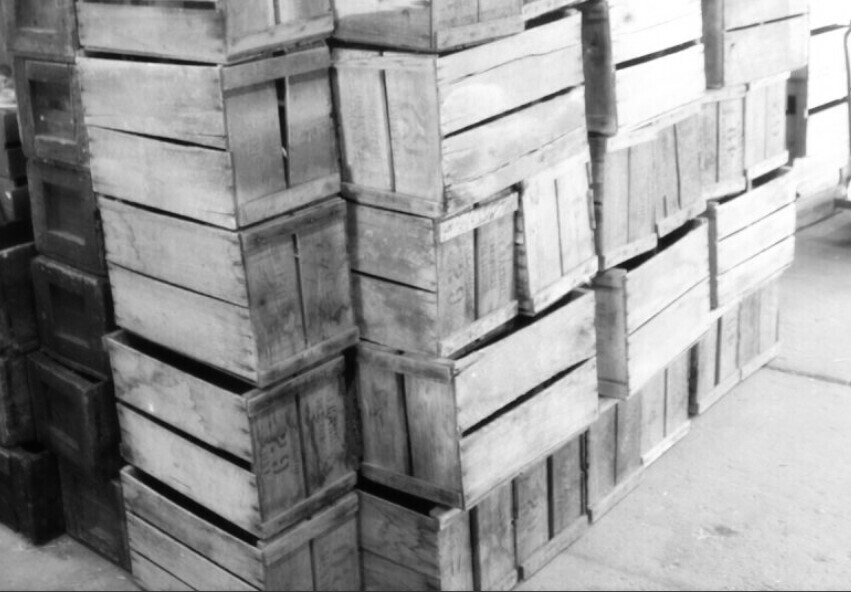
I grabbed The Professor, and we took a position behind a stack of wooden boxes against the opposite wall. “Damn, Gus!” I called out. “Can’t you do anything the easy way?”
“Kiss my ass!” the detective hissed as he stared at the door. A terrified Wittmer cowered next to him.
“Spit and give me a hint!” I laughed in response.
“That has to be Wygnanski out there! How the hell did he find us?” the big cop demanded.
I shrugged. “Who the hell cares how? He did!”
“You and your buddy there are what got us into this mess!” After a pause, he added, “I don’t like you, Tanner!”
“That really hurts, Donovan. But, for now, I suggest you focus your ire on that man in the hallway trying to kill us. And, in the meantime, calm down. I don’t want you to have a stroke. At least not a fatal one, anyway.”
“Very funny, shamus!”
The Professor chuckled. It surprised me. “What’s so humorous?” I asked.
“Pinned down by a villain who has murder on his mind? Didn’t we meet under similar circumcisions?”
I smirked at the comparison. “Yeah. Come to think of it.”
“Well, this has more irony than a blacksmith’s ass crack,” he snickered.
I smiled at his unexpected language. Glancing over to Gus, I posed, “What now?”
“Hell if I know!” He scanned the room, then inquired of the doorman, “Is there another way outta here?”
“Only that door,” Packiam offered.
Donovan let loose an exasperated exhale. “Well then, we need to flush that goon out from his hiding place!”
“That seems fairly obvious, but how do you propose we do that?” I asked.
“I dunno, Tanner. Any ideas?”
After a moment of thought, I inquired of the man squatting beside me, “Do I recall correctly that there is a nicely recessed doorway in the passageway opposite this one?”
“Yes, there is. It leads to the boiler room. However, please have no delusions that I will repeat the decoy maneuver I exhibited at our first meeting.”
“No. I wouldn’t ask you to.” I yelled across the room, “Gus!”
Before the policeman could answer, Walter whispered, “It’s locked.” That was unwelcomed news.
“Yeah?” the lawman bellowed back.
“How about we throw the door open and I dive across the hall to the embrasure there? Hopefully, that’ll draw whoever it is out enough that you can put a couple of slugs in him.”
“You willing to shoot the works that way, Gil?”
“I’m not suicidal, but I don’t have any other ideas. We can’t ask Wittmer or Walter here to take the chance. Besides,” I snorted, “it’ll be less complicated if a copper takes him down than if a citizen does it.”
“Okay, if you’re sure.”
I swallowed hard. “I’m as certain as I can be at this point. Just one thing.”
“Yeah?”
“My happy ass is a little too big to hide completely in an entryway. And sure as hell not for very long. So do what needs to be done quick.”
“Of course, Tanner,” he mumbled.
After instructing our respective cohorts to sit tight, the two of us met at the door. “On the count of three,” Gus suggested as he reached for the doorknob. I nodded, somewhat uncertain of what I was getting into.
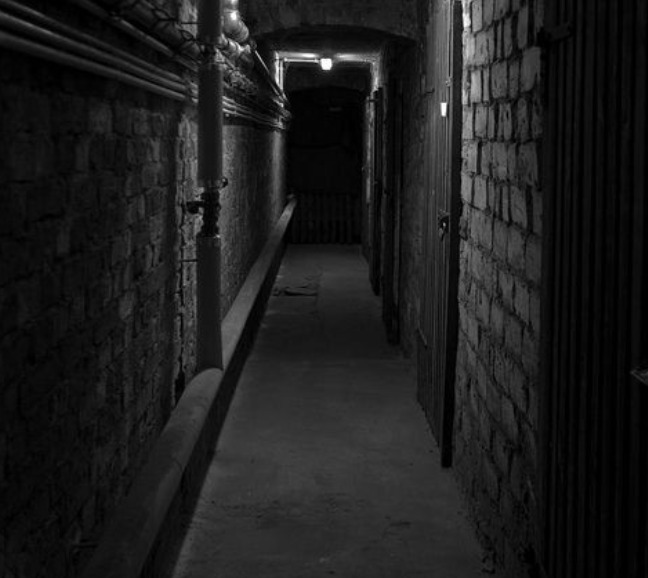
I braced myself as Donovan counted under his breath. When he reached three, he flung open the door, and I launched my body to the door across the way. Simultaneously, the man at the far end of the corridor stepped out from the corner and fired twice. Wood splintered just in front of me. I slammed into the door and made myself as skinny as possible. Meanwhile, Gus returned fire with two rounds of his own.
Simultaneously, the man at the far end of the corridor stepped out from the corner and fired twice.
Apparently, the detective’s blasts failed to have the desired effect. “He ducked back around the corner,” he told me in a gravelly whisper.
At this point, I felt my backside was at least two times its normal size and an excellent target for our assailant. “Now what?” I questioned, my face jammed against the door.
There was an odd noise and the sound of something heavy hitting the floor down the way. “What the hell was that?” I breathed. I didn’t dare look, but heard Donovan harrumph. “What? What is it, Gus?”
“It’s okay, Tanner. You can come out from your hiding place. It appears I clipped the bastard after all. He’s down,” he crowed triumphantly.
Easing an eye around the fractured jamb, I saw the body of a large man sprawled prone across the floor at the far corner. I pushed off from my location and joined the city cop.
“Let’s have a look,” he proposed.
I agreed, but felt compelled to tell our two companions to stay put for now. Guns at the ready, we cautiously approached the fallen form. There was no blood and no sign of any wounds. I kicked the man’s revolver away from his hand. It rattled among several empty shell casings, indicating our friend had reloaded his Smith and Wesson. Gus rolled the fella over and cuffed him. As big as a sofa, he had a face like yesterday’s oatmeal.
Donovan exhaled audibly. “Yeah. It’s ‘Short Stack’ Wygnanski, all right.”
Then we noticed something we hadn’t seen before. Blood was trickling from a sizeable gash on the man’s head. His thick black hair and the murky light made it difficult to see. But it wasn’t a bullet wound.
As I was getting ready to speak, I saw a figure crouching in the connecting passage. Uncertain, I raised my .45. Donovan spun and raised his weapon, as well. In that split second, I recognized the person.
“Hold it, Gus!” I yelled, pushing his gat downward. I approached the woman. It was the spunky female reporter I mentioned earlier. I knew her on sight and a few things about her, but we’d never actually met. When I extended my hand to her, she grasped it, and I pulled her to her feet. As she stood, The Professor and Whispers joined our group. “So what brings you to our little soiree, Miss Olsen?”
As she brushed and straightened her clothing, she teased, “It’s a long story you can read about in the Chronicle, Gil.” Grinning, she added, “And you can call me Lois.” She nodded to the unconscious man. “Is–?”
“I’m afraid reading it in your paper won’t be good enough, lady,” the cop interjected, stepping closer and flashing his buzzer. “How do you come to be here? And I want to know now.”
She adjusted her hat and indignantly fessed up. “Well, only because you insist, detective. A source, who will not be named, revealed to me that the Huron Place shooter was Barry Wygnanski, and that he was hunting the fifth man who’d been present. This informant said Wygnanski’s intentions toward his prey were less than honorable. Other than those murders, things were kind of slow on my desk. So I started shadowing the palooka. And, let me tell you, he was covering a lot of ground in his search.” She glanced at the other two men. “Is one of these the intended victim?”
Whispers raised his hand reluctantly. The reporter produced a pencil and pad from somewhere and stepped forward. “I need to speak with you–”
“Hold it right there, sister!” Donovan grumbled. “You’re not talking to anybody just yet. You still haven’t explained what happened here.”
She smiled in a way that might have made some men’s skin crawl, but she intrigued me.
“Well, while I was tailing him, Wygnanski ended up here at the Claremont. My guess is he was tagging one of you,” she reasoned, jerking her chin at Packiam and me, “to get to his target.”
I looked askew at the detective and put in, “I figure he was aware Wittmer and The Professor were great pals. It was a good bet Nelson might come to him for help.”
“I didn’t see Short Stack upstairs, but I didn’t know who I was looking for,” the bull offered sheepishly. He regained his authoritative composure. “Go on,” he instructed Lois.
“Well, when Barry and I entered the lobby, he saw the three of you talking and made for a large potted plant for cover. I recognized you and Gil. I knew then I was onto something hot that was likely going to explode. And I had a scoop. After you walked to the stairs, this sweetheart came out from behind the plant he was using for concealment and followed. I did the same a few seconds after.
I knew then I was onto something hot that was likely going to explode.
“He took up a position at this corner and pulled a gun. I waited and watched. Apparently, the crumb never saw me. Then he suddenly threw potshots along the hall. I had to do something but had no weapon. That’s when I noticed this.” She pointed to a small bucket on the floor near where she’d been hiding.
Gus walked over and lifted it. “This thing’s kinda heavy. Is that concrete at the bottom? What the hell is this?” He looked to Walter for an answer.
“It is my understanding that, in days of yoke, they used them in the street in front of the hotel to keep horses in place. They were called hitch or hitching weights, tether weights, or stay puts. Nowadays, the ones still around are used for doorstops.”
The detective turned back to Lois. “You mean you slugged him with this?” He chuckled, “You are one healthy dame!” He hefted the container in his hand. “You could have killed him.”
Olsen’s eyes softened slightly. “I didn’t know what else to do. Is he?–”
“Dead?” Gus said, anticipating her question. “Nah, he’s as tough as a woodpecker’s lips. But he’ll have a helluva headache when he wakes up.” He turned, picked up Wygnanski’s gun, and dropped it in his coat pocket. “All right, let’s go down to headquarters and sort this out with statements from everybody. Here, Tanner, help me with this punk.” We wrestled the murderer to his feet and started dragging him.
As we moved toward the stairs, I opined, “This little episode seems to let Wittmer out from under suspicion.”
Before I finished, Lois chimed in, “Detective, I have to contact my paper with this story while it’s still an exclusive!”
The city lawman came to a sudden halt and gaped at us. “All right! Everyone of you needs to hold your water. Everyone’s going to the police station. I have a job to do, and I’m gonna do it right.”
“Turning over a new leaf, Gus?” I chortled.
“Why don’t you get lost, Tanner?”
“And have you guys looking for me? No thanks, brother!”
My antagonist took his frustration out on his senseless prisoner, roughly dragging him along. Over his shoulder, Donovan asked Walter, “I don’t suppose an elevator comes down here, does it?”
“No.”
“Well, is there a telephone anywhere on this level?”
“Yes, there’s one in a custodial office a short distance beyond the stairwell.”
“Okay. That’s where we’re going. This son of a buck is too heavy for us to climb those stairs with. I’m calling a fast wagon to come pick him up. Those boys are used to hauling lard asses around on stretchers. They can take him to the admitting hospital to get him checked. The reporter here did some damage to him, and I want to make sure he’ll live to step off for the murders.”
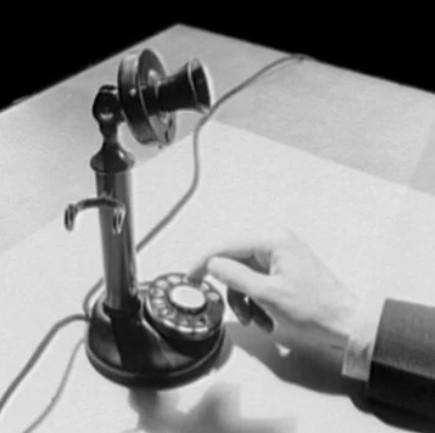
We gathered in the small office. When he finished his telephone call for the ambulance, Gus addressed us. “After they fetch Wygnanski, we’ll go to headquarters, like I said. You’ll–”
An impatient Lois broke in. “But I have to get this story ready for the morning edition!”
The detective raised a firm, quieting hand. “You, sister, can use a blower in the press room and call your story in. You do that occasionally, right?”
“Yes, but I have an exclusive. There’ll be other newsies there and–”
His uplifted palm moved closer to the woman, causing her to pause her plea. “Then I’ll make sure you get a phone in a private place to dictate to whoever. I owe you that much, anyway.” With a mischievous grin, he added, “Just spell my name right.”
That seemed to quell Olsen’s concerns.
I leaned into Donovan and spoke in low tones. “We owe Lois more than a private phone call.”
“Huh?”
“She saved our bacon, Gus. The least we could do is treat her to a nice dinner at an excellent restaurant.”
The man considered my proposal and agreed. “Let’s let the dust settle a little first. Okay? I’m going to the lobby to meet the ambulance guys. Keep an eye on Short Stack.”
“Sure.”
* * *
Several hours later, we had finished everything at police headquarters. Lois had phoned her newspaper and dictated her scoop to the re-write man. We had all given written statements to Gus for his case file. Whispers was safe and sound, being held as a material witness for the time being. Word came that Barry Wygnanski had been examined at the hospital and was being kept there overnight, under guarded arrest, for observation. Other than a likely concussion and a raging headache, he would recover from Olsen’s “attack”. And Donovan sent the killer’s revolver to Lemuel Rosenthal at the city’s crime lab for a possible ballistics match with the slugs pulled from the unfortunate poker players.
Whispers was safe and sound, being held as a material witness for the time being.
We all got together in an interrogation room with Donovan before we departed and arranged to take Lois to dinner at the restaurant of her choice the following night. The detective and I had agreed to split the tab. I invited Walter along as my guest.
As we walked to the building’s atrium, Gus was shaking his head over how he could have read the evidence on Huron Place so wrong. We chuckled and chalked it up to simply one more of life’s experiences.
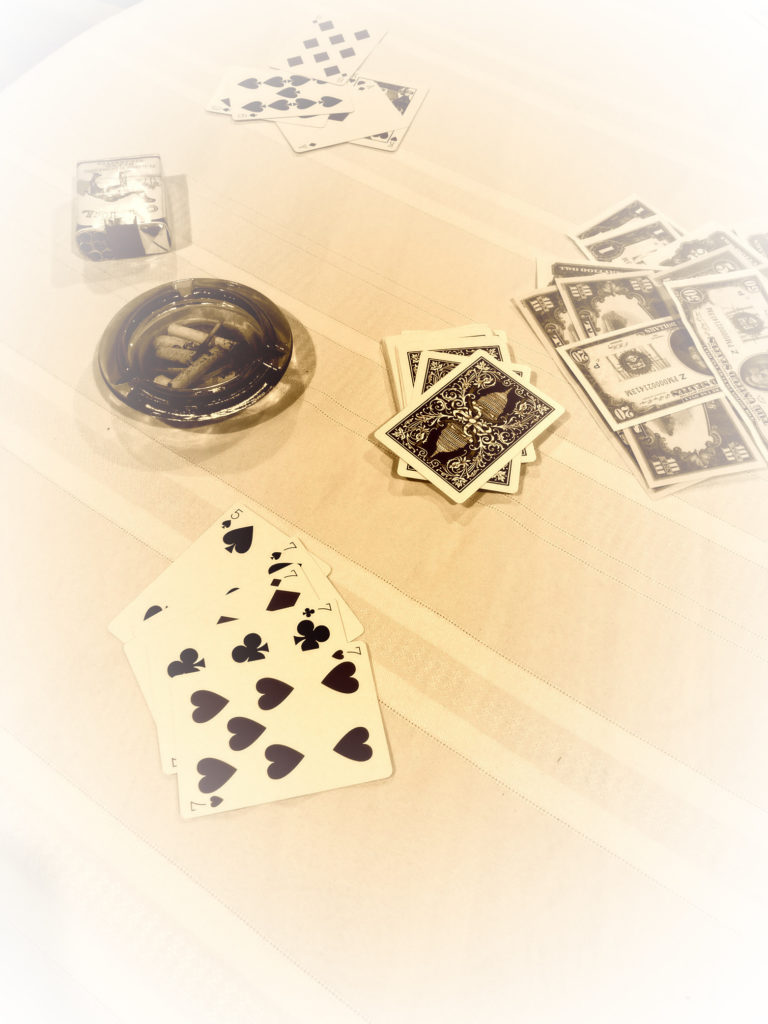
At the door to the street, Lois stopped and turned to us. “You’re not the only one who didn’t understand things correctly, Detective Donovan. The three men at that poker table apparently never heard that a Smith and Wesson beats four of a kind every time.”
With that, Olsen whirled and disappeared through the exit and down the steps. I really liked that woman and planned on doing something about it soon. ©