Mid-December 1935
Folks always seem to see things differently, depending on their experiences. Take the other night, for example. A group was sitting around a table at Harry’s Paradise Tavern, chewing the fat. The small crowd comprised city police Detectives Rob Waddell and Gus Donovan, my brother Police Officer Marty Tanner, retired city Detective John Wilder, and me. Wilder was something of a legend among our city’s police department. The usual closing time had come and gone, but Harry, who had joined our cluster, showed no sign of hustling us out the door. The proprietor felt no regard for our municipality’s ordinances since one retired and three active-duty coppers were among those gathered.
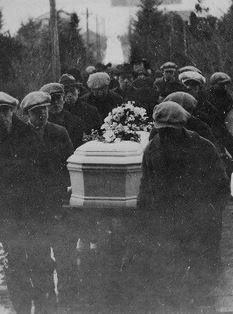
That afternoon, we’d attended the bitterly cold funeral of a lesser light from our city’s criminal underbelly of twenty-odd years earlier. Wilder had suggested attending the service and then having a “wake” that evening. He was going to the funeral because he’d been the flatfoot who’d run Ernie Cruickshank, the dearly departed, out of the city two decades earlier. He said it was the least he could do. Dirty Ernie, as folks far and wide knew him, had made a last request to have his body returned to and interred in his hometown.
That afternoon, we’d attended the bitterly cold funeral of a lesser light from our city’s criminal underbelly of twenty-odd years earlier.
Cruickshank’s longtime moll, one Iva Grabowski, had returned to the city with her beau’s remains. On his deathbed, Ernie had asked Iva to contact Wilder to let him know of the funeral’s time and place. None of us could figure whether Ernie considered it a kind of guilt trip thing for Wilder or not. Anyway, Waddell and Donovan joined the funeral procession because nothing else was going on. Besides, they were curious what other nefarious characters might show at the burial. I went at Waddell’s invitation. Well, that and because my private investigation business was on an involuntary sabbatical until a paying customer darkened my door again. I dragged Marty with me.
A dozen or so of Cruickshank’s old cronies showed up to bid their pal farewell. Seeing a contingent of coppers present had shaken the unsavory bunch. Several of the lugs quickly, but delicately melted into the scenery at the sight of Marty, Wilder, Waddell and Donovan. Fortunately, enough of them had stayed to serve as pallbearers. Those remaining escorted the grieving Iva off to a wake of their own.
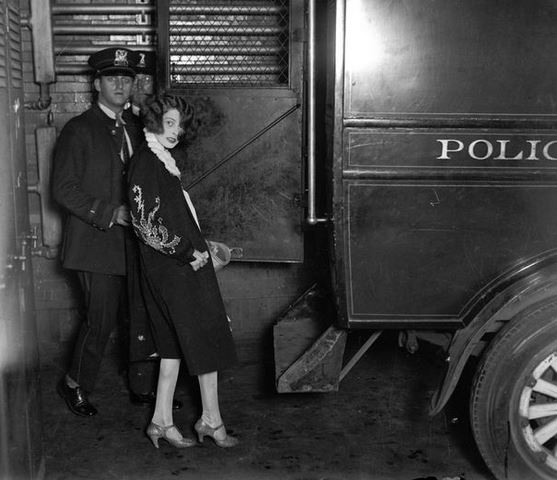
“Iva’ll be in fitting company,” Wilder had muttered, as he watched the group slink away. On the drive back to the city, he related she’d chosen to leave town with Cruickshank when the detective had escorted him to the county line. According to him, the woman had been a pro skirt before she took up with Ernie. “Man, Iva had great pins, but she was one hard number, I’ll tell ya! Got pinched for posting orphan paper around the state, trying to get her man a poke for a few big-time heists.”
In due course, we’d meandered into Harry’s and drank the afternoon into the night.
“… just because they’re meaner than they were in years past.” John Wilder was concluding his argument concerning what a downturn the criminal class among us had taken in the last twenty years.
“What about the goons in Chicago in the twenties? Plenty of mean killings there and then,” Donovan offered.
“Yeah, but that was different.” Wilder felt compelled to supplement his argument to those gathered. “That was Prohibition-fueled violence. And they always directed their viciousness at other hooligans in the bootlegging business.” He chuckled grimly, “Even Dean O’Banion, a cold-blooded killer in his own right, was a florist who loved arranging flowers, for Pete’s sake.”
“I dunno, John,” Rob Waddell put in, as he stood, pushed his chair back with his legs, and walked to a front window. All eyes followed him. Waddell drew a fair amount of respect, too. The group waited for his follow-up thoughts. After a second or so staring out into the night, he continued. “Possibly it’s only a run of notorious goons getting their names spread across the front pages and on the radio lately. It goes back to the old saying in the news racket. ‘If it bleeds, it leads.’ Isn’t that what the newshound Zier told you one time, Gil?”
I didn’t respond. The diminutive reporter’s violent death still crossed my mind once in a while. Rob returned to his seat. “It’s still snowing a whiteout,” he said to no one in particular. “Can’t even see the moving picture theater’s marquee across the street.” He gazed around the table. “Say, what’re they showing? Anybody know?” he asked of no one in particular. “I didn’t notice when I came in.” He chuckled, “I had my face buried in my overcoat.”
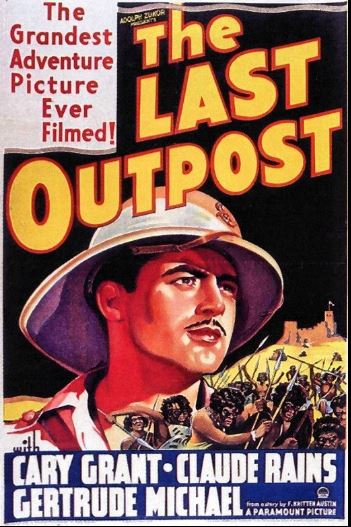
“They’re still showing The Last Outpost. My wife and I saw it last weekend,” Marty contributed. “Not bad.”
“Who’s in it?” Waddell asked. “What’s the story?”
I could see by Wilder’s face he wanted to return to the earlier discussion. We knew John enjoyed pontificating, as the eggheads liked to say, and his soapbox was just getting warmed up. But Rob relished slowing the retired man’s word volume every so often, like a hitter stepping out of the batter’s box to break a pitcher’s rhythm. Though Waddell did so with the respect owed the retired detective. But, before Wilder could continue his discourse, we had to deal with the matter of my pal’s entertainment needs. John’s fingers drummed the table impatiently.
We knew John enjoyed pontificating, as the eggheads liked to say….
“Cary Grant,” Donovan interjected, “and that Invisible Man mug. What’s his name?”
“Claude Rains,” I helped, though I realized it might irritate Wilder. “The movie is about two British officers during the Great War. They’re also showing newsreel footage of the China Clipper’s takeoff from San Francisco to Manila on its inaugural flight last month. Quite a crowd showed up for the sendoff.” I paused, before continuing, “Ever notice how they label events or things ‘Great’ when they aren’t that great to people who have to suffer through them? Like ‘The Great War’ and ‘The Great Depression’?”
Harry grunted his agreement, pushed away from the table, and moved to get the group another round of drinks.
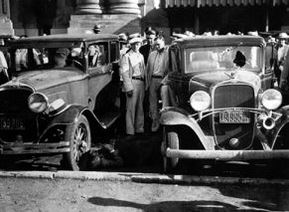
“Yeah, Gil, that is odd.” John Wilder was taking the conversation back in the direction where his interest lay. “But as I was saying, the criminals today are just nastier than they’ve been in the past.” He leaned over the table on his elbows. “I might agree with you, Rob, that they’re simply getting more attention if it were only one or two, but look at the facts. In the last couple of years, they’ve repeatedly used senseless gunfire or died in gunfights trying to avoid the justice due ‘em. And they don’t give a rat’s ass who gets hurt in the process.” He started ticking off on his fingers, “I’ll start with the Kansas City Massacre back in ’33 at the Union Station there. Bystanders all over the place. Four law-enforcement officers dead. The bums even killed the mobster they were trying to break free from federal custody.
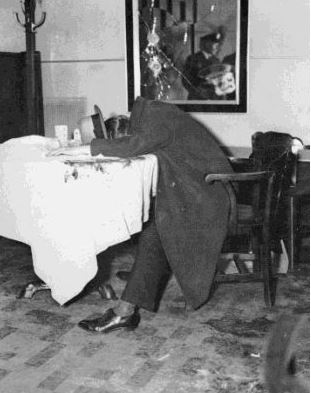
“Then, you had Dillinger killed in Chicago, Baby Face Nelson, also in Illinois, Pretty Boy Floyd in Ohio, and that Barrow gang pair in Louisiana. Those were in the last year. That’s just to name a few better-known outlaws. I understand the only reason Machine Gun Kelly didn’t shoot it out a few years ago was because the law caught him in an apartment early in the morning and unarmed. Then there was ‘Shotgun’ Ziegler, who they shot to death last year from a passing car out in front of a restaurant in Cicero. Hell, two months ago somebody shot Dutch Schultz to death in a family restaurant in New Jersey. He–”
“Sure,” Marty interrupted, “but weren’t Ziegler and Schultz killed by other gangsters?”
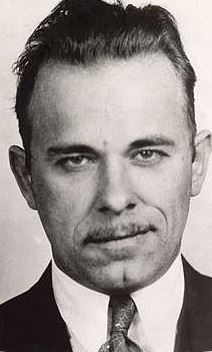
“My point, Marty,” Wilder sighed, “is these criminals will even shoot up a family restaurant, an occupied street. Remember,” he pressed, tapping the table with a forefinger for effect, “Dillinger died in a hail of bullets on a sidewalk outside a movie theater with civilians everywhere.” His voiced raised slightly, “And recall that three weeks earlier Dillinger’s gang had robbed a bank in South Bend, Indiana. There, they opened fire in a pointless shooting spree, killing a police officer and wounding four innocent bystanders.” The trim, handsome Wilder leaned back in his chair and rubbed his chiseled jaw. “And don’t forget what the crumbs did to Walter Liggett last week.”
“Who?” Donovan had never been one to keep up with current national affairs.
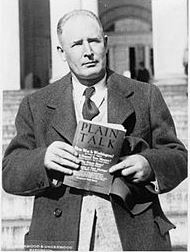
“Walter Liggett. He was a newspaper editor who’d crusaded against the political corruption and criminals created by Prohibition,” John explained. “Anyway, when he wouldn’t give up his fight against the sleaze, they mowed him down with a chopper outside his apartment. And in front of his wife and kids! His family was only inches away from the shooting! The killer coulda hit the kids!” He shrugged, “Mrs. Liggett and other witnesses identified a prominent mobster as the shooter, but they’ll never get a conviction.”
“…when he wouldn’t give up his fight against the sleaze, they mowed him down with a chopper outside his apartment.”
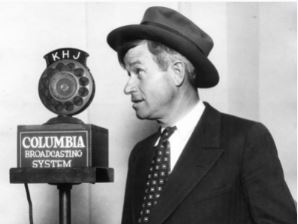
“Speaking of newspapers,” interrupted Waddell with a wry grin, “you know what I miss? Will Rogers’s column.” The beloved Oklahoman had died in a plane crash in Alaska in August. Wilder squinted in frustration as Rob continued, “And listening to him on The Gulf Headliners on Sunday evenings.” Those at the table mumbled their agreement. “Yeah, they’ll never replace ‘Will Rogers and his Famous Alarm Clock.’” It was the way they had introduced the show toward the end of its run.
In the momentary pause that followed Waddell’s reverie, Wilder took the floor again. “As I was saying, I tell you they just don’t care anymore! Yeah, Dirty Ernie was a yegg of the first order. But he never did soup jobs. He wasn’t a dub by any means. Just the victim of bad luck on occasions. When he’d get pinched, he took his medicine. And the poor lunger never hurt nobody. We need a better class of criminals nowadays,” he chuckled sardonically.
“On the topic of old timers,” Harry asked, as he returned with a tray of drinks, “whatever happened to Fat Tony Mitchell? He disappeared all of a sudden.”
As the barkeep dealt the libations among us and reclaimed his seat, Waddell responded. “Oh, I got word Fat Tony dropped dead a year ago out in Topeka.”
“Oh, yeah? What’d the guy die from?”
“I understand it was his heart and liver.”
Harry’s face showed a mild shock. “Really?”
“Yeah,” Rob said, pausing slightly. “Complications of his heart and liver.”
“Huh!” Harry’s surprise remained.
“Yeah,” the detective chuckled. “Somebody complicated those vital organs with three slugs from a forty-five.”
Wilder joined the chuckle but said nothing. We used the pause in the retired detective’s opining to wet our whistles. You might conclude John Wilder had spent too much time alone on the chicken farm he’d bought when he retired, and not enough time talking with other human beings.
Detective Donovan broke the silence by setting forth an outlook of his own. “I’m gonna miss guys like Cruickshank.” In unison, the small group gathered around the table, swung heads toward Donovan. “Well,” he shrugged faintly, “his kinda lug was good for a couple of burglaries a year. Maybe a strong-arm robbery. Small-time crap such as that. Nothin’ serious. In and out of jail, regular as clockwork. Gave a Joe such as me a sense of job security, ya know.”
I smiled. With his ineptitude at detective work, Donovan needed every bit of the “job security” he could get.
Little did those of us gathered at Harry’s that night realize how prophetic Detective Wilder’s words would prove to be in only a short time.
* * *
A week later, I was in my office going through the city directory. I was hunting for a person whose name had come up in a bond fugitive case I was working for Murray Hertz, a local bail bondsman. The object of my search had had a fair-weather girlfriend who might give me a lead to his whereabouts, if I could find her. As my finger edged down the page listing the last name “Jones,” I grew to realize how many folks with that handle there were in our city. Forget the “needle in a haystack” routine, I was looking for a needle in a stack of needles.
Suddenly, an urgent knock sounded at the office door. Holding my finger in place on the book, I yelled, “It’s open!”
After a brief period of the knob being fumbled with, the door opened. A scruffy-looking informant I used occasionally, known far and wide by the ambiguous moniker of “The Crawler,” burst into the office. He slammed the door behind him. His eye which toed out was moving erratically. The man pulled off his slouch hat and started pacing back and forth. I couldn’t tell whether he was gowed up on something or in desperate need of a fix of some sort. “Need your help, Gil,” he huffed as he moved, wringing his hands.
He slammed the door behind him. His eye which toed out was moving erratically.
I marked my place in the telephone directory with a pencil and leaned back in my chair. This mug wasn’t getting any easy scratch from me, especially to blow on muggles or hop. I was nobody’s soft touch. “Take it easy on the rug, fella. You’ll wear a path in the thing.” I set fire to a gasper. “Exactly what is it you want, Crawler?”
He glanced around as if someone might have sneaked up on our conversation. “I got this valuable information the coppers will want to have. I–”
“You might have noticed the lettering outside the entrance you just came through,” I sighed, “said nothing about the police department being housed in here.” I returned to the directory to take up my search. “Take your information to the coppers.”
My visitor inhaled sharply. “I can’t do that, Gil! And you know it!” He leaned over my desk, sweaty and bug-eyed. “Why’re you doin’ me this way?” For several reasons, I was aware the crumb would never go to the police with any information. For one thing, the idea that a fellow ne’er-do-well might see him going into or coming from the police station not under arrest scared him to death. It was a surefire way to get his teeth kicked in, or worse.
Another reason was The Crawler’s unnatural fear in the presence of a uniformed man with brass buttons and a badge. Still another was my informant pal had a criminal record. He’d done nothing major, mind you, but he was a good-for-nothing wastrel. And the coppers might throw him into a cell just for the hell of it. A man, with a drug addiction such as my snitch’s, was never a pretty picture in lockup.
The druggie was more likely to come to me with any relevant information he’d gleaned from the city’s underbelly. He had a good ear for reliable rumors on the street. The hophead always passed his information along to me for a price. That way, he got the cash to feed his habits. Meanwhile, I, in turn, would take the dope to a pal at headquarters. If it turned out to be a good lead on something, I garnered points with the coppers. In my racket, that was no minor thing. And The Crawler knew better than to screw me on anything. I’d make his life miserable. Extremely miserable.
I looked up into his pleading, contorted face. “Whatcha got, Crawler?”
He fidgeted onto the front edge of a visitor’s chair. “You know the jewelry heist over on Dunbritan?”
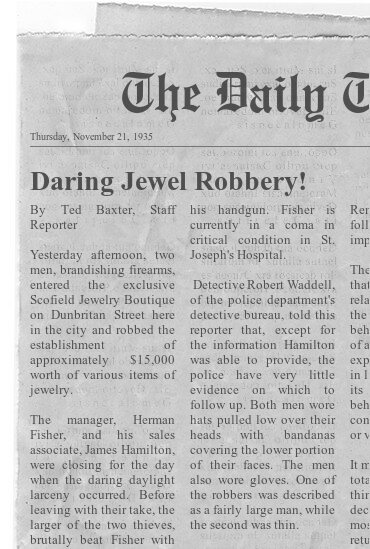
I nodded. The account of the armed robbery had been in the morning editions. A couple of goons had knocked over a fashionable jewelry store at closing time the evening before. Both men had worn hats pulled low and bandannas. So no usable descriptions came from the witnesses, just one sizeable mug and one thin fella. The article reported the larger of the two robbers pistol-whipped the store manager badly for no apparent reason. The poor sap was in a coma over in St. Joseph’s Hospital. And they got quite a haul from what the dailies said. The job didn’t sound mob-connected.
“Well, I know who did it!” Something had The Crawler wound up now. “Okay, okay, I don’t know their names, but I can show you where they’re holed up!” He cut me off when I started to speak. “They’re in an apartment on the second floor of the Hosch Apartment Building on Lexington. At least I think that’s the floor. Word is they’re waitin’ for a fence who’s comin’ in from Chicago to get the swag! The coppers gotta hurry,” he finished impatiently.
I was familiar with the Hosch. The place was a run-down dump on a once-respectable street near the river. Several months earlier I’d liberated a bail jumper from the joint and returned him to his bondsman, Murray Hertz. “What’s the apartment number?”
I was familiar with the Hosch. The place was a run-down dump on a once-respectable street near the river.
“I dunno, Gil.” He read my face. “I swear! But it’s on the second floor. I think. A … a associate of mine lives at the Hosch. He saw ‘em when they come back carryin’ the loot and heard ‘em talkin’ about what a piece of cake the job was. He showed ‘em to me when I was at his flop this morning.”
The rags had said the robbery was the work of two hooligans. But possibly they had a lookout or a driver or both. I wanted to keep the coppers from walking into a hornet’s nest. “And it’s only the two of them?”
“That’s what he said, and that’s what I saw.”
“What’d they look like? Height, size, hair color?”
“I dunno, Gil,” he whined. Shaking my head and leaning back in my swivel desk chair again, I formulated a plan of attack. But I needed to pin The Crawler to specific descriptions. “Aw, Gil!” His eyes were now doing a dance to music only his dope-addled brain could hear. “I–okay, okay. One of ‘em is three or four inches taller than you and bigger. Muscle-bound. Mean lookin’ scar on the right side of his forehead. Black hair. The other one’s built same as me. Maybe a little shorter. Reddish hair.”
As The Crawler twitched his way through the descriptions, his portrayal of the pair didn’t ring any bells with me. Many down-and-outers called the Hosch home, at least for a time. “You’ll have to do better than that, my friend. Here’s how we’ll play this. You and I are driving to the Hosch. And you’re going to point them out to me.”
“No, Gil. I don’t wanna get anywhere near those two!” He tugged at his worn whipcord jacket. “Besides, I’m in kinda bad shape.”
“That’s not lost on me, pally. But you want to get paid, right?” He nodded vigorously. From my billfold, I retrieved a fin. I held the thing between two fingers and extended it toward the doper where he could see it.
“Hey this is worth more than a stinkin’ five dollars!” He was getting more jittery as the minutes passed.
I pulled the dough back into my palm. “This is a down payment, Crawler. After you point them out, I’ll give you the five. If the rap pans out, I’ll add another fin to the pot. For your information, my name’s not Henry Morgenthau.” He gave me a blank stare. “Besides, times are still tough for us working folks. Take it or leave it. Savvy?” I knew the answer to my offer. He blinked hard and nodded. He seemed to be on the edge of a deep abyss.
I set the city directory aside for the time being. Grabbing my hat and overcoat, I held the door open for him. He moved through it like a man going to the gallows. He likely expected to deliver his news and be off with whatever cabbage he might weasel out of me. I’m not that easy.
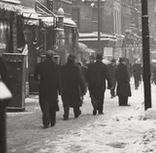
I drove the LaSalle through the continuing snowstorm toward the apartment building. As we approached it, The Crawler reached across the seat and slammed his arm over my chest. “Stop! Stop! That’s them!” I braked as carefully as possible on the slick street and followed his eyes to two bundled-up mugs ambling along the snow-covered sidewalk toward the front of the apartment building. They appeared to fit the description given by my companion. “Those are the two robbers!” he exclaimed as he slid lower in the seat.
The Crawler reached across the seat and slammed his arm over my chest. “Stop! Stop! That’s them!”
“Are you sure?”
“Yeah! It’s them all right! The skinny one is a little gimpy. Limps on his bum left leg.”
I watched as they passed through the building’s embrasure. Easing the LaSalle to the curb, I turned to my companion. “Okay. Stay here. I’ll be right back.”
“My money! I–”
“You’ll get it when I get back. And you’d better be here when I get back.”
As much as the icy conditions allowed, I hustled across the street and into the Hosch’s lobby. The pair was waiting for the elevator, removing their overcoats and shaking snow off their hats when I drew up beside them. The bigger ruffian gave me a quick once-over. I pretended not to notice. He had a hard-knuckled look. That scar on his forehead didn’t soften the effect any.
The second hood appeared lean and hard. Not that I was on speaking terms with every gangster in town, but neither ruffian looked familiar to me. Perhaps they were only passing through our burg and chanced upon an easy score. Or maybe they were planning to settle into a life of crime in our fair city. Either way, they’d be changing their plans at the insistence of the local coppers or the south side mob in whose section of the city they’d pulled the jewelry job. Territory was territory, after all.
When the elevator opened, I stepped in ahead of them and moved to the back of the car to keep them in front of me. The larger one didn’t take kindly to my maneuver. After he pressed the button for the second floor, he turned to me. “What floor you want, bub?” he growled. I gave him the top floor’s number. He half-turned back toward me again. “I’d say, you look to be a copper.” I said nothing. “Well, are you, Mac? You a bull?”
I laughed casually but squared up to him and looked him in the eye, a straight-from-the-shoulder, hard look. “Not even close, buster. Just a mug minding my own business.”
The big man’s face gave way to an ironic smirk as he nodded.
After the pair got off the elevator at their stop and started along the hall, I punched the button for the third floor. There, I exited the lift and took the stairs down one level as quickly as possible. Quietly cracking the entry to the corridor, I saw the pair going into an apartment at the far end of the hall. When their door closed, I eased into the passageway and walked to their place. Apartment two-twenty-two. I listened at the door for as long as I thought reasonable and necessary. Only two voices came to me through it.
Quietly cracking the entry to the corridor, I saw the pair going into an apartment at the far end of the hall.
I returned to the LaSalle and found The Crawler still slumped low in the seat, as fidgety as ever. “Okay. Let’s roll,” I said, as I teased the motor alive and pulled the heap out onto frozen Lexington Avenue.
“Did you get what you needed?”
“Yeah.”
“How about my money then?”
“When we stop, you’ll get your fin, Crawler,” I promised. “Right now, I’m trying to keep control of this crate on the ice.” Police headquarters was a dozen blocks east of the Hosch, also on the south side of town. Fortunately, traffic was lighter than usual, owing to the weather.
* * *
When I eased my car to the curb at the station house, The Crawler went into a panic. “What’re you doin’, Gil?” he yelled. “You can’t leave me here!”
I turned and handed him the fiver. “You can wait here and I’ll get you back to your place, eventually. Or you can hail a hack, if you can find one, or you can walk. But I’ve got to get this dope to the coppers fast.” He snatched the bill from my hand. “I’ll get the rest to you when this is over.”
The Crawler moved to leave. His eyes were scanning the sidewalk erratically. Before he closed the car door, the junkie turned back to me. “It’s a good scoop, Gil. But they ain’t gonna be around long.” Holding the bill next to his face, he shook it at me and ended, “I’ll be back for the rest of my money,” before disappearing around the corner of the building. Knowing the hophead the way I did, he’d probably freeze to death trying to walk to his current dope peddler rather than shell out a nickel for a cab ride.
I gingerly climbed the icy steps of the police station to pass along to my pal, Detective Rob Waddell, what information I had. The desk sergeant told me he wasn’t sure whether the detective was in the building, adding Waddell had been working all night on the jewel robbery. It turned out the pistol-whipped fella had a connection to a joker in city hall. At my insistence, the sergeant called back to the bowels of headquarters and located Detective Waddell. The desk officer relayed Rob’s message to me he didn’t have time to meet. I asked the officer if I could speak with Waddell. He handed me the receiver. When Rob learned I had good dope on who pulled the job and where he’d find them, he said he’d be right out. Shortly, my pal appeared at a door to the lobby.
At my insistence, the sergeant called back to the bowels of headquarters and located Detective Waddell.
After I explained what I’d been told and what I’d seen firsthand, he asked the source of my information. Before I could answer, he added he smelled The Crawler’s involvement. Detective Waddell was well aware of the druggie’s inclination to come to me with tips. When I only smiled, he confided, “Well, that bit about the thin guy limping fits the description the salesman Hamilton gave us. We kept it out of the newspapers early on. Thanks, Gil.” Then Rob moved to return to his office. I asked whether I might tag along, mostly because I could identify the two men I’d seen and partly out of curiosity. “It’s just that I want to be there for the payoff.” He reluctantly agreed. I followed my pal into the corridor leading to the detectives’ area.
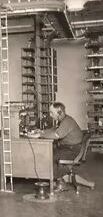
As we moved along the hall, Waddell ducked into a small room where the department had set up a makeshift communication center. He spoke to the uniformed officer sitting at a radio console and a microphone. Our city’s police department had recently followed the lead of a New Jersey department–Bayonne, Waddell had told me–by putting two-way radios in a few patrol cars.
“Get hold of whoever’s in a radio patrol car on the southwest side of town near the river. Tell them to go to the Hosch Apartment Building and set up on the alley behind it. Then wait. Don’t let anybody leave the building but don’t do anything else. Wait for me to get there. I’ll meet him there. No sirens. And radio me to let me know who the officer is.” The backstreet was a blind alley dead-ending at the building next to the Hosch. So there was only one exit the officer needed to cover.
* * *
Several minutes later, Detective Gus Donovan had joined Rob. The three of us stepped out of the building into a howling snowstorm. The blizzard’s fury had increased with the accompanying wind picking up. Snow was blowing horizontally. In Waddell’s departmental Ford, we headed for the Hosch. Rob drove with his fellow detective beside him on the front seat. I occupied the back seat. Gus kept glancing back at me, shooting dirty looks. Obviously, he didn’t care for me joining their little soiree. As we were driving away, the radio crackled. Donovan grabbed the phone and spoke to the man at headquarters. “This is Detective Donovan. What is your message?” he asked, hesitantly in clipped tones. Folks were still getting the hang of this two-way radio business.
Donovan grabbed the phone and spoke to the man at headquarters. “This is Detective Donovan. What is your message?” he asked, hesitantly in clipped tones.
Amid the static, the radio officer advised, “Please tell Detective Sergeant Waddell I contacted Sergeant Coggins in his patrol car. He is going to the Hosch Apartments and will set up as instructed. That is all.”
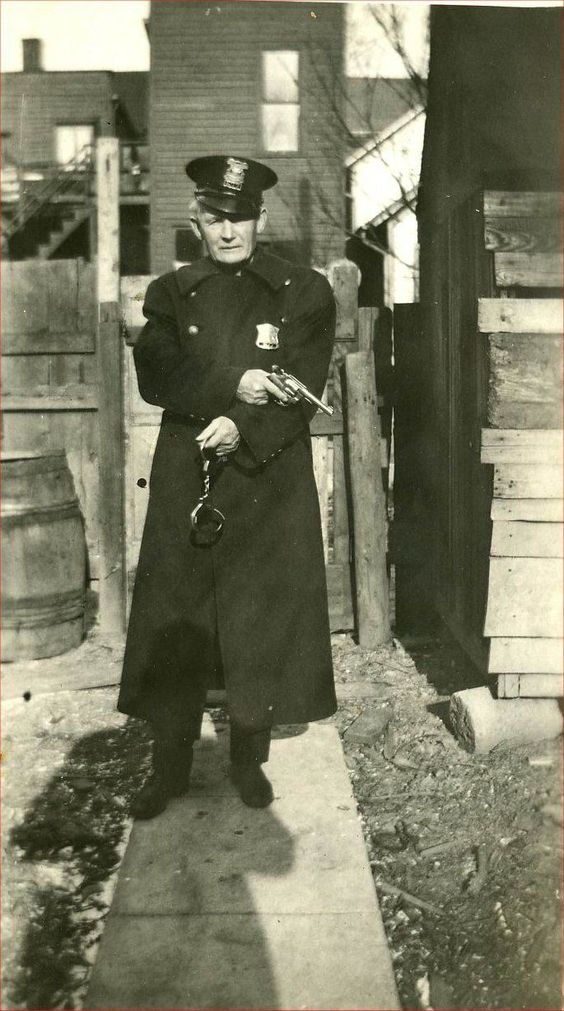
When Gus glanced his way, Waddell nodded. He moved the crate cautiously over the icy streets, navigating among weather-stalled and wrecked heaps. “Okay. Message received. That is all,” Donovan responded into the thing. Sergeant Michael “Big Mike” Coggins was a longtime, well-thought-of veteran of the police force. He’d taken my brother Marty under his wing when the kid had joined the department. During the drive, Rob filled Gus in on the descriptions of and the information he now had of the whereabouts the two men they were after.
As he stopped the car in front of the Hosch building, Waddell cut the flathead V-8 motor. Pushing his hat back on his widow’s peak, Rob turned to his fellow detective. “Gus, ease around to the alley and back up Sergeant Coggins. If either of the two mugs we’re after show their pusses, stop them. But don’t take any chances with them. So far, they’ve shown themselves to be dangerous. And armed. Get me?” Donovan nodded his understanding as he climbed out of the Ford. Rob Waddell turned to me. “Shall we?”
We scrambled out of the car and trotted into the apartment building. In the lobby, the detective grabbed my arm. “Gil, you take the elevator. I’ll take the stairs and meet you on the second floor. And watch yourself.” I knew my pal too well. Most likely, he thought the stairs provided more chances to run into unexpected trouble, were more dangerous. He wouldn’t put me in that situation, even though he knew I could take care of myself. The elevator was a safer bet for a civilian.
I silently eased out of the lift into the second-level corridor. The hall was empty and quiet except for a radio playing somewhere on the floor. After a few seconds, the door to the stairs started opening. I stepped behind it and saw Rob through the gap between the jamb and the door. I whispered his name. He moved around the thing and closed it softly.
We walked along the hallway to apartment two-twenty-two. No sounds came to us from inside. We nodded to each other and took up positions on either side of the door, our handguns at the ready. Waddell tried the knob. It turned, and the door eased open slightly. The room was as quiet as a drift of smoke. I reached around and pushed the door open the rest of the way. Still nothing. We exchanged questioning glances. The detective held up three fingers to me and slowly lowered them one by one. When he folded the last finger, we barreled into the room on our respective sides of the entryway.
The darkened room appeared empty. But the stench of death and the metallic smell of blood enveloped the place. On the far side of a bed, we found the source. The thin redheaded hoodlum of the pair I’d seen earlier in the day lay splayed on the floor. There was no question he was dead. Someone–his partner, the Chicago fence?–had beaten him to death, pulverizing his face into an unrecognizable pulp. The ferocity of the attack had splattered blood and brain matter up on the wall beside him. While I raised the shades, Waddell quickly fanned the rest of the room but found nothing of interest.
The thin redheaded hoodlum of the pair I’d seen earlier in the day lay splayed on the floor.
We met back in the hall. “Whaddya think, Rob? A falling-out among thieves?”
He glanced back into the apartment as he closed the door. “I’m not sure, Gil. Possibly. But we’ve got to find the other goon before someone else gets hurt.”
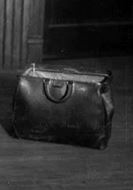
We hustled through the passageway and back to the lobby, each taking the way down we had come up earlier, just in case. As we hit the ground floor, a figure ran toward us in the dimly lighted back hall. It was the second robber of the pair. He had a small satchel tucked under one arm. When he saw us, the large man slammed to a stop, simultaneously raising the revolver in his right hand toward my detective friend. I still had my rod in my working hand and raised it instinctively, yelling, “That’s him!” Before either of us reacted, he squeezed the trigger three or four times in rapid succession. His gat clicked dry each time.
“Wait, Gil!” Waddell yelled with a hand raised in my direction. “I want him alive!” The lummox screamed something about killing us as he charged Detective Waddell. My pal sidestepped the thug and laid a terrific blow across his skull with his weapon. The fella dropped as if an enormous tree. Rob kicked the unconscious man’s weapon away from his hand. I picked it up and dropped it into my overcoat pocket. At that point, we saw blood on the shoulder of his greatcoat. As he handcuffed the mug, my detective buddy looked up at me. “Where the hell did he come from?”
I recalled from my previous visit the corridor led to an exit to the alley behind the building. “My guess is from the rear exit at the end of that hall,” I explained.
“I knew there was one some–.” My companion frowned with sudden anxiety. “Oh, hell! We need to check on Donovan and Coggins!”
We left the dormant man on the lobby floor and ran to the back door. In the backstreet, we saw a patrol car at the open end. As we sprinted against a headwind toward the thing, Waddell stayed two strides ahead of me, no doubt propelled by a sense of fraternal urgency. He kept muttering “Oh, hell” under his breath.
We saw no sign of anyone around the car. Rounding the machine, we found Sergeant Coggins lying on the icy pavement next to the opened driver’s side door. Someone had shot the old cop at least three times. His service revolver was still in its holster. The detective knelt beside him on one knee and checked for a pulse. He looked at me, shaking his head. Tears welled in his eyes. Perhaps the icy wind caused them. I wasn’t sure. “Mike,” he muttered in an absent, toneless voice. Then he muttered an oath.
The detective knelt beside him on one knee and checked for a pulse.
I surveyed the area. Gus Donovan was nowhere in sight. A discoloration on the stark, white ground nearby caught my attention. I walked to it. The fresh blood droplets stood out against the snow. A trail of the stuff led off across the street. Then I heard Waddell ask where Donovan was. Still bent down on one knee beside the dead sergeant, he was looking around frantically.
“This way, Rob,” I urged, pointing.
We hurriedly followed the blood trail toward a drugstore on the other side of the street. Inside the business, we saw Detective Donovan sitting on the tiled floor, propped up against a counter. Someone had pulled the left side of his overcoat and suit coat off, revealing gunshot wounds. Blood ran down the detective’s arm inside his shirt sleeve, then across his limp hand where it dripped from his fingertips. His gun lay beside him.
An older man in a white smock was bent over the big copper. He frantically worked on a wound to Donovan’s left shoulder and another in his lower torso on the same side. The Good Samaritan looked up at us. “This man’s been shot! I called for an ambulance and the police! I’m trying to stop the bleeding!” he blurted, as Waddell and I hustled to the wounded cop. Rob knelt next to his fellow detective and slid Gus’s weapon away.
Donovan slowly opened his eyes. “Rob,” he gasped. “Rob … Coggins?” Before Waddell could respond, the injured officer’s eyes closed again.
Rob looked to the white-smocked stranger. “Will he make it, Doc?”
The man shook his head and proclaimed, “I don’t know! Hell, I’m only a pharmacist. I’m doing the best I can!”
The detective put a reassuring hand on the man’s shoulder. “Sure! Sure! Thanks, Doc! This man’s a police detective. Same as me. We appreciate everything you’re doing.”
In that instance, a uniformed officer, name of Syndergaard, burst into the store. I knew him to be a good, hard-nosed copper who brooked no crap from miscreants. Before the door closed behind him, we heard sirens in the distance. His watery eyes looked stunned. “Sergeant Coggins is dead, detective!”
Before the door closed behind him, we heard sirens in the distance.
While the druggist continued to work on Donovan and I tried to check the bleeding, Waddell met with the copper. “Yeah, we know. The same bastard who killed him also shot Detective Donovan. Listen, the shooter’s lying handcuffed in the Hosch’s lobby, along with a satchel of swag. Get a few other uniforms on your way back there. They’ll find a body in room two-twenty-two that’s also his handiwork. You take charge of the goon and the satchel and make sure they get to headquarters.” As an afterthought, Waddell pulled the officer close. In a low, indistinct tone, he added, “If he makes a wrong move, kill him.” Waddell’s voice trembled with emotion.
Syndergaard nodded grimly. “I just wish he’d try.”
I looked to the doc, who was too busy with Donovan to have heard much of anything. The big detective’s hemorrhaging seemed to have stopped. He moved in and out of consciousness several times. As Waddell returned to him, he opened his eyes again. “Rob … this mug came outta nowhere and started shootin’ just as I got to Mike.” He swallowed hard before continuing, “Mike …. He shot Mike Coggins. Before I got my gun out, he … he shot me. I think he was gonna kill me. I returned fire. He ran away. Think I hit him.”
“You did, Gus. Got him good. Just hang on. An ambulance is on the way. You’ll be fine. Just hang on.” Donovan closed his eyes again. At least he was still breathing. My detective pal rose. He looked at me. “Why the hell didn’t we hear the shots, Gil?”
“Who knows, Rob? The wind was howling. We were at the far end of the alley from Coggins’s patrol car. Maybe it happened while I was in the elevator and you were in the stairwell. That could’ve deadened the sounds some. I don’t know.” He nodded, uncertain.
An ambulance arrived, and the attendants came in. We stepped out of their way so they could take care of the injured officer. In short order, they had Detective Donovan on a stretcher and loaded into the meat wagon. As it pulled away, a second ambulance was loading Coggins’s body.
Waddell watched and waggled his head sadly. “That poor son of a gun. He was going to retire in a couple of months. It’s not just another dead man, Gil. That’s one of our own.” After a pause, he added, “Somebody’s got to tell his wife Maggie. I guess it’ll be me.”
“I’ll go with you, if you’d want.”
“Nah. I’ll take a uniformed officer with me, Gil. Thanks anyway.”
“Could Marty help?” I suggested. I wasn’t sure how my brother might feel about being volunteered, but the cat was out of the bag now. “Mike was a mentor to him when he first joined the force.”
“Good idea, if Marty’s okay with it.” Before we left, Rob returned to the man in the white smock, got his name, and thanked him for what he’d done for Gus.
We ambled to the apartment building, lost in thought. Syndergaard had already transported the big gangster and his satchel of swag to the station house. Rob relieved me of the man’s weapon and gave it to an officer with instructions to hold it for a ballistics match. Detective Waddell directed the other coppers who’d arrived regarding what they needed to do.
Rob relieved me of the man’s weapon and gave it to an officer with instructions to hold it for a ballistics match.
Then we made our way to the hospital to check on Donovan. Gus was already in surgery by the time we arrived. We waited. After an hour, a doctor came out to report the big detective would pull through. One slug, he told us, had barely missed Gus’s heart. He suspected the detective only survived because his heart had contracted at the time instead of dilated, and the bullet just missed it. As he walked away, he said his patient was still under the effects of the anesthesia and wouldn’t be ready for visitors for several hours.
* * *
Without my car, I ended up joining Waddell when he made his way from the hospital to the high school where Maggie Coggins taught. The detective had someone contact Marty, and he met us there. Despite the weather, the schools were open, and hers was letting out when we arrived. Joined by the principal, we walked to Maggie’s classroom.
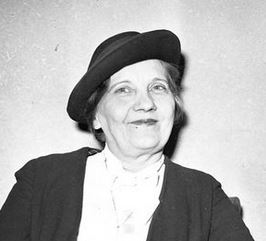
The matronly woman was packing books away when we entered. At first, she smiled when she saw Detective Waddell. Then, as if the import of his presence struck her, her face convulsed, and she staggered, grabbing her desk for support. Maggie dropped heavily into her desk chair, as her eyes teared up. The next half hour was one of the most emotionally difficult and draining times of my life. I’d rather crawl over two miles of broken beer bottles on my hands and knees than ever go through something like that again.
Marty remained with Mrs. Coggins while Waddell and I went to police headquarters.
* * *
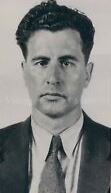
I waited in the detective’s office while he checked in with his lieutenant. Upon his return, Rob informed me they’d identified the thug who’d shot Donovan and Coggins. “His name was Ed Spooner, aka ‘Butcher Boy.’ He and his now-dead running mate, one Augie Porter, had been on the lam from Buffalo, New York. The authorities there want them for several armed robberies and a shoot-out with local police before their escape. In the gun battle, they killed one officer and wounded another. The pair knocked over a bank or two along their way here. That’s how the Buffalo police tracked their movements. This afternoon they notified us the pair might be headed in our direction. By the way, the satchel Spooner was carrying held the jewelry taken in the robbery.”
When Waddell said he was going to the jail to see Spooner, I asked to go along. He exhaled forcefully, as if aggravated. After I reminded him I was the source of the information that brought about the killer’s capture, he relented.
* * *
Spooner was lying on a bunk when we approached his cell. They had treated his gunshot wound, delivered by Donovan, and one arm was in a sling. He also had a large bandage on the side of his head where the detective sergeant had slammed his service revolver. The jailhouse bull who’d accompanied us yelled at the inmate to get up.
Spooner looked our way and grinned. “Come to apologize for tryin’ to split my skull, copper?” He rose casually and stepped toward the cell’s bars.
Waddell met him there. “No, Spooner. I’ve come to tell you when you fry in the chair here, you’ll only do it for one dead police officer, not two. The second one you shot will pull through. But frying only once is still too good for you.” After a pause, nodding toward me, he added, “Oh, yeah, and we’ll be there to see you off.”
“I’ve come to tell you when you fry in the chair here, you’ll only do it for one dead police officer, not two.”
Spooner moved closer to the detective as he spoke through the bars, “One survived, huh? Well ain’t that just too bad. And did the one who croaked cry while he was dyin’? Can you still see his face, his eyes, detective? I can.” A smirk played across the killer’s face. “I’ll jump into my grave laughing, knowing I took another dirty copper with me!”
In one quick, unexpected move, the detective reached through the cell’s framework, fastened both hands on Spooner’s shirt collar, and jerked him forward hard. The killer’s face crashed into the horizontal bar at face level with a sickening crunch. Bones shattered, cartilage tore. The punk fell to the floor, the bridge of his nose spurting blood. He didn’t move. Rob acted as if nothing had happened as he turned to walk away. I glanced at the bull. He was studying something unseen on the opposite wall.
“John Wilder will be coming back to town for another funeral. Hell, maybe he was right. I guess I’ll have to apologize to him,” Waddell muttered as we left. I could only nod my uncertain agreement. ©