Funny how many of my case file accounts start with me either drinking or eating–usually drinking. This one started over ham and eggs at The Wayside Café one morning. I was dawdling and scanning one of the daily rags our city claimed as a newspaper while waiting for my breakfast.
In this Great Depression election year, it seemed Herbert Hoover couldn’t do now for his fellow citizens what he’d done for many people on other occasions. In their time of need, he’d helped the Belgians during the Great War, the Russians during their famine back in ’21, and the lower Mississippi River residents in ‘27. To make matters worse for the sitting President, the paper reported 17,000 World War I veterans and their families had gathered in our nation’s capital. They were there to demand cash-payment redemption of their service certificates. The broadsheets referred to them as the “Bonus Army.” The newly nominated-for-President Franklin Roosevelt and the Democrats were giving Hoover hell over his apparent ineptitude.
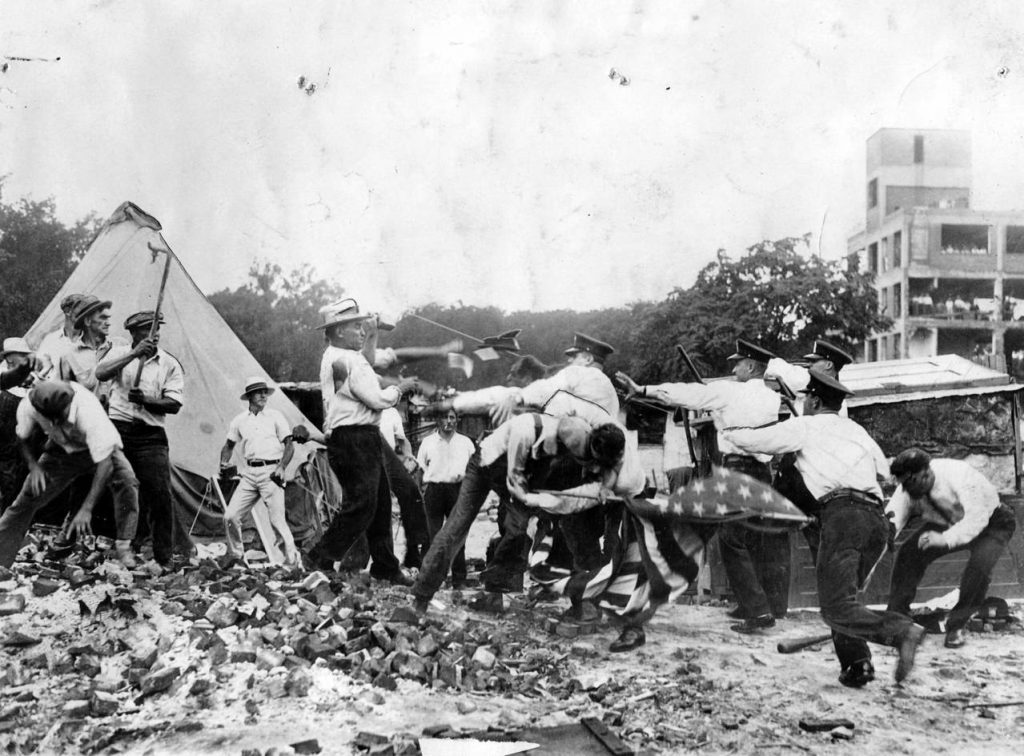
Adding to his misery, the Bonus Army was rioting with the Washington, D.C. police and the U. S. Army under the local command of this mug named Douglas MacArthur.
With a head shake and a heavy sigh, I started turning to the sports pages. Along the way, something of an obituary caught my eye. Flo Ziegfeld, known as the “glorifier of the American girl,” had died of a lung infection the previous Friday. Although I’d never seen one of his productions, I’d always read and heard he’d been quite a showman.
Along the way, something of an obituary caught my eye.
On the front page of the sports section, there was a big spread on the summer Olympics getting ready to open at the recently expanded Los Angeles Memorial Coliseum. Besides increasing the seating capacity, the newspaper article told of the Olympic-themed changes they’d made to the stadium. We’d done swell in the winter games at Lake Placid earlier in the year, I figured, but the paper was touting the expectations of the hosting nation this summer. Not much interest for me there, though. My Reds were having another dismal season, despite an excellent year at bat by Babe Herman. It was another exceptional year at the plate, too, for Ernie Lombardi. The lumbering catcher was one of my favorites on the team. Nonetheless, at this point in the season, it looked like another cellar-dweller ending for the team. Another sigh, which I also used to cool my coffee.
My breakfast came, along with a java refill. Other than the news from Washington and Cincinnati, everything was right with my world.
On the table across from my plate was an oversized envelope with the photographs and a report on the latest divorce inquiry on a “loving couple” named Polanski. I’d been working the job for Richard Head, attorney-at-law. Head had a reputation as a late riser. He tended to be tardy. Always. In fact, the judges he appeared in front of at the local courthouse jokingly referred to him as “the late Mr. Head,” as if he’d recently passed away. I was waiting until he meandered into his office to deliver the fruits of my efforts on his client’s behalf.
Going into Head’s office to deliver my work product was always a minor challenge. There, I had to circumnavigate his secretary, Elvira, to get to him. Every time I delivered a report to Head, I had to go through what I called a “ritual dance” with the hard-bitten old prune. It went something like this. I’d arrive with my report to deliver to Attorney Head. Elvira would thrust out her mitt, steadfastly demanding I leave the documents with her to give to him. Just as stubbornly, I’d clutch the envelope against my chest, refusing and claiming a need to speak with the lawyer in person regarding vague issue with the inquiry.
Eventually, I’d gain access to the man himself. This was crucial to my continued ability to eat and drink. Not that the shyster was an outright chiseler, but he was notoriously slow in paying for work done. He was one of those “the checks in the mail” or “the check must’ve gotten lost in the mail” kind of fellas. I always held the file “ransom” until he paid me on the spot.
Not that the shyster was an outright chiseler, but he was notoriously slow in paying for work done.
Truth be told, I hated working these domestic jobs. Yeah, they fed the bulldog, so to speak, but this one had kept me out of town for over a week. I could only hope Harry, my full-time bartender, part-time shrink and proprietor of Harry’s Paradise Tavern, hadn’t leased my favorite barstool to someone else.
* * *
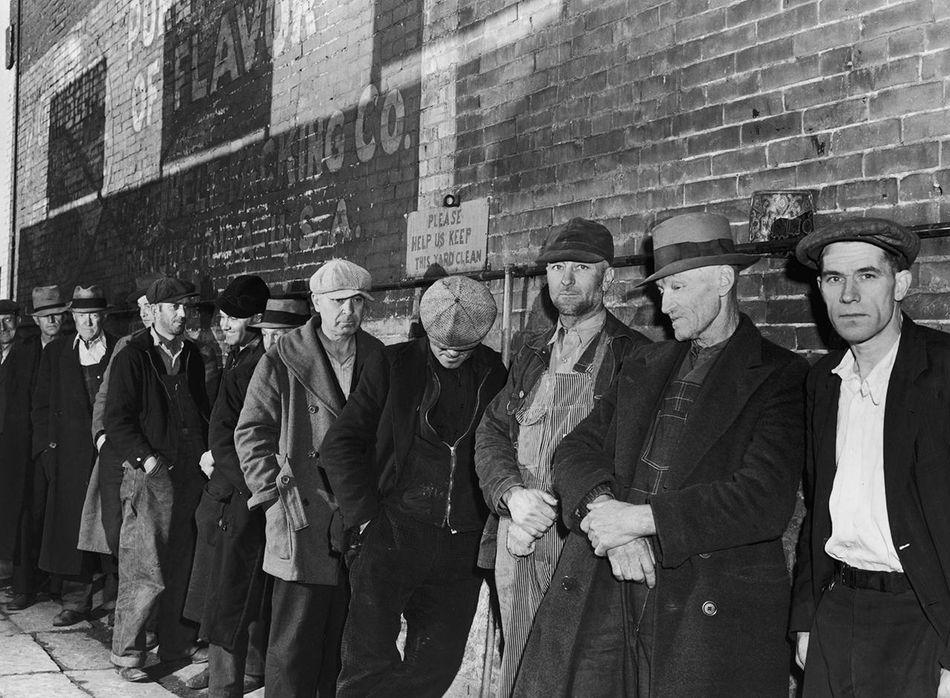
After leaving the Wayside, I walked to Attorney Head’s office building. The morning air was still cool. A drizzle started to fall as I ambled. The weather and the hike didn’t help my mood any. Along the way, I passed a crowd of men, standing in line for a soup kitchen, a sign of the hard times the country was experiencing. More than a few were sporting what had become known as Hoover flags. At a time when the national unemployment rate hovered just under twenty-five percent, these sights were common. Factories closed and homes and farms went into foreclosure regularly. Something had to change. Hopefully, the election coming up in November might bring something better.
* * *
Ultimately, I made my way to the Monroe Building and up the fourteen stories to the attorney’s office. Later, having delivered the file and received payment in cash, as was now our usual practice, I departed. At the elevators, I pushed the call button and waited patiently. During the next minute or so, several people came down the stairs, which was of the open variety and emptied at each floor onto the corridor.
Finally, after an extended period of waiting, someone in the crowd groused over the elevators not working. I took the hint and joined the herd for the trek downward. Several floors below, a scrum had gathered in the hall around the staircase. They were gaping at someone or something farther down the way. My natural curiosity–I am in the investigation game, after all–got the better of me. I joined the rubberneckers. We heard a copper, who was holding both elevators open there, tell someone he was doing it so the things could be available for “official use.”
My natural curiosity–I am in the investigation game, after all-got the better of me.
Peering over and between the heads of my fellow gawkers, I saw the lanky form of my copper buddy, Detective Sergeant Rob Waddell, a scant distance away. Before I could get his attention, a uniformed policeman came up behind me, pushing his way through the mob. I turned and found it was my big brother, Marty, a proud member of our city’s lawmen’s guild. When I tugged at his sleeve, he quickly whispered he didn’t know what was happening. He’d just been told by his sergeant to come to this floor.
The big guy moved away and stopped to speak with Waddell, who turned, looking in my direction. After a brief, low conversation, Marty returned to the gathering and started trying to disperse them. He paused long enough to tell me the detective wanted to see me. As the horde scattered, I approached Waddell, who greeted me warmly. We hadn’t seen each other in two weeks, which was unusual for us.
“Nothing that big,” Rob responded to my question regarding the commotion. “Some poor stiff offed himself in an office last night or this morning. The cleaning woman found him when she came in early.” He chuckled when he realized the pun he’d uttered, then blew air as he spoke, “They called us on the thing, as if we didn’t have enough actual crime.”
“Some poor stiff offed himself in an office last night or this morning.”
He paused and smiled, jerking his chin toward a small group clustered around an office door down the passageway. “Detective Donovan caught the call. He’s in there now, clearing up any loose ends.” Rob took a funny position on my outlook about his fellow detective. And, in my estimation, that was a loose use of the term when applied to Angus Donovan. Waddell knew we had a contentious history and of my low estimation of the flatfoot’s abilities as a copper. On one hand, my pal wished I wasn’t so outspoken when it came to my attitude toward Gus. On the other, he liked to pluck my nerves by bringing his name into a conversation every so often. As he spoke, Waddell moved toward the office door. I took it as an invitation to join him.
We made our way past the small group of onlookers and stepped through the doorway into the large office space. The room had rows of neatly arranged desks. The stench of death and the metallic smell of blood permeated the joint. I saw Donovan’s rotund form standing over the body of a man sprawled in a desk chair. The corpse sat as if thrown backwards in the seat. The dead guy’s harshly contorted face, a grayish white, showed traces of blood. He had a gunshot entry wound at his temple. His eyes were a faint dull gleam under partially lowered lids. From angle I had, it looked as though a good portion of the back of his head was missing. Donovan looked around vaguely and scribbled something in a little notebook. There were a few uneasy-looking office employees standing in a small group to one side, hiding their eyes for the most part. One woman was sobbing softly into a hankie. A tall, thin black woman stood alone against the far wall. “That’s the woman who found the body,” Waddell informed me, nodding in her direction.
For some reason, the cleaning lady caught my eye momentarily. A handle protruded from the mop on the floor up through her arms, folded across her chest almost defiantly. The woman was watching Donovan intently. Every so often, her head shook ever so slightly. She struck me as someone who had something pertinent to say, if given the chance. Gus didn’t seem to notice her.
After a minute or so, the investigator joined Rob and me. “Well, there’s nothing more to do here, Rob. Suicide, plain and simple. Let’s go and let the meat wagon boys do their job.” He turned to me, as if seeing me there for the first time. “What’re you doing here, shamus?” he snarled.
“Just stopped by to see how a real professional operates,” I answered sarcastically. Det. Waddell cleared his throat purposely. He often served as the referee in my encounters with his fellow detective. “Say, Gus, did you ask the cleaning lady about the situation?” I asked quietly.
Donovan leaned toward me, as if to impart a secret. “I don’t need to learn nothing from a dinge, Tanner.” Despite his confidential demeanor, he raised his voice such that it carried throughout the sizeable space. The cleaning woman’s eyes flinched at his words. The office workers briefly gaped at the detective. Waddell winced at his fellow detective’s statement. I’d often thought the buffoon had learned to whisper in a sawmill.
Despite his confidential demeanor, he raised his voice such that it carried throughout the sizeable space. The cleaning woman’s eyes flinched at his words.
I looked to Waddell while speaking to Donovan. “I read somewhere Seneca said ‘Chance makes a plaything of a man’s life.’ You never know where your chance for answers may come from.”
Donovan took my meaning. Sort of. His gut pressed against me menacingly. “And I ain’t taking no advice from some bum in upstate New York any more than I’ll take it from a smoke,” he proclaimed loudly with brutal breath. “It’s a suicide, Buster Brown,” he declared, waving a piece of paper in my face. “The stiff left a suicide note in his typewriter. There’re powder burns on the side of his head and this gat was by him on the floor,” he added, displaying the weapon in question. “So why don’t you just dangle?”
My eyes passed among the paper, the iron, and the man holding them. There was no signature on the page. “I guess there’s no sense in having those checked for the dead man’s fingerprints now that you’ve ham-handed them.” The guy’s death may well have resulted from a suicide. From what I could see, the scene had the hallmarks of a self-inflicted end. But I’d also seen the sloppy way Gus approached almost every investigation he conducted.
Donovan bristled. “Listen here, you punk–”
“Never mind, Gus,” Waddell interjected softly but firmly. “Give ‘em to the coroner’s boys for evidence at the inquest. And for God’s sake, finish up so we can get out of here.”
“All right, boys, this hunk a meat’s all yours,” Gus called across the room to two waiting men. There was a faint, collective gasp from the dead man’s coworkers. The oblivious detective handed a coroner’s man the suicide note and the handgun, saying, “Tell the cutter to call me if he needs anything.” The pair gingerly moved the deceased from his chair to a stretcher. Their careful movements appeared to have less to do with respect for the dead and more with their wish not to mix with the man’s bodily fluids.
As the men carried the body out, Donovan turned his attention briefly to the office staff huddled together. He made a hand gesture in the direction of the blood and brain matter covering the floor and wall behind the dead man’s desk. “You’re gonna need her,” he jerked his thumb at the black woman, “or somebody to clean this mess up. We don’t need it no more.” The group could only gawk at the graceless detective, who turned on his heels and went out the door, satisfied with a job well-done.
We followed the stretcher to the elevator where the coppers and the coroner’s men filled the car. Gus and I exchanged unhappy grunts by way of farewells. I told Waddell I’d wait for the next elevator run. We agreed to catch up later. In truth, I wanted to mosey back to the office.
When I did, the person I wanted to speak with was cleaning up an extremely nasty mess. She appeared to be miserable. My notion seemed less important at the moment. Instead, I met with the office manager, who assumed I’d been with the Waddell’s team. I let him assume. He looked in a card file and gave me the information I sought. I jotted down the home address of Mrs. Viola Turner, the cleaning lady. At the time, I didn’t know whether I would do anything to soothe the uneasy feeling gnawing at my insides.
* * *
Regardless, I had other business, which had been on hold while I was out of town on Attorney Head’s matter, to take up my time. First, I made a quick stop by my bank to deposit the money I’d received from Head. Then, I traveled across the city to meet with an insurance executive, one Luca Carelli, who wanted me to find a missing heiress. We spent the better part of the afternoon going over what he knew of the woman and her last known whereabouts. The money his company owed the woman wasn’t a fortune, but it could’ve kept me sitting on my barstool at Harry’s for quite a spell. Carelli reiterated his determination to find the woman and to get to her the money that was rightfully hers. He hired me to do the job and paid me a nice retainer.
After completing our business, we relaxed in his richly appointed office and talked baseball over a couple of fine-quality cigars and several rounds of bootlegged Jack Daniels. Luke, as he insisted on being called, happened to be a Cincinnati Reds fan, as well. So we commiserated over the poor season our team was having.
During the conversation, the executive rose and retrieved a baseball from a shelf. I hadn’t noticed the thing before that second. He handed it to me and pointed out Ernie Lombardi’s autograph. He explained he’d had a younger brother, Sal, living in Oakland, California. The kid had been an avid fan of their local Pacific Coast League team. Sal had watched Lombardi when he’d started playing in Oakland several years earlier.
When the Brooklyn Robins purchased the big catcher and he headed east, Luke’s brother telephoned and told him what train Lombardi would be on when he passed through our city. As a favor to Sal, the insurance man met the train during its brief stop here and got the autograph.
After he’d finished explaining the story behind the autograph, Luke became somber. His eyes saddened and moistened. After a few seconds, he told me Sal died in a roadway accident the week after he’d gotten Lombardi’s “John Hancock.” He said he’d never even had time to send the autographed baseball to him. Through swimming eyes, he told me, since his brother had no kids, he’d kept the ball to remember Sal by. Luke smiled sadly and said the story had come full circle, now that Lombardi was playing in Cincinnati.
In the private investigation game, I tend to come across birds from the lower rungs of life’s ladder. I’ve become something of a decent reader of what folks truly are behind their smokescreen, if they’re sporting one. So it’s a significant day when I get to meet a good guy. At the risk of sounding corny, I saw them as islands of light in the sea of shadows my work required me to navigate. Okay, enough of the philosophizing from “Professor” Tanner. Anyway, this Carelli fellow was a right gee. I liked him.
I’ve become something of a decent reader of what folks truly are behind their smokescreen, if they’re sporting one.
* * *
As is one of my tendencies when left doing a mindless task, my brain started drifting during the drive back to my side of town. I couldn’t get that cleaning woman’s expression and body language out of my head. There was just something there that needed a second look. And it was for damned sure Donovan wouldn’t do it. I had her name and address, but dusk was starting to close in on my day. Viola Turner lived in the once-prominent Riverside section on the southwest side of the city. I didn’t want to be roaming a somewhat unfamiliar neighborhood, looking for someone in the dark. Besides, after the way the city gumshoe had treated her, I wasn’t sure what sort of reception I’d get. Best left to daylight hours, I figured.
* * *
I hadn’t been to Harry’s tavern in more than a week because of my work out of town on the domestic entanglement of Head’s client. When I got to the area of the bar, I had to park on Broad Street, just around the corner from Harry’s. The walk might do me good, I convinced myself. I rounded the corner from Broad and saw a flock of regulars standing outside the tavern with the proprietor, looking skyward. As I got closer, I realized there was a strange red glow on their upturned faces. Stepping away from the building and following their gazes, I saw a lighted sign proclaiming the location of Harry’s Paradise Tavern in bright-red tubular letters. The tubes themselves were producing the light. That was something new.
I rounded the corner from Broad and saw a flock of regulars standing outside the tavern with the proprietor, looking skyward.

Harry looked away from the light long enough to spot my presence. He moved to me, slapped me on the back, and leaned his frame against mine. “So, whaddya think, Gil? Looks great, huh?”
“Yeah, sure. When did this happen, Harry?”
My friend couldn’t stop grinning. “Well, I’ve been thinking it over for a while. Then, this salesman for the things comes by here four months ago. Gives me a big pitch about how a classy place like mine deserves a little something to give it an extra flash.” Now, I loved Harry and his watering hole. But calling the joint “classy” was laying it on pretty thick, even for a salesman in the desperate years of the Depression. I said nothing as my pal continued, “I still put it off ‘til Roosevelt got the nomination.” Roosevelt and the Democrats were well-known opponents of Prohibition. Part of FDR’s platform was a promise to repeal the Eighteenth Amendment. “When Roosevelt got the nod, I took the plunge. Seemed as good a time as any.” He looked back at the lighted addition as he spoke to me. “It runs on electricity and something called neon. It’s some chemical or gas or something that gets excited when it gets hot.” Harry elbowed me and chuckled wickedly, “Kinda like us. Right, Gil?”
“Yeah …, like us,” I answered, hesitantly. “Say, Harry, this thing must’ve set you back a pretty penny. Did any moths fly outta your wallet when you went to pay for it?”
“No, wiseacre. In fact, if it weren’t for your steady patronage, I never could have afforded it.” He slugged me on the shoulder as he spoke. “Gil,” he said, leaning toward me and sinking his voice to a whisper, “the salesman called my place a bistro. It sounds kinda highbrow, but I don’t know what a bistro is. You know?”
Because of the way he pronounced the term, my first thought was it was “beast row,” as in a place they kept animals, which some nights was appropriate for Harry’s. But I had to be honest. “No, Harry, I don’t know what the word means,” I returned in a soft voice.
As the neon sign’s newness wore off, the small band of patrons slowly meandered inside to wet their whistles with Harry’s special “tea.” After I settled on my usual stool and Harry finished filling the needs of his other customers, he sauntered to me and poured my libation. The saloonkeeper leaned wearily on the bar and asked, “Say, where the hell have you been for the last week or so?” He chuckled, “You don’t call, you don’t write, you don’t send flowers. I thought you didn’t love me anymore. Or had died. I even left word with old man Posey down at the morgue to call me if you showed up there.”
“Say, where the hell have you been for the last week or so?”
“Thanks, Harry. That’s awfully sweet of you,” I mumbled sarcastically.
“Sure, pally. I’d take care of the arrangements for your funeral, you know. Who else gives a damn about you?” he laughed. I joined in his amusement at the morbid thought of me croaking with no one to claim the body.
As I drank the night away, my mind kept going back to the cleaning woman who’d discovered the dead man earlier that day. Her demeanor had spoken volumes, at least to me. Several times I talked myself into and out of sticking my beezer in the case. I ended the night determined to speak with Mrs. Turner the next day. Well, it wouldn’t be the first time I stepped over a line of sorts. Besides, making Donovan eat crow, if it turned out that way, would be worth it.
During the evening, Waddell came into Harry’s for a nightcap. On the topic of that morning’s suicide, he told me the coroner’s investigator had determined the suicide note had been typed on the dead man’s machine. I avoided telling Rob of my plan to visit the cleaning lady. It could only result in a sermonette about interfering in matters which didn’t concern me.
* * *
After breakfast the next morning, I returned to my bank to deposit the check I’d received from Carelli. The teller at the window, the same mug I dealt with the day before, made a smart remark about me making deposits two days in a row. I left him with the cynically spoken hope the bank might still be in business if I needed cash at the end of the day. In those bleak days of the Depression, there was a lot of truth in my humor. But, fortunately, my bank hadn’t invested in Wall Street.
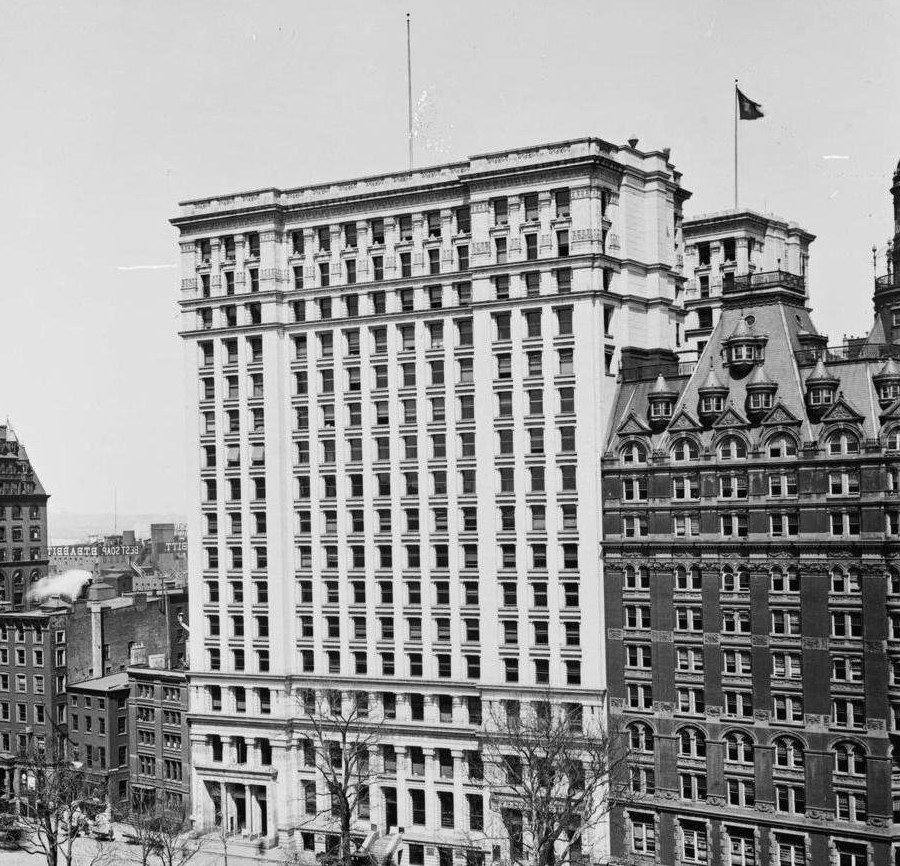
I made my way to the Monroe Building where the dead man had been found the day before. I knew from my earlier visit the office was open only half a day on Saturdays. On the eighth floor, I again met with Mr. Pace, the office manager. He was standing at the desk where Viola Turner found the body. The manager was shuffling through paperwork. It became clear when we greeted one another he still thought I was a police department detective. I didn’t disabuse him of his notion.
It became clear when we greeted one another he still thought I was a police department detective. I didn’t disabuse him of his notion.
As he sorted papers, Pace informed me Viola had finished work and left for the day. He explained her job required her to complete her work before the office staff arrived. As a result, she came in early. Glancing at the remaining traces of the incident on the wood floor and wall, the manager made clucking noises of disapproval with his tongue. “I think Viola will have to try Bon Ami to get the job done.” It was obvious the woman had made inroads in removing traces of the death, but remnants lingered on the wood. Pace shook his head at the scene. “With due respect to Stanley, I’ve never seen such a mess.”
“Stanley?” I asked uncertainly.
“Yes. Stanley Yarbrough. The dead fellow. The entire thing was just such a shock to everyone here. We had no idea Stanley might do such a thing.”
“Oh, yeah, Stanley Yarbrough. Of course,” I quickly responded, slapping at my pockets. “I left my notebook in the office. Sorry, I just didn’t recall the name.”
Pace shot me an odd look, but commented, “Well, I guess you see too many of these things. Uh, dead bodies, I mean. You know, suicides. Especially after Wall Street. They probably start running together.”
“Yeah. Yeah, they do, unfortunately.” I turned to leave. “Well, I just have some questions for Mrs. Turner. A few things occurred to us after we left here yesterday. You know how it goes.”
“Oh, I’m sure.” He asked, after a pause, “Viola’s not in any trouble, is she?”
“No, nothing like that. Like I said, we just need to clear up a few things.”
“Great. She’s an impressive worker. Couldn’t do without her.”
“Thanks again,” I shot back as I closed the office door behind me. Well, now I had a name for the fella who’d pulled the Dutch act.
Back on the street, the morning air of this late July was heating up with the humidity also on the climb. Sometimes it felt like I was standing in the breath of an enormous dog, except for the smell. And the paper mill south of town did its best to add to that element when the wind was right. Behind the wheel of my LaSalle, I unfolded the piece of paper with Viola Turner’s address. Her place was on the southwest edge of the city. I’d never had any call to visit the area, so Viola’s neighborhood was only vaguely familiar to me.
Behind the wheel of my LaSalle, I unfolded the piece of paper with Viola Turner’s address.
* * *
On the drive to Mrs. Turner’s place, I thought of what I might be getting into. Often, relations with black people were touchy, even in a city as relatively diverse and open-minded as ours. The tone Donovan had set with the woman was something I’d have to overcome if she let me. While I was certainly no Gus Donovan in my attitude toward others, it wasn’t in my nature to apologize for the words or actions of someone I didn’t control or agree with. Time would tell how much headway I’d make with the woman.
In due course, I reached the area Mrs. Turner called home. It was a salt-and-pepper neighborhood of nondescript, modest bungalows set on generous lots. More than a few showed small signs of neglect. They’d boarded up several, probably the results of the foreclosures taking place daily. I located the house and pulled to the edge of the dirt road it sat on. The well-maintained place had remnants of a dirty brown lawn, suffering from the oppressive heat, no doubt. On the porch perched a solitary rocking chair.
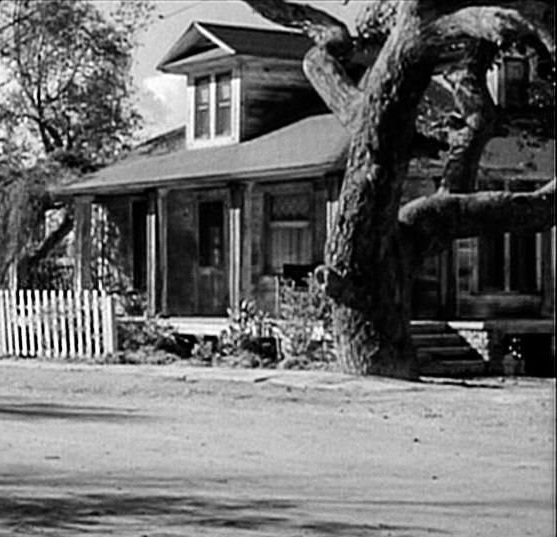
As I climbed out of my bucket, an old Liberty truck, filled with lumber, rumbled past, kicking up a torrent of dust. I tossed my half-smoked butt after it. As I rounded my car, I saw a gaunt old black man sitting stone-faced on the low stoop next door. He was eyeing me closely. I smiled and touched the brim of my fedora. He nodded in return and smiled weakly. Maybe his smile was less feebleness than doubt about my presence.
Climbing the front steps, I pulled the screen door open and knocked. Though windows were open across the front of the house, the fact the door was closed in this heat was a little surprising. As I waited for someone to answer, a sultry morning breeze rustled through the shoots of dead foundation plantings. A person moved beyond the door, bare feet thudding across the wood floor of the frame house. A little boy, age six or seven, opened the door. He stood wide-eyed and mute as he looked up at me. When I asked to see Mrs. Turner, he turned without a word and disappeared into the house, calling something I couldn’t quite make out. I let the screen door close quietly.
Shortly, Mrs. Turner appeared. A mixed look of surprise and uncertainty played across her face. Wiping her hands on her apron, she asked, “Yes? What can I do for you?” There was a hidden strength in her voice.
I took off my hat. “Mrs. Turner, my name is Gil Tanner. I was wondering whether I could speak with you for a few minutes. It’s regarding the incident at the office yesterday.”
She cracked the screen door, but stood firm, blocking the entrance. She gave me a quick once-over. “You’re not the police. I heard the conversation between you and that detective fellow. Who are you?” A serious expression held fast on her face.
I read something in her eyes. There could be no messing with, no lying to this woman. She was a force the world had to deal with. “No, ma’am, I’m not with the police. I’m a private detective and a friend of Detective Waddell, the other, the slender police detective who was there. I just happened to be passing the office yesterday when I came upon the scene. Frankly, when I saw you, I gathered from your body language you had something to say. I want to hear it, if you don’t mind.” She glanced to the street behind me. “I’m alone, Mrs. Turner. What you say to me will stay between us, unless you say otherwise.”
“Frankly, when I saw you, I gathered from your body language you had something to say. I want to hear it, if you don’t mind.”
The apron dropped from her hands as she pushed the screen door open wider. She threw me a brief grin despite her uncertainty. It was a self-assured, yet cautious smile. “C’mon in then.” I walked into the modest but neatly maintained living room. A large oscillating fan in a corner made a faint, soothing murmur. The breeze it produced was relatively refreshing. “Have a seat, Mr. Tanner,” she offered, gesturing toward a sofa. She took one of the two chairs opposite. The little boy reappeared and leaned gently on the arm of Mrs. Turner’s chair. She put her arm around him lovingly.
“Please call me Gil, Mrs. Turner. ‘Mr. Tanner’ was my old man,” I chuckled, trying to break what I felt was tension on her part.
“Then I’m Viola. This is my son, Luther. Would you care for some coffee, Gil?”
“No, thank you, ma’am. It’s too hot for coffee for me, but please go ahead if you want a cup.” She shook her head gently. “And thank you, Viola, for talking to me,” I said, resting my fedora on a knee. The little boy was eyeing me carefully, the way kids tend to do when they come across something different. Taking a deep breath, I said, “I take it Detective Donovan didn’t ask you many questions yesterday.”
The woman shrugged her slim shoulders. “He confirmed what time I found Mr. Yarbrough’s body. Then just asked my name. Nothing more.”
“Yet watching you, I came away with the feeling you had more to tell him. Am I right?”
Viola paused a long minute, as if trying to decide what to say or how to put it. Her eyes crawled to her son, then back to me. “It wasn’t a suicide.”
Her words took me aback somewhat. “How do you know?” She bristled slightly. I held up a reassuring hand. “Look, I don’t doubt you. But, obviously, I’m curious how you know that.”
“I just do, that’s all.”
I never learned much from a client by doing the talking. The same rule seemed to me to apply here. “Are you willing to tell–?”
At that instant, a large, older black man, wearing a flannel shirt under stained bib overalls, abruptly came into the room as far as a chair sitting between us. He stopped, put his hands on its back, and leaned over it, looking hard at me. Before I could rise to greet him, he spoke to Viola while watching me narrowly. “Luther said you had company. A white man.” His quiet words weren’t hateful, though there was something of a challenge in them.
Before I could rise to greet him, he spoke to Viola while watching me narrowly. “Luther said you had company. A white man.”
I tossed my hat on the sofa and stood. My eyes stayed firmly, but friendly like on the man. Before I could introduce myself, Viola intervened, “Daddy, this is Gil Tanner. He came to ask me a few questions about finding Mr. Yarbrough’s body.”
“Is he the detective you mentioned last night?” His tone wasn’t generous.
“No, daddy. He’s a friend of the nice one. Gil is a private detective, though. He wants to learn what I know about the circumstances. Gil, this is my daddy, Amos Stevens.”
I stuck out my hand to Mr. Stevens. He pushed himself erect and ignored my hand. “If you ain’t police, what’s your interest in this? You Yarbrough’s kin?”
I kept my offer out to him. “No relation to Yarbrough. I’m just looking for the truth, Mr. Stevens. And I think your daughter holds the key to it,” I said, waggling my extended hand. When he hesitated, I added, “I’m not here to bring any harm to anybody, Mr. Stevens. I swear.”
“Well, I seen too many times where dealin’s with whites ended bad for a black man. Or a black woman, for that matter,” he grunted.
“If Mrs. Turner–”
“Viola,” she smiled.
“If Viola feels uneasy at any time during our visit, I’ll gladly leave. None of you’ll ever see or hear from me again. I promise.”
“A white man’s promise?” he grumbled, shaking his head.
“It’s okay, daddy,” the woman put in. “I think I understand what Gil’s intent is.”
In contemplation, Mr. Stevens removed his hat and ran his fingers across his bald pate as if hair still resided there. The motion put me in mind of an amputee who’s still convinced the missing limb is present and he can feel it. “Phantom limb” is what I think they called it. A seemingly interminable silence hung in the air between us. He looked to his daughter who gave him a slight nod. Clearly, Mr. Stevens set great store by his daughter’s judgment. After another second’s thought, he took my hand and shook it. He relaxed a bit. So did I. “Mind if I sit in on your talk?”
Clearly, Mr. Stevens set great store by his daughter’s judgment.
“I have no objections,” I said. Viola echoed my sentiment.
“Then you can call me Amos.” Amos sat in the chair he’d been leaning over. When he’d settled in, he turned to his grandson. “Luther, you go on out back and help Memaw pick vegetables. There’s lots that needs doing in the garden. I’ll be there directly.” The boy quietly did as he’d been told. After a screen door slammed, the older man turned back to me and smiled. “I don’t think the boy should hear this. Besides, we got a sizable garden patch out back that needs pickin’.” He chuckled, “Been makin’ sure it gets plenty of water in this hot, dry spell. The garden helps out a lot in these times.”
“I’m sure it does. Fresh vegetables sound good, too.” I didn’t want to cut the old man off, but I shifted my eyes to Viola. “Let’s get back to Mr. Yarbrough’s death. You say it wasn’t a suicide. Do you have any proof it wasn’t? If you do, the authorities need to know and know quick. The inquest is Monday afternoon.” When she didn’t answer right away, I moved on gently. “Understand, Viola, the coroner’s folks have determined Mr. Yarbrough composed the suicide note they found on his typewriter. The letters “e” and “s” on his machine fall slightly below a typed line. They didn’t find that on any other typewriters in the office.”
“In other words, the typebars for those two letters are out of alignment,” she said evenly.
I didn’t know what you called the parts of the damnable thing. I was just happy when the pre-Great-War vintage Royal typewriter in my office worked. It was always misspelling words in my reports. “Yeah, I guess, if it’s what they’re called, yeah they are.” Out of the corner of my eye, I saw Amos suddenly sporting a broad grin.
“But, of course, that doesn’t mean Mr. Yarbrough typed the letter, does it?” It was more a statement of fact than a question.
“I’m not sure I follow, Viola.”
“Well, anybody could have killed the man, and then typed the note on his machine to frame it as a suicide. Or vice versa. Right? I believe that’s what happened.”
Her statement, such as it was, was true. Anybody could have typed the letter. But what was her basis for that line of thought? “You’re obviously operating with more information than I have.” She simply smiled in response to my statement. When she did, I saw the family resemblance with her daddy.
“You’re obviously operating with more information than I have.”
“Wait here, Gil,” she said, rising from her chair. Amos was still grinning from ear to ear, hands tapping the arms of his chair happily. He reminded me of a kid waiting for a piece of candy. Viola disappeared down a hall.
After his daughter left, his wife, followed by Luther, joined Amos and me. The older woman, who Amos introduced as Celia, took off the large straw gardening hat she was wearing. Mrs. Stevens said she needed “a time out of the sun” and eased into Viola’s chair. When Luther tried to climb onto her lap, she gently admonished him, “Not now, child. It’s too hot.” While Viola’s mama cooled herself with a handheld fan from a local church, Amos welcomed the boy onto his knee. Then Mr. Stevens explained to his wife my presence in their home.
Mrs. Stevens was skeptical, to say the least. “And a white man’s gonna be believin’ our Viola’s word ‘ginst ‘nother white man?” she sighed, rolling her eyes. I wasn’t sure what she meant, but I was fast learning this was one family who spoke their minds. “The Lord knows ain’t no sense gettin’ mixed up in this here mess. It ain’t no use in this world,” she said in a languid drawl.
I wasn’t sure what she meant, but I was fast learning this was one family who spoke their minds.
“It’ll be okay, Mrs. Stevens. If Viola has proof, we’re gonna make people listen.” By the look on her face, I could tell she was still harboring disbelief. Except for the soft flapping of the woman’s fan, a heavy silence fell over the room.
Shortly, Viola returned with a brown paper bag. She poured its contents out onto the small table beside me at the end of the divan. She quickly said, “I didn’t touch them any more than I had to, because I didn’t know whether fingerprints might be important.”
Viola’s last comment gave me pause and stopped me from handling the things. I looked at them. There was a folded sheet of smudged typing paper which appeared to have printing on the inside of the fold. Also, there were two small spools connected by a black and red ribbon. At first, it didn’t click in my head what I was looking at. Then it hit me. “It’s a typewriter ribbon.” Viola waggled her head in the affirmative. “Where did it come from? What kind of proof is this of anything?”
“It’s the ribbon from Mr. Cohen’s typewriter. Let–”
“Cohen?”
“Yes, Joel Cohen. He’s the office accountant. But let me back up a little, Gil. I’m not a nosy person,” she assured me, “but I have a natural curiosity. Normally, I just do my work with blinders on, so to speak. I try to finish before any of the office staff shows up for work. But it doesn’t always work out that way.” She glanced down at Amos before returning to me. “I’m invisible to those people, anyway.” Viola shifted her weight uncomfortably between feet. “Well, a week ago, I was doing my regular office cleaning before anybody showed up.”
She glanced down at Amos before returning to me. “I’m invisible to those people, anyway.”
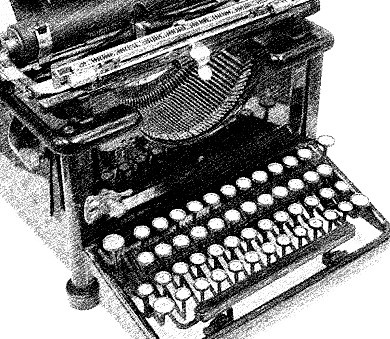
“When I emptied Mr. Cohen’s wastebasket, something caught my eye. It was a typewritten letter. First, it struck me as odd, because Mr. Cohen hardly ever writes correspondence. Maybe a memo once in a while, but he just usually types ledgers. I could see the letter had no salutation and no place for a signature at the bottom. Second, I saw the word ‘sorry’ twice on the page. That was odd. Because there was no name attached to it, I didn’t understand it. Initially, I thought maybe it was a resignation letter or some such. Now I know it was his practice run of the so-called suicide note for Mr. Yarbrough.”
Viola’s words were hitting me like a ton of bricks. When I glanced up, she was nodding. The woman went on, “The sheet of paper is the letter I found in Cohen’s wastebasket.” She took a deep breath and explained further. “It was still early when I found poor Mr. Yarbrough yesterday and no one else was in the office. When I found him, I also saw the note still wrapped around his typewriter’s platen.” I shot her a questioning gaze. She smiled, “The platen is the typewriter’s roller where you insert the paper.” I nodded in reverence to her knowledge. Her daddy was still beaming at his daughter. “When I read it, everything fell into place.” Another deep breath. “I traded out the typewriter ribbon in Mr. Cohen’s machine and hid the used one. Then I went to the building’s basement where our rubbish goes until it’s collected each Monday. I dug through the trash until I found the letter. It’s a bit smudged with dirt on the blank side, but just fine on the typed side. And you can read the entire suicide note on the ribbon. But reading a document from the ribbon is harder than reading the actual typed page, because the ribbon doesn’t include the spaces shown on the typed document.”
Viola was making sense, but I still had one question. “How can we show this ribbon is from Cohen’s typewriter?”
I think the “we” settled Mr. Stevens’ mind regarding me. Before Viola could answer, he gathered his wife and grandson to go back out to the garden. He stopped at the door long enough to call to me, “You’re welcomed to stay and have some of those vegetables for supper with us.” I smiled and accepted his invitation.
When I looked back to Viola, she smiled and sat down. She continued, “Black and red ink strips cover the ribbon. Each is half the width of the entire length of the ribbon. There’s lever on Mr. Cohen’s machine, which allows him to switch between the colors. He uses only that kind of ribbon, because they make bookkeeping entries of negative amounts in red. Mr. Cohen’s the only person in the office who uses them. He’s very touchy about it, too. Besides, there are bookkeeping documents Mr. Cohen typed which show up on that ribbon.”
“Are you willing to go to the police with me, tell them what you’ve told me, and give them this evidence?”
She hesitated. “I don’t know, Gil. Do you think that detective will want to hear anything from me? I mean–”
I leaned toward her and interrupted her thought, “Don’t worry, Viola. The way I’ll set it up at the police station, he won’t have any choice.” When she hesitated a little longer, I added, “Look, I’m not trying to put pressure on you, but you’re too smart to let a mug get away with murder.”
She smiled again. “My mama always says soft soap is ninety percent lye. In this instance, it’s spelled ‘l-i-e’.”
I laughed. “No, I’m serious. You strike me as a pretty smart cookie. Too sharp to be emptying wastebaskets for a living. You did something else before, didn’t you? Something requiring smarts.”
“What makes you say that?”
“Intuition alone. But what you’ve told me and shown me today sealed the deal. After all, I am a detective,” I laughed, leaning back on the sofa. “Look, you’re the one who’s gotta live with it if you don’t speak up.”
She spent the next minute in quiet contemplation. “Well, I read where Edmund Burke said, ‘The only thing necessary for the triumph of evil is for good men to do nothing.’ I guess the same logic applies to women, too.” She chuckled, “Even black women. Yes, I’ll go to the police. But only if you go with me.” I agreed.
I sat still for a brief minute, just watching Viola. “So?”
“So, what?”
“What did you do before you emptied wastebaskets?”
“I was a teacher.” She released a rich, low laugh. “One course I taught was typing.” I chuckled at the thought I’d been learning at the feet of an expert.
“And?”
“And then there was the Crash. The school I taught at had to close. There were no teaching jobs available for me where we lived.” She paused in thought. Her eyes watered. “Then my husband died in an accident at the mill where he worked.” A single tear rolled down her cheek as she spoke. Another silence. She cleared her throat and continued, “My daddy was a janitor at the same school where I taught. Mama was a laundress. She still had some work. But, with the loss of three incomes, my parents and I decided there might be more employment opportunities in the city. So we left Union Grove and moved here. We weren’t the only ones. As daddy might say, ‘folks was leaving two to a mule.’ Anyway, we were wrong.”
“Then my husband died in an accident at the mill where he worked.”
She read my face at this comment. “Wrong about chances for jobs here.” Her face grew serious. “Daddy couldn’t find any work. So he reverted to his boyhood on the farm and planted our garden patch. He sells some vegetables when people can afford them. Sometimes, he just gives them away to help out. The best I could do, as a black woman, was cleaning offices.” Her eyes essayed the room. “We got this place through a member of our congregation. So here we are.” She blew air, “At least we’re still together. Now I’ll probably lose my job.”.
“I don’t think so. Mr. Pace doesn’t want a murderer among his employees. Besides, he seems to think a lot of you and the job you do.”
“I’m certain he does, as far as his feelings for a black woman go.” Her voice was taut.
“It’s none of my business, Viola, but why don’t you play each hand when it’s dealt?” She nodded silently.
Later, over a mess of cooked fresh vegetables, I explained I’d attempt to contact Detective Waddell the next day to arrange for us to come to headquarters. Because the next day was a Sunday, I could only try. Viola and I agreed to meet with Waddell, if we could, at nine o’clock on Monday morning. That would be after she finished work and still leave enough time to take her evidence to the coroner’s inquest. I felt confident Waddell would want to hear what Viola had to say, even if Donovan didn’t. Before leaving the Turner’s place, I told Viola I’d pick her up at the Monroe Building at eight-thirty.
* * *
Viola was waiting on the sidewalk in front of the office building when I pulled to the curb at eight-thirty sharp. She slid into the passenger side of my heap, holding the paper bag of evidence. When I’d spoken to him the evening before, Waddell had been unsure about a meeting regarding Yarbrough’s death. His chief concern was my motive wasn’t just to irritate Donovan. When I assured him the reason was legit, he set a meeting and agreed to sit in on it.
A half hour later, Viola and I sat at a table in an interrogation room at police headquarters. I set fire to a Chesterfield and offered one to Viola. She waved it off. The door opened and Gus walked in, followed closely by Rob Waddell. The rotund detective stopped short and turned to the detective sergeant. “What the hell is this, Rob?”
A half hour later, Viola and I sat at a table in an interrogation room at police headquarters.
“Take it easy, Gus. Gil, here, claims to have new information on Yarbrough’s death. Information which might make it a murder.”
“The local rags called it a suicide,” Donovan snarled. “That’s good enough for me. Anyway, what the hell’s she doin’ here?” Viola’s eyes flinched. My guess was, no matter how many times she heard that tone, it still cut to the quick.
My patience was wearing thin. “She’s the person with your evidence, Donovan! Just listen to her!” I glanced sideways at the woman beside me. The look in her eyes made me add, “Please.”
“You mess with my case, snooper, and I’m gonna put my foot so far up your ass, you’ll be spittin’ shoe polish!” He harrumphed loudly. “Besides, if it was a murder, how do I know she didn’t kill Yarbrough?”
I angrily tossed my gasper into the tin can sitting on the table and used as an ashtray during interrogations. “For Pete’s sake, Donovan, get the stick outta your ass and listen to her!”
“Take it easy, boys. Let’s remember our manners,” Waddell interjected firmly, pushing Gus into a chair and leaning hard over the table toward me. He turned his head and smiled at Viola. “Please tell us what you think we need to know, Mrs. Turner.” Rob took the last chair at the table.
“‘Mrs. Turner’ now, is it?” Gus snorted, looking up at his fellow detective. When he looked back into the woman’s eyes, he asked, “When did she become so high and mighty?”
To her credit, Viola ignored his words and began. Before she emptied the paper bag, she explained what was in it and expressed her concerns concerning the fingerprints. Then she poured its contents onto the table. Waddell moved the items around with a pencil, examining them. Donovan spent his time studying the room’s ceiling. When Viola described how she came upon them and how they tied Cohen into Yarbrough’s death, she finally caught Gus’s interest. He even asked questions of the woman, reflecting a growing belief in her story. I supposed he knew if it turned into a solved murder, the detective assigned to it would get the credit. Finally, Viola explained how he could read the draft of the suicide note on Cohen’s typewriter ribbon. When the interview finished, we agreed to meet at the inquest at one o’clock so Viola could give her evidence.
To her credit, Viola ignored his words and began.
* * *
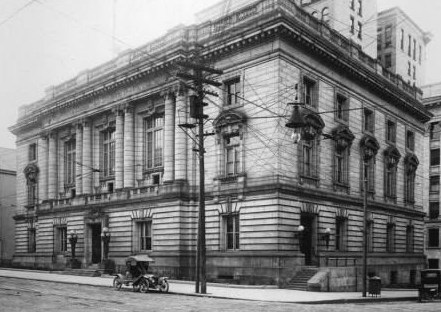
The inquest went smoothly. Only Andrew Pace, the manager, was present from the office staff. With the cooperation of the court, he gave what little testimony he could offer and departed before the star witness took the stand. In turn, Viola testified in no uncertain terms about the evidence she’d found. The initial misgivings on the court’s part to hear from her soon gave way to an avid interest in her actions to gather the proof and what it revealed. She showed herself to be a formidably efficient lady. In his testimony, even Detective Donovan agreed Viola’s evidence showed the death to be a murder instead of a suicide, which had been his first thought. The coroner returned a finding of “unlawful killing” and turned the investigation over to the police department, namely, Gus.
She showed herself to be a formidably efficient lady.
We left the two detectives with Donovan’s expressed intent to go straight to the office to pick up Cohen. He said he wanted to brace the accountant before he learned of the coroner’s ruling and took it on the lam. As an aside, Waddell told me he’d meet me at Harry’s that evening to let me know where things stood.
I drove Viola back to her place. During the drive, she told me she planned to go in to work extra early. The lady said she wanted to avoid running into Joel Cohen, in the event they didn’t hold him on a murder charge. She said she intended to do so until the entire thing was finished. I agreed it was a good plan.
At one point on the drive, we stopped at a traffic signal. Viola and I let our gazes roam to a small group of men standing on the sidewalk nearby. They stood aimlessly in front of a boarded-up store. These men had lost jobs, pride, and hope, not necessarily in that order.
Viola looked straight ahead through the windshield and shook her head. “It’s a crying shame what life can be to some folks.”
“Yeah. I guess they feel diminished, less valuable, less a whole person if not working,” I opined.
“Yes. But folks can make some people feel that way even when they are working.” I didn’t respond. I understood her words. Mine didn’t matter, anyway. It veiled the rest of the drive to Viola’s place in silence.
Amos was sitting in the front porch rocker, anxiously awaiting his daughter’s return. The pair shared a relieved hug. In subdued tones, she told him the meeting and inquest went well, leaving out the part about initial Donovan’s attitude. My guess was Viola didn’t want to reinforce Amos’ feelings about dealing with white people. When I thanked her for coming forward, she expressed her gratitude for me standing by her. Amos gave me a hearty farewell handshake. We parted with my promise I’d let her know what was happening in the inquiry.
My guess was Viola didn’t want to reinforce Amos’ feelings about dealing with white people.
I returned to my office, made a few telephone calls, and gathered information on Carelli’s missing beneficiary. Then I laid out a plan to locate her. That could wait until the next morning. Just then I was hungry and thirsty.
* * *
After a great spaghetti and meatball meal at Cappacino’s, I toddled off to the Paradise Tavern. Moving inside from under the glare of Harry’s new sign, I found Detective Waddell sitting at the bar next to my favorite stool. Joining him, I ordered a shot of Harry’s “special tea.”
Beyond a noncommittal greeting, my pal said nothing for the first several minutes. Finally, I could bear it no longer. “So is there any news on the Yarbrough case?”
“Oh, yeah,” he grinned teasingly. “Gus picked up Cohen right after the inquest. He spent several hours questioning the mug. The guy was tougher than you think an accountant might be.” Rob then nonchalantly went back to his drink.
“Gus picked up Cohen right after the inquest. He spent several hours questioning the mug.”
Waddell was a friend, but he could exasperate me at times. “And?”
“Oh, in the meantime, the lab boys matched Cohen fingerprints to ones on the note Mrs. Turner found in the trash. Then they connected the note to Cohen’s typewriter. They also got a partial print from Cohen on the so-called suicide note found in Yarbrough’s typewriter. And another from the typewriter ribbon from Cohen’s machine. Funny thing, the note didn’t have any of Yarbrough’s prints on it. And, as the woman said, you can read the entire suicide note on the accountant’s ribbon.”
“Is that it, Rob?”
“Well, yeah, except Donovan wormed a confession out of Cohen.”
Relief for Viola’s sake swept over me. But I couldn’t help putting in my sarcastic two cents, “Yeah. I’m sure it was a ‘bookworm’.” Donovan had a reputation for forcibly applying interrogation aids, such as books and telephone directories, to suspects’ heads to make them talk.
Waddell smiled. “We’ve learned Cohen found out Yarbrough was having an affair with Mrs. Cohen. Seems he thought the only way to win her back was to rid himself of his rival. So he lured Yarbrough into the office to discuss the situation ‘like gentlemen’. Only Cohen had no intention of being a gentleman about it. He killed Yarbrough and set it up to look like a suicide. Almost worked, too. Cohen just didn’t understand how to set up a suicide scene properly. He got sloppy. Gus is still looking for more evidence in the murder. If there is any, he’ll find, I’m sure.” He took another sip, then added, “That Mrs. Turner is pretty sharp. Even Gus said so.”
I smiled. Donovan wasn’t the brightest star in God’s firmament. But maybe his acknowledgement of Viola Turner’s acumen came under the heading of ‘even a blind hog finds an acorn once in a while’. ©