Outside the imposing structure of the Castañeda Hotel, I sat in the LaSalle for a few minutes, considering my next moves. Wainthropp had wired ahead to arrange for a room for the next night. Distrust of my client still gnawed at me. I rehashed things that had crossed my mind during the long drive west. My guess was the west-coast contact knew my name. I hadn’t been told his, only a sign he’d give by which to identify him in the hotel’s dining room when the time came. The icy, blustery wind and dark, low cloud cover added to my foreboding.
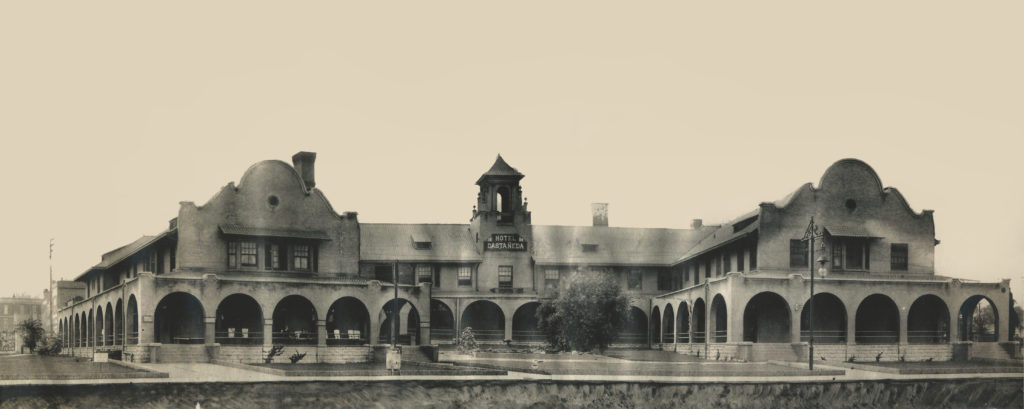
Sliding out of my machine, I made my way into the lobby and the registration desk, where I learned the joint was a Harvey House hotel. That meant the grub would be pretty good. Despite being a day early, the clerk obligingly set me up for both nights. He nodded to the doctor’s bag I carried and asked about any other luggage I might have. I explained I’d check out my accommodations, then give the town the once-over before settling in.
Before I left the front desk, I requested I not be disturbed for any reason. And, because I was only going to be in the hotel for two nights, I didn’t want any maid service. He assured me he’d see to it and gave me my key. I climbed the stairs to the second floor. The space was nice. It had radiator heat but no private bath. I’d return after taking care of a few other matters.
* * *
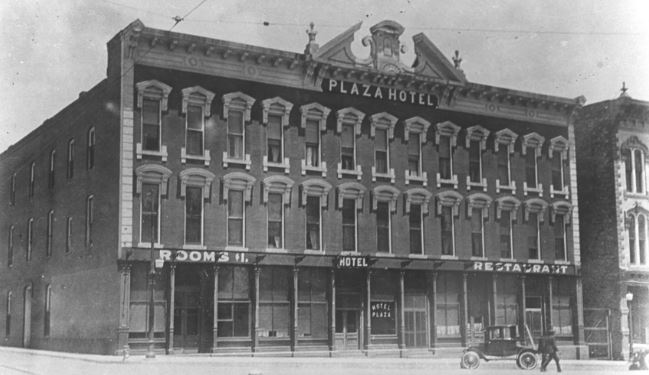
My next destination was a joint called the Plaza Hotel, whose name I’d seen on a sign as I drove into town. Less than two miles away from the Castañeda, it might seem a world apart if circumstances took a turn for the worse. And I now had to make preparations to prevent getting jobbed or having something far more ominous befall me.
Less than two miles away from the Castañeda, it might seem a world apart if circumstances took a turn for the worse.
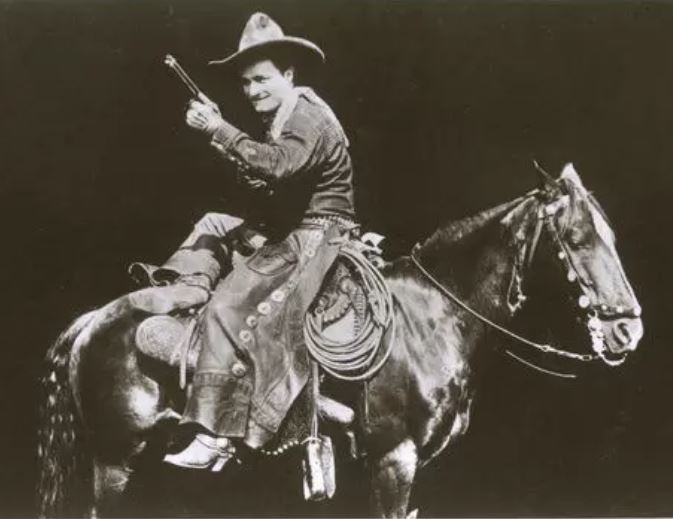
Using the name Joe Daly from Kings Point, New York, I checked in to the Plaza. Though I’d never been to the small village on Long Island’s north shore, I knew of it from something I’d read regarding George M. Cohan having a home there. After learning it was my first stay at the inn, the desk clerk happily told me about the history of the place. “The Plaza Hotel has ‘starred’ in moving pictures, including one of the dozen Tom Mix made here in Las Vegas in 1915,” he gushed. Although a fan of the cowboy star from boyhood, I wasn’t interested at the moment.
When I asked for a spot on the hotel’s front, he gave me one on the third floor. I asked if the hotel had a safe large enough to hold my satchel. He assured me it did and invited me into the office where the imposing coffer stood. I placed the bag inside and the clerk locked it. Before leaving the lobby area, I stuck my head in the bar for a look. Jack Daniels and I could settle in there nicely should the opportunity present itself.
After climbing one of the matching staircases and prowling the hall, I located my room, which overlooked the historic town plaza, same as the bar. Excellent. I dumped my traveling bag on the bed and left.
My next stop was a second-hand store I’d passed in town. There, I bought a suit, shirt, tie, a pair of shoes, and a grip. A toothbrush, Pepsodent, a bar of Lifebuoy soap, and a safety razor from a nearby drugstore rounded out the needs for my plan.
Before returning to the LaSalle, I put my “treasures” into the travel bag.
* * *
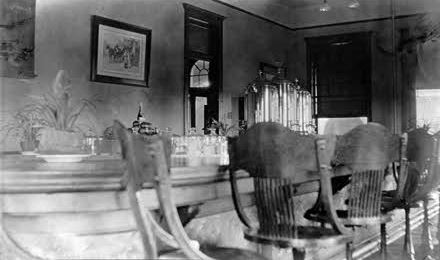
Back at the Castañeda, I hauled the used carryall to my room and unpacked, hanging the suit and shirt up. I draped the tie over a chair and put a pair of socks and BVDs I’d set aside in a dresser drawer. I smoked a couple of coffin nails as I worked. Their presence in the ashtray helped give the effect of occupancy, as did the nearly empty whiskey bottle I left. After placing the toiletry articles conspicuously on top of the dresser, I placed one shoe a few feet behind the door. As I left, I set the second shoe up against the inside of the door when it was nearly closed. I locked the door after me. I supposed my efforts might be for naught. Time would tell. Then I ambled downstairs for a bite to eat at the hotel’s lunchroom area.
As I left, I set the second shoe up against the inside of the door when it was nearly closed. I locked the door after me.
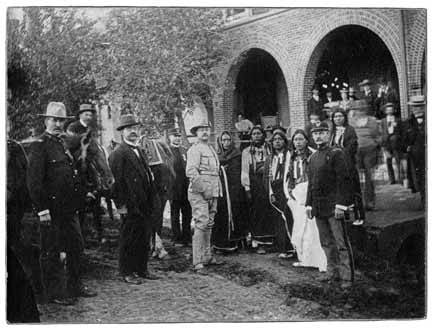
A fire roared in the fireplace there. I took a seat at the bar. The lug behind the counter had the mistaken impression I’d been a doughboy. He figured I might be interested in the Castañeda’s 1899 hosting of then-governor of New York, Theodore Roosevelt, and the first reunion of the Rough Riders. Rather than disabuse him of his assumption, I listened as I ate. Meanwhile, I gleaned as much information about the ways in and out of the hotel as possible.
When I’d finished my meal, I left for the Plaza Hotel. I spent the rest of the day relaxing with a little whiskey in my room after the long drive. I figured I’d need all the steely nerves I could muster in the next twenty-four hours.
* * *
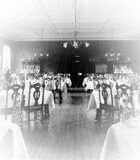
At the appointed time late the next afternoon, I appeared at the Castañeda’s dining room. Perusing the large space from the entrance, I saw couples or groups of people occupied most of the tables. Only one fella sat alone. Next to his plate sat my recognition signal–two packs of cigarettes, one standing vertically on top of the other. The hostess, dressed in black, stepped to me and offered to show me to a seat. I thanked her and told her I was joining someone already eating.
Next to his plate sat my recognition signal–two packs of cigarettes, one standing vertically on top of the other.
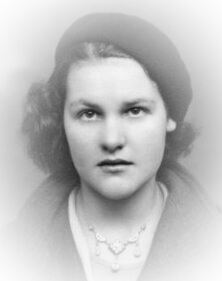
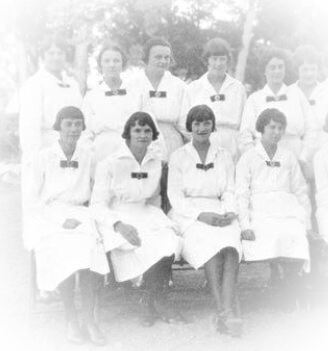
As I moved in his direction, the man glimpsed me. He spoke to a woman standing beside him, handed her something, and she hurried away. She wasn’t a waitress. The Harvey Girls wore the same outfit, which was akin to a nurse’s–a white starched skirt, a high-collared blouse with cuffs, topped off with a black folded ribbon tie. This twist was a slightly plump but firm redhead in a plain black dress suit and white blouse under an overcoat. She sported a jaunty beret and carried a shoulder bag that could have emptied a fair-sized ice-box.
When I reached the man, a familiar female fragrance wafted my way from where the frill had been standing. They called it Tabu. The honey I’d been running around with when the perfume had been introduced several years earlier had gone off her nut over the scent. It was the only one she wore. I recalled it was pretty sexy stuff.
The guy at the table looked up at me with a scowl. “Yeah?”
“I’m Gil Tanner,” I responded in a low voice.
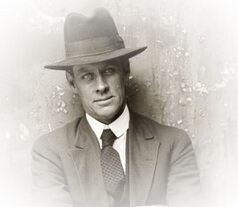
“Grab a seat, Tanner.” When I eased into the chair opposite him, he edged over the table in my direction and scanned the place before returning his hard gaze to me. “Where’s the cabbage?” The mug was a solid man, much younger than I’d expected, with dark hair, black eyes and swarthy skin. He had gangster written all over him.
“I have it available. Not on me, but I can lay hands on it fast enough. Who’s the tomato? What’s your handle, mister? And what’s the plan?”
“You ask a helluva lot of questions, Tanner. The broad? I dunno. She just asked me for a match. Could be a hooker, but who knows? If she is, you can bet Fred Harvey won’t be happy about it. You can call me Sal. And to answer your last question, I figured we’d meet in your room tonight and you can hand it over.”
“That’s jake with me, friend. What time?”
“Let’s say eight o’clock. What’s your room number?”
Now, I figured he knew more than he was letting on. My guess was he’d already checked with the front desk to see if I’d arrived and knew the number. “Two-oh-five.” A nearly imperceptible flinch flashed in his eyes. I had my answer. “Sorry. I meant two-oh-three.”
Quickly regaining his composure, he grinned, “Okay.” When I rose, he offered, “Let me buy you supper, Tanner.” He had an oily tone, a greasy smile and a monstrous self-conceit.
“No, thanks. I need to get the satchel before our meet.” I wasn’t hungry, anyway.
“Don’t you have it here?”
“Maybe. Maybe not. Doesn’t matter. You’ll get it at eight.”
“Well, at least let me buy you a drink at the bar.”
Was he stalling me? If so, that meant he wasn’t working alone. But I didn’t plan to ham it up with him too long, if he was playing for time. “Tell you what. Let’s have that drink after the handoff to celebrate a successful job.”
His face lightened into a dishonest smile. “Yeah. Sure. A successful job. See you later then.”
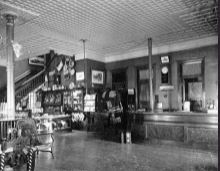
This goon’s idea of a “successful job” and mine were not likely to have the same outcome. I strolled casually from the dining area to the lobby’s newsstand. There I bought a local broadsheet and perused it. Taking my time allowed the events I imagined going on behind the scenes to unfold. As I stood there, it became one of those moments when you’re sure you’re being watched. I didn’t see him, but I felt Sal’s eyes ranking me.
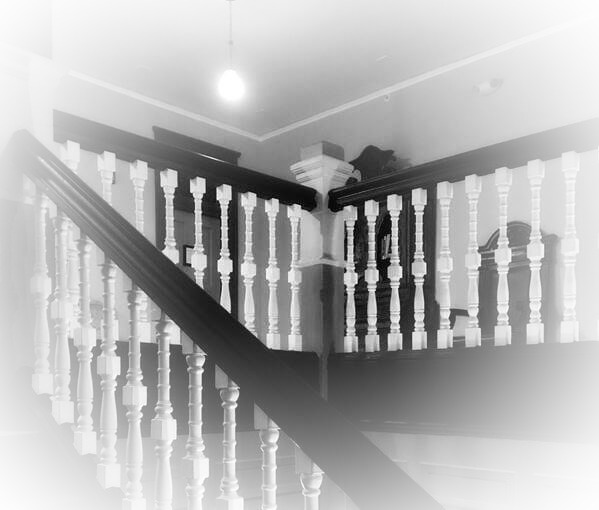
After a time I tossed the newspaper onto a borne settee and climbed the stairs. When I reached the top of the first flight, from the corner of my eye I saw my contact hustle to the registration desk to make a quick phone call. I paused where I could watch him but he couldn’t see me. He hung up without speaking to anyone.
At my door, I cracked it open ever so slightly, flipped the overhead light on, and stuck my head inside. Sure enough, the shoe that I’d left against the door was pushed three-quarters of the way to the wall, close to its mate. As I entered, the scent of Tabu came to me. I’d had company in the form of the skirt I’d seen earlier at the dining room table. Apparently, the Californian had talked his companion into frisking my accommodations while he kept me occupied. She’d been very careful in her fanning of the place. Everything sat exactly where I’d placed it. All of it except the shoe. Was the redheaded frail part of the LA mob? Or was she Sal’s moll who was not above doing the odd job for her man? At that point, I didn’t know and didn’t care.
I’d had company in the form of the skirt I’d seen earlier at the dining room table.
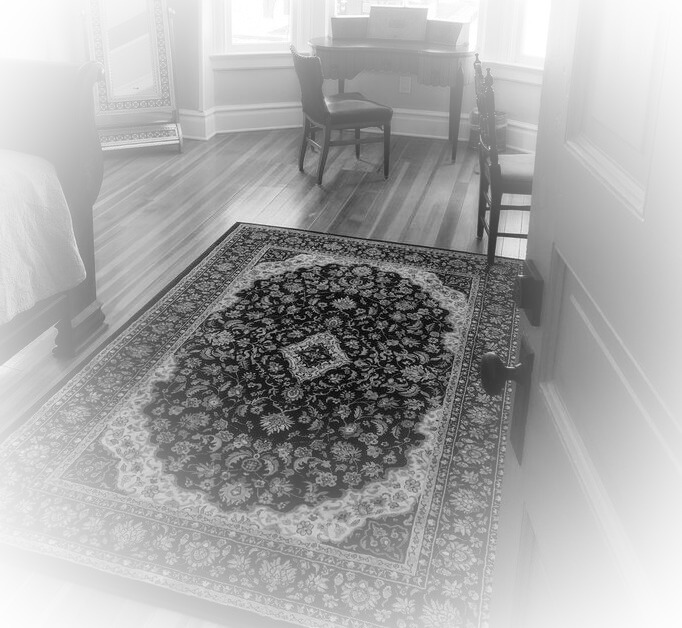
I left the hotel by a back exit and drove to the Plaza, making certain I hadn’t pick up a tail. A light snow had started to fall. Retrieving the satchel from the hotel’s safe, I went to my room to pack my bags and put a few items I might need in the coming hours in my coat pockets. After loading the LaSalle in preparation for what I expected would be a hasty exit from the burg and gassing up, I returned to two-oh-three at the Castañeda under overcast skies. I set the money satchel on the side of the bed opposite the door.
There was an hour before the time we were to meet. I lit a cigarette and started to pour myself a drink to relax. Suddenly, it occurred to me the moll could have “doctored” the whiskey bottle I’d left in the room with a mickey to knock me out before the meeting. The contents of that bag she carried piqued my curiosity now. I skipped the booze.
At eight o’clock on the dot, a hard rap sounded on my door. I opened it, admitted the man, and checked the hallway. His female cohort was nowhere in sight. He walked halfway into the room and turned to face me.
“So, where’s my package?”
“It’s right here,” I said, walking around the bed, picking the bag up, and tossing it onto the bed. “But how are you going to know it contains the money?”
“Wainthropp wired and told us to look for his seal.” As Sal approached the bag, I could feel the pulse in my temples. My mouth was dry–I’d have given anything for a gulp of Jack Daniels. The moment of truth had arrived. The man gave the bag and the seal a check before turning to me with a frown. I braced myself. “That Limey is something of Nance in my boss’s book.” Nodding to the satchel, he added, “It looks good to me.” Because of his arrogance and his obvious belief he was the smartest lug in any room, he’d only given the seal a cursory examination. “Besides, I don’t figure you for showin’ up with a grift on your mind. That would only get you dead.” He forced a chuckle. “So–”
“Hold on a second,” I said, reaching into my inside coat pocket. He flinched. I hesitated. “Easy, bub. I’m just getting a receipt the Nance wants me to have signed,” I lied, setting the papers and a pen on the dresser. “One copy for you, one copy for him. You sign both, then I’ll sign. But the Brit can wait for the paperwork,” I laughed. “I’m taking a week in Las Vegas, Nevada, while I’m out this way. A little time at the roulette wheels is just what the doctor ordered.” My theory was, if the mobster tried to follow me, he might as well head off in the wrong direction.
His grimace melted into an uneasy smile. “Sure. Sure.”
I stood behind him as he put his John Hancock on the papers, using the dresser’s surface. He dropped the pen, tossed me that oily smirk, and walked around behind me while I completed my part. Just as I finished, in the mirror above the dresser, my eyes caught the slow movement of my companion’s right hand under his lapel toward his left shoulder. Spinning in his direction as the hand emerged with a .32 revolver, I grabbed his right wrist, raise it in the air, and hammer him with a quick right jab. It had little effect.
…my eyes caught the slow movement of my companion’s right hand under his lapel toward his left shoulder.
I looked up to the gat and saw the man was trying to twist the working end down in my direction. My efforts to keep it above us and pointed away from me doubled. He jabbed at me with a straight right, very hard and well-practiced. The blow snapped my head back. Reaching for my roscoe meant taking a hand away from the battle for his. Not advisable.
Our shoes gave neither of us a good purchase on the wood floor to get leverage on the other. We flailed across the space in our struggle for control of the iron. For a brief time, it was touch and go. He was strong, but I was a little stronger. Only a little. My opponent began slamming one of his heels against the back of my ankle enough to trip me off balance. My leg started to buckle from his efforts. In desperation, I head-butted him. He stumbled back, blood pouring from his nose, and dropped on the bed with me on top of him, our legs thrashing. As we scrapped for the small rod, it spit lead. The transom shattered.
Suddenly, the door to the connecting room flew open, and the redhead charged in. Before she reached the bed, a second shot rang out. It hit the woman, and she dropped, her legs twisting under her as she fell. “Clara!” the other man cried out as his eyes widened wildly at the sight of her sprawled on the floor, moaning in pain. His distraction gave me time to flash a sap and hammer it none too gently on his skull. The struggle ended with Sal out cold on the bed and the .32 in my hand.
I turned to the woman. She had a non-lethal gunshot wound to her left shoulder, but her right hand garnered my attention at that moment. The gal’s mitt was trying to work a Colt pistol loose from a garter that had been exposed when she’d hit the floor. So, she wasn’t just a girlfriend to this guy. She was a gun moll. And an entirely different creature, in my estimation. Then again, perhaps she was a minor movie star, who wanted to act the part of a gun moll to her gangster playmate. In that case, they’d miscast her in the extreme.
Stepping to her, I stooped, drew a bead on her head with the .32, and slapped her hand away from the gat. She looked up at me with hatred in her eyes and, true to her calling, made another effort at the Colt. Learning was not taking place. I delivered as hard a Sunday punch as I dared to her face. She went limp. Blood trickled from her nose and her bold, red lips. I removed the Colt from her garter and dropped it into my coat pocket, along with her partner’s rod.
She looked up at me with hatred in her eyes and . . . made another effort at the Colt.
I dragged the unconscious man off the bed and laid him out on the floor. Pulling Monk’s handcuffs from my side coat pocket, I clamped one end onto the gorilla’s right wrist and fed the connecting chain through the handles of the money satchel. My intent was to handcuff him to the bag, to slow him down if he tried to come after me.
In a burst of inspiration, I grabbed one of the redhead’s legs, pulled her over to where her boyfriend lay, and flipped her onto her stomach. Her modesty, if she had any, was no doubt outraged, as her skirt became less concealing during my effort. I snapped the other end of the handcuffs onto her right hand. If they walked in that state, one of them had to hoof it backwards. Let the pair of them work it out.
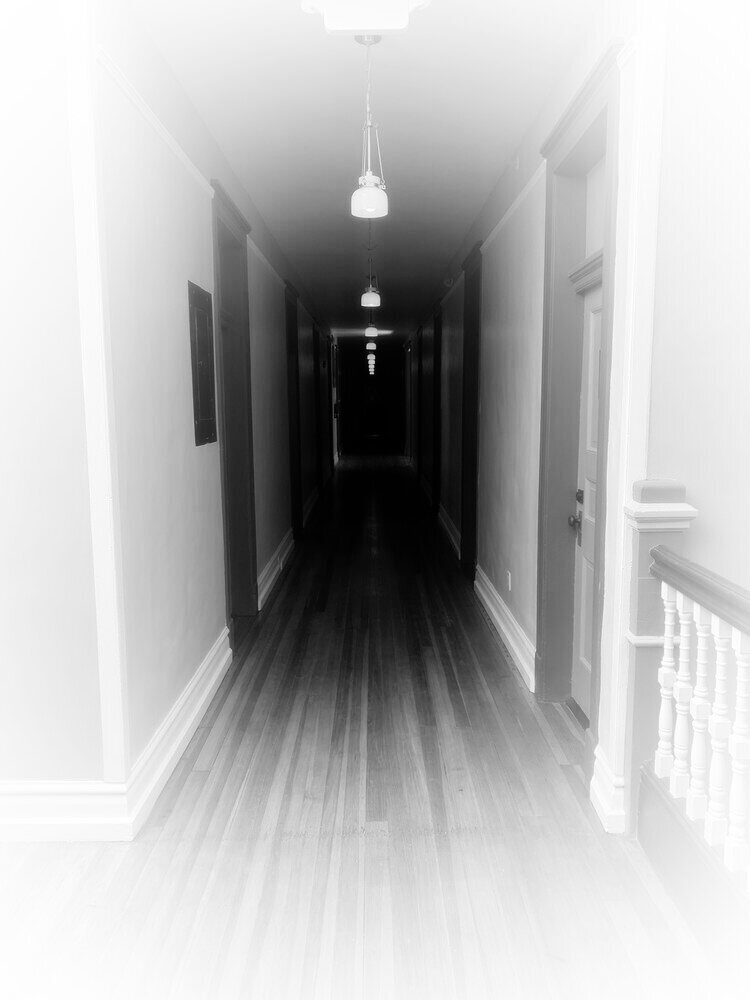
A quick check of the corridor revealed no one stirring. Either the sound of gunfire was a common occurrence hereabouts or the few occupants there were had gone out for the evening. I stepped back inside, lit a Chesterfield to calm down, and quickly scanned the scene. The California couple still “snoozed” peacefully. There was nothing I needed to leave with, except the receipts tucked firmly in my coat pocket. As I checked the room, the mirror above the dresser showed blood oozing from my lip and crawling down the line at the corner of my mouth. I dabbed it with my handkerchief. No need to alarm anyone I might encounter as I left the hotel.
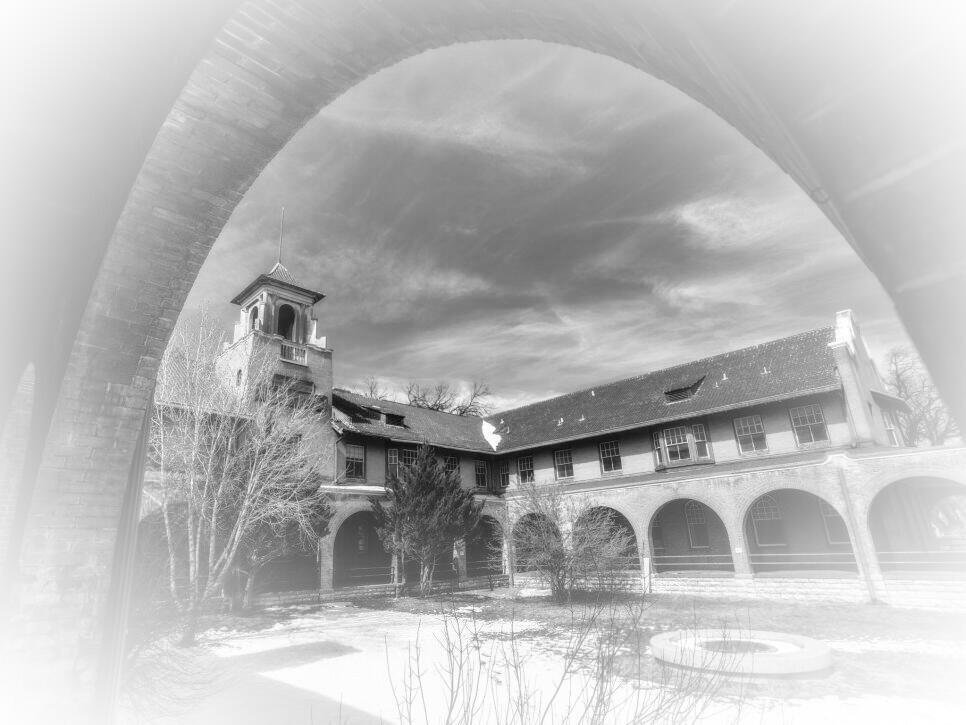
In a matter of minutes, the Castañeda Hotel was fading in my wing mirror as I burned road south toward Santa Rosa. It looked like a clean sneak. At least nobody shot at me as I drove away. I didn’t know whether Sal had had any other thugs with him, waiting in the shadows to carry out the hit.
It looked like a clean sneak. At least nobody shot at me as I drove away.
* * *
After a while, when I was sure no one was following me, I reduced my speed on the dark, unfamiliar road. I drove through the night. The urgency of putting as many miles between my adversary and me as possible, along with the frosty night air rushing through the opened driver’s window, kept me awake during the trip. As I traveled, I imagined the gunman and the redhead climbing into a big, new car with California plates for the return trip to LA. No doubt they’d contact their boss to let him know the outcome: though they had the satchel full of money, Tanner was still alive. I’d likely have to deal with the repercussions of that newsflash to Wainthropp.
Passing through the little town of Vega, my thoughts drifted to Sarah Mae and her family. Now, I’m not the sentimental type, but I hoped they were well on their way to California.
The time on the highway finally caught up to me. And hitting the “Jericho Gap” in the dark and half asleep was not my idea of a smart move. So, a little before five o’clock that morning, I pulled off the road in Amarillo and got a room. Just to be on the safe side, I parked my crate out of sight from the highway. Too tired to eat, even if a hash house had been open, I crawled between the sheets and gave myself up to exhaustion.
* * *
Around five hours later, I awoke with a start. I’d been dreaming the redhead had caught up with me. She had her Colt pressed against my groin with her finger on the trigger and a maniacal grin on her puss. That alienist could probably read volumes into that nightmare.
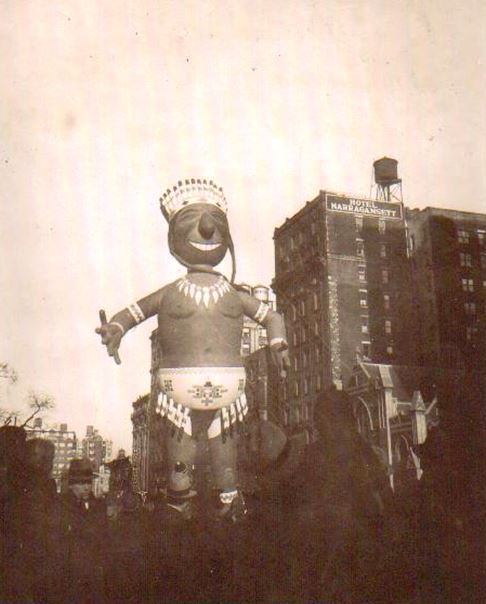
After showering and dragging a razor across my mug, I walked to a nearby diner called The Spotlight Cafe for a meal. Over coffee, ham, and eggs, and a couple of Chesterfields, I read a wire-service article in the local paper on Jesse Owens, who’d embarrassed Adolf Hitler with his Olympic performance that past August. Owens had made quite a splash in the sporting world with his exhibition of track prowess. Also, there was a report of the recent Macy’s Christmas parade back in New York. A photograph of the parade balloons the handlers fought to control in the blustery winds accompanied the article. The rest of the news dealt with how the locals planned to celebrate the holidays and how the depression might affect their festivities. The reporter tried to sound optimistic, but he didn’t quite get there.
* * *
Though I figured the journey east would be more relaxed than the trip west, I hit the pavement again, hoping to make Tulsa before my endurance ran out. There was no rush, but I was ready to get back to my bed.
The Jericho Gap was as rough a drive as I recalled.
Dusk was just before settling around the time I entered Oklahoma City. I stopped to fill my tank at the same gas station I’d topped off at on my way west. Needing to stretch my legs and wanting to grab a Coca-Cola, it seemed as good a place as any. A different kid filled my tank.
After paying him, I pulled my heap the short distance to a roadside joint catering to the tourists frequenting Route 66. Out in front of the place, an Indian was showing a small crowd how to handle a rattlesnake. I joined the wide-eyed suckers watching the demonstration. The fella was pretty good at controlling the slithering critters. After a brief time, I moved inside. I didn’t have a need for his technique. The only snakes I dealt with back in my hometown were of the two-legged variety. Nearby, a squaw leaned against the front of the “trading post,” weaving baskets for another audience of gawkers.
I didn’t have a need for his technique. The only snakes I dealt with back in my hometown were of the two-legged variety.
I walked inside and pulled a Coca-Cola from a cooler. While I was waiting to pay for the soda, an Oklahoma souvenir ashtray caught my eye. In its center was a supposed likeness of Will Rogers. I shook my head. The man had been dead for a little more than a year and somebody was already trying to make money off him. On second thought, maybe it was a case of pride in a native son. What the hell! I bought one for my office desk.
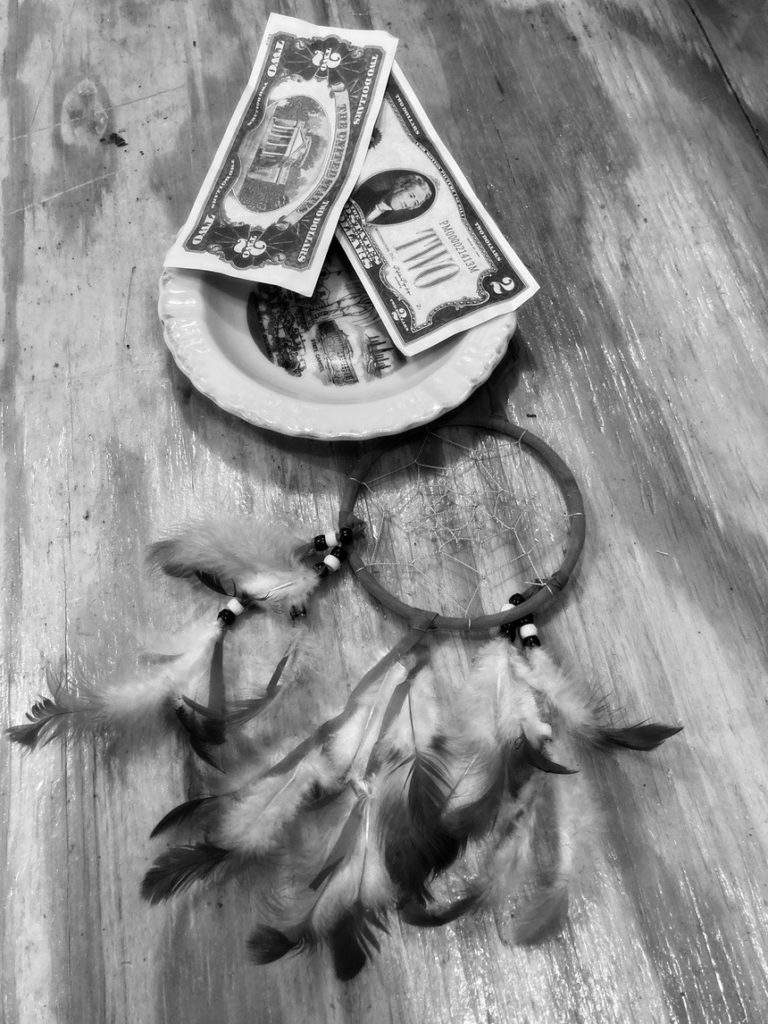
The salesgirl spotted me looking at a contrivance I’d never seen. She referred to it by an Indian name I can’t pronounce or spell and told me the Native peoples believed it protected children from harm. My nephew Tommy was celebrating his second birthday the following month. I figured it was something no one else would give him. I bought one and a kid’s Indian headdress for him. The feathered getup might be a little big for the boy right now, but the way he was growing, he’d be into it in no time.
* * *
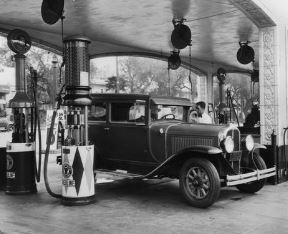
Back on the Federal highway, I made good time. Full darkness fell before I made the town of Stroud, Oklahoma. I pulled into a gasoline station in town to top off the fuel tank and for a bathroom break. The man there told me Tulsa was only fifty miles further along the road. Feeling awake enough to go that short a distance before stopping for the night, I pressed on.
* * *
A few miles outside Stroud, I saw two cars ahead, pulled off to the right side of the road. Men were clamoring into them. Not knowing what was going on, I slowed as I got closer. It was a good thing I did. Suddenly, both cars shot from the shoulder onto the pavement, making U-turns and heading back toward town. As they met me, I saw both heaps were full of men hollering and laughing. They forced me to slam on my brakes and veer sharply to the right to avoid a crash. As I ran off the road, my headlamps washed across a billboard beside the highway. A man lay in the weeds at the base of the large sign. He wasn’t moving. I put on the brake, got out, and hustled to him.
They forced me to slam on my brakes and veer sharply to the right to avoid a crash.
In the glow of my heap’s lamps, I saw he was a small, elderly mug, possibly in his seventies or eighties, dressed in western clothing. A battered cowboy hat lay next to him. Nearby was a timeworn grip which had been opened and the contents carelessly strewn around. His face was badly bruised and starting to swell. I didn’t get a response when I tried to get him to speak. He needed a doctor and quick. The fella groaned pitifully when I picked him up, but never opened his eyes. I figured he might have a few broken ribs to go along with his cuts and abrasions.
Hoisting him in my arms, I realized just how little he was. He was around five and a half feet tall and couldn’t have weighed much over one hundred fifty pounds. I sat him in the passenger’s seat, tossed his hat beside him, and went back for his travel bag. Climbing in, I cranked the engine to life, wrangled the same U-turn the two mysterious cars had made, and motored quickly back toward town.
As I entered the community, I found the shingle I’d seen as I passed through earlier. It hung beside the road in front of a bungalow and read “Dr. Spencer Nigh.” I pulled the LaSalle off the street at the house. A light was burning in the front room. When I banged on the door, a woman answered. I told her I had an injured man who needed immediate medical attention. She turned and spoke to someone in the room before telling me to take him to a door around the side where the physician’s surgery was located. I hurried back to the LaSalle, collected my charge, and carried him around to the side of the house.
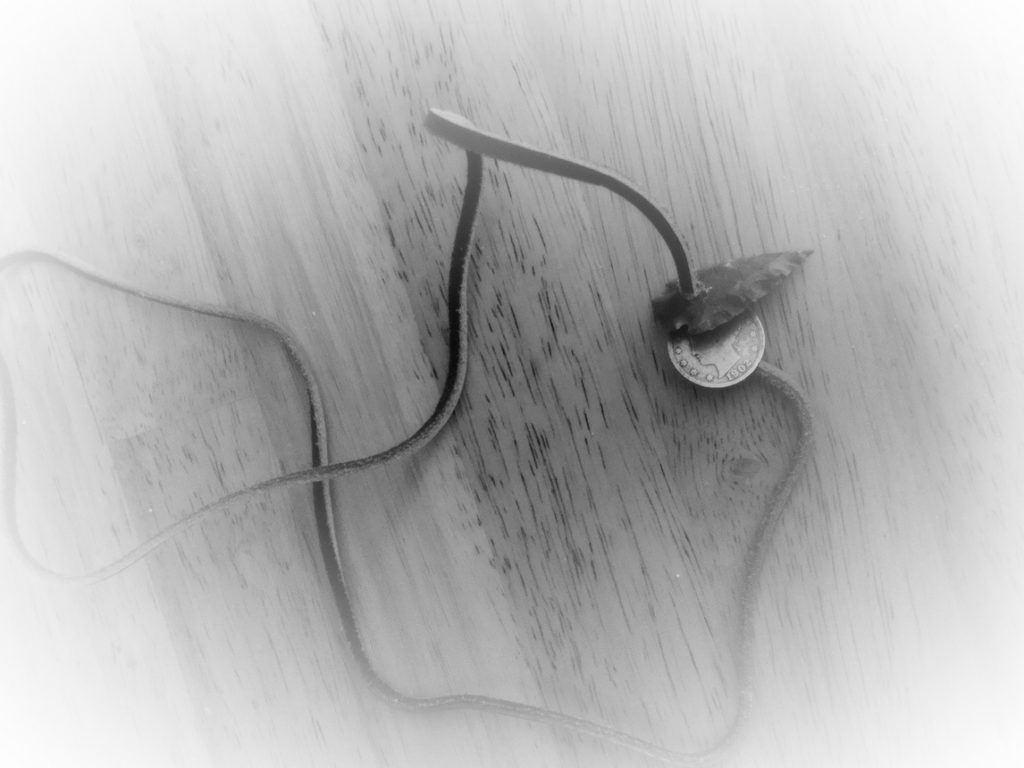
At the door there, a serious-looking man in dress shirt and slacks met me. I’d put him in his mid-thirties. “I’m Dr. Nigh. This is my wife, Donna,” he explained, indicating the woman. “She assists me from time to time. Bring him in and lay him on the table. Take off his shirt, if you will, while I wash up.” I did and slipped him out of the upper part of his union suit. As I expected, the man’s torso was already starting to discolor. I noticed two nasty, old scars on his left arm, one above and one below his elbow. An arrowhead and old dime, suspended from a leather thong, hung from his neck. I laid them aside so Nigh could work.
The doc returned and stood over the old-timer, examining the injuries to his head, face and chest. For the first time, I noticed the battered man had a hint of Indian blood in his features. With something of a surprised grimace on his face, the croaker straightened and shot me a hard look. “You know this man?” I shook my head and explained the circumstances under which I’d found him, assuring the medical man I’d pay for his care.
With something of a surprised grimace on his face, the croaker straightened and shot me a hard look. “You know this man?”
Dr. Nigh withdrew to a lighted glass cabinet containing instruments, medication and bandages where his wife was gathering things. “Donna,” he whispered, but with no effort to hide his words, “go on to bed. I’ll take care of this.” When she started to speak, he cut her off with a reassuring, “Go on now. We have a big day tomorrow. I’ll handle this, then be right behind you.” She grudgingly left. He stood for a long minute, as if contemplating the treatment he intended to pursue.
The old man opened his eyes slowly and looked around. His agonized face shifted to me. “Where… where am I? Who are you, mister?”
“I found you beside the road beaten up. I brought you back to Stroud to the doc here to get medical care. Just lie still and–”
“What?” the old man cried. He looked to Dr. Nigh, then back to me. “Listen, mister, you gotta git me outta here pronto!” He fell into a coughing jag before finishing, “We gotta hightail it now!”
Spencer half turned, told me he needed something from the next room, and went through the door his wife had, closing it behind him.
When the doctor disappeared, the fella on the table reached up and grabbed my lapel firmly. “Mister,” he said in a hoarse undertone, “these people are gonna kill me if they find me here. You need to git me outta town now. I’ll explain later.”
Confused, I eyeballed the door the doc had walked through and crabbed the circumstances. Two carloads of goons, apparently from this town, had worked over an elderly man and left him by the road to die. Now, a sawbones from that same town seemed hesitant to treat the man. Something queer was going on here. I didn’t know what, but it was a pipe it smelled wrong.
I moved to the door Nigh had passed through and cracked it open. He was standing by a telephone table in a dimly lit hallway, rubbing his chin. When he reached for the blower, I quietly played my hand. The doc was so focused on what he was about to do, he never heard my approach. Just as he put the telephone’s handset to one ear, I put the muzzle of my .45 to the other. Spencer stiffened. The color drained from his face. “Hang it up, doc,” I breathed. He complied, careful not to make any sudden moves. On an uncertain notion, I ripped the telephone wire from the wall.
Just as he put the telephone’s handset to one ear, I put the muzzle of my .45 to the other.
“Back inside,” I ordered, motioning with the roscoe to his examining room. Again, he submitted.
The patient was resting uneasily on one elbow when we re-entered the room. One of his eyes was swelling shut. He wore an anguished expression, made worse when he saw the gun in my hand. “What’s happenin’, mister?”
“I’m not sure, friend, but this setup stinks. What’s going on here?” I looked between Nigh and his patient. The physician said nothing.
The injured man’s anxiety increased. “We gotta git outta here now! I’ll tell ya later.”
“Doc?” I urged him. He shook his head slightly and refused to speak. “Okay. I’m not sure of the hands being played here. But you’re going to patch this man up and give him what he needs for pain. Then we’re heading back to Oklahoma City for the law.” The physician stood still. I assisted his move to the old man with a shove. “And watch your step, doc. I’m not a croaker, but I can smell a phony move a mile away.” I took up a position across the table so I could observe.
Nigh cleaned the man’s abrasions and cuts, bandaging the latter. He wrapped the guy’s torso where he diagnosed “bruised ribs, at the very least.” When he finished and picked up a syringe, the old man objected. “What’s that fer?”
“It’s for your aches and to help you get some shut-eye.”
“Sleep? I don’t wanna sleep! Uh-uh.” He glanced at me pleadingly.
“Give him some Bayer or something instead.”
“It won’t be as effective in relieving the pain.”
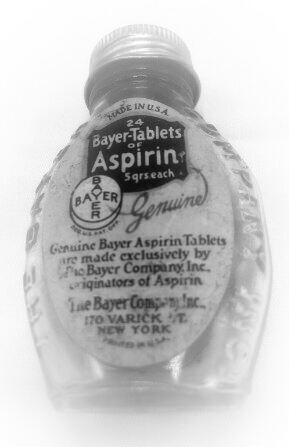
The man being treated was shaking his head vigorously. I made a motion with my gun. “Give him the aspirin.” Spencer retrieved a bottle from the cabinet, got a glass of water from the sink, and returned to the table. He handed two pills and the water to his patient. The older guy glanced at me. I snatched the bottle from Nigh’s hand and read the label. I nodded to my companion, who washed the tablets down with the water. Shaking the bottle of aspirin in the doctor’s direction, I said, “I’ll just hang onto these, doc. What do I owe you?”
I snatched the bottle from Nigh’s hand and read the label.
“I pay my own way, mister,” the cowboy objected, trying unsuccessfully to get cash from his tight jeans pocket.
My hand on his arm stopped him. “I’ve got it, old-timer.”
Nigh waggled his head dejectedly. Then he tossed an angry face my way. “Nothing. Just take this galoot and get out!”
I holstered my rod and said, “Gladly, doc.” The old man grabbed the arrowhead thong lying nearby and made a move as if he was going to get off the table and walk under his own power, but I stopped him. “Never mind that, I can carry you quicker than you can hobble to my car.” I picked him up and walked to the outside door. The doctor never moved an inch to help. The man in my arms reached out and opened the door. I scrambled through it and to my crate.
* * *
With the bruised man on the seat beside me, I coaxed the car to life and pulled away toward Oklahoma City. The jostling of the car caused my wizened passenger to moan low. A block away from Spencer Nigh’s place, I hung a left and then, after a farther stretch along, another left. A third left, followed by a right, and we were back on Route 66, traveling toward Tulsa. The old fellow was watching me, smiling through the obvious pain.
“I’m just a wonderin’ what caused you to get tangled up in my troubles, mister. Where I come from, we got a sayin’. ‘Life is simpler when you plow around the stump.’ Helpin’ me might put you in need of a sawbones yourself.” As he spoke through split, engorged lips, he gingerly brought out a small pouch of tobacco and cigarette papers from a pocket. Between the movement of the car over the road, his discomfort and the darkness, he fumbled to roll the cigarette he wanted. Tobacco spilled everywhere.
I pulled a pack of smokes and matches from my shirt pocket and reached them out to him. “Here. Try one of these until you can manage better. Probably not as good as yours, but easier.” He took one and lit it, blowing a plume of smoke out the window. I set fire to one for myself. We smoked in silence for a minute as I checked the wing mirrors for anyone who might follow us.
“So, you got a name or do I just keep calling you ‘cowboy’?” In the tepid light, I saw another grin.
“Name’s Joe. Joe Hines. You got a handle, pardner?”
“Yeah, I’m Gil Tanner.”
“From back east?”
“Yeah. How d’you know?” He didn’t reply. His smirk just widened. I let it drift. “So, Mister Hines, what was all that about back there?”
Initially, he avoided my question with one of his own. “What’s your trade? You toting a sidearm we don’t see in these parts much makes a cowpoke wonder. That’s not a Colt Peacemaker under your arm. And don’t try to bullshit me, ‘cause I can smell the stuff even under three foot of snow.”
That’s not a Colt Peacemaker under your arm.
“I’m a private investigator heading home from a job. Now how about telling me what I’ve gotten mixed up in.”
“Long story, Gil.”
“And I’ve got at least an hour’s drive ahead of me.”
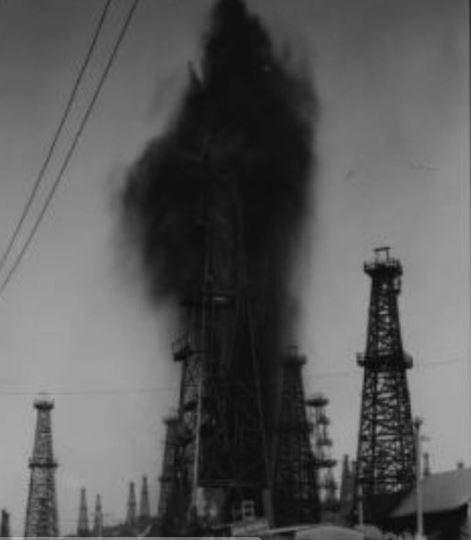
“Let’s just say I rode rough in my day. Signed on as a cowpuncher with a cattleman named Chisum for a while. But I wasn’t always on the right side of the law. Rode with a gang some folks called “The Boys.” Done some pretty despicable stuff. Done time because of it. But one thing I didn’t do was what those sidewinders in Stroud said I did.” After a pause, he added distantly, “Indian blood makes you guilty in the eyes of lawmen, no matter what.” Hines gazed out the window as if searching for the distant oil derricks in the darkness. “I buried more ‘n one friend out on that prairie,” he muttered. “And more ‘n one varmint bent on killin’ me.”
I smiled at the thought. “You buried your enemies?”
He shrugged, “I plugged ‘em. I panted ‘em.” He grinned, “Some of ‘em, anyways.”
“And those men in Stroud said you did what?”
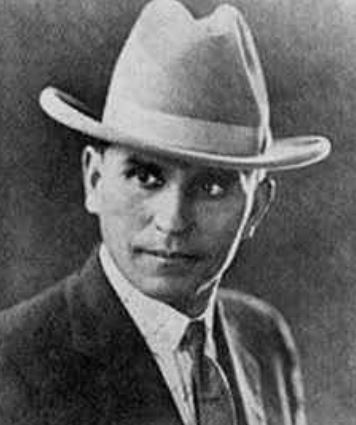
He didn’t speak right away. Eventually, he opened up with, “Ever heared of a mixed-blood Cherokee outlaw named Henry Starr?” I shook my head. I’d read something of Belle Starr, but not Henry. “He was big hombre, well over six foot tall,” the old guy mumbled in apparent recollection. “Henry bragged to bein’ ‘The King of the Bank Robbers.’ But he was a dang fool to my way of thinkin’.
“Back in 1915,” Hines continued after a bit, “he decided to rob two banks in Stroud, the Stroud National Bank and the First National Bank, from what I heared, at the same time. Now, bank holdups in Oklahoma were as common as fleas on a hound back then, so folks were quick to catch on to ‘em. And tryin’ to pull off a double daylight bank robbery was just plain stupid, ‘cause the locals had cars to chase him down and telephones to call the surroundin’ law. Anyway, him and his gang rode into town on horseback.
“They split up into two groups. Henry and his band got money from one bank, and, holdin’ a group of hostages, started back toward their horses. Along the way, that murderin’ idgit shot at the townspeople. Well, word of the holdups spread quick, and the locals took up arms. There was a gun battle. Starr and another outlaw got wounded and captured. The rest of the gang escaped with around six thousand dollars. Damned fool’s lucky they didn’t lynch him. I heared he was killed durin’ a bank robbery back in ’21. Don’t know where.”
There was a gun battle. Starr and another outlaw got wounded and captured.
“Which group were you with, Joe?”
In the dim light, I caught his gray eyes flash angrily at me. “Neither, mister! And make no mistake about it! That band of assholes back there in Stroud claimed I was one of ‘em who rode off with their money!”
“Sorry. I–”
“Know how old I was back in ’15, Gil? I was in my sixties! Not a greenhorn, but past the age for robbin’ banks!” He heaved a deep, agonizing breath. “By that time, I’d rather gave birth to a porcupine backwards than to go to stickin’ up banks.” He fell quiet. The old guy might seem frail at the moment, but he was a man of mettle.
We rode in silence for a short while. Hines was frozen in one position, stony with despair and pain, as we drove. Finally, I broke the impasse. “I’m sorry. I meant no offense. It’s just that you mentioned not always being on the right side of the law, then started talking about a bank robbery. I figured–”
“Well, don’t go figurin’ without all the stuff to be knowed! You asked what happened back there, and I’m a telling you the tale.” He shuddered in discomfort.
With no automobile headlamps in my wing mirror, I pulled off the road and got a bottle of whiskey from my travel bag in the rumble seat. Climbing back into the heap, I handed him the hooch and the aspirin bottle. “Wash a few of those down with this. Both ought to ease the ache some.”
“Much obliged, pardner,” he smiled vaguely.
“Again, I’m sorry if I misspoke. Care to finish your story?”
After he chugged a fair amount of booze to accompany the pills, he glanced sideways at me. “Tonight, I was passin’ through Stroud headin’ east, mindin’ my own business. I had to change busses there and was waitin’ for the next one to come along. Seems some jasper saw me waitin’ and was sure I was part of Starr’s gang that got away all those years back. I guess he rounded up a posse to snatch me up and teach me a lesson. One of ‘em said somethin’ about being a relative of one of Henry’s hostages. Another said the gang had shot at him durin’ the holdup. They took me out and beat me good. I swear the only reason they didn’t lynch me was a deputy sheriff was in the group. He stopped ‘em. But,” he assured me, “I wasn’t nowhere near their damned town in 1915.”
Seems some jasper saw me waitin’ and was sure I was part of Starr’s gang that got away all those years back.
I shook my head, “Twenty-one years is a long time to hold on to bitterness.”
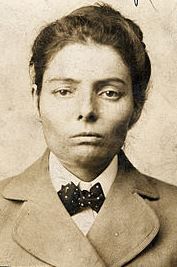
“It don’t take a very big person to carry a grudge.” He took another heavy slug of the whiskey. “Let’s stop blowin’ on the fur and git to the hide, Gil. I got outta Huntsville prison in ’82 and headed to St. Louie, tryin’ to go straight. Well, tryin’ anyway. Problem was,” he swanked, “I had a devotion to any form of crime in my day. But I did okay ‘til I ran across Laura Bullion, who was knockin’ boots with an hombre from the Wild Bunch. She and this feller had been robbin’ trains, so they said, and were hidin’ out from the law there. They both knew me. Well, I didn’t want to git caught up in their troubles, so I skedaddled just before the law caught up with ‘em. Wandered around for a while, keeping my head down, until I heared ‘bout a prospect in California.
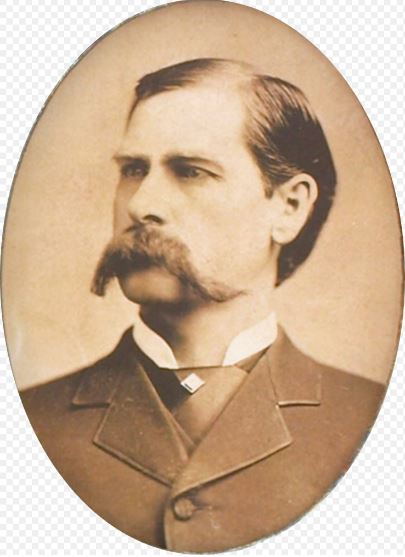
“That’s where I was in 1915. In Los Angeles, tryin’ to git my boot in the door of them movin’ pictures. Later on, I heared Wyatt Earp was compadres with William Hart and Tom Mix, givin’ ‘em advice on their flickers. Well, that’s what I tried to do before he even showed up. When it comes to horse and cattle wranglin’, I know a lot of things about a lot of things. So I gave it a shot. But somebody with a reputation like Earp’s was the only cowpoke those motion picture people wanted help from where it paid good money. Hell, even Henry Starr made a picture show at some point before he was killed!
“So I tried my hand at some other things ‘tween then and now.” He swirled the liquid in the bottle and gulped another round. “Built me a nice little grubstake, though, and decided to go to Florida. Sit in the sun. Maybe fish. Someplace where nobody looks down on you ‘cause of where you’re from. In California, people like me–from places like Oklahoma, Arkansas, Texas, Kansas, even Missouri–are lumped under a single word meant to hurt: Okies.” Following a pause, he asked, “Why is that, Gil?
“I don’t have the answer, cowboy.”
He exhaled sharply. “Well, that’s where I was headed ‘til I got bushwhacked tonight.” His words became hollow. “Nothin’ left for me back West. Got no friends left. They’re all gone. Cholera, consumption, Regulators’ bullets, and nooses…,” his voice trailed off.
In the silence that followed, the old man drifted off into a fitful snooze and groaned in pain every so often. I felt the need to put as much distance between him and that crowd of vigilantes in Stroud as possible, to get him out of Oklahoma. But it was obvious the fellow needed bedrest. When we reached Tulsa, I found a decent hotel and got us a place for the night. Again, I parked my crate out of sight from the highway. After checking in, I went back to the LaSalle, got Joe and shuffled him up to our room. After putting him to bed, I made do with a chair in the room. He continued to moan in agony occasionally during the night.
I felt the need to put as much distance between him and that crowd of vigilantes in Stroud as possible….
* * *
After several hours sleep, I awoke to find the old timer sitting up in bed, smoking. He didn’t look any better than he had the night before, so I asked, “How’re you feeling?”
He smiled, “Like I was shot at and missed, shit at and hit.” Stubbing out his gasper, he said, “Nah, forgit it. I’m just tired.”
“You hungry?”
“My face and jaw still hurt too much to eat, but I could do with a pot of coffee, Gil.”
* * *
Over java, I suggested Hines let me drive him as far as my hometown. It would put him well out of the reach of the Stroud men and, from there, he could catch a bus or train to continue his journey if he wanted. He agreed to the idea, but then bowed up when I tried to pay for his coffee. Not wanting to injure his pride, I gave in. I didn’t figure a nickel might break him. He dropped a dime on the counter and proudly told our waitress to keep the change.
* * *
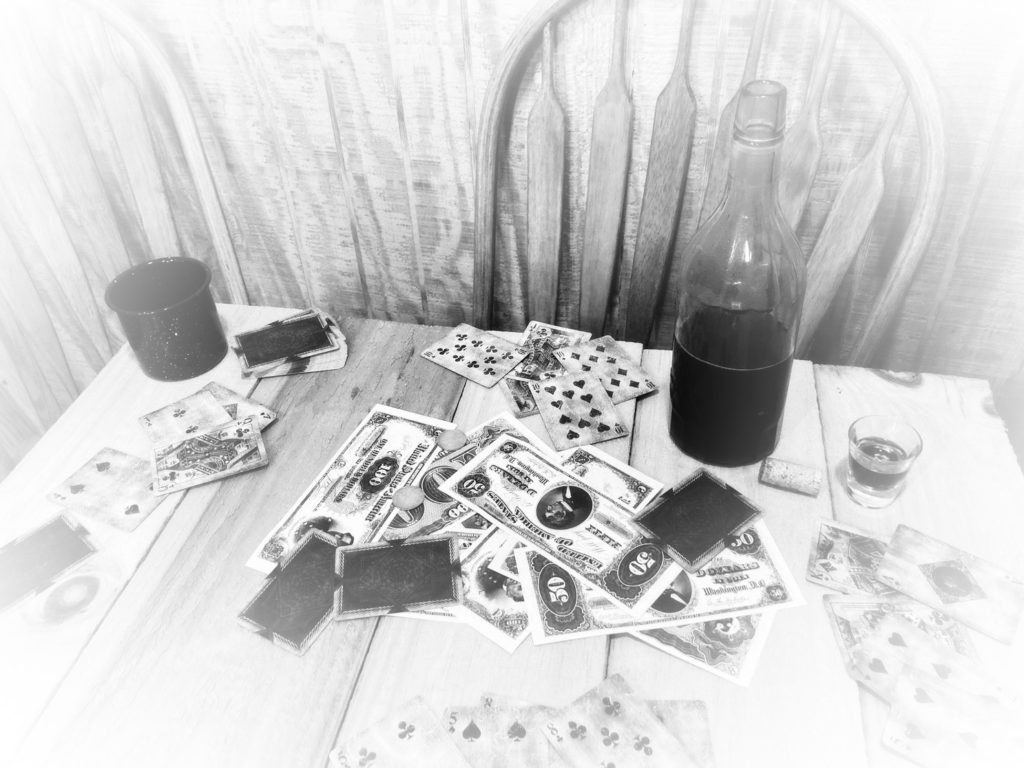
Before noon, we cleared the Oklahoma state line into Kansas. Along the way, Hines asked, “Where was you comin’ from, Gil?” When I mentioned Las Vegas, my companion, as I had, interpreted that to mean Las Vegas, Nevada, and explained he wasn’t much for gambling. The gang he’d rode with were inclined to play poker among themselves with their ill-gotten gains at a watering hole called The Painted Lady Saloon. But he shied away from the gaming tables. He told me walking into a bank with a drawn six-shooter, rustling cattle at night, or riding through a stampeding buffalo herd to lose lawmen was enough of a gamble to suit him. “Besides,” he said, “I always figured losing the respect of another man ain’t worth cheatin’ at cards like my amigos did.”
The gang he’d rode with were inclined to play poker . . . with their ill-gotten gains at a watering hole called The Painted Lady Saloon.
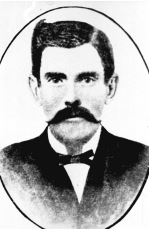
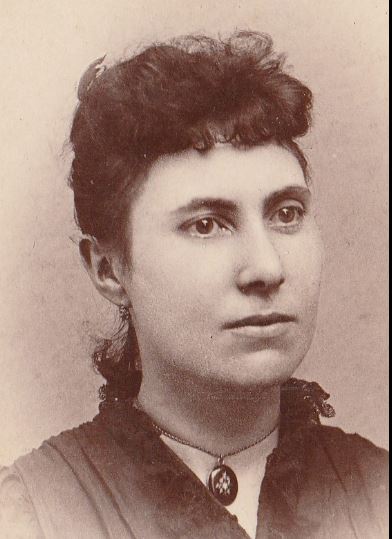
After I explained I was referring to the Las Vegas in New Mexico, he laughed, “Been there, too. That town was a helluva ruckus years ago.” Joe described a place where many of the Old West legends, including Earp, the Durango Kid, Big-Nose Kate, and Billy the Kid, were to be found there at various times. Doc Holliday ran a saloon there, he told me, and killed a man in a gunfight. Another bar owner was Robert Ford, who had supposedly murdered Jesse James. His use of the word “supposedly” struck me as odd. In its heyday, he assured me, Las Vegas was one of the roughest towns in the West, its reputation for lawlessness far exceeding Dodge City, Deadwood, or Tombstone.
When curiosity got the better of me, I asked about the arrowhead I’d seen on the thong around his neck. He shook his head and refused to speak on it.
* * *
The rest of the trip home was uneventful. While I focused on the road, the cowpoke slept between bouts of nursing the whiskey bottle and smoking his hand-rolled cigarettes. He seemed to be feeling better, considering the beating he’d taken. But the swelling of his face, lips, and left eye remained.
During the drive, a notion kept gnawing at my brain. Under the heading of carrying grudges, I wanted to repay Wainthropp for trying to get Sal to kill me. Hurting him physically wasn’t in the cards. I wanted to hit him where it really wounded his psyche. Never being happy to have someone pull one over on me, I had a loose idea of how to make a play against him. And my passenger might come into the picture. If he agreed.
I wanted to hit him where it really wounded his psyche.
* * *
When we rolled into my hometown several nights later, I offered the old codger the opportunity to stay at my place for as long as he needed to heal up before he moved on. Independent cuss that he was, he argued he’d find his own way. I reminded him of the lateness of the hour and pointed out that getting a hotel room in the city would put a big dent in whatever money I assumed he might have. Even getting a bed in a flophouse or a shelter wasn’t without its perils. After a few minutes’ consideration, Hines relented.
* * *
The next night, after we’d had a meal at Cappuccino’s Restaurant, which still meant soup for Joe’s mouth, we wandered into Harry’s Paradise Tavern. After getting the gingerly moving Joe to a table, I ankled to the bar to get us some libation.
“Who’s your buckaroo pal, Gil?” Harry snarked, looking over my shoulder at Joe’s western getup. “Never seen him before. Looks as though somebody gave him the Broderick.” When I explained who Joe was and briefly how we’d met, the bartender shot me a smirk as he poured our drinks. “You gonna make a habit of dragging whatever you find on the road in here?” he joked harshly.
I knew my barkeep was referring to the incident several years earlier when I’d encountered The Professor during a return trip from a job and brought him to town and into the tavern with me. We were good friends, but that didn’t stop us from razzing each other when the chance presented itself. “Hells bells, Harry!” I whispered coarsely across the bar. “That was what? Five years ago?” I chuckled, “You sound like a battle-ax I might be married to, beating me over the head with my ancient history.”
“Hells bells, Harry!” I whispered coarsely across the bar. “That was what? Five years ago?”
“Well… Why don’t you just apply to an adoption agency?” he muttered defiantly as he dealt me our drinks and walked away. I could only laugh.
When I got back to the table, Hines was taking the place in. He smiled as much as the swelling allowed. “This saloon’s a far cry from The Painted Lady.”
I slid his drink across the table to him. “Yeah? It belongs to the guy behind the bar. He’s a friend of mine.” When I offered the man a coffin nail, he waved it off and reached for his loose tobacco and rolling papers. “Listen, Joe, I have a favor to ask of you. I need help with something, and I think you can do it.” He nodded and rolled a cigarette with thoughtful slowness as I explained my unfinished business with Albert Wainthropp and how I figured he might assist me. “If all goes according to my plan, it shouldn’t involve any danger to you. I just need a diversion for around five or ten minutes,” I finished.
After he’d lit his cigarette, he gazed at me intently. “You saved my scalp, Gil, when I was jumped back there. I wouldn’t be much of a man if I didn’t ride along with you when you need me. If I didn’t, old man Chisum would say I was all hat and no cattle. It was the way he’d size up loudmouthed tinhorns from back east when they showed up. You might not think it to look at me now, but I was knowed for bein’ more than a touch ruthless in my day. That involved takin’ chances. Some big ones.” He leaned back in his chair. “As we used to say, ‘Timin’ has a lot to do with the outcome of a rain dance.’ So if I can help the timin’ of your gambit, I’ll be there with you. Just tell me what I can do.”
‘Timin’ has a lot to do with the outcome of a rain dance.’
As we drank, I conveyed my plan to my newfound friend. He agreed to join me. With a chuckle he added, “One last bit of shenanigans before I trade in my spurs for a fishin’ pole in Florida.”
“You like to fish?”
“Dunno,” he grinned. “Ain’t never done any. But I’m gonna find out.”
* * *
The next morning, we drove to a good second-hand clothing store to get Hines as nice a suit as possible. Unfortunately, the economic circumstances of the country had led many folks to part with perfectly good items just to put food on the table for their kids. Fortunately for me, that included good clothes. In short order, we found a suit and accessories that fit Joe fine. He could take them with him when he left, as he repeatedly reminded me he intended to do.
We returned to my apartment to await the darkness I needed to carry out my plan. The old man was standing in my small bathroom, assessing his abused face in the mirror when he had an inspiration.
“Say, Gil. You said you were worried ‘bout my diversion makin’ sure this Albert feller leaves his office so you can do whatever it is you aim to.” He turned and glanced my way. As I nodded, he walked into the room. “Instead of raisin’ a ruckus at a gamin’ table, how’s ‘bout I crash through the front door caterwaulin’ ‘bout gittin’ beat up in his parkin’ lot. Sure ‘nough, that’d git his attention. He sure as hell don’t want that reputation for his joint. He’d want to smooth it over and calm his customers personally, I’m guessin’, if he’s like you said. And he won’t want the law involved. Might as well make the most outta this battered kisser.”
I considered his idea. “Yeah, yeah. That might work a lot better. But you have to do it with a lot of noise.”
“You ever ride through a herd of cattle, yelling, intent on stampedin’ and rustlin’ ‘em?” he asked knowingly, smiling at me. Without waiting for an answer, he moved on, “And in my former line of work, we used what you call diversions more than once. I can handle my end. I don’t saddle a horse unless I intend to ride.”
* * *
At eight-thirty that night, I parked the LaSalle at the end of the supper club’s parking lot closest to the highway back to town. A much different looking Joe Hines sat beside me. During the drive, I’d described both Simon and his boss to the old cowboy, so he could be sure he had the marks with him during his commotion. He was to wait five minutes before going into his act to give me time to move around the building and find the owner’s office.
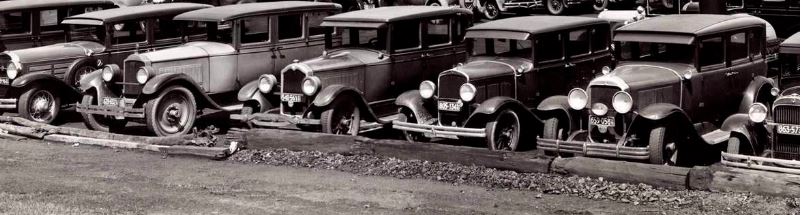
On the near end at the back of the building, I located a window, which gave me a clear view through sheer curtains of the Brit sitting at his desk. His lap dog, Simon, paced the floor nearby. When he walked past the window, I quickly ducked farther into the shadows. Suddenly, the bully flinched. He looked first to the door, then to Albert, who nodded. Simon hustled to it and disappeared into the lobby. Within a few seconds, he reappeared and excitedly spoke to his boss. I heard the sound of his words but couldn’t make them out. The casino owner slammed his pen down on the desk and left the room.
When he walked past the window, I quickly ducked farther into the shadows.
With the flash I’d brought wrapped in a rag to soften the noise, I broke a pane, unlocked the window, and raised it. Climbing into the opening and past the drapes, I heard my accomplice screaming through the door to the lobby. He was giving it his best, yelling about being assaulted and robbed in the parking area.
At Wainthropp’s desk, I used a screwdriver to pry open the lower drawer I’d watched the thug go into a week or so earlier. The same effort didn’t work on the lockbox when I removed it. It just wouldn’t give. My time to finish the job and make an exit was running out. I gave up, closed the drawer, and beat a hasty retreat through the window with the strongbox under my arm. Opening the container had to keep until later when I could better focus on it.
Back in the parking lot, I waited in the LaSalle. After what seemed an eternity, Joe Hines emerged from the club’s front door. Simon walked beside him, a hand on the old man’s shoulder. The sight gave me pause. I couldn’t let Albert’s henchman see me. True to his part, Joe angrily removed Simon’s hand and shoved him away. The second man growled, shrugged, and returned to the building. My partner hastily shuffled to my location, hauled himself into the car, and laughed excitedly, “If ‘The Boys’ could see me now!”
True to his part, Joe angrily removed Simon’s hand and shoved him away.
I cranked the motor, slammed it into gear, and sped off. On the return trip to town, I took a hairpin turn on two wheels, causing my passenger to let out a whoop.
* * *
As pre-planned, I drove straight to the train station. Not that he wanted to linger in our fair city, but if Hines was set on traveling to Florida, the sooner, the better. I didn’t want him to hang around where he might be recognized by anyone or sought by Wainthropp or Simon once they’d discovered the theft of the strongbox and put two and two together. That afternoon, I’d bought him a ticket on the Magnolia Special to Atlanta to pay him in advance for his help at the Riverside Supper Club. We made the station with a few minutes to spare before its departure. And certain he’d not cotton to getting snatched a second time while waiting for his conveyance, I insisted on staying with him until the train pulled out, just in case.
While we stood on the platform with his grip in hand, I thanked Joe again for his part in my caper. When I said he’d opened my eyes to the good people out west, he looked surprised. “Of course, we got good folks out there,” he assured me. “‘Out where friendship’s a little truer…. Where a man makes a friend without half tryin’. That’s where the West begins.’” he quoted. I must have given him an odd expression, because he added, “You need to read some Arthur Chapman.”
I made a mental note to ask my bookstore associate, Micah Kaplan, about this Chapman guy.
When the conductor called “All aboard,” he climbed slowly into the pullman and tossed a halfhearted wave goodbye from a window as the train jerked to a start, then eased away.
* * *
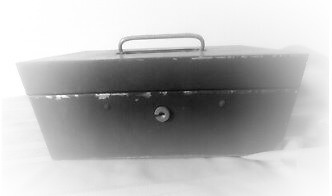
Later that night in my apartment, I finally got the strongbox opened. It certainly lived up to its name. Inside was the ledger I was after, as well as seven hundred seventy-three dollars cash and miscellaneous papers. I kept the cash toward what Wainthropp owed me for the job. Glancing through the documents, I found they included a few not-so-discreet love letters to or from several of our locally prominent citizens. There were other papers that also appeared to be the basis for a blackmail scheme Albert was running. Seems the bastard had his hand in several grifts. I set them aside.
Inside was the ledger I was after, as well as seven hundred seventy-three dollars cash and miscellaneous papers.
In the journal, I found Wainthropp had written the sucker list in some sort of code made up of various sides of a square and two-sided points, some containing a dot. The notes at the top of the first page were in the same handwriting as the instructions the Brit had given me when he hired me. As I nursed Jack Daniels and smoked Chesterfields into the morning hours, I worked on trying to break the cipher. Whether it was the booze or pure fatigue, my effort was fruitless, so I called it a night. Besides, I knew someone who could make quick work of it.
* * *
After breakfast the next morning, I motored to Malaprop’s Bookstore and its proprietor. It was rumored Micah Kaplan had worked with Herbert Yardley in the cryptographic section of Military Intelligence during the Great War. Regardless, I knew him to be a whiz at playing with words and deciphering codes.
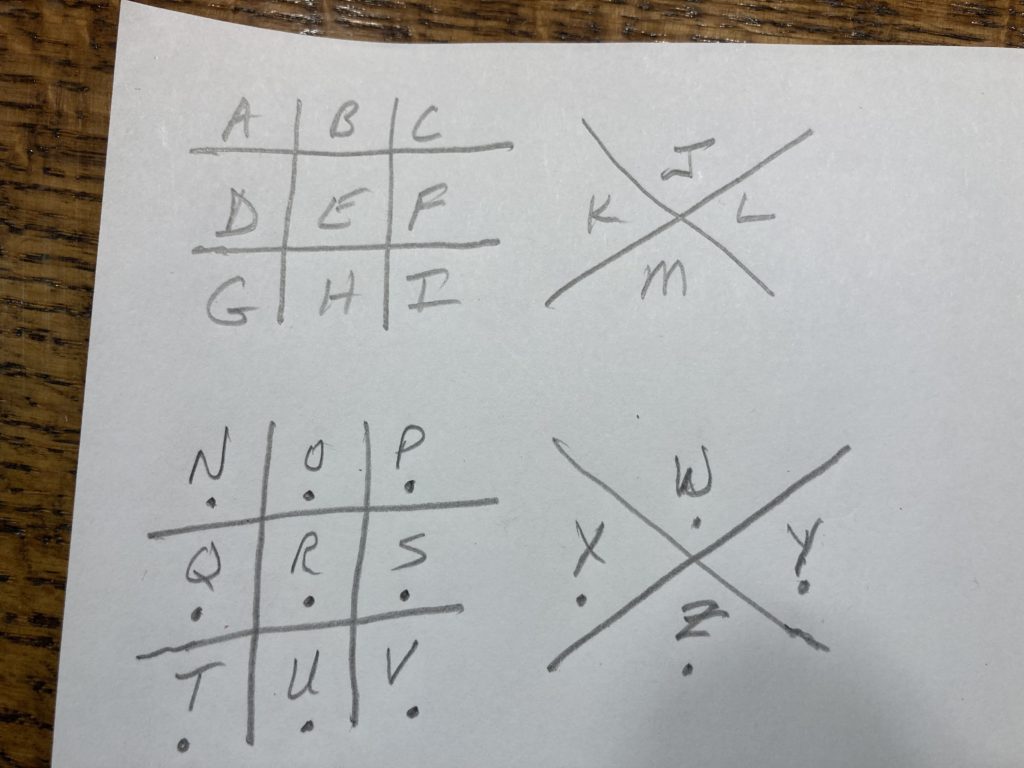
My pal greeted me warmly. I explained what I had. He loved a challenge such as this and said he’d be glad to look the book over. After a few seconds scanning the ledger, Micah smiled and picked up a pencil. On a clean sheet of paper, he drew two vertical and two horizontal lines, such as kids playing tic-tac-toe do. After that, he filled the thing with the first nine letters of the alphabet. He next sketched a large X on the sheet and filled it with the next four letters. Micah repeated the diagrams with the rest of the alphabet but added dots at the bottom of these sections. By this time, I thought I might be catching on.
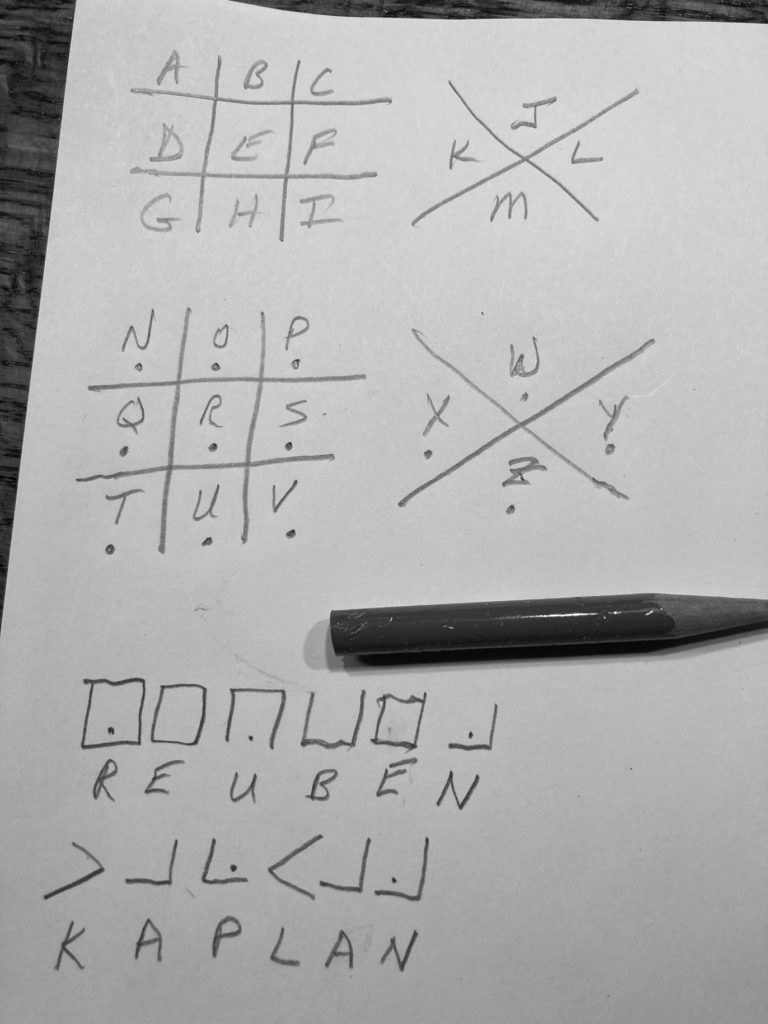
“This is called ‘The Pigpen Cipher,’ also known as ‘The Masonic Cipher.’ During the Civil War, Union soldiers in Confederate prisons used it to communicate with friends on the outside. In this code, the two lines that form the upper left side of the tic-tac-toe diagram I drew represent the letter A. The U-shaped upper middle section of the figure corresponds to the letter B, and so on. The dots make it possible to use the same diagram pattern more than once.” He pointed to a line in the book. On a new sheet of paper, he drew out the symbols from the line, then added the letters below. “For example, this entry refers to a fellow named Elmer Crane who owes our British friend a little over thirty-one hundred dollars. And here’s my nephew’s entry,” he finished with a shudder.
During the Civil War, Union soldiers in Confederate prisons used it to communicate with friends on the outside.
“Yeah, yeah, I see it. So simple, yet effective.” Micah smiled and nodded. I shook his hand and thanked him. Then I asked him if he’d heard of someone named Arthur Chapman.
“The cowboy poet. Indeed, I have.” He left me and returned with a book, which I bought. I departed the bookstore with a copy of Out Where the West Begins and Other Western Verses in one hand and Wainthropp’s ledger in the other.
Another chum of mine, Detective Rob Waddell of the city police department, would be interested in Wainthropp’s journal. I’d learned from Micah that a number of reformers, joined by Waddell and some other right cops, had been after Wainthropp’s hide and those of his political partners for quite a while. I drove to police headquarters and turned it over to him after explaining what it was and how to decipher its entries.
At the Carnegie Library, I searched for information on the people Albert Wainthropp appeared to be extorting with the documents I’d found in the box. After locating addresses for all but one, I returned to my agency. Back at the office, I dropped the incriminating documents into envelopes addressed to them and marked “personal”, to be mailed when I left the building. The remaining letter I’d later turned over to Det. Waddell with a brief explanation. As usual, he’d ask no questions of me.
For now, I retrieved a bottle of Jack Daniels from my desk, poured a long drink, and settled back to read Arthur Chapman’s works, while memories of the old cowboy were fresh in my mind. ©
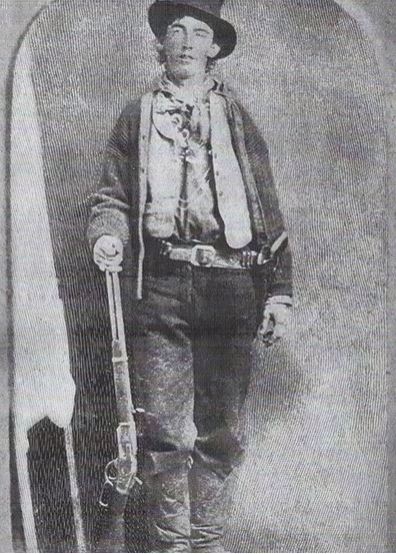
Epilogue: In 1948, William Morrison, a probate investigator, was sent from St. Louis to investigate the case of an elderly man named Joe Hines attempting to claim his recently deceased brother’s land. The dead man had been Jesse Evans’ brother. Hines confessed his real name was Jessie Evans, who had vanished from public view after getting released from a Texas prison in 1882. Hines told Morrison of his experiences in the Lincoln County Wars with 19th-century American frontier outlaw and gunman, Billy the Kid, who was allegedly killed by Sheriff Pat Garrett on July 14, 1881. But he stunned Morrison by claiming that the Kid was still alive and living near Hamilton, Texas, under the name Ollie L. “Brushy Bill” Roberts.