AUTHOR’S NOTE: This installment steps away from fiction to recount a scene I witnessed on a New York subway many years ago.
During my undergraduate studies on Long Island, on the outskirts of New York City, it became obvious that the City was a behavioral scientist’s laboratory-come-true. It likely still is. But looking around these years later at what passes for “normal” conduct, one cannot help but conclude such researchers could make their home anywhere in our glorious country. Or the world.
In this story, I wish to impart an incident I saw during my days in New York City. The period in question was the late 1960s, a time before the term homeless took its place in our daily language. Yes, there probably have always been “vagrants” among us, but they were still a dirty little societal secret at the time. Also, the episode happened before the “subway vigilante” Bernhard Goetz appeared on the scene. And the events occurred before the violent attacks we hear so much of became as common as they are today. The world’s mindset was very different. But no, the following is not a political statement or a judgment of an individual. It’s simply a tale regarding unconventional human behavior and the response to that comportment I’d like to share.
New York City was experiencing a dreadful winter that year. I don’t recall the exact year, but it’s not important. The weather was severe enough to drive otherwise unsheltered people to seek the relative comfort afforded them by the New York underground system. Likewise, my purpose for being there and which part of the network are not pertinent to the story. While it may not be clear in my telling, the events themselves transpired in a brief period.
During a crowded time of day for riding the subway, I clambered aboard a car with several other weary travelers. They occupied every square inch of seating to the point of discomfort for some, I’m certain. Other commuters held onto the overhead devices to steady themselves during the ride. They were referred to as “straphangers.” Maybe they still are. I was one. Regardless, several of citizens in this category were commuting with me.
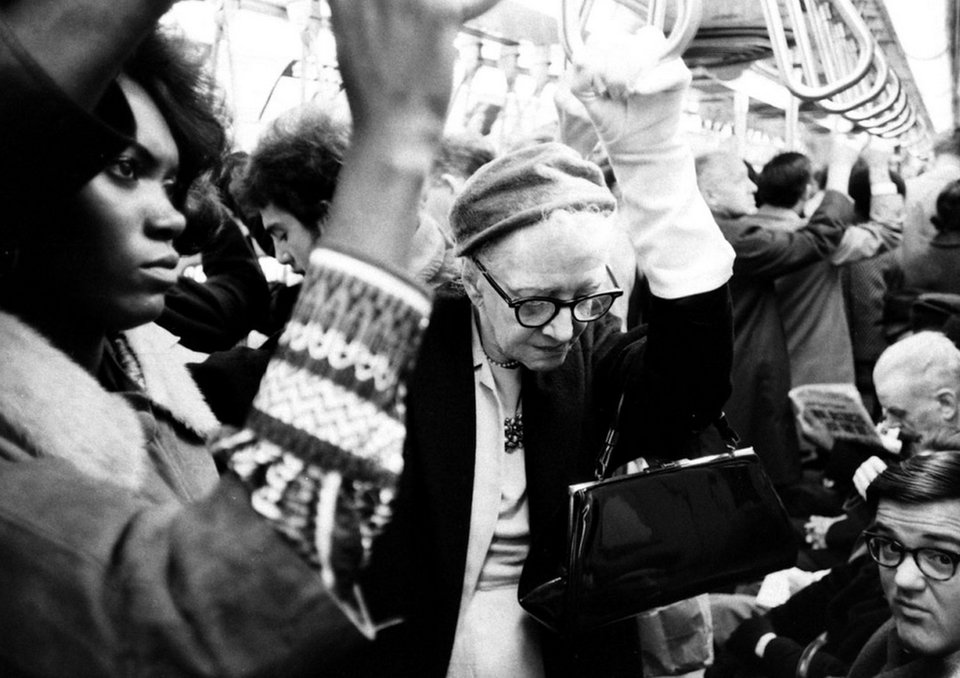
As we jostled along, the usual murmurs of travelers and the background noises of the system filled the car. One particular individual captured the attention of those clustered there. The unshaven man, dressed in rather ragged attire, was tall, raw-boned, and sinewy with long, matted, unruly hair. Even from my strap on the other side of the car, I could “sense” he had not encountered soap and water for a period of time.
The fellow had started talking to himself just after the train’s earlier stop. His words were unintelligible, but he had no shortage of them to share with those around him. Initially, the other commuters smiled to themselves and exchanged expressive glances concerning the seemingly unhinged man in their midst. The stranger’s monologue grew more bizarre, louder, and more enraged as the seconds passed, although the source of his anger and its target remained unclear. It became increasingly obvious that the guy was disturbed, perhaps seriously.
The man’s soliloquy stopped suddenly. He surveyed the car with a marked frown. At this turn of events, the occupants, particularly those close to him, froze in trepidation about what might happen next. Their anxiety was nearly palpable.
The subject of this tale was holding an overhead strap above and standing in front of a stylish female in her mid-twenties and a well-dressed, distinguished-looking, middle-aged man. These two did not appear to be traveling together or were in any way associated with one another, although a bond soon formed.
After a few moments, the disturbed man–and I use the term not in a clinical sense–began talking to himself again. The reaction was as expected: no one seemed to notice the man at all. But, as his nonsensical soliloquy became louder, a blanket of quiet amusement descended on most of those within earshot. That condescending smirk was passing from person to person. It was that facial expression which graces the faces of those who feel a slight embarrassment when a base individual awkwardly makes his or her presence known. Lowered eyes, studying the tops of their shoes, then followed their shared smiles.
Just as they had appeared, though, expressions of stern aloofness replaced the meaningful grins as the man’s voice continued to rise above the background noises. A person standing nearby responded by moving away with the obvious air of someone who had had his private world invaded by unwelcome forces. From the theatrical manner of his withdrawal, one could conclude his retreat to be as much a product of a fear of “guilt by association” as prompted by anything else.
Suddenly, the troubled man ceased his monologue. Most of the folks who had reacted dismissed this pitiful creature and turned their thoughts elsewhere. Yet, for a moment, a few apprehensive eyes still followed this poor form’s every move. It appeared as if ceasing his apostrophe elicited from these people as large a response as the one-sided conversation had.
Then the unfortunate fellow retched dryly, loudly, and violently over the laps of the aforementioned man and young woman seated below him. His actions were what we called the “dry heaves” in my college days. The horror-filled eyes of the two projected “victims” stared in disbelief at the heaving form above. Others, occupying adjacent spaces, made futile attempts to slide on the packed seats out of harm’s way. Those ensconced on either side of the pair, however disgusted by this man’s behavior, steadfastly refused to abandon their places. Meanwhile, the obvious targets of the unfortunate soul’s impending regurgitation overcame their momentary petrification. They simultaneously removed themselves quickly from the “danger area” to a safer standing position toward separate locations in the car’s rear. By this time everyone’s focus were on the abject creature who had caused the commotion.
As abruptly as the violent retching had begun, it ended. With a maniacal grin beaming across his countenance, the erstwhile nauseous man turned. He scanned all those in the car and slowly lowered himself onto the now-unoccupied seat before him. From that moment on, he acted as if nothing out of the ordinary had happened. A sense of stunned disbelief swept over those present.
The reactions of everyone present to the turn of events were obvious. It flooded those involuntarily seated next to the individual with an uncertain relief. But they still maintained as much of a void between themselves and the man as the crowded conditions and creature comforts allowed. Most of those removed from the little comical drama / commotion displayed outright amusement at the situation, the perpetrator, and the “victims.” Behind their knowing nods, chuckles, and smirks, I detected a powerful feeling of admiration and, sometimes, approval for the vagrant’s initiative, however woefully conducted.
The other passengers’ reactions appeared to fire the two dupes with feelings of hatred, indignation, and embarrassment. They’d been subjected to humiliation by and being outwitted by a “lesser.” Regardless, these responses did not manifest themselves in a physical or verbal manner. This looked to be because of the risk of yet another degrading setback at the hands of a readily discernible “imbecile.” It seemed, through their own mental deductions, the victims realized a certain method to his “madness.”
The rest of my time on the subway ride with the “extortionist” passed uneventfully. ©