September 1931
The man stood at a window, staring out into the night. Through the opened venetian blinds. a moderately lanky fellow looked back at him from the reflection in the darkened panes. The dusky, brooding eyes, set on a bony face below black eyebrows and hair, appeared haggard and sad. Then a grimace covered his face. The expression was a jumble of pain and anger. He plunged a hand deep into a trouser pocket. It jangled loose change nervously, but absentmindedly.
Neither of us had spoken for several minutes. Snapshots of his wife and her lover in various stages of undress and supposed ecstasy covered my desk. The pictures had not been easy to get. For the moment, I regretted how dedicated to and good at my racket I was.
For the moment, I regretted how dedicated to and good at my racket I was.
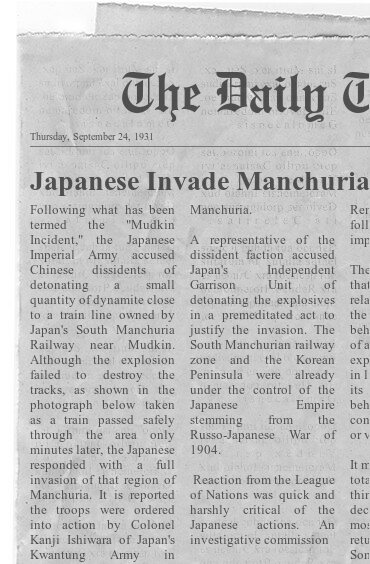
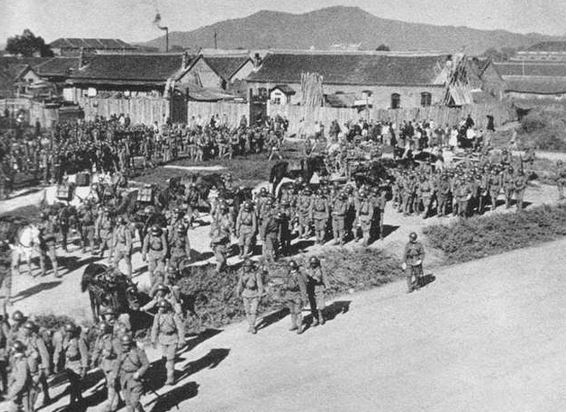
Beneath the photographs was the newspaper I’d been reading when the guy appeared at my Tanner Detective Agency office, wanting a report of my findings on his behalf. I’d been catching up on the Japs’ invasion of Manchuria a week or so earlier. The Empire of Japan was expanding its territory. The dailies reported the aggressors based their actions on the Mukden Incident. The story had been accompanied by a photograph of their troop movements. My gut told me this somehow did not bode well for the rest of the world. A little voice in my head chimed in maybe the pundit who labeled the Great War “the war to end all wars” had been a touch optimistic.
Those days, I was bypassing the sports pages, except the occasional reports on boxing matches or horseraces. I’d pulled in a few bucks on the recent Canzoneri-Berg bout in New York. Likewise, I’d made a chunk of change on Twenty Grand–the name of the horse, unfortunately, not my winnings–at the Kentucky Derby back in May. A little more cash came my way when the Belmont Stakes ran. But, in my preferred sport, only the White Sox were having a worse season than my favorite baseball team, the Reds.
As much out of boredom as thirst, I poured myself another Jack Daniels. On cue, the man at the window stared down at his empty whiskey glass, fingering its lip. He half turned in my direction and held the glass out to me. “Mind?”
“Of course not, Andy. Just take it easy.” I started to rise, but he moved to my desk. I poured. He gulped.
* * *
I’d known Andy Cecchini since we were kids running wild together on the streets of our city. Somehow, we’d survived that daredevil, rambunctious period of our lives. Andy’s old man owned the neighborhood butcher shop where my mother had shopped for the carnivorous side of our meals. On the other hand, my old man rarely worked because he drank more of his meals than he ate.

When I was a kid, the barrel-chested Mr. Cecchini was scary as hell to me. He was missing two fingers on one of his hands. One day, when I was around five or six years old, he caught me staring at the hand. He bent over and waved the disfigured thing slowly in front of my face, smiling eerily. Then he whispered he’d accidentally chopped off the fingers while cutting meat. Because the fingers, he’d told me, were of no more use to him, he’d just ground them up in the sausage. Terrified, I steadfastly avoided sausage. A short time after our encounter, I refused to eat the ground meat at breakfast and confessed the reason. My old man slapped me upside my head and told me not to be such a “stupid baby.”
Then he whispered he’d accidentally chopped off the fingers while cutting meat.
Later that day, my mother took me aside and told me Mr. Cecchini had lost part of his hand in the Spanish-American War. He’d only been teasing, she’d assured me. Despite my mom’s reassurances, I steered clear of sausage for another dozen years. To this day, I still eye them warily when they’re set in front of me. Especially when they come from the shop in the old neighborhood Andy had taken over when his old man died. I stick to bacon or ham when I have breakfast at The Wayside Café.
* * *
“So, let me get this straight, Andy,” I said, throwing my hands up in a helpless gesture. “And understand, now, I’ve never married and I’m no angel. You–”
“No, you ain’t that,” he grumbled.
I shot him a frown. My patience was wearing thin, despite Andy being an old friend. “As I was saying, you cheated on Doris, no problem. She cheats on you, big problem.”
His only answer was to hold his glass out for another round. I obliged with a liberal measure. As he sipped the drink, he kept his swimming eyes on the snaps on my desk. “I just don’t believe it, Gil!” he exclaimed suddenly over the rim of his tumbler. Then, he spun a print, so it was right side up toward him and stared at it as if seeing it for the first time. He exhaled audibly. “Doris said she didn’t even like doing that!” I had no response. After what seemed an extended minute, he moaned, “How could she do this to us?”
How do you answer that under those circumstances? What’s good for the gander is good for the goose? I shrugged, “Every man can have a woman, but the iceman has his pick.”
Andy looked at me sharply, stunned. “She doin’ it with the iceman, too?”
I stifled a laugh at my friend’s confusion. “Nah. That’s just something my old man used to say, when he was sober enough to speak lucidly, that is,” I said, blowing air.
“Your old man was quite a character, Gil. He wasn’t Catholic, and he wasn’t Irish, but he never missed a wake,” Andy said with something of a relieved chuckle.
I wasn’t sure the term “character” fit my old man in any way, but it wasn’t worth getting into with Andy over. “Ditto, buddy.”
He looked at me and grinned broadly. “You still not eatin’ sausage?”
I could feel my face turning red. “Let’s just stick to your problem for the time being, Andy!”
“Okay. All right, then. Who’s this jerk she’s with, Gil?” He paused. “Was he a fireman, Gil? Doris always seemed to have a thing for firemen!”
“I don’t know whether he was a fireman, Andy. He wasn’t wearing a hat at the time I saw them together.” Cecchini’s face showed he didn’t see any humor in my smart-aleck reply, so I moved on. “Does it really matter, Andy?” I was trying to avoid my pal’s inclination toward retribution. The man had a quick, mean temper. He always had and probably always would.
I remember once, when we were kids, a bigger, older boy called him by his true first name, Andreas. Andy always hated being called by that name, and everybody knew it. Nobody used it. Nobody. The kid invoked the name to get under Andy’s skin. As it turned out, he got under Andy’s entire body as my friend slugged him on the kisser, taking the larger boy to the ground. Then my buddy sat on his chest and pummeled him until we pulled him off. More than one lug had underestimated the strength in Andy’s gangly form.
The youngster had built up a lot of sinewy muscle as he hauled loads of beef and hog carcasses around the butcher shop for his old man. I recall Mr. Cecchini calling to him, encouraging him to “be a man” as he staggered under the weight of a slab of meat. But Andy always pulled it off. My pal had always had that kind of tenacity. I figured willpower had led Andy to pull the butcher shop through the recent dark economic times.
I knew the “other man” with Doris Cecchini to be a door-to-door salesman named Curtis Groendyke, though I wasn’t exactly sure how the hell to pronounce his last name. Telling Andy his name could serve no useful purpose. For a second, my mind drifted back to the circumstances when I’d helped my buddy Harry, owner and operator of Harry’s Paradise Tavern, the year before. His wife, Blanche, had succumbed to the “charms” of a man with the identical occupation. But the mug in Andy’s case worked for the SoftHaven Shoe Company.
Telling Andy his name could serve no useful purpose.
Perhaps there was more to be said, in some respects, for the door-to-door racket than I’d given it credit for. Here was a jasper in a racket which actually expanded his “social life.” In my situation, I was in a gambit that interfered with my socializing. At least, I partly blamed my job for the lack of it. Let me simply say, at that minute, it had been a long while since I’d engaged a woman in an act of mutual good feeling, if you take my meaning. Besides, in these money-ravaged years of the Depression, the guy likely had more opportunity for encounters such as he’d had with Doris than he did making door-to-door sales of shoes.
By this time, Andy had plopped in a chair across the desk from me. His pan reflected a great deal of worry or an undisguised fear. Maybe hate. At this point, I wasn’t certain there was a difference. Suddenly, my friend’s face became a knotted gnarl of fury. “I wanna kill the son of a bitch! Help me, Gil! Help me kill ‘em!”
“Hold it, Andy! You can’t be serious! I’m–”
“I’m serious as hell,” he interrupted with slightly less enthusiasm. As he spoke, Andy’s eyes shifted among the photographs on my desk. “And I’m gonna do it, with or without your help.”
“What’s that going to get you, Andy, except a trip up the river? You think your fellow citizens will return a verdict of ‘needed killing’ and let you walk?” I shook my head vigorously, “Uh-uh. Even if you find a sympathetic jury, it’ll probably still be manslaughter and ten to twenty years. Without their sympathy, it’s murder and a short-lifetime ride on Old Sparky. Yeah, the state’ll give you an electric cure for your temper, for certain.” The man said nothing. He was calm, but there was rage in his eyes, which still prowled the photographs. “Think over what you’re saying, Andy.”
“… it’s murder and a short-lifetime ride on Old Sparky.”
My client shot me a steely up-from-under look. “Oh, I’ll think about it, all right,” he said in an ominous tone. Andy’s voice was getting a boozy edge to it. I could only hope it was the hooch talking. Honestly, I was feeling the effects of the whiskey, too.
Nonetheless, we drank away the next couple of hours and swilled our way through old times and a bottle of Jack. We reminisced about the times we spent playing baseball on a sandlot over by the coal yard. Andy had had a wicked throwing arm. Because of my height, I usually played first base with Andy behind me in right field. He loved to try to throw a nonchalant kid out at first on a hard line-drive base hit. The power of his throws hurt like hell when they reached what passed for my glove. He still got a kick from my complaints.
Then we recalled the night we’d sneaked out of our houses to see two girls in town with a traveling carnival. Convinced they were chippies of easy virtue, we were determined to spend time with them. Their chastity, if they had any, remained intact that night. The pair of us ambled home, no worse for wear. We still looked back on the night with amused frustration. Since that time, we always jokingly referred to the girls as the “Lee Sisters.” Ug and Home.
“At least your girl had teeth,” Andy kidded.
“Yeah. Did you notice that tooth?” Chuckling and pouring another round, I added, “And I remember your girl had long brown hair–under her arms!” We shared a laugh at the memory.
Despite the banter, the look in Andy’s eyes told me his smoldering fury lay just below the surface the whole time. Eventually, the time came to call it a night. Because we could barely walk, much less were in condition to drive, I called a taxi to pick us up. Andy’s place was too far from my office to carry him home and return to my joint. That, and the fact I didn’t think the Cecchinis needed to see each other just then made my decision to have the hack take us to my apartment easier. We could come back and get our heaps the next morning.
By the time we got to my building, Andy was fading in and out of consciousness. I decided it would be easier to carry my pal over my shoulder up the four flights to my bedsit. Though something of a struggle, the first three flights were not too bad. Between the third floor and mine, though, the constant pounding of my shoulder into Andy’s midsection apparently got the better of his insides. Suddenly, he puked down the back of my suit. The event only hastened my progress to my place.
In my apartment, I kicked the door shut behind me and stood Andy on his feet as best I could. As I straightened, my friend spun and dove onto my unmade Murphy bed. Not that I’m a poor host, mind you, but my intent was to gingerly place the lug on a chair and keep the bed for me.
I gave up and resigned myself to cleaning up the mess he’d made of my suit before it caked too much. The smaller mess on the staircase had to be left for Mr. Conforti, my building’s super, to clean. I was in no condition to make my way back down the stairs to the “scene of the crime.” After about five minutes in the bathroom, trying to sponge my suit clean through an inebriated fog, I gave up and decided to deal with it later. Finally, I dropped onto my Morris chair. The last thing I recalled was Andy mumbling Doris’s name in the dark.
* * *
A shaft of morning sunlight, biting at my eyes through my windows, brought me back to consciousness. Aside from the constant pounding in my head and my body’s stiffness from an awkward sleeping position, the first thing which struck me was Andy’s absence. Forcing myself out of the chair slowly, like an old man climbing out of a bathtub, I looked for him in my small bathroom. He was nowhere around. I wanted to believe the clear light of day might ease his anger and he’d be all right to go out into the world. But an uneasy hunch I needed to find him gnawed at my insides.
… the first thing which struck me was Andy’s absence.
I grabbed a quick shower, dragged a razor across my mug, and put on a clean shirt and my other suit. Then I carefully stashed my outfit from the night before in a bag to go to Mr. Stoddard at my dry cleaner’s.
Though I desperately needed at least a bucket of coffee and a bottle of aspirin, the idea of sitting in a café next to the smelly mess didn’t appeal to me. Stoddard’s joint, around the corner from my building, was my first stop. At the cleaners, the old man shot me a wry smile at the sight of my soiled suit. “You certainly made a mess of yourself this time, Gil.” Unfortunately, the man had had experience cleaning up after me. But, in fairness, most of the time, it was removing stains–usually blood, grease, grass, and the like–from my suits and shirts caused by fracases on the job.
Despite my throbbing head, I couldn’t help responding. “If you’ll check closely, Mr. Stoddard, you’ll see the ‘damage’ is on the backside of my suit. Not even Houdini was double-jointed enough to do that.” I smiled weakly, “No. It’s somebody else’s handiwork.” Stoddard returned the grin, but his face showed my argument hadn’t entirely convinced him. I let it drift.
It was past the usual breakfast time at the Wayside, but I got my pail of java and some dry toast, my cure for a hangover. Oscar also sold me one of the tins of aspirin he kept behind the counter. I chewed three or four before I snagged a hack to my office in the Belvedere Building. At the building, my LaSalle sat where I’d parked it the day before. Andy’s Hudson sedan, which he’d pulled up next to my heap, was missing. Because what the man might be up to still concerned me, I decided to call Doris when I got upstairs.
Andy’s Hudson sedan, which he’d pulled up next to my heap, was missing.

At my desk, I dialed the Cecchini residence. While it was ringing, I used my free hand to start clearing the snapshots of Doris and her lover from my desktop. Suddenly, the proprietor of the photography studio next to my office burst through my door. Lester Osgood, known in our building as Lester the Letch, had an after-hours involvement in the “French postcard” trade. The degenerate also seemed to have a sixth sense about the presence of risqué pictures stemming from one of my jobs. He flashed a cheesy grin, made a beeline for my desk, and began shuffling through the photographs faster than I could put them into the file folder. My call continued to ring. As it did, I picked up the telephone and brought it down hard on one of Osgood’s hands.
My neighbor quickly pulled the hand back to his chest. “Ouch! That hurt! Hey, what’s the big idea?”
I put a hand over the mouthpiece. “The idea, my nosy friend, is you keep your mitts off my case photos!” After a dozen or so rings with no answer, I cradled the earpiece. Turning my attention to my unwanted visitor, I added, “Don’t you get enough smut in your evening profession, Lester?”
“I don’t know what you mean, Gil.” The smirk on Osgood’s face belied his words. He’d be a pushover at a poker table.
“Sure, Lester, sure. Now get out of here. I’ve got work to do.”
“Well, the reason I came over, Mr. Wisenheimer, was to tell you a guy stopped by earlier. When you weren’t in your office, he asked me to give you a message. He said to tell you thanks, but he’ll take care of the problem.”
The message worried me. “What’d the mug look like?”
“He was tall and skinny with dark hair and eyes. But he looked tough. He reeked of whiskey and looked like hell.”
That was Andy, right enough. Now my concern for Doris grew. “Did he say anything else?” The photographer shook his head. “Thanks. I appreciate your letting me know, but I’ve gotta get going.” I packed away the Cecchini investigation file and stood. After locking the folder in my filing cabinet and grabbing my fedora, I herded my neighbor out of the office.
* * *
My head still ached as I navigated my crate through noon traffic toward Cecchini’s Butcher Shop on the southwest side of town. There, I spoke to one of Andy’s employees, a fella named Matt DiFrancia, who Andy considered his right-hand man in the shop. DiFrancia told me my friend had stopped by the shop briefly around midmorning. As he was leaving, the owner had told Matt he probably wouldn’t be back in until the next day. He hadn’t seen or heard from Andy since.
My next stop was the Cecchini home in the Belmont neighborhood on the northeast side of the city. Doris and Andy lived there in a modest bungalow on Wyngate Avenue. As I turned onto their street, I didn’t see Andy’s Hudson anywhere.
After easing the LaSalle to the curb in front of the house, I sat and thought about facing the next several minutes. I dreaded seeing Doris if she knew her husband had hired me to follow her. Old pangs resurfaced as I ambled up the sidewalk to the house.
* * *
Doris Lombardi had been the distant heartthrob of most guys in our high school class. She was attractive, vivacious, and funny. But, because her old man was a large, mean son of a bitch, none of the fellas would go near her in a romantic sort of way. She never seemed to notice. Wherever Doris went, she was the center of attention. Her dance card was always full. But she had such a kind, pleasing manner, none of the other girls showed any envy. Besides, Mr. Lombardi’s attitude toward likely suitors meant the guys spent their time pursuing the other girls in our school. Everyone appeared happy with the circumstances. Everybody except those like me, who carried an unrequited torch for the good-looking brunette. Somehow, Doris, Andy and I formed a bond during our teenage years. We were almost inseparable in a platonic way. Damn Plato!
Doris Lombardi had been the distant heartthrob of most guys in our high school class.
High school graduation came and went. I trotted off to try my hand at college, thinking I wanted to be a mechanical engineer. Truth be told, maybe part of the motive for me taking off was to escape my alcoholic, abusive old man. My brother was in the Coast Guard by then, and I didn’t want to remain the sole object of the man’s drunken rages. Whatever the reason, college didn’t take. After a year, I made my way back home. I found Andy had started working full time in his family’s butcher shop. Doris was working as a sales associate at a local five-and-dime.
While looking around for something to do, I became pals with a copper on the city’s police force. As he talked about his job, I realized I wasn’t cut out to be a bull. But the guy, Rob Waddell, suggested my natural curiosity and “intuitive skills,” as he called them, would come in handy in the private investigator’s racket. What the hell. I applied for a license, put up a bond, and opened an office around the time they promoted Waddell to detective. The rest, as they say, is history.
Except, as with history, there’s always a behind-the-scenes story. In the case of the Doris, Andy, and me, it went like this. While I was away at college, trying to figure how the hell geometry could do me any good outside a poolroom, Doris’s father had been killed on the job in a railroad accident. With him out of the picture, Andy moved in on the girl. She fell for the lucky stiff. And, by the time I returned home, they were an item, as the gossip columnists liked to write. Anyway, I was home in time to serve as Andy’s best man.
* * *
At the Cecchini’s door, I rapped loud enough for anyone anywhere in the house to hear. Doris opened the door. Then, without saying a word, she meekly stepped back into the middle of the parlor. I let myself in through the screen door. A small mouse was forming under one of the woman’s eyes. She averted her face. I reached for her cheek and turned her face to me.
“Did Andy do that?”
Her face hardened. “You ought to know, Gil!” she fired back in a hateful tone. It bothered me to hear it coming from Doris. “You and your damned snooping! Why can’t you leave people alone?”
So the cat was out of the bag. “Listen, Doris–”
“No! You listen!” She drew a deep breath. “Our lives are our own, Gil. But my guess is you don’t know about Andy’s affair. His lasted awhile. My fling with Curtis was only those three times.” So I’d come into the picture in time to catch only the last two rendezvous. She looked down at her hands, then back up at me. “I guess I did it just to get back at Andy. It meant nothing.”
“It meant something to Andy, Doris.” She let loose a gasp and looked hurt. I took her by the shoulders. “Look, do you still love him?”
“You know I do, Gil.” Yeah, I did.
“Well, does he know it?”
She pulled away from my grip. “I told him so when he came home this morning and confronted me. He said he’d been with you last night, drinking.” Doris’s comment was as much a question as it was a statement, but the plea for an answer wasn’t in her words. The thing was written in her eyes.
“Yeah, he was. We got too plastered to get him home last night, so he bunked at my place. He’d already gone when I woke up.” I moved her to a sofa where we sat. “I was worried about you. So I came over. Where is Andy?”
“I don’t know. We had a terrible argument, and he left.”
My few years as a shamus had taught me how to read a lie, most of the time. “Does he know the guy’s name?” She blanched and nodded vaguely. “Does he have any idea how to find him?”
Doris hesitated, then waggled her head. “He said he just wanted to tell Curtis to stay away from me. I told him where he lives.”
“Damn, Doris! Andy said he’s going to kill the guy!” Her hand went to her mouth as the tears filled her eyes. She knew what his temper could lead to. I shook her to keep her attention. It did no good. Doris looked past me with dull eyes. Rising quickly, I exclaimed, “I’m going after Andy!”
She jumped up. “I’m going with you!”
“Hell no, you’re not! You’re going to stay here by the phone. If Andy calls, get him back here somehow! Should he come back, keep him here! If I can’t find him, I’ll check back with you. Understand?” She nodded in a detached sort of way.
* * *
Back in the LaSalle, I drove as rapidly as traffic allowed the several miles to the Sheffield Court Apartments, where it sat on the corner of Sheffield and Reynolds Streets. Groendyke had taken Doris to his place there the couple of times I’d caught them in flagrante delicto, as the highbrows might say.

Every time I saw a dark Hudson sedan during the drive, I did a double take for Andy behind the wheel. Still looking for the Cecchini heap, I rounded Sheffield onto Reynolds. The car was nowhere on the busy thoroughfare. It didn’t mean Andy wasn’t around. I slid my machine to the curb and scrambled out. Dog trotting to the Sheffield Court’s entrance, I continued to scan the street for any sign of my friend. The sidewalk was plenty crowded, but no Andy.
Stepping off the elevator on the third floor, I heard a blast come from the direction of Curtis’ flat around a corner. Heavy footfalls sounded in the passageway. I headed for the salesman’s door, grabbing my automatic from the holster under my arm as I moved. When I turned the corner, the hall was empty, but the stairwell door was slamming shut. I loped to it and threw it open. The shadowy figure of a man, a hat pulled low on his head, descended the stairs, three at a time, two flights below. Possibly it was Groendyke himself. Whoever it was, even if connected to Doris’s lover, had too much a head start to catch. I returned my attention toward the shoe salesman’s place.
Heavy footfalls sounded in the passageway.
At Groendyke’s door, I stood to one side and knocked loud. No answer. By this time, several hallway doors opened and wary faces appeared from behind them, gaping at me. “Get back inside and lock the door!” I yelled. They saw my rod and quickly complied.
After banging on the door again with no response, I tried the handle as quietly as I could. The thing was unlocked. I held the door closed by the knob and waited. Still, no sounds came to me from inside. But a faint hint of cordite fumes reached my nostrils. I pushed the door open. Nothing moved.
I stirred around the edge of the door and looked into the room. Only dead air greeted me. The apartment’s two windows were closed against the heat of the Indian summer we were experiencing. Sunlight coming through the venetian blinds showed the dust in the room’s stuffy air. Before I switched on the light, something told me all was not right. The acrid stench of gunpowder was a stronger. I turned on the overhead light.
An unmade wall bed sat on a threadbare, tan area rug. A small table on one side of the bed held a telephone, a small lamp, a pack of smokes, and an overflowing ashtray. Beneath the windows was a dresser with a mirror centered over it between the openings. A small oscillating fan, a table-model radio, two gin bottles, one a dead soldier, and a few glasses sat on top of the dresser. At least one of the glasses had smeared lipstick on the rim. Curtis had had recent company.
A search of the dresser drawers yielded nothing of value. A high-backed wing chair covered in flowered chintz lay on its side at the other end of the room. Someone or something had overturned the accompanying side table, too. A broken lamp, an empty hooch bottle, and a liquor tumbler lay on the floor beside the table. The rug was scrunched up there as if a struggle had taken place.
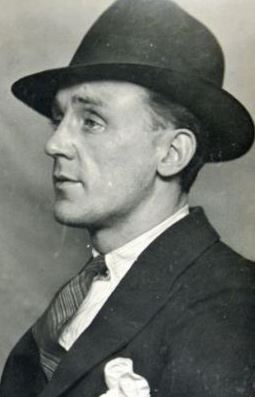
I frisked the closet as I prowled across the apartment. Except for men’s duds and a couple of suitcases, it was empty. The door to the bathroom was partway closed. When I tried to open it, the thing wouldn’t give enough for me to get in. I pushed harder and reached in to turn on the light. Then I put my head around the door. There I saw what I’d simultaneously expected and dreaded to find. Curtis Groendyke was crumpled on the floor between the door and the footed tub. A nasty, gaping hole occupied the space where his left cheekbone had been. His pale-blue eyes reflected horror but saw nothing. The stiff had several bruises and a couple of abrasions marking his face. I returned my gat to its holster.
Curtis Groendyke was crumpled on the floor between the door and the footed tub.
Avoiding the man’s blood pooled on the tiled floor, I moved into the small room. Kneeling beside the body, I touched a muscle in his neck. It was hard. A somewhat shady, but reliable doctor associate had once told me the big muscle in the neck is usually the first to harden when rigor mortis sets in. I straightened. It appeared Curtis had been dead for a while.
For a long minute, I digested the circumstances. Groendyke had been dead for maybe four hours or so, based on the rigor I’d found. My guess was the gunpowder fumes continued to hang in the air because the room had been shut tight. So the blast I’d figured earlier for a gunshot must have been the sound of a backfiring car down on the street. Apparently, the noise had come to me through the open window at the end of the hall.
I wasn’t sure the man running down the stairs had any involvement with Groendyke’s murder. More important, I wasn’t certain whether the man had been Andy. It was tough to judge, looking down on the top of a hatted man two faintly lighted floors below. I’d found no gun in the place. So whoever killed the salesman had taken it with them. I was aware Andy owned one, an old Iver Johnson top break .38 revolver he’d gotten from his old man. He usually kept it at the butcher shop. I could only hope my pal hadn’t stopped by his shop that morning to retrieve the iron. The good thing about gats was they were portable. The bad thing about them, when you were trying to solve a murder, was they were portable.
Now what? Too many curious citizens had gotten a good gander at my puss as I stood in the hall, gun in hand. Walking away was not an option. I had to find Andy and get a few answers. But first things first.
Back in the flat’s main room, I pulled out my handkerchief and used it to pick up the phone’s receiver. I didn’t figure the killer had made any social calls while he was here, but the fewer prints I left the better. A small crowd had gathered in the hall at the open door. I told them someone had murdered Groendyke, and I was calling the police. They were also told not to come into the room.

A dame on the building’s telephone switchboard downstairs came on the line and connected me to police headquarters. My pal, Detective Waddell, wasn’t in, according to the man who answered. Instead, a Detective Gus Donovan came on the wire. I’d heard the name but was unfamiliar with the guy. Though I knew a number of the mugs on the city’s force, the burg was large enough I didn’t know every one of them. I explained to Donovan who and where I was and that I’d discovered Groendyke’s body. He ordered me to “sit tight” and he’d be right over. We disconnected.
Now I had two other calls to make before the coppers showed up. But the nosy neighbors didn’t need to hear these. I moved to the door and gently closed it in their faces. Then I telephoned the Cecchinis place. Doris answered and told me Andy hadn’t come back yet. That wasn’t good news to me. A quick call to the butcher shop told me Andy had not appeared there since the one time earlier in the morning. Re-cradling the receiver, I strolled out into the hall to wait with the others, who were sharing speculations about the salesman’s sudden demise.
In due course, a rotund guy with a florid, pockmarked face wearing a tight-fitting suit approached. The lug looked like ten pounds of crap stuffed into a five-pound sack. Fred Stanhope, a uniformed officer I’d dealt with, trailed him.
“Detective Donovan?” The big detective smelled of cigarette smoke, prehistoric sweat, and coffee. I extended my hand to him.
He ignored my offer and asked, “You Tanner?” I nodded. “Where’s this body?”
I jerked my head toward Groendyke’s apartment. “In the bathroom.”
In turn, Detective Donovan cocked his chin at Stanhope, who entered the flat and closed the door on the ever-nosy neighbors. The residents then formed a small semicircle around me and the copper. Without uttering a word, the flatfoot half turned in their direction and scowled. They moved back demurely. Giving me the once-over, the detective pulled out a pencil stub and pad and asked, “How d’you come to find the body?”
Without uttering a word, the flatfoot half turned in their direction and scowled.
“I’m a private investigator working a case.” I ignored a contemptuous snort from Donovan and continued, “I had some questions for Mr. Groendyke,” I lied. “So I came here to see him. Nobody answered my knock. I found the door unlocked, so I went in. That’s when I found him on the bathroom floor. Somebody’d shot him once in the head. Been dead for a while.”
“So you a part-time cutter, too, Tanner?” His sarcasm hung in the air between us.
“Uh-uh. But I’ve seen enough stiffs in my time. I didn’t come across any gun in the apartment.”
“That brings me to the question of your roscoe. You carry one, I presume,” he said smugly. There were mumblings among the residents gathered. I nodded. He held out a hand. I carefully raised my suit coat so the big man could see the thing under my left arm. Then, using only a thumb and forefinger, I carefully removed it from the holster and handed it to the detective. This jasper and how goosey he might get with a gun being flashed around by a stranger was unknown to me.
As he checked my .45 and sniffed the muzzle, he prodded further, “What kinda job you workin’ on?” Satisfied with his examination, he handed the gun back to me. A measure of disappointment played across his face. The stout flatfoot came across as a lug who was happy to grab any quick and easy solution, right or wrong, to a case that came his way. I was grateful I hadn’t fired the thing since it was last cleaned.
“It’s confidential, detective.”
“This is a murder investigation, Tanner. I want to know what you know. And I want it now! Who’s your client, shamus?”
“Confidential.”
“We heard a shot a short time ago, detective!” a neighbor put in. “Then we saw this fella in the hall with that gun in his hand.” Donovan gave the man a quick “mind-your-own-business” kind of glower before quickly returning to me.
He started to speak, but I cut him off. “Yeah, I heard the blast, too, as I was getting off the elevator. But I figure it for a backfiring heap on the street because Groendyke’s been dead for a while, judging from the rigor. As I was coming along the hall, I heard the stairway door there slam shut,” I added, pointing. “I looked into the stairwell and saw a guy running away. Didn’t get a good look at him, though. He was a couple of floors below and wearing a hat.”
Stanhope reappeared in the hall. Donovan looked his way. “Yeah, he’s dead right enough, detective,” the officer sighed. “Judging from the stiffness, I’d say he’s been dead for at least a couple of hours. I telephoned for the coroner.”
Donovan’s eyes shifted back to me. “So, you gonna tell me what kinda investigation you’re workin’ and who you’re doin’ it for, or do I hafta lock you up as a material witness?”
Well, that was a short honeymoon, I thought. Often, these things I call “gut feelings” come to me regarding people and circumstances. Sometimes the feeling is good, sometimes bad. Donovan was registering the latter. The senses are rarely wrong. “Listen, I’ve told you everything I’m aware of concerning Groendyke’s murder!”
“I’m still gonna haul you in!”
“On what charge?”
“I don’t need no charge to hold you twenty-four hours, peeper!”
“Uh! An overnight in jail doesn’t bother me, Donovan!”
“So, you been there before, wise guy?”
“No, but I’ve been in worse places.”
“Well, we’ll see ‘bout that, Tanner.” He motioned to Stanhope. “Wait here for the coroner’s boys.” He grabbed me by an elbow. “I’m gonna take our friend here down to the station house.” Groendyke’s neighbors mumbled their approval.
* * *
A little more than a half hour later, Donovan had had me placed at a table in an interrogation room in police headquarters. After several minutes, the door opened and Donovan strolled in, followed by Rob Waddell. Rob’s widow peak glistened with a hint of sweat. It appeared he’d been in a heated discussion with his fellow detective. I was glad to see his puss. “What’s going on, Gil?”
“I was working an investigation and came across the body of a mug I needed to speak to. Like the law-abiding citizen I am, I called you boys and waited for Donovan here to show up. Then I answered his questions and told him everything I knew about what I’d found. The rest, my assignment, my client, is immaterial to your investigation. If it were relevant, I’d spill it, because I’m that kind of upstanding citizen. It doesn’t seem good enough for your pal here. He wants to lock me up for no reason. My mouthpiece is going to have a field day with this false arrest.” I folded my arms across my chest and sat back in the chair. Waddell appeared uneasy. Donovan looked defiant.
“Wait here,” Rob muttered. The two men left the room.
Despite my anxiety over finding Andy and getting answers, I waited with what the patience I could muster. In short order, Waddell returned to my location. He didn’t look happy. He sat across from me at the table and folded his hands on it. “I’m not sure what to do with you, Tanner.” That was my second clue he was not pleased with the circumstances. The only time he’d ever called me by my last name was when we were at odds over something. It hadn’t happened often, but frequently enough I picked up on it. He shot me a hard glare. “Do you swear you’ve told us everything you know about Groendyke’s murder?” Before I could answer, he held up a hand. “And the case you’re working had nothing to do with his death?”
“I’m not sure what to do with you, Tanner.”
I cleared my throat haughtily, as a college professor might. “I’ve told Detective Donovan everything within my sphere of knowledge about Groendyke’s death, Rob. Honest. I’ll be glad to repeat it to you, if you want. The man was already dead when I got there. There’s nothing I’m aware of in regards to my inquiry which relates to the murder.” It wasn’t a lie. I didn’t know anything for certain at that point. “Besides, Rob, we’ve known each other pretty well for a while. Am I stupid enough to shoot some mug in his apartment and then call the cops? And then stand in the hallway with my gat where his neighbors can see me and wait for the law?”
He blew air. “Okay. We’ve got no evidence to hold you on Groendyke’s murder. So you can go–for now. But you’d better make yourself available to Detective Donovan for any questions he comes up with, get me?”
Nodding gratefully, I said, “Sure, Rob, sure. Thanks.”
“Don’t thank me, Gil,” my pal cracked, shaking his head. “I’m tempted to let Donovan hold you as a material witness to see if he can sweat anything more out of you. But, knowing you as I do, I don’t think it’ll do any good.” He chuckled, “Besides, I don’t want to waste the city’s money feeding you. Get going.”
On the way out, I passed an unhappy Gus Donovan. The look on his face made me pass on asking for a ride back to the Sheffield apartments and my LaSalle. I flagged down a hack instead.
* * *
At the Sheffield Court apartment building, I slid behind the wheel and pulled into traffic to make my way to Andy and Doris’s place. I could only hope my friend was there and had some answers.
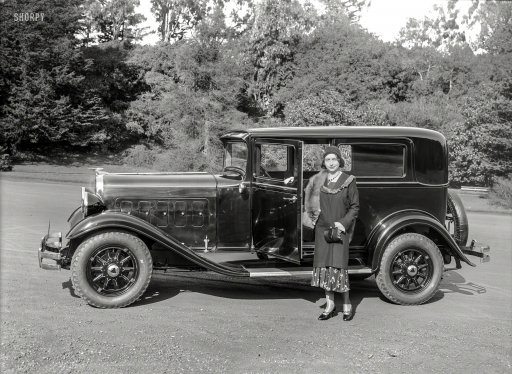
Turning on to Wyngate Avenue, I saw Andy’s machine sitting in their driveway. I pulled in behind it and cut my motor. A raucous argument came to me from inside the bungalow. As I walked up the rutted drive, I laid a hand on the Hudson’s hood. The thing was hot, much hotter than the day’s heat would have made it under the shade tree.
My knock brought the quarrel to a stop. Andy came to the door. He smiled weakly and let me in. Doris stood in the doorway between their parlor and kitchen. She’d been crying. Hard. The mouse under her eye was maturing. Andy walked to her and placed his arm around her shoulder. She seemed to allow the move grudgingly. Neither spoke.
The mouse under her eye was maturing.
The situation pissed me off. I moved close to the man. “So, Andy, where the hell have you been the last two hours?”
“Right here, Gil!” he exclaimed, weakly.
“That’s bullshit, Andy! I called an hour ago, and Doris told me you weren’t here. And, before you try it, you haven’t been to the shop since midmorning. So, where, Andy?”
Doris moved from her husband’s embrace and forced her way between us. “What the hell is this, Gil, the third degree?” she yelled in my face.
I looked from him to her and back again. “It’s me or the cops! Make your choice!”
Andy nudged an enraged Doris aside, stepped next to her, and put his arm over her shoulder again. “I was in the garage. Doris just didn’t know it.” His grip on her shoulder tightened slightly. The Cecchini’s home had a detached garage behind the house at the top of the driveway.
I glanced at her. She gave me her profile and did a little floor work with a shoe. Andy’s grip tightened almost imperceptibly. Her eyes moved to me slowly, but defiantly. “Yes, Gil. That’s right. He was out in the garage. He went straight there when he got home. I just didn’t see him.” Her words rang hollow.
“Then why was your Hudson’s hood still hot when I pulled in. You hadn’t been here five minutes before I arrived!” I jerked my head toward the street. “Speaking of arrivals, if you were anywhere near Groendyke’s place today, it won’t take the coppers long to trace you. They won’t be far behind me.”
“What’s this all about, Gil? Why is it so important where I was?”
“Somebody murdered Curtis Groendyke in his apartment this morning. I found his body a couple of hours ago.” I tried not to let my skepticism show in my words.
Doris gasped at my words. She pulled away from her husband and looked at him sharply. Her face twisted in fear and anger as tears filled her eyes. Then she drew back and slapped him hard across his face. The sound of the smack ricocheted around the room.
“What the hell did you do that for?” he moaned, putting a hand to his reddening cheek.
“For all the times I should have and didn’t!” She screamed, waggling her head in uncertainty. “How could you do it, Andy?”
“That’s some great alibi you got there, Andy!” I stepped between them, facing him. “Look, I don’t like coincidences. The district attorney likes them even less. These are the facts the law’ll be working with,” I added, ticking them off on my fingers. “One night you learned your wife has had a … one-off fling with this man,” I said, massaging the truth for Doris’s sake. From the corner of my eye, I caught a hint of gratitude on her face.
“You threatened to kill the guy. The next day, you found out his name and where he lived. You stormed off. Everybody’s concerned because we know what a temper you have. That same day, the bum’s found murdered in his flat.” My pal was shaking his head forcefully. “When I found him, he’d been dead for a couple of hours. You’d better be able to tell the bulls where you were during that time, because you had plenty of time to kill him and get home before I got here.”
“I didn’t do it, I tell you! I swear!” The man’s pleading eyes shifted between me and his wife. “But I know the law won’t believe me.”
“Try me then. I’m your friend.”
Doris dropped onto an armchair. Andy sank onto the divan and wrung his hands. I walked to him and hovered. He glanced at his wife before looking up at me with a resigned grimace. “Okay, okay. I’ll give it to you straight, Gil.” After a pause, he continued, “Yeah, I was really mad when I left here. And, yeah, I went to Groendyke’s apartment to confront him. He laughed in my face when I told him why I was there. Laughed!” He studied the pattern in the area rug at his feet for a second. “I lost my temper.” Doris let go of a low shriek. “No! Not like that, honey! I just roughed up the jerk. That’s it. I swear! Your boyfriend is … was a wimp, Doris!” he snorted to her angrily.
“I lost my temper.” Doris let go of a low shriek.
Looking back to me, he continued, “After a few punches, the man fell to the floor and cried for me to stop. I decided he wasn’t worth the effort. When I left him, he was nursing his mug with a wet facecloth. But he was very much alive, Gil! I swear he was!” Andy stopped my next question when he went on, “I was pretty worked up by that time. I drove around for a while before deciding I needed a drink. Since I was already on the south side of town, I drove to the Rathskeller. Stayed there until about half an hour ago.” The Rathskeller was a speakeasy in the cellar of a restaurant called The Heidelberg Inn on the south side of the county.
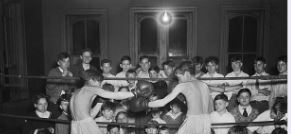
I grabbed my friend’s left hand and turned it palm side down. The butcher was left-handed. And everyone knew his fist held a wicked punch. More than a few kids had learned it the hard way at O’Malley’s Gym. When we were going up, old man O’Malley spent time teaching a bunch of us the “manly art of boxing.” Occasionally, he sponsored matches between the boys. More than one youngster had learned what a tough scamp my friend was. Anyway, Andy’s knuckles were reddened, as if they’d been in a fight recently. He looked at me knowingly. Dropping his hand, I prodded, “There’s just one last thing. Did you pick up your gun when you stopped at the shop?” Doris whimpered at the question. He blinked and nodded. “Where is it, Andy?”
“It’s around somewhere.” He grabbed my forearm. “I took it just to scare him, I swear!”
“I’ve known you for, what is it, twenty-six years? You’ve always been a pain in the neck. The older we get, the lower down my backside the pain slides. I asked you a simple question, Andy. Give me a straight answer.”
“It’s in the car.”
I told the man to get it and bring it inside. As he passed through the front door, I moved to the built-in bookcases beside the fireplace. A framed photograph of old man Cecchini in front of his butcher shop sat there. Reverie brought a smile to my face. So did the framed snap sitting next to it. It showed three teenagers celebrating, in a pre-Prohibition way, the armistice ending the Great War. Doris, Andy, and I were a sight to see. My sideways glance at Doris went unnoticed. She was avoiding looking at me.
When Andy returned, I unloaded the revolver and looked it over. None of the rounds from the gun had been discharged. It didn’t smell as if anyone had fired it recently. “Take this thing back to the shop and put it where you normally keep it. Don’t let anyone there know you retrieved it earlier or let them see you putting it back.” I handed it to him. He tossed it onto the divan and dropped beside it. “It wasn’t used to kill Groendyke, apparently, but it won’t help you any if the cops learn you got it to go to his place.” He looked at the relieved smirk on my face. “How come you believe me, Gil?”
“I’m not certain, Andy. Right now, I’m torn between old friendly emotions and instinctive disgust. But I believe you. I hope I’m not making a mistake. Tell me I’m not, Andy.” He looked at me with mournful eyes and said nothing. I ankled toward the front door, stopped, and turned back to the couple. Doris had moved to the sofa and snuggled against Andy with her head nestled on his shoulder. I shook off another pang. “They’re probably going to subpoena me to the coroner’s inquest because I found the body. I’ll let you know what he decides and what the coppers plan to do. Meanwhile, keep your head down. And call me if the law pays you a visit.”
“They’re probably going to subpoena me to the coroner’s inquest because I found the body.”
* * *
On the drive back toward downtown, I realized I hadn’t eaten since the toast and coffee that morning. Instead of going to Mama Cappacino’s, I drove to The Heidelberg Inn. After all, it was past the time for a meal. But I don’t like to eat on an empty stomach. So the Rathskeller would be my first stop. Besides a drink, I needed to corroborate my friend’s alibi. After a lengthy description of Andy and repeated assurances I wasn’t a copper, the bartender there confirmed it, much to my relief.
* * *
Andy didn’t contact me over the next two days. It eased my mind. The cops weren’t on his trail. I was going into Harry’s that morning when I ran headlong into Detective Donovan making his way out to the sidewalk. He’d never darkened the joint’s door, as far as I knew. He stopped me. “I was just lookin’ for you, shamus. Waddell said to check this dive if you weren’t in your office.” Again, my reputation preceded me. But I don’t consider Harry’s a “dive.” To me, it’s more a home away from home. I let the cop’s comment drift.
“Yeah? What’s shaking, detective?”
“I got a few more questions.”
My inquiries had satisfied me Andy had nothing to do with Groendyke’s death. In addition, he’d not contacted me since the event. And, like the man said, no news is good news. The circumstances had put me in good spirits. And on the notion of spirits, I offered, “Fine. Step into my office annex, and I’ll tell you whatever I can.”
He eyed the bar front suspiciously, then glared at me. “Nah. We’re gonna do this on my territory.”
* * *
In my LaSalle, I followed the big detective’s Ford to the station house. He sat me at the same table in the same interrogation room and disappeared for a time. When he returned, Detective Waddell was with him.
Donovan leaned over the table to me. “Are you sure you can’t finger the mug running on the stairs?”
“As I said before, he was two floors below in a dimly lighted stairwell, wearing a hat pulled low over his face. He didn’t look back in my direction. So the only thing I saw was the top of a fedora.” I leaned back on the chair. “Besides, if Groendyke had been dead for a couple of hours, the guy probably had nothing to do with it. That is, unless you figure he hung around for some asinine reason.” I moved forward, rested my elbows on the table, and said self-assuredly, “Nah, I don’t see it.” I looked to Waddell. He returned my glance with a smug smirk. “So what’s the deal? Is there something else I don’t know?”
“I’d say that’s plenty, peeper. What you don’t know could fill a encyclopedia,” Gus replied, arrogantly. My hunch was Donovan had never even seen an encyclopedia and couldn’t have spelled the word if you put a rod to his head. Frankly, that he could use the word in a sentence shocked me.
I looked to my detective pal again. He merely shrugged. Donovan pulled a paper from a coat and handed it to me. “This is your subpoena for the cutter’s inquest. It’s tomorrow morning at ten. Be there.”
“Sure, sure. But is this what you dragged me here for?” The two detectives left the room as I posed the question. A uniformed officer replaced them and escorted me to the front door.
* * *
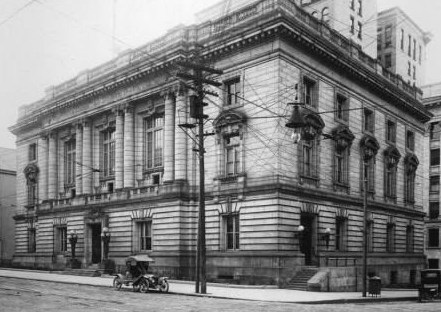
Ten o’clock the next morning found me sitting in the courtroom normally used for coroner’s inquests. Detectives Rob Waddell and Gus Donovan strolled in. Waddell took the seat next to me, with Donovan occupying the seat on the other side of his fellow detective. We weren’t able to start a conversation before the coroner appeared and called the session to order.
Eventually, they called me as the first witness in the matter of the death of Curtis Eugene Groendyke. My story was short and to the point, as far as I would tell it. It was the same as Donovan had heard days earlier. And it included my guesstimate Groendyke had been dead for several hours based on the rigor I’d felt.
My story was short and to the point, as far as I would tell it.
The next witness was Dr. Herman Clyatt, one of the coroner’s staff. He had performed the postmortem examination of the murdered man. After testifying to a few preliminary matters, the examiner asked him for Groendyke’s approximate time of death. At that point, he laid a bombshell on me, at least. He estimated the salesman had been dead only a short time before I’d discovered his body, perhaps a half hour maximum.
As I started to raise my hand in protest, Waddell gently pressed his hand on my arm. “Wait,” he whispered. Dr. Clyatt stated the deceased had experienced something called a cadaveric spasm. It was, he explained, a rare form of muscular stiffening occurring at the moment of death and persisting into the period of rigor mortis. The good doctor then enlightened all present, saying he can distinguish a cadaveric spasm from rigor mortis. The spasm is a stronger stiffening of the muscles which cannot be as easily undone as rigor mortis can. The cause, he told the court, is unknown but is usually associated with violent deaths under extremely physical circumstances with intense emotion. I’d sure seen that in the stiff’s eyes.
It was, he explained, a rare form of muscular stiffening occurring at the moment of death and persisting into the period of rigor mortis.
His testimony took me aback, to say the least. It sort of proved something our mom used to tell us. Every pancake has two sides, no matter how thin it is. It then occurred to me the fella I’d seen running on the stairs could well have been involved in the killing after all. No wonder Donovan pressed me for a description. But at least I knew it wasn’t Andy Cecchini.
They called Donovan to the stand next. He told the court his investigation, to that point, revealed Curtis Groendyke had had what he called “a Casanova complex.” The neighbors had informed the detective Curtis had many female visitors. They reported most had stayed only briefly, some overnight. Gus said he was still pursuing leads he felt might lead to a jealous husband or boyfriend.
After the session adjourned and we were in the hallway, Waddell explained to me they’d learned of Clyatt’s findings the morning Donovan had hauled me downtown. They were hoping they might jar some memory loose to help them find the guy who I’d seen running away. I could only shrug.
* * *
Donovan and his department never found Groendyke’s murderer. Waddell later told me there were just too many suspects, too many jealous husbands, boyfriends, and lovers to narrow it down with what little evidence they had to go on.
* * *
The subject of Groendyke and his murder was never again mentioned between me and Andy, me and Doris. What they spoke about in private is beyond my ken. I’m glad to say my friends always seemed happy afterward. And I never told Doris she’d been just one of a long line of skirts waltzing through the door-to-door salesman’s life. To paraphrase something else our mom used to say, I wasn’t going to lift the lid off of that pot. ©