The day is like yesterday in my mind. The date was April 17, 1934, a Tuesday, if memory serves. I’d just returned to my one-room apartment from the stakeout of a philandering politician’s love nest. The day was blustery and teeth-chattering cold. The winter in early ’34 had been relatively mild, but bitterly frigid weather had made a late appearance. And with a vengeance. It hadn’t released its grip on our part of the country yet any more than the Depression had loosened its hold on the entire nation.
I’d just returned to my one-room apartment from the stakeout of a philandering politician’s love nest.
The latest figures in the dailies showed the unemployment rate still hovered around twenty-one percent. Recently, in Minneapolis, a procession of jobless folks had marched to city hall. The people were seeking an extension of the Civil Works Administration, another of FDR’s alphabet-soup agencies under his New Deal. There, the group sent in a committee to see the city council. But, after word got out the council had arrested the committee, the demonstration turned violent. Coppers moved in with tear gas and clubs. The resulting brawl injured eighteen people, thirteen of them lawmen.
The newsreels at the movie houses reported the same Federal agency had gotten millions of jobless workers’ families through a tough winter. It did so by paying wages for work performed. The work was what the detractors had called “leaf-raking.” Whatever the hell they wanted to label it, if it got food to a man’s hungry kids, God bless. But, as the highbrows say, I digress.
The sports section of the morning’s broadsheets had ballyhooed the reopening of the refurbished Fenway Park in Boston. But my focus was on Cincinnati’s rechristened Crosley Field, “modestly” renamed after the team’s new owner, Powel Crosley, Jr.
Closing my apartment door, I set my Graflex camera on the dresser and tossed my satchel and overcoat onto the unmade Murphy bed. I stopped myself just before plonking the fedora onto the bed, too. Instead, it went on top of a dresser. Not that I’m superstitious, mind you. Next, I dispensed with tie, suit coat, and shoes. I pulled a chair across the room and turned on my Philco table radio. Then, I sat and leaned back in the chair as far as I dared, putting both feet up on the toe-warming radiator. The idea was my feet and the receiver should warm up at the same time.
As light glowed behind the dial and the radio hummed to life, station WLW out of Cincinnati came mixed with static through the speaker. Soon, the southern cadence of a new play-by-play guy was broadcasting to Cincinnati baseball fans. I’m one of those. Besides renaming the stadium, the Reds’ new owner had brought in an unknown announcer for the games, a fella named Red Barber. The question in my mind was whether “Red” was his true moniker or he’d adopted it because of the team’s name.

The answer came later, when he referred to himself as “the Ol’ Redhead.” His knowledgeable drawl didn’t help the Reds any that day, though. The Cubs blanked them six to nothing. Despite losing the home opener, I thought over how far the team had come since its start by Harry Wright back in 1869. Now fans could sit hundreds of miles away from the stadium and listen to the games. It wasn’t the same as being there, but pretty darned good. Again, the expectation this year might be better than the last crossed my mind. As the man said, “Hope springs eternal….”
In dialing stations to get some music after the game, I came across a local orchestra, playing their rendition of a familiar tune. It was “Smoke Gets in Your Eyes,” the Paul Whiteman hit from earlier in the year. The broadcast came from the Orchid Room of the St. James Hotel, one of the city’s swankier joints frequented by the swells of our metropolis. I’d been in the Orchid Room once, but only to follow a wayward husband.
With the background music humming, I swung the chair around to my desk–the Murphy bed. I opened the satchel and turned my attention to organizing notes on the case at hand. My mind drifted back to the events of the last month or so which had brought a conclusion to this investigation.
* * *
T. Winston Biggers, as he’d introduced himself, had telephoned my office in mid-February. I was still in the office—not at Harry’s Paradise Tavern—when the telephone rang. By introduction, he said Nathaniel Brubaker had recommended me. This was the second person who’d mentioned Brubaker, an insurance company guy I’d done work for, as their source of the lowdown on my work. I made a mental note to send Brubaker a Christmas card that year. Biggers stated he was extremely busy at the moment but wanted to meet later that afternoon to discuss hiring me. When I agreed, he asked whether I knew of The Pytheas Club. I said I did, and we agreed to meet there at five thirty.
Now, I hadn’t lied when I told Biggers I was “familiar” with the club. Most of our informed citizens were aware of The Pytheas and its snooty reputation. What I didn’t mention was I’d never set foot inside the building housing the most exclusive men’s organization in the metropolis. The gentlemen who frequented the institution flew at a different societal altitude than me. Sort of like the difference between the Wilbur Wright’s airplane altitude record in 1908 and the one that frog Lemoine set just last year.
The gentlemen who frequented the institution flew at a different societal altitude than me.
Anyway, I decided it wouldn’t do for Mrs. Tanner’s youngest boy to show up at the club smelling of Jack Daniels and not dressed to the nines. So, I passed on my afternoon routine at the Paradise Tavern. Instead, I drove to a bookstore to learn what there was know regarding Winston Biggers, whose name was familiar only in passing. The owner of the establishment was the aim, not one of his books.
Micah Kaplan was a smallish, wizened old man with the knowledge of our municipality and its inhabitants, past and present, even the city historian envied. Rumor was the old man had been an attorney once but grew to dislike the profession and its denizens. I never confirmed that piece of gossip. He never mentioned it, and I avoided the subject. A natural love of reading and learning had led the man, late in life, to open a small bookstore. A number of years earlier, I’d moseyed into the shop one rainy afternoon, looking for something to fill my down time. I told you before I’d read a book once.
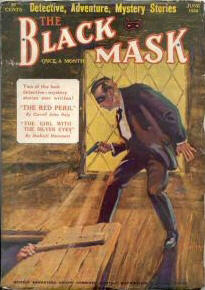
We’d struck up a conversation about an unknown author. I’d read the man’s short story, “The Girl with the Silver Eyes,” in a Black Mask magazine while waiting in my barbershop. I was looking for any books by the writer. The proprietor had advised he was unaware of any books published by this guy, Dashiell Hammett.
Kaplan’s business had somehow weathered the economic storm following the Wall Street fiasco. During the dozen years and many engrossing conversations which followed that damp afternoon, we’d become fast friends. And, luckily, Hammett had published novels in the interim.
Old man Kaplan, who rolled his eyes at the mention of my potential client’s name, filled in the blanks. Biggers, my source informed me, was a wealthy local businessman who’d made money during and after the Crash. He now had his eye on the governor’s office. The current thinking was he’d decided to start with the mayor’s office before reaching for the larger prize.
Mayor William Jefferson Warren, a totally corrupted individual, was due to be up for reelection in the fall. Of him, Micah mumbled, “Zayn vort zol zayn a shtekn, volt men zikh nit getort onshparn.” When I shot an uncertain gaze, he patted my hand avuncularly and laughed. Then, peering at me over his thick glasses, he translated, “If his words were a stick, you couldn’t lean on it.”
After a second, he sighed, “Power attracts the worst, corrupts the best of men. As Shakespeare put it, he’s an ‘infinite and endless liar, an hourly promise-breaker.’” The consensus in the city was the mayor was so crooked, when he died, they’d not bury him in the traditional manner. They’d screw him into the ground. That the voters had been put him back into office was a credit, or discredit depending on your take, to the crooked powerful political machine which backed him.

Micah told me the gossip circulating around town was Warren had fallen out of favor with the political machine running things. They’d turned to Winston Biggers as their new man. Biggers, a widower, was known as a no-holds-barred battler. And fighting dirty wasn’t beneath him. That figured for any mug who’d come out of the Crash making money. In my mind, underhanded politics meant he was in lockstep with the machine now backing him, if true. It was enough background for the time being. I thanked Micah and departed Malaprop’s Bookstore with a copy of The Thin Man under my arm.
I traveled back to my apartment to get fitted out for the meeting with Biggers. After showering and scraping a razor over my puss, I put on my best bib and tucker.
* * *
A place to park near the club was impossible to find. So, I opted for a space in a nearby parking lot, which cost slightly less than a nice meal. It was no wonder only the richest swells frequented this section of the city.
At the appointed hour, I climbed the steps to the club’s entrance. The association had located inside one of those oversized, three-story mansions. A railroad magnate or some such person had built it during the last half of the nineteenth century. He’d had more money than sense and had had to give the thing up during the Panic of 1893. Fortunately, the structure was just the right fit for The Pytheas Club, who’d swooped in and saved it from demolition.
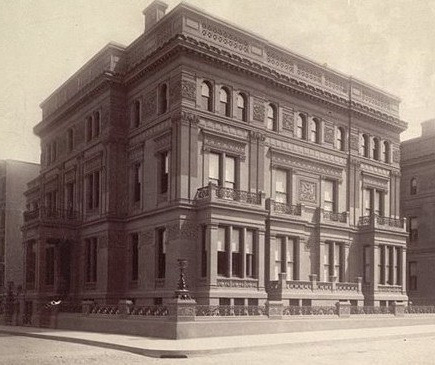
The club’s management had refurbished the vestibule with inlaid floors, rich dark paneling, and potted ferns. It looked more akin to the lobby of the Ritz than a men’s club entryway. To one side was a reception desk of the same wood as the cladding. As I approached the desk, the occupant, who sat behind a desk plaque reading “Concierge,” gave me the once-over. While his snobbish appraising glance was discreet, the disapproving assessment of what he saw was not. For the sake of a paying client, I ignored the lug. The idea came to me maybe “concierge” was French for “horse’s ass.”
When I explained my presence, he smiled and informed me Mr. Biggers had not yet arrived at the club. He finished, “However, I’m certain he shan’t be long.” That one word helped me understand the world I was entering. With some hauteur, he invited me to have a seat while I waited. I ankled across the lobby to a plush chesterfield set against the far wall. I enjoy people-watching. And this joint was a rich environment for such a pastime, if one liked peacocks, fops, and dandies. After a brief time, a tall, distinguished-looking man entered and walked to the desk. The receptionist directed the man to me. As he moved in my direction, he gave me a quick examination. It was a piercing up-and-down look. He did it the way those accustomed to judging strangers instantly and with no inhibitions about letting them know it do.
I stood as he extended a hand. “Mr. Tanner?”
“Yes. Mr. Biggers?” I asked as we shook hands.
“Yes. Sorry I’m a little late, Mr. Tanner. An unexpected business matter popped up at the last minute. It couldn’t wait.” I made a gesture and started to accept the apology, but he continued with an inviting hand motion of his own, “Shall we go in?” My well-dressed host was hard of eye and thin of lip with a metallic voice. He reminded me of a flinty minister, but without the dog collar.
Biggers turned and led me to the “sanctum sanctorum” through a heavy oak door which looked as if it could survive a G-man’s ramming truck. As we made our way, I confessed to Biggers I’d never darkened the entrance of his club. He chuckled condescendingly. We walked past elaborate stained-glass windows through large, paneled doors to a dark, opulent barroom. Small clusters of winged leather chairs with little side and center tables filled the room. Stern-looking men speaking in serious, hushed tones or reading the Wall Street Journal or other broadsheets by lamplight occupied them. The entire place was as quiet as a church mouse pissing on cotton. Calvin Coolidge’s funeral entourage had been livelier.
The room’s polished oak-paneling gleamed in the subdued lighting. Seemingly endless pictures of men wearing little skipper hats and standing aboard yachts decorated the walls. A few were under full sail with the ubiquitous saltwater spray here and there, some at dockside. It was an interesting décor considering the city’s distance from the Atlantic Ocean and the Gulf of Mexico. Several members might have had such vessels somewhere, but it still seemed odd.
At the bar, Biggers asked what I wanted to drink and ordered his “usual.” “Bourbon and branch water coming up, Mr. Biggers,” replied the smiling barman.
When the fellow poured the water from a pitcher, I gave him a questioning look. Was it branch water, I wondered, or just plain old tap water? I’ve always enjoyed letting the air out of the balloons of pompous people. But I said nothing. The barkeep averted his eyes from mine and gave my host a reassuring smile. A double Jack Daniels in hand, I followed Biggers.
As we slalomed toward our destination, I saw James Bumgarner, a client from several months earlier, across the barroom floor. He was the first guy who mentioned a referral from Nathaniel Brubaker. It made me wonder whether Brubaker was also a member of the Pytheas clique. When Bumgarner saw me, he turned his head to avoid eye contact. My intimate knowledge of his dubious private life obviously made him too uncomfortable to acknowledge my presence. When his close-set eyes crawled back to me, I grinned and nodded. I let his attitude drift and moved on. A relieved Bumgarner resumed recycling oxygen.
When Bumgarner saw me, he turned his head to avoid eye contact.
Biggers motioned to a chair in one of the small groupings at the edge of the room near a large, ornate fireplace. He broke the ice by telling me something of the history of the club and the source of its name. Adding untold excitement to my day, Biggers explained Pytheas was a Greek sailor from the fourth century B. C. The restless mariner discovered—at least from the Mediterranean perspective—the British Isles. Pytheas had circumnavigated Britain, according to my host, when most Greco-Roman minds imagined little other than an endless ocean existed beyond the Pillars of Hercules. Then, Biggers unnecessarily explained the Pillars to be Gibraltar and its southern counterpart. He spoke in a low tone, matching the others in the room but with the pride of one who might have crewed Pytheas’ vessel.
My host also informed me at least one man, whose picture hung on a wall there, had taken part in the America’s Cup. As I suspected, despite his haughty presentation of the facts, Biggers was uncertain which man. I gathered the Cup was a sailing race. Because my sporting enthusiasm ran to baseball, boxing, and bangtails, I only waggled my head and grunted with feigned wonder. I’d read up on the nautical contest later, in the event it ever came up again. But it explained the photographs of “yachtsmen” decorating the walls.
After my introduction to the club, Biggers leaned in close and dropped his voice even lower. “Are you familiar with Mayor Warren, Mr. Tanner?”
I normally insist people call me Gil. With this joker, I was jake with an arm-length relationship. I, too, leaned forward, elbows resting on my thighs. “I read the newspapers,” I replied noncommittally.
“Well, then you’re aware he’s scheduled to run for reelection this fall.” I nodded as he continued, “The corruption of the current administration has some prominent and powerful people upset. These folks have come and asked me to stand for mayor. They want honest leadership for a change. That’s me.” His face beamed with pride as he sat back to let, in his estimation, the “glorious” news overwhelm me. As he paused, he crossed one knee over the other gracefully and straightened the crease on his trousers.
I stifled a laugh. First, those “prominent and powerful people” didn’t mind dishonesty, as long as they got their share of the pie and controlled the officeholder. Second, few things put me in a state of awe. I doubted whether anything this jasper might say or do could get me there. If not for the things I suspected about this crumb, I could almost make out a halo just above his hairline. “Yeah? So where do I come into the picture?”
The man uncrossed his legs and leaned forward again, dropping his hands between his knees and clasping them together. His eyes scanned the room furtively. Somehow, a fair amount of his dignity faded with the moves. He whispered close, “The story is His Honor has had multiple dalliances. My informants tell me he’s carrying on now with yet another floozy. But Warren’s extremely discreet. Never out in the public eye. Not like the recent mayor of New York City.” He shook his head and went on, “His wife puts up with it, but I don’t think the citizens will. I want you to get the proof to show the voters just what sort of mayor they have.” His voice had turned smarmy.
“I want you to get the proof to show the voters just what sort of mayor they have.”
My natural curiosity overcame me and I grinned. “If you’ve got the backing of the political machine, why the need for any ammo against Warren?”
He shot me a greasy smile. “The political bosses can be fickle. They may change their minds. I need to have something to keep their attention on me. Anything that’ll make them turn their backs on Warren once and for all.”
Just out of curiosity, I posed what was possibly an irrelevant question. “Why doesn’t the wife just divorce him? Or him, her?”
Biggers appeared aggravated his disclosure hadn’t shocked me. My question, too, added to his displeasure. He obviously didn’t understand the muck a private investigator wallows around in routinely. “If you must know, one reason is Mrs. Warren is a strict Catholic. There will be no divorce.” He smiled, as if privy to a wicked secret, before going on, “From what I’ve heard through the grapevine, there’s a second reason. It seems Mr. Mayor has settled a handsome amount of money on his wife on the condition she stays with him, no matter what. In addition, the woman is to support his political career. Apparently, she’s more than happy to comply.” Biggers’ tone had gotten even oilier as he spoke. It made my skin crawl. In my book, what remained of his self-respect drained away like bathwater.
I suggested, after a pause, “Well, I’m sure a man in your position has operatives already on the payroll. I’d think they can handle this kind of work. Why not just use one of them?”
“That’s the problem with using one of my people or a private investigator I’ve used before. The public can see them as biased in the extreme on my behalf. Frankly, they may also try too hard, if you get my meaning, to get the goods on Mayor Warren. However, using someone such as you, with whom I’ve had no dealings and who’s apolitical, as I understand you are, no one will question the findings and the evidence come up with. Besides, his people are familiar with my men. It wouldn’t be long before he caught on to what was in the air.”
Now, there are some folks I won’t do a job for regardless of the money offered. But I stopped to consider the situation. Here, on the one hand, I saw a mayor, crooked to the very core. On the other hand, Biggers was a guy rumor and informed speculation said was at least a little bent. No matter which way I sliced it, it came down to the lesser of two evils. And I make my own choices, especially when I need the money. But he’d pay for the privilege of having my experience to rely on. “All right. I’ll get a hundred dollars a day, plus expenses.”
He flinched faintly. “But it’s not what I understand from Mr. Brubaker your usual rate to be, Mr. Tanner.”
“Well, just between us girls,” I elaborated, “if I’d known what hard cases I’d run into in Brubaker’s matter, he’d have paid a helluva lot more than he did.” I sat back in my chair, confident of my position, and lit a cigarette. In a low voice, I followed up, “Regardless, this job can easily involve serious risks on my part. Warren’s not above cracking heads, or having it done, if need be.
“I’m guessing he has a significant interest in keeping what you call his ‘dalliances’ out of the public domain. It could mean trouble for anyone sniffing around, peeping through keyholes. This isn’t the same as chasing a runaway frail.” When his eyebrows drew together in a frown, I added, “Perhaps I don’t appear too bright, but I’m good at this racket. And I can see when a job can get plenty nasty. Even physically dangerous. I expect to get paid for the exposures I’ll face doing your bidding.”
An impersonal smile played at the corners of his mouth. “Fair enough. On one condition. If you get cornered, you will tell no one I hired you or mention my name in any context. And, if you put this over, there’ll be a bonus in it for you.”
“Agreed.” Suddenly, it occurred to me I probably could have asked for two or three-hundred a day and gotten it. Oh well.
My client cocked his chin at my suit and changed the subject. “Say, is that a school tie?”
I glanced down at the striped thing hanging from my collar, brushed it casually, then shot him a grin. “Yes. As a matter of fact, it is. It’s from the school of hard knocks. And you can buy one off a pushcart any afternoon.” He fell quiet for a time.
Before we parted, Biggers slid an envelope he said contained a two-thousand-dollar retainer across the small table between us. Winston told me to call him if I required more money. When I slipped the packet into an inside coat pocket, it felt all warm and snuggly. Back on the street, as I made my way to my LaSalle, I felt the sudden need for a bath. People such as politicians, lawyers, and insurance salesmen always gave me the same urge.
* * *
My first step was to get a handle on whatever personal security the mayor had in place. I was certain he had a measure of protection around him as he moved around the city. The last thing I needed was to run afoul of goons looking out for His Honor’s well-being. I’m a careful man, even when taking a risk. An uncle of mine, who’d fought in the Great War, told me of an up-and-coming officer over there who advocated taking calculated risks. He’d declared they differed from being rash. I’d always thought it excellent advice.
The last thing I needed was to run afoul of goons looking out for His Honor’s well-being.
My brother Marty, a copper on the city’s payroll, and Donna, his wife of six months, had invited me to dinner the next night. Because he’d been on the force for several years, I figured Marty might know something of the mayor’s setup which might help me. Then again, maybe not. Regardless, it was an easy, logical place to start.
* * *
The next evening, Marty, sporting a bib apron, opened the door. The sight caused me to chuckle. He shot me a big-brother glance, which mixed patience and displeasure. I skipped asking whether the man of the house was home or otherwise poking fun at him. My older brother is several inches taller than me and has thirty or forty pounds on me. Those pounds are all muscle. And he knows how to use them, too.
Donna, a flaxen-haired beauty, joined us in the parlor. I’d brought along a bouquet as a “thank-you” for dinner. A bottle of hooch had come to mind, but Donna didn’t drink and Marty only imbibed moderately and only outside their home. No sense in stirring up matters. I gave Marty a pointed up-and-down look and pushed my luck. “These are for the lady of the house,” I smirked, before handing Donna the flowers. She went to put them in water and returned.
As we sat and caught up on our respective lives, the pair couldn’t stop grinning at each other. While I understood they were probably still madly in love after only six months of marriage, it seemed a bit overboard. Finally, I asked whether they needed time alone. Donna blushed and prodded Marty to tell me something. The big galoot, grinning from ear to ear, blurted out, “You’re gonna be an uncle, Gil!”
Though somewhat stunned, I thought it was marvelous news. As I tried to picture my brother as a father, we stood and I congratulated them with a handshake and a hug. When we sat again, I asked, “So when did this happen?” The awkwardness of the question hit me, so I rephrased it, “I mean, when did you find out?”
“A week ago, Gil,” Donna laughed, “but we wanted to wait to tell you tonight over dinner.”
“Well, that’s swell! I’m so happy for you!” I looked at Donna. She was a great gal. When they’d met, my brother was a rambunctious character. Part of it stemmed from his bootlegger-chasing time in the Coast Guard and, in part, from his time playing professional football for the Dayton Triangles. Donna had had a great calming influence on Marty. He’d settled down like I never thought he might. They’d always seemed a match for each other. Now they appeared more in love than ever. We talked about having a kid in the house and laughed at my “job” as an uncle. Soon Donna was ready to serve the pot roast. Marty was ever-attentive to Donna as they got supper on the table. Now I understood the apron.
During the meal, I told Marty I needed to speak with him confidentially concerning an inquiry I was working on. When Donna looked at me quizzically, I assured her it was nothing too serious.
After we’d eaten, Donna insisted Marty and I take coffee into the parlor and talk instead of helping her clear the table. He agreed when she assured him she’d leave the dishes in the sink for him to wash. I smiled, thinking he was treating her as if she was at death’s door, instead of pending the birth of a child.
When my brother and I sprawled on their couch, we made small talk for a few minutes. Finally, I asked Marty whether he was aware of any security measures Mayor Warren used when he was going around the city. He questioned why I wanted to know.
Not wanting Marty mixed up in this play any more than necessary, just in case things got messy, I chose my words carefully. “Well, a man has hired me to watch Warren’s activities. You know, see where he goes, what meetings he attends. Crap like that.”
Marty tossed me an odd look, like the copper he was. He pressed me, “Who wants you to do this and why, Gil?” His voice was even and taut.
I chuckled, trying to relieve the tension. “Although I plan on keeping a low profile, I just don’t want to step on any toes. You know, toes attached to the feet of folks who might not understand my repeated presence, if they notice me,” I answered. I did my best to sidestep the question.
“Who, Gil, and why?”
“The ‘who’ will stay with me, Marty. After all, I have a reputation to protect regarding client confidentiality.” I cut Marty off when he started to speak. “The why is simple. My client thinks he wants to run for Warren’s job this fall, but isn’t sure. This potential political opponent just wants a better handle on what the position entails,” I lied. “I know it sounds crazy, but I don’t pick my clients.” Lying to my brother was not something I normally did or enjoyed doing. Ever. While still young, we’d formed a close bond in the face of an alcoholic, abusive old man. An enormous part of our powerful connection was always being truthful with each other. I told myself the lies here were to protect Marty.
My brother’s eyes had a look of uncertainty, but he passed on voicing his doubts. “I don’t know much about the setup, except the mayor has hired at least two former detectives as his security detail. Maybe more guys, but I’m not sure.” I nodded. It didn’t surprise me. Donna joined us on the sofa and snuggled up lovingly against my brother. “From what I understand, they stay in the background during day-to-day matters. But they’re always somewhere around. They’re more prominent when the mayor has a public matter, giving a speech or something.”
He followed up after a thoughtful pause, “I’m not sure what you’re up to, Gil, but watch your step. These guys play very rough.” I noticed his serious tone wiped the smile off Donna’s face. Her eyebrows furrowed, but she said nothing. One of her hands moved to Marty’s upper arm and squeezed. He gave her a half-hearted smile, then returned to me. “One of them, Chester McPhail, you may remember.”
“…the mayor has hired at least two former detectives as his security detail. These guys play very rough.”
Yeah, I recalled McPhail, all right. He was a burly, nasty goon, who already had a reputation as a dirty copper when he beat a suspect nearly to death during an arrest. Despite his claim of self-defense and backing from city hall, the police chief dismissed McPhail, but only after a citizens’ committee caused a public outcry. In reality, the word was he’d still be on the force otherwise. That was some time back. For a number of reasons, I’d lost track of the bum after he left the department. I rarely got into the political realm of things.
“Another mug is Julius Chambers, a newcomer. The mayor hired him directly from the department. He’s no Chet McPhail, but he’s nobody to mess with either. The word is McPhail recommended him to the mayor. As I said, I’m unsure of any others.”
This guy Chambers was unknown to me. He must have worked in another part of the city for the brief period he’d been here. But McPhail giving Julius a recommendation was all I had to hear about him.
“Well, it’s getting late.” I rose to leave. “Thanks, Marty. And congratulations to both of you, again,” I offered earnestly. As I shook his hand, I glanced at Donna. That concerned expression still lined her face. While giving her a congratulatory embrace, I whispered, “It’s all right. I’d never hurt either of you.” When we separated, her look told me my words had fallen short of reassurance. It appeared I left them in a more somber mood than when I’d arrived.
* * *
The third day of tailing Mayor Warren, as discreetly as I could, ended. His attendants deposited him back at the mayoral mansion. There, he was to prepare for an evening reception in honor of a bigwig from Washington. Warren had made no moves hinting at an affair during that time. And I’d only caught glimpses of McPhail on the periphery. I still didn’t know what Chambers looked like, beyond being a big, hairy-knuckled thug, as described by my pal on the police force, Detective Waddell.
I went back to my office in the Belvedere Building. Just as the elevator door was closing on the ground floor, a hand shot through the opening and stopped it. As the door reopened, I realized the body part belonged to Lester Osgood, a full-time photographer and after-hours French postcard entrepreneur. Lester’s studio was next to my office.
A voluptuous, sleepy-eyed redheaded dish, a model, I supposed, for the latter vocation, accompanied him. Such modeling sessions usually ended with noises coming through the wall, which brought to mind my limited social life. One or both reeked of whiskey. Lester the Letch, as we knew him in the building, shot me a knowing grin. Well, I thought, so much for working quietly in the office this afternoon. Instead, I checked on a few things at my agency. Then I left for dinner at Cappacino’s Restaurant, a nightcap at Harry’s, and home to my Murphy bed.

* * *
At breakfast the next morning, I read in a broadsheet that escorting the Washington muckety-muck around our fair city was to fill the mayor’s day. The visitor was on a mission from the White House to see if and how FDR’s programs were helping the nation recover from the Crash. With a gaggle of news ferrets following their every move, it was to be a high-profile day, which promised to keep Mayor Warren busy. It meant no time for slap-and-tickle between Warren and his latest twist, if there were one. The day was to end, according to the news report, with another gala event that night in honor of the Washingtonian. I decided to take the time to catch up on paperwork in my office. That was, assuming Lester and his flame-topped model had parted company.
I was finishing a report on a heart-balm matter for a shyster named Richard Head, who hired me from time to time to do his dirty work. My office blower rang. I stubbed out a cigarette and answered. Mrs. William J. Warren was on the other end. She asked me to appear at her home at one o’clock that afternoon. We set a visit. Although taken aback by the call, I was sure I understood the purpose of this “meeting.” Just how she knew to call me puzzled me, though. The interval gave me time to finish and deliver my account to Attorney Head on my way to the mayor’s home.
* * *
One o’clock found me standing at the Warren’s front door. After two hefty tugs at the bell pull, an attractive young brunette in a maid’s uniform opened the door. She shot me a gorgeous smile. With my puss, I was certain it was nothing personal–simply her way of greeting every guest of the household. I wondered whether His Honor had tapped this youthful thing if his libido, as I the shrinks called it, was as strong as Biggers thought. Maybe it was too close to home. As my old man said, don’t crap in your own nest. The young woman frowned at the gasper in my hand. I tossed it before going inside.
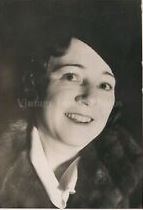
The girl took my hat and showed me through the spacious foyer into an enormous room occupied by a waiting Mrs. Warren. On a table between the davenport she occupied and the overstuffed chair where she bid me sit was a silver coffee service on a matching serving tray. My hostess poured two cups of coffee into Limoges china. Mrs. Warren handed me the cup and saucer before doctoring her serving and sipping it. Waiting for her to speak, I observed the woman. Shirley Warren was an eye-catching, middle-aged woman with, from what I could see as she sat, a striking figure. She was what my old man would have called “Boston Proper.” From her manner, the mayor’s wife struck me as from the teacups-on-their-knees set.
As we sat quietly, my feeling was she was struggling with how to move into the delicate subject for which she’d summoned me. I was wrong. “Thank you for coming, Mr. Tanner. Let me get right to the point. I demand you tell me what’s behind your interest in my husband’s activities.”
Mrs. Warren’s knowledge of my movements regarding her husband concerned me. Although I’d tried to be as unobtrusive as possible in shadowing Mayor Warren, it was obvious I’d miscounted the trumps. Just as apparent, the woman had some idea of my assignment but was keeping her cards close to her … bodice. I said nothing.
Mrs. Warren’s knowledge of my movements regarding her husband concerned me.
Seemingly unperturbed, she continued, “From what I gather, you’re not the political-assassin type, unlike that Italian fellow last year in Miami who tried to kill the President.” I merely smiled. “Because you’re a private investigator, I assume someone has hired you for an unknown reason. I demand to know who and why.”
“I’m not at liberty to divulge that information, Mrs. Warren.” She flinched faintly. This was a woman accustomed to having her way. “Suffice it to say, Mrs. Warren, I mean your husband no physical harm.”
Her face darkened faintly as she shifted in her seat. “See here, Mr. Tanner, is this regarding, shall we say, my husband’s extramarital dalliances?” There was that word again. High society has a strange ability to assign delicate words to such indulgences practiced by their own kind. When I only drank coffee in response, she demanded, “Did the alderman hire you?” Her question involving an alderman threw me. I’d have to figure that one later. Again, I said nothing.
“Mr. Tanner, we are both adults here.” I smiled at her assessment of me. “Let me be brutally frank. Some years back, my husband had his heart set on having children. Honestly, I didn’t care one way or the other. Maternal instincts have never been a powerful part of my psyche. And the physical act of lovemaking was never appealing to me,” she sighed, shaking her head as if recalling an unpleasant memory.
“After several years of trying… or should I say after several trying years,” she smiled coldly, “I became pregnant. It was a most unpleasant experience from the outset. Finally, as those who’ve never given birth are prone to say, the day for the ‘blessed event’ arrived. After a horrific struggle to try to deliver the child, it was stillborn. Then, I nearly died from childbed fever. The entire affair was a burdensome thing for me. I’m not a strong woman. But only in the physical sense, mind you,” she admonished sternly. “William didn’t care about my circumstances if it meant having a son.
“At that point in time, I weighed my options. Surgery to prevent an unwanted pregnancy or using any type of what is these days called birth control is against the tenets of my faith. It’s a mortal sin. However, I was not prepared to take a chance on getting pregnant again. I told William, if he wanted sex in the future, to look elsewhere. But I warned him to be inconspicuous in doing so. I knew then what I was letting myself in for.
“William has done the former with a vengeance, shall we say? Fortunately, he’s also followed the latter, as I demanded. I’m aware of his peccadilloes. If I want to put up with them, it’s my business. No one else need concern themselves. And if you repeat a single word of what I’ve said here today, you’ll find yourself at the wrong end of a lawsuit for slander.” After a silence, she added, “Or worse.”
“… if you repeat a single word …, you’ll find yourself at the wrong end of a lawsuit for slander.” After a silence, she added, “Or worse.”
After sipping her coffee, Shirley Warren advised, “The political bosses know of my husband’s shortcomings and have known for some time. William still has their backing. He will continue to do so, regardless. So, if the object of your pursuits is to damage our marriage or his career, you can tell your employer they are wasting your time and their money. Understand, Mr. Tanner, I’m asking nicely, for now. It’s in everyone’s best interest, especially your own, if you leave it alone.” Her lecture having concluded, she picked up a small bell from the table beside her and gave it a hardy ring. This was as good a time as any. The woman was giving me frostbite.
Soon, the maid returned and escorted me to the front door, returning my hat in the process.
I paused on the steps long enough to set fire to a gasper before sliding behind the wheel of my LaSalle. Driving away from the residence, I couldn’t get two things Shirley Warren had mentioned out of my mind. First, why might she think an alderman had hired me? Was Mayor Warren creasing the sheets with the wife of a city politician? And if so, which one? Did Biggers know who the “other woman” in question was? Maybe there was no affair.
Conceivably another metropolitan politico had his sights on Warren’s chair, and Mrs. Mayor was mindful of it. Second was her certainty the city’s political machine still backed her husband. Could T. Winston have it wrong? Or was he lying? Shirley appeared to have a finger on the pulse of things. Surely, she was cognizant, politically speaking, of where in the metropolis the bear crapped in the buckwheat, as my old man termed it.

The questions caused me to make a side trip to visit Micah again before I returned to the office. The bookseller knew nothing of any alderman coveting the mayoral position. But there were scurrilous rumors, as my friend put it, concerning an alderman’s wife having a roving eye. The old man gave me a quizzical look and asked if there might be a connection between the gossip and Mayor Warren. Also, he questioned how T. Winston Biggers fit into the picture. Kaplan had a knack for gathering information in bits and pieces. I explained I wasn’t sure but would share anything I learned later, regardless of any veiled threats from Shirley. Micah and I had built our relationship over the years, in part, on a give-and-take.
* * *
At the office in the late afternoon, I was clearing up a few loose ends when the phone rang. “Biggers here,” the caller said, when I answered. I came to learn the man always referred to himself that way when telephoning. He shot straight to the purpose of his call. He’d reserved a room for the evening upstairs at his club and wanted to meet with me at seven o’clock. It was just as well Mayor Warren had a commitment, if Biggers intended to occupy my time that night.
* * *
Just before the appointed time, T. Winston rushed into the lobby of the Pytheas Club. He nodded in the sofa’s direction, where I’d taken a seat, and hurried to the reception desk. There, he signed a register or something and received a key. As my client hustled past me, he signaled me to follow. “This place doesn’t have an elevator. We must use stairs,” he mumbled over his shoulder, as he led the way to a large, curving staircase with a polished oak banister. “Sorry.”
“It’s not a problem. Most of my clients live in walk-ups and usually on the top floor,” I laughed.
Biggers took the steps two at a time, as if raiding the joint. He seemed in a big hurry. The place he’d reserved turned out to be a comfortable bedroom on the third floor. My host caught me eyeing the space. “Often,” he explained, “members, who live in the country or who work late here in the city, will get a room at the club for the night. Other times, we may just want to meet or entertain someone privately.”
“So, the mayor is not a member, or I assumed he’d have his soirees here,” I joked.
The would-be politician shot me a brief, hard gaze as he moved to answer a knock at the door. It was a fella from room service, delivering two bottles of liquor and setups on a tray. When he turned back toward me, Biggers responded to my attempt at snappy repartee. “As a matter of fact, Warren is a member here. But, just for your information, the club has very strict rules concerning visitors and the use of these rooms. This is, after all, an establishment exclusively for men.”
My try at humor had fallen on deaf ears. Okay, so Ed Wynn, I’m not. “Understood,” I nodded, not wanting to belabor the line of discussion any further than necessary.
T. Winston, too, moved on. “I noticed you ordered Jack Daniels the last time we met. So, I took the liberty of having a bottle brought up with my bourbon.” After he’d mixed himself a drink, he stepped aside. “Help yourself, friend.” While he took a seat in a stuffed chair, I made myself a liberal thirst-quencher. I sat across a small table from him. He smiled and cocked his chin at my glass. “Never acquired a taste for whiskey. I found a preference for bourbon and branch water while undergoing infantry training at Camp Lee, Virginia, before being shipped overseas to The Great War. It’s the only thing I ever hoist. Before my time in the army, I’d never indulged. Even today, I limit myself to only one when I imbibe. And it’s only to take the edge off the day.”
He saw disbelief in my expression. With a respectful smile, he explained further, “My father was a temperance minister. ‘Woe be unto any heathen who partaketh of spirits’,” he chuckled, raising his free hand and voice, as if behind a pulpit. Still smiling, he then raised his glass, making a toast to successful undertakings.
After I’d made myself another drink, Biggers asked how my inquiry was going. I brought him up to speed on what little there was to report, without mentioning my visit with Mrs. Mayor. He didn’t seem happy with the lack of progress, but, as a Brit pal of mine often said, it was early days yet. The investigation had just started. I explained, regardless of his impression, Warren didn’t partake in his “vice” every day or night. Besides which, I reminded him, the out-of-town visitor had occupied much of Mayor Warren’s recent time. I assured him I’d continue to follow my target’s activities and contact him when I had information to pass. By the look on my client’s face, it occurred to me I’d hear from him before then.
Small talk followed, during which he reflected on his war experiences and losing his wife to an undisclosed disease several years earlier. He also asked me a few questions about my PI work. Although it was time I might have used more productively elsewhere, the bottle of Jack Daniels eased my troubled mind.
Before we parted, I broached a subject which had been gnawing at my gut since earlier in the day. When I questioned whether he’d told anyone he’d hired me and for what purpose, Winston appeared flustered. From the look in his eyes, he seemed to be turning over the question as if it were an unfamiliar object. “Why … why no. Why do you ask?”
When I questioned whether he’d told anyone he’d hired me and for what purpose, Winston appeared flustered.
His hesitation spoke volumes. In my racket, nothing is more frustrating than having a client who won’t tell you the complete truth or, worse yet, lies to you outright. The response left me uncertain about Biggers. I recalled Micah’s words regarding Warren’s veracity. Possibly they applied to everyone in this little scenario. But T. Winston was footing the bill, so…. I laughed my inquiry off as idle curiosity. The man opposite me still looked uneasy. I didn’t bother bringing up the topic of whom the party’s political machine was backing.
* * *
The next week or so showed Mayor Warren’s lascivious predatory habits covered a wide range of the city’s female population. On his dance card were at least two chorines, one a beautiful dancer from a posh nightclub, and a gorgeous woman unknown to me. I later learned she was an alderman’s wife. Maybe reading the front page and the society pages had its benefits. Anyway, the broad’s spouse, a member of the opposition party, somehow stayed in office despite his party affiliation. After observing the pair’s rendezvous during that time, it was obvious only her husband offered any resistance to the mayor’s activities. What the lady didn’t understand was she wasn’t the only dame Warren had on his roster.
While documenting his escapades in a report, complete with relatively innocent candid pics, I kept waiting for the opportunity to catch His Honor and a paramour “together” on film. But they were always either in a location I couldn’t access or there wasn’t enough light for snaps. I’d never felt more like a peeping Tom in my life. Still, I wanted to figure out where the mayor got his stamina, not that I’d been in the game in a while, if you get my drift.
* * *
In the early evening of the Tuesday of the second week, I followed Warren and a hoofer to his love nest. The joint was in a remote area on the west side of town. I stood in the dark below the third-story apartment’s windows as, one by one, they drew the shades. The joint was so darkened the fire escape outside them did me no good. That finished my night.
As I turned to leave, I backed into what I thought was a tree. Before I could react, I learned the “tree” had arms. A powerful someone grabbed me from behind in a forceful bear hug, holding my arms securely at my sides. Then, in the tepid halo of light coming from the ground-floor apartment windows, I saw another huge lug step in front of me. His arms ended in sizable fists.
It was too dark to see their faces. But the blackness didn’t keep punches from finding my head. After several hard shots to my kisser and a few terrific body blows, which knocked the air out of me, my assailant behind me let me go. I fell to the ground like a bag of laundry. After two quick kicks to my midsection, they had finished. The men never spoke. Because I had no desire to continue the encounter, I stayed down. The roughnecks departed into the darkness as quietly as they’d appeared.
* * *
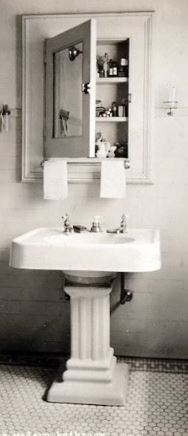
Later, bending over the sink in my office’s small bathroom, I dabbed my bruised jaw with a damp cloth. The mirror showed a mouse forming under my left eye. The abrasions weren’t too bad, but I wasn’t happy with the face. My ribs ached like hell. The mugs knew what they were doing. It was as good a going-over as I’d had in a while. During the roughing up, a whiff of cheap aftershave came to me. I wouldn’t soon forget it. Okay, so now I’d gotten a warning from the mayor’s security goons. My guess was McPhail and Chambers had tagged me tailing Warren. Between that pair, Mrs. Warren, and, I’m sure, the mayor, too many people wanted me to stop. Which meant I had to keep working the gig—just being more careful—because I’m obstinate that way.
* * *
A couple of afternoons later, I was climbing the flights to my apartment. Mr. Conforti, the building’s superintendent, shuffled down the hall on the floor below me. “Buon giorno, Gil!” he called up to me. Our super was a right gee, who liked the bottles of sambuca I occasionally slipped him away from his wife’s disapproving eyes. When I leaned over the rail to greet him, he yelled, “Your two friends are waiting upstairs!”
“Friends?”
“Yeah. The guys said they were working on something with you. They seemed to know you pretty well, so I let them into your room to wait!”
As he shouted the words, a door on the floor above me—my floor—opened and slammed shut. I heard heavy footfalls running along the hallway to the banister there. Looking up, I saw two large, unfamiliar, rough-looking characters staring down at me. One of them mumbled, “That’s him! Get ‘em!” as they hustled toward the staircase.
I was still feeling the effects of my last meeting with a duo such as this—hell, possibly even the same pair. Without hesitation, I turned and pelted down the steps three at a time, with the mugs hot on my trail, half a flight behind me. When I reached Conforti, I snatched the toolbox he held and flung its contents up onto the stairs above me in one movement. Despite the suddenness of my move, the super said nothing. He knew what racket I worked and was quick to size up my situation. Besides, another bottle of his favorite refreshment would soon come from me for his trouble.
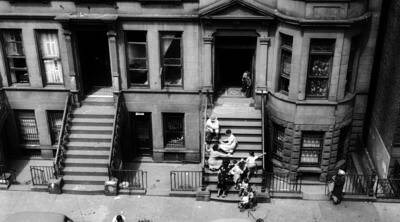
Luckily, I gained the ground floor and front door well ahead of my pursuers. Out on the busy street, I quickly abandoned the idea of using my heap to make a getaway. Instead, I bolted down the stoop and dropped into the entrance to the Confortis’ basement apartment, hidden beneath the building’s steps. Out of view from the sidewalk above, I pressed hard against their door.
Out on the busy street, I quickly abandoned the idea of using my heap to make a getaway.
It’s funny how the brain often works. For some inexplicable reason, an uncle of mine, who’d fought in France, came to mind in that instant. He’d once told me of a harrowing battlefield experience. As he crossed an open field for the first time, bullets started flying. He dove to the mud. Then, my uncle prayed to God to take the buttons from his uniform so he could get closer to the earth. So it was with me at the moment. I tried to become one with the Conforti’s apartment door.
The two sizeable men clamored out of the building and down the steps. I saw them through the grating covering my location. The pair stopped on the pavement and essayed both directions of Cuyahoga Street. “Where the hell did that shamus get to?”
“I dunno, but he hauled ass.” He nudged his partner, “C’mon, let’s go see the boss. We’ll catch up to the peeper later.”
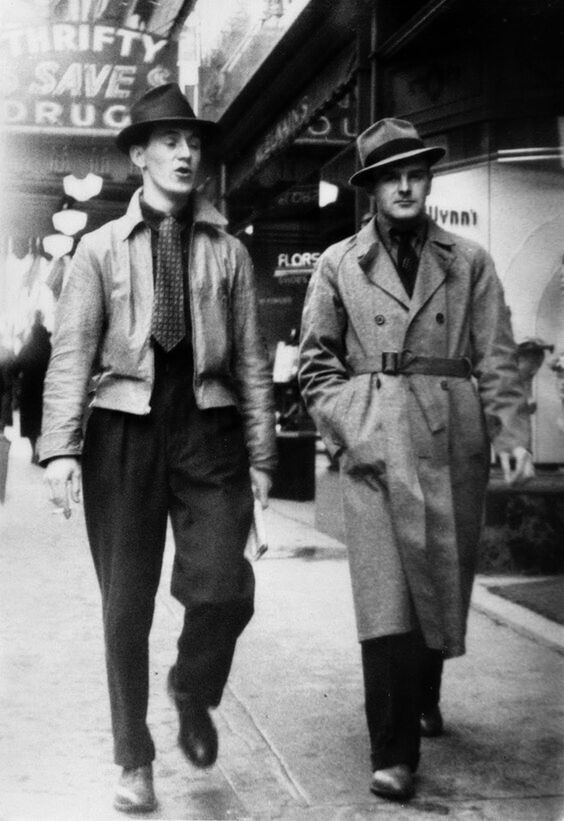
As they meandered away, I realized neither man was Chet McPhail. So, Marty was right. His Honor the Mayor had others on his goon squad. After a brief wait, I cautiously moved to the sidewalk and eyeballed the street for my adversaries. Confident they’d gone, I climbed the stairs to my apartment, stopping to apologize to Mr. Conforti, who was putting tools back into the toolbox.
* * *
Several nights later, I was returning from yet another unsuccessful attempt to get my target on film. Someone stepped out from an alley, eased up behind me, and sapped me. I’m sure I dropped to the pavement at once, but, in my mind, I was free falling toward a large black pool, which enveloped me when I reached it.
When I came to, I was playing post office with a grimy concrete floor. I tried to raise my head. It weighed the same as a Mark V tank. Through blurry vision, I recognized I was in a dingy, cluttered garage. A hefty, plug-ugly hooligan stood over me. When I tried to get up, the gorilla forced me back to the floor with a monster-sized shoe. “Stay where you are, gumshoe. The boss wants to have a talk,” he said in a cold, even voice.
I was not up for making an issue of it. At his suggestion, I stayed on the floor. Shortly, a door at one end of the joint opened. I figured this was where Mayor Warren and I would come face-to-face for the first time. He’d threaten me and I’d keep doing what Biggers had hired me for until I got the payoff I was looking for. Or got maimed.
When the door had fully opened, Mrs. William Jefferson Warren entered the room. The woman moved with a feline grace–sure, smooth, and slow. She wore an evening gown trimmed with diamante and carried a small, matching sequined handbag. To say she looked out of place in the dump would be a monumental understatement. She had another roughneck accompanying her. It never occurred to me to ask Marty whether the wife had security measures.
She shook her head and smiled. “You are an extremely hardheaded man, Mr. Tanner. I’d hoped, after my second message to you, you might see the advantage of giving up your quest and leave well enough alone. Perhaps you haven’t realized the first duty of a man in power is to stay in power. Sometimes it requires help from those around him. Don’t you understand politics will remain unchanged with or without your efforts? It’s so futile.” She moved closer to me. The ruffian behind me pressed his foot hard on my ribcage to remind of my proper place at the moment. “Or don’t you have faith in our political system?” Shirley Warren asked snidely.
“You are an extremely hardheaded man, Mr. Tanner.”
My head was clearing a little. I sat up slowly, glancing over my shoulder for a reaction from my “caretaker.” None came. “When it comes to politics,” I groaned, “I’m an agnostic.”
She ignored my response. “Now, I will ask you nicely once more, Mr. Tanner. Are you going to stop following my husband and spying on his activities?”
“You know, Shirley,” I said, rubbing the knot on my head, “I believe I will.” Maybe my eyes showed something else when my mouth lied. I wasn’t able to manage a poker face just then.
She gave me a sour grin. A kind of permanent disbelief shown in her face. It revealed someone who had long ago stopped expecting to be told the truth. Her eyes moved from me to the lummox standing over me. “Take care of him,” she admonished, but without emotion. With that, Mrs. Mayor turned on her expensive heels and departed. That sleek kitten notion of her came back to my mind. Stroke Mrs. Warren the right way, and she’ll purr. But rub her the wrong way, and the claws come out. The thug who’d accompanied her in followed her out. The door closed.
I wasn’t certain what her instructions to my much-larger companion meant, but it felt ominous. Having hands laid on me was getting damned old damned fast. The time had come to gird my loins. Across the garage, I saw a large monkey wrench lying on the floor beside a workbench. It might serve as the equalizer I needed under the circumstances. The question was whether I could get to it before this hoodlum ripped me a new one.
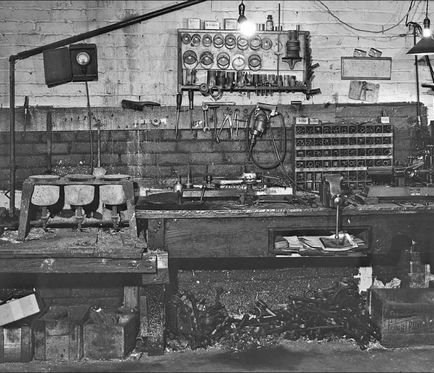
When he stepped around in front to bring me to my feet, I kicked a leg as hard as possible into a kneecap. As he howled in pain and fell backward, I scrambled on all fours toward the tool. Just as I reached it, the man dove at me with an angry force. Before he overtook me, I spun onto my back and raise the wrench. I brought the thing into play and laid a solid blow to the side of his noggin. When he dropped to the concrete with a moan, I caught the scent of a familiar fragrance. I bent over him and landed several hard slugs to his head and to each hand with the wrench. I didn’t care whether he lived or died, but it might be a while before he gave someone the Broderick again. If he survived, he wouldn’t forget me, anyway.
I tried to stand to walk but only staggered. Gaining the top of the workbench, I balanced on the flat of my hands for a brief time. Then, standing groggily over the unconscious man, I angrily kicked him in the groin for good measure. He didn’t move. I leaned against the bench until the cobwebs in my brain cleared. Then I dragged the goon into a tool storage closet. Still a little woozy, the move gave me trouble. He weighed a ton. Before locking him inside, I wiped the wrench clean of prints and tossed it in after him. I stumbled out of the building, a garage in the industrial section of the city. After gingerly making my way to a street, I flagged a taxi. The hack driver, eyeing me warily, dropped me down the block from my apartment. In my place, I fell into bed.
* * *
Over the next several days, I shadowed the mayor from a distance. During that time, I’d followed Warren and one of his harem to an out-of-the-way restaurant. There I overheard them planning a secluded picnic for the afternoon of the seventeenth. Under the heading of “the best laid plans of mice and men,” an unexpected, severe cold snap came over the city. It had forced them to retreat to the mayor’s love nest that morning.
Fortunately for me, McPhail and his sidekick were nowhere in sight. Also, to my good fortune, the lovers were so eager to climb into bed, they forgot to draw the shades. So, rather than photos of a romp in a meadow, I contented myself with what I could photograph through a bedroom window. The opening had a convenient fire escape just outside it. I thought I’d freeze to death out on the damned thing, but I got the pictures to cinch the proof my client wanted. Yeah, it was a trash caper, but it fed the bulldog, so to speak.
On my way back to my bedsit, I left the film with the same lug who had developed Lester’s French postcard prints before the photographer had set up his own darkroom. The fella, named Onslow, did his job and kept his yap shut. I ordered two copies of each snap, one set for my files and the other for the client. The man told me he’d have the photographs the following morning. Then I called Biggers from the privacy of a phone booth at the corner drugstore. When he received the news I’d have my report ready the next day, he was ecstatic.
* * *
It had been a tough case. Back in my apartment on that mid-April afternoon, I gathered the case materials into my satchel. Then, I left for my office to put my notes together into a detailed account of the investigation results.
Later, after finishing the typing, I locked my copy of the file and photographs in a cabinet. I leaned back in my swivel chair, lit a Chesterfield, and relaxed. To add to the pleasure of the moment, I poured myself a generous Jack Daniels and reflected on the circumstances. Tomorrow, I thought, my account of the mayor’s activities and the snapshots will go to Warren’s potential challenger in the fall election. There were certain to be sordid newspaper stories because of what was in the file. That wasn’t my problem. I’d read somewhere Joseph Pulitzer had said something relating to publicity being the greatest moral factor and force in our public life. This investigation might well prove his point.
Not that I had a dog in the fight, but I hoped to convince Biggers to hold on to his information until closer to the election. Releasing it too early might cause a collective forgetfulness by voting time. Besides, if what I’d seen over the past several weeks was any sign, my client’s adversary was not going to change his ways, even if he changed his bedmate. More to the point, neither Warren nor his wife were likely to take kindly to any negative press. Sure, my name might end up in the middle of it, but a mug in my racket rarely gets bad publicity from completing an assignment. And I’d deal with any retribution coming my way when it happened.
Early in the evening, my phone rang. “Biggers here,” was the greeting when I answered. His voice sounded distant, agitated. At his insistence, I was to meet him in the parking lot of The Oasis roadhouse on the outskirts of town. For whatever reason, he didn’t want to use his club or my office for our get-together. We were to rendezvous at nine o’clock the following night.
* * *
When I climbed into his automobile Wednesday evening, Biggers seemed nervous. He said everything was fine now that I’d finished my work. Despite my client’s assurances to the contrary when I questioned him, he couldn’t hide an undercurrent of anxiety. I caught him frowning and looking around the parking area furtively several times. I told myself it was a matter of my client not wanting anyone to see him meeting with me and receiving my account of the case and the snaps.
He used a flashlight to scan the document, reading aloud. “You ‘followed him and his female companions on thirteen consecutive days….’” His eyes were racing ahead while he mumbled to himself. “… Now here’s the meat of the matter.” His voice slowed to read out with exactitude the key phrase he was looking for. “And ‘they met at this apartment on eight of those days. The encounters lasted from three to five hours, with two extending overnight.’” I responded in the affirmative. Then he looked at the photographs. An uneasy grin crossed his face. “This is dynamite, Tanner! Well done!” He handed me an envelope containing my last payment with the bonus.
“This is dynamite, Tanner! Well done!”
He was too impatient to listen to my arguments about waiting to release the documents for publication. Okay, I thought, it’s his choice, his funeral.
My client stopped me as I climbed out of his Packard. “You know, I hope I can count on your vote, Mr. Tanner, when the time comes.”
I paused before telling him how I really felt. “I don’t follow party lines, Mr. Biggers. If I vote, I pull the lever for the person, regardless of affiliation. You haven’t said much yet. I’ll wait to decide.”
My man’s face reflected mild surprise, a hint of disappointment, in the dim light coming from the roadhouse. He was still sitting in his heap when I cranked the LaSalle and pulled away.
* * *
The next morning, I grabbed a paper from a newsie on the street and headed to breakfast at The Wayside Cafe. After plopping in a booth and ordering my usual fare, I unfolded the daily to check the sports section. Before I could turn the pages, a small article in a bottom corner of the front page caught my eye.
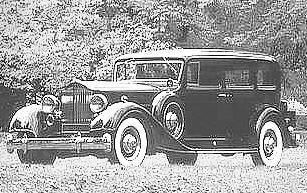
Biggers’ name was in the headline. The daily described a fatal, single-car wreck on the highway where I’d met him the previous night. A passing motorist, the account related, alerted by the Packard’s headlamps, had discovered the dead man’s automobile overturned in a gully off the road. He’d found Biggers’ battered body, deceased from internal injuries, lying near the automobile. Several empty liquor bottles turned up in the car’s front seat. The paper reported the police attributed the mishap to driving while intoxicated.
My heart sank. I could only figure was the man had gone into the roadhouse and celebrated getting the case report. Over celebrated, one might guess. There was no mention of anything else being in the auto. I pondered the story. Something smelled wrong. It hung in the air like the smoke of a cheap cigar. Thinking of the far-reaching documents I’d delivered to the late T. Winston, I decided to pay a visit to my copper buddy, Detective Sergeant Rob Waddell. I called him from the pay station in the diner. He’d just returned to his office when he answered. Despite his hesitancy to meet right away, I told my pal I planned to come straight to headquarters to see him.
* * *
I took a seat across the desk from a weary-looking detective, and tossed my topcoat onto another chair. After my comment on his appearance, he explained he’d been up all night on a stakeout. My friend added he was just getting ready to go home to bed when I called. When I said I wanted to see any information he might have on Biggers’ death, he shot me an exasperated grimace.
“You kept me from my warm bed over a car accident?” he growled.
“Was it? An accident, I mean, Rob?” I responded, setting fire to a fag.
“What’s it to you?” Not waiting for my answer, he blew air in frustration. “Look, Gil, I didn’t go to the scene of the accident”—he emphasized the word—“but Biggers was a prominent citizen. So, news of it has gotten around the station house. It’s a cut-and-dried crash from what I understand. The poor stiff gets loaded, runs off the road, and dies from his injuries when he’s thrown from his Packard. His clothes reeked of booze, and we found empty hooch bottles in the car. The only question in the case is whether Biggers’ crate rolled over him during the wreck. Because of the nature and extent of the injuries, the cutter thinks it did.”
“The poor stiff gets loaded, runs off the road, and dies from his injuries when he’s thrown from his Packard.”
“But I knew this much about the man, Rob. He never had more than one drink when he drank.”
“So, for whatever reason, the mug goes too far, gets plastered on scotch, and pays the price. He simply–”
“Wait! Scotch? Were the empty bottles scotch bottles?”
“Yeah. That’s what I heard.” My friend was getting more annoyed by the minute. “So what?”
Then it hit me. “Somebody didn’t do his homework!”
“What? Whaddya mean?”
“Winston Biggers never gargled scotch! He only drank bourbon with branch water!”
Rob’s mouth twisted. His tired eyes shot me a stern look as he leaned across the desk toward me. “And how do you know that?”
“He told me so himself! And he was adamant about never having more than one! And always bourbon!” Easing off a little, I went on, “Don’t just take my word for it, Rob. Ask the barman at the Pytheas Club.”
Waddell sat back in his chair and ran a weary hand over his stubbled face as he reflected on what I’d told. “You seem pretty sure of this, Gil.”
I nodded emphatically. “Absolutely! Were any documents found in Biggers’ car?”
The detective started to respond but made a quick phone call to somewhere in the police department instead. “And find out what time the passing motorist came across the Packard,” I put in as he dialed. He made a few inquiries and repeated my questions to the person on the other end of the blower.
When he hung up, he waggled his head at me. “No, nothing but the empty scotch bottles were in the automobile. And they located the car a couple of miles from The Oasis at nine thirty-five last night. What difference does it make?”
“There’s something I have to tell you about this situation, Rob. I was working a confidential lay for Biggers. I left the man, sitting as sober as a preacher, in The Oasis’s parking lot only fifteen minutes before they found him dead. Even if inclined to get stinko, he didn’t have time. He wouldn’t have, under any circumstances. And certainly not with scotch.”
My detective pal made a quick, hard study of my face. Suddenly, he grabbed his telephone and placed another call. After a few seconds, he snapped, “This is Det. Waddell. Lemme speak to Dr. Clyatt.” A pause. “Doc. Rob Waddell. Do me a favor. Check Winston Biggers’ blood and stomach contents for alcohol… Huh?… Yeah… How long?… Okay, thanks… What?… No. Don’t release the body to anybody until I give you the high sign… Huh?… No, I don’t care who it is… Yeah, yeah, my responsibility.” He cradled the phone with, “Jeez!”
“What’s wrong?”
“Nothing. But now I got to battle city hall over Biggers’ body.”
“What do you mean?” A vague uneasiness was settling over me.
“The mayor’s office called the morgue this morning. Because Biggers has no living relatives, they want to claim the body to make sure an important citizen, such as he was, gets a proper funeral.” He shook his head and leaned back again.
“Well, there’s something else you need to know about the work I was doing for Biggers. He–”
“Yeah, I was gonna ask you about that.”
Waddell knew the story behind what I was getting ready to tell him. The local pundits held our governor was getting bribes from the city’s south side mob, known as The League. The gangsters made payoffs to an influential ward boss and Warren, who then forwarded a cut to the state capital. This had been going on since the governor had been our district attorney. It was a part of the burg’s dirty politics. A number of reformers, joined by Detective Waddell and some other right cops, had been after Mayor Warren’s hide and those of his political cronies for quite a while. They’d been trying to get something on these bums, but nothing ever stuck.
Now was the time to lay it out for Rob. “Biggers told me he wanted to challenge Warren for the office of mayor this fall. He hired me to dig dirt on Warren’s extramarital affairs, of which there are many, I can tell you.” When Waddell started to speak, I restrain him with a raised finger and continued, “Over the last month or so, I gathered the evidence he’d hoped for. In doing so, I observed a few of the payoffs from League big shots to His Honor. Everything was in my report. That’s why I was with Biggers outside The Oasis last night. I delivered my account, complete with photographs, of the mayor’s activities. Fifteen minutes later, my client is dead under very questionable circumstances and the file I gave him is missing.”
“Damn!” Waddell looked dejected.
I chuckled, “It’s okay, Rob. I’ve got my copy, including the negatives, at the agency.” Suddenly, a disturbing thought hit me. I could almost feel my stomach pumping acid.
My pal, ever the sharp detective, read my face. “What’s wrong, Gil?”
I jumped to my feet and exclaimed, “I’ve got to get back to my office! Right now!”
Waddell seemed to sense my concerns. My friend grabbed his hat and overcoat. “I’m coming with you!”
We were outside and in my LaSalle in quick order. As we drove, I explained the “obstacles” I’d encountered during my investigation on behalf of Biggers and my concern for my copy. He nodded, brows knotted. A short time later, I pulled to the curb in front the Belvedere Building, tires screeching to a stop. We bailed out of the car and barreled past a few startled, curious pedestrians and into the lobby. I bypassed the slow, rickety elevator and opted for the stairs. Waddell was on my heels. Making the fourth floor in what was probably record time, I ran to the office door.
As I started to slide the key into the lock, the door eased open. As usual, I’d locked my agency upon my last departure. There was no sign of a forced entry. I stepped back from the opening and glanced at my companion, who was already drawing his roscoe. I did likewise. As we stood on either side of the door, I pushed it open the rest of the way. Quickly looking inside, we could see the space was empty.
As I started to slide the key into the lock, the door eased open.
We holstered our guns and went in. Nothing was out of place, except for a filing cabinet drawer—the one which had held my copy of the documents I’d delivered to Biggers. Papers were sticking out of the drawer, keeping it from closing. Someone had opened the cabinet and had rifled through its contents. A quick search revealed the Biggers file was missing. Neither of us had spoken a word during this time. I shook my head at Rob. “It’s gone,” I said with a heavy sigh. “The office lock and the one on this cabinet have been picked by somebody who knew their business. Damn!”
With nothing else to do on Biggers’ matter, nowhere to look for the stolen documents, Waddell and I sat at my desk. The detective’s fatigue momentarily forgotten, we had a few drinks and commiserated. We agreed, without my report and photographs to back me up, my testimony regarding the events I’d witnessed meant nothing. As far as the matter concerned my friend and his reformer pals, they were right where they’d been before my investigation.
* * *
And so, time marched on. During my work on the Biggers case, on April 29th, my Cincinnati Reds lost a game, nine to five, to the Pirates. It was significant because the Bucs were playing their first home outing on a Sunday after their state repealed its “Blue Law,” prohibiting such games. The season saw the Reds finish dead last in major-league baseball. So much for hope. The favorite team of the Paradise Tavern’s proprietor, the Cardinals, won another World Series. And I had to hear it all winter. Damn Branch Rickey and his farm team system.
Detective Waddell later told me Doc Clyatt’s test showed Biggers had no alcohol in his stomach or his blood. Rob theorized it was a murder set up to look like a road accident. But, with no proof beyond circumstantial evidence, it was a lost cause. They never found the documents I’d given the dead man. And the political machine again backed Warren, who easily won reelection. The mayor and his cronies continued their crooked ways. At every turn, someone trying to shine a light on their dealings brought naught. The public’s memory rapidly fades when it comes to political scandals. And, as the fella said, politics make strange bedfellows. ©